CFA Institute

Private Equity at a Crossroads: A Conversation with Ludovic Phalippou

Ludovic Phalippou, PhD, Professor of Financial Economics at Oxford University, has become one of the most closely followed and debated voices in private equity. His articles on Enterprising Investor were among the most read in 2024, and I was pleased to sit down with him for a wide-ranging conversation. Known for his sharp analysis and independent perspective, Phalippou has long challenged the industry’s dominant narratives, and he does so during our conversation with his usual clarity and candor. In our discussion, which will air on May 21 on YouTube, Phalippou revisits several of the themes that have defined his research: performance reporting, governance, incentives, and transparency. But we also explored how the current macro environment and the changing investor base are placing new pressures on an already complex system. The result is a thought-provoking look at where private equity stands today and where it may be heading. Impact of Rising Interest Rates Phalippou begins by discussing how the current macroeconomic environment, particularly rising interest rates, is exerting pressure on private equity firms. He explains that higher borrowing costs directly affect the leveraged buyout model that has traditionally underpinned private equity returns. As debt becomes more expensive, deals need to generate higher operational improvements or revenue growth to offset this financial burden. Phalippou emphasizes that many PE firms are now resorting to financial engineering or restructuring debt to avoid public bankruptcies. However, he warns that these tactics may not be sustainable if the high-interest environment persists. Transparency and Governance in Private Equity One of Phalippou’s central critiques is the lack of transparency in private equity, which he likens to the mutual fund industry of the early 20th century before reforms were implemented. He calls for standardized reporting and stricter governance to protect investors, particularly as private equity becomes more accessible to retail markets. He highlights issues with traditional metrics like internal rate of return (IRR) and delves into the way in which IRR can be manipulated to present an overly optimistic picture of performance. Performance Myths and Misconceptions Phalippou challenges the widely held belief that private equity consistently outperforms public markets. He argues that the metrics used to support this claim often fail to account for survivorship bias or the lack of appropriate benchmarks. According to Phalippou, the perception of superior returns is frequently based on selective reporting and marketing rather than reality. Alignment of Interests Another key theme in the interview is the alignment — or misalignment — of interests between private equity fund managers, executives, and investors. Phalippou highlights the importance of understanding who benefits most from PE structures. He notes that while fund managers often claim their interests are aligned with those of investors, the reality is more complex, and he shares examples. Environmental, Social, and Governance (ESG) Practices When asked about ESG initiatives in private equity, Phalippou offers a nuanced view. While he acknowledges that ESG compliance is increasingly important, he suggests that many firms approach ESG more as a marketing tool or regulatory requirement rather than as a genuine driver of value creation. He makes observations about some ESG initiatives and discusses ESG reporting in private equity. Private Equity in Sports Franchises Phalippou touches on the growing involvement of private equity in owning sports franchises. He characterizes this trend as a blend of professionalization and vanity projects. While private equity firms bring operational discipline and financial expertise to sports management, there is also an element of prestige and personal ambition that drives these investments. The Role of Academia Reflecting on his role as an academic, Phalippou discusses his efforts to demystify private equity for his students and foster critical thinking. He aims to go beyond the surface-level jargon of the industry and equip students with the tools to ask deeper, more critical questions about the data and assumptions behind private equity practices. Challenges Facing the Private Equity Industry Phalippou outlines several challenges that private equity firms are likely to face in the coming years. These include: Increased Scrutiny: As private equity becomes more accessible to retail investors, it will face heightened scrutiny from regulators and the public. Saturation of the Market: The influx of capital into the private equity space has led to higher valuations and reduced opportunities for outsized returns. Technological Disruption: The rise of AI and data analytics is transforming the way due diligence and operational improvements are conducted, potentially disrupting traditional private equity practices. Future of the Industry Phalippou concludes with a discussion of where private equity might be headed. He brings data and deep research to bear on issues that many in the industry still treat as settled. His perspectives on current practices and future direction are clear, direct, and thought-provoking — whether or not you agree with every conclusion. This discussion is a valuable opportunity to revisit long-held assumptions and consider how the private equity landscape may evolve in the years ahead. source

Private Equity at a Crossroads: A Conversation with Ludovic Phalippou Read More »

From AI FOMO to Fee Fatigue: Investor Sentiment 2025

Client sentiment in 2025 reflects both novelty and continuity. Beneath the buzz of AI and geopolitics lie enduring concerns about cost, timing, and behavior. Based on confidential chats with readers of Canadian MoneySaver (where I write a monthly column), these five concerns will remind us that investor psychology evolves far slower than the markets. 1. I’m terrified of tariffs. “I’m in a bit of a bind. I lost my job in late 2023, and I just turned 60. During the current round of tariff wars, I panicked and sold about 80% of my stock portfolio. I have always been a successful buy-and-hold investor, but it felt like this could well be a repeat of the great financial crisis. I wanted to avoid losing a lot of money. Luckily, I have other savings that will cover income needs for some time, so I’m still able to invest for the long-term. I wish I had kept everything the way it was. What do I do now?” My advice: If the market goes below where you sold, your panic sell was not a mistake. However, if the market never goes back to the level where you sold, not only would you have missed the gain since the April lows (the S&P500 has since risen nearly 35%), but you would miss all future gains as well. The biggest mistake investors make is attempting to time the market. The average investor usually cashes out when they should be buying, and vice versa. Remember that all markets are cyclical. Sometimes it can feel like the stock market is a casino and we forget that proper investment plans are in place for good reasons. It seems to be that before you panicked, you had a sound investment strategy that had worked well for many years. Why argue with success? Your investment objectives have not changed. You’ve had some time to lick your wounds, but now it is time to work on a disciplined approach to buying back your dividend-paying stocks. Put together a stock purchase plan and stick to it. Maybe buy 20% on the first of the month for the next four months, or something along those lines. If we happen to get a huge pullback then you can speed up the stock purchases. 2. What undiscovered stocks will benefit from AI? “Everyone knows that Nvidia is doing well making chips for Generative AI (GenAI). Depending on the day, it’s the world’s most valuable company. I am trying to find an undiscovered stock that might benefit from GenAI. I read something about liquid cooling in the data centers. Does that make sense?” My advice: Everyone is looking for a stock that will rise with the GenAI tide but hasn’t been discovered yet. Such a thing might have been possible in the exceedingly early days of 2023 but is now more of a challenge. There are all kinds of companies that have famously rode the GenAI wave higher: chip companies (Nvidia and AMD), the hyperscalers that are building data centers and AI services (Alphabet, Amazon, and Microsoft), and big players (Meta and Oracle). Other winners include companies that own data centers (Equinix), companies that make connectivity chips for AI data centers, (Broadcom), companies that assemble the various chips into servers (Dell, Supermicro), and companies that supply power for these data centers (Schneider Electric). In any megatrend investment theme, finding a true undiscovered opportunity is difficult once it’s peaked. Unless you are fascinated by the process, I don’t think searching for this (metaphoric) needle in a haystack is a great use of your time. To put that into perspective, look at Nvidia, whose market cap has risen to $4.6 trillion. It is trading at around $188, up from about $14 at the end of 2022 when the GenAI wave started rolling. Meanwhile, Vertiv is often touted as an “undiscovered gem” that makes advanced cooling solutions for data centers. With a market cap of just below $50 billion, Vertiv is much cheaper than Nvidia. It was last trading at $164, making it only slightly less “undiscovered” than Nvidia. 3. Is my money manager missing the GenAI wave? “I look at what is going on in GenAI and worry that my money manager is not investing heavily enough in this megatrend: GenAI ETFs are beating the pants off the NASDAQ. GenAI is already having seismic effects on my job, and it’s only just begun. Google is rolling out real-world products that we can use today. For example, I just added Gemini to my marketing company’s Google Workspace. Is my money manager missing another wave while it is still forming?” My advice: Some tech analysts I spoke with pointed out that GenAI is already transforming how people work: by 2030, most computer code, most advanced semiconductor chips, and many successful drugs will have been written, designed, or discovered with the help of GenAI. This will likely add more than $1 trillion to the global economy. It is expected to become ubiquitous in the global call center/CX industry and at marketing firms like yours. There are perhaps 100 million people working in those industries. At about $500 per year for basic GenAI tools, we’re talking $50 billion. If we throw a 20x forward P/E multiple at that, it would be worth over a trillion dollars. The only problem is that this is already priced in. The combined market cap of leading publicly traded AI companies (Microsoft, Nvidia, Google, Amazon, and perhaps Meta, Apple, Tesla and Oracle) has risen to almost $22 trillion in October 2025, suggesting that most are expecting well over 100 million paid daily users. If the number of people paying for and using these tools rises to 100 million by 2028, the value of a GenAI ETF would likely decline. And if the number of paid daily users rises to 200 million to 300 million (or about just a quarter of all knowledge workers today), the value of GenAI ETFs would remain flat. For this “wave” to still

From AI FOMO to Fee Fatigue: Investor Sentiment 2025 Read More »

5 Conversations to Test Whether Your Asset Manager’s AI Adds Value

Artificial intelligence is hot and transformative, reaching far beyond tech into the investment industry. With so much hype, there is a risk that AI is being used more as a marketing gimmick than as a genuine tool to improve investment strategies. Building on a CFA institute overview of how data science and AI are entering investment management[1], this piece takes the perspective of asset owners and consultants. I offer 5 critical conversations to cut through the noise and uncover the real value of AI in investing. While written with asset owners and consultants in mind, individual investors can also use these questions when evaluating their own asset managers or advisors. Artificial Intelligence (AI) covers systems that perform tasks requiring human intelligence, such as pattern recognition, prediction, or text generation. Here I use AI to mean techniques, from machine learning to generative models, that go beyond linear rules-based quant models. Common sense remains the best guide when selecting an asset manager. These 5 conversations can help separate substance from buzzwords, clarifying whether AI is truly adding value. Some questions clarify experience with systematic investing; others help spot “old wine served in new bottles” and assess its role in future client interaction. 1. Definition and Scope: How Does Your Manager Define AI in Investing? How do you define AI in your investment process, and which specific tools or techniques, such as machine learning, natural language processing, or alternative data, are used?Ensures AI is clearly defined and provides a solid basis for the rest of the discussion. How does AI-driven investing differ from your systematic rules-based strategies, and where do they overlap?Tests whether AI adds unique value or repackages existing approaches. 2. Organization and People: Who Runs AI at Your Asset Manager and How Are Teams Structured? How is AI embedded in your infrastructure, including data pipelines and compute resources?Reveals the robustness of the AI setup and commitment to execution. How is AI organized and led in your team and firm, and what resources, and mix of skills (AI specialists vs. finance experts) support it?Assesses leadership, culture, and long-term investment in people and technology. 3. Experience and Added Value: How Long Has AI Been in Use, and What Has It Contributed? Since when have you been using AI in your investment process, and how has its weight changed over time?This makes it specific and concrete. How do you measure the specific contribution of AI to the strategy’s performance? Can you show how AI decisions have improved results versus a traditional approach?Evaluates accountability and evidence of value added. 4. Risks and Limitations: What Are the Pitfalls of AI in Investing? What have you learned from episodes such as the August 2007 quant crisis, or the LTCM blow-up?  Not everyone knows these events. Knowing quant history helps to prevent making the same mistakes again. What are the limitations of AI, and where might it hurt performance?This is a useful check on the manager’s critical thinking. 5. Outlook: How Will AI Shape Asset Management and Client Communication? What do you think of past AI winters, when progress stalled for a couple of years before taking off again? Could this happen again, and how would you deal with such a winter?Explores preparedness for cycles of innovation and stagnation. How much of your client interaction (newsletters, reports, insights) is generated by AI versus by humans?Reveals the role of AI in communication and transparency. Finally, ethics cannot be ignored. Asset managers should have safeguards to prevent bias, opacity, or misuse of data. Responsible AI use is as important as performance. AI is powerful, but not magic. Having these 5 critical conversations and asking the right questions helps reveal whether it truly adds value or simply serves as the latest buzzword on an unchanged process. For individual investors, raising these same questions with your own asset manager or advisor can help ensure AI serves your long-term goals of capital preservation and growth. Pim van Vliet, PhD, is the author of High Returns from Low Risk: A Remarkable Stock Market Paradox, with Jan de Koning. Link to research papers by Pim van Vliet. [1] Data science and AI: A guide for investment managers | CFA Institute If you liked this post, don’t forget to subscribe to the Enterprising Investor. All posts are the opinion of the author. As such, they should not be construed as investment advice, nor do the opinions expressed necessarily reflect the views of CFA Institute or the author’s employer. Image credit: ©Getty Images / Ascent / PKS Media Inc. Professional Learning for CFA Institute Members CFA Institute members are empowered to self-determine and self-report professional learning (PL) credits earned, including content on Enterprising Investor. Members can record credits easily using their online PL tracker. source

5 Conversations to Test Whether Your Asset Manager’s AI Adds Value Read More »

Maladapted Industries: The Risk of Artificial Selection by the State

What happens when an industry survives not by producing products consumers desire, but by producing products governments desire? You get what I call a “pet industry” — a sector that is shaped more by political mandates than by market demand. From Europe’s steelmakers to global EV producers, these industries rely on state support to survive, but as political winds shift, their future looks increasingly fragile. Investors, beware: pets can be expensive to keep. In nature, species evolve through natural selection, or survival of the fittest. But humans learned long ago how to override that process. Through selective breeding, we’ve engineered animals to suit our needs. In this setup, it is the handler — not nature — deciding which traits are “fit.” This is “artificial selection” in a controlled environment. As I have argued before, consumer selection is to commerce what natural selection is to biology. A species of industry is adapted to the demands of its market via consumer selection. Here, too, we learned how to hijack the evolutionary process. The state, not consumers, decides which traits are “fit” and coerces accordingly. This, too, is artificial selection in a controlled environment. Whether biological or commercial, artificial selection often leads to maladaptations. Traits that might not survive in the wild are preserved and even encouraged. Over time, the species — or industry — loses its ability to survive in the natural environment and becomes dependent on the one created by its handler. When a scenario like this exists in commerce, companies begin to evolve in ways that make them less competitive and more reliant on government support to survive. This is the essence of a pet industry: one that has been reshaped by state intervention to the point where it can’t survive without it. A pet industry is not simply protected by regulation; its products and, thus, the firms producing those products have been fundamentally reshaped by state intervention. And like any pet, it survives only as long as its handler stays committed. That puts them — and investors — in a risky position. The Nature of Pet Industries The justification for commercial artificial selection usually starts with the idea that consumers are getting it wrong. Perhaps consumers don’t value carbon emissions enough when selecting autos, so the state may intervene. Left alone, the thinking goes, the market would evolve in the wrong direction. To intervene, the state alters consumer selection by promoting desirable traits and penalizing undesirable traits regardless of the value consumers attach to those traits. The state’s goal is to alter the most fundamental unit of commerce, or what we call a preme: product traits and the industrial processes that produce them. Moreover, the state alters financial selection, which is the commercial equivalent of sexual selection, by subsidizing  favored firms and penalizing disfavored  firms. Eventually, the industry’s products and processes are no longer aligned with the market’s demands; the industry is instead aligned with the State’s demands. It is then a pet industry  dependent on the state as its handler. I am not opining on whether such interventions are good or bad. We are sure, however, that such interventions are risky. The state is promoting traits that would not be selected on their own.  Intervention would, by definition, be unnecessary otherwise. Yet, state handlers are fickle, especially in democracies, and controlling global markets is a notoriously difficult task. How do Pet Industries Behave Rather than adapting to market demands, a pet industry relies on the state to adapt the market to its demands. This creates some unusual dynamics. When a pet industry suffers, its leaders blame their handlers (the state) for not controlling the market. Rarely do they blame themselves or even mention consumer demands. Two recent examples illustrate this clearly: Europe’s steel industry and the global auto industry. European Steel The European Union has mandated net zero emissions by 2050[1] and, thus, mandated a “low emissions” preme into EU steel. To comply, steelmakers must invest in new technologies, raising costs and making them less competitive in global markets. To control the pet industry’s market, EU states subsidize the EU steel industry and use carbon tariffs to protect the industry.[2] Despite the EU’s efforts, the EU’s steel industry is in distress.[3] Accordingly, the executive chairman of ArcelorMittal, an EU steel firm, recently argued, “[T]o maintain a domestic [steel] industry, the combined policy landscape must . . . form a supportive environment that enables European steelmaking to decarbonize and thrive. . .. Intervention is required so that European steel is better protected . . . .”[4] (emphasis added) Rather than ask the EU to relax its net-zero mandate so his firm can adapt to the market’s demands, ArcelorMittal’s chairman urged for the EU to tighten its control of the market. The pet industry’s handlers listened: soon after Germany’s then-Chancellor Olaf Scholz called for additional subsidies and a direct investment by the state in Thyssenkrupp, a key domestic steel producer.[5] Global Autos In the United States, the EPA’s emissions rules mandate that EVs account for 56% of new car sales by 2032.[6] California has plans to altogether ban the sale of gas-powered vehicles by 2035.[7] The European Union has adopted similar mandates.[8] These policies effectively mandate an “electric powertrain” preme for the global auto industry. Meanwhile, the state is heavily subsidizing every facet of the pet industry’s transition to EVs. Automakers invested heavily to satisfy the state’s demands, but consumer demand hasn’t kept up. EVs are sitting unsold on dealer lots while new and used EV prices have collapsed.[9] As a result, losses in automaker’s EV businesses are enormous and growing, not shrinking, in many cases.[10] Some early-stage producers, including the Swedish battery maker Northvolt, have already gone bankrupt.[11] Northvolt’s former CEO blamed the failure on “hesitation and questions on the speed of the [EV] transition from carmakers, from policymakers, and from the investment community.”[12] A competitor added, “You will not . . . hav[e] a [EU] battery sector if you let private investors purely take financial decisions not based on political goals.”[13] Neither felt consumer demand was even worth mentioning. In

Maladapted Industries: The Risk of Artificial Selection by the State Read More »

Valuing Digital Assets with TradFi Tools: Three Methods

Introduction Digital assets form a new and distinct asset class that despite considerable volatility is rapidly maturing. Bitcoin, the first and largest cryptoasset, laid the foundation for enormous innovation across decentralized finance (DeFi), the metaverse, and various other crypto sectors. To analyze this nascent asset class, we apply the lens of traditional finance, or what some in the crypto space call “TradFi.” By combining this framework — informed by decades of experience in equities, bonds, hedge funds, and capital markets — with a deep understanding of token technologies and structures, we hope to identify attractive opportunities. Here we’ll walk through three approaches to crypto analysis: sector classification, valuation methodologies, and risk management techniques. 1. Organize Crypto into Sectors According to CoinMarketCap, there are 9,749 liquid tokens as of this writing. That’s quite a large universe. To capture the breadth, depth, and evolution of equity market sectors, MSCI and S&P Dow Jones Indices developed the Global Industry Classification Standard (GICS). Digital asset markets have yet to coalesce around a GICS equivalent. CoinDesk and Wilshire, among other players, are developing what may become industry standard crypto sector classifications, and we have constructed our own proprietary framework. Let us explain. There is a common misconception that every liquid token is a “cryptocurrency” and thus a competitor to bitcoin. While that might once have been the case, the crypto space has expanded beyond just digital currency. We have identified six investable crypto sectors: Currencies are digital forms of money used for peer-to-peer (P2P) transactions without the need for a trusted third party. Protocols are assets native to “smart contract”-enabled blockchains. Decentralized Finance (DeFi) applications are built on smart contract platforms that perform P2P transactions without a bank or other trusted third party. Utilities are used in the service and infrastructure networks that are constructing the middleware layer of blockchain economies. Gaming/Metaverse applications are built on smart contract platforms that are disrupting the entertainment sector, including gaming, metaverse, social networking, and fan-related applications. Stablecoins have values pegged to other assets, most commonly the US dollar. These sectors each have subsectors within them. For example, DeFi can be further broken down into decentralized exchanges, borrowing and lending, yield aggregators, insurance, liquid staking, on-chain asset management, and more. Stablecoins are fiat-backed, crypto-backed, and algorithmic. Why use a sector approach to cryptoassets? First, sector diversification can bring value to long-only crypto investing strategies. Market capitalization in crypto markets is concentrated in Currencies and Protocols. (As of 30 March 2022, 58% and 38% of the top 100 digital assets were either Currencies or Protocols, respectively, though Stablecoins, centralized exchange tokens, and certain other assets were not included in this analysis.) Indeed, many major digital asset indices have little exposure beyond these two sectors. For example, as of 31 March 2022, the Bloomberg Galaxy Crypto Index had no exposure to the Gaming/Metaverse sector and less than 2% each to DeFi and Utilities. But exposure to some of the smaller, more “up-and-coming,” sectors can be worthwhile. The following table shows that sector correlations in 2021 ran as low as 55%, with Gaming/Metaverse exhibiting the lowest relative to other sectors. (Correlations in 2022 are higher amid a crypto bear market.) Crypto Sector Correlations, 31 Dec. 2020 to 31 Dec. 2021 Since Stablecoins are pegged to the US dollar, they have very low correlations to the other sectors and thus were not included.Runa’s sectors are market capitalization weighted and rebalanced daily.Sources: Messari and CoinMarketCap This sector approach brings several benefits. First, as the crypto space matures and is driven more by fundamentals than narratives, and as investors better understand the differences among the various sectors, these correlations should decline. Second, cross-sectional analysis across different projects within the same sector yields more “apples-to-apples” comparisons. For example, the same fundamental metrics can be deployed to evaluate DeFi exchanges like Uniswap and Sushiswap. But they may not work as well for Utilities like the distributed file storage networks Arweave and Filecoin. The economic sensitivities and the drivers of risk, revenues, and customer demand just vary too much between crypto sectors. Indeed, the preferred tools an equity analyst deploys to value financial companies like JP Morgan or Goldman Sachs are not likely to work as well for automobile manufacturers like General Motors and Ford. Of course, unlike equity markets, digital assets are novel, immature, and evolving quickly. After all, DeFi wasn’t much of a sector until the DeFi Summer of 2020, and the Gaming/Metaverse sector became much more important with the rising popularity of non-fungible tokens (NFTs). Digital asset sectors are not something that investors and analysts can “set and forget.” As new sectors emerge, sector frameworks need to adapt with the asset class. 2. Identify Value in Crypto There is meaningful turnover in the top ranks of digital assets. Additionally, there is real “go-to-zero” risk. Projects can and do fail, sometimes with a bang but often with a whimper, fading in value over time. For example, of the top 300 crypto assets by market cap at year-end 2016, only 25 remained in the top 300 five years later, according to CoinGecko. So, how can we identify those tokens that will stand the test of time? In equity markets, the Gordon Growth Model, a variant of the dividend discount model, is a textbook valuation method that determines a stock’s price based on the company’s future dividend growth. Gordon Growth Model P = D1/(r – g) Where P = Current Stock Price D1 = Value of Next Dividend r = Rate of Return g = Dividend Growth Expected in Perpetuity By rearranging the formula and solving for r, the rate of return, we get: r = D1/P + g The first term in the formula is current dividend yield, and the second is growth potential. We can adapt the concept behind this model to evaluate a crypto token’s value: The current dividend yield is the economics of the project today, and growth represents the project’s potential. We can quantify the former by using traditional asset valuation principles

Valuing Digital Assets with TradFi Tools: Three Methods Read More »

Consumer Lending Unlocked: Opportunities and Risks in a $27 Trillion Market

Consumer lending has become one of the most dynamic segments in private markets, evolving rapidly alongside advancements in technology and shifts in consumer behavior. With a market size of $27 trillion and growing, consumer lending offers investors a diverse array of opportunities, from traditional mortgage-backed securities to emerging products like buy now, pay later (BNPL) loans. As the sector evolves, it brings unique challenges for investors and policymakers, from navigating new risk-return profiles to addressing gaps in regulation and transparency. Understanding this evolving landscape is key to unlocking its full potential. In a recent Bloomberg interview, Apollo’s Global Head of Credit Product Akila Grewal forecasted exponential growth in private credit to $40 trillion. The most interesting tidbit in that interview was the inclusion of consumer loans in the mix. It is the fastest-growing sub-asset class in private markets and can complement a portfolio’s exposure to direct lending. Indeed, many industry practitioners foresee a future of private market allocations that includes direct lending as the less-volatile exposure and consumer loans as the growth driver. What Is Consumer Lending? Broadly speaking, consumer lending offers exposure to the creditworthiness of consumers. Historically provided by traditional financial institutions like banks, consumer loans have undergone a dramatic transformation due to securitization, technological advancements, and evolving consumer behaviors. Consumer loans can be categorized into two core groups: Property-backed residential mortgages: These loans are collateralized by residential properties and represent a well-established segment of consumer credit. Non-property-backed consumer loans: This group includes personal loans, auto loans, student loans, and credit card debt. Over recent years, this category has expanded to include innovative products like BNPL services and hybrid offerings like salary advance loans and other even more exotic products such as loans backed by energy credits from consumers using renewable energy to sell to the grid. Traditional Assets and New Opportunities Constant innovation has driven the sector’s exponential growth, producing a diverse offering of investment opportunities.  Until recently, consumer lending has been almost exclusively handled by banks which lend directly to individuals — think about traditional mortgages or loans for the purchase of consumer goods like cars and appliances. Financial institutions have also consistently relied on credit scores to assess a customer’s viability, classifying customers in defined brackets based on their credit history. Credit scores became ubiquitous in the 1960s and have remained crucial in assessing a customer’s ability to repay a loan. Case in point, the subprime mortgage crisis was triggered by a rise in defaults due to a relaxation of lending standards to individuals with subprime credit scores.   While banks continue to offer residential mortgages, consumer lending has evolved profoundly. Securitization allowed the redistribution of risk which, coupled with short-sighted regulation and policy choices, also created moral hazard and triggered the global financial crisis. In more recent times, the rise of online lending platforms has democratized access to credit, enabling consumers to secure loans with greater speed and convenience than ever before. But this new landscape has created issues with controlling access to credit. For example, BNPL loans are offered at the time of purchase and allow most consumers to instantly defer payments interest-free. This has been disruptive and controversial. Unlike traditional lending products, BNPL loans often feature ultra-short maturities and interest-free structures. While attractive to consumers, these characteristics introduce unique challenges for lenders and investors, particularly in understanding the associated risk-return profile.[1] Established Structures vs. Emerging Opportunities Each type of consumer loan carries a distinct set of risk-return drivers, shaped by factors such as collateralization, borrower demographics, and macroeconomic conditions. Compared to direct lending, the key feature of many products derived from consumer loans is that they are typically asset-backed loans. Investors have a claim on the pool of securitized assets, and they can traditionally pick different tranches with different risk/return levels.  Securitization that utilizes cash flows from credit cards, auto loans, and student loans payments as collateral has traditionally provided investors with diversification benefits and steady returns. The securitized asset is usually over-collateralized and often includes additional credit enhancement features.  Defaults in this space have been traditionally below 2% except in times of heightened consumer stress. The presence of credit enhancements have made it historically unlikely for the most senior tranches to experience losses.  In contrast, the securitization of newer products such as BNPL loans, which is still in its infancy, presents some issues that should be considered. The unique attributes of these loans — no interest accrual, short duration, and rapidly evolving underwriting standards — pose challenges for structuring and risk assessment. In terms of risk exposure, the implications of underwriting loans without traditional interest payments, where profits for the issuer are drawn primarily from merchant fees, are yet to be assessed. When it comes to return profiles, limited historical performance data makes projecting returns and assessing risks for these products arduous. But most importantly, because of the lack of interest payments, BNPL lenders do not check credit scores. As a result, most BNPL loans are extended to subprime borrowers. This, coupled with the lack of transparency, may potentially create default risk down the road. The transparency issue is that borrowers’ data is not available because most of these companies are privately owned. BNPL firms do not have much interest in pursuing the borrower once the loan is securitized and removed from their balance sheet, as they have already collected their fee.   The Road Ahead: Innovation Meets Regulation As consumer lending continues to evolve, regulatory frameworks must adapt to address the complexities introduced by new products and platforms. The increased sophistication — which relies on the use of new types of collateral such as intellectual property or energy credits — demands transparent risk assessments, standardized reporting, and robust consumer protections. For investors, the expanding consumer lending universe offers both opportunities and challenges. While established products like mortgage-backed securities and credit card ABS provide more familiar risk-return profiles, emerging products require additional caution. Stay Tuned: a forthcoming CFA Institute Research Foundation book on consumer lending will offer a deep dive into products in the space from

Consumer Lending Unlocked: Opportunities and Risks in a $27 Trillion Market Read More »

Blinded by Success: How Obsessive Goal-Setting Can Backfire in Finance and Beyond

In the fast-paced world of investment management, success is often measured by hard numbers — returns, mandates won, assets under management. But an obsessive focus on hitting targets can lead to goal-induced blindness, where professionals overlook the long-term consequences of their actions. An example of goal-induced blindness that is often cited in psychology literature is the deaths of climbers on Mt. Everest.  From burnout to ethical missteps, the pursuit of short-term wins can come at a steep cost. Just as companies like Wells Fargo and Volkswagen suffered from prioritizing performance metrics over integrity, investment professionals risk making decisions that boost immediate gains while undermining sustainable success. Recognizing the hidden dangers of unchecked ambition is critical for maintaining both professional longevity and ethical leadership in the financial industry. There are examples everywhere of highly motivated people who are “blinded by the goal” (cue the “Blinded by the Light” tune), from young bankers addicted to Adderall to a women’s soccer team using a drone to spy on their opponent’s practice. Yet, in successful organizations, this topic is almost never discussed. It will be a talking point on my panel at CFA Institute LIVE 2025 in Chicago in May. In the early years of my career in finance, I worked in the research and trading division at a leading bank. I managed a small team that provided asset allocation advice to large institutional clients. Most of the time, we had to crunch numbers and deliver recommendations quickly because our firm was competing to win the related portfolio reallocation mandates. We had clear goals for growing our activities. We counted the studies, the recommendations, and the wins/losses of trading mandates. We covered the globe. Hundreds of studies every year. It was fast-paced, and I loved it. But I developed goal-induced blindness. I wasn’t taking care of myself. I was traveling non-stop, and wasn’t getting enough sleep. Most of the time, upon waking up, I needed a few minutes to remind myself which time zone I was in. If a salesperson asked me to fly to Japan for a presentation with one or two days’ notice, I was happy to rise to the occasion. It made me feel important. I spent most of my time on the road while remotely managing the rest of the team via BlackBerry (remember those?). At some point, I developed a head cold that lasted a year. I was stressed and exhausted. It took me a while, but I eventually realized that my frenetic work ethic was dumb. Just plain dumb. Lack of sleep weakened my immune system and made me less productive. I recommend Matt Walker’s book Why We Sleep on the adverse effects of lack of sleep. I have often noticed high performers who aren’t maximizing their potential because they focus on a narrow set of measurable goals at the expense of their long-term wellbeing. Most of the time, it’s not full goal-induced blindness, but it’s a blind spot.  Companies can also suffer from goal-induced blindness. Think of Wells Fargo employees opening dummy accounts, presumably to increase the measurable goal related to the number of new accounts opened. Or Volkswagen cheating their carbon dioxide emissions numbers. Or trading and investment firms taking too much risk to juice short-term returns. Examples abound. One of the most powerful aspects of the psychology of leadership, borrowed from economics, is that people respond to incentives. You should encourage your team to strive toward ambitious goals and, by all means, attach incentives to them. However, you should insist on two non-negotiable rules.  No one should ever compromise their well-being. In the long run, a mentally and physically healthy team will crush any overworked competition. Many young bankers are addicted to Adderall, reports the Wall Street Journal. This may boost their short-term productivity, but it’s a path that almost certainly leads to negative long-term outcomes.  Make it crystal clear that everyone should stay miles away from any ethical grey zone. Just ask the Canadian women’s soccer team. From The New York Times: Canada’s women’s soccer team entered the Olympics as the reigning gold medalist and the No. 8 team in the world. Yet its Paris Games began with an accusation of spying on New Zealand, a team ranked 28th that has won only two Olympic matches in its history. Soccer’s world governing body FIFA then handed Canada coach Bev Priestman a one-year suspension, deducted six points from the team’s Olympic group-stage total and issued a fine. Canada’s appeal against the points deduction was unsuccessful. Ambition fuels success. It pushes individuals and teams to achieve extraordinary outcomes. However, too many organizations forget that the relentless pursuit of measurable goals can lead to burnout and ethical missteps. Without perspective, ambition narrows our focus, making us blind to warning signs. The fallout can be severe: strained relationships, damaged reputations, and even the collapse of organizations. Ask the critical questions: Is this goal worth the cost? Are we achieving it in a way that aligns with our values? What is the impact on our well-being and the well-being of those around us? When ambition is guided by perspective, it transforms from a risky obsession into a force for success. Key Takeaways Ambition is a powerful driver of success, but without perspective, it can become a liability. Whether in finance, sports, or corporate leadership, goal-induced blindness can lead to ethical compromises, burnout, and short-sighted decision-making. True leadership requires balancing ambition with awareness—ensuring that the pursuit of success does not come at the cost of well-being, integrity, or long-term sustainability. By fostering a culture that prioritizes ethical decision-making and personal health, individuals and organizations can achieve not just short-term wins, but lasting, meaningful success. Sébastien Page, CFA, is the author of The Psychology of Leadership. You May Also Like For Investment Leaders: Why You Should Learn to Love Losing For the Investment Professional: The Mindset Shift that Changes Everything Climbing the Ladder in Finance: The PIE Framework for Investment Professionals Sources: Saeedy, Alexander. Dec. 14, 2024. “The Drugs Young

Blinded by Success: How Obsessive Goal-Setting Can Backfire in Finance and Beyond Read More »

Do-It-Yourself High-Dividend Strategies

Introduction What do business development companies (BDCs) and covered call and preferred income strategies have in common? Most obviously, they all offer dividend yields well above those of the S&P 500 and are especially popular among yield-hungry retail investors. Less obviously, all these strategies have underperformed the S&P 500 on a total return basis over the long term. Put another way, dividend investors are trading capital for income. Do investors need to accept lower returns in exchange for high dividend yields? No, they do not. In fact, do-it-yourself (DIY) high-dividend strategies can generate enviable income without sacrificing capital. High-Dividend Stock Performance The Global X SuperDividend US exchange-traded fund (ETF, DIV) is our proxy for a high-dividend US stock portfolio. The ETF has a 10-year track record, manages more than $600 million in assets, and charges 0.45% in fees per year. It is composed of 50 equal-weighted high-dividend-yielding US stocks that paid dividends consistently over the last two years and are less volatile than the US stock market. Given its portfolio composition and positive exposure to the value, low volatility, and size factors as well as negative exposure to quality, the Russell 1000 Value Index serves as the benchmark. The dividend yield of DIV is 6.3% compared with 2.0% for our Russell 1000 Value Index proxy, the iShares Russell 1000 Value ETF (IWD). Dividend Yields: US High-Dividend ETF vs. Russell 1000 Value Source: Finominal But this comparison reveals a 2.5% CAGR for DIV versus 9.0% for the Russell 1000 Value Index between 2013 and 2023. While not an appropriate benchmark, the US stock market as represented by the S&P 500 has done even better with 12.4%. That DIV basically achieved zero performance over 10 years even as its benchmark doubled and the S&P 500 nearly tripled in value is quite an accomplishment. US High-Dividend Stock Performance Source: Finominal Return on Dividend vs. Return on Capital When we break DIV’s performance into price and dividend returns, we see that capital investment depreciated from $1,000 in 2013 to $660 in 2023. While DIV did yield positive total returns over the last decade, these all came from dividends. This demonstrates a poor stock-selection process that allocated capital to troubled companies that nevertheless paid high dividends. Such firms might be overleveraged, have lackluster products, or belong to declining industries. In value-investing lingo, they are value traps — cheap for good reason. Price vs. Dividend Return: Global X SuperDividend U.S. ETF (DIV) Source: Finominal Synthetic Dividends via Capital Returns What is a dividend? It is simply a capital distribution from a company to its shareholders. Nothing more, nothing less. Theoretically, all listed companies could distribute any excess cash not needed for operations or investments back to their shareholders. But many firms — Amazon among them — choose not to. Other companies have negative operating cash flows but pay dividends anyway because shareholders expect them. Rather than pay dividends directly, many US companies have started buying back their shares. As a rule, investors should purchase companies with growing cash flows instead of focusing on dividends. After all, the dividends a company pays indicate little about the underlying health of the business. But if we hold a stock, mutual fund, or ETF, we can create our own synthetic dividends by selling part of our investment. Amazon may not pay dividends, but as investors, we can set a desired dividend yield, say 4% per year, and sell the requisite percentage of our Amazon investment on a quarterly basis to realize that 4%. We can increase the dividend yield of the Russell 1000 Value or any index to our desired level through such synthetic dividends. Increasing Dividend Yields via Capital Returns Source: Finominal Tax Considerations Of course, the switch from ordinary to synthetic dividends does require some adjustments, mental and otherwise. Since synthetic dividends represent return of rather than return on capital, they are taxed as capital gains instead of dividends and only if the investment was profitable. While some investors can minimize taxes, through Roth IRAs, for example, for many others taxes can still significantly reduce the underlying value of the investment. DIV’s total post-tax return is 13.3% from 2013 to 2023 assuming a 20% dividend tax rate. That compares with a 29.7% pre-tax return. Investors could have synthetically generated a similarly high dividend yield for the IWD. The pre-tax return would have only declined from 146.0% to 132.9% if we had factored in a 15% capital gains tax. This is a much higher return than DIV’s. So, what explains the difference? Most of it is due to the health of the companies in the IWD. High Dividend Strategies: Post-Tax Returns Source: Finominal Further Thoughts Proponents of traditional dividends might contend that DIV’s lackluster performance was the result of a poor stock selection process. Other products that prioritized dividend growth over yield might have done better. While such an approach might reduce underperformance, it would also lower the dividend yield. For example, the T. Rowe Price Dividend Growth ETF (TDVG) features more than 100 dividend-growing stocks but only offers a dividend yield of 1.3%, less than the IWD’s 2%. The takeaway is clear. Instead of trying to find companies that pay dividends without destroying investment capital, we may be better off taking the S&P 500 or some other benchmark and creating synthetic dividends at our desired yield. In other words, not all financial engineering is bad. For more insights from Nicolas Rabener and the Finominal team, sign up for their research reports. If you liked this post, don’t forget to subscribe to Enterprising Investor. All posts are the opinion of the author. As such, they should not be construed as investment advice, nor do the opinions expressed necessarily reflect the views of CFA Institute or the author’s employer. Image credit: ©Getty Images / stevecoleimages Professional Learning for CFA Institute Members CFA Institute members are empowered to self-determine and self-report professional learning (PL) credits earned, including content on Enterprising Investor. Members can record credits easily using their online PL tracker. source

Do-It-Yourself High-Dividend Strategies Read More »

Climate Change Calculus: HNWIs and Sustainable Impact Investing

Climate change is inescapable even for high-net-worth individuals (HNWIs). Its effects are forcing both short- and long-term decisions on HNWIs and their family offices. In the short term, the phenomenon is changing the calculus of where HNWIs choose to live, travel, and do business. In the long term, it is making them question what the world will look like for their children, grandchildren, and society as a whole.  Socially responsible and sustainable impact investing give HNWIs tools to protect their short- and long-term interests — and to potentially reap financial rewards along the way. How Climate Change Is Impacting HNWIs  Florida and California are two states long favored by HNWIs. But climate change may be changing that. Under perennial storm and hurricane threat, Florida is facing an exodus of insurance companies. Farmers Insurance, Bankers Insurance, and AIG subsidiary Lexington Insurance, among others, no longer offer home insurance in the state.  California suffers from a similar dilemma. After devastating wildfire seasons in the late 2010s and early 2020s, the state has recently endured atmospheric rivers and megastorms. Hurricane Hilary brought a year’s worth of rain in a single day to some parts of the state and led to damages in the $7-billion to $9-billion range. Stung by repeated losses, insurers are pushing premiums ever higher or exiting the state altogether. HNWIs may be able to take higher premiums in stride, but wholesale loss of coverage is another issue entirely. Will they stay in these states and risk substantial financial losses or relocate altogether? Leaving may solve the immediate problem, but the same existential question remains: What kind of world are they leaving for their heirs?  This is where socially responsible investing can help bridge the gap between doing well and doing good. Sustainable Impact Investing: More Than Do-Gooderism Socially responsible and sustainable impact investing are not just forms of money-losing altruism. HNWIs and family offices — like all investors — expect to earn financial returns on their investments. Sustainable companies may have motivations beyond the bottom line, but they have to have a business model with a sustainable bottom line if they are to appeal to investors over the long term. The growing influence of such investment strategies demonstrates their viability. They have achieved some important milestones, including: 1. Buy-In from Global Actors Worldwide, socially responsible investing is accelerating. Saudi Arabia’s sovereign wealth fund, the Public Investing Fund (PIF), has announced its goal of achieving net zero emissions by 2050. Governments are getting behind impact investing. 2. More Capital and Customers Environmental, social, and governance (ESG) reporting is growing ever more important to investors’ buy-and sell decisions. Nearly half (48%) have expressed an interest in sustainable investing, and 68% say they would be willing to pay more for sustainable products. From a personal perspective, investing in companies that mitigate climate change can not only safeguard the tangible assets that HNWIs enjoy but also help preserve those assets for their heirs. Climate change might not be solved in their lifetime — or in the next several generations’ — but more and more consumers, investors, lenders, and governments believe that concentrating their resources to counteract climate change can yield both financial and practical benefits. There is no backup planet to build on or invest in, and HNWIs are beginning to align their capital allocations with that sentiment.  If you liked this post, don’t forget to subscribe to Enterprising Investor and the CFA Institute Research and Policy Center. All posts are the opinion of the author. As such, they should not be construed as investment advice, nor do the opinions expressed necessarily reflect the views of CFA Institute or the author’s employer. Image credit: ©Getty Images / Kofi Oliver Professional Learning for CFA Institute Members CFA Institute members are empowered to self-determine and self-report professional learning (PL) credits earned, including content on Enterprising Investor. Members can record credits easily using their online PL tracker. source

Climate Change Calculus: HNWIs and Sustainable Impact Investing Read More »

The Augmented LP: 6 Ways AI Can Enhance the Allocator’s Workflow

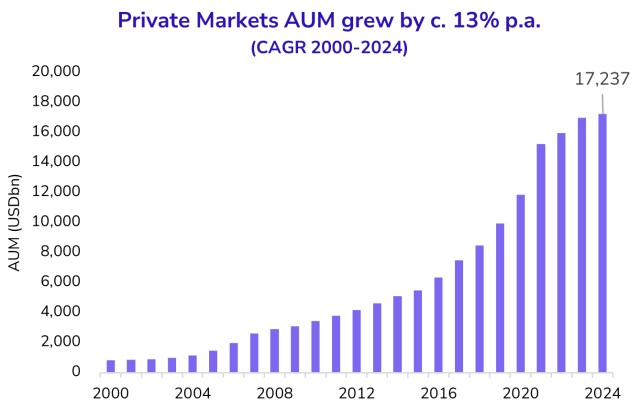
Private markets, once outlier investments with a manageable set of underlying financial instruments, are growing more complex with each passing quarter. These markets now sit at the center of institutional portfolios and have evolved into a sprawling ecosystem of private credit, continuation funds, royalties, and infrastructure with assets exceeding $17 trillion. The breakneck pace of new strategies and new structures has created a deluge of information and data even the best-resourced limited partner (LP) teams struggle to process. Amid this scale and complexity, most LP teams still rely on fragmented workflows: spreadsheets, PDFs, scattered notes, and disjointed data platforms. Decisions often depend as much on memory and intuition as on measurable insight. Artificial intelligence (AI) can markedly improve investment decision outcomes. Sources: Private Markets AUM in USDbn (PE, PD, Infra), 2000-2024, Preqin As the market has grown so has the dispersion between top—and bottom—quartile managers, underscoring the gravity of allocator discipline and process quality. The next evolution in investment analysis isn’t about outsourcing decisions to algorithms but about using AI tools to sharpen human judgment. The AI-Augmented LP uses machines to structure chaos, extract insight, and maintain discipline from allocation to oversight, without giving up control across the investment process to the final investment decision. Sources: Dispersion (Q4 2014 Q4 2024), J.P. Morgan, Deutsche Bank AG. Data as of Feb. 2025 What AI Can and Cannot Do for LPs—and Why It Matters Now Used properly, AI technologies can enhance every stage of the allocator’s process, automating routine work, detecting inconsistencies, classifying strategies, and tracking changes across vintages and managers. Tools such as natural language processing (NLP), machine learning (ML), large language models (LLMs), and autonomous agents can now extract, structure, and compare information from the mountains of documents and data that surround private-market investing. Scalability is where AI adds the most value. With clear prompting and oversight, AI can save hours of work and free up human teams to focus on insight, context, and conviction. The lesson for investment managers is not to reject AI tools but to govern them with allocators as the final interpreters and decision makers. The models do not profoundly think about or understand institutional investing; they predict the probability of a particular outcome which is predicated on data availability and quality. To wit, they can fall short, misread nuances, fabricate information, or overlook subtleties that experienced professionals instinctively catch. AI tools should enhance and support decision-making, not replace it. 6 Ways AI Can Enhance the Allocator’s Workflow Across the investment process, AI is shifting the allocator’s role from data wrangling to decision-shaping. These six areas highlight how LPs can use intelligent tools to cut friction, uncover insight, and apply human judgment with greater precision. 1. Strategic and Tactical Asset Allocation AI can streamline the asset allocation process, making it a continuous and data driven exercise, rather than a once-a-year check-in necessitating multiple spreadsheets. Constraint Extraction and Structuring: Natural language tools can read policy statements, asset and liability models, and regulatory texts, extracting liquidity limits, solvency rules, and capital budgets. These can become structured inputs that dynamically inform portfolio models. Dynamic Calibration: AI agents can track how internal and external factors evolve including mandate changes, market dislocations, or new strategies and then update allocation assumptions in near real time. Scenario and Sensitivity Testing: Machine learning systems can simulate multiple portfolio outcomes, measuring how rate changes, pacing shifts, or rebalancing moves affect capital efficiency and liquidity. Human Oversight: AI should make strategy discussions sharper, not set strategy. Allocators still determine risk appetite and weighting decisions. Principle: AI structures constraints and surfaces trade-offs; allocators set direction. 2. Sourcing and Screening Sourcing in private markets remains fragmented and biased toward well-known managers. AI gives LPs the reach and structure to uncover what traditional funnels miss. Thematic Discovery: Clustering algorithms can identify relationships among managers, strategies, and regions, revealing niche opportunities and spinouts that manual screening may overlook. Continuous Monitoring: AI agents can scan filings, databases, and public disclosures to alert analysts to new launches or team changes that fit institutional mandates. Automated Data Extraction: AI models can parse pitch decks, due diligence questionnaires (DDQs), and fund updates, tagging details like strategy, AUM, and team composition for searchable analysis. Prioritization and Scoring: By comparing extracted data across funds, AI can score opportunities on strategy fit, performance dispersion, and risk factors, ensuring analyst focus where potential impact is highest. Principle: AI filters the noise; allocators find the signal. 3. Due Diligence Due diligence produces the insights that drive investment decisions, yet much of that intelligence is locked in unstructured documents and personal notes. AI makes it usable and comparable. Information Extraction: Natural language models can read private placement memorandums (PPMs), limited partnership agreements (LPAs), DDQs, and financial statements, organizing key terms, performance metrics, and qualitative information into structured form. Verification and Comparison: AI can detect inconsistencies across vintages, highlight changes in fund terms, or identify dispersion anomalies in reported returns. Knowledge Capture: Transcribed meetings and call notes can be tagged and stored, building an institutional memory that preserves insight even as teams change. Human Validation: Analysts review, interpret, and challenge AI outputs, testing assumptions, confirming accuracy, and adding qualitative context that models cannot infer. Principle: AI organizes diligence; humans judge merit. 4. Investment Decision The investment committee (IC) translates analysis into action, but time constraints and uneven data can weaken its decisions. AI strengthens preparation, consistency, and challenge. Structured IC Materials: AI tools can generate clear summaries of due diligence findings, emphasizing anomalies, peer benchmarks, and alignment with mandates. Scenario Simulation: Automated models can test downside cases and concentration exposures, helping the IC visualize portfolio implications quickly. Counterpoint and FAQ Agents: AI can play the role of structured challenger, flagging weak assumptions, surfacing overlooked risks, and compiling recurring questions for efficient discussion. Decision Discipline: By grounding debate in structured data, AI helps committees spend time evaluating judgment rather than locating information. Principle: AI sharpens the question; the IC provides the answer. 5. Monitoring and Portfolio Management Monitoring is too often

The Augmented LP: 6 Ways AI Can Enhance the Allocator’s Workflow Read More »