CIO CIO

Mistral turns focus toward regional LLMs with Saba release

The LLM’s deployment options include an API and local deployment on-premises. Mistral said the local deployment option could help more regulated industries, such as finance, banking, and healthcare, adopt the model. In benchmark tests, such as Arabic MMLU, Arabic TyDiQAGoldP, Arabic Alghafa, and Arabic Hellaswag, Saba outperforms Mistral Small 3, Qwen 2.5 32B, Llama 3.1 70B, and G42’s Jais 70B. Saba also outperforms LLama 3.3 70B Instruct, Cohere Command-r-08-2024 32B, Jais 70B Chat, and GPT-4o-mini in benchmarking tests, such as Arabic MMLU Instruct, Arabic MT-Bench Dev, and Arabic-Centric FLORES-101. source

Mistral turns focus toward regional LLMs with Saba release Read More »

OVHcloud US: Addressing businesses’ complete cloud needs

Based in Reston, Virginia, OVHcloud US is a wholly owned subsidiary of OVH Cloud, Europe’s leading cloud provider. We recently caught up with Pascal Jaillon, Senior Vice President, Product at OVHcloud US to learn more about the evolving needs he sees among customers, the company’s global reach, and the future of cloud services. “One of the things that sets our operations in the US apart is that we draw on one of the largest global networks,” said Jaillon. “OVHcloud owns and operates 43 data centers across four continents – all connected and backed up by our high-speed, robust network with 100Tbps of capacity and 46 redundant PoPs. Within our data centers are more than 450,000 servers that are relied on by more than 1.6 million customers in more than 140 countries. There are very few companies that offer that kind of global scale, let alone through infrastructure they control directly that’s vertically integrated.” OVHcloud’s emphasis is on providing customers with high-performance and ultra reliable infrastructure, including software-defined data centers. This is further reflected by the sheer breadth of the solutions it offers, from a portfolio of bare metal servers to more than 100 IT services that span everything from AI to managed database solutions. Notably, OVHcloud’s bare metal solutions offer unlimited traffic, scalability, and global availability in all of the company’s data centers across the world. And its data centers have one of the lowest Power Usage Effectiveness Ratings, in part because of OVHcloud’s patented liquid cooling systems. “Our global reach is unmatched, but our ability to help our customers address the totality of their infrastructure needs is perhaps our most significant differentiator,” adds Jaillon. “On top of this, we deliver the best-in-class computing services and cloud solutions enterprises – from vibrant startups to leading global brands – need to excel.” Addressing every cloud need OVHcloud’s cloud portfolio includes everything needed for any combination of private, public, hybrid, multi, and sovereign clouds as well as the professional services required to ensure that customers’ IT initiatives deliver as promised, whether they are vibrant startups or mature, global brands and stalwarts. Two of these cloud solutions include a hosted private cloud based on VMware by Broadcom technologies and an OpenStack-based public cloud. OVHcloud also offers direct connections to additional hyperscale environments in addition to fully sovereign cloud options. Jaillon stresses that sovereignty comes down to choice. “For us, sovereignty comes down to choice because there are different definitions of sovereignty in countries throughout the world, in different markets, and among enterprises and institutions,” he says. “That is why we offer sovereign cloud foundations focused on data sovereignty, technical sovereignty, and operational sovereignty as well as one that encompasses all three. Because of this and the importance and value we place on sovereignty, we are a strong and ideal partner for organizations in highly regulated environments such as those in the banking, government, and healthcare markets.” Jaillon also is quick to point out that while most companies are now in the cloud and want to accelerate their cloud migrations and transformations while shifting from costly CapEx to flexible OpEx while reaping the flexibility and innovation inherent in the cloud, a large part of IT remains on-premises. Not surprisingly, customers continue to demand on-premises solutions in order to keep and safeguard crucial data within their four walls. For this reason, OVHcloud launched its On-Prem Cloud Platform in 2024. “Even organizations that are committed to a ‘cloud first’ strategy realize that there are still systems and data that must be kept close,” he says. “The very notion of a multi, hybrid cloud approach is a reflection of this reality.” Building on a longstanding collaboration with VMware OVHcloud’s close collaboration with VMware goes back to 2011 when the company built its first solution based on VMware by Broadcom technologies. Today, Jaillon is bullish on being a Broadcom Pinnacle Partner and the value of VMware Cloud Foundation, VCF, which OVHcloud is incorporating into three offerings, including a managed cloud with dedicated hosts, a shared and managed cloud, and a pre-installed private cloud. “With VCF, you have a solution that delivers the essential services for a high-performing software-defined data center experience that features the best virtualization on the market, enables enterprises to use the trusted and proven solutions they know, and empowers them to dive deeper into the monitoring and optimization of their infrastructure,” he says. “And that’s on top of complete license portability that lets enterprises move from on-premises to cloud, and among different providers with ease and without penalty. That’s a win-win for all involved.” To learn more, visit us here. Look to CIO.com for stories about the industry-leading providers in the Broadcom Advantage Program and insights on how they are helping enterprises succeed in their private, hybrid, and multi-cloud endeavors. source

OVHcloud US: Addressing businesses’ complete cloud needs Read More »

CIO Leadership Live with Nikhil Bhushan, CTO, Starbucks India

Overview With Starbucks India brewing plans of a 1000 stores by 2028, how does the café chain maintain a robust technological infrastructure to keep stores running seamlessly? With their commitment to the environment, how do they contribute to the sustainability goal through technology? Nikhil Bhushan, CTO of Starbucks India spills the beans on this episode of CIO Leadership Live. Register Now source

CIO Leadership Live with Nikhil Bhushan, CTO, Starbucks India Read More »

Global Tech Tales: What Buyers Want | Episode 4: AI Priorities in 2025

00:00 Hi, I’m Matt Egan, as we’ll discover from our conversation today, the world is focused on the possibilities of AI. But what should you focus on your data? Because without it, there is no AI. With HPE, help make your data AI ready and uncover hidden patterns and trends, gain insights for better products and performance. Together, we can see more than possibilities. So you see success. Hewlett Packard, enterprise, unlock ambition. Hi everybody. Welcome to Global Tech Tales. What buyers want. I’m Keith Shaw here to moderate a discussion with other editors from around the world about technology and leadership topics. Joining me on today’s show. Matt Egan, he is the global content and editorial director at Foundry, and he is also representing the UK, and he is myco-host. Ann Lim, editorial director for CIO, CSO and Channel Asia in Singapore, and Marcus Jerräng. He is the editor in chief of Computerworld Sweden, representing Sweden and welcome everyone. Hello. Thank you very much. Hello. All right, so we’re going to talk about AI priorities in this episode. And you know, we’re in 2025 now, and I’m sure that CIOs and other IT leaders have got this huge, huge To Do List, especially when it comes to either artificial intelligence or generative AI. And there was an article recently in cio.com that talked about a lot of the different priorities, and their take was that play time was over, and it’s time to get practical, so that you know their big thing was moving from pilot to production. But we’re also seeing other priorities from from different from different organizations. I’m just going to run down the list really quick, and then I want to ask the panel about some of their impressions and what they’re hearing from their their you know, their colleagues in their parts of the world. So in addition to moving from pilot to production with a lot of the generative AIproducts and projects, we’re also seeing exploring new technologies from AI agents, we’re also hearing about new technologies such as reasoning AI, new models that are out there ramping up and hiring or upskilling existing employees, it can be a priority focusing on the ROI cost of effectiveness of AI deployments. You know, are the are the CFOs starting to get involved with all of this money that’s being spent? And then finally, also cleaning up data, or finishing up previous data projects. There’s a lot of other statistics that we start off with the show here. And for example, there was an IDC report basically saying that 44% of marketing leaders and 42% of contact center leaders say the lack of skilled employees is the greatest barrier to successfully leveraging AI. So it feels like upskilling would be a huge priority. So I want to, I want to ask the panel, Matt, what are you hearing from your colleagues in the UK? Is this list of priorities, what you’re seeing as well, or are there other ones out there that are top of mind? I think it captures it, right? I mean, the reality is that AI has been around for many years, and even the generative AI hype is now half a decade old, right? And this is very much the year where the IT leaders I speak to are feeling the heat on the back of their neck, because organizations need to move from experimentation and projects to demonstrating real world value, the investments gone in, in terms of time, technology, even some hiring, although we should talk about that too. So I’m hearing a lot that the pressure is on for it to show the business leaders efficiencies, new products and services. And of course, what that then means is a whole other raft of things, each of which is worthy of its own discussions. Right? Return on investment, aligning and enabling the broader business strategy. It itself becoming an enabler of business strategy. It’s the point, and I hear this a huge amount, in which it leaders feel that they need to have their organizations prepped for whatever the future is going to be, right? So that means, yes, skills and mindsets within it, but also across the wider business. It means processes, right? How does an idea become a product? How does that develop? What are the metrics, the analytics, the it operating model to support but also enable these things? A big thing, a huge thing, I think, is infrastructure. A lot of it, leaders have been asked to support and lead on AI strategies without business leaders fully understanding the demands and connectivity, on storage, on security, and yeah, you mentioned it right? Data, if you’ve got bad input, you’ll get bad output. But how many organizations have the perfect, centrally accessible database? So I think it all rolls back into this idea that in 2025 play time is over, right? This is getting real, but the reality is, there are a lot of challenges that IT leaders feel, and in the UK, another one of those is the legislation piece. But I’d love to hear from the team, because I imagine we’re hearing similar but also different things in different parts of the world, okay? I want to bring in Ann on the conversation and and you represent Singapore, but you also cover a lot of going at what’s going on in China. So in that part of the world, what are the big priorities for AI? Firstly, Asia, and well, also Southeast Asia is fairly challenging to talk about, if I want to paint an accurate picture of what’s happening here.On the one hand, we’re definitely seeing more organizations across Southeast Asia and Hong Kong, which is also a market that I cover, rolling out AI initiatives this year. And these are go lives right, which means they have already defined the scope, goals and criteria for success. They’ve established a project team and

Global Tech Tales: What Buyers Want | Episode 4: AI Priorities in 2025 Read More »

What’s changing the rules of enterprise AI adoption for IT leaders

The proliferation of open-source AI models — more than 1 million are currently listed on the Hugging Face portal — is driving innovation particularly at the application end. DeepSeek has simply ratcheted up this trend an order of magnitude. We can expect attention to shift this year from model developers to those building business applications harnessing this low-cost environment for innovation. Unlike Microsoft and the PC operating system, Google search, and Meta’s social media, it doesn’t look like any single model developer is going to have a controlling interest in shaping the evolution of AI in the near-term. Co-founder and CEO of IDPartner Systems Rod Boothby sees OpenAI as the dominant model developer so far, offering only unit innovations, whereas Microsoft, Meta, and Google have system innovations that exploit network effects to benefit all system users. Software developers and users have benefited from a stable and widely used PC operating system; website operators can optimize their sites for the dominant search engine; and Google, Instagram, and Facebook users can connect to and follow millions of other subscribers. “Until and unless OpenAI creates a forum where people can interact and profit, it’ll likely remain one model supplier among many, which can easily be replaced,” says Boothby. Building for the enterprise As model costs fall and the value from AI migrates up to the application layer, enterprises are going to have even greater choice in business solutions, either from third parties or those developed inhouse. For CIOs with access to the right resources, building applications internally is now a more realistic proposition. This becomes increasingly attractive in the context of complex business processes that may be unique to enterprises. As the costs of running models fall to near zero, the ROI equation shifts dramatically. According to Forrester Research, the ability to run hyper-efficient models like DeepSeek locally on PCs opens up a new era of edge intelligence, which businesses can deploy across organizations. source

What’s changing the rules of enterprise AI adoption for IT leaders Read More »

AI lifts workforces to new heights of efficiency and innovation

AI is a highly effective, multifaceted tool that can not only improve worker productivity for simple tasks, but can also dramatically transform customer service, cybersecurity, and even business strategy. Content that is augmented and shaped by AI – intelligent content – greatly increases the efficiency of human work. When AI is used effectively, people are not replaced but enabled to work smarter so they can focus on higher-value tasks and strategic decision-making.  A recent study by Foundry finds that because content and data are at the center of business processes, an inability to properly store, manage, integrate, and access that knowledge has a drastic impact on productivity: 84% of organizations indicate information silos have a noticeable impact on employee productivity and operational efficiency; 66% report their organizations have lost business opportunities due to an inability to access data in a timely manner; 54% estimate they spend two or more hours per day just searching for information they need to do their jobs.[i] AI spending and productivity are increasing Kieran Gilmurray, Chief AI Innovator at Technology Transformation Group, says automating tasks with the help of AI allows employees to increase their value to an organization through creativity, problem-solving, and innovation. “Business leaders should use AI to streamline repetitive tasks, allowing employees to focus on higher value, strategic work. In addition, AI can provide real-time insights and data analysis, empowering employees to make faster, more informed decisions which can help companies reach new heights of competitive performance.” When it comes to productivity, finding the right data is consistently the number one pain point hindering employees’ performance, according to Peter Nichol, Data & Analytics Leader for North America at Nestlé Health Science. “Data surrounds employees every day. Companies realize that intelligent content management, the classification and tagging of large volumes of unstructured data (images, spreadsheets, and emails), boosts employee efficiency. AI can be leveraged to automatically classify, tag, and index documents. Natural language processing (NLP) is a great example of using AI to analyze content contextually and automatically categorize documents, saving employees time when searching for information.” Chris Selland, Partner at TechCXO, agrees that automating repetitive tasks should be a basic application of AI but stresses that such low-hanging fruit is just the beginning. According to Selland, AI should also:   Enhance decision-making: By analyzing vast amounts of data quickly, AI can provide insights that help leaders and employees make more informed decisions faster. This is particularly valuable in areas like market analysis, risk assessment, and resource allocation. Personalize customer experiences: AI-powered tools can help us deliver more tailored and personalized services and products, improving customer satisfaction without increasing the workload on our teams. Streamline operations: From supply chain optimization to internal alignment to predictive maintenance, AI can help us identify inefficiencies and streamline processes across the organization. Augment human capabilities: AI isn’t about replacing humans but about enhancing what our teams can do. For example, AI writing assistants can help employees draft reports more quickly, or AI-powered analytics tools can help salespeople identify the best leads. Customer service Gene de Libero, Principal at Digital Mindshare LLC, stresses the value of AI in improving customer experience, both in personalizing customer interactions and in analyzing them. “Marketing leaders can use AI to streamline digital experience content creation by automating tasks like generating personalized messages, drafting reports, and curating content based on audience preferences. AI also enhances customer experience by analyzing interactions in real-time, enabling faster responses and personalized recommendations.” Tom Allen, Founder of the AI Journal, asserts the insurance industry is a ripe field for increasing the value of customer interactions. “Insurance companies whether commercial or retail are prime examples of where AI is useful. It can speed up claims processing, which can have a big impact on customer satisfaction. When employees don’t have to spend nearly as much time deciphering the nuances of an entire claim, they can spend more time with the customer, thanks to accurate AI.” Cybersecurity Kayne McGladrey, Field CISO at Hyperproof and Senior IEEE Member, says cybersecurity is also fertile ground for AI. “CISOs are looking at AI and automation solutions that handle common cybersecurity tasks. These include collecting evidence of control operations for the internal audit team, testing that evidence automatically, and producing regular reports on such things as false-positive cybersecurity events. These tasks help overworked cybersecurity analysts and engineers to focus on the parts of the job that they love without burdening them with excessive paperwork.” How to drive AI adoption It is fine to talk about the myriad benefits of AI, but none will be realized until AI is implemented. Doing so requires cultural change, contends Isaac Sacolick, President of StarCIO and author of Digital Trailblazer. “Organizations should promote a culture of continuous improvement, experimentation, and empowerment. Leaders should articulate the business drivers and illustrate how gen AI-enabled platforms benefit employees, customers, and the organization as a whole.” Scott Gnau, Head of Data Platforms at InterSystems, says the best way to design AI applications is to think holistically. “AI can’t be siloed in just one department or role. A single employee can touch multiple pieces of the business. Teams should build models that incorporate data streams originating from across the business. They should create AI agents that employees can turn to as a single source capable of fulfilling all their needs.” Digital friction and the future of work Lindsay Sterrett, VP of Product Marketing at OpenText, notes that the Foundry research reveals 97% of organizations are impacted by digital friction—the unnecessary effort an employee must use to complete daily tasks, leading to inefficiency, frustration, and missed business opportunities. “By combining AI tools with cloud content management, organizations can reduce digital friction and deliver a huge impact on daily user experiences and organizational efficiency,” says Sterrett. “Intelligent content is critical to eliminating productivity barriers. By removing information siloes, surfacing valuable insights, and connecting content within the context of business processes, AI productivity tools transform business data into actionable knowledge. Very simply, AI productivity is the future

AI lifts workforces to new heights of efficiency and innovation Read More »

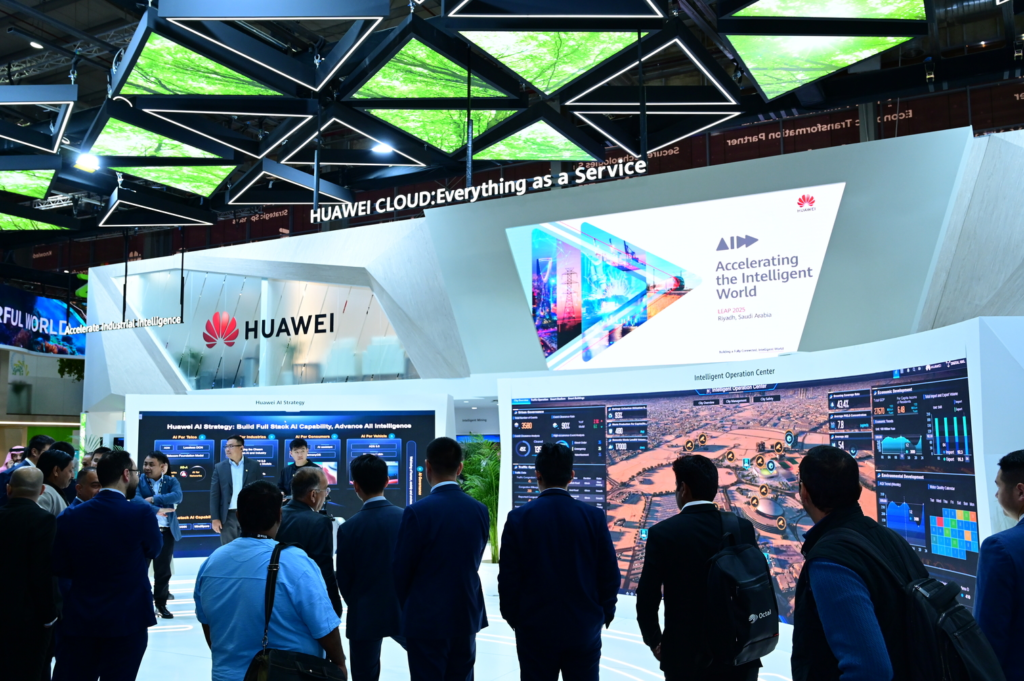
Huawei Cloud fuels Saudi Arabia's AI ambitions at LEAP 2025

At LEAP 2025, Huawei Cloud demonstrated its commitment to Saudi Arabia’s AI leadership, showcasing its Riyadh Region as a pivotal hub for AI development in the Middle East, Central Asia, and Africa. The company highlighted how its sophisticated infrastructure and AI capabilities are empowering the Kingdom to build locally relevant AI solutions while maintaining data sovereignty. Launched in September 2023, the Huawei Cloud Riyadh Region serves over 1,000 customers and 300 partners across government, finance, media, and e-commerce sectors. Its 3AZ architecture delivers low latency rates, boasting 25ms within Saudi Arabia and 100ms across the region. Huawei Cloud has solidified its position by obtaining a Class C license from Saudi Arabia’s Communications, Space, and Technology Commission (CST) and entering the National Framework Agreement (NFA V2.0), enabling direct cloud service procurement by government entities. Alan Qi, President of Huawei Cloud Middle East and Central Asia, stated that Huawei Cloud is transforming how enterprises harness AI. He emphasized that the Riyadh Region provides the foundation for Saudi Arabia to develop AI solutions aligned with its unique needs and values. Huawei Cloud showcased its “AI for industries” approach, highlighting its Pangu model series and DataArts platform at LEAP. The company emphasizes its focus on Arabic language models and localized AI solutions to ensure the technology is accessible and relevant to the Saudi market. source

Huawei Cloud fuels Saudi Arabia's AI ambitions at LEAP 2025 Read More »

CIOs and CISOs grapple with DORA: Key challenges, compliance complexities

The delay in the arrival of the Regulatory Technical Standards (RTS) does not help. “The legislator has not completed the regulatory process,” says Giancarlo Butti, an auditor and expert in privacy and security. “To date, only some of the delegated regulations have been officially released, so financial entities that are, for example, redefining contracts with suppliers will subsequently have to — once the other delegated regulations arrive — add the part relating to the management of relationships with subcontractors. It is very important, in fact, that financial entities carefully consider the risk of the entire supply chain. An aspect that is not considered enough is that the impact of DORA does not only involve financial entities but, indirectly, the entire ICT supply chain.” The complexity of DORA, therefore, is not in the text itself, although substantial, but in the work it entails for compliance. As Davide Baldini, lawyer and partner of the ICT Legal Consulting firm, points out, “DORA is a very clear law, as it is a regulation, which is applied equally in all EU countries and contains very detailed provisions. By comparison, NIS2 is based on principles and is a directive, so each member country has room to maneuver in its implementation. However, DORA is very prescriptive, and this makes compliance complex in terms of time and the human and financial resources that need to be deployed.” source

CIOs and CISOs grapple with DORA: Key challenges, compliance complexities Read More »

Black IT leaders weigh in on what DEI means for IT

Jackson recounts the time he gave a talk on inclusivity, equality, belonging, parity, and justice at a manufacturer, where he sought to break down assumptions. “I said, ‘At the end of the day it doesn’t mean if you’re white, you’re wealthy, or if you’re Black, you’re a Democrat, or that if you have friends who are part of the LGBTQ community that you’re exploring. It’s just people are people,’” Jackson explains. He spoke to the uniqueness of all individuals and the inclusivity being a culture where everyone belongs. He adds, “Diversity for me just means people.” Jackson says a man approached him afterward first confiding that he only attended the talk because it was mandatory and then saying, “I didn’t think you and I could have anything in common. But you opened my mind.” “He seemed to take away the ability to be more collaborative with people who didn’t share his identity,” he says. ‘Inclusive excellence’ advances careers, organizational success Robert Scott, ITSMF vice president and dean of its Global Institute for Professional Development, defines “diversity” as “having a robust mix of people from all different backgrounds that brings diversity of thought and capabilities.” Robert Scott, vice president, ITSMF ITSMF He acknowledges that diversity “does include things that are flashpoints today such as gender, race, and orientation, but it’s also diversity of thought and educational diversity.” He adds, “Diversity is just having a mix. Equity is all about treating those folks on a level playing field. And inclusion is about making people feel like they belong and that they’re treated equitably.” As for the benefits produced by those concepts, he points to research from University of Michigan professor social scientist Scott Page that shows diverse teams operating in an equitable and inclusive environment routinely outperform homogenous teams in terms of business results, creativity, and innovation. Scott knows it takes work to create equitable and inclusive environments where diverse individuals can succeed. He mentored a Black woman whom he says thought hard work alone would get her ahead. Like others who have historically been shut out of the executive ranks, she didn’t realize that she needed more to advance. Scott advocated for her and she eventually became a CIO. Scott coached her on the fact that image and exposure are also needed to progress into management and executive tiers; hard work, how you do that hard work, and who sees it all matter. But image and exposure involve mentoring and sponsorship, which is where many people — particularly first-generation professionals and those from underrepresented groups — can be shut out. If you don’t have access to potential mentors and sponsors “because you’re not included and you don’t feel like you belong, if people don’t engage you, if you’re not invited to the weekend golf outing or out with the group because you’re not welcome there, then you won’t advance,” Scott explains. ITSMF programs such as corporate workshops help show companies those obstacles and give them strategies for removing them, he says. “That’s the power of DEI,” he says, noting he uses the term “inclusive excellence” to describe such work. See also: source

Black IT leaders weigh in on what DEI means for IT Read More »

How AI is empowering tech leaders

When it comes to IT procurement, “time is money” is an understatement. For many organizations, the procurement process eats up six to nine months — an expensive exercise in a time of digital transformation, when both tech agility and organizational leadership define business success. That’s why the CIO of today is no longer solely a manager of technology — they’re also strategic business leaders balancing the fine line between long-term strategy and immediate implementation. The ever-increasing demands of their role are complicated by procurement inefficiencies that can stretch timelines, strain resources, and stall progress. But here’s the good news. AI is helping CIOs reimagine the entire procurement life cycle, enabling organizations to streamline complexity, harness data-driven insights, and speed up the decision-making process. The AI-powered procurement solution: Speed meets strategy AI is revolutionizing procurement by automating routine tasks, improving decision-making, and enhancing efficiency. It’s not just another tool — it’s a game-changer. It addresses procurement’s most pressing pain points while powering a more strategic and visionary approach to organizational transformation.At its heart, this transformation is about people. Why? AI-powered procurement platforms directly support tech leaders in navigating their dual responsibility: dealing with the here and now, while leading their teams into an innovative future. (See also: Under increasing pressure, how can CIOs convince CFOs to invest in AI?) Procurement’s pain points: Roadblocks to progress Traditional procurement processes are notorious for inefficiencies and delays. Here are some of the challenges AI can address:• Lengthy timelines: Procurement delays can triple project timelines, putting organizations at a disadvantage. With AI-driven platforms, procurement cycles are significantly shortened, enabling organizations to launch new projects faster. • Legal bottlenecks: Contract negotiations and compliance reviews often add months to the process. Legal processes, from analyzing commercial contracts to standardizing legal data, billing, and more, are optimized by AI, removing bottlenecks. • Data deficiencies: Seventy-five percent of organizations struggle with poor data analytics, leading to uninformed decisions. AI improves data accuracy. • Collaboration challenges: Traditional procurement hinders collaboration, making it difficult to build trust and achieve alignment with suppliers and internal stakeholders. AI-driven platforms make it simpler for suppliers and procurement teams to collaborate. • Resource strains: Misjudged workloads and overestimated process maturity create undue pressure on teams. AI automates routine tasks, freeing procurement professionals for strategic work. • Legacy system integration: Incorporating new solutions into outdated systems remains a logistical nightmare. AI can take on repetitive tasks — such as data entry or basic queries — while legacy systems handle more complex processes that require human oversight.  • Supplier risks: Evaluating supplier performance and mitigating risks consume substantial resources. AI simplifies this process, identifying risks and ensuring compliance. Strategic procurement: The bigger picture What if we could think of procurement as a strategic catalyst of innovation and growth? Unlike traditional methods that prioritize short-term cost savings, strategic procurement — amplified by AI — focuses on long-term value. By aligning procurement decisions with business goals, AI supports sustainability, enhances supplier relationships, and prioritizes total cost of ownership over upfront price tags. It transforms procurement into a forward-thinking function that supports the broader mission of the business. (See also: How to prioritize AI initiatives: A strategic framework for maximizing ROI.) The CIO as visionary: Enabling leadership with AI As they balance the demands of procurement with the strategic imperative to innovate, AI becomes tech leaders’ most valuable ally. It’s not only about faster processes; it’s about smarter ones that align with the mission and goals of the organization. In this light, the CIO’s hybrid role as both manager and leader comes into sharper focus. AI can eliminate the operational pain points of procurement, granting CIOs the bandwidth to steer their organizations toward innovation while overseeing daily operations. The implications extend beyond individual organizations. AI-powered procurement accelerates access to new technologies, enabling businesses to adapt to market shifts in real time. It fosters agility, empowers teams to focus on meaningful work, and ensures that organizations remain competitive over time. AI everywhere: Transforming procurement We’ve entered the era of “AI everywhere,” where generative AI (GenAI) technologies are transforming the way businesses operate. From streamlining workflows to uncovering actionable insights, these advancements are reshaping software sourcing and vendor management. This means faster, more confident, data-driven decisions — and smarter, simpler procurement. (See also: Where CIOs should place their 2025 AI bets.) How to get started Start with familiar toolsAdopt GenAI tools already integrated into your workflows, like Microsoft 365 Copilot or Google’s Gemini. Freemium options like Otter.ai offer an easy way to explore AI’s capabilities without big commitments. Refine your workflowExamine your procurement processes to identify inefficiencies. AI can automate repetitive tasks and uncover insights to optimize workflows and vendor analysis. Focus on strategic partnershipsLeverage AI insights to prioritize long-term vendor relationships over transactional wins. Collaboration across IT, procurement, and legal teams ensures strategic value aligns with company goals.By addressing inefficiencies, reducing timelines, and providing actionable insights, AI bridges the gap between execution and vision, empowering technology leaders to drive meaningful change. Learn more about IDC’s research for technology leaders OR subscribe today to receive industry-leading research directly to your inbox. International Data Corporation (IDC) is the premier global provider of market intelligence, advisory services, and events for the technology markets. IDC is a wholly owned subsidiary of International Data Group (IDG Inc.), the world’s leading tech media, data, and marketing services company. Recently voted Analyst Firm of the Year for the third consecutive time, IDC’s Technology Leader Solutions provide you with expert guidance backed by our industry-leading research and advisory services, robust leadership and development programs, and best-in-class benchmarking and sourcing intelligence data from the industry’s most experienced advisors. Contact us today to learn more. source

How AI is empowering tech leaders Read More »