CIO CIO

Data flow is transforming manufacturing. Here's how to leverage it.

Over the past decade, the convergence of Operational Technology (OT) and Information Technology (IT) in the manufacturing space has accelerated dramatically, driven by the adoption of interoperable platforms, open standards, and modern industrial software that enable seamless integration across systems. This integration of traditionally disparate systems into a unified framework is fundamentally reshaping how manufacturing operations are managed and optimized today. In fact, the global IT/OT convergence market is growing at a CAGR of 14.5% and is projected to reach $133.7 billion by 2030.  The IT/OT convergence enables a seamless flow of data across the entire enterprise, empowering manufacturers to gain unprecedented visibility into their processes, identify inefficiencies, and make data-driven decisions to improve quality, productivity, and overall performance.  At the heart of IT/OT convergence lies the rise of smart data-driven factories, where Internet of Things (IoT) sensors and devices generate massive amounts of data. This data is what transforms factories into ‘data hubs,’ driving modern manufacturing innovation. Let’s take a closer look at why this shift is redefining the industry. Smart factories: A data-driven revolution in manufacturing Smart factories are redefining manufacturing through the intelligent integration of technology. By harnessing the power of IoT, Artificial Intelligence (AI), and big data analytics, these advanced facilities transform raw data into actionable insights. IoT sensors and devices, deployed throughout the factory, generate a continuous stream of real-time information on equipment performance, production rates, and environmental conditions. This data is seamlessly integrated across OT and further into IT systems, providing a comprehensive overview of operations. Leveraging advanced analytics and AI, smart factories extract valuable insights from this data, enabling predictive maintenance, optimized production scheduling, and real-time decision-making. Digital twin technology creates virtual representations of physical assets, allowing for simulation and optimization not only during the design phase but also throughout the equipment’s lifecycle for monitoring, maintenance, and ongoing improvements. before implementation in the real world. This holistic approach to manufacturing drives efficiency, agility, and competitiveness.  While the potential benefits of smart factories are immense, manufacturers must overcome significant challenges to fully realize their vision. Bridging the OT-IT divide The successful implementation of a smart, data-driven factory hinges on the seamless integration of IT and OT systems. Unfortunately, this integration is often hindered by fundamental differences in these systems and significant security challenges. OT systems, designed for real-time control of industrial processes, prioritize reliability and speed over data accessibility, with many legacy systems lacking sensors or any means to communicate their data effectively. Conversely, IT systems excel at data processing and analysis but often lack the real-time precision and environmental resilience needed for industrial operations.  Raw data from OT systems can also overwhelm IT networks without proper structuring. This inherent incompatibility creates obstacles to data exchange and analysis. Moreover, connecting OT systems to IT networks introduces vulnerabilities to cyberattacks and direct penetration, such as malware and ransomware. Protecting sensitive operational data while enabling data flow is a complex challenge that requires a balanced approach. Red Hat’s enterprise open source software and Red Hat edge solutions effectively bridge the gap between OT and IT systems by providing a standardized, secure platform that can manage thousands of devices and applications across both environments, addressing issues related to system incompatibility and security concerns that often arise when integrating OT and IT systems.  Red Hat leverages an open development model that ensures stability, security, and innovation, enabling seamless integration of diverse systems. The Red Hat platforms extend hybrid cloud capabilities to the edge, allowing for real-time data processing and analysis close to the data source. Red Hat Enterprise Linux (RHEL), for instance, provides a robust and secure foundation for both OT and IT environments. Leveraging an open development model, it ensures stability, security, efficiency and innovation.  A new era of manufacturing is here, but it needs preparation Manufacturers are at the dawn of Industry 4.0, an era characterized not only by the vast amounts of data generated but also by the intelligence derived from this data. Integrating OT and IT systems is a crucial step in this transformation that manufacturers must plan ahead for. Technologies like machine learning and AI are poised to revolutionize integration of OT and IT data and enable the creation and application of sophisticated models that not only improve data-driven decision-making but also optimize operations, enhance predictive maintenance, and streamline workflows across OT and IT environments.  Red Hat empowers manufacturers to thrive in the era of Industry 4.0 with cutting-edge open source based software platforms that helps integrate OT and IT systems seamlessly.  Connect with us today to learn how we can help you in your journey to smart manufacturing. source

Data flow is transforming manufacturing. Here's how to leverage it. Read More »

Is declining AI maturity a sign of progress?

At first glance, the central finding in the newly released ServiceNow and Oxford Economics’ 2025 Enterprise AI Maturity Index study seems surprising: on a 100-point scale, the average AI maturity score dropped nine points from last year. With so much attention, focus and investment in AI, how is it possible that businesses have fallen behind?  The reasons are relatable but telling. The speed of AI is overwhelming and moving faster than most organizations can keep up. In 2022, OpenAI introduced the world to generative AI. By 2024-2025, AI agents took over the spotlight. Now, agentic AI is the new rage. At the same time, AI complexity combined with the uncertainty around unproven pilots and the inherent limitations of basic use cases is holding back companies around the world, and across every industry. Naturally, they’re more reserved and move cautiously.  There are also those leaders who see uncertainty as a catalyst for finding answers and an opportunity for curiosity, exploration and imagination. This group is motivated to speed up, to challenge their assumptions and explore bolder, more ambitious pilots that move the needle. In doing so, they broaden their perspectives and force-function the ability to uncover more impactful AI use cases and outcomes. ServiceNow calls these progressive leaders AI Pacesetters.   source

Is declining AI maturity a sign of progress? Read More »

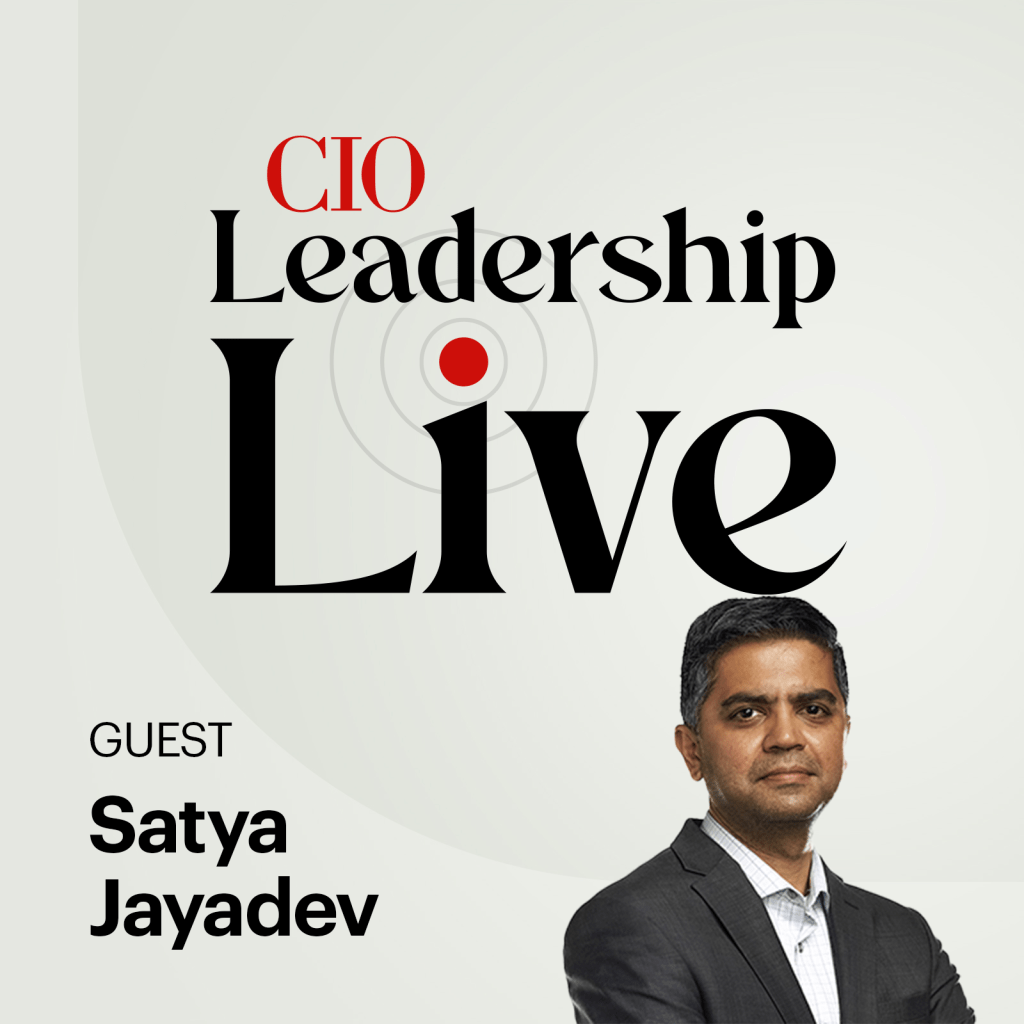
Agentic AI, the tech ecosystem, leadership all topics covered here with Satya Jayadev, Vice President & CIO, Skyworks Solutions Inc.

I think this is, this is a fantastic time to be a CIO. As as we can see that technology is becoming truly limitless, right? And I think many years ago, our organizations were spending a lot of time gathering data and very little time analyzing the data. But then the digital transformation era came in, and it slipped in, so we spent little time trying to gather data and a whole lot of time analyzing data. But that’s not enough. In today’s AI age, we are now starting to see that that time is becoming extremely a very important resource. And I think organizations want to make decisions, and they want to make they want to move faster. So we’re now trying to look at the organization, and we are now saying that we need to shorten the time to analyze through the help of AI, and we need to be more working towards making decisions for the organization, so that we can get a number of these use cases to operationalize and decision making is extremely important for us. So the AI era is all about shortening the time to analyze and increasing the time to make decisions right. And so now this is truly getting into that space, and how do we do it right? We can’t do it with the workforce that we’ve had. We can’t go as fast, and velocities are extremely important. Yeah, and this is the time we need to start looking at our ecosystem and say, our vendor partners. What do you do? There are 30,000 startups in the world. Can we partner with some of them? Can we co develop can we share IPs? They can build a revenue stream while we take our products faster to the market. Can we partner with our customers? They have the same problems that we do? Maybe we can partner and build a solution together. We can also partner with non competing peers, and say, you we have the same issues. Let’s go together. Let’s bring our workforce together. Let’s divide our work and let’s get stuff done. Yeah, I think these are the this is a time where unconventional ways are going to come into the are going to be the that’s the name of the game, in my opinion. And how do we make our our organizations more effective is how unconventional and how innovative that we do. This is a great time for transformational CIOs and not so good time for operational CIOs. Yeah, yeah. source

Agentic AI, the tech ecosystem, leadership all topics covered here with Satya Jayadev, Vice President & CIO, Skyworks Solutions Inc. Read More »

Could Agentforce 3’s MCP integration push Salesforce ahead in the CRM AI race?

Salesforce’s introduction of Model Context Protocol (MCP) and Agent2Agent (A2A) capabilities to Agentforce could push it ahead of the competition in the customer relationship managment (CRM) market, according to analysts. “Their implementation of MCP is one of the most ambitious interoperability moves we have seen from a CRM vendor or any vendor. It positions Agentforce as a central nervous system for multi-agent orchestration, not just within Salesforce but across the enterprise,” said Dion Hinchcliffe, lead of the CIO practice at The Futurum Group. Rivals such as HubSpot and Microsoft haven’t gone this deep on open protocols, Hinchcliffe said. “Salesforce is betting big on agentic composability, and for now, they’re out front.” Key to Salesforce’s success in the integration of agent interoperability frameworks is the introduction of agent gateway — a tool that sits in the Agent Builder inside Agentforce, according to Brian Landsman, CEO of Salesforce AppExchange. “The agent gateway is going to allow you (enterprise users) to provide governance effectively and administration around all of those registered MCP or A2A experiences. If you’re an admin, you can make sure that you’re managing the MCP server or multiple of them appropriately,” Landsman said. While Salesforce is not stopping enterprises from using an MCP server, for security reasons, it suggests using the MCP servers it has listed on the AgentExchange — currently about 35, including from partners such as AWS, Box, Cisco, Google Cloud, IBM, Notion, PayPal, Stripe, Teradata, and Writer. source

Could Agentforce 3’s MCP integration push Salesforce ahead in the CRM AI race? Read More »

Democratizing the data lifecycle: Data visualization tools that drive impact

One of the most valuable assets an enterprise can tap into is its own data — sales transactions, web analytics, and input from third-party data sources. But the value this data holds will remain unrealized until it can be transformed into actionable insights. To unlock data-driven value, IT leaders must be able to quickly and easily explore data and share insights across teams at every stage of the data lifecycle.   Data visualization is a critical first step for enterprise leaders to see and understand patterns, trends, and outliers in data, but it often encounters several roadblocks: data silos, integration complexities, and governance limitations. Without a unified view, data visualization can be incomplete or misleading, often resulting in ineffective decision-making.   Impactful data visualization tools can help enterprises make the most of their data. By leveraging these tools and taking three simple steps, IT leaders can transform raw information into actionable insights.  Enable self-service for full data lifecycle   To get the full value from data, IT leaders need the full picture. Data engineers, business analysts, and data scientists must be able to collaborate across the data lifecycle, and access shouldn’t stop there. Organizations need to enable self-service analytics enterprise-wide. Data visualization tools should be designed to make data accessible to a broader range of users, not just analysts or data scientists.   The most impactful data visualization tools give everyone across the data lifecycle the ability to present data analytics and machine learning models in meaningful ways. Organizations should focus on tools that are easy to use. For example, solutions like Cloudera Data Visualization offer intuitive drag-and-drop capabilities, infused AI, and custom application creation.   Perhaps most importantly, tools should offer integrated security and governance, so users can leverage enterprise data without moving, copying, or creating security gaps. That way, with secure collaboration and transparency across teams, more users are empowered to make data actionable, while ensuring they are viewing data that they should have access to.  Ensure secure, seamless integration  Today, most enterprises have shifted to a hybrid cloud environment in some form. With a hybrid approach, organizations are faced with the challenge of managing data across a growing number of environments, and as data and analytics move between infrastructures, the tools that effectively manage it in one environment may not translate to another. When it comes to data visualization tools, data needs to be integrated seamlessly across hybrid and multi-cloud environments. For enterprise leaders, that means leveraging tools that are built to work across diverse data environments, including on-premises systems, private clouds, and public cloud services.  The focus should also be on tools that work out-of-the-box without requiring extra integration, moving data, or compromising security. This way, users can be more agile and reduce barriers to deliver insights to their peers and broader business teams. Additionally, native integration offers particular benefits for managing user access and governance. Users can log into the data visualization tool and start analyzing the data they have access to, removing the need to replicate policies across multiple tools. Keeping data in one central place, such as a consolidated Open Data Lakehouse, helps prevent data leaks and strengthens enterprises’ security and governance throughout.  Deliver real-time insights  Part of what makes a data visualization solution, like Cloudera’s, so impactful is the ability to deliver raw information to users’ fingertips instantly. Advanced capabilities might include real-time streaming visualizations, embedded machine learning, and natural language querying. Gone are the days when writers built reports using back-end SQL for their end users. Today’s business users can talk directly to their data in natural language and gain the insights they need immediately. Automated reporting is also especially helpful, enabling users to automate analytics dashboards for updates and consumption.   Data visualization should be designed to bring together and drive augmented analytics by surfacing visual analytics across all these sources of data. In a single dashboard or application, users can bring in a pie chart from a data warehouse, a table showing results of a faceted search, or prediction results from a deployed ML model.  Bring data visualization and true hybrid together  Embracing data visualization is about more than just maximizing the value of data. It’s also a powerful means to create trust and confidence in analytical outputs and machine learning models, helping to operationalize those insights across the business. As enterprises adapt their data management and infrastructure, embracing a true hybrid approach, they must leverage tools that are scalable and secure.   Learn more about how Cloudera’s data visualization capabilities are fueling better decision-making and collaboration.  source

Democratizing the data lifecycle: Data visualization tools that drive impact Read More »

Hacking the future of travel for Sabre

Online travel services are big business. Last year they netted $600 billion, and by the end of the decade, they will be worth closer to $1 trillion annually. That kind of value does not come about by chance. It involves turning very complex markets — with countless variables of price, availability, and timing — into seamless products and processes that customers are able to use without being aware of the specifics of the underlying technology. For many airlines, hotel operators, and rail and car rental companies, Sabre is the business behind the business. The company, which works with more than 400 airlines and 50,000 travel agencies, is the source of much of the technology that makes global travel seamless, from booking one flight that connects with another, to adding in hotel reservations, tour bookings, rail travel, or car rental — and doing it all online in just a few clicks. Behind the scenes, Sabre’s constant search for the latest technologies to innovate in travel and enhance customer satisfaction means a big focus on research and development. Keeping pace with technological advances — especially since the explosion of generative artificial intelligence (AI) — is crucial to staying ahead of the competition. Collaboration in the genes Infosys has been working with Sabre for the last five years, essentially as an extension of its product teams, and often in intensive collaborative sprints involving multiple providers and a broad spectrum of software skills. For Sabre, this is a natural way of working, because collaboration is how it began. The company was formed following a chance meeting on a plane between the president of American Airlines and an engineer from another company. The pair quickly realized that an existing message management system could be used to automate the airline’s booking system, speeding it up and reducing the amount of manual work required. Imagine, test, develop. The emergence of generative AI is accelerating Sabre’s product development process and changing it for the better. It is enabling product teams to move more rapidly through the process of designing, developing, and testing use cases, which helps Sabre keep abreast of travel trends and differentiate itself in the market. Collaboration with technology partners has been an integral part of this process. At a recent generative AI hackathon, for example, developers from Sabre, Google Cloud, and Infosys gathered in Texas to apply AI to real-life business problems. This two-day sprint packed a lot into 48 hours. Its mission was to find ways to use the technology to reduce operational costs and increase customer satisfaction by developing cutting-edge support solutions. One project looked at automating email responses to inbound travel queries. While generating a generic email response is straightforward, creating one that is relevant and accurate for a unique query is another matter. But an auto-response that returns informative detail as well as available offers not only ensures a high likelihood of customer satisfaction but also reduces processing time. This means routine queries can be answered faster, with human agents freed up to focus on more complex tasks. To achieve this, Infosys worked primarily with Google’s Vertex AI tool, a machine-learning and generative AI platform, using application programming interface (API) requests to transform the unstructured information in the original email into structured trip bookings by generating valid travel offers for air travel, hotels, and other booking components. The resulting proof of concept speeds up and refines the response process, enabling more queries to be answered without additional resources while lowering costs and streamlining support processes. It also provides richer insights into customer behavior and preferences. Push the boundaries A related task was to develop a chatbot that could accurately process and respond to a wide range of customer queries 24/7, reducing the need for human intervention. The Infosys team researched multiple generative AI approaches and used a range of Google tools such as Dialogflow (a natural language interpretation platform), Gemini (a generative AI assistant and family of large language models), Agent Builder (which develops automated agents), and Vertex AI. Creating sophisticated chatbots that provide immediate assistance and automate routine tasks, while still satisfying demanding customers with highly relevant and accurate answers, is vital to reducing costly human interventions. The hackathon was intended to push the boundaries of AI in real-world business applications, using talented partners to create transformative and industry-leading solutions that enhance customer satisfaction while increasing revenue and reducing costs. Sabre is a powerful advocate for the value of partnership. It will continue exploring opportunities to collaborate with industry leaders such as Infosys to harness the potential of generative AI techniques, artificial intelligence, and machine learning to solve the most complex challenges in travel. Infosys – AI in aviation  source

Hacking the future of travel for Sabre Read More »

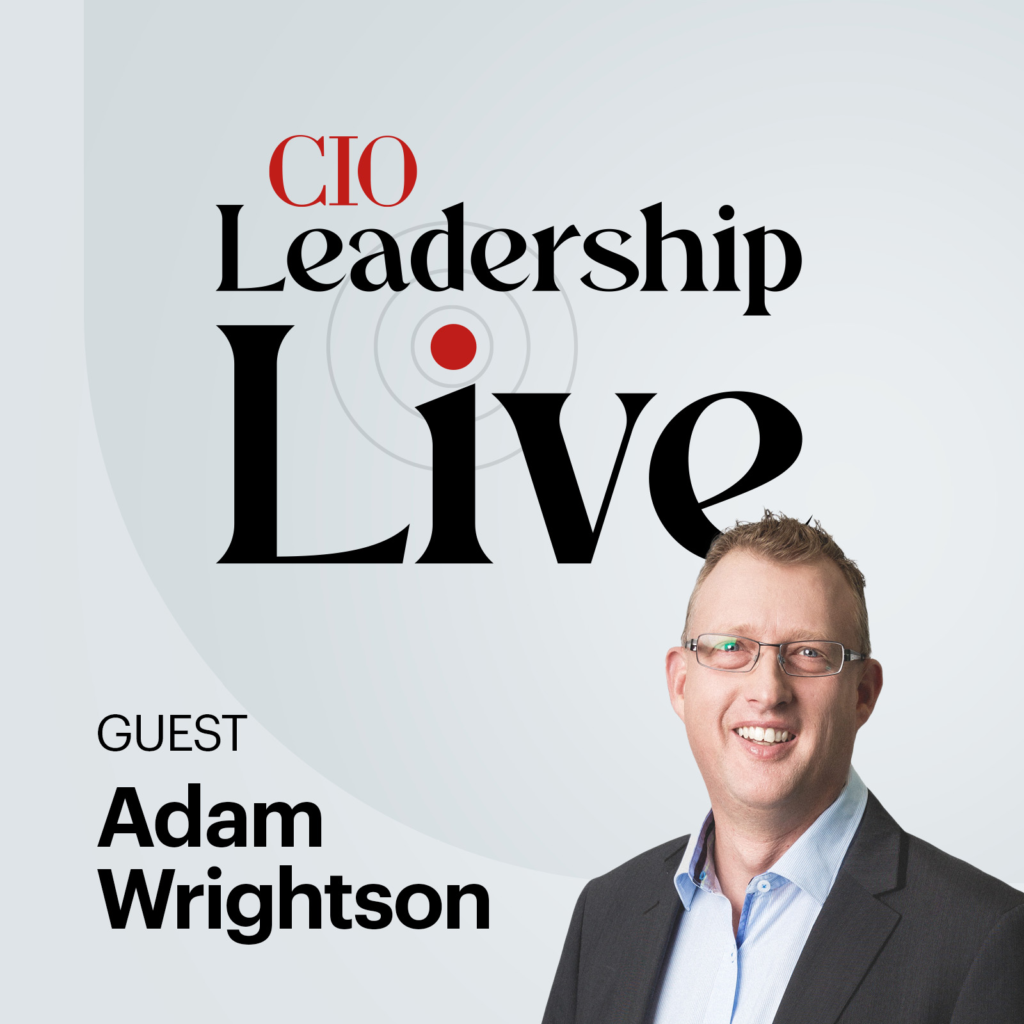
CIO Leadership Live Australia with Adam Wrightson, Chief Technology Officer, HOYTS

Adam Wrightson: Yeah, look, I mean, I’ve been very privileged over my entire career at Hoyts, which I think, as you said, is, it’s been a long time. It’s sort of, you know, it’s coming up on almost three decades. And through that time, I’ve, as I said, I’ve done everything from develop an ERP system, but believe it or not, still runs our mortgage business today, right through to a digital transition of you know, our Hoyts business, from from analog film to digital projection and sound to then In more recent years, you know, leading a digital strategy to, I guess, reinvent our entire digital journeys and our digital workflows for our customers. And I guess that’s really been the focus in the last three or four years. And it started with a strategy which was, I guess, driven in the first instance by our CEO who talked about, I guess, digital being the new battleground for competition. Hoyts had spent a significant amount of money upgrading our cinemas with reclining seats and differentiating that entire customer experience, and we wanted to replicate that, that, I guess, the in cinema experience with, you know, the digital experience, because that’s the the journey that a customer goes through before they come and actually do, the physical experience in cinema. And so we want to be best in class, be best in the world at delivering, you know, the best possible digital experiences. And so that started with, obviously, with a strategy. But the strategy involved not simply just changing some of those workflows or user journeys, but literally re architecting our entire digital infrastructure right from moving to micro services, micro services foundation for for for the code base, hosting it on Azure cloud, all of which gave us the performance and scalability and reliability that we were potentially missing in in our original in some of our earlier iterations of our website, and so that became the focus to reinvent, sorry, to re architect the website, and then on top of lay on top of that, streamlining the the user journeys for for the customers to make that easier. And I think, I think that that is now culminated in in global recognition of the work that we’ve done on both our website and, more recently, our native app, both of which have won their relative awards in the Australian web awards, as well as being a finalist in this year’s webbys for our most recent app development. So I think for me, I guess it reinforces what we’ve achieved and what we set out to do, and getting that recognized, recognition, you know, somewhat, I guess it endorses that in that strategy, in what we’ve achieved.   source

CIO Leadership Live Australia with Adam Wrightson, Chief Technology Officer, HOYTS Read More »

The ERP paradox: How digital transformation reinforces CFOs as data gatekeepers

The evolution of ERP: From operations to financial control  ERP systems originally emerged to support day-to-day operations. The earliest versions, like MRP systems such as MAPICS, early manufacturing resource planning systems and inventory management platforms, were designed for inventory management, manufacturing workflows, procurement and logistics. These systems served as the digital backbone of companies with complex supply chains or production lines. For instance, a large automotive parts supplier used ERP to track inventory, manage factory allocations and plan production schedules.  Over time, ERP vendors expanded their offerings with powerful financial modules automated general ledger (GL), financial reporting, regulatory compliance and audit-ready features. Major vendors like SAP, Oracle and others began positioning their solutions as comprehensive business platforms rather than purely operational tools. These developments became magnets for CFOs. Financial benefits are often easier to quantify and present to the board than operational ones, making finance-focused ERP systems more immediately justifiable. As a result, ERP ownership frequently shifted. It was no longer solely about streamlining operations but increasingly about centralizing financial oversight.  This shift often led to strategic design decisions that favoured finance, where all data, primarily financial transaction data, as opposed to broader operational metrics like customer behavior, supply chain efficiency or production output, sometimes passed through finance first. Operational managers across all departments (collectively referred to as RevOps throughout this article, encompassing all non-CFO/CEO stakeholders, including sales managers, operations managers, marketing managers and other departmental leaders) often found they had limited access to real-time insights, and self-service analytics were frequently delayed or gated, ostensibly to prevent misinterpretation.  source

The ERP paradox: How digital transformation reinforces CFOs as data gatekeepers Read More »

How CIOs can beat enterprise bloat and unlock intelligence

Enterprise AI budgets keep climbing, yet the promised productivity boost remains elusive. In its latest quarter, Snowflake reported $1.04 billion in revenue, up 26 percent year over year, while NVIDIA’s data‑center business surged 69 percent year over year to $44.1 billion. Those numbers suggest wholesale adoption. In board meetings, however, it is still hard to name even one workflow that now runs faster, costs less or secures data better because of AI. The root cause lies in spending priorities. Enterprises continue to pour billions into data‑lake migrations, multi‑year cloud contracts and sprawling vendor ecosystems under the assumption that progress starts with a capital‑intensive overhaul. Budgets swell, automation stalls and data scientists drown in governance checkpoints, while front-line teams are left wondering what changed. Analysts confirm the gap: roughly 85 percent of enterprise AI projects fail, and the share of companies abandoning their AI initiatives jumped to 42 percent last year. Architecture receives funding; outcomes do not, and legacy systems stay untouched.  The legacy trap I have spent 15 years helping large enterprises deploy AI, and I have watched well‑funded programs collapse under yesterday’s playbook, replicating corporate stasis. One global bank I worked with illustrates the pattern. Determined to catalogue tens of thousands of “mission‑critical” data assets, it fielded an army of analysts to trace lineage, permissions and residency by hand. Months and millions of dollars later, barely a quarter of the estate was mapped, and fresh schema changes were already invalidating the work. source

How CIOs can beat enterprise bloat and unlock intelligence Read More »

How Babson College went all-in on AI in higher education

AI behind the scenes: Running smarter college operations GenAI isn’t just changing how students learn — it’s also making life easier for the people who keep Babson running every day. Across departments such as IT, marketing, enrollment, finance, and human resources, Babson’s staff members are using generative AI to save time and work smarter. They’re using it to write and edit content, run surveys, crunch data, conduct research, and help with coding. According to Patria, the marketing and enrollment teams are the heaviest users. Marketing uses GenAI tools within M365 Copilot to write ad copy, emails, and presentations. Enrollment uses Copilot to predict enrollment levels, collect insights from student survey results, and analyze tuition pricing. source

How Babson College went all-in on AI in higher education Read More »