CIO CIO

IDC’s Meredith Whalen reports on accelerating the AI fueled enterprise from new IDC Research

So, as you were saying, you know, industry is really important, and we think going to be an important differentiator going forward. So what you’re going to see is that, you know, last year, when we talked it was a lot of focus on the functional use cases. And a lot of those capabilities will be added into, like, your enterprise applications. And so organizations will have to adopt that just to, you know, be best in class in, you know, HR and finance, but it’s not going to necessarily create a competitive differentiation in the future. And so the industry specific use cases are where enterprises will be able to create unique value. They’ll be able to innovate, drive greater retention, greater revenue streams. And so we expect to see more and more focus on that. So to support the industry, we’ve just come out with our industry specific use case adoption study, where we’ve gone out to over 3000 organizations by 21 industries and ask them for the industry specific use cases. Which ones are you are using? Which ones are you planning to invest in in the next 12 months? So we’re releasing that as well this month. And then the second thing is economic uncertainty. Okay, so we have tariffs, tariff news on a regular basis. So at IDC, we have our black book product, our black book product looks and forecasts all of IT spending around the world, all different categories. And so every month, we come up with an update on that. And we also have been doing a baseline scenario, a downside scenario, and then an upside scenario. So we are monitoring this, and as new information comes in about tariffs and the impact on the economy, we’re factoring that into our forecast as well. Wow. source

IDC’s Meredith Whalen reports on accelerating the AI fueled enterprise from new IDC Research Read More »

Beyond the lakehouse: Architecting the open, interoperable data cloud for AI

AI in the enterprise has become a strategic imperative for every organization, but for it to be truly effective, CIOs need to manage the data layer in a way that can support the evolutionary breakthroughs in large language models and frameworks. They need to move beyond traditional data architecture that is often rigid and siloed, which creates direct impediments to AI innovation and competitive agility. That’s why there is a massive pivot toward AI powered open lakehouse architectures. Built on open formats and interoperable engines, the open lakehouse architecture unifies structured and unstructured data into a single, flexible architecture. Unlike legacy systems, it eliminates silos and supports real-time access, making it possible to power everything from traditional business intelligence to advanced AI and machine learning workflows. The open data foundation: Beyond raw Iceberg to enterprise-grade control For years, the vast scale of data lakes often resulted in “data swamps,” lacking the critical governance and performance necessary for enterprise-grade workloads. While open formats like Apache Iceberg offered a breakthrough by bringing transactional integrity and schema flexibility to cloud storage, they presented a dilemma for CIOs: embrace openness at the cost of fully managed capabilities, or choose fully managed services and sacrifice interoperability. These issues are resolved by the current lakehouse evolution. Platforms like Google Cloud’s expanded BigLake deliver truly enterprise-grade open data foundations – elevating Iceberg to a comprehensive native storage format that benefits from automated operational efficiency and integrated data lifecycle management without sacrificing openness. This means organizations gain the best of both worlds: complete data ownership and the flexibility of open standards, combined with the fully managed experience and robust controls demanded by their most critical workloads. Interoperable engines: Fuel every user on the unified data layer An open data foundation’s full value emerges when it empowers all data practitioners with true engine independence. While analysts need high-performance SQL, engineers and scientists use Spark and Python for advanced analytics and AI. CIOs must ensure that these diverse workloads consistently use a single, shared data copy. Unified runtime metastores are key to this interoperability. A single, serverless metastore – like the new BigLake Metastore, built on open standard APIs – serves as the central control plane for all data. It establishes a single source of truth for schemas, lineage, and access controls to dramatically simplify data governance and accelerate time-to-insight, and guarantees secure and uniform access across all workloads. It ensures that your diverse workforce can leverage their preferred tools, all operating on a consistent, well-governed data layer. Unified catalogs: From passive inventory to active intelligence Traditional data catalogs, mere passive inventories with scattered governance, cannot meet open lakehouse and AI demands. Modern, scalable, unified catalogs are now delivering automated data understanding, proactive quality and lineage for trusted AI, and actionable metadata for generative AI. Modern unified catalogs (e.g., Google Cloud’s Dataplex Universal Catalog) use AI to map metadata across the full data estate—from lakehouses to operational databases and AI models. Their “active metadata” ensures robust governance, complete data-to-AI lineage, high data quality, and powerful semantic search. This dynamic intelligence is also vital for grounding next-gen AI experiences and building foundational trust in AI. Bridging operational and analytical: Unlock the flywheel of activation A pivotal architectural breakthrough is underway, bridging historically siloed operational and analytical data. Where slow and costly ETL processes caused latency and data duplication issues and hindered real-time decisions and AI activation, the modern open lakehouse breaks through these silos. By using open formats on unified storage, organizations derive analytical insights and fuel real-time operations from the same data, eliminating complex ETL, data movement, and associated costs while leveraging comprehensive data richness. This fusion enables, for instance, real-time fraud detection that triggers operational updates, or AI agents that deliver instant personalized recommendations from rich contextual data. Such seamless operational-analytical synergy on an open, intelligent foundation creates the “flywheel of activation” – data is ingested, analyzed, and immediately activated into core workflows. This creates a self-reinforcing cycle of continuous improvement, innovation, and competitive differentiation. This is the true promise of the AI-powered data cloud: An agile, intelligent, and unified data foundation that propels businesses forward in the age of AI. Ready to architect your open data cloud for rapid return on investment? Google Cloud can help. Visit here for more information. source

Beyond the lakehouse: Architecting the open, interoperable data cloud for AI Read More »

From IDC Directions, Ritu Jyoti discusses top research and Agentic AI trends and predictions.

So, a lot of middle level jobs, which actually has advanced levels of automation, of doing some deep research, doing some, you know, creating some reports, creating some customer service interactions. They are very poised for massive disruption, including the software development, which is one on the top of the radar. But at the same time, we’re also looking into some new jobs being created, like ethicists, you know, account managers. source

From IDC Directions, Ritu Jyoti discusses top research and Agentic AI trends and predictions. Read More »

How writing makes you a stronger leader

The takeaway: Write to lead, write to win  There are powerful tools and mental models that can help you think more clearly, write more effectively and make better decisions. One of the best starting points is Richards Heuer’s The Psychology of Intelligence Analysis. Originally written for intelligence professionals, it offers practical strategies for challenging assumptions, avoiding bias and applying structured analytic techniques — the very skills that all thoughtful leaders need.  You’ll also find a deeper understanding of our mental blind spots in Thinking, Fast and Slow by Daniel Kahneman, which explores the two systems of thought — fast, intuitive judgments and slower, more deliberate reasoning. When we rely too heavily on fast thinking, we fall into familiar traps like confirmation bias and the illusion of coherence. Writing is a way to slow our thinking down — to engage our more reflective, analytical selves.  In an age when AI is taking over many low-level tasks, clear, human thinking remains one of our greatest advantages. And writing is one of the most powerful ways to exercise it.  source

How writing makes you a stronger leader Read More »

Why Microsoft is unifying data and AI within Fabric

Digital twin builder to support enterprise automation use cases Another tenet of Microsoft’s data and intelligence unification strategy is the addition of a digital twin builder inside Fabric’s Real-Time Intelligence, a workload that is aimed at analyzing streaming and log data. The digital twin building, which is accessed through a low-code interface in Real-Time Intelligence, will enable enterprises to create virtual replicas of physical assets like machinery and logical entities like customers, in order to help automate entire processes, said Ulag. He said that process automation can be achieved via Fabric as enterprises will be able to link telemetry, real-time data, real-time data analysis, and workflows into an AI-driven application. Constellation Research’s Ni agrees with Ulag’s vision and said that unlike digital twins, which are simply digital models of physical assets, Fabric’s digital twin builder acts as the foundation layer of data intelligence. source

Why Microsoft is unifying data and AI within Fabric Read More »

The great IT disconnect: Vendor visions of the future vs. IT’s task at hand

I suggest each major vendor draft a statement reflecting their understanding of the causes, contexts, and conditions facing each and every one of their customers. Wouldn’t it be interesting to ask your key suppliers for specifics regarding how they see your future? Have you ever asked your primary solution provider to give you a breakdown of how they spend their marketing budget? Millions are spent on things that “Just don’t matter” to working CIOs. The world would be a much better place if we had fewer slogans and more conversations. Reclaiming the narrative of ‘next’ Who is the generational voice for the Age of AI? Is it Jensen Huang, CEO at Nvidia; Sam Altman, CEO at OpenAI; Marc Andreessen, co-founder of venture capital firm Andreessen Horowitz; or Elon Musk, at Tesla, SpaceX, and xAI? Who has laid out a future you can believe in, a future you want to live in? source

The great IT disconnect: Vendor visions of the future vs. IT’s task at hand Read More »

New cybersecurity threats test the mettle of financial services CIOs

CIOs in the financial services industry are in an interesting position these days. Cybersecurity threats have multiplied, seemingly exponentially, but so have risk management tactics – all thanks to artificial intelligence (AI).  Several innovations have opened the door to advancements. AI copilots, for example, have made it more efficient for employees to advise customers. GenAI systems have automated the management of unstructured financial data, freeing up employees for higher-value tasks.  But one of the most confounding new developments has been the rise in hybrid attacks — sophisticated cyber assaults designed to simultaneously exploit vulnerabilities across both cloud and on-premises enterprise environments.. These attacks are now faster, more complex, and more adaptive than earlier iterations, and financial services officials have been scrambling to fend them off.  Rectifying weak threat detection  In one case, a multinational bank with a traditional security information and event management (SIEM) system struggled with threat detection, operational inefficiencies, and compliance challenges. The bank transformed its security operations center (SOC) with an AI-driven SecOps platform that provided seamless integration, compliance, and automation.  As a bonus, it achieved rapid threat detection and response. The reduction in false positives was nothing short of dramatic. The new approach meant a palpable increase in the kind of insights that drive security investment decision-making, supporting the institution’s long-term strategic goals. The rule of thumb of hybrid attackers Hybrid attackers move laterally across cloud and on-premises environments. In the modern cloud environment, workloads scale dynamically, applications deploy in real time, and data is unencumbered as it moves across geographic and organizational boundaries. Because attackers don’t distinguish between cloud and enterprise environments, security strategies must be holistic.  Take the central Asia bank that needed an integration solution for its security tools and a way to automate its existing processes to help its SOC analysts do their work. In order to improve its mean time to detect (MTTD) and mean time to respond (MTTR), almost all the bank’s security technologies were integrated with its new solution, centralizing incident management and speeding up analysis and response times.  The pace of cyberthreats With cloud threats evolving at breakneck speed, financial institutions must prioritize proactive security. While an ideal system instantly detects and blocks runtime attacks to prevent escalation, not all vulnerabilities are created equal. AI’s ability to discern genuine threats from potential risks allows for a more strategic and effective security posture.  Automation is at the core of a robust hybrid financial services security defense. Institutions require systems capable of isolating compromised containers, revoking credentials, and neutralizing misconfigurations swiftly to prevent attacker escalation. A crucial element of this strategy is the seamless integration of cloud defenses with the Security Operations Center (SOC), a vital step in countering hybrid cyberattacks.  Palo Alto’s Cortex Cloud Palo Alto’s Cortex Cloud provides this comprehensive approach, reshaping security operations for organizations handling sensitive information like banks. Built on intelligence, automation, and comprehensive visibility, Cortex Cloud offers AI-driven prioritization and automated remediation, ensuring financial institutions are protected across the entire spectrum—from code to cloud to SOC. Learn what Cortex Cloud can do for your business. source

New cybersecurity threats test the mettle of financial services CIOs Read More »

AI regulation in the US is heating up, but keeping up will become harder

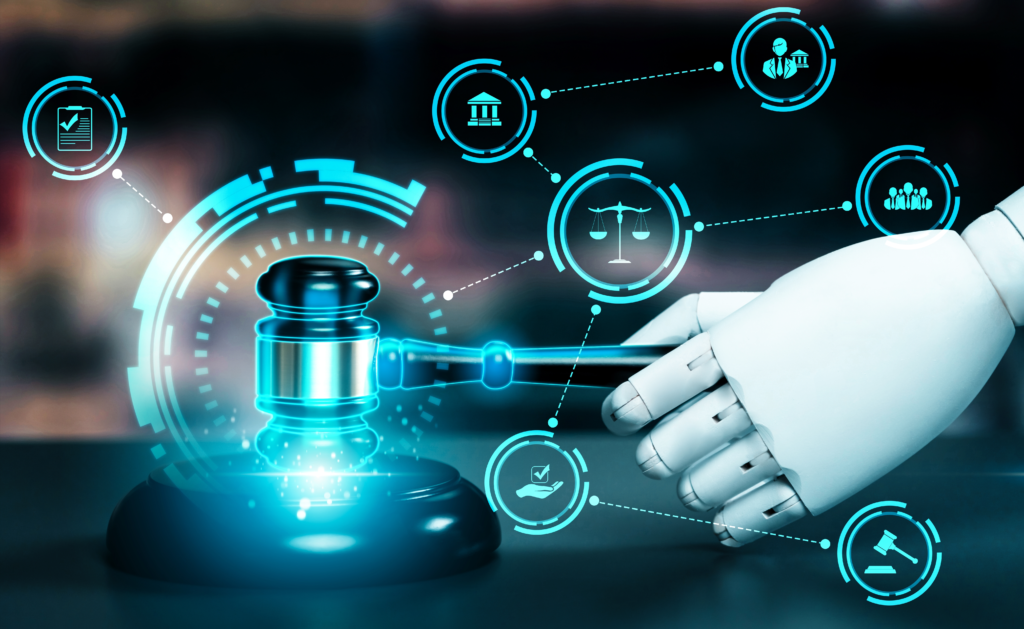
Responsible AI is getting a lot of buzz. With policy conversations around the deregulation of AI, we’ve been led to believe that ethical practices are falling on enterprises, as they largely have since the inception of the technology. This, however, is wrong. The days of “AI washing” are coming to an end. And while we may see lags in federal oversight, that’s not the case for state and local governments.   State lawmakers across the US introduced nearly 700 AI-related bills in 2024 across 45 states. Of the bills that were introduced, 113 were ultimately enacted into law. This is a feather in the cap of true responsible, ethical AI. But it’s also a real challenge for enterprises. While piecemeal AI governance is better than nothing, it makes for an extremely complex and fragmented legal environment.   States like California, Colorado, Utah, Texas and Tennessee are blazing the trail, enacting comprehensive legislation to govern AI systems. Others, including New York, Illinois and Virginia, are advancing targeted and sector-specific regulations. While smaller states remain lightly regulated, partly because they sometimes wait to adopt legislation from larger ones, enterprises operating digitally or across state lines need to be aware of potential breaches of law.  source

AI regulation in the US is heating up, but keeping up will become harder Read More »

Synthetic data’s fine line between reward and disaster

Up to 20% of the data used for training AI is already synthetic — that is, generated rather than obtained by observing the real world — with LLMs using millions of synthesized samples. That could reach up to 80% by 2028 according to Gartner, adding that by 2030, it’ll be used for more business decision making than real data. Technically, though, any output you get from an LLM is synthetic data. AI training is where synthetic data shines, says Gartner principal researcher Vibha Chitkara. “It effectively addresses many inherent challenges associated with real-world data, such as bias, incompleteness, noise, historical limitations, and privacy and regulatory concerns, including personally identifiable information,” she says. Generating large volumes of training data on demand is appealing compared to slow, expensive gathering of real-world data, which can be fraught with privacy concerns, or just not available. Synthetic data ought to help preserve privacy, speed up development, and be more cost effective for long-tail scenarios enterprises couldn’t otherwise tackle, she adds. It can even be used for controlled experimentation, assuming you can make it accurate enough. source

Synthetic data’s fine line between reward and disaster Read More »

Digital leadership in a divided world: 2025 CIO and CTO priorities by region

CIOs and CTOs are no longer just technology gatekeepers; they are now expected to act as commercial leaders, shaping enterprise strategy in line with market realities. However, while digital transformation remains a common ambition, the way it is executed differs sharply by region. From data sovereignty in Europe to AI infrastructure in Asia, today’s global CIO must design with divergence in mind. Based on my work with clients across multiple continents, I have seen firsthand how regulatory, political and cultural factors are reshaping technology priorities in 2025. Although digital transformation can be a universal strategic goal across an enterprise, applying a single, global strategy across all regions is not usually practical or appropriate. Instead, priorities are being shaped by geo-economic, political and cultural contexts. Technology leaders must consider the regulatory environment, local infrastructure maturity and prevailing public expectations within each geography.  Geopolitical considerations are now a standard part of strategic planning. Sanctions, data sovereignty rules, technology export controls and import tariffs continue to influence access to platforms, hardware and vendor partnerships. Regional conflicts such as the war in Ukraine and Indo-Pakistani tensions create disruption and urgency. US-led protectionist policies, UK bilateral agreements and regional alliances like ASEAN all influence procurement, data policy and operating model design.  Cultural values and workforce norms are also significant. From differing public views on automation and biometric ID to contrasting approaches to hybrid work and public-private collaboration, technology leaders must now manage more than just systems and infrastructure; they must also manage trust, compliance and narrative alignment across jurisdictions. To demonstrate the complexities that need to be navigated, I thought it would be helpful to present a comparative snapshot of current global issues that should be influencing CIO and CTO priorities across five regions: Europe, the United Kingdom, the United States, the Middle East and Asia. It draws on data from 2025, real-time global engagement and the broader impact of contemporary geopolitical forces, including the war in Ukraine, renewed US-China trade tensions and the economic realignments triggered by the UK’s recent agreements with India and the United States.  source

Digital leadership in a divided world: 2025 CIO and CTO priorities by region Read More »