CIO CIO

AI 성공의 관건은 ‘분산 데이터 문제 해결’

AI의 잠재력을 활용하기 위해 서두르던 CEO들은 벽에 부딪히고 있다. 무엇보다도 데이터가 혼란스럽다. 새로운 연구에 따르면, AI 에이전트를 적극적으로 도입하고 확장 계획을 세우고 있는 CEO는 61%에 달하지만, 50%는 급속한 기술 투자로 인해 분산되고 연결되지 않은 시스템 구조가 출현하고 있으며, 결과적으로 AI의 잠재력이 저해되고 있다고 인정했다. 이러한 데이터 혼란이 AI의 잠재력을 짓누르고 있다. 최근 몇 년간 AI 프로젝트의 25%만 예상 ROI를 달성했다. IBM이 30개국 2,000명 CEO를 대상으로 한 조사에 따르면, 지난 몇 년 동안 기술 도입이 파편적으로 이뤄짐에 따라 AI 투자의 성과를 저해하는 분산된 시스템 구조가 출현했다. IBM 컨설팅 부문 수석 부사장 겸 책임자 모하메드 알리는 보도자료에서 “CEO들이 AI 도입 시 단기 ROI 압력과 장기 혁신 투자 사이에서 균형을 맞추고 있다”라고 밝혔다. 또 68%의 CEO는 부서 간 협업을 위해 통합된 기업 전체 데이터 아키텍처가 필수적이라고 보고 있으며, 72%는 자체 데이터가 생성형 AI의 가치를 이끌어내는 열쇠로 보고 있었다. QKS 그룹의 실무 담당 디렉터 아만디프 싱은 “파괴된 기반 위에 모델을 겹겹이 쌓는 접근법은 장기적인 AI ROI를 기대할 수 없게 한다”라며, 표면적인 AI 통합은 기술적 부채를 더욱 쌓는다고 경고했다. source

AI 성공의 관건은 ‘분산 데이터 문제 해결’ Read More »

SW 나와라 뚝딱!··· 코드 대부분을 AI가 작성하는 시대 곧 온다

증강 코딩 도구는 자연어 처리 기술을 통해 아이디어 브레인스토밍, 프로토타이핑, 전체 기능 개발, 오류 또는 보안 취약점 검사를 지원다. 이는 실시간 제안(Copilot), 상호작용형 코드 편집(Cursor), 전체 스택 가이드(ChatGPT) 등을 통해 구현된다. 가트너에 따르면 이러한 도구는 코딩 과정을 간소화해 단독 개발자, 빠른 프로토타이핑, 협업 워크플로우에 이상적이다. 생성형 AI 도구에는 스택블리츠 볼트.뉴(StackBlitz Bolt.new), 깃허브 스파크(Github Spark), 러버블(Lovable)과 같은 프롬프트-투-애플리케이션 도구와 블링크IO(BlinqIO), 디프블루(Diffblue), 아이데라(IDERA), 퀄리티키오스크 테크놀로지(QualityKiosk Technologies), 키루스(Qyrus)와 같은 AI 강화 테스트 도구 등이 있다. 애플은 앤스로픽과 협력 중이라고 보도되고 있다. X코드(Xcode)에 AI 코딩 도구를 도입하기 위해 클로드 소넷(Claude Sonnet) 모델을 활용해 AI 생성 코드 작성 및 테스트를 지원할 예정이다. 이 도구들은 내부 테스트 중이며, 공개 출시 계획은 확인되지 않았다. 애플이 이를 언급하는 시기는 다음 달 WWDC 이후로 예상된다. source

SW 나와라 뚝딱!··· 코드 대부분을 AI가 작성하는 시대 곧 온다 Read More »

How to establish an effective AI GRC framework

Make AI governance a team effort AI crosses virtually every facet of the business, so the GRC framework should include input from a broad spectrum of participants. “We typically begin with stakeholder identification and inclusion by engaging a diverse group of sponsors, leaders, users, and experts,” says Ricardo Madan, senior vice president and head of global services at IT service provider TEKsystems. This includes IT, legal, human resources, compliance, and lines of business. “This ensures a holistic and unified approach to prioritizing governance matters, goals, and issues for framework creation,” Madan says. “At this stage, we also build or ratify the organization’s AI values and ethical standards. From there, we set the plan and cadence for continuous feedback, iterative improvement, and progress tracking against these priorities.” source

How to establish an effective AI GRC framework Read More »

Lenovo, AMD redefine mobile productivity with AI-powered ThinkPad

Keith Shaw: Hi everybody, welcome to DEMO, the show where companies come in and show us their latest products. Today, I’m joined by Brent Lamm. He is the Senior Worldwide Product Manager at Lenovo. Welcome to the show, Brent. Brent Lamm: Thank you so much. Great to be here. Keith: We usually do software on the show—AI and all that other stuff. We do have some AI-related elements here, but this is hardware, right? Brent: This is 100% hardware. I represent the ThinkPad group at Lenovo. We’re part of the commercial product sector—strictly ThinkPad. That’s where I’m based. Keith: So I don’t have to ask you what a ThinkPad is, because I think most people know what that is—or at least I hope so. But what are you here to show us? Brent: Today, I’m here to show a brand-new product for us. It’s the next generation of our compact, thin, and light design: the ThinkPad X13 Gen 6. This is powered by the AMD Ryzen™ AI Pro 300 Series processor, so it packs a lot of punch in a very small form factor. Keith: Who is this really designed for? Is it anyone in the enterprise, or are there specific roles that would benefit from the AMD chip? Brent: It’s a combination of both the AMD chip and the hardware. Because this is such a thin, light, and portable device, it’s ideal for mobile users—hybrid workers going between home and office, commuters, frequent travelers—whether that’s on public transit, flying, or working globally. Anyone needing a powerful and efficient system in a compact form factor. Keith: Here’s the question we ask everyone on the show: What problems are you solving? Why should anyone care about this? In the AIPC space, is it fair to say this is the next generation—Gen 2—of AIPCs? Are we doing a better job of explaining why people would need an AIPC now? Brent: Absolutely. This is going after that next-gen AIPC space. With the AMD Ryzen AI Pro 300 Series processor, you’re getting up to 50 TOPS—trillions of operations per second—on the NPU. That means you can run multiple AI applications simultaneously at low power, without draining performance or battery life. So, for mobile users who need high performance and long battery life, this system fits perfectly. Keith: So this is a two-part question. If people don’t have this system, what would they be doing instead? They might have an AIPC from another brand or maybe no AIPC at all. Can you talk about the benefits? Brent: If someone didn’t have a system like this, they’d likely be lugging around something much larger. Go back five years—during COVID, people stayed home. This is a 13-inch device, but during that period, we saw a decline in the 13-inch market. People gravitated to 14-, 15-, or even 16-inch devices since they were stationary. But over the last year to 18 months, people have started traveling again. They want compact, lightweight systems that still deliver the performance and features of larger machines. We didn’t sacrifice on performance or user experience—just packed it into a smaller design. Keith: Want to show off some of the features? Brent: I’d love to. First, let me hand this to you. Keith: Wow. That really is light. It almost feels like it shouldn’t be this light—like a model. Brent: It’s the lightest ThinkPad we’ve ever made—right around 950 grams, just over two pounds. Incredibly lightweight, yet still MIL-SPEC tested. It’s spill-resistant, dent-resistant, drop-tested—just like any other ThinkPad. Keith: I usually feel my laptop in my backpack. I might need to double-check to make sure it’s still in there! Brent: Exactly! And none of that sacrifices battery life. You actually have two battery options: a 41Wh battery for ultra-lightweight users, and a 54.7Wh battery if you want extended battery life. Keith: And that’s user-replaceable? Brent: Yes—completely. Four screws on the bottom, pop off the D cover, two screws for the battery. There’s even a QR code on the battery linking you to support.lenovo.com, where you can order a new one. We even offer augmented reality tutorials to guide you through replacement—and none of this voids the warranty. source

Lenovo, AMD redefine mobile productivity with AI-powered ThinkPad Read More »

Products, not permission slips: A new way to pay for digital value

Each product team goes into annual planning as a “project” — because that’s the language finance still speaks. Tactically, the project is called by the capability or product name: “improve customer acquisition,” as opposed to the “integrate third-party data for personalization project.” That detail may be one opportunity on your roadmap, but it is a means to an end and subject to change. This gets you the full year’s funding in one go. No mid-year scrambling. No fits and starts. Your teams can flex scope as needed and prioritize outcomes, not just output.  Governance becomes much simpler. The 80% of work that lives in product teams gets approved up front and measured by results. The 20% continues through traditional review. Remember, the up-front funding of product teams is a privilege. It can be revoked if, for example, the benefits do not justify the TCO for multiple quarters.  You can stop here. This is a huge win. You’ve modernized the way product teams are funded, made life easier for finance and created a more coherent conversation about value. But if you want the full unlock — if you want end-to-end clarity — there’s one more step.  source

Products, not permission slips: A new way to pay for digital value Read More »

Critical infrastructure CIOs chart a vital new course for IT

Technical knowledge and skills are important, but given the speed, scale, and complexity of change, a mindset shift must come first. The executives all touted the importance of curiosity, creativity, initiative, and a learning mindset. Adams says his senior leadership is focusing on developing and strengthening these and other essential human factors through training on areas like “how leadership properly engage in crucial conversations to ensure progress, build followership, and find common areas of agreement that can lead to moving the ball forward.” He adds that professional and personal resilience is something everyone needs to keep building to maintain balance and calm in the storm. As these visionary leaders are making clear, this is not business as usual — it’s a reinvention of the infrastructure that powers our economy, our security, and our future. The scale and significance echo the boldest infrastructure eras in American history. Just as the highway system enabled the mass movement of people and goods, today’s infrastructure build-out is powering the mass acceleration of intelligence, automation, and innovation at scale. But this time, the pace is blistering. As Redmond points out, “If people are talking about more than a day’s turnaround and delivery of something, it’s too late. The way we think, the way we implement, the way we deliver is different now. Those organizations that embrace it will do well. The organizations that try to fight it and stay in the same old mold will be in trouble.” source

Critical infrastructure CIOs chart a vital new course for IT Read More »

Why patchwork security solutions won’t combat AI cyber threats

Security teams face increasingly fast-acting, and dangerous, threats. And AI is increasing the pace of cyber attacks to the point where conventional responses are no longer enough. According to researchers at Palo Alto Networks, the median time it takes an attacker to penetrate a network and access confidential data has fallen from an average of nine days in 2022, to under 24 hours in almost 45% of cases in 2024.[1] In some cases, “successful” hacks are carried out in just minutes. “We see tens of billions of attacks every day,” says Etienne Bonhomme, a Vice President of France at Palo Alto Networks. “We’ve seen an increase in the number of new attacks, and even zero-day attacks that we’ve never seen before. Currently we see around 2 million new unique attacks every single day.” Bonhomme says this is being driven by threat actors’ use of AI. “Due to AI, there are new tools everybody can access, with the ability to create new threats.” Modernisation, and fighting AI with AI It is not all one-way traffic, however. Defenders, too, are using AI to counter cyber threats. Automation allows security teams to respond far more quickly than they can by relying on human analysis alone. “It allows us to be incredibly effective,” Alistair Wildman, VP for Northern Europe at Palo Alto Networks, says. “It drives the mean time to detect, and mean time to respond, down to minutes… by cutting out the noise.” Human analysts can then respond to the alerts that need action. But, as Wildman cautions, CIOs and CSOs need to be prepared to invest in modern technology, to counter today’s threats. “You need to stay current with technology. The latest releases will have the best features and the best AI. If you’re using technology that is 10 years old, it will be out of date by now,” he warns. Tool sprawl undermines security Investment is clearly needed to stay ahead of cybersecurity threats. And then there is the complexity of today’s security systems, with the enterprises often fielding over 30 “point” solutions. “There are way too many technologies, tools, and platforms,” says Wildman. “A lot of companies have spent the last 10 years buying the best of breed.” This has led to security tools that are poorly integrated, and hard to manage. They often run their own AI engines which causes further fragmentation. A newer approach is “platformisation”. Instead of buying dozens of point solutions, CSOs can use a single security platform to manage threats. These platforms do need to be open, extensible, and able to share data. But used well they will improve security, reduce complexity and control costs. Running on a platform closes the gaps between security tools, gaps that attackers are adept at exploiting. “A great example is Vinci, the global construction, concessions and energy company,” says Bonhomme. “They have consolidated 10s of sources into just two to monitor and detect threats. Previously, if an endpoint was threatened, it could take weeks to check – and even then they may have only reached 80% of the threat scope. Now, using Cortex, they can remediate the entire incident in just a few hours.” “We help our customers simplify and be more agile,” says Palo Alto Networks’ Bonhomme. “You need to be agile to avoid attacks while securely enabling the business to grow.” Find out how to defend your organisation in the face of rapidly evolving threats. Read more here [1] Palo Alto Networks Unit 42 Incident Response Report, https://www.paloaltonetworks.co.uk/cyberpedia/what-is-a-cyber-attack source

Why patchwork security solutions won’t combat AI cyber threats Read More »

Most CEOs think their CIOs lack AI savviness

Many CEOs see the hype about AI but don’t understand the on-the-ground realities of making it work, says Boris Kolev, global CIO at youth training organization JA Worldwide. CEOs sometimes push to implement AI tools that aren’t yet useful because of a fear of falling behind, he adds. “Often, the CEO is going to conferences and events where AI is a topic and speaks with some lecturers and presenters who explain how AI is very easy to implement and is very powerful,” he says. “But when it comes to data security, cost, privacy, compliance, protecting company data, etc., things are very complicated, and CEOs don’t go that deep.” In many cases, there’s a gap between CEO expectations and CIO delivery of AI solutions, adds Yvette Schmitter, cofounder and CEO of IT consulting firm Fusion Collective. Most CIOs and CDOs understand the technology better than CEOs, who are often “dazzled by parlor tricks” from AI vendors, she says. source

Most CEOs think their CIOs lack AI savviness Read More »

CIO50 Australia 2025 nominations open

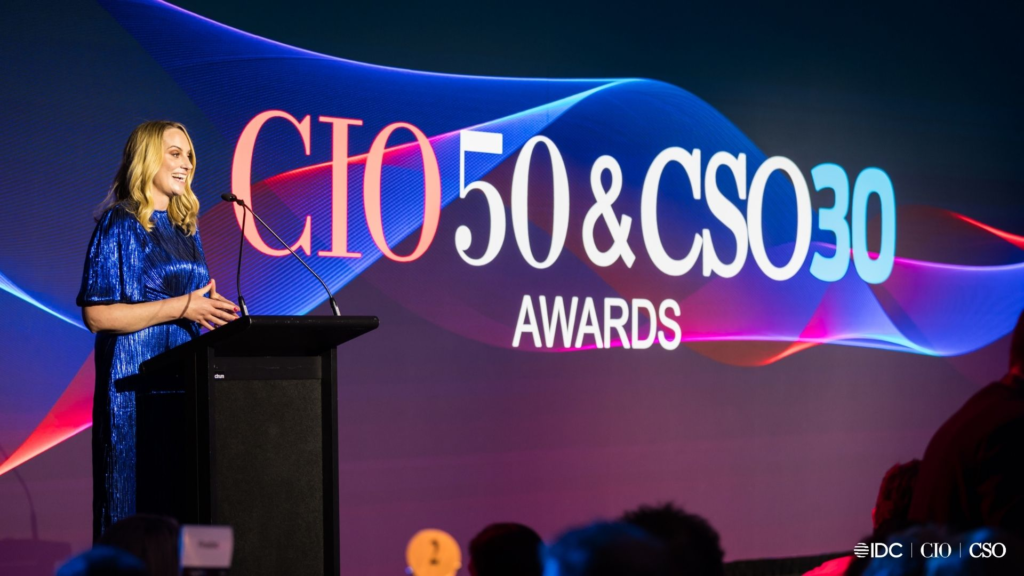
Celebrating a decade of excellence, the prestigious CIO50 Australia Awards are back for 2025 – and nominations are officially open. This milestone year marks the 10th annual CIO50 Awards, which will once again be held alongside the CSO30 Awards in Sydney on September 23. Hosted by CIO Australia, this flagship program recognises the most outstanding senior technology and digital executives driving innovation, transformation, and impact across the country. Open to individuals with overall responsibility for their organisation’s ICT vision and strategy, the awards celebrate those who are shaping the future of business through technology. Nominations can be submitted either by the candidates themselves or by colleagues nominating on behalf of a deserving leader. Entries are accepted online or via downloadable Word documents, which can be completed and returned by email. source

CIO50 Australia 2025 nominations open Read More »