CIO CIO

A strategic approach to legacy platform modernization

This is why modernization is the ideal time to remove redundant, obsolete or trivial data — otherwise known as ROT. This includes, for example, duplicate records, data that is improperly encoded, and data with missing values. 2. Adopt the right migration approach There are multiple ways to switch over from a legacy environment to a more modern one. The fastest but riskiest is the big bang approach, in which you move everything at once. An alternative is phased migration, where you migrate workloads incrementally; this reduces risk, with the tradeoff that it can take longer. A third option, parallel run, involves deploying two complete copies of your applications at the same time — one hosted on the legacy platform and the other in the modern one — and spinning down the legacy workloads only after you’ve confirmed that their replacements are fully up and running properly. This approach minimizes risk, but it’s more complex and costly because it requires running two environments in parallel. source

A strategic approach to legacy platform modernization Read More »

SAP adoption surges in Europe as enterprises embrace cloud

This shift towards cloud-based ERP solutions is evident even in the US. A report by the Americas’ SAP Users’ Group (ASUG) highlights that private cloud environments are the leading choice for those running SAP S/4HANA, with 42% of respondents either already using a private cloud or planning to within the next two years. “The momentum towards cloud-based ERP solutions is evident, driven by enterprise-wide digital transformation strategies and the need for scalable IT infrastructure,” Hungershausen noted. “Larger companies, in particular, are leading the charge as they leverage cloud solutions to modernize their operations.” Growing confidence in RISE with SAP SAP’s RISE with SAP program, designed to facilitate cloud migration, has gained considerable traction. This year, according to the study, which was conducted between January and February 2025, 48% of respondents are either using or planning to use RISE with SAP, compared to just 16% in 2024. Moreover, companies expressing no plans to adopt RISE with SAP have dropped from 61% last year to 23%. source

SAP adoption surges in Europe as enterprises embrace cloud Read More »

How SymphonyAI Uses Generative AI to Revolutionize Enterprise IT and Employee Onboarding

00:00 Hi everybody, welcome to DEMO, the show where companies come in and show us their latest products and services. Today I’m joined by Tim Lawes—he’s the Senior Sales Director at SymphonyAI. Welcome to the show, Tim. 00:10Thanks for having me, Keith. 00:11All right, tell us a little bit about SymphonyAI and what you’re going to be showing us today. 00:14We’re a company with around 3,000 employees spread out across the world. We serve multiple industries, all built on AI technology. We have divisions for financial crime, retail and CPG, industrial, media, and I’m here representing the enterprise IT division. 00:35So, since the company name includes “AI,” I’m assuming you’re going to show us something related to artificial intelligence or generative AI. 00:49That’s a safe bet. The enterprise IT division is actually a backend platform designed for every employee to use. Regardless of company size, say you’re onboarding a new employee—that workflow process can go through our platform. So, from day one, that employee is using our backend system. The main users are IT service leaders—those handling tickets or internal requests. But it’s grown into what we call enterprise service management, because departments like HR and Finance also need to support employees. So, they all end up using our platform. 01:27Okay, so what’s the main problem you’re solving with this? Why should a company care? 01:33It’s really about driving efficiency. Think about onboarding an employee 10, 15, 20 years ago—that might’ve involved circulating emails or leaving sticky notes. Eventually, someone would forget the laptop, or the parking pass, and the new hire would sit idle for days. With our platform, it’s about modernizing those processes—adding workflows, and using generative AI to take it to the next level. 02:04This must require a lot of internal data. You can’t just take a consumer-grade generative AI tool and plug it in, right? 02:16Exactly. The sweet spot is integration. We want our generative AI copilot to connect with as much of a company’s tech stack as possible—up to where it makes sense. That way, it can run API calls across platforms. For example, if a company uses Workday as their HRIS system, we want to seamlessly push and pull data—handling onboarding, offboarding, promotions, insurance—everything in a streamlined way. 02:50You mentioned that without this, companies would rely on endless email chains. What else might they be doing? Would they be looking at other AI tools? What makes SymphonyAI unique? 03:08We’re a highly scalable platform. Sometimes when we enter a new sales cycle, the prospect may be using a competitor—but surprisingly, a lot of large companies don’t have a backend platform at all. They may rely on spreadsheets, shared inboxes, or patched-together tools from mergers and acquisitions. That’s where we come in—providing a single source of truth. Employees can go to one portal, or use our generative AI copilot via Microsoft Teams or Slack. It meets the employee where they work. That way, all departments and support groups use one platform. 03:57All right, let’s dive into the demo. You’ve got a couple of use cases to show us. 04:01Yep, for sure. I’ll start with our service portal and go through a basic end-user scenario. I’m based in Raleigh, North Carolina—and I had to travel here for this interview. Let’s say I’m a new employee and don’t know the travel policy. I can go to our copilot and ask, “How do I travel to Boston?”The copilot is like your best friend at work—the one who’s been there 20 years and knows everything. I can ask it, “I’m traveling to Boston for three days, what’s my travel per diem?” It tells me I have $60 per day (a bit skimpy with inflation!), and it also references our travel policy. It’s actually running an API call and pulling info from a 30– to 50-page PDF, summarizing just the relevant content. I can then continue a natural conversation: accommodations, regional info, etc. If I drop my laptop in a hotel parking lot, I can use Teams to file a service request. It’s the front-facing support tool for any employee. 05:35Let’s flip to the backend now. If I’m a support tech, and I get a ticket that Outlook isn’t working, our AI suggests how to triage it—suggesting workgroup, impact, urgency, assignment, and priority. That speeds up resolution time by getting tickets to the right hands faster. 06:02Now here’s an example of what we can do inside Microsoft Teams. The same capabilities exist in Teams, Slack, Google Chat—wherever conversations happen. Employees don’t need to go to a separate site, though they can if they want. But most of the value comes from meeting users where they are. 06:26Here, I asked the copilot to schedule a meeting with my colleague Jason Uri. It checked his Outlook calendar and returned two available time slots. I picked one, and it scheduled a Teams meeting automatically. 06:50You could’ve used this to book guests for this show! 06:53Exactly. This is just the first iteration. Soon, it’ll book flights, hotels—we’re calling it “AI for Work,” and it’s going to have a lot more functionality. 07:47Now, anytime companies use internal data with generative AI, there’s concern about hallucinations or security issues—like someone accidentally finding out the CEO’s salary. How do you prevent that? 08:15We take a security-first approach. Every customer gets a single-tenant architecture—no data is co-mingled. To access the system, you authenticate—like I did through Teams. The system inherits your roles and permissions. So, if I don’t have access in Workday to see CEO compensation, then the copilot can’t access it either. It uses your token to enforce those same permissions across integrations. 09:02So, how long does it take to install and integrate this? Are we talking six months? 09:12It’s actually very fast. We’ve got around 300 out-of-the-box connectors. The longest part is just figuring out what you want to do—where to plug it in, what problems you’re trying to solve. The platform uses Microsoft’s OpenAI LLM in our Eureka AI platform, so it’s ready to go on

How SymphonyAI Uses Generative AI to Revolutionize Enterprise IT and Employee Onboarding Read More »

How automation forges a sense of community and purpose at 6sense

Wise also discussed data quality, and the cultural shift to deliver and continuously improve on technology excellence. Watch the full video below for more insights. On achieving efficiencies: When you come into a pre-IPO environment, there’s a lot of fast growth. And there’s a lot of situations where your business processes aren’t really as mature as they should be. And because of speed, maybe you’re doing things that are manual but you have to start maturing because end-to-end processes have to be as efficient as possible. So Automation Domination is a program we put in place to change the way the company thinks about efficient automation of processes and not accepting the status quo. We made it a top level company objective and the key result was to save 67,000 manual people hours. The way we came up with that was we took our employee base, about 1,200 employees, and asked, what if we could save one hour per week per employee for the entire year? So that’s the rough math of why 67,000 hours became the goal. The real deliverable, though, was to change the culture and the way people think about what they’re doing. It was also to create an environment where people also thought about what they do and how it affects other groups. On outcomes: Automation Domination breaks down silos and becomes ingrained into our environment. Then for me as a CIO, I know there’s going to be process improvement, efficiencies, and speed that ultimately help our customers. So we focused a lot on the sales and marketing. It was a great experience and it was so successful that we’re doing it again and our next goal is to save 100,000 hours. It’s a pretty awesome experience and now it’s changed the entire culture so I don’t have to cheerlead anymore. You just hear team members and employees talking about it all the time. source

How automation forges a sense of community and purpose at 6sense Read More »

Veeam Data Platform protects, secures and recovers data during disruptions

00:00 Hi, everybody! Welcome to DEMO, the show where companies come in and showcase their latest products and platforms. Today, I’m joined by Emilee Tellez, a Field CTO at Veeam Software. Welcome to the show, Emilee. 00:10Thank you, Keith. I’m happy to be here. 00:12Congratulations! You’re our first virtual demo. 00:15That’s awesome. 00:17So, what are you showing us today? 00:20Today, we’re going to be discussing everything that’s part of the Veeam Data Platform Premium. 00:26Who is this designed for? Usually, within an enterprise, it’s fair to say everybody, but more specifically, is there a role within a company that benefits the most from this product? 00:37Sure! I’ll say it is for everybody, but when we start thinking about specific cyber threats that companies face, CISOs and security analysts are going to love Veeam Data Platform Premium because it helps them with defense and response capabilities. For CIOs and IT operations teams, it highlights gaps in their recovery process. 01:02The idea is that you’re merging the worlds of security teams and IT operations, right? It still feels like, in many companies, those are separate groups that don’t communicate much. There are things that just get “thrown over the wall,” so to speak. 01:16Yep. We want to bring those two teams together so they can coordinate a better response to any type of incident or threat. 01:27What are the main problems you’re solving with this? Why should companies adopt this platform? Does it improve their current security and recovery processes? What would they be doing without it? 01:39Sure. Generally speaking, when you think about Veeam or your recovery process after a cyber event, recovery becomes your number one priority. Everyone should be backing up their data—that’s table stakes. But having a breadth and depth of recovery features and functionality, so you can restore your data where and when you need it, is critical. That’s where our platform helps organizations increase their cyber resilience, ensuring they have full flexibility and access to their data. 02:17Let’s jump into the demo. Show me some of the key features of the Veeam Data Platform. 02:22Perfect. First, let’s talk about the Veeam difference. Take, for example, an attack from a ransomware group like Akira. If we look at a company without Veeam, a threat actor might gain access to the environment unnoticed. There’s no notification, and no way to determine how they got in. With Veeam, companies can detect brute force login attempts within vSphere and monitor unusual behavior on specific VMDKs. Our Veeam ONE analytics and monitoring platform provides robust, built-in alarms. These alarms monitor vSphere, Hyper-V, backup and replication environments, and even protect items within Microsoft 365. One key feature we showcase is possible ransomware activity detection. This runs on the actual virtual machine in production—not just before backup occurs, but as the virtual machines are active. We have predefined rules and logic that can trigger alerts when suspicious or anomalous behavior is detected. We can assign these rules to specific workloads and notify security administrators for further investigation. Additionally, we can take automated actions, such as isolating a compromised virtual machine from the network, either automatically or with approval settings. 04:21Are these settings designed to prevent security teams from experiencing alarm fatigue or dealing with too many false positives? 04:34Yes, exactly. The system is configured to reduce unnecessary alerts while ensuring critical threats are flagged appropriately. Let’s take a look at another feature. When a threat actor gains access and moves laterally within an environment, how does Veeam notify organizations of this potential intrusion? With Veeam, not only can we detect anomalies on production machines, but we also recognize that cybercriminals often target backup servers first. They aim to corrupt or delete backups to ensure they get paid in a ransomware attack. Veeam can scan endpoints and backup servers to detect unusual activity. For example, we can identify brute force login attempts on backup servers or flag malware detection events within our software. We can also detect encryption attempts, unauthorized tools for data exfiltration, and suspicious file types. 06:03Wow! I didn’t even realize attackers often target backup servers first. Their strategy makes sense—if companies have backups, the attackers try to compromise them before stealing data. Is that what you’re seeing? 06:22Absolutely. In our annual Ransomware Trends Report, 1,200 organizations affected by ransomware reported that 96% of the time, threat actors targeted their backups first—trying to corrupt, delete, or encrypt them. 06:43So, what happens next? 06:48Let’s say a threat actor gains access and begins encrypting or exfiltrating data. Over the past two years, Veeam has enhanced its security scanning capabilities to help customers identify clean recovery points. For example, our malware detection system can identify:Encryption activity: Detecting mass changes in production data.Suspicious files: Monitoring for onion links or unauthorized tools like Mimikatz.Signature detection: Identifying malware with polymorphic capabilities or leveraging existing antivirus solutions for scanning backups. We also allow customers to integrate Veeam with third-party security tools. If a security tool detects an encryption attempt, it can trigger an out-of-band backup automatically. 09:10At this point, if a company doesn’t have Veeam, is their data already compromised? If they do have Veeam, does this stop the attack, or does it just prevent things from getting worse? 09:29With Veeam, they can begin stopping the attack. Our platform enables:Out-of-band backups: Capturing as much clean data as possible before it’s encrypted.Security alerts: Notifying security teams of active threats.Incident triage: Understanding what’s been compromised and preparing for recovery. By proactively detecting attacks, we help organizations recover without reinfecting themselves. 13:29I like that this isn’t just about preventing attacks but also helping companies respond effectively. Security isn’t 100% foolproof, so it’s crucial to have a plan for stopping and recovering from incidents quickly. 14:12Exactly. Security professionals talk about defense in depth—having multiple layers to prevent intrusions. I like to think of it as defense in response—giving organizations multiple ways to respond and recover. 15:35Before the show, we discussed your security integrations. That’s a big advantage since companies don’t want to replace

Veeam Data Platform protects, secures and recovers data during disruptions Read More »

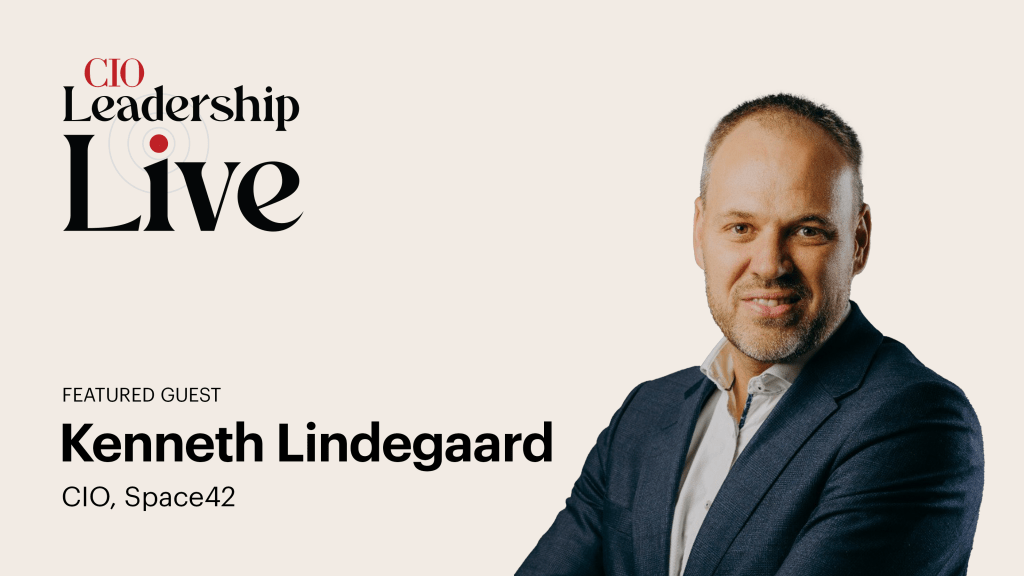
CIO Leadership Live Middle East with Kenneth Lindegaard, CIO, Space42

Overview In this episode, we’re joined by Kenneth Lindegaard, the visionary CIO of Space42. Kenneth brings a unique blend of strategic insight and hands-on expertise to the table.As CIO of Space42, Kenneth is at the forefront of integrating cutting-edge technologies such as AI, satellite communications, and geospatial insights. His mission is to optimize these technologies for both operational efficiency and customer satisfaction, driving digital transformation that enhances business outcomes. Join us as we delve into Kenneth’s approach to balancing innovation with operational demands, and explore how he is shaping the future of IT in the Middle East. Register Now source

CIO Leadership Live Middle East with Kenneth Lindegaard, CIO, Space42 Read More »

Beyond ChatGPT: Secret robotics plans and the $38 billion humanoid revolution

In the next 30 days, the company will show something that no one has ever seen before in a humanoid robot. Figure has secured several large companies as customers, including BMW. The company plans to deliver 100,000 robots over the next four years. AI and robotics — a symbiotic development The exponential advances in AI, particularly in large language models and machine learning, are laying the foundation for the next generation of humanoid robots. AI-driven humanoids show great promise for industrial applications, from manufacturing to logistics and beyond. However, challenges remain, including regulatory frameworks, cost efficiency, and hurdles to market adoption. As AI and robotics continue to develop in parallel, the coming years will determine how seamlessly these intelligent machines can be integrated into human-centered environments. Whether in industrial automation, personal assistance or even entertainment, the AI-first approach is shaping a future in which humanoid robots will play an increasingly central role in society. source

Beyond ChatGPT: Secret robotics plans and the $38 billion humanoid revolution Read More »