Forrester

AI, FinOps, And Digital Sovereignty Lead Global Cloud Trends

Tech executives at global organizations manage their public cloud environments by keeping into account many different factors worldwide, from different regulations to country-specific technology and business requirements. There are a few trends that are stable, though, as we found out in our research. Every year, we produce a series of reports that dive into cloud adoption data in different regions. We have published the first three reports in the 2024 series: The State Of Cloud In The US, 2024; The State Of Cloud In Canada, 2024; and The State Of Cloud In Europe, 2024. We will also publish six APAC-focused reports over the coming months that cover Australia and New Zealand, India, China, Japan, Malaysia, and Indonesia. Each report also includes a map of the data centers in these regions from the global and regional cloud vendors. Global Trends Have Their Own Local Peculiarities The importance of cloud, together with the preponderance of global vendors in each local market, has recently cast new focus on digital sovereignty at global organizations in an attempt to reduce dependability on foreign legislations and grant autonomy and business continuity independent of the cloud vendors’ applicable jurisdiction. In 2024, the cloud continues to serve as the heart of major technology innovations, especially amid the age of AI. Cloud vendors are opening new data center regions to support their customers’ demand in the AI and generative AI space. As an example, Microsoft is set to invest €4.3 billion just in Italy to enhance its cloud and AI data center infrastructure. In addition to AI, companies are prioritizing FinOps to get more out of their cloud spend. Enterprises adopt FinOps for collaboration, accountability, and transparency on cloud spend — and this is gaining traction among tech executives, not just cloud leaders. Here is a sampling of our findings from our recent research on cloud adoption: Digital sovereignty norms influence cloud choices in the US, Europe, and Canada in different ways. While enterprises in the US, Europe, and Canada say that they value digital sovereignty, the three markets are moving in different directions. More than half of US enterprises say digital sovereignty “completely” constrains their choice of cloud vendor, which is more than those in Canada and Europe, but the US federal government continues to take a laissez-faire approach to the cloud overall. The European Union and its member states have laws in place that refer to digital sovereignty and serve as models for non-European legislation in cloud and elsewhere. In 2024, the EU and its member states continued to promulgate cloud regulations that touch on areas around and beyond data residency, such as France’s SREN Law, which aims to make the cloud market more competitive. Meanwhile, Canada loosened its data residency laws. For example, British Columbia’s Freedom Of Information And Protection Of Privacy Regulation and Quebec’s Privacy Legislation Modernization Act ignored the question of digital sovereignty. AI is driving cloud adoption and talent hiring in North America and Europe. Enterprises in both North America and Europe are hiring and retraining their staff so they can better utilize AI. For example, some US enterprise cloud decision-makers in 2024 are either hiring new staff (24%) or retraining existing staff (25%) for AI and machine learning (ML). The National Hockey League uses cloud-based AI/ML to track player performance and the likelihood of players scoring goals. Vodafone used Google Cloud to build a unified AI platform, giving its data scientists prebuilt pipelines, standardized tools, and automated deployments to cut the amount of time it takes to move from proof of concept to production-ready AI solutions. This platform allowed Vodafone to reduce its AI development time from proof of concept to production from 20 to two weeks. FinOps is a priority in North America and Europe to optimize costs and cloud usage. Many enterprises are adopting FinOps to optimize their own cloud usage: 68% of North American enterprise cloud decision-makers and 56% of European enterprise cloud decision-makers have their own FinOps practices. Enterprises such as Software Solutions Integrated (SSI) and Siemens Mobility Services use cloud cost management and optimization tools — Virtana Optimize and CloudCheckr, respectively — to optimize their cloud spend. To help you navigate the cloud markets in each of these regions and beyond, here are a few steps that you can take: If you are a Forrester client and want to learn more about this topic, please schedule a guidance session with me, Dario Maisto, senior analyst. Explore the links to related research included below. Not a Forrester client? Please contact the Forrester account team. source

AI, FinOps, And Digital Sovereignty Lead Global Cloud Trends Read More »
GDPR Isn’t Enough: Navigate Privacy Regulations In APAC

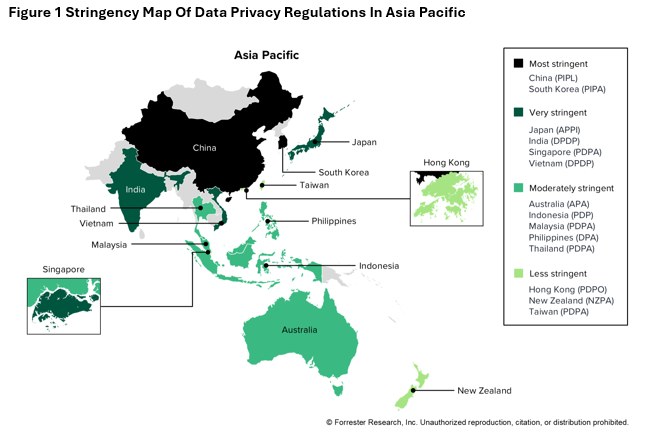
According to Forrester’s Business Privacy Survey 2024, 46% of privacy decision-makers in Asia Pacific (APAC) report full compliance with GDPR. However, compliance with the EU’s GDPR alone isn’t sufficient in APAC, where local regulations may impose additional or different requirements. My recent report, “Navigating Privacy Regulations In Asia Pacific,” highlights the key APAC privacy regulations that are most relevant to marketers. APAC Privacy Regulations Differ From GDPR In Three Key Aspects In APAC, local privacy regulations may impose different or additional requirements compared to GDPR. Key ones include: Data localization. GDPR ensures data protection regardless of location but doesn’t mandate specific country storage. APAC regulations like China’s Personal Information Protection Law (PIPL) and Vietnam’s Decree on Personal Data Protection (DPDP) require certain data to be stored within their countries. Cross-border data transfers. GDPR allows transfers with adequate protection or explicit consent. China’s PIPL and Vietnam’s DPDP require government approvals and security assessments. Japan’s APPI requires opt-in consent. Legitimate interests. GDPR allows processing for legitimate interests like marketing, provided it doesn’t override individual rights. In APAC, only the Australian Privacy Act and Singapore’s Personal Data Protection Act recognize legitimate interests; others require consent. APAC Privacy Regulations Demonstrate Various Levels Of Stringency Many APAC privacy regulations have adopted GDPR-like principles, such as data subject rights, consent requirements, and breach notification obligations. However, the details and stringency vary across the region (see Figure 1).   Navigate Three Key Dimensions That Are Most Relevant To Marketers Marketers should focus on the components of these regulations relevant to consumer engagement and marketing activities. Emphasize the following three key dimensions: Fundamental requirements. To conduct compliant marketing, marketers need to understand APAC regulations’ various requirements around consent and opt-out (including cookies), sensitive data and children’s privacy, data localization and cross-border transfer requirements, and penalties for breaches. Transparency, minimization, and security. Marketers need to follow APAC regulations’ varying requirements on data use transparency, minimization, and data breach notification, which are vital for compliance and consumer trust. Data subject rights. APAC regulations also vary in terms of granting consumers rights to know, access, correct, object, limit, transfer, and delete their data. Some regulations address automated decision-making, which is important for marketing automation and AI. Marketers: Adopt A Proactive Privacy Strategy Understanding the most relevant privacy requirements in APAC and meeting all compliance requirements are only the first steps for the region’s marketers. The goal is to adopt a proactive privacy strategy in marketing, earn customers’ trust, and be truly privacy-first. Forrester clients can access the full report to navigate the region’s complex privacy regulations, benchmark themselves against GDPR, and adopt a proactive, privacy-first marketing strategy. To find out more, schedule a guidance session with me. source

GDPR Isn’t Enough: Navigate Privacy Regulations In APAC Read More »

Serverless, Sovereignty, And (Of Course!) AI: Our Takeaways From the 2024 Public Cloud Platform Waves

AI rightly has taken center stage in the public cloud platform market, but it’s not the only major transformation underway. First, cloud users are changing the way that they provision and consume cloud services, with serverless-first approaches gaining momentum. Second, sovereignty concerns are carving the market into regional and national components amid trade tensions. Each of these key trends are featured in the public cloud platform evaluative reports, the result of our collaboration over the past year to identity evaluation criteria in a rapidly changing technology environment and assess competitive differentiators. The most recent of our reports, The Forrester Wave™: Public Cloud Platforms, Q4 2024, highlights how hyperscalers are remaking core infrastructure services for the generative AI (genAI) moment with a focus on data, even as they push up the tech stack to reach business users with AI-infused versions of services that operate largely beyond the boundaries of traditional enterprise IT. The Forrester Wave™: Public Cloud Platforms In China, Q3 2024, by Charlie Dai, shows Chinese cloud providers driving platform innovation AI services and foundation model support across several domains. The Forrester Wave™: Public Cloud Platforms In Europe, Q3 2024, by Dario Maisto, puts a spotlight on how European users’ (and their governments’) priorities on sovereignty and sustainability have created an opportunity for Europe-focused cloud providers to offer competitive options up and down the tech stack. Forrester clients have access to the full reports. Here are some key points: The serverless-first (and often only) public cloud is here. Cloud providers and customers have been wrestling with both legacy technologies from data centers and the open-source complexity of cloud-native technologies such as Kubernetes and function as a service (FaaS). Today, Kubernetes and FaaS have become implementation details — checklist items for cloud customers who want services that provide a pipeline into nonproprietary open-source-based services but who don’t want or need to put resources into complex platform build-outs and integrations. The Chinese cloud providers are particularly innovative on this front, for example, with serverless machine learning/deep learning and support for mini-app mobile development. Digital sovereignty and cloud sustainability influence cloud procurement in Europe. European regulators are setting the pace on digital sovereignty and cloud sustainability. Here, digital sovereignty moves beyond the cloud infrastructure domain to involve hardware, software, network, and data, each with broader implications. The most obvious example is in-region (or, sometimes, in-country) data centers and supply chain controls. But a cloud provider that offers European operations physically, legally, and logically separated from the rest of the world isn’t necessarily a sovereign cloud vendor, which requires adherence to a mix of regulatory and certification regimes. Cloud sustainability is gaining traction, too, as providers face spiking energy usage from power-hungry genAI services. In both arenas, Europe is set to influence globally. Cloud AI moves from scattershot to orchestrated services. The requirements of genAI and the global scale of public cloud made it inevitable that hyperscalers would dominate the AI boom, albeit with disruptive upstarts and resurgent older tech providers getting into the mix, as well. Our evaluation of cloud provider AI offerings focuses heavily on the infrastructure firepower. We also looked at both AI-assisted TuringBot developer tools for general application development as well as others specifically for developing AI applications and agents. We paid particular attention to genAI-enabling technologies such as retrieval-augmented generation, which is often critical to move foundational models into production. While these services are not all yet generally available, the essentials are there for users who are prepared to accept complexity to achieve genAI results in the near term. For more details, Forrester clients please read the global, Chinese, and European reports and book an inquiry or guidance session to discuss. If you’re not a client, be sure to attend the upcoming Predictions 2025 webinar on January 30. source

Serverless, Sovereignty, And (Of Course!) AI: Our Takeaways From the 2024 Public Cloud Platform Waves Read More »

It’s Time To Update Our Smart Manufacturing Tech Tide, And We Need You

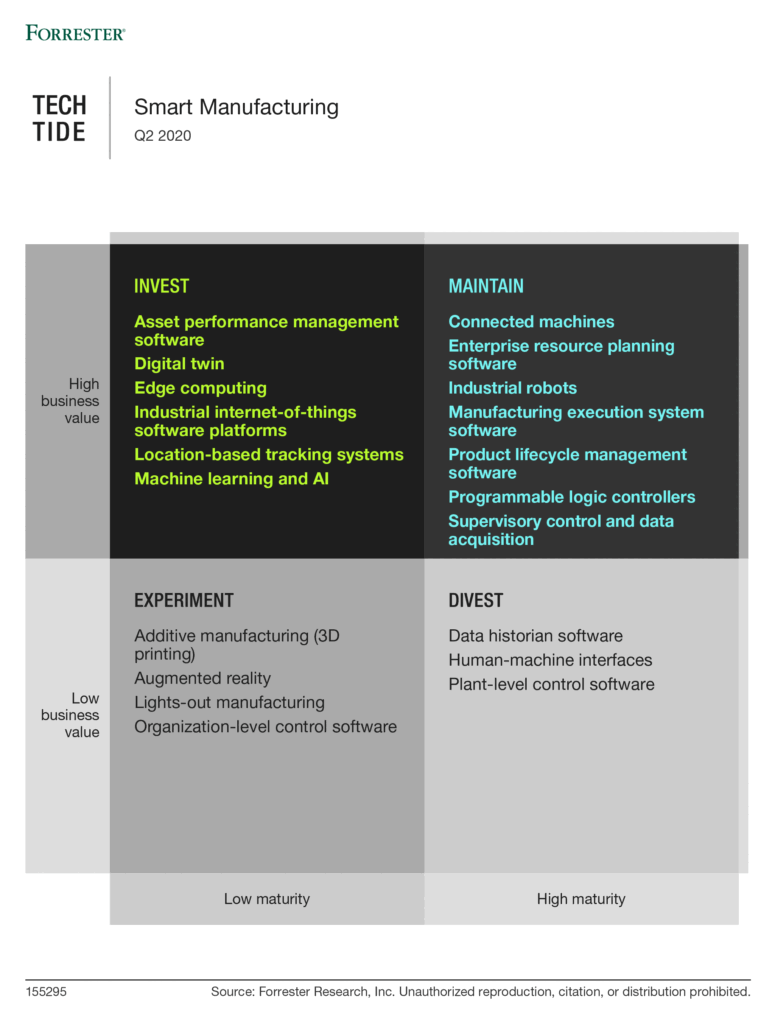
The Forrester Tech Tide: Smart Manufacturing, Q2 2020 presented an analysis of the maturity and business value of 20 technology categories that supported smart manufacturing back in 2020. Like other Forrester Tech Tides it offered a visual representation of the state of technologies in the space, plotting them against the two dimensions of business value and maturity. Twenty technologies that mattered in smart manufacturing back in 2020 A lot has changed since we completed this exercise in 2020, and it’s time to draw up a new list of the technology categories that are going to matter in 2025. A survey will be sent out in January We use a survey to validate our perspectives on the technologies that should be included, to confirm their position on the graphic, and to gather good examples of use cases and relevant vendors to highlight in the report. The research team is currently drawing up our list of (client and nonclient) vendors and other stakeholders to approach with the survey. If you’re a Forrester client and want to be sure you’ll receive a copy in January, please contact your account team and let them know that you’re interested. source

It’s Time To Update Our Smart Manufacturing Tech Tide, And We Need You Read More »

“Managed Services-as-Software” Offer A Vision for the Future of Managed Services

Traditional managed services have long been caught in a fundamental dilemma: achieving high-quality service delivery while maintaining cost-effectiveness. After offshore and cloud, managed services are being reshaped by AI at a fundamental level, introducing a new services paradigm that blends performance-based models, automation, and human-centric refinement. This shift is happening across industries, from HR and supply chain to help desk and manufacturing operations. AI-led services represent the next wave, potentially replacing or significantly augmenting human capital. Contact Centers As The Tip Of The Spear Consider the contact center, a historically manual, low-margin cost center. Enter the AI-powered model: An AI platform handles the lion’s share of interactions and continuously learns from every engagement. AI-first providers such as Crescendo are delivering managed services as software that flip the economics and the value proposition of traditional business process outsourcing. Crescendo’s platform promises to leverage advanced large language models and proprietary IP to handle 50–70% of interactions seamlessly. The rest — complex, high-touch cases — go to top-tier human experts. Knowledge engineers use customer interactions to constantly refine and improve the AI models, ensuring that the system gets smarter and more effective over time. Complexity doesn’t vanish overnight, but the reliance on large manual operations decreases as the AI becomes better at understanding context, maintaining accuracy, and adhering to brand voice. The Economics Of AI-Powered Services Perhaps the most revolutionary aspect of AI-powered managed services is their economic model. Rather than charging for labor hours or headcount, these services are increasingly moving toward outcome-based pricing. This approach aligns provider incentives with customer success metrics, fundamentally changing the dynamics of service delivery. Key advantages of this model include: Predictable costs tied directly to successful outcomes. Reduction of traditional staffing and training overheads. Reduced operational complexity. Scalability without proportional cost increases. The Learning Organization What sets advanced AI-powered managed services apart is their ability to learn and improve continuously. Unlike traditional services where knowledge often remains siloed within individual agents, AI systems can systematically capture and apply insights from every interaction. Knowledge engineers play a crucial role in this ecosystem. This knowledge loop creates a virtuous cycle: Each interaction provides data for model improvement. Enhanced models deliver better customer experiences. Improved experiences generate more positive interaction data. The system becomes increasingly effective over time. The Road Ahead: Fully Managed, Always Improving While the market is in its early stages, venture capital and investment firms are betting heavily on these AI-powered services. They anticipate adoption rates that could surpass the SaaS revolution, driven by clear ROI and immediate operational benefits. Contact centers are proving to be the perfect testing ground, but this model will expand across IT services, HR, supply chain, and other domains of operation where service quality and cost efficiency matter. This is what the future looks like: managed services that aren’t merely offshored or outsourced but are continuously optimized, AI-infused, and laser-focused on business results. Organizations can leverage these AI-powered managed services in two complementary ways: Transform delivery of mission-critical but nondifferentiating capabilities. Customer service, IT support, and back-office operations can be optimized through AI-powered managed services, freeing resources for strategic initiatives. Use these partnerships as learning laboratories. Understanding how AI models operate in managed services will provide valuable insights for future applications in core, differentiating business capabilities. Read our recent report to learn more about how generative AI is disrupting professional services. source

“Managed Services-as-Software” Offer A Vision for the Future of Managed Services Read More »

TeamViewer Acquires 1E: What It Means

TeamViewer And 1E: The First Major DEX Acquisition But Not The Last When I published my blog post on the great DEX-pansion in October, I foretold a future when the digital employee experience (DEX) market would consolidate … but I didn’t think it would happen so quickly. While I predicted that consolidation would happen in 2025, this morning, we received news of the first major acquisition in the DEX space. German remote connectivity vendor TeamViewer announced its intent to acquire end-user experience management vendor 1E for $720 million. TeamViewer And 1E: Good For Vendors, Customers, And The Market Whenever M&A hits a market I cover, I ask myself four questions to evaluate whether it makes sense: How does it benefit the companies involved? Does the acquisition benefit customers? What are the risks? How will it change the market going forward? Let’s cover each now. TeamViewer Gets Access To The DEX Space, While 1E Benefits From Scalability TeamViewer is a perennial leader in remote support and control and continues to remain popular with Forrester clients, even as a plethora of third-party endpoint management tools have released their own native remote support tools. After a massive surge in its stock price during the pandemic due to the rise in remote working, however, the company has been trying to reinvent itself in a sluggish remote support market. 1E offers that opportunity with: A proactive and autonomous approach to IT support, rounding out TeamViewer’s more reactive approach with real-time end user experience telemetry. A strong market presence in the rapidly growing DEX space. Improved visibility beyond devices with 1E’s web, SaaS, and client application monitoring capabilities in addition to employee sentiment. 1E has been challenging the end-user experience management (EUEM) market for the past few years but is increasingly facing pressure from larger software vendors that are entering the space. Despite strong growth and its recent acquisition of Exoprise, the company will need more resources to compete in an increasingly crowded market. TeamViewer gives 1E the resources that it needs, such as: Access to TeamViewer’s 4,500 enterprise customers worldwide, especially in OT environments. Increased go-to-market resources from a vendor that’s significantly larger with exceptional brand awareness. Products that fill gaps in the 1E portfolio, such as mobile device management. Customers Get An End-To-End IT Support Capability Spanning Reactive To Proactive Proactive IT is a frequent subject of client inquiry. Most customers today, however, have different tools for managing different phases of the IT support lifecycle. The acquisition combines 1E’s proactive approach to IT support with TeamViewer’s leadership in reactive remote control. Theoretically, this will enable customers to source best-of-breed capabilities from a single vendor. Typically, this is not possible today without sacrificing the quality of either the EUEM or remote control product, but customers will still need to supplement these capabilities with third-party service management and conversational AI tools to bring proactive IT to life. Product Overlap And Integration Are The Biggest Risks M&A always poses some risks for vendors and customers alike: Culture harmonization, product line rationalization, talent retention, and pricing increases are some common challenges. While Forrester’s view of this acquisition is positive, there are a few notable risks: TeamViewer and 1E products are mostly complementary, but overlaps exist. 1E has a significant endpoint management business that may clash with the client management side of TeamViewer’s remote monitoring and management business. 1E’s unique architecture and proprietary remediation language will also need to go through a harmonization and rationalization process. This will take time and could impact feature sets for customers in the long term. 1E’s legacy business (e.g., Nomad) and on-premises presence will likely require attention. 1E joins a much bigger company with its own culture, ways of working, and priorities. So far, 1E has operated as a small, nimble SaaS company focused primarily on DEX. It will be up to TeamViewer to ensure that 1E can continue to capitalize on the DEX opportunity and up to 1E to level up its staff to understand opportunities in the OT world, an area that 1E has little experience serving. Success in DEX requires a very specific sell, so a joint go-to-market motion that dilutes DEX in some way could pose a risk. This Is Just The Beginning Of DEX Consolidation All of the Leaders and Strong Performers in the recent evaluation The Forrester Wave™: End-User Experience Management Solutions, Q3 2024, are pure-play experience monitoring tools. While some vendors have enough momentum to continue operating independently, it will become increasingly difficult for some to maintain market leadership without significant investment in partnerships and M&A. With the rise of larger software vendors such as Ivanti, Omnissa, and Tanium, smaller vendors will move fast to provide a bulwark against encroaching DEX competitors. My Prediction: We Will See Another Major Acquisition Or Merger In 2025 What do you think? Is the TeamViewer/1E partnership a good thing? Will there be more acquisitions in 2025? Forrester clients can set up an inquiry with me to learn more, and non-Forrester clients can always find me on LinkedIn or set up a briefing by emailing [email protected]. source

TeamViewer Acquires 1E: What It Means Read More »

A Look Under The Hood Of Our New Forrester Wave™ Report

Earlier this year, Forrester unveiled a new interactive experience, powered by our Forrester Wave™ and Landscape research, to better help our clients make vendor selections for technology products and services. At that time, we also announced that we’d give our iconic Forrester Wave graphic an update and roll out an updated report format for Wave evaluations. Well, we’re happy to say that the future is now here! Forrester clients currently have access to our new Wave report format. What do you need to know about this new report format? Specifically, it: Ranks each included vendor as a Leader, Strong Performer, or Contender. Forrester’s Wave graphic now shows three bands instead of four, which better highlights our calls about where vendors or providers sit in a market relative to their peers and aligns with our three-point scoring rubric. All evaluated vendors are ranked as Leaders, Strong Performers, or Contenders, and you’ll see us place vendors in all categories (unlike some of the “everyone’s a winner” research in the marketplace). Incorporates customer feedback for the evaluated providers. Forrester’s Wave graphic now highlights the quality and caliber of provider reference customers, as well as ongoing feedback that Forrester collects outside of the Wave process, with more prominent markers on the Wave graphic. Keep in mind that we regularly speak to customers of the vendors we’re evaluating; we don’t depend on surveys or other products to inform us of customer feedback. Complements an interactive Wave digital experience. Forrester clients can use our “Help me find a vendor” wizard to indicate what capabilities and strategic criteria are most important to them. They can see a list of vendors that match that set of criteria and a score showing the ones that best match their needs, compare vendors side by side, and review an individual vendor’s detailed scorecard for our detailed analysis on that offering. Also, notable vendors from Landscape reports are included in our new digital experience, which creates a streamlined experience for an expanded group of vendors. This new DX showcases data from the over 225 tech and services markets we cover. All of these updates were made based on client feedback and input, with the goal of making this information more useful and more accessible to clients. The interactive digital experience is live today, so if you’re a Forrester Decisions or Forrester Market Insights client, give it a spin. If you’re not a Forrester client, learn how to become a client here. source

A Look Under The Hood Of Our New Forrester Wave™ Report Read More »

Prepare Your Supply Chain Applications Portfolio For A Changing Trade Environment

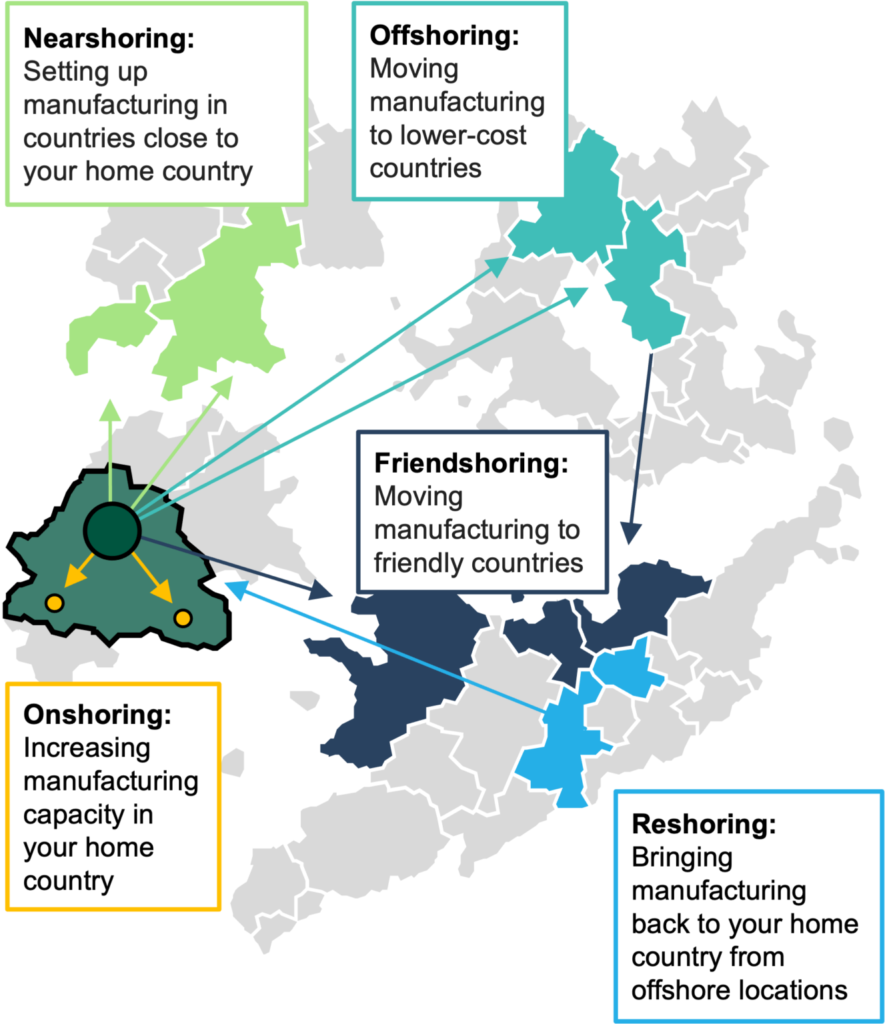
Over recent weeks, many Forrester clients have asked us how prospective tariffs might impact their supply chain processes and supporting applications. What Is The Potential Impact Of New Tariffs On Manufacturing? While there is still a lot to speculate about concerning the wider implications of new tariffs, technology executives and supply chain leaders at US and international manufacturers should: Prepare for price increases. A new trade environment might involve increases in raw material costs, or you might reduce factory gate prices to maintain competitiveness in protected markets. You should review the digitization of your commercial relationships and contracts with suppliers, channels, and customers. Understand the impact of tariffs or quotas on terms of service and on price escalation clauses. Anticipate challenges in accounting for cost of goods sold. You should review your enterprise resource planning management of landed cost. Will there be more customs duty invoices arriving long after you sell the goods in stock? What does it mean for your calculation of cost of goods sold? How can you show the expected full landed cost to prospective customers on your website? How will your order management route orders to the most tariff-efficient production or shipping locations? Incorporate tariff barriers in your supply network planning. You should evaluate the role of smart manufacturing technologies in rebalancing offshore, nearshore, and onshore manufacturing to achieve resilience, sustainability, and cost objectives. Check your ability to support changing global trade compliance requirements. You should be able to automate export compliance with local content regulations within a free trade area, as well as compliance with the EU Supply Chain Act or US Department of Justice denied party lists. Rethink your new product introduction strategies. North American and European manufacturers will struggle to match the scale of rivals in developing economies that are targeting mass markets. They should invest in foundation technologies such as product lifecycle management and IT/OT integration as part of their manufacturing operations management support in order to pivot from competing on economies of scale to competing on economies of scope. Do You Need A Stack For Each Trading Block? Conduct a tariff-ready enterprise architecture review. Changing patterns of trade impact sourcing supply chain and production systems that are tracking the origin of raw material or component batches. This also affects sell-side applications such as commerce, CRM, and sales force automation. Given concerns about data sovereignty and protection of critical IP, you might need a stack for each regional trading block. You must map application linkages and workflows for multipolar export and import use cases to ensure that you can survive and thrive in any environment. Along with my colleagues Paul Miller, Michele Pelino, and Jeffrey Rajamani, I look forward to hearing your viewpoint on how best to flourish in the next four years. In the meantime, please book an inquiry to discuss our research and tools, and look out for our mass customization report with more details on how to pivot to a new age of manufacturing success. source

Prepare Your Supply Chain Applications Portfolio For A Changing Trade Environment Read More »

Five Takeaways from ITC Vegas 2024

InsureTech Connect (ITC) was bustling with 9,000 attendees, including carriers, agents, brokers, and a whole host of solution and technology providers, both incumbents and startups alike. With over $4 billion in insurtech funding so far this year, the industry is full of inspiring ideas on how to improve insurance. As the industry and the insurtech ecosystem continue to mature, however, there’s still a struggle to connect all the pieces and scale effectively. Here are five key takeaways from the conference. Everyone is talking about AI, but how many are using it? At past conferences, it has felt like attendees were on a hunt to solve problems using AI. Now, we are seeing real implementations of AI in claims, fraud, and internal knowledge management. All these use cases are still standalone solutions focused on operational efficiency and productivity gains. We have a long way to go before AI takes on the challenge of profitable topline growth. But significant advances in the technology and pressure from the C-suite to deliver ROI are leading to more sophisticated conversations about AI. Carriers will need to improve their data postures if they want to scale AI and see some real gains that contribute to operating performance. To have nice things, you first need to have nice data; very few are able to do this at the moment. A refreshing focus on fundamentals has emerged. The industry and the insurtech ecosystem have a renewed focus on insurance expertise as a core competency for building novel solutions. Gone are those outsider buccaneers — the provocative disrupters — that knew little about insurance but were there to revolutionize the industry with the backing of fast and loose venture capital funding. Venture funds now refuse to invest in founders that lack core insurance expertise, bringing a noticeable level of humility to insurtechs, both small and large. The industry now has a better focus on innovation within the realities of the highly regulated, nuanced, and intentionally conservative business of disciplined underwriting and claims management. Offerings containing old-school underwriting and claims along with new-school solutions are now better able to address the reality of the insurance industry. Embedded insurance is poised to make its mark on insurance. Two factors favor embedded insurance in the current climate. First, the hard market is driving carriers to diversify and to a certain degree differentiate through alternative distribution models. Second, changing customer preferences favor embedding insurance seamlessly into customer journeys and making it available at the point of need. Technology providers like Bolt offer a platform that helps insurers provide embedded insurance products by digitally connecting distribution partners and end customers to carriers. These capabilities seamlessly allow insurance products to be part of other existing customer journeys. Hyper personalization is a winning solution for the industry. There is a shift toward customizing life and P&C insurance based on individual customer behaviors and preferences. Distribution partners, including agents and brokers, are increasingly facilitating tailored offerings in both life and P&C lines. This is proving to be a winning solution for customer acquisition and retention. Insureds are very receptive to customized solutions, since they provide transparency into coverages. Driving customer engagement is a rare silver lining in an increasing-rate environment. The question remains: Is personalization the answer to an industry that struggles with customer engagement? Time will tell. In the meantime, strong partnerships among insurers, insurtechs, and other value-chain participants are driving innovation and streamlining policy and claims administration in pursuit of delighting the customer. Carriers are begging to modernize their aging tech stacks. Incumbent insurers continue to maintain aging technology stacks. Some of them are still running business-critical functions on mainframe systems. The industry desperately needs to modernize but has struggled due to expense pressures and risks of impacting existing books of business. Luckily for the industry, new solutions such as InsureMO are now offering carriers middleware infrastructure powered by APIs and microservices that is bringing new life to these old tech stacks. These solutions sit on top of legacy systems and provide a bridge to modernization, but the risks of additional tech debt from these solutions demand that carriers have a deliberate strategy for them. ITC was a packed few days with lots of energy and inspiring ideas. Clients interested in discussing these and other themes can chat with me via an inquiry or guidance session. source

Five Takeaways from ITC Vegas 2024 Read More »

GenAI Disrupts Professional Services

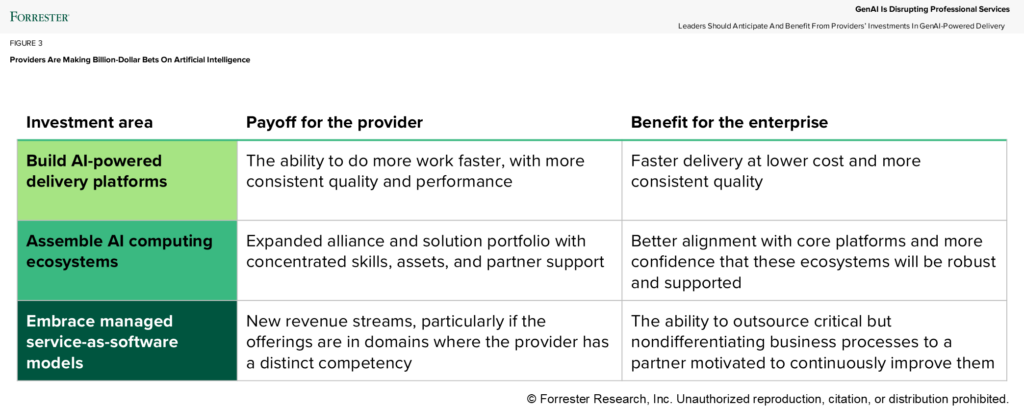
As pure knowledge businesses that make money in billable hours worked, service providers are on the front lines of generative AI-powered disruption. GenAI-powered digital assistants supplement people’s work, augmenting their knowledge, skills, and experience as well as automating their tasks. The impact is more work completed in less time with fewer people. Over the next five years, service providers of all kinds — systems integrators, business process outsourcers, management consultancies, marketing agencies, tax advisors, financial auditors, lawyers, and more — must respond. Previous waves of service industry disruption — offshore labor and cloud computing — lowered costs and unlocked more demand for technology and for services. Will the same happen again? Only if service providers reinvent their business models as asset-based, solution-driven, and outcome-oriented. To compete and establish a new long-term value proposition, providers must cannibalize their existing time-and-materials commercial models, riding the cost curve down and reskilling their workforce while reinventing their offerings and business models for the era of AI computing (see figure below). Providers with scale and strong balance sheets will thrive and reinvent themselves as post-AI service providers, reconstructed to thrive in the AI computing era; smaller or less nimble providers will struggle.   What Tech Executives Should Do To Take Advantage Of AI-Powered Services As a technology executive, you might be able to negotiate lower rates, but that isn’t going to be the endgame for how genAI will change the role of providers in your success. Instead of scratching out discounts, focus instead on a stream of potential benefits that a provider can bring: projects delivered faster at lower cost, co-investment in IP that benefits you, new managed services, and help navigating the disruptive shift to an AI-powered enterprise. The key word is “ongoing.” You want to take advantage of providers’ investments today, and you want providers to keep investing to bring even more genAI benefits. source

GenAI Disrupts Professional Services Read More »