The Next Web TNW

Exclusive: New autonomous tractor can shift from farming to warfare

Spanish startup Voltrac has emerged from stealth with an autonomous tractor that lives a double life.  In peacetime, the 3.5-tonne electric vehicle zips around farms, hauling heavy goods and using cameras to gather data on crop health. But when enlisted, the tractor is equally capable of navigating enemy assaults to deliver critical supplies to frontline soldiers. “In Ukraine, for instance, many lives are lost in non-combat situations, including frontline resupply missions,” Voltrac’s cofounder and CTO, Francisco Infante Aguirre, told TNW in an interview. “That’s where we see a machine like ours making a difference: it’s built for tough terrain, and it doesn’t risk human life. It can do the same job whether it’s hauling crops or carrying ammo.”  Voltrac’s CEO and cofounder Thomas Hubregtsen (left) and cofounder and CTO Francisco Infante Aguirre stand outside their office in Valencia, Spain. Credit: Voltrac Voltrac’s machine has a carrying capacity of 4,000kg, a top speed of 40km/h and a range of up to 20 hours thanks to several large 200kW batteries stored in its body. Like an ebike, the tractor’s batteries are swappable — except these batteries are so heavy you’ll require a forklift to transport them.  The tractor comes with the standard tow hitch where farmers would typically attach equipment like ploughs, mowers, or cutters. The machine can also be retrofitted with a giant flatbed that makes it capable of transporting a container full of supplies. That’s useful for both farms and frontlines.  The 💜 of EU tech The latest rumblings from the EU tech scene, a story from our wise ol’ founder Boris, and some questionable AI art. It’s free, every week, in your inbox. Sign up now! “Our tractor only needs tiny tweaks to its hardware to easily serve both agriculture and defence markets from the same platform,” said Infante, adding that the startup is in preliminary talks with NATO departments. For military purposes, those “tweaks” include the addition of anti-jamming tech and interceptor drones to protect it from enemy attack. The machine could also be used for removing and detecting mines.   As you’ve probably noticed by now, the tractor doesn’t have a cabin. That’s because it pilots itself — or at least, that’s the plan for later on. For now, the vehicle is remote-controlled, a bit like a first-person view (FPV) drone. Voltrac plans to have one human control several tractors from a remote location station. Then, once the company gets the regulatory green light, it plans to let the machines drive themselves.  Beyond self-driving, Voltrac’s system will run “live experiments” in the field. The tractor will try slightly different agricultural treatments in different areas, watch how the plants respond, and adjust its approach on the next pass. Over time, this constant feedback loop helps it figure out the right dose of water, fertiliser, or pesticide for every patch of land. That could lead to higher yields, lower costs, and fewer chemicals in the soil.  “We’re not just building a smarter tractor — we’re building a system that learns as it goes, which is one of the big differences from other intelligent tractors out there,” Voltrac’s CEO and cofounder, Thomas Hubregtsen, told TNW.   Hubregtsen’s CV includes jobs building AI systems at BMW and Google X. The Dutchman also co-founded Extropic, an Austin-based startup building a new kind of AI chip to rival NVIDIA.  Meanwhile, Aguirre, an aerospace engineer, has had stints at hypersonic plane startup Destinus and now bankrupt flying taxi firm Volocopter. His connection to tractors, though, runs deep: his family’s business, Aguirre Agricola, is one of Spain’s biggest suppliers of agricultural equipment.     Hubregtsen and Aguirre combined their expertise to found Voltrac just over a year ago. The startup quickly secured $2mn in pre-seed funding from Antler and Foodlabs, which allowed them to build their first prototype.  Voltrac aims to develop its tractors — and the underlying hardware and software stack — entirely in-house. The vehicles are built mostly from off-the-shelf components. Thanks to their electric drivetrain and lack of a cabin, they use 70% fewer parts than a traditional tractor.  The startup is targeting a seed round in September and plans to deliver its first vehicles in early 2026. Want to discover the next big thing in tech? Then take a trip to TNW Conference, where thousands of founders, investors, and corporate innovators will share their ideas. The event takes place on June 19–20 in Amsterdam and tickets are on sale now. Use the code TNWXMEDIA2025 at the checkout to get 30% off. source

Exclusive: New autonomous tractor can shift from farming to warfare Read More »

Quantum art, multiball, and AI selfies: TNW 2025’s best side quests

Qubits, entanglement, superposition, trapped ions, Schrödinger’s cat. These terms sound strange because the world of quantum mechanics — where things can exist in multiple states at once — is strange.  Thankfully, a group of students from TU Delft are bringing these powerful sub-atomic phenomena to life at TNW Conference through an exhibition of abstract artworks. Their project, Emergence Delft, blends science and creativity into a mind-bending exploration of quantum reality. A centrepiece of the exhibition is Coexist — a mesmerising light installation that captures the elusive nature of quantum mechanics through colour, interaction, and design. At its heart, Coexist tackles superposition, the ability of a quantum system to exist in multiple states at once. For instance, a qubit — the quantum version of a classical bit — can be both 0 and 1 at the same time. But it doesn’t stay that way forever. The moment it’s observed, the qubit collapses into a single, definitive state — a phenomenon known as the act of measurement. Are you ready for TNW Conference 2025? Less than one week to go! Last chance to join the get a ticket before we sold out! Inside Coexist, a glowing white light — which contains all visible colours — symbolises superposition. Around it, oversized polarisation filters are arranged like futuristic portholes. As visitors peer through and rotate these filters, different colours are revealed, depending on how the filters interact with the light waves. Just like in quantum mechanics, the act of looking changes what you perceive. Still don’t get it? Don’t worry, we don’t either. That’s why we’ll be heading to the exhibition on the business floor of TNW Conference on June 19-20 to uncover the quantum mystery. It’s one of many weird and wild activities on the sidelines of the event. Fun and games at TNW Conference 2025 The quantum art exhibition is just the start — TNW Conference is packed with epic side events to fuel your fun. Test your sporting prowess at our padel court, try out a mixed reality game called Multiball, or belt out hits at the KPMG Karaoke Trailer. And don’t miss DataSnipper’s GenAI photo booth, where you can transform into an AI-generated fantasy character in seconds.  A render of the DataSnipper GenAI photo booth. Credit: DataSnipper Talking of photography, while you’re exploring the event, networking, and engaging, don’t forget to capture the moments in the TNW Photo Challenge.  Simply choose three to five of our photo challenges, snap your shots, and share them on social media using the right tags. You’ll then be entered for a chance to win 2 free tickets to TNW Conference 2026. You can find the full rules here — and check out our floor plan to navigate your way to the prize. Here’s a full list of the challenges:   Where’s Boris?Snap a photo of our Founder, Boris Veldhuijzen van Zanten. On the FerrySnap a pic on the way to NDSM — our venue for the event. Dutch Mode ActivatedTake a photo riding a bike or e-scooter to the conference. Lawn LegendsPost a pic of you cheers-ing with new friends. Pitch PerfectCatch the action at one of the three pitch battles and tag your favourite startup. Karaoke SuperstarFilm yourself singing at the KPMG Karaoke Trailer — no stage fright allowed! Game OnShow off your multiball score — bonus points for high scores! Masterclass MomentCapture your participation at a Blue Stage Masterclass, which offers expert advice on everything from turning startups into global powerhouses to leveraging AI agents (sign-up required). Human TNWSpell out TNW with a group of people — creativity encouraged! Court-side ClickTake a picture playing on the EY padel court (sign-up required). One Stage, One StorySnap a pic at your favourite stage and tag the speaker who inspired you most. Bridge the MomentSnap a pic on the TNW Bridge. Tech Tour Treasure HuntCapture a moment from a TNW Tech Tour — our guided expeditions to the startup booths — and tag your favourite company booth (sign-up required). Driven by InnovationSnap a pic behind the wheel of the KIA car cruising around the venue. Whether you’re here to unravel the mysteries of quantum physics or to join the karaoke fun, TNW Conference promises a mix of mind-expanding ideas and unforgettable moments. Over 95% of the tickets are now sold out — but we’re still offering a discount for our loyal readers: use the code TNWXMEDIA2025 at the ticket checkout to get 30% off. See you at the show! source

Quantum art, multiball, and AI selfies: TNW 2025’s best side quests Read More »

Starmer tells UK to ‘push past’ AI job fears as tech leaders raise alarm

British Prime Minister Keir Starmer has said it is time to “push past” concerns that AI poses a threat to human jobs — contradicting the concerns of some of tech’s biggest players. Speaking at London Tech Week today, Starmer called for industry to embed AI throughout the UK economy, from healthcare to education.  By taking on administrative tasks, Starmer argues that artificial intelligence tools can free up people to focus on the “human work.” For this reason, he said, “AI will make us more human.”   Starmer’s assertion that AI is not here to replace humans, but to relieve them, is a popular sentiment among AI evangelists, including Microsoft’s Satya Nadella and Jensen Huang, CEO of Nvidia.  The 💜 of EU tech The latest rumblings from the EU tech scene, a story from our wise ol’ founder Boris, and some questionable AI art. It’s free, every week, in your inbox. Sign up now! By taking over the grunt work — such as filling out forms, summarising emails, or analysing spreadsheets — they argue that AI will enable people to do more meaningful work. However, not all tech leaders are so optimistic. Sebastian  Siemiatkowski, CEO of Swedish fintech unicorn Klarna, recently cautioned that rapid AI deployment may trigger a recession by decimating white‑collar jobs.  Speaking on The Times Tech Podcast, Siemiatkowski claimed AI bots had already enabled the buy now, pay later firm to slash its workforce from 5,500 to 3,000 and replace 700 customer service roles.  “There will be an implication for white‑collar jobs and when that happens that usually leads to at least a recession in the short term,” he said. He also criticised tech leaders for “downplaying the consequences of AI on jobs,” urging urgent societal preparation.  Dario  Amodei, CEO of Anthropic, painted an even starker picture in an interview with CNN last month. He warned that AI could wipe out “half of all entry‑level white‑collar jobs” within five years, potentially pushing unemployment in the US to 20%. AI has already been linked to job losses in many professions, including translation, customer service, copywriting, paralegal work, data entry, graphic design, and journalism. In an ironic twist of fate, the tech is also threatening the jobs of the developers who helped create it. Entry-level jobs that graduates rely on to kickstart their careers look to be the most at risk. While Starmer’s vision that AI will make us more human by shouldering mundane tasks paints a hopeful future, current trends paint a more complex picture. The warnings from Siemiatkowski, Amodei, and many others suggest that, without urgent preparation and governance, we’re sleepwalking into economic uncertainty.   AI’s future will be a hot topic at TNW Conference, which takes place on June 19-20 in Amsterdam. Tickets for the event are now on sale — use the code TNWXMEDIA2025 at checkout to get 30%. source

Starmer tells UK to ‘push past’ AI job fears as tech leaders raise alarm Read More »

TNW Backstage dives into the debate over sustainable motorsport

This week on TNW Backstage, we’re heading into the fast lane — and straight into the climate debate. In the final episode of the podcast, we revisit a divisive bet on sustainable motorsport: Extreme E, the all-electric racing series. The events sent SUVs hurtling through some of the planet’s most fragile ecosystems. Supporters said they raised awareness about environmental issues, while detractors called it a classic case of greenwashing. At last year’s TNW Conference, we were guided through the twists and turns by Ali Russell, then the managing director of Extreme E. In his talk, Russell laid out his vision for fighting climate change through high-octane racing. He pitched it as both a testing ground for EV innovation and a global platform for environmental advocacy. The results? Mixed. While Extreme E broke new ground in EV performance and gender equity, critics poured scorn on its sustainability claims. The 💜 of EU tech The latest rumblings from the EU tech scene, a story from our wise ol’ founder Boris, and some questionable AI art. It’s free, every week, in your inbox. Sign up now! At TNW Conference 2025, we’ll continue unpacking the tension between sustainability and innovation — especially in the future of mobility. Here’s a sample of what’s on the agenda: The Road Ahead: Driving Innovation and Sustainability with former F1 driver Robert Doornbos Green Growth: Funding and Scaling Businesses for a Sustainable Future with Skytree and VS Particle Disrupting the Food Chain: AgriTech’s Role in Feeding the Future with Open Food Chain and Lumo Labs Innovation at Scale with Ferrari’s Chief Research and Development Officer As for Extreme E, the series has now rebranded as Extreme H — the first hydrogen-powered off-road racing championship. Want to hear what led to the pivot? Then listen to TNW Backstage on Spotify, on our dedicated podcast site, or via the media player at the bottom of this article. Catch up on TNW Backstage We created TNW Backstage to take you behind the scenes of TNW Conference — and the tech shaping our world. The six-part series is now complete, but you can still catch up on any missed episodes. In our debut episode, we explored data privacy and Meta’s controversial “pay or consent” model with Ron de Jesus, the world’s first Field Chief Privacy Officer Episode two featured comedy creator Derek Mitchell and TNW co-founder Boris Veldhuijzen van Zanten on the power of humour in tech Our third episode dove into brain-computer interfaces with MindAffect CEO Jennifer Goodall Episode four examined the future of personal audio with Xander de Buisonjé, a musician and the founder of Breggz Our penultimate episode discussed the evolution of e-commerce with Aron Gelbard, co-founder and CEO of Bloom & Wild — the UK’s top-rated online flower delivery company To thank you for listening, we’re also offering an exclusive discount on tickets for TNW Conference, which takes place in Amsterdam on June 19 and 20. You’ll find the offer hidden in each episode of TNW Backstage. Thanks for reading — and now, for listening too. source

TNW Backstage dives into the debate over sustainable motorsport Read More »

Clearest views yet of Sun’s south pole may unlock its mysteries

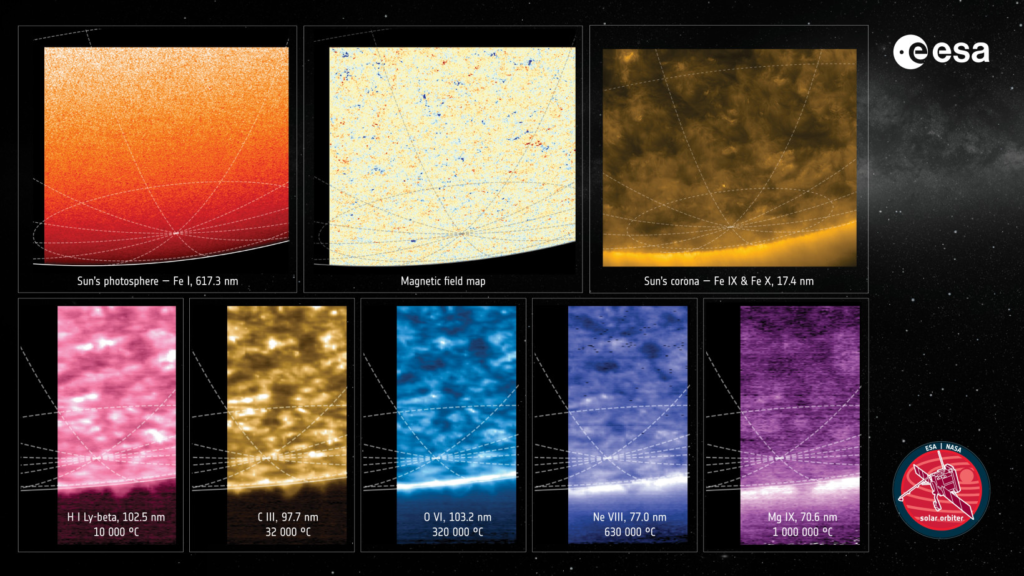
A spacecraft developed by European scientists and companies has captured unprecedented new views of the Sun’s south pole. Built by Airbus in the UK, Solar Orbiter was developed as part of a joint mission between the European Space Agency (ESA) and NASA. The probe launched on a United Launch Alliance Atlas V 411 rocket from Cape Canaveral, Florida in 2020. A number of European tech firms also contributed to the mission. One of them is Dublin-based Enbio, which developed a protective coating for the probe using crushed animal bones. It’s one of the more unusual materials ever flown into space — and it plays a vital role in shielding Solar Orbiter from the Sun’s intense heat and radiation. The spacecraft will fly closer to the Sun than any other probe in history, crucial to getting a better view of our nearest star.  Before Solar Orbiter, all the images of the Sun had been taken from the ecliptic plane, the flat path along which Earth and its space satellites orbit. That’s made it impossible to view the poles directly. Are you ready for TNW Conference 2025? Less than one week to go! Last chance to join the get a ticket before we sold out! Solar Orbiter has gained a new perspective by tilting its orbit out of the ecliptic plane to unseen angles of our nearest star. To achieve this, the probe performed repeated flybys of Venus and Earth, using their gravity to gain the momentum needed to enter an entirely new orbit around the sun.   In March, Solar Orbiter reached a viewing angle of 17° below the solar equator. The probe captured several images from this vantage point using a suite of scientific instruments that observe the Sun in visible, ultraviolet, and extreme ultraviolet light. The combined data offers a multi-layered look into one of the least unexplored frontiers of our nearest star. Solar Orbiter’s different instruments provide several views into the Sun’s fiery atmosphere. Credit: ESA The unprecedented views could improve scientists’ understanding of the Sun’s magnetic field and the solar cycle. They may also shed new light on the origins of solar storms — the energetic outbursts that can disrupt satellites, power grids, and communications on Earth. Professor Carole Mundell, ESA’s director of science, said the mission marked a “new era” for solar science.  “The Sun is our nearest star, giver of life, and potential disruptor of modern space and ground power systems, so it is imperative that we understand how it works and learn to predict its behaviour,” she said. A magnetic mess Solar Orbiter’s latest data reveals the Sun’s magnetic south pole in a state of chaos, with a mix of north and south magnetic fields rather than a single dominant one, like on Earth. This is characteristic of the Sun’s 11-year activity cycle when its magnetic field flips.  The spacecraft also captured the movement of solar particles above the south pole, uncovering swirling flows of hot plasma that suggest the presence of polar vortices in Sun’s atmosphere. These complex dynamics, unseen from Earth or traditional orbits, could provide new clues about how the Sun’s magnetic field works and drives the solar wind.  Enbio isn’t the only tech firm behind Solar Orbiter’s recent accomplishments. Portugal’s Active Space Technologies developed precision feedthroughs that allow UV light to enter the spacecraft’s instruments without exposing them to intense heat. Another Portuguese company, Critical Software, supplied the probe’s diagnostics and onboard software, while Irish software startup Captec provided software verification and validation for the probe’s onboard flight software.  All this tech has opened the door to unprecedented views of the Sun — and the best may be yet to come. Over the coming years, Solar Orbiter will tilt even further out of the ecliptic, eventually reaching 33° above the solar equator, giving a new perspective on the Sun’s fiery nature.  Former NASA rocket scientist Aisha Bowe — who was on Blue Origin’s historic (and controversial) all-female spaceflight — will explain the EU’s space ambitions at TNW Conference. The event takes place on June 19-20 in Amsterdam. Tickets are on sale now — use the code TNWXMEDIA2025 at the checkout to get 30% off. source

Clearest views yet of Sun’s south pole may unlock its mysteries Read More »

Live selling: the next big hustle sweeping Europe

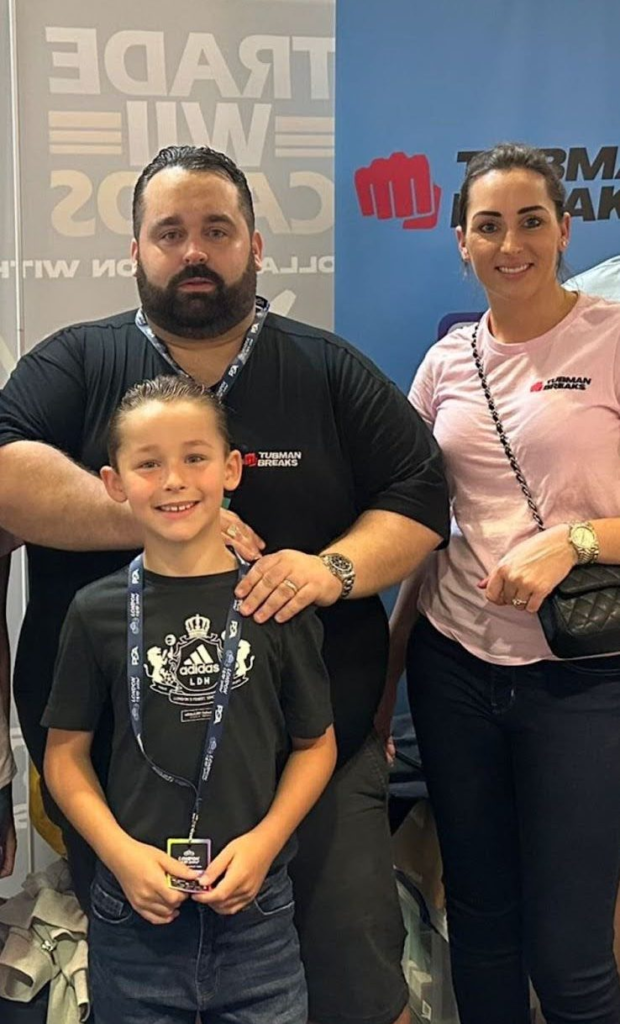
Tinny music plays in a dimly lit basement as we watch a teenager pull football shirts off a nearby clothing rack and hold them up to the camera. He describes each item monotonously — the team, season, colour, and condition — before sticking on a numbered label and transferring them to another rack. Each item gets less than a minute in the limelight. Bid rates and prices are listed at the bottom of the screen with eager buyers swiping a yellow bar to bid, while exchanging questions, comments, and emojis in the live chat box. When a buyer wins a bid, their username pops up with bursts of brightly coloured confetti. After live streaming for just over an hour, the teen has made €1,000 in sales.  Generating this kind of cash on Vinted, eBay, Depop, or any other static peer-to-peer marketplace would have taken days, even weeks. Instead of writing detail-heavy descriptions, uploading multiple images, and fielding a laundry list of questions from interested parties, independent resellers and small retailers are turning the camera on themselves to livestream video auctions on the shopping app Whatnot. The Californian startup has been quietly plugging away since 2019, when product management whizz Grant LaFontaine and software engineer Logan Head founded it to solve the pain points experienced by sellers of the plastic Funko Pop figurines, including counterfeit sellers and scams. The success has been a slow burn, with the focus still on niche hobbyist and fan communities. This year, however, has been pivotal for the app. It kicked off by raising $265mn (€233mn) in a Series E funding round, which brought its valuation to $4.97bn (€4.37bn). When TikTok went dark in the US earlier this year, Whatnot placed ads in a number of national newspapers to reach sellers using the platform’s Shop feature, whose livelihoods were at risk from the federal ban. Since then, its growth in the UK, Europe, and North America has been remarkable, with a 100% increase in both new sellers and first-time buyers over the past year. With sellers across 140 shopping categories and nine geographies, flogging everything from hair products and luxury bags to bullion and Plushies, it’s eBay meets Twitch, with a distinct DIY, lo-fi feel. Sellers aren’t broadcasting from pristine, influencer-grey homes, they’re experimenting from bedrooms in shared housing, squeezing shows in between the school run, or beaming in from quiet moments in thrift stores. For many, it’s shaping up to be a full-time job, with some even employing a team to manage their operations.  From casual buyer to full-time live seller making £1mn a week Livestreaming and “shoppable” video content have been booming in China for years, where platforms like Douyin (TikTok’s Chinese equivalent) and Taobao host thousands of daily livestreams. Over 600 million Chinese consumers regularly watch shopping live streams, and the breadth of what they can buy through this medium is staggering. A new life insurance policy, still wriggling crabs direct from a small village farmer, a discounted McDonald’s chicken sandwich, a secondhand car — the list goes on. Top live sellers, often called “Key Opinion Leaders” such as Austin Li (aka The Lipstick King) have built mega followings and can easily generate $100mn (€88mn) in sales in a single session. In 2024, the Chinese livestream commerce market reached 5.86 trillion yuan, equivalent to about €715bn. By 2026, it’s projected to reach 8.16 trillion yuan (€996bn). While China will forever remain streets ahead, the medium is undeniably taking root in Europe. On Whatnot’s platform, there’s been a 600% year-on-year increase in European sellers specifically, and they host more than 20,000 hours of live shows a week. Over half (59%) generate the majority of their revenue from live selling, which rises to 70% for UK sellers, according to the platform’s data from early 2025. This real-time, interactive approach to shopping is attractive for small resale businesses, but is also pulling in passionate buyers-turned-sellers, many of whom have never been in front of an audience before. It chimes with a trend that Sam Shaw, strategy director at cultural insights practice Canvas8, has been tracking for over a decade — the desire to be your own boss, which is especially prevalent among younger generations. Nearly two-thirds of people aged 18 to 35 say they’ve started a side gig to supplement their income, or plan to start one, according to a survey by Intuit. Nearly half of those surveyed say their primary motivation for starting a side hustle is to be their own boss. “There’s a strong desire for independence and to build something personal,” says Shaw. “Live selling lets people turn their interests or products into a business.” Andrew Tubman, for example, hadn’t heard of live selling before he attended the London Card Show with his young son in 2023. A punter with a penchant for Pokémon cards, it was here that he first came across Whatnot. He downloaded the app and used it to buy more trading cards, and spent big on several limited edition Disney collections. “I was watching how livestreamers were doing it, what works and what doesn’t,” explains the 35-year-old from Cranleigh, Surrey. “Then I took the leap to do my first show as a seller in February last year — it was addictive.” Live seller Andrew — aka Tubmanbreaks — and his family. Credit: Andrew Tubman Working a 48-hour week in the motor trade industry, Andrew — known as @TubmanBreaks on Whatnot — managed to fit in a couple of shows weekly, selling sports and entertainment trading cards. He began to see that it could be a viable sideline business. Less than two months after Andrew and his wife Chantel registered as a company, it was clear that demand was high, and live selling alongside the day job wasn’t sustainable. “At least six nights a week, I was streaming all night, then staying up to pack the cards for postage — it was exhausting,” explains Andrew. “I’d been doing my full-time job for a decade, and although stable, I didn’t

Live selling: the next big hustle sweeping Europe Read More »

Opinion: Space startups are pivoting to defence. That’s great for innovation

A few months ago, at the SmallSat Symposium, a panel issued a sobering warning to space startups: do not chase defence dollars at the expense of long-term sustainability. Why? Because companies, particularly in the space sector, might be tempted to follow the money rather than focus on producing valuable products and services with broader, longer-term applications. It’s of course true that any company should be wary of “leaning in” too closely to what seem like passing fads. But the warning overlooks an important reality: the shift towards defence investing is not a trend. It’s a transformation in space and space investment, and one that will have positive — albeit unintended — consequences. Across the space sector, there has been a noticeable shift towards focusing on pure defence investing. Companies that once prioritised commercial applications, or at most maintained dual-use business models, are now making full-scale pivots to defence. Needless to say, that move isn’t random. It’s the product of geopolitical changes, such as the ongoing conflict in Ukraine, and a widespread belief that the world is changing. As Michael Gove, who served in the Cabinets of four British prime ministers, put it recently: “The ideal of a rules-based international order, where multilateral institutions restrain states pursuing their self-interest, has proved to be a false hope… we are back to a world closer to that of Thucydides in which the strong do what they can and the weak suffer what they must.” The change is happening at the public sector level, too. In 2024, global governmental expenditure on space programmes surged to $135 billion (€119 billion) — up 10% from the year before. The primary driver was rising defence budgets. A recent Bruegel report concluded that without support from the United States, “Europe could need 300,000 more troops and an annual defence spending hike of at least €250 billion” to keep the continent safe. As geopolitical tensions rise, governments worldwide have been funnelling money into space-based defence technology, a recognition that the sector is the cornerstone of any modern military. One of the unintended yet highly beneficial consequences of this shift among startups is its impact on the private space sector. Increased defence investment is breathing new life into aerospace and deep-tech innovation. Companies that previously struggled to secure commercial funding are now benefiting from sustained government investment, allowing them to work on cutting-edge technologies. These include (among many others) optical communications, needed for secure and high-speed space-based data transmission; Earth observation, crucial for climate monitoring, disaster response, and resource management; and synthetic aperture radar (SAR), enabling all-weather, day-and-night imaging capabilities with high precision. The 💜 of EU tech The latest rumblings from the EU tech scene, a story from our wise ol’ founder Boris, and some questionable AI art. It’s free, every week, in your inbox. Sign up now! Despite the opportunities that await here, moving from purely commercial to defence markets is not without its hurdles. Startups can face significant challenges. Government contracts often come with delayed payments and long procurement cycles, creating cashflow issues for smaller firms that lack financial reserves. Defence-related technologies are subject to stringent export controls and compliance requirements, heaping bureaucratic burdens on startups that many are ill-equipped to bear. But for those companies that make the pivot successfully, the rewards far outweigh these obstacles. Defence funding provides long-term stability and a runway for companies to develop world-class technology that may later be commercialised in other sectors. In other words, to pivot into space isn’t necessarily to leave behind the commercial world. Some startups are making full-blown pivots to defence, but the real sweet spot remains in the world of dual-use technology — those innovations that serve both commercial and defence markets. Companies that maintain this balance benefit from diverse revenue streams, greater resilience to market fluctuations, and the ability to shift emphasis as commercial demand evolves. The success of this dual-use approach is plain to see in the companies that have seamlessly integrated their offerings across sectors. Take the SAR satellite company ICEYE, whose data is used in flood response, maritime activity monitoring, and conflict zones like Ukraine. Or FibreCoat, whose advanced materials protect satellites from the harsh conditions of space, regardless of what those satellites are used for. Given the scale of government investment, as well as the ongoing volatility in the broader geopolitical landscape, it’s highly unlikely that the present shift in focus towards defence is merely a fad. There is a new world order in place, and national security considerations will play a defining role in geopolitics for years to come. However, the space sector’s ultimate goal should be a balanced ecosystem where defence and commercial efforts reinforce one another. The current surge in defence spending is helping accelerate technological innovation, funding infrastructure that will benefit the commercial sector in the long run. As companies continue to develop dual-use applications, they can ensure that the innovations sparked by defence priorities also drive broader commercial progress. That’s good news because space touches almost every area of modern life. It’s the backbone of the world economy. It plays a vital role in navigation, communication, connectivity, and sustainability. The space economy is projected to reach $1.8 trillion (€1.58 trillion) by 2035, according to a report by McKinsey and the World Economic Forum. We may well be entering a new golden age for the industry, one in which entrepreneurs have access to more capital, investors are more willing to back high-risk ventures, and technology development is progressing at an unprecedented pace. If companies can navigate the challenges of defence contracting while remaining mindful of the broader commercial applications of their products, the entire space ecosystem stands to benefit. For startups, the key will be balancing short-term defence opportunities with long-term strategic growth, so ensuring that today’s pivot does not become tomorrow’s dead end. But if the evolution towards greater defence investing is managed wisely by all involved parties, it could propel the space industry into its most vibrant era yet. Defence tech will be

Opinion: Space startups are pivoting to defence. That’s great for innovation Read More »

European VCs just made a record bet on this fusion energy underdog

Two years ago, German startup Proxima Fusion emerged from stealth with big ambitions to make a little-known stellarator fusion machine a serious contender in the race for commercial fusion energy. Today, the Munich-based company secured Europe’s largest-ever private investment in fusion power — a €130mn Series A funding round from big-name investors including Balderton Capital, Cherry Ventures, and Plural.  Daniel Waterhouse, partner at Balderton Capital, said he now thinks Proxima has taken its place as the leading “European contender” in the global race to commercial fusion. Proxima was the first company to spin out from the Max Planck Institute of Plasma Physics in Germany. The company’s stellarator machine holds superheated plasma in place using twisted magnetic fields, creating the conditions for atom-fusing fusion reactions to occur. The 💜 of EU tech The latest rumblings from the EU tech scene, a story from our wise ol’ founder Boris, and some questionable AI art. It’s free, every week, in your inbox. Sign up now! Many fusion projects today use a different machine called a tokamak, which relies on symmetrical, doughnut-shaped magnetic fields. This technology is at the heart of major international projects such as ITER in France and is popular among well-funded startups such as the US’ Commonwealth Fusion Systems and the UK’s Tokamak Energy.   Stellarators are more complex to build, but have several advantages over tokamaks. They need less power to operate, and their twisted shape makes the plasma within easier to control. Theoretically, they can operate continuously without requiring breaks.  Francesco Sciortino, co-founder and CEO of Proxima Fusion, told TNW that he believes stellarators are the only fusion technology that guarantees continuous operation, an essential feature for future fusion reactors.  “While they are harder to design, we believe that stellarators will leapfrog tokamaks because they are easier to operate and are more suitable for power plants,” he said.  Francesco Sciortino, co-founder and CEO of Proxima Fusion, speaking at a company event in March 2025. Credit: Proxima Fusion First conceived in the 1950s, stellarators were largely shelved due to their sheer engineering complexity. However, advances in AI-powered simulations are helping Proxima overcome some of those design challenges. Ian Hogarth, partner at Plural, an early investor in Proxima, believes the startup’s stellarator design has opened the door for Europe to lead in fusion technology.   “Their peer-reviewed stellarator power plant design concept confirms that fusion really can be commercially viable, and creates an opportunity for Europe to be first to the target,” he said.  Proxima aims to complete its first demo device, Alpha, in just six years. The machine will lay the foundation for Stellaris, a 1GW fusion reactor which the company hopes will power up sometime in the 2030s. But it’s not the only one looking to write a stellarator redemption story.  Across the Atlantic, Bill Gates-backed Type One Energy is also pursuing bold plans to commercialise the stellarator. Like Proxima, Type One recently unveiled peer-reviewed designs for a fusion energy reactor. The company, which spun out of the University of Wisconsin-Madison, also plans to switch on its first commercial-scale machine sometime in the 2030s.   The pair are just two of dozens of startups across the world looking to build fusion energy reactors within a similar time frame. Some, such as Helion Energy and Commonwealth Fusion, have raised over $1bn apiece.  While the ambitions of fusion energy companies should be taken with a pinch of salt, they’re not necessarily unrealistic. Over 70% of experts believe we’ll have a fusion device powering the grid by 2035, a Fusion Industry Association survey found last year.  If those predictions come to pass, fusion could become an important part of Europe’s renewable energy mix — and one with distinct advantages. Unlike wind or solar, fusion would provide continuous power. Unlike fossil fuels, much of which is imported from countries like Russia and the US, fusion is clean and could be homegrown, boosting energy security.    However, with the US leading in private investment in fusion energy, Sciortino fears that Europe may lose its advantage and urged governments to support emerging startups. “This is an important moment for Europe — a moment when we have the chance to make choices that will define the coming decades, and a chance to seize the lead in the global race to commercial fusion,” Sciortino previously told TNW. “Europe cannot afford to squander the opportunity; it must invest in companies that are working towards our continent’s energy security and sovereignty.” Want to discover the next big thing in tech? Then take a trip to TNW Conference, where thousands of founders, investors, and corporate innovators will share their ideas. The event takes place on June 19–20 in Amsterdam and tickets are on sale now. Use the code TNWXMEDIA2025 at the checkout to get 30% off. source

European VCs just made a record bet on this fusion energy underdog Read More »

‘World’s first’ autofocus glasses could spell the end of reading specs

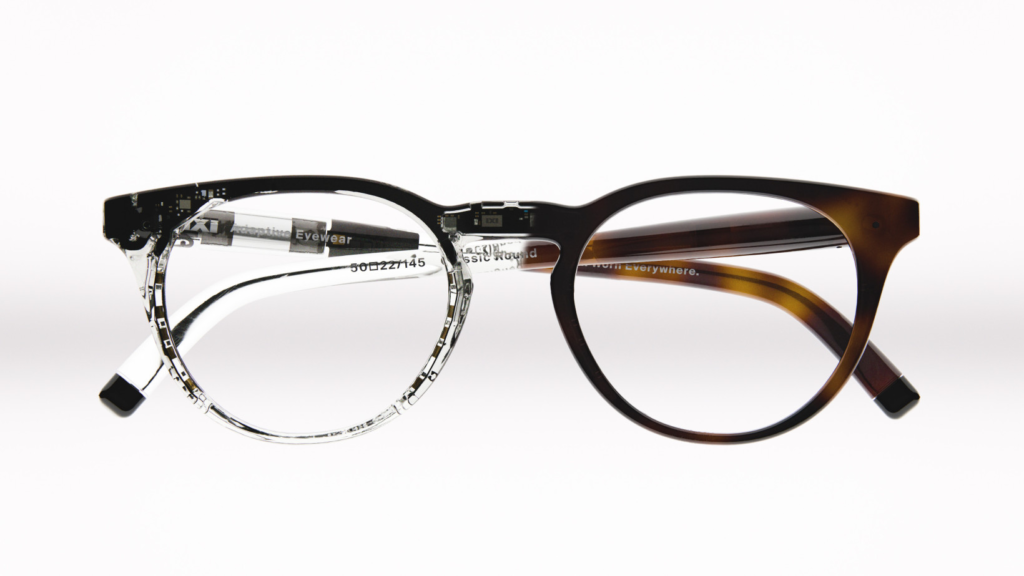
While Mark Zuckerberg was hyping Meta’s latest Ray-Ban smartglasses and Apple was promoting its Vision Pro mixed reality headset in 2023, Finnish startup IXI was quietly crafting high-tech specs for more practical purposes.  Founded in 2021, the company emerged from stealth in April with $36mn in funding to commercialise what it claims are the world’s first autofocus glasses. The prescription specs promise to change the way visually-impaired people see the world around them.  “None of the tech giants are fixing eyesight,” Niko Eiden, IXI’s cofounder and CEO, told TNW in an interview. “They’re looking at smart eyewear as a new wearable platform for AI assistants or capturing footage for your social media feed, but not solving the actual vision problem.”  Eiden is speaking from experience. He spent 14 years at Nokia developing imaging and augmented reality (AR) tech that laid the foundation for Microsoft’s HoloLens headset. After that, he co-founded Varjo, Europe’s mixed reality (XR) kingpin.  IXI’s autofocus glasses are as slender as a regular frame. Credit: IXI The 💜 of EU tech The latest rumblings from the EU tech scene, a story from our wise ol’ founder Boris, and some questionable AI art. It’s free, every week, in your inbox. Sign up now! IXI’s glasses, however, don’t have fancy cameras, AI, or VR features. Instead, they use a low-power sensor that tracks your eye’s movements. By emitting light pulses and measuring the reflections that bounce back off your eye, the sensor can determine whether you are looking near, far, or somewhere in between.  The glasses then send that information via electrical signals to the lenses, which are made up of a thin layer of liquid crystal sandwiched between two layers of plastic. When an electric field is applied to the glass, the liquid crystals change structure ever so slightly, which means they bend light differently. That allows the lens to autofocus on whatever you’re looking at, with a lag time of about 0.2 seconds. “We’re trying to push the same step change that happened with cameras — from fixed focus to manual focus to auto focus,” said Eiden.  With IXI, cofounder and CEO Niko Eiden is tackling his next big tech challenge. Credit: IXI From static to dynamic IXI’s autofocus glasses look to replace bifocal and progressive lenses. These glasses offer vision correction for multiple distances, such as reading and driving, all in a single lens. However, they have limited usable zones, with distortions at the edges and a narrow section for reading. This can make activities like walking down the stairs pretty awkward.  Due to the autofocus capabilities, IXI says it can offer a full field of vision across the whole lens. And thanks to the low-power electronics, the tech doesn’t need much room — it can fit in the frame of a regular pair of specs.  However, it’s still early days at the company. IXI is still very much in R&D and hasn’t yet set a launch date for its first product. The company also has to overcome technical challenges related to transparency, haziness, and full-day wearability to ensure the product matches or surpasses the optical clarity of traditional plastic glasses. It also has to meet the stringent medical requirements for prescription glasses.  Nevertheless, Eiden is bullish on the tech’s potential to fill the gap between smart glasses being developed by tech giants and the traditional eyewear industry, which, he said, invests more in brand and design than optics. If IXI can disrupt that segment, it could be in for big gains.  The global eyewear market reached $200bn in 2024. It’s growing by 8-9% each year and doesn’t show any signs of stopping. That’s because human eyesight is getting worse, a problem scientists have linked to excessive screen time combined with poor lighting conditions and inactive indoor lifestyles.  It perhaps doesn’t come as a surprise, then, that IXI isn’t completely alone in this space. French startup Laclarée and Japan’s Elcyo are also working on autofocus glasses, although they haven’t released a product yet either.   Armed with fresh funding, IXI is now planning to ramp up R&D, expand its team of 50 people, and move into a new headquarters with a purpose-built lab and clean room facilities. The company plans to hold the first live demos of its glasses later this year.  “From the static lens to the dynamic lens… it’s a natural evolution,” said Eiden. “Whether it’s us or another company, somebody will crack it.” Want to discover the next big thing in tech? Then take a trip to TNW Conference, where thousands of founders, investors, and corporate innovators will share their ideas. The event takes place on June 19–20 in Amsterdam and tickets are on sale now. Use the code TNWXMEDIA2025 at the checkout to get 30% off. source

‘World’s first’ autofocus glasses could spell the end of reading specs Read More »

Why changemakers burn out — and how to burn bright instead

This piece is part of our “Ask the Expert,” series where experts share their insights into some of the most pressing questions facing our tech ecosystem. Sign-up for your spot on Santa Meyer-Nandi’s Ask the Expert session about “How to burn bright, not out” at TNW2025 on June 20 at 15:30. In our work — whether shaping sustainable management frameworks, advising climate innovation funds, or guiding impact entrepreneurs — we see the same silent barrier appear again and again: People are burning out, even as their ideas succeed. And it’s not because they’re disorganised or weak. Quite the opposite. The 💜 of EU tech The latest rumblings from the EU tech scene, a story from our wise ol’ founder Boris, and some questionable AI art. It’s free, every week, in your inbox. Sign up now! What we see is high-functioning burnout. The founder who delivers and performs but can’t sleep. The policymaker whose campaigns are technically successful but whose nervous system is stuck in survival mode. The sustainability lead who’s holding transformation inside an institution — without feeling held herself. It often looks fine from the outside. But it slowly erodes motivation, creativity, and resilience—qualities that are essential for long-term change. Burnout is not a personal failure. It’s a system response The World Health Organization recognizes burnout as a workplace phenomenon linked to chronic, unmanaged stress. According to a 2022 study by The Hartford, 30% of employees reported being less engaged with their work due to burnout and 25% struggled to concentrate. While these figures are already concerning, they likely underestimate the deeper toll burnout takes in fields like sustainability, public service, or systems change—where the stakes are high and the emotional load is rarely named. In fact, research published in the Journal of Occupational and Environmental Medicine points to the substantial impact of mental health — related absenteeism and presenteeism on workplace productivity. But in our experience, the cost is not only economic — it’s relational, cultural, and strategic. Burnout often changes the arc of a project long before it becomes visible on paper. Because these individuals are not just managing deadlines. They’re managing resistance. Complexity. Emotional labor. Moral pressure. All while pioneering new paths — often without a map, and often without peers who truly understand the terrain. We’ve worked in boardrooms and ministries. We’ve led public funds and cross-sector partnerships. Again and again, it’s not the lack of good ideas or smart tools that stalls momentum. It’s the human architecture. It’s whether the people involved feel grounded, seen, and supported — both professionally and personally. Why we care about the other side of change I’m an environmental lawyer by training. My co-founder, Dr. Anna Katharina Meyer, has worked across the energy transition, climate finance, and sustainability strategy. Together, we’ve spent years shaping the technical and financial architecture of change: regulation, investments, governance. And yet, time and again, we’ve seen projects falter not because the ideas weren’t sound — but because the people holding them were too depleted to continue. The biggest invisible cost in systemic change is emotional and relational. We’ve seen teams fall apart not for lack of passion — but because they lacked the space to recover and reconnect. Not because people didn’t care — but because they cared alone. That’s why we’ve started speaking more publicly about what we used to consider “side issues”: well-being, self-regulation, and emotional sustainability. Because they’re not side issues at all. What matters is not just what tools people have — but whether the environment allows them to use them fully. We’re not romanticising slowness. We’re professionalizing resilience. Teams that are regulated, connected, and psychologically safe make better decisions.That’s not just a psychological insight. It’s a strategic one. What decision-makers must do now If you’re funding, leading, or designing systems of transformation, here are four places to begin: Create safety inside ambition.High performance and psychological safety are not opposites. They are prerequisites for sustainable excellence. Fund communities, not just projects.Strategic alignment isn’t enough. People need peer relationships and mutual recognition to stay in the work long enough to succeed. Value emotional sustainability.Leaders and teams doing heavy emotional labor need spaces where they can step out of their roles and be human. That’s not indulgent—it’s intelligent. Treat self-management and well-being as operational priorities.Build rhythms for pause, reflection, and recovery into your systems — especially in high-pressure cycles. Burn bright, not out The future will be shaped by those who can hold complexity — and stay well while doing it. By leaders who know that change doesn’t only live in frameworks, but in culture. By teams that understand that sustainable impact requires internal sustainability too. If we want transformation to last, we need structures that help people stay in the game long enough to truly change it. source

Why changemakers burn out — and how to burn bright instead Read More »