The Next Web TNW

Mosa Meat seeks EU green light to sell ‘world’s kindest burger’

Dutch scaleup Mosa Meat, the maker of the “world’s kindest burger,” has submitted its first request to sell cultivated meat in the EU.  Cultivated or “lab-grown” meat is made by harvesting animal cells and growing them in a high-tech bioreactor filled with a nutrient-packed broth. The result? Real meat minus the slaughterhouses and climate-heating emissions.  Singapore, the US, and most recently Israel are the only countries that have approved sales of cultivated meat for human consumption. The UK has also rubber-stamped one lab-grown treat — but that’s only for pets. While the Netherlands approved tastings in 2023, selling lab-grown remains illegal across the EU.   In a bid to open its home market, Mosa Meat has submitted a “novel foods” application to the European Food Safety Authority (EFSA). It is the second cultivated meat company ever to do so. The first was French startup Gourmey last year for its lab-grown foie gras.    The next big thing? It might be you… TNW Conference is here to support startups & scaleups to become the next big thing. Be part of the journey. Mosa will now patiently await the verdict — very patiently. The approval process will take at least one and a half years.  To add insult to injury, the EU’s regulatory process requires ingredients to be submitted individually. This forced Mosa to deconstruct its burger. It decided to start with cultivated fat — the juiciest bit. After that, the company will work on getting the green light for the muscle component. In the meantime, Mosa plans to blend the cultivated fat with plant-based ingredients to create beefy foods like hamburgers, meatballs, empanadas, or bolognese. It’s a departure from the 100% lab-grown meat the company first promised us. Nevertheless, it’s a quicker route to market. “By starting with cultivated fat, we’re paving the way to introduce our first burgers to consumers while staying true to our long-term vision,” said Maarten Bosch, CEO of Mosa Meat. “Our initial products will combine cultivated and plant-based ingredients, leveraging our in-house expertise in both areas.”  Mosa held the first tastings of its cultivated burgers in the Netherlands last year, just months after competitor Meatable hosted the first legally approved tasting of cultivated meat in Europe.   In April, Mosa secured €40mn in funding, bringing its total raised to $147mn. Despite strong backing, the company, and others like it, still face a long road ahead. Unlike plant-based meats, pioneered by brands like Impossible Foods and Beyond Meat, cultivated meat has struggled to get off the ground after an initial wave of enthusiasm. It is still expensive to produce and regulatory roadblocks have cooled investment.  “Cultivated meat is still a relatively new field, so it’s natural to see early challenges, whether that’s regulatory complexity, high initial production costs, or securing long-term investment,” Bosch told TNW.  “We believe the best way to overcome these hurdles is through a combination of scientific rigour, strategic partnerships and a focus on scaling up production efficiently.” Despite the challenges, startups like Mosa are pushing through, convinced that cultivated meat offers consumers an attractive alternative to plant-based meat or regular animal-sourced steak, ribs, or wings.  “We don’t see our cultivated burgers as just competing with plant-based alternatives,” said Bosch. “We see cultivated meat as an additional option for consumers who appreciate the culinary experience of meat and want to make a meaningful change without giving up what they love.” source

Mosa Meat seeks EU green light to sell ‘world’s kindest burger’ Read More »

ZuriQ is rewriting the rules of quantum computing by letting qubits fly

Ah, quantum computing… that moonshot technology full of potential, full of promise — and jam-packed with enough jargon to make the average person cry.  Qubits, entanglement, superposition, trapped-ions, Schrödinger’s cat. These terms sound strange because the world of quantum mechanics — where things can exist in multiple states at once — is strange.  And that’s why I want you to bear with me while I relay this latest piece of news from the buzzing quantum computing startup scene.  ZuriQ, a spin-out from ETH Zurich in Switzerland, has raised $4.2mn to commercialise a new chip architecture that could dramatically increase the number of qubits a trapped-ion quantum computer can handle, supercharging its computational power. The 💜 of EU tech The latest rumblings from the EU tech scene, a story from our wise ol’ founder Boris, and some questionable AI art. It’s free, every week, in your inbox. Sign up now! “The space for few-qubit devices that act as toy models is already saturated, and devices with 20-40 qubits won’t drive large profits,” said Pavel Hrmo, CEO of ZuriQ. “We need to focus on long-term scalability.”  ZuriQ wants to build a quantum computer with thousands of qubits, powerful enough to solve wickedly complex problems and revolutionise fields from medicine to cryptography.  How can it do that, you ask? Well, it’s got something vaguely to do with aeroplanes, cars, and magnetic fields. But first, a quick science lesson.   Qubits are the basic units of information in a quantum computer. Unlike bits in a regular computer, which can only be 0 or 1, qubits can be 0, 1, or both at the same time. This allows quantum computers to solve many problems simultaneously, making them light-years faster than even the top supercomputers of today.  Now, there are two main kinds of quantum computers in development. The first and most common are superconducting quantum computers, pioneered by the likes of Google and IBM. They use tiny loops of supercooled metal to create qubits. These machines are lightning-fast. However, they must be kept at −273°C at all times and are more error-prone than their main rival, the trapped-ion machine.  Trapped-ion quantum computers use charged atoms (ions) as qubits. Electric and magnetic fields trap these ions in place, and lasers control them to perform calculations. They’re very stable and precise but slower than superconducting quantum computers due to one fatal flaw: ions arranged in a line, like cars in a traffic jam, become overcrowded and inefficient as more qubits are added.  That’s why scaling up the number of qubits in a trapped-ion quantum computer has proved a major roadblock for companies developing them, like IonQ and Quantinium — putting a cap on their abilities. That is, perhaps, until now.  Setting qubits free ZuriQ has developed a completely new way to design trapped-ion quantum computers by allowing ions (the qubits) to move freely in two dimensions on a quantum chip instead of being restricted to one-dimensional chains. This allows qubits to move in all spatial directions like an aeroplane, instead of like cars driving along roads and through junctions. If the startup’s technology is all it is cracked up to be, it could enable trapped-ion quantum computers to far exceed the capabilities of their superconducting counterparts. Fuelled by fresh funding, ZuriQ is on track to demonstrate its first prototype machine by the end of this year. The startup said it aims to become the flagship provider of quantum computing worldwide. “We have been highly impressed by the speed of execution of ZuriQ’s founding team and the pace of progress towards technical milestones that have been elusive in the community so far,” said Pascal Mathis, partner at Switzerland-based VC Founderful, which led the investment round.  The funding arrives at exciting times for quantum computing. Interest in the field has been abuzz since Google unveiled an experimental machine that was able to solve a mathematical equation in five minutes that a traditional supercomputer could not master in 10 septillion years — that’s older than the universe. The breakthrough brought the dream of quantum computing a step closer to reality. Nevertheless, Nvidia’s CEO Jensen Huang was quick to pour cold water on the hype, cautioning at CES 2025 that practical quantum applications are still 15-30 years away. source

ZuriQ is rewriting the rules of quantum computing by letting qubits fly Read More »

Trump AI plan exposes threat of Europe ‘surrendering’ to big tech

Donald Trump’s big AI announcement has turned heads on both sides of the Atlantic. Trump revealed this week that OpenAI, SoftBank, and Oracle have formed a joint venture — called Stargate — that will invest $500bn in AI infrastructure. The companies said $100bn of the funding was available immediately. The rest would be deployed over the next four years. Trump billed Stargate as “the largest AI infrastructure project by far in history.” He added that the project would ensure “the future of technology” is in the US. Masayoshi Son, the CEO of SoftBank, had another bold prediction. He said the venture would drive  “artificial superintelligence.” The 💜 of EU tech The latest rumblings from the EU tech scene, a story from our wise ol’ founder Boris, and some questionable AI art. It’s free, every week, in your inbox. Sign up now! European tech leaders echoed the sentiment — but fear that the continent will become beholden to American power. David Villalón, the CEO and co-founder of Spanish AI startup Maisa, exemplified this blend of excitement and alarm. “This massive investment shows that the next stage in the growth of AI — Artificial Superintelligence — is no longer a fringe concept but an inevitable reality requiring unprecedented investment in infrastructure, akin to laying down the tracks for the next Industrial Revolution,” he said. Villalón added that the transition requires powerful new computing capacity. Stargate will bring a big dose of this to the US. European tech leaders have called for the continent to react “Without large-scale capital commitments and a bold approach to AI infrastructure, Europe risks surrendering its future to global players who control the fuel of tomorrow,” Villalón said. Europe’s AI worries Villalón pointed to the example of his home country. He believes Spain has “immense potential” in renewables, but needs a major funding boost to remain globally competitive and strategically independent. “Spain is spending peanuts on vacuous publicity AI projects, while ignoring, or not understanding, what’s needed — compute,” he said. Similar anxieties have reverberated across Europe. Jan Marquardt, the CEO of German startup Zivee, warned that AI companies need strong infrastructure, big funding, and minimal regulation, “all of which is available in the USA — and not in Europe.” Christian Klein, the CEO of German tech SAP, added that Stargate should be “a wake-up call” for the continent. Villalón shares their concerns. “To use a football analogy, Europe is currently in the relegation zone while USA and China — with their budgets, quality and ambition — are operating in the Champions League,” he said. source

Trump AI plan exposes threat of Europe ‘surrendering’ to big tech Read More »

Genomics pioneer steps closer to dementia treatment breakthrough

An Icelandic scaleup has sparked hopes of a breakthrough in dementia treatment after raising €26.5mn for groundbreaking research. Arctic Therapeutics (ATx) attracted the investment after pioneering a new approach to drug development. Founded in 2015, the company first analyses genomic data with bioinformatics — a blend of computer science and biology. After identifying disease-associated genes and proteins, ATx targets the root causes of a given condition. According to the scaleup, the process cuts the risks, costs, and time involved in developing treatments. The next big thing? It might be you… TNW Conference is here to support startups & scaleups to become the next big thing. Be part of the journey. Price increase on Friday. The new financing could push the benefits closer towards patients. ATx said the Series A funds will advance two frontrunner drugs: AT-001 and AT-004. AT-001 has proven particularly promising. The treatment focuses on dementia caused by harmful accumulations of protein. Its primary target is amyloid-induced angiopathy, a condition characterised by proteins amassing in the walls of the brain’s arteries. Taken orally, AT-001 disrupts and dissolves these harmful protein clusters. Consequently, the treatment could reduce the risks of dementia. ATx is confident of stalling the condition’s progression. The company also believes the drug could delay dementia’s onset — and even reverse its course. Ívar Hákonarson, the CEO and co-founder of ATx, said the treatment has “transformative potential.” “AT-001 offers hope for earlier intervention and even preventive use in individuals at high risk of developing dementia based on our biomarker signals,” he told TNW. Credit: ATxHákonarson co-founded ATx in 2015 as a spin-off from the US-based Center for Applied Genomics (CAG). Credit: ATx Changing the trajectory of dementia Tests on AT-001 are progressing rapidly. Last year, the European Medicines Agency (EMA) approved a new clinical trial that will probe the drug’s effects on HCCAA — a rare form of familial dementia. ATx also plans to launch a clinical trial for AT-004. The study aims to show the treatment is effective and safe for acne, before expanding into other inflammatory skin diseases. ATx expects the new funds to accelerate the research. A syndicate of international investors participated in the round. Among them is the European Commission’s EIC Fund, which supports companies developing disruptive tech. Svetoslava Georgieva, the chair of the EIC Fund Board, described the ATx financing as both an opportunity and a responsibility. “In Europe alone, dementia affects over 10 million people — placing immense strain on families, healthcare systems, and economies,” she said in a statement. “By providing an equity investment in Arctic Therapeutics, the EIC Fund is supporting groundbreaking preventive treatments that have the potential to change the trajectory of this crisis, improve quality of life, and alleviate the burden on healthcare infrastructure worldwide.” source

Genomics pioneer steps closer to dementia treatment breakthrough Read More »

AI startup Sereact lands €25M to give dumb robots better brains

Stuttgart, Germany-based Sereact has secured €25mn to advance its embodied AI software that enables robots to carry out tasks they were never trained to do.  “With our technology, robots act situationally rather than following rigidly programmed sequences. They adapt to dynamic tasks in real-time, enabling an unprecedented level of autonomy,” said Ralf Gulde, CEO and co-founder of Sereact (short for “sense, reason, act”). Early Spotify and Klarna-backer Creandum led the Series A round. Existing investors Point Nine and Air Street Capital also chipped in as did several prominent angel investors. These include former Formula 1 World Champion Nico Rosberg, ex-DeepMind product lead Mehdi Ghissassi, and past Skype exec Ott Kaukver. Typically, robots — like those Roomba vacuum cleaners — are hard-coded. This means they follow exact instructions that enable them to repeat specific tasks.  The 💜 of EU tech The latest rumblings from the EU tech scene, a story from our wise ol’ founder Boris, and some questionable AI art. It’s free, every week, in your inbox. Sign up now! Sereact’s eembodied AI, however, acts like a robot’s brain, allowing them to analyse and even learn new jobs on the go. This is thanks to a machine learning technique called zero-shot visual reasoning, which allows AI to understand and interpret images without prior specific training on those types of images.  The model, dubbed PickGPT, makes robots smarter. It also means humans don’t have to pre-program them for each task, saving time for the companies that use them.  “The opportunities here are endless and it’s great to see this kind of innovation coming from Europe,” said Johan Brenner, general partner at Creandum. Sereact’s approach is similar to that of UK startup Wayve, which raised $1bn in Europe’s largest-ever AI funding round last year. However, while Wayve’s tech targets autonomous vehicles, Sereact focuses on logistics and warehouse robots that do things like pick and pack, sort goods, and run quality control checks. Firms like BMW, Daimler Truck, Bol and Active Ants have already adopted Sereact’s software at their factories. However, the startup is now looking to venture beyond the warehouse.  Sereact said it will use the fresh funding to develop new “robot hardware platforms,” such as mobile robots and humanoids. The company also plans to expand its US presence.  “We’re on an exciting journey to become the leading platform for robotics applications that forever change the daily lives of people and businesses,” said Gulde.  source

AI startup Sereact lands €25M to give dumb robots better brains Read More »

Europe accelerates AI drug discovery as DeepMind spinoff targets trials this year

Google DeepMind spinoff Isomorphic Labs expects testing on its first AI-designed drugs to begin this year, as tech startups race to turn algorithmic magic into actual treatments. “We’ll hopefully have some AI-designed drugs in clinical trials by the end of the year,” the firm’s Nobel Prize-winning CEO Demis Hassabis told a panel at the World Economic Forum in Davos this week. “That’s the plan.”   The potential of AI-powered drug discovery is huge. Instead of spending years or even decades testing chemicals by hand, machine learning algorithms can sift through mountains of data to spot patterns and predict which molecules could make the next miracle drug. This could lead to faster drug development, cheaper costs, and new cures. By one estimate, there are over 460 AI startups currently working on drug discovery, of which over a quarter come from Europe. Globally, more than $60bn has been invested into the space so far, and the funding flood isn’t showing any signs of letting up.  The 💜 of EU tech The latest rumblings from the EU tech scene, a story from our wise ol’ founder Boris, and some questionable AI art. It’s free, every week, in your inbox. Sign up now! Yet discovering the drugs is merely one step in the process. it’s only when big pharma decides they’re worth manufacturing, marketing, and distributing that it’ll make a real difference to the likes of you and me.  That’s what makes some of the recent hookups between pharma behemoths and AI startups particularly exciting. Last year, Isomorphic Labs inked a $45mn deal with Eli Lilly to collaborate on AI-based research into small molecule therapeutics. Under the agreement, Isomorphic is also eligible to receive up to $1.7bn in “performance-based milestones.” The company also signed a similar collaboration with Swiss biotech Novartis. “We’re already working on real drug programs,” Hassabis told Bloomberg Television in an interview shortly following the announcements. “I would expect in the next couple of years the first AI-designed drugs in the clinic.” Exscientia, which spun out from Dundee University in 2012, was among the first to apply AI to drug discovery. In 2024, the company advanced its first AI-designed drug candidate into human clinical trials, achieving this milestone in just 12 months — a process that typically takes around five years. US rival Recursion acquired the Oxford-based company for $688mn in November.  These are two big examples of an AI-driven drug discovery market that’s booming, and increasingly, consolidating. However, there are also plenty of early-stage companies working on more niche applications of the technology. These include Cambridge, UK-based CardiaTec, which is using AI to find new drugs to treat heart conditions, and London-headquartered Multiomic Health, which is working on formulas to treat metabolic diseases.  Despite all the potential though, AI isn’t a silver bullet for drug discovery. While it can drastically speed up finding the right compounds needed to make new drugs, the most time-consuming steps — like wet lab tests with physical samples, clinical trials, and FDA approvals — aren’t going anywhere. Still, AI’s real power lies in that critical first phase: zeroing in on targets that might’ve otherwise slipped through the cracks, saving researchers time and possibly even unlocking new treatments. source

Europe accelerates AI drug discovery as DeepMind spinoff targets trials this year Read More »

Dutch startup Shift plans to build $250M ‘world wonder’ to inspire climate action

Shift, a social enterprise founded by Dutch tech entrepreneur Don Ritzen, has announced its ambitious plans to construct a massive landmark designed to inspire action on climate change.  Shift aims to attract 1 million annual visitors to the “New World Wonder,” which it estimates will cost up to $250mn. The startup plans to build the monument in the Netherlands, and if that’s successful, construct one on every continent.   “Civilisations before us built grand monuments to celebrate gods, momentous events or industrial progress,” Ritzen told TNW over the phone. “I truly believe that our generation needs something equally big and extraordinary to drive people to take action on climate.” To turn its vision into reality, Shift has kicked off an international architecture competition with a total prize pool of €250,000. Architects from around the world will battle it out to create a winning design for the landmark.  The Shift team is open to fresh ideas, but it does have a basic outline of what the World Wonder will offer. According to a brief seen by TNW, the startup envisions a striking physical structure that features “immersive experiences” that “engage all the senses.” The 💜 of EU tech The latest rumblings from the EU tech scene, a story from our wise ol’ founder Boris, and some questionable AI art. It’s free, every week, in your inbox. Sign up now! The landmark will serve as a hub for sustainability education, showcasing stories of “climate heroes” and providing visitors and non-visitors access to thousands of green initiatives via an accompanying digital platform. “We want it to be space that inspires awe,” said Ritzen. “But most importantly, one that ignites hope and empowers people to change their behaviours over the long term.”  Ritzen’s vision might seem like a load of hot air, but it’s a serious proposal coming from a well-respected figure in the Dutch tech scene. Ritzen is the co-founder of Rockstart, a startup incubator that has guided over 350 early-stage companies to a collective net worth of €1.7bn. “Shift has a financial roadmap in place and relationships with institutional investors and high-net-worth individuals to develop the design and realise the first landmark,” the company said in a statement. It also said it is in discussion with several municipalities in the Netherlands to secure a location for the structure. Ticket sales will constitute the main revenue for the monument and its accompanying digital platform. The entry fee is expected to start at €20 per person.   Shift operates a social enterprise model, with 95% of the company owned by a foundation, Stichting Shift World. The remaining 5% is held by impact investors. Residents of the municipality in which the landmark is to be built also have the option to become co-owners.   The architecture competition will run across two stages, with the winning team set to be announced in November. Judges include Ben van Berkel, founder of internationally renowned design firm UNStudio, and Géke Roelink, director at the NEMO Science Museum in Amsterdam. source

Dutch startup Shift plans to build $250M ‘world wonder’ to inspire climate action Read More »

This robot worm digs for geothermal energy in your backyard

Four billion years ago, Earth was a fiery, tumultuous world of molten rock, volcanic eruptions, and toxic skies, with searing heat and the constant threat of asteroid impacts. Thankfully, our planet has cooled off a bit since then. Nevertheless, the Earth still radiates vast amounts of geothermal energy. It’s a clean, limitless, always-on power source lying beneath our feet — we just have to dig for it. Or get robots to do the hard work for us.  Borobotics, a startup from Switzerland, has developed an autonomous drilling machine — dubbed the “world’s most powerful worm” — that promises to make harnessing geothermal heat cheaper and more accessible for everyone.  “Drilling will become possible on properties where it would be unthinkable today — small gardens, parking lots, and potentially even basements,” Moritz Pill, Borobotics’ co-founder, tells TNW.   The next big thing? It might be you… TNW Conference is here to support startups & scaleups to become the next big thing. Be part of the journey. Price increase on Friday. At just 13.5 cm wide and 2.8 metres long, the compact boring robot can silently burrow just about anywhere. It could make geothermal a viable backyard energy source. A 3D render of Borobotics’ geothermal drilling rig. Credit: Borobotics The machine — nicknamed “Grabowski” after the famous cartoon mole — is the world’s first geothermal drill that operates autonomously, according to the startup. Sensors in Grabowski’s head mean it can detect which type of material it’s boring through. If it bumps into a water spring or gas reservoir on its way down, the robot worm automatically seals the borehole shut. And unlike the diesel-powered drills typical to the industry, the machine plugs into a regular electrical socket.  However, Grabowski’s humble frame has a few drawbacks. The device is less powerful than bigger rigs. It’s also slower and can only dig to a maximum depth of 500 metres. But for Borobotics’ target market, that’s more than adequate, it says. Limitless heat just below our feet  While most geothermal startups look to produce utility-scale electricity by digging many kilometres below the Earth’s crust, Borobotics is going shallow.  “In many European countries, at a depth of 250 metres, you have an average temperature of 14 degrees C,” says Pill. “This is ideal for efficient heating in winter, while still being cold enough to cool the building in summer.” Borobotics wants to tap the burgeoning demand for geothermal heat pumps. These devices use a network of subterranean pipes to transfer heat from below the ground to a building on the surface. Under the right conditions, they double-up as air conditioning.  Heating and cooling buildings accounts for half of global energy consumption, the lion’s share of which comes from burning fossil fuels like natural gas.  To curb emissions, the EU has committed to installing 43 million new heat pumps between 2023 and 2030, as part of the bloc’s €300bn REPowerEU plan.  The advantages are obvious. Heat pumps use electricity instead of fossil fuels to transfer heat or cold air. They are up to three times more efficient than the equivalent gas boiler. If they plug into a renewable energy source, even better.  The EU backs both geothermal and air-source heat pumps, but the latter dominate thanks to lower costs and easier installation. That’s despite geothermal heat pumps being more efficient because they rely on stable subterranean heat rather than fluctuating outdoor temperatures. “The potential of geothermal heat pumps to decarbonise Europe is substantial, as long as the cost comes down,” Torsten Kolind, managing partner at Underground Ventures, tells TNW. “The minute that happens, the market is open.” Underground Ventures, based in Copenhagen, is the world’s first VC dedicated entirely to funding geothermal tech startups. The firm led Borobotics’ CHF 1.3mn (€1.38mn) pre-seed funding round, announced this week. The Borobotics team, based in Zurich, just raised their first major funding round. Credit: Borobotics Due to their small size, Borobotics says its drill is “very resource efficient” to produce and maintain. What’s more, Grabowski’s autonomous capabilities, other than being cool, have a hidden advantage.  Pill paints the following picture: “A small team arrive to a site with a Sprinter van containing everything necessary to drill,” he explains. “They set the drill in half a day and from then on it works autonomously.”  Pill predicts that one or two people will be able to handle 10-13 drill sites simultaneously. If correct, this means drilling companies can cover more ground in less time, even if Grabowski is a little more sluggish than its fossil-fuelled relatives.  Given the EU’s chronic shortage of heat pump installers, an autonomous drilling robot may be a welcome helping hand.   Despite the apparent potential, it’s still early days for Borobotics. Founded in 2023, the company is currently developing its first working prototype. Fuelled by its first major pot of funding, it looks to test the robot in real conditions this year.  Geothermal tech is heating up    In December, the International Energy Agency (IEA) released its first report on geothermal energy in over 10 years. In the report, the IEA predicted that geothermal could cater to 15% of global energy demand by 2050, up from just 1% today.  Geothermal projects of old were largely state-led, and confined to volcanically active regions like Iceland or New Zealand where hot water bubbles at or near the surface. But the next wave of installations looks to be led by startups armed with state-of-the-art technology that allows them to dig deeper and more efficiently. Geothermal energy startups attracted $650mn in VC funding in 2024, the highest value ever recorded, according to Dealroom data. One of those is US-based Fervo Energy, backed by Bill Gates’ Breakthrough Energy Ventures. Google has already plugged into Fervo’s geothermal plant in Nevada to power one of its data centres. Another upstart is Canada’s Eavor, which is currently building a giant underground “radiator” in Germany that could heat an entire town. “The problem has always been geology and economics, but the advances of startups like Fervo and

This robot worm digs for geothermal energy in your backyard Read More »

GenAI deals with news giants increase as Mistral partners with AFP

Yet another deal has been signed between a publisher and a GenAI leader. Paris startup Mistral and news outlet Agence France-Presse (AFP) announced today that they are combining their services to improve AI responses. The deal provides Mistral’s chatbot — imaginatively named Le Chat — with access to all of AFP’s text stories.  According to Mistral, the integration will bring “enhanced factuality” to the AI assistant. The next big thing? It might be you… TNW Conference is here to support startups & scaleups to become the next big thing. Be part of the journey. Price increase on Friday. “Partnering with a globally trusted news agency like AFP allows Le Chat to offer reliable, factual, and up-to-date responses, verified by professional journalists,” said Arthur Mensch, the startup’s CEO and co-founder. Mistral also highlighted the linguistic capabilities. AFP’s daily production of 2,300 text stories spans six languages — French, English, Spanish, Portuguese, German, and Arabic — all of which will be available to LeChat. “Through this partnership, we are providing our clients with a unique multicultural and multilingual alternative,” Mensch said. For AFP, the deal adds an extra income source and a new outlet for the agency’s 1,700 journalists. “Through this partnership, AFP is further diversifying its revenue sources, reaching a clientele beyond the media sector and exploring new uses for its content in the daily operations of businesses,” said Fabrice Fries, the company’s CEO and chairman. Deals and disputes between GenAI firms and news outlets The content deal expands a growing range of agreements between publishers and GenAI companies. Just a day earlier, two other eye-catching collaborations were announced. One brings news from the Associated Press (AP) to Google’s Geminis chatbot. The other merges Axios journalism with OpenAI products. As part of the deal, the ChatGPT-maker will fund the media brand’s expansion to four new US cities.  Axios joins a lengthy list of publishers collaborating with OpenAI. The GenAI giant has now partnered with nearly 20 media organisations, including the Financial Times, Le Monde, and AP. Yet not every news outlet has been a willing collaborator. A group of them — led by The New York Times — took OpenAI to court this week over alleged copyright infringements.  They argue that OpenAI used their content to build systems without consent or payment. OpenAI contends that the “fair use” law protects the practice. By signing agreements with publishers, GenAI firms could avoid such legal disputes. For Mistral, the partnership with AP is the first content deal of this kind. The integration is slated to roll out to all Le Chat users in the coming weeks. Neither Mistral nor AFP have revealed the value of the multi-year contract. source

GenAI deals with news giants increase as Mistral partners with AFP Read More »

Space-based wildlife tracker relaunches after split with Russia

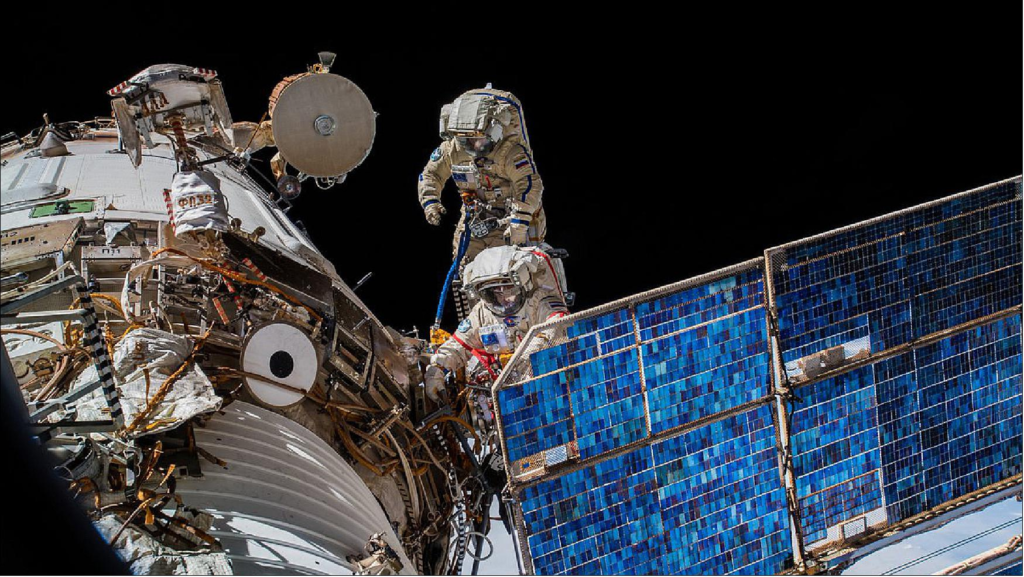
In 2018, after decades of research and tens of millions in funding, Russian astronauts attached a wildlife-tracking receiver to the exterior of the International Space Station (ISS). The device received data from tagged animals across the planet and beamed it to a ground station in Moscow. From there, it went to an open-source database called Movebank.  The space tracker was the final piece of the puzzle for the ICARUS project, an international effort led by German biologist Martin Wikelski to track the migratory patterns of wildlife from space. It was a game-changer for conservationists, who could monitor the journeys of tiny birds, bats, cats and other animals on a global scale for the first time. The data could even warn us of volcanic eruptions or protect us from diseases.  That was until Russia invaded Ukraine in March 2022. After that, the West severed most of its bilateral research with Moscow. ICARUS was shot from the sky. But now, Wikelski — the director of the Max Planck Institute of Animal Behavior — looks to give the project new wings.  Russian astronauts Sergei Prokopyev and Oleg Artemyev install the ICARUS antenna assembly on the Zvezda module of the ISS. Credit: Roscosmos, DLR Today, the Max Planck Society announced that it has teamed up with German spacetech startup Talos to launch ICARUS 2.0. Founded in 2022, Talos builds tiny solar-powered IoT tags that attach to the fur or feathers of wildlife. The five-gram devices gather location data, alongside measurements of the surrounding temperature, humidity, pressure, and acceleration. The tags then beam this information to a receiver aboard an orbiting CubeSat, which then relays it to researchers back on Earth. The next big thing? It might be you… TNW Conference is here to support startups & scaleups to become the next big thing. Be part of the journey. Price increase on Friday. “ICARUS 2.0 represents a complete technological overhaul,” Gregor Langer, Talos’ CEO,  told TNW. “We’re replacing the Russian ISS-based technologies while also significantly improving the update frequency and accuracy of the animal-tracking data.”  For Wikelski and scientists across the globe, it’s the perfect solution. The system enables high-precision tracking of animals. It’s relatively inexpensive to deploy and operate. And perhaps most importantly, it means that ICARUS is finally freed from the clutches of geopolitics, putting scientists back in control.  “The shutting down of ICARUS illustrated the potential vulnerability of international research projects to geopolitical changes and, thus, the importance of sovereign infrastructures,” said Langer. “However, this relaunch also demonstrates the huge potential of ‘NewSpace’ technologies and companies that can provide services for which governmental institutions were still needed just a few years ago.”  Once up and running again, ICARUS will allow scientists to observe animal movements in near totality for the first time and help create what Wikelski calls the “internet of animals.”  A blackbird fitted with a GPS transmitter. Credit: Talos While ICARUS 2.0 will use 5-gram GPS tags for now, the project plans to deploy devices weighing less than 1 gram in the future. Meanwhile, other scientists in Germany are even working on miniature trackers for bees.   “ICARUS 2.0 will be a critical tool for addressing environmental challenges, including climate change, conservation, and zoonotic disease tracking such as SARS, bird flu, and the West Nile virus,” said Wikelski. The ICARUS 2.0 mission aims to launch the CubeSat constellation in phases. The first satellite is set to launch aboard a SpaceX Falcon 9 rocket this autumn, with all five CubeSats expected to be operational by the end of 2026. Funded by the Max Planck Society, the system will cost roughly $1.57mn to launch and have annual operating expenses of around $160,000.  “By leveraging space technologies and collaborating with innovative space startups, the ICARUS initiative benefits from faster development cycles and enhanced capabilities, further expanding its reach and impact in global scientific research and conservation efforts,” Wikelski concluded.   source

Space-based wildlife tracker relaunches after split with Russia Read More »