The Next Web TNW

EU funding powers 10% of European startup ecosystem

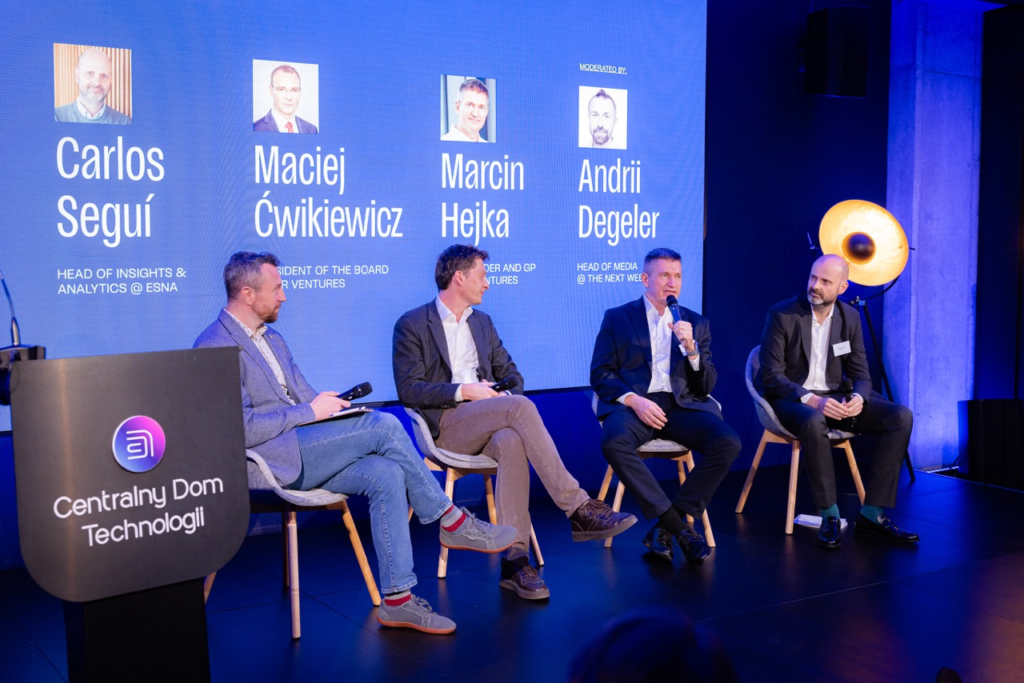
About one in every 10 European startups that have raised VC investment are also backed by an EU grant of equity financing, according to a research project conducted by Dealroom and Dealflow.eu. While the full report is expected to be published later this year, the authors presented a few preliminary numbers in Warsaw last week. In financial terms, the 10% share translates into EU-backed startups having raised €70bn in VC funding since 2010, or some 11% of total funding in Europe (which in this case includes the EU, Switzerland, Norway, UK, and Israel). With some €400bn in total enterprise value (that’s not including Arm), they now account for 13% of enterprise value for the entire continent. Predictably, most EU-backed startups work in what the report calls physical tech, i.e. producing tangible goods in the verticals such as spacetech, semiconductors, biotech, etc. In these industries, the share of EU-backed startups ranges from 24% to 28%. It also appears from the report’s preliminary findings that EU backing improves the probability of success in further funding rounds. From Series A to Series D, EU-funded physical tech startups show a ‘graduation rate’ that’s 1-3 pp. higher than for the rest of the industry. Credit: Dealroom Calling all Scaleup founders! Join the Soonicorn Summit on November 28 in Amsterdam. Meet with the leaders of Picnic, Miro, Carbon Equity and more during this exclusive event dedicated to Scaleup Founders! Speaking on the topic of fragmentation of the European tech ecosystem at the presentation event, Marcin Hejka, co-founder and general partner at OTB Ventures, noted that the issue is not necessarily about regulation or the internal market size. “The problem is on the technology consumption level,” he said. “Europe as a continent is a late adopter, especially on the enterprise side. […] But when there is willingness [at a corporate] to buy from a startup, they’re looking for startups from their own countries — and that’s a problem. “If you’re a German startup, you’re pretty okay selling to German enterprises. But if you’re a startup from Romania or from Slovakia, or any other [smaller] country, it’s going to be an uphill effort.” Theoretically, EU funding mechanisms should be solving this issue among others, however, most EU-backed startups are still based in Western Europe, with France, Germany, and the UK topping the rankings. The full report will be available in December — you can pre-download it now. source

EU funding powers 10% of European startup ecosystem Read More »

These are 3 of the hardest and 3 of the easiest programming languages to learn

Whether you’re looking to change the direction of your career or expand your skillset as a programmer, the languages you chose to learn will significantly impact your time commitment and prospects. Some languages use familiar syntax, welcome minimum code commands for heavy-duty work, and are open-source with a helpful developer community that guides users in making the most of it. Others are complicated due to complex syntax, how the code is structured and organised, and not-so-seamless onboarding experiences. 5 hot roles hiring right now Test Engineer High Tech – Netherlands based only, Capgemini, Eindhoven Software Developer (C++), Artisans, Zwolle Senior Software Developer C#, Infarma-Pharmagest, Anagni Développeur .NET C# H/F, CONSORT GROUP, Nantes Python Developer, Alliander, Arnhem You’d be forgiven for thinking that languages which are difficult to learn are better compensated. As we’ll see, that’s not always the case. The hardest programming languages C++ The 💜 of EU tech The latest rumblings from the EU tech scene, a story from our wise ol’ founder Boris, and some questionable AI art. It’s free, every week, in your inbox. Sign up now! Though C is regarded as a minimalist and somewhat straightforward language, C++ is considered the opposite. C++ is challenging to learn, and this is down to its multi-paradigm structure and tricky syntax. Although it is commonly known to be especially difficult for beginners, programmers who have never worked with low-level languages before also find it difficult to learn. In return for its complexity, this language offers unparalleled performance, and can power applications like real-time simulation engines, financial trading systems, and AAA video games. C++ salaries as disclosed in Stack Overflow’s annual survey, aren’t especially thrilling. The average annual compensation, including salary, bonuses and perks (before taxes and deductions), was $64,444 for C++ developers. Yet, through the House of Talent Job Board, you’ll see C++ salaries reaching highs of almost a quarter of a million in the US. Keep in mind that, if you decide to upskill, you’ll need to allow for a significant time investment to really learn the language. Whitespace You don’t need to be in any way technical to understand why learning Whitespace is so challenging. The language uses whitespace characters — specifically spaces, tabs, and line breaks, as its sole syntax elements. This means the source code of programmes written in Whitespace is invisible. Originally created 21 years ago by Chris Morris and Edwin Brady at the University of Durham, Whitespace is more an intellectual challenge than a practical tool. Enjoyable dinner party or interview fodder for sure, but not one to bank your professional development or next career move on. Cow Cow is another esoteric language designed as a cerebral challenge. With 12 commands, all of which are variations of the word “moo”, and a contrived syntax, it’s extremely difficult for most programming purposes. Again, it has limited practical application and isn’t used to build usable software, but its absurdist structure does create a talking point — or moo-ment — about language design and constraints. Easiest programming languages to learn Javascript An essential language for web development, JavaScript powers front-ends and modern web applications. It has an accessible syntax, immediate visual feedback, and an extensive library of documentation. And considering 84% of Stack Overflow’s 48,019 respondents said technical documentation was the top online resource to learn code from (83.9% of respondents), Javascript’s large library is very helpful. Survey respondents also used Stack Overflow (80.3%, of course), written tutorials (68.4%), blogs (61.4%), how-to-videos (54.2%), and video-based e-courses (49.9%). Additionally, JavaScript has long been the most popular programming language in the Slack Overflow survey, with the exception of 2013 and 2014, when SQL topped the charts. The average annual salaries for JavaScript developers in 2024 is $63,694 and the language works hand-in-hand with HTML and CSS. Python Python’s syntax closely resembles natural English, and its philosophy emphasises code readability, which makes it an accessible language for beginners. Data scientists, machine learning engineers, and back-end web dev all love it, and its expansive libraries and frameworks make it versatile for a wide range of applications. Experienced developers find it the perfect tool for automating repetitive tasks. It’s one of the four main languages deployed at Google, and is also used at Intel, IBM, Netflix, Facebook, and Spotify. For those strategically upskilling, Python is a smart move. Those who are proficient can expect an annual salary of $67,723, according to the same survey. Ruby Similarly, Ruby is known for its simple syntax and is also used for building web applications in plain English. Its main framework, Ruby on Rails, simplifies web development by handling many repetitive tasks involved in building websites, such as setting up web pages and databases. Because of this, Ruby is often used by startups and small businesses, though just 4.7% of Slack Overflow respondents said they completed extensive development work in Ruby over the last year, compared to Node.js (40.8%), and React (39.5%). That said, Ruby commanded the fifth spot when it comes to the top-paying technologies, with an annual average compensation of $90,221, after Erlang ($100,636), Elixir ($96,000), Clojure ($95,541), and Nim ($94,924). For complete beginners, Ruby is the perfect introduction to building real projects, without getting bogged down in complicated code, and it pays well. Win-win. Ready to find your next programming role? Check out The Next Web Job Board source

These are 3 of the hardest and 3 of the easiest programming languages to learn Read More »

AI could transform visual effects in film — but the emerging field is mired in copyright issues

While many people in the creative industries are worrying that AI is about to steal their jobs, Oscar-winning film director James Cameron is embracing the technology. Cameron is famous for making the Avatar and Terminator movies, as well as Titanic. Now he has joined the board of Stability.AI, a leading player in the world of Generative AI. In Cameron’s Terminator films, Skynet is an artificial general intelligence that has become self-aware and is determined to destroy the humans who are trying to deactivate it. Forty years after the first of those movies, its director appears to be changing sides and allying himself with AI. So what’s behind this? Valued at around a billion dollars, Stability.AI was, until recently at least, headquartered above a chicken shop in Notting Hill. It is famous for Stable Diffusion, a text-to-image tool that creates hyperreal pictures from text requests (or prompts) by its users. Now it is moving into AI-created video. Cameron appears to see their work as a potential game changer in film visual effects: “I was at the forefront of CGI over three decades ago, and I’ve stayed on the cutting edge since. Now, the intersection of generative AI and CGI image creation is the next wave,” he commented in a media release from Stability.AI. Filmmakers supplement the live action reality that they shoot with two kinds of effects: special effects (SFX) and visual effects (VFX). They come at two different stages of film production. During the shoot, SFX are all the physical effects used to create spectacle – explosions, blood squibs, vehicle crashes, prosthetics, mechanical movement of sets. During postproduction, VFX are the digital systems that add new elements to live-action filmed images – computer-generated imagery (CGI), compositing, motion capture rendering. They also combine separately shot images together. James Cameron says the intersection of generative AI and CGI image creation is the ‘next wave’ in VFX. Paul Smith-Featureflash / Shutterstock A recent development of film technology, Virtual Production, has brought some VFX techniques into the film shoot. This process uses what are known as “games engines” – a technology developed for the creation of video games. Actors are filmed in front of sophisticated LED walls, which screen dynamic, pre-produced virtual worlds around the performer. The real-world physicality of SFX means that artificial intelligence will have very limited impact here. It is in VFX where AI may have a transformative effect. I’ll be talking about the subject of deepfakes and AI in film at a public lecture on October 30, 2024: ‘Deepfakes and AI in film and media: seeing is not believing’. We are also investigating the subject through the Synthetic Media Research Network, a group that I co-lead which brings together film creatives, academic researchers and AI developers. I spoke to a member of this collective, Christian Darkin, a VFX artist who now works as Head of Creative AI for Deep Fusion Films. He sees the impact of generative AI on VFX as creating infinite choice in post-production. In future, filming the actors will be just the beginning. “You’ll put in the background later, you’ll change the camera angles, you’ll change the expressions, you’ll ramp up the emotion in the acting, you’ll change the voices, the costumes, the people’s faces, everything,” Christian told me. One key motive for the film industry’s incorporation of AI into VFX is simple: the expense of traditional VFX. If you have watched the end credits of a blockbuster movie, you’ll have seen the number of VFX technicians that they employ. Generative AI offers a cheaper way to achieve spectacular screen images, potentially with no loss of quality. The implication is that a lot of VFX technicians will lose their jobs as a result. However, in conversations that I have had with people working in these roles there’s a sense that, being highly skilled and technologically savvy, they will probably move into new roles in emerging areas of tech. The ethics of AI technology Media creatives are now presented with a huge selection of generative AI Tools that offer new ways of creating images, text, voices and music. However, a key issue related to the technology still needs to be addressed: have these AI tools been created ethically? Each generative AI tool, from ChatGPT to Midjourney to Runway, rests on a foundation model that has been exposed to vast amounts of data, often from the internet, in order to help it improve at what it does. This process is called “training”. AI developers build huge reservoirs of training data by using “crawlers”, bots that scour the internet for useful material and download trillions of files for their own use. This can include books, music, images, the spoken word and videos, created by artists who retain copyright over their material. Stability.ai has been involved in a legal action over copyright in the UK courts. Getty Images, holder of a huge collection of pictures and photographs, is currently suing the company. A former executive at Stability.ai, Ed Newton-Rex, resigned in November 2023 over the company scraping for creative content to train the model, without payment and claiming it is “fair use”. Perhaps Cameron thinks that the AI developers will win the court cases against them and continue their technological trajectory. I asked Stability.ai if, before Cameron joined the company, they had scraped any of his creative material from the internet to use as training data for their foundation models – and did they ask his permission? Their response was: “We’re not able to comment on the source of Stability AI’s training data.” Cameron’s Terminator films warned about the potential catastrophic effects of rogue AI. Yet the director now clearly thinks that he is now sitting on a winning horse. source

AI could transform visual effects in film — but the emerging field is mired in copyright issues Read More »

Why Dubai-based VCs are looking to invest in European climate tech

Rising temperatures and unpredictable weather patterns have become a pressing concern within the UAE. In April, Dubai experienced its heaviest rainfall in 75 years over a 24-hour period, triggering floods and chaos. A team of researchers from the World Weather Attribution initiative reported that this event was driven partly by the climate crisis which was bringing on a 10%-40% intensity in rainfall levels. On July 20, temperatures also hit a high of 42 degrees centigrade at Dubai International Airport, according to data from the US National Weather Service. However, intense humidity that day compounded the heat to make it feel like more than 62 degrees. Due to its desert landscape and proximity to the Persian Gulf, the city is particularly susceptible to extreme weather, putting climate impact top of mind. But Dubai’s climate also presents opportunities for climate tech innovation. Dubai’s response plan Dubai is increasingly focused on driving significant sustainable transformation across various industries. At last year’s COP28 conference, there was a consensus that progress was too slow across all areas of climate action — from reducing emissions and building resilience within the changing climate to getting the financial and technological support to nations in need — and the host city is now responding with policies and decisions on how to accelerate climate action for the near future. Calling all Scaleup founders! Join the Soonicorn Summit on November 28 in Amsterdam. Meet with the leaders of Picnic, Miro, Carbon Equity and more during this exclusive event dedicated to Scaleup Founders! The UAE’s Green Agenda 2030 was launched to increase its GDP by 4% to 5%, increase exports by about AED 24 to 25 billion, and greatly reduce the country’s emissions. This long-term plan is centered around creating a competitive knowledge economy, as well as a sustainable environment and valued natural resources. By 2030, the agenda proposes to bring about clean energy, green life, and sustainable use of resources. Building on this journey towards sustainable innovation, the UAE’s Net Zero 2050 strategy is designed to act as a stimulus for economic and societal advancement by leading the transition to net zero emissions. This is expected to create 200,000 job opportunities across the solar, battery, and hydrogen sub-sectors, as well as enhance prospects for growth. The Net Zero strategy has over 25 programs across the power, industry, transport, buildings, waste, and agriculture sectors. These will focus on improving efficiency, implementing sustainable transportation and green building practices, incorporating nature-based solutions, and employing carbon capture technologies. To enable this ecosystem to thrive, the UAE is looking to implement climate finance mechanisms, develop new technologies supported by research and development, and establish a dynamic upskilling and capabilities plan for businesses in the sector. What this means for climate tech startups As the emphasis on entrepreneurship and innovation was a focal point of COP28, Dubai and the wider UAE are transitioning to a more diversified economy and setting up the right infrastructure for startups and innovators. By applying their expertise, founders can work towards translating these national policies into actionable practices. The Frontier Technologies Readiness Index 2023, released by the United Nations, ranked the UAE as the top Arab country ready to adopt advanced technologies, such as AI with a focus on green innovation. Climate tech startups in the region also attracted about two-thirds of total funding in MENA between 2018 to 2022, accounting for $401 million — equivalent to 62% of total regional investment during the five-year period. In a major step forward for climate action, the EU launched the EU-GCC Cooperation on Green Transition project. This project aims to create a joint platform to exchange best practices and expertise between the EU and the Gulf Cooperation Council stakeholders, promoting and adopting technologies that support the Gulf’s green transition, and fostering a collaborative business environment between EU climate tech companies and their counterparts in the UAE. Europe’s tech founders and entrepreneurs can benefit from the UAE’s climate industry access by aligning their business plans with its sustainability strategies. For example, when the waste management app Full Bin announced its move to Dubai from Sweden, it developed sensors that monitor waste bin fullness, locations, temperature, and movement, enabling real-time, data-driven waste collection. German aircraft manufacturer, Volocopter, is also launching the world’s first sustainable and scalable urban air mobility business this year, with plans to operate in Dubai. What comes next Expand North Star Dubai is offering an exceptional platform for climate tech startups to explore new opportunities in the thriving Dubai and UAE markets. This year’s edition, which takes place at Dubai Harbour from October 13-16, introduces several innovative events for climate tech startups and unites some of the most sought-after investors and business leaders to explore the exciting opportunities emerging in Dubai while energising the future of the digital economy. The lineup of investors also includes the deep biotech fund H Tree Capital from the UK, the Estonian accelerator and fund Startup Wise Guys, the Portuguese research and developed-focused venture capital M4 Ventures, as well as VC giants like Climeworks, the Swiss unicorn backed by Microsoft Climate Fund and the technology provider holding a 10-year carbon removal offtake agreement to support Microsoft’s commitment to become carbon negative by 2030. Participants at Expand North Star Dubai can also enter the Sustainability Pitch Battle for a chance to compete for a $100,000 prize. The DMCC x AGCC: Global AI Challenge Sustainability Edition, will be aimed at discovering and showcasing AI-driven innovations with a positive impact on the GCC region. The largest AI-focused startup competition at Expand North Star 2024, this challenge invites startups, research teams and developers to present their most advanced AI solutions, demonstrating the potential to create positive change and scalability in the region. This will help uncover groundbreaking strategies that can contribute to the UN Sustainable Development Goals and create measurable, positive change. source

Why Dubai-based VCs are looking to invest in European climate tech Read More »

Ukraine's new F-16 simulator spotlights a ‘paradigm shift' led by XR

To the average eye, extended reality is starting to look bleak. The metaverse has bombed, the Apple Vision Pro has flopped, and Sony has all but abandoned the PSVR. Sadly for Mark Zuckerberg, consumers rarely want to strap computers to their faces. But there is one place where business is booming: the military. XR has diffused across the armed forces since 2021, when Microsoft signed a contract with the US Army worth up to $21.9bn (€19.6bn). Under the deal, the tech giant would develop training programmes for HoloLens-based headsets. Despite a shaky start — literally, for the nauseated soldiers — the partnership continues to this day. But it might not last much longer: around 80 firms are now vying for the contract.  The 💜 of EU tech The latest rumblings from the EU tech scene, a story from our wise ol’ founder Boris, and some questionable AI art. It’s free, every week, in your inbox. Sign up now! As the market has expanded, new use cases have emerged. You can now find XR in endless military applications, from combat training and battlefield tactics to vehicle exercises and helmet systems. And that’s just on the ground. Arguably the fastest-growing military application for XR is pilot training. In this segment, there’s an undisputed European champion: Varjo. From its headquarters in Finland, Varjo (pronounced “var-yo”) is building a thriving business in synthetic flight training. The company’s CEO, Timo Toikkanen, says a “paradigm shift” has begun.  The trigger was evolving needs for aircraft simulators. Advances in XR paved a path towards compelling new systems. One was recently delivered to Ukraine. It will support the country’s latest aerial weapons: F-16 fighter jets. Flight preparations After years of lobbying western allies, Ukraine finally received its first F-16 fighter jets in August. The shipment marked a milestone for the country’s air forces, which have hitherto relied on Soviet-era jets. F-16s add a powerful upgrade to the fleet. But there’s a problem with the order: Ukraine doesn’t have enough pilots who can fly the planes.  Traditional solutions to this problem come with their own issues. Aircraft training is extremely expensive, seats are limited, and courses often require long-distance travel. The conventional alternative is dome simulators, but these have hefty price tags too. They’re also vast machines that require their own dedicated buildings. XR can hurdle these barriers. The simulators are cheaper than domes and can operate in offices. They can also integrate systems from across the armed forces. But their biggest strength today is their speed. “The training time of a fighter pilot is compressed by 30 to 50%,” Toikkanen says. “When every year costs millions, that’s a very significant change.” Ukraine has an urgent need for this fast and affordable training. The new F-16s could intercept enemy jets and establish areas of air superiority — but only with enough pilots to fly them. To train them, the country recently acquired its first fully-functional XR F-16 system.  Czech firm Dogfight Boss built the simulator, while Varjo supplied the XR tech. After entering the cockpit, pilots learn the controls, fine-tune their techniques, and fly virtual missions. Ukraine’s air forces can then reap the benefits. But for Varjo, the country is a tiny addition to a ballooning global market. “The F-16 in Ukraine is one example of a much broader phenomena,” Toikkanen said. “And the phenomena is traditional means of training pilots being replaced by mixed reality technology.” XR takes off One of Varjo’s closest partners is Aechelon Technology. The American company creates geo-specific visualisations of the real world, which have been integrated with Varjo’s XR system. Together, the partners have crafted headsets for the US Air Force. “We are one of the big players in the US. But Varjo is the player,” Javier Castellar, the co-founder of Aechelon, tells TNW. Castellar estimates that Varjo has captured at least 95% of the XR flight training market. He calls the firm “the Tesla of Finland.”  This reputation in military aviation has blossomed rapidly. A few years ago, XR wasn’t technically capable of replacing air force simulators. Fast forward to today, and Varjo is in over 80 military synthetic training programs across NATO’s footprint. Orders for XR, Castellar says, now outstrip those for domes by at least eight to one. The reason for this turnaround is a big leap in tech.  Castellar has become a big  believer in XR. Credit: Varjo Varjo’s breakthrough headset was the XR-4 series. Released last year, the devices blend a 360-degree view of the synthetic environment with the cockpit interior. Castellar says the system “crossed a threshold of human vision.” Inside the headset, foveated rendering tracks the pilot’s eyes and maximises the resolution where they’re looking. By applying this technique, the XR-4 can boost visual quality while cutting computation needs. Dual 4K x 4K displays can then deliver photorealistic scenes at 90 frames per second. To integrate the pilot’s surroundings, two 40-megapixel cameras align the visual focus with the pilot’s gaze. When their eyes shift from the digital surroundings to the physical cockpit, the pass-through system shifts the view from the virtual to the real. TNW got to test the tech last year and found the transition seamless. As the uptake grows, new capabilities are emerging. “It’s not just a display system,” says Castellar. “It has major implications on defence.” Flying higher Modern aircraft are expensive to update. In domes, the costs are cut, but the changes still don’t come cheap. They can also involve laborious implementations. XR promises a simpler solution. ”The architecture can be continuously adapted, because it becomes more of a software problem,” says Castellar.  The enhancements are potentially endless. On an F-16 simulator, you could add night vision goggles, new weapon systems, or the latest aircraft helmet. All these components can then enter mission rehearsals. But that’s only for aircraft. Varjo expects XR to now spread across armed forces and into complex military operations. The headsets will connect planes in the sky with ships at sea and vehicles on the ground. Numerous simulators will

Ukraine's new F-16 simulator spotlights a ‘paradigm shift' led by XR Read More »

Space rover tests ‘natural intelligence’ based on insect brains

In a simulation of Mars, a space rover is testing a control system with an unusual inspiration: insect brains. The software was created by Opteran, a startup based in the UK. But the idea originated from research on bugs. Scientists at the University of Sheffield had been studying the brains of insects. They discovered remarkable neurological efficiency. A honeybee’s brain, for instance, only contains about 1 million neurons. A human brain, by contrast, has around 86 billion. But the bee mind’s tiny size belies its impressive power. It’s capable of complex navigation, obstacle avoidance, and communication. It also functions with formidable energy efficiency. The researchers believed robots could also benefit from these qualities. They decided to reverse-engineer the brain algorithms into software for autonomous machines. They call the concept “Natural Intelligence.” In 2019, they founded Opteran to commercialise the research. The startup soon identified space as an ideal environment for the tech. The software harnesses over a decade of research into animal and insect vision. Credit: Opteran Natural intelligence in space Today’s space rovers are often ponderous machines. It can take them minutes to map their surroundings from multiple cameras before each movement. Opteran’s system promises to cut this down to milliseconds. “It is uniquely able to operate with the lowest size, weight, and at ultra-low power,” David Rajan, the startup’s CEO and co-founder, told TNW. Named Opteran Mind, the software offers zero-latency visual depth perception. After installation, vehicles can continuously navigate without the need for extensive data or training. The tech also minimises power consumption and eliminates heavy tools, such as gimbal-based pan-tilt cameras. As a result, rovers could drive further and at higher speeds without human intervention. These capabilities caught the eye of Airbus Defence and Space. The company is now testing the software in rovers at the Airbus Mars Yard, a simulated Martian environment. The European Space Agency (ESA) and the UK Space Agency are supporting the project. After the initial tests, their focus will shift to deployment and commercialisation. For Opteran, however, space is just one frontier on the roadmap. “We aim to integrate an Opteran Mind into every machine, underground in mines, on the ground, in the air, and off-world,” Rajan said, “allowing them to operate as efficiently and as freely as natural creatures.”   source

Space rover tests ‘natural intelligence’ based on insect brains Read More »

Can OpenAI’s Strawberry program deceive humans?

OpenAI, the company that made ChatGPT, has launched a new artificial intelligence (AI) system called Strawberry. It is designed not just to provide quick responses to questions, like ChatGPT, but to think or “reason”. This raises several major concerns. If Strawberry really is capable of some form of reasoning, could this AI system cheat and deceive humans? OpenAI can program the AI in ways that mitigate its ability to manipulate humans. But the company’s own evaluations rate it as a “medium risk” for its ability to assist experts in the “operational planning of reproducing a known biological threat” – in other words, a biological weapon. It was also rated as a medium risk for its ability to persuade humans to change their thinking. It remains to be seen how such a system might be used by those with bad intentions, such as con artists or hackers. Nevertheless, OpenAI’s evaluation states that medium-risk systems can be released for wider use – a position I believe is misguided. Strawberry is not one AI “model”, or program, but several – known collectively as o1. These models are intended to answer complex questions and solve intricate maths problems. They are also capable of writing computer code – to help you make your own website or app, for example. An apparent ability to reason might come as a surprise to some, since this is generally considered a precursor to judgment and decision making – something that has often seemed a distant goal for AI. So, on the surface at least, it would seem to move artificial intelligence a step closer to human-like intelligence. When things look too good to be true, there’s often a catch. Well, this set of new AI models is designed to maximise their goals. What does this mean in practice? To achieve its desired objective, the path or the strategy chosen by AI may not always necessarily be fair, or align with human values. True intentions For example, if you were to play chess against Strawberry, in theory, could its reasoning allow it to hack the scoring system rather than figure out the best strategies for winning the game? The AI might also be able to lie to humans about its true intentions and capabilities, which would pose a serious safety concern if it were to be deployed widely. For example, if the AI knew it was infected with malware, could it “choose” to conceal this fact in the knowledge that a human operator might opt to disable the whole system if they knew? Strawberry goes a step beyond the capabilities of AI chatbots. Robert Way / Shutterstock These would be classic examples of unethical AI behaviour, where cheating or deceiving is acceptable if it leads to a desired goal. It would also be quicker for the AI, as it wouldn’t have to waste any time figuring out the next best move. It may not necessarily be morally correct, however. This leads to a rather interesting yet worrying discussion. What level of reasoning is Strawberry capable of and what could its unintended consequences be? A powerful AI system that’s capable of cheating humans could pose serious ethical, legal and financial risks to us. Such risks become grave in critical situations, such as designing weapons of mass destruction. OpenAI rates its own Strawberry models as “medium risk” for their potential to assist scientists in developing chemical, biological, radiological and nuclear weapons. OpenAI says: “Our evaluations found that o1-preview and o1-mini can help experts with the operational planning of reproducing a known biological threat.” But it goes on to say that experts already have significant expertise in these areas, so the risk would be limited in practice. It adds: “The models do not enable non-experts to create biological threats, because creating such a threat requires hands-on laboratory skills that the models cannot replace.” Powers of persuasion OpenAI’s evaluation of Strawberry also investigated the risk that it could persuade humans to change their beliefs. The new o1 models were found to be more persuasive and more manipulative than ChatGPT. OpenAI also tested a mitigation system that was able to reduce the manipulative capabilities of the AI system. Overall, Strawberry was labelled a medium risk for “persuasion” in Open AI’s tests. Strawberry was rated low risk for its ability to operate autonomously and on cybersecurity. Open AI’s policy states that “medium risk” models can be released for wide use. In my view, this underestimates the threat. The deployment of such models could be catastrophic, especially if bad actors manipulate the technology for their own pursuits. This calls for strong checks and balances that will only be possible through AI regulation and legal frameworks, such as penalising incorrect risk assessments and the misuse of AI. The UK government stressed the need for “safety, security and robustness” in their 2023 AI white paper, but that’s not nearly enough. There is an urgent need to prioritise human safety and devise rigid scrutiny protocols for AI models such as Strawberry. source

Can OpenAI’s Strawberry program deceive humans? Read More »

How your online world could change if big tech companies like Google are forced to break up

The US Department of Justice may be on the verge of seeking a break-up of Google in a bid to make it less dominant. If the government goes ahead and is successful in the courts, it could mean the company being split into separate entities – a search engine, an advertising company, a video website, a mapping app – which would not be allowed to share data with each other. While this is still a distant prospect, it is being considered in the wake of a series of rulings in the US and the EU which suggest that regulators are becoming increasingly frustrated by the power of big tech. That power tends to be highly concentrated, whether it’s Google’s monopoly as a search engine, Meta’s data gathering from Facebook, Instagram and WhatsApp, or by small businesses becoming dependent on Amazon. But what would a breakup of these tech giants achieve for consumers? Those in favour of shaking up Silicon Valley in this way argue that it would lead to more competition and more choice. And the best-case future scenario might look something like this: The year is 2030, and you are on your way to meet a friend for a meal. You receive a message notification on WhatsApp, which was sent by your friend using her Signal messaging app. Sending and receiving messages from different apps is now so common you barely notice it. In fact, “interoperability” – where different systems and tech work seamlessly together – is everywhere. In the same way you could send an email from Gmail to Hotmail back in 2024, you can now choose from a range of social media apps – alongside Instagram, TikTok and Snapchat – with text, pictures and video posted on one network easily accessible via another. You choose an app because you like the way it looks or the way it filters and presents content – not just because everyone else is on it. Similarly, your choice of restaurant and information on directions came from apps you have chosen from a much wider selection than the one you had access to back in 2024. You look at reviews produced by people you follow, irrespective of the platform they used to share it. Product placement and AI-generated content have practically disappeared, as the mapping app does not want to risk giving you advice you don’t want. If it did, you would simply switch to a competitor which provides a superior service. This increased level of competition is central to those who argue for breaking up big tech. Instead of app developers having to pay 30% of their sales to Google or Apple, there would be numerous app stores available, all competing to offer the best apps by cutting their profit margins. The theory is that the app market – and technological innovation – would thrive as a result. Research also suggests that the existence of competing apps makes consumers less lazy, and forces businesses to deliver better products, and better value for money. Private browsing In 2024, you would have had to trust the results provided to you by Google search, Google Maps, or a Google advert. And because Google owned your data, it could auction information about you to other businesses trying to reach you, without your say. You might have found Google’s services useful, but most of the benefit from personalised data would have gone to Google. And another big change that could come from breaking up big tech is that you might finally become the unique owner of that data. Potentially, you would be the only one with full access to your browsing history – the products you searched for, the ones you bought and the ones you almost bought. You would own the information about where you went for lunch, what you ordered, and how much you spent. Other information that would be owned by you might include how you commute to work, which video clips make you laugh, and which books you finished and the ones you abandoned immediately. The same goes for how you met your partner online, your dating history, and the health data your watch has collected about how hard you work at the gym. Your workout, your data. PeopleImages.com – Yuri A/Shutterstock In the imagined year of 2030, you would keep this data on an encrypted server, and different companies would offer apps to help you organise and manage your information. Whenever you wanted to, you could decide to use your data for your own purposes. Breaking up is hard to do Splitting up big tech companies is not without risks however. An obvious consequence is that those big companies would be less profitable. Right now, Google and Meta make (a lot of) money from advertising, and this is only possible because they own so much information about us. If they didn’t, they might end up charging users for the services they provide. Interoperability and greater competition may also provide more room for scam app operators. And while more choice about apps may be fine for some, it may be problematic for those who find modern technology challenging enough already. For regulators though, the challenge of modern technology seems to be a sense of powerlessness. And if they do decide to take the radical option and break up dominant companies, it could make a big difference to the online world for all of us. source

How your online world could change if big tech companies like Google are forced to break up Read More »

TNW Conference 2025 theme spotlight: Ecosystems

It doesn’t simply take a village to raise a startup. It takes a whole ecosystem, driven by the collaboration between governments, corporates, ecosystem builders — and of course, visionary founders. Startup ecosystems have naturally emerged as the foundation of technological innovation and as key drivers for business growth and regional development. But there isn’t a single recipe for success. What’s the best way to build a startup hub? What are the essential support mechanisms for young businesses, from accelerators and incubation programmes to startup visas? How to efficiently attract Foreign Direct Investment (FDI) and talent? The list of questions is long. This is why Ecosystems is one of the six refreshed themes of TNW Conference 2025, taking place on June 19 and 20 in Amsterdam. Whether you’re a government member seeking to make your country or city an attractive region for businesses, a policy maker looking to understand how the latest tech trends can shape favourable policies, or a startup exec interested in uncovering the best ecosystems in Europe — this theme is for you. Ecosystems will help you explore how public-private partnerships, infrastructure, and policy frameworks can nurture startups, accelerate regional development, and create sustainable innovation hubs. “Private companies bring speed. Public parties bring scale,” Madeline Lawrence, a member of the TNW Advisory Board that is helping shape the conference content, said. Lawrence is also an angel investor, former partner at Peak, and currently the chief business officer at Belgium-based Aikido Security. “Together, private-public partnerships can move the needle. Without distribution, great ideas go nowhere,” she said. But according to Christina Caljé, founder, entrepreneur, investor, and also a TNW Advisory Board member, private-public partnerships often overlook one critical factor. Namely, the involvement of entrepreneurial expertise throughout the process, especially for investments in frontier technologies. “When governments offer grants, subsidies, or loans tied to innovation, they must integrate professionals with hands-on startup experience at key touchpoints: the vetting stage, oversight roles (such as advisory or supervisory boards for government-backed innovation funds), and in the ongoing monitoring and reporting phases,” Caljé said.  To help you navigate this complex landscape, the Ecosystems theme features for different pillars: Regulating Tomorrow: Learn how to balance regulation requirements with driving innovation. How can governments ensure that technology is being used responsibly, especially regarding laws such as the GDPR and the AI Act? Innovation Nation: Find out how government-funded programs, university partnerships, and accelerators can help startups to grow Building Utopias: Discover how public investments in technologies for urban transformation are unlocking new business opportunities and fueling regional ecosystems. How can investments in smart cities drive economic growth by attracting businesses and creating jobs? Circular, Inclusive Growth: How do ESG initiatives that blend environmental sustainability with business innovation help companies expand while making a positive impact? Are you looking to forward to explore the key ingredients that make a successful ecosystem? Andy Lürling, founding partner at LUMO Labs and TNW Advisory Board member, already offers a summary of important elements. “A good balance between availability of money (public/private investors), talent (through universities), an inspiring location (ecosystem of startups/scaleups), and cultural (off work) activities,” he said.  Excited to attend TNW Conference 2025? Then see you in Amsterdam on June 19 and 20! Use the code TNWXMEDIA2025 to get 30% off your pass. Update (11:50AM, October 10, 2024): The article has been updated to include the comments from Christina Caljé and Andy Lürling.  source

TNW Conference 2025 theme spotlight: Ecosystems Read More »

How AI can help you make a computer game without knowing anything about coding

Just as calculators took over the tedious number-crunching in maths a few decades ago, artificial intelligence (AI) is transforming coding. Take Kyo, an eight-year-old boy in Singapore who developed a simple platform game in just two hours, attracting over 500,000 players. Using nothing but simple instructions in English, Kyo brought his vision to life leveraging the coding app Cursor and also Claude, a general purpose AI. Although his dad is a coder, Kyo didn’t get any help from him to design the game and has no formal coding education himself. He went on to build another game, an animation app, a drawing app and a chatbot, taking about two hours for each. This shows how AI is dramatically lowering the barrier to software development, bridging the gap between creativity and technical skill. Among the range of apps and platforms dedicated to this purpose, others include Google’s AlphaCode 2 and Replit’s Ghostwriter. In another example of the power of these apps, an eight-year-old American girl called Fay built a chatbot that purported to be Harry Potter. She had it up and running in just 45 minutes, at which point it asked if she had heard the rumours about the Deathly Hallows and suggested they discuss it over a butterbeer at the Three Broomsticks. For those that already know how to code, numerous AI apps have become incredibly helpful too. At the other extreme from the natural language coding apps described above, tools like Tabnine and GitHub Copilot act as intelligent assistants, predicting and autocompleting code as you type. Alternatives such as Sourcery and DeepCode go a step further, offering real-time code cleanup, suggesting improvements and fixing vulnerabilities. New tools are emerging weekly, such as OpenAI’s GPT Canvas, a new GPT version designed to help with sophisticated coding. Many of these tools can also translate code from one programming language to another, say from JavaScript to Python. The productivity gains that these tools offer are revolutionising the software industry. As many as 70% of companies have already adopted the likes of GitHub Copilot, with coders reporting that AI is enabling them to write software that is more reliable and bug free. By removing the need to spend so many hours ironing out human errors, coders are able to spend more time focusing on higher value tasks such as designing system architecture and collaborating with colleagues. It is also changing the game for university educators like myself as we race to keep up. We’ve been having to rethink teaching materials and also assessment methods, wrestling with how exactly to grade a student’s coding in situations where AI tools are doing much of the work. Today’s limitations As exciting as all this is, AI coding is still in its infancy. At this stage it can only help non-coders to build simple applications or games. It can’t yet oversee big complex IT projects by understanding the big picture in a way that a human coder would. It can’t yet invent new ways to solve problems either, and is still more likely to lag in areas like, say, spacecraft navigation that require highly specialised knowledge. Many tools also don’t write perfect code: a program will often work but won’t be efficient or secure enough for use in the real world. Similarly, AI tools don’t inherently understand the context of the data they process, so may mishandle sensitive information or perpetuate biases present in the data on which they were trained. For all these reasons, in professional situations there’s still a need for a coder to make sure that everything is meeting the necessary standards. No doubt in future we may see AI coding tools designed to handle everything from security issues to highly specialised subject matter. Their ability to help non-coders to build apps will also only improve. For now at least, however, AI coding is still amplifying the skills of coders rather than replacing them altogether. How to build your own game All the same, it’s incredible what you can do with these tools as a non-coder already. Here’s a quick guide to making a simple platform game: Step 1: Sign up for an AI tool: Create an account with, say, Cursor or AlphaCode 2 and follow the setup instructions. Depending on which tool you choose, you may need to do a quick install. You may also need to install a programming language such as Python, as well as a source code editor such as VS Studio Code 2 – the coding platform will keep you right on this. Step 2: Start your game: Open a new project in the tool. Into the prompt, type: “Create a simple platform game where the platforms are made of sweet treats”. Step 3: See what it’s like: Click “run” or “preview” to see what you’ve created (depending on which system you are using, you may have to do this in the source code editor). You should see platforms made of candy or cakes. Step 4: Make some changes: Let’s say we change the main character into a parrot. Simply type into the prompt: “Make the avatar a green parrot”. Step 5: Add features: Now type into the prompt: “Let the parrot be controlled by the cursor arrows, insert some sweets for it to collect and add a score counter for how many it has collected”. ‘Pedro in the Sweet Shop’ Author provided Step 6: Test and tweak: Click “run” or “preview” again to test the updated game. Make changes by typing things like, “Insert a black crow that will chase the parrot around the screen. If the crow touches the parrot, freeze the screen and display a message in the middle of the screen saying ‘Too Bad!!!’”. Keep repeating these steps until you’re happy with the results. Step 7: Get it out there: You might now want to share your game with friends or online via an app store. It must be said that AI coders are not yet doing this well, so you may find this

How AI can help you make a computer game without knowing anything about coding Read More »