It was cold – but nowhere near what I expected; I’ve been colder in an outdoor swimming pool in Australia. It’s part of a global feedback loop, the scale of which I only began to comprehend when I saw this remarkable continent for myself.
In the late 1970s, researchers became increasingly concerned about the stability of the West Antarctic Ice Sheet. There have been ongoing attempts to determine when the ice sheet last collapsed and when it might collapse next. Then, in 2024, a press release hit my desk – a research paper had determined that the West Antarctic Ice Sheet had collapsed during the last interglacial period.
The problem? Current global temperatures are on par with the last interglacial period. Time was ticking for the ice sheet. I booked my ticket.
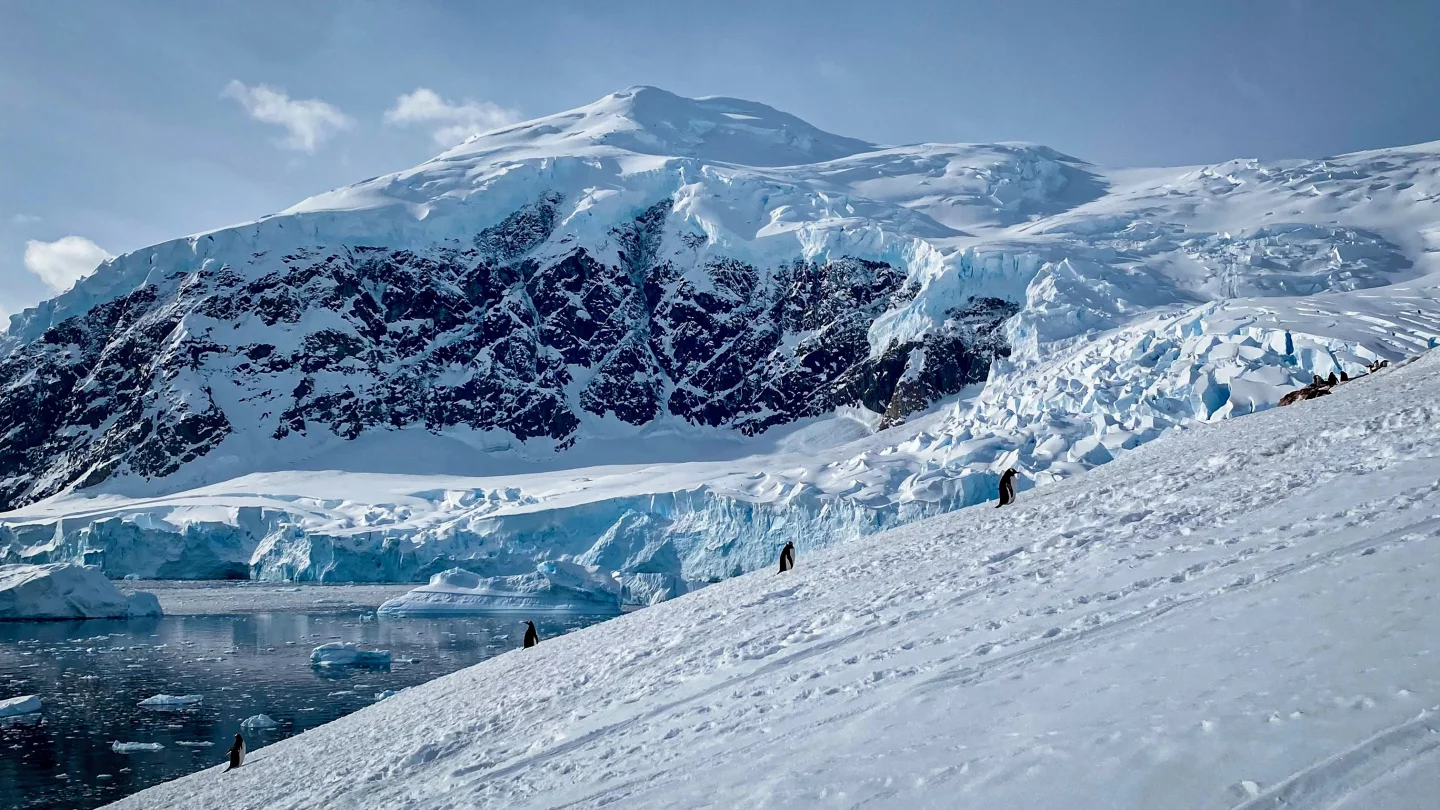
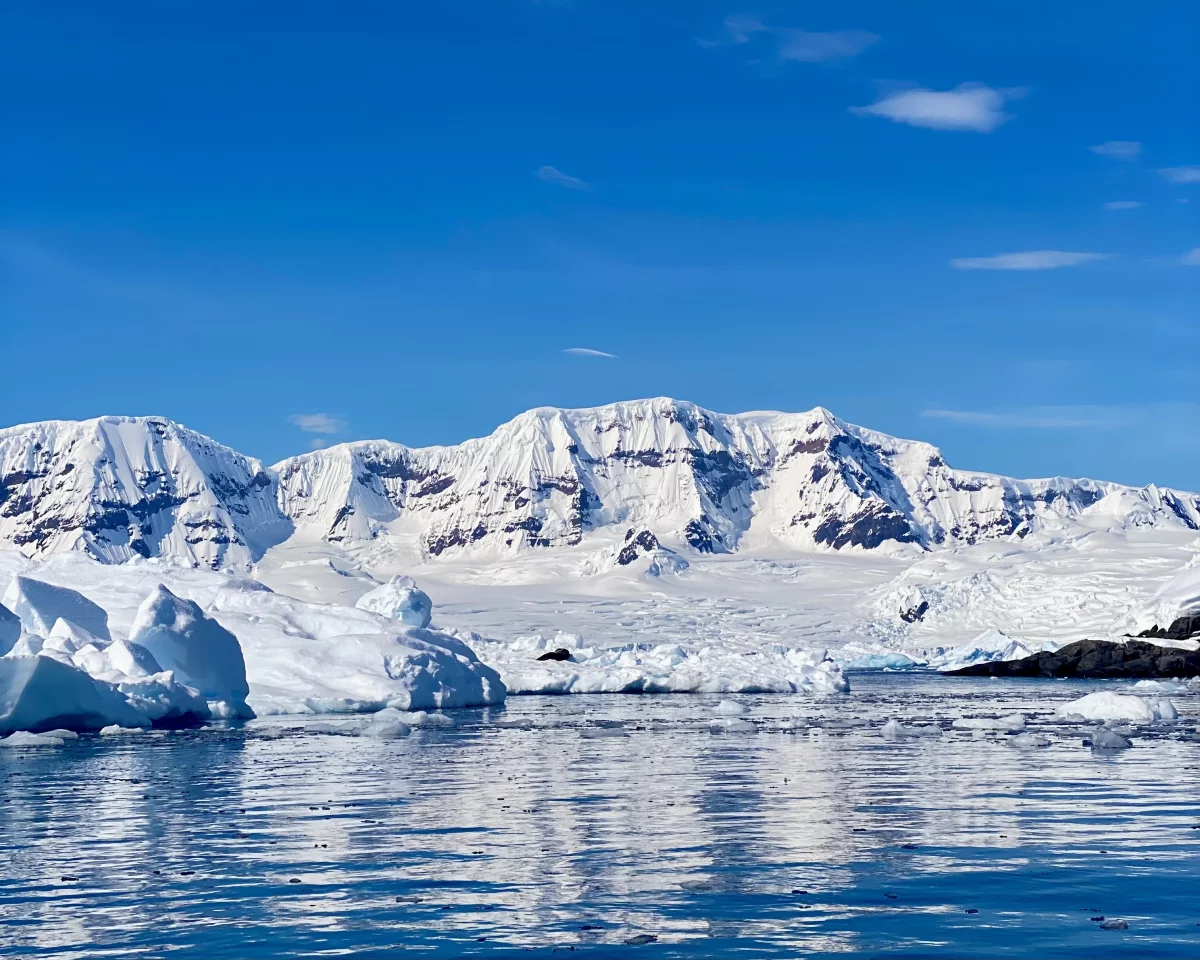
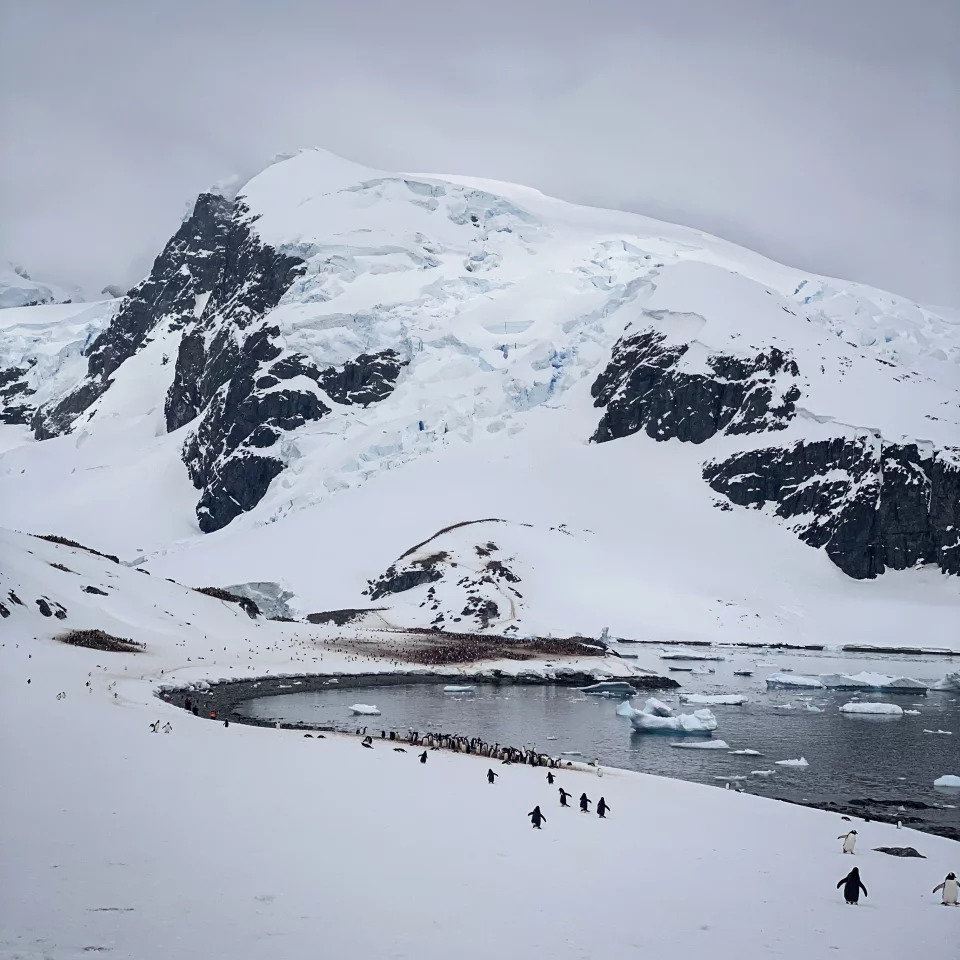
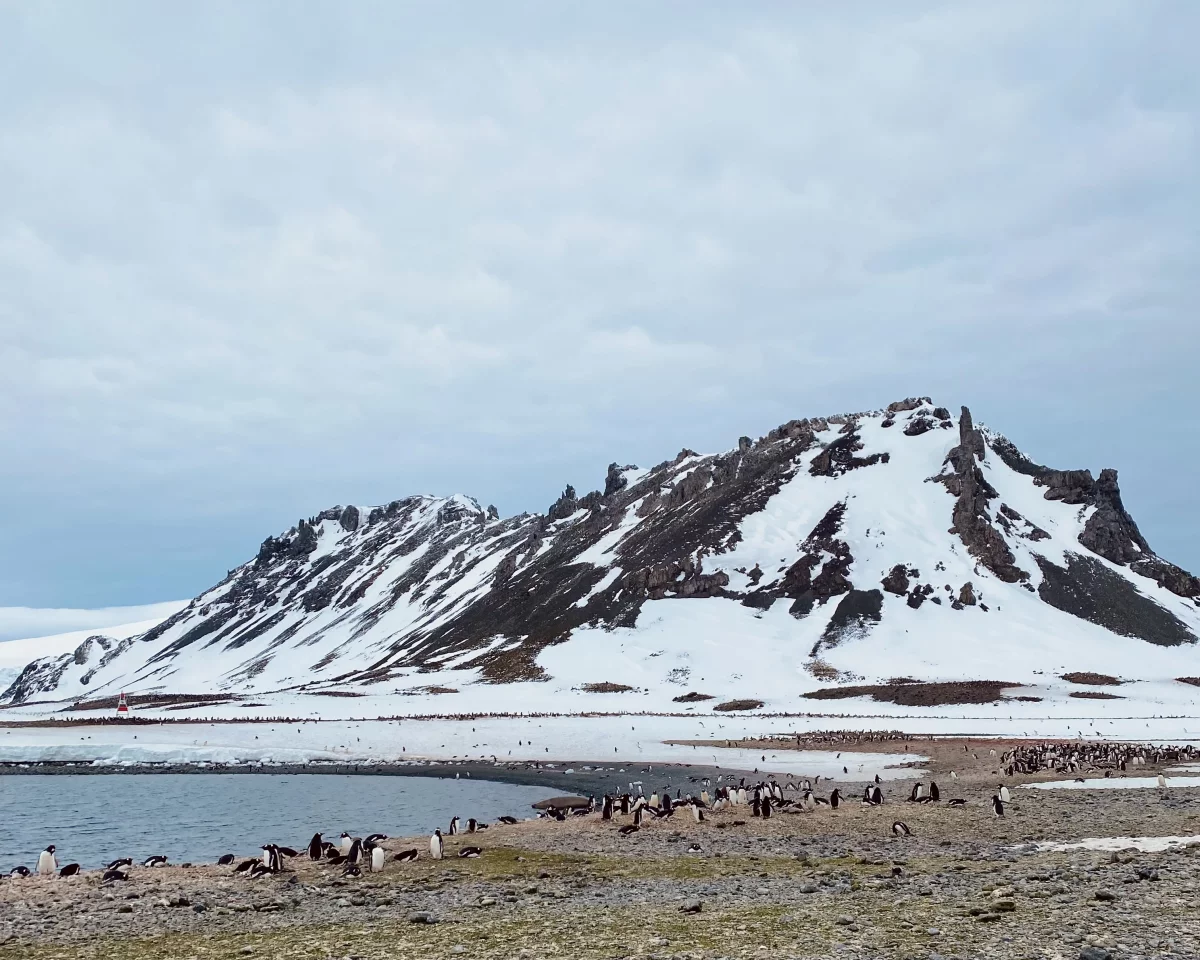
After three long flights and two days on a boat, I stood on the ice sheet overlooking a colony of gentoo penguins. It felt like I was in a simulation – the amount of ice around me couldn’t be real.
There was ice covering every mountain, filling the gaps between mountains and forming glaciers, and extending into the distance. The sheer volume of ice was beyond comprehension – and I was there in summer. During the Antarctic winter, frozen seawater creates ‘sea ice’, almost doubling the area of the continent.
To help me break down just how much ice is in Antarctica, I turned to Dr Richard Jones, a Chief Investigator at Securing Antarctica’s Environmental Future (SAEF) who focuses on climate and ice sheets.
Turns out, I’m not the only one who struggled to take in just how much ice is on the continent. On one of his early trips to Antarctica, Jones recalls, “flying over huge mountain ranges as well as all of this ice – you just keep on flying and flying for hours. And you really start to comprehend just how big Antarctica is.”
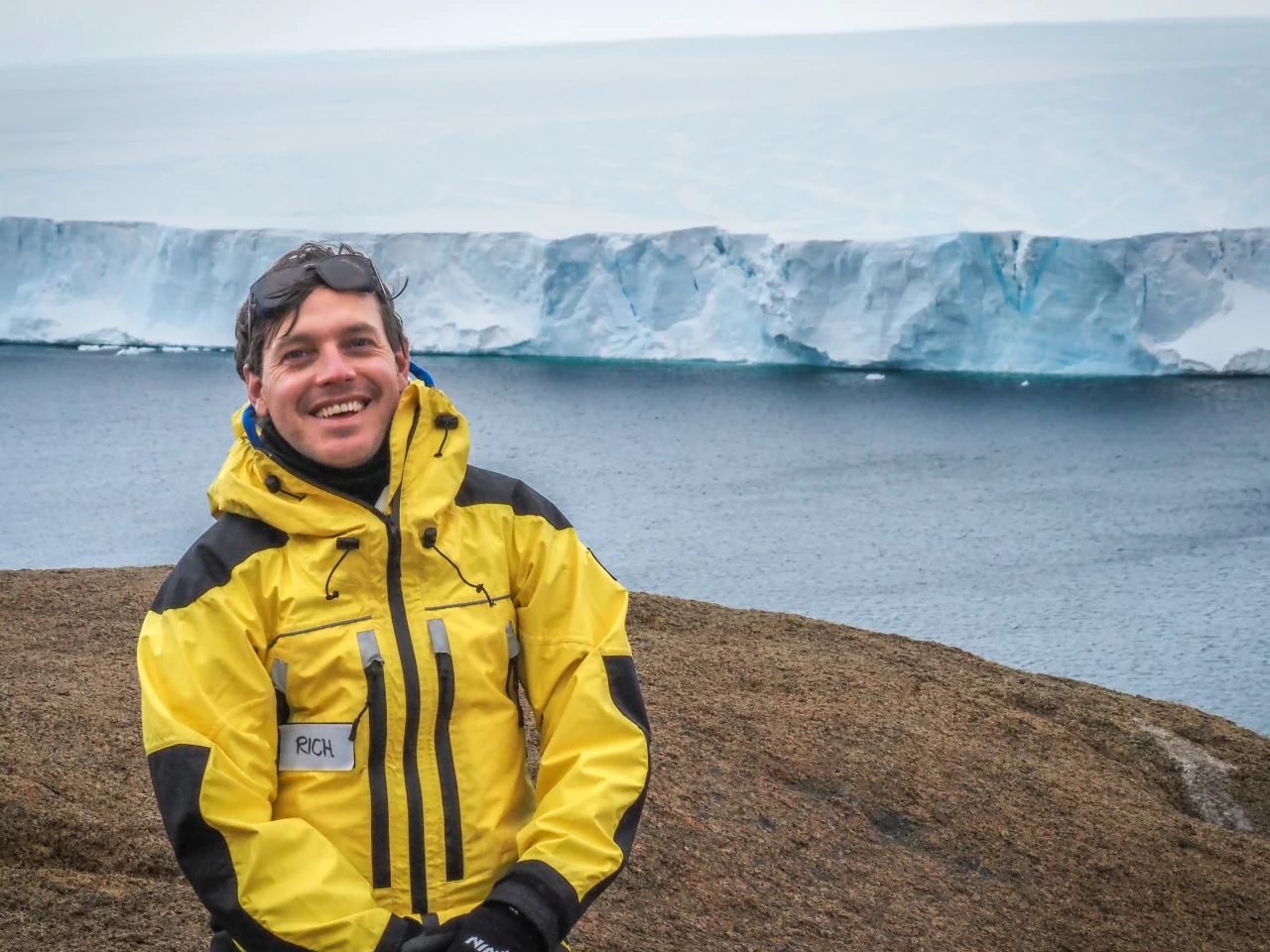
Supplied by Richard Jones
It’s not just spread far and wide, the glaciers and ice on the continent are kilometres thick. Jones says he once flew from a research station to the top of an ice plateau in a helicopter. “You just keep on going up and up and up. We went from basically sea level to about two and a half thousand metres,” he says.
Seeing all of this ice and knowing that researchers have been concerned about Antarctica melting for over 50 years, raises the question: Where the hell is all of this ice going to go when it melts?
If all the ice melted, that would be equivalent to 58 metres of sea level rise.
“The ice sheet is essentially kilometres thick of glacial ice. It’s sitting on land and flowing off the Antarctic continent, and that’s going to directly contribute to sea level rise,” says Jones. “If all the ice melted, that would be equivalent to 58 metres (190 ft) of sea level rise.”
Cat Williams
There’s a lot of ice, so I put on a lot of layers. Thermals. Fleece. Down jacket. Waterproofs. Beanie, neck buff, gloves. Two pairs of socks, gumboots. I step outside and immediately start sweating.
It’s day one, and the sun is beaming down. I swap my beanie for a cap for the rest of the trip. By day three, I’m skipping the thermal and down jacket layer. It’s no surprise that ice is melting – I feel like I’m starting to melt too.
It’s extremely unlikely that the entire Antarctic ice sheet will melt, but this doesn’t mean that we won’t feel the effects.
“By 2100, there could be about 28 cm (11 inches) of sea level rise specifically from Antarctica,” says Jones. This rise could be higher if increasing temperatures trigger “instabilities” in the ice sheet. “I think it’s hard to comprehend at the moment because for a lot of people, the amount of [sea level rise] is pretty small from Antarctica.”
“If we go beyond the century – say to 2150 – it could be tens of centimetres, or it could be multiple metres.”
Unsurprisingly, Jones says there’s uncertainty in this estimate as well, due to a limited understanding of how quickly ice sheets are retreating in certain areas, and when tipping points could occur.
“This is largely down to how much greenhouse gases we emit, and partly down to how the ice sheet responds to the warming,” he says. “The big concern is what’s going to happen beyond that with Antarctica, because it will then become a dominant source of sea level rise.”
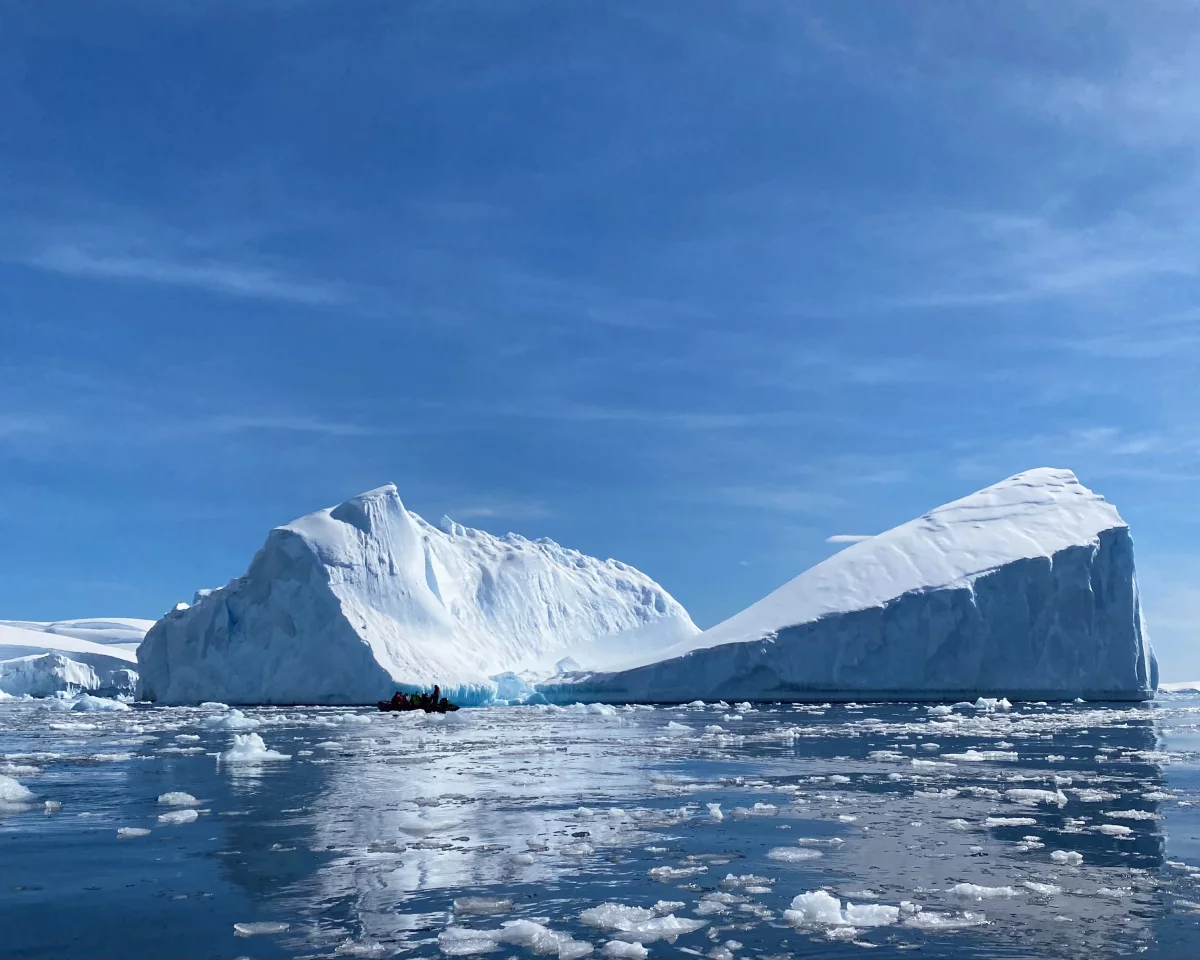
Cat Williams
This sea level rise will have far-reaching consequences for us in the future, from coastal erosion and flooding to hundreds of billions of dollars of infrastructure damage. Yet, because we can’t directly see the impacts of this ice loss right now, it can be difficult to understand that there is a need for immediate action.
Whilst there’s uncertainty about the rate of the ice sheets melting, there is no question that sea ice is on the decline, and in a fairly dramatic fashion. Dr Peter Fretwell has been a researcher at the British Antarctic Survey for over 20 years and is the author of The Penguin Book of Penguins – he knows a thing or two about Antarctica.
“In the winter, generally, we get up to about 13 million square kilometres (5 million square miles) of sea ice,” says Fretwell. That’s just shy of two entire Australias of sea ice every winter. “In the summer, it shrinks back to what is usually about 3 million square kilometres (1.2 million square miles). But in the last few years, it’s been much less.”
Fretwell says in 2023, the sea ice coverage was closer to 1.8 million square kilometres (695,000 square miles) – roughly a 40% reduction.
“That change happened really rapidly,” he tells me. Sea ice is only a few metres thick (compared to the kilometres-thick glacial ice), so the extent of the ice will respond faster, but the ice is also melting faster due to warmer ocean temperatures.
The water around Antarctica is certainly warming – I would know because I leapt in it. And if I’m quite honest, I’ve been colder in an outdoor swimming pool in Australia.
The water around Antarctica is certainly warming – I would know because I leapt in it. Don’t get me wrong, it was cold, but I was in one of the coldest places on Earth. I was expecting to turn blue.
“Nobody predicted the sea ice was going to do this,” says Fretwell. “It flipped from the largest ever extent in 2015, to the lowest ever extent in 2016.” And now, it’s been at its lowest four extents in the previous four years. “It’s really, really low.”
Without sea ice to buttress the glacial ice, the melting of the Antarctic ice sheet will speed up, too. “If you’ve got no sea ice, it takes the cork out of the bottle,” says Fretwell. “That land ice can flow a lot quicker into the ocean. We expect to see acceleration of [melting] glaciers and ice sheets when we’ve got no sea ice.”
At 10:30 pm on my second night in Antarctica, a guide reported an emperor penguin. An emperor penguin was the last thing I was expecting to see, and this one – to almost everyone’s surprise – was floating about on a large iceberg.
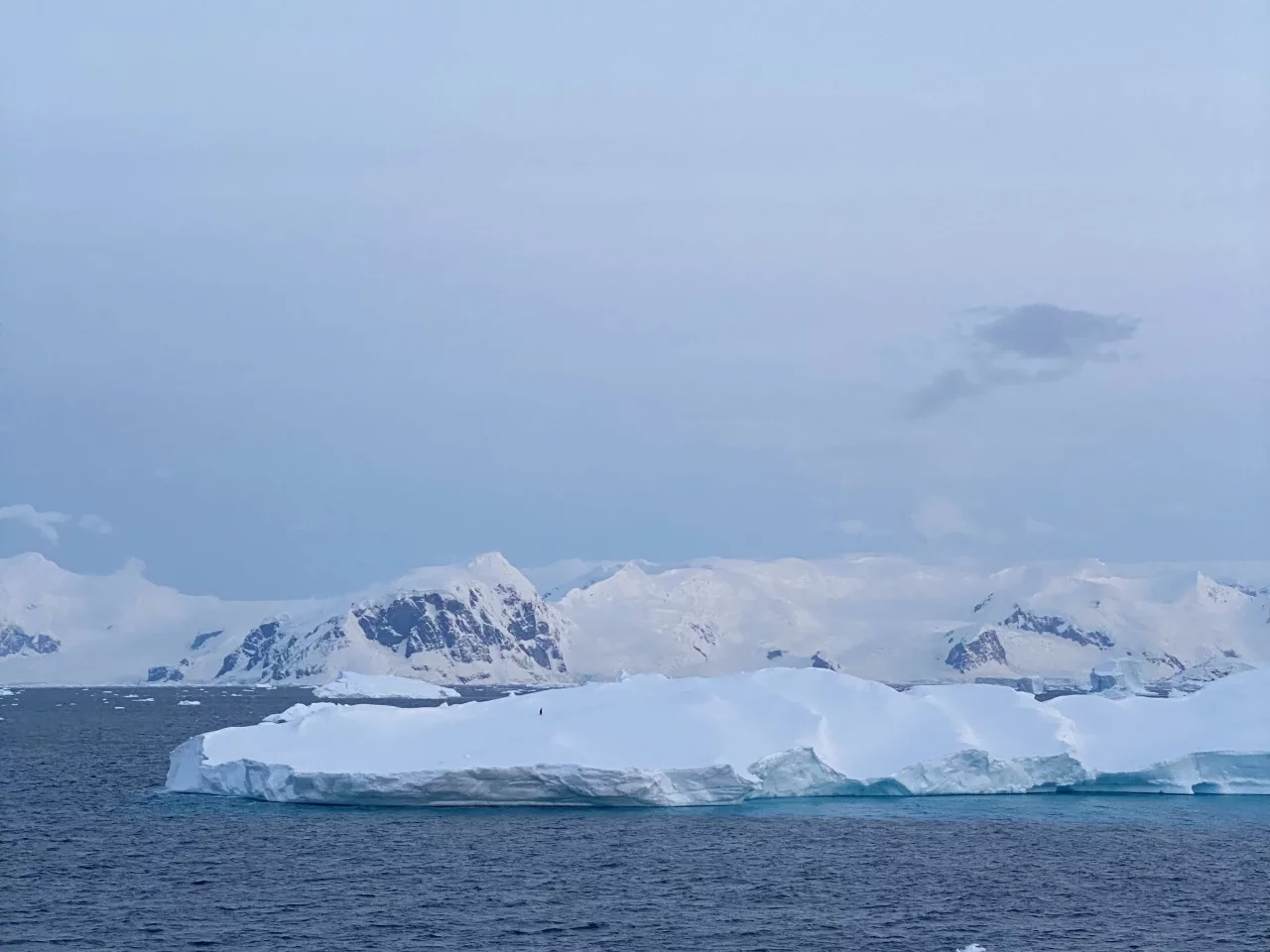
Cat Williams
When they’re not swimming in the ocean, Emperor penguins spend their entire life on sea ice. “It breeds, it courts, it uses it as a resting platform, and it does its moulting on sea ice,” says Fretwell. “If the ice goes, it can’t go anywhere else.”
The rapid decline of sea ice is causing issues for emperor penguins – particularly when it comes to moulting. Fretwell and his colleagues have published research showing that if sea ice breaks up too early and emperor penguin chicks haven’t completed their moult, they can get hypothermic and die in the water.
If you remember Pesto – the famously enormous King penguin at Melbourne Aquarium – he spent a lot of time losing his fluffy grey feathers on ‘land’. If he had to go in the water without his sleek black waterproof feathers, he might have suffered a similar fate.
“We’ve just published a new study, which has shown that it’s actually happening to the adults as well,” says Fretwell.
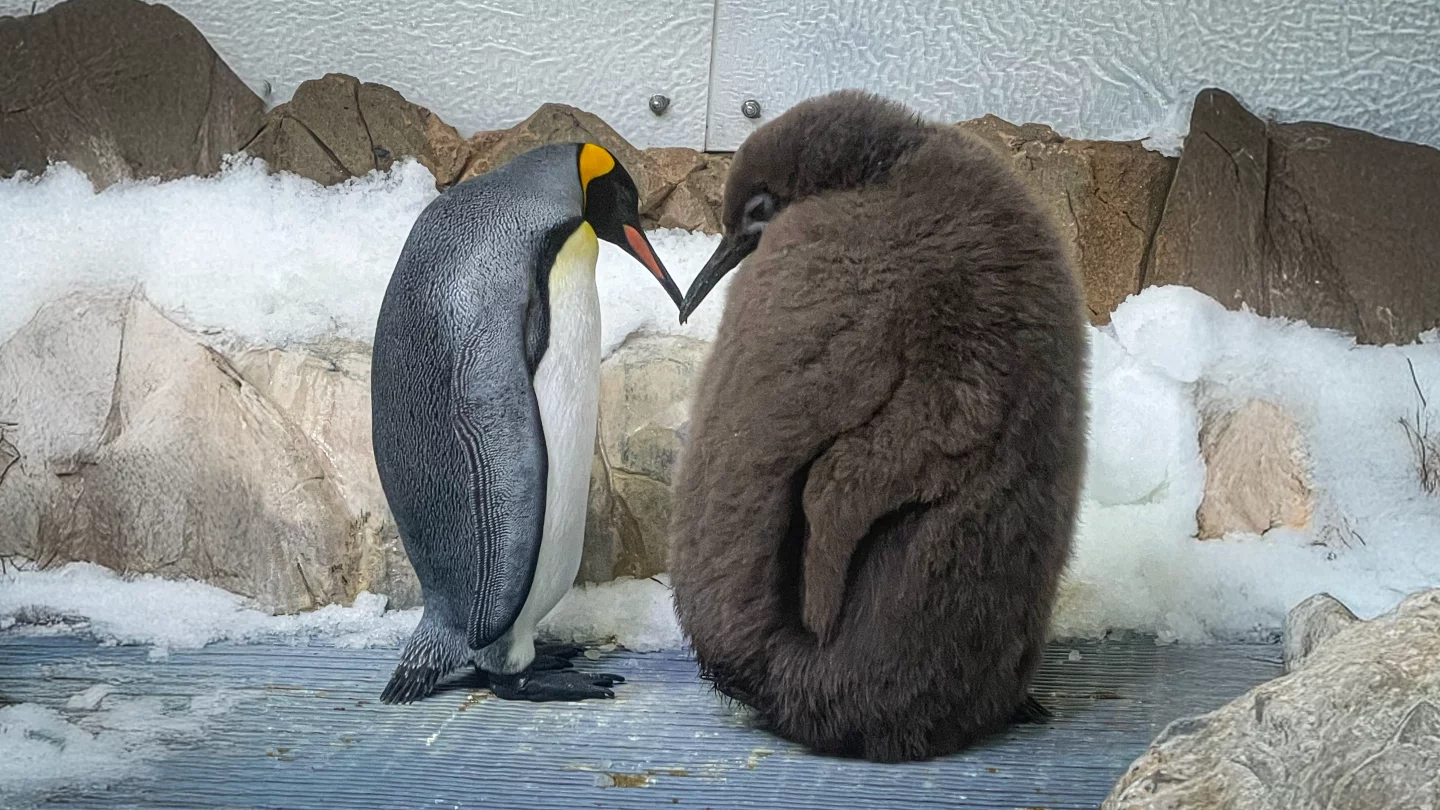
Bronwyn Thompson/New Atlas
In the West Antarctic Peninsula and Weddell Sea region, emperor penguin populations are down 22 percent. Fretwell says this decline is purely attributable to climate change. “There’s nothing else affecting them.”
Unlike the demise of glacial ice, which is harder for scientists to predict, sea ice is being lost right now. “We’re really worried about it,” says Fretwell. “For the emperor penguins, it’s getting quite serious now.”
By day five in Antarctica, I’m convinced something, somewhere has been sacrificed, because it’s been sunny for five days in a row. One of the guides says this hasn’t happened in 15 years. I slather more sunscreen on. It was only early November – peak summer was still a long way away. With the sun already beating down, it was a bad omen for the longevity of the sea ice.
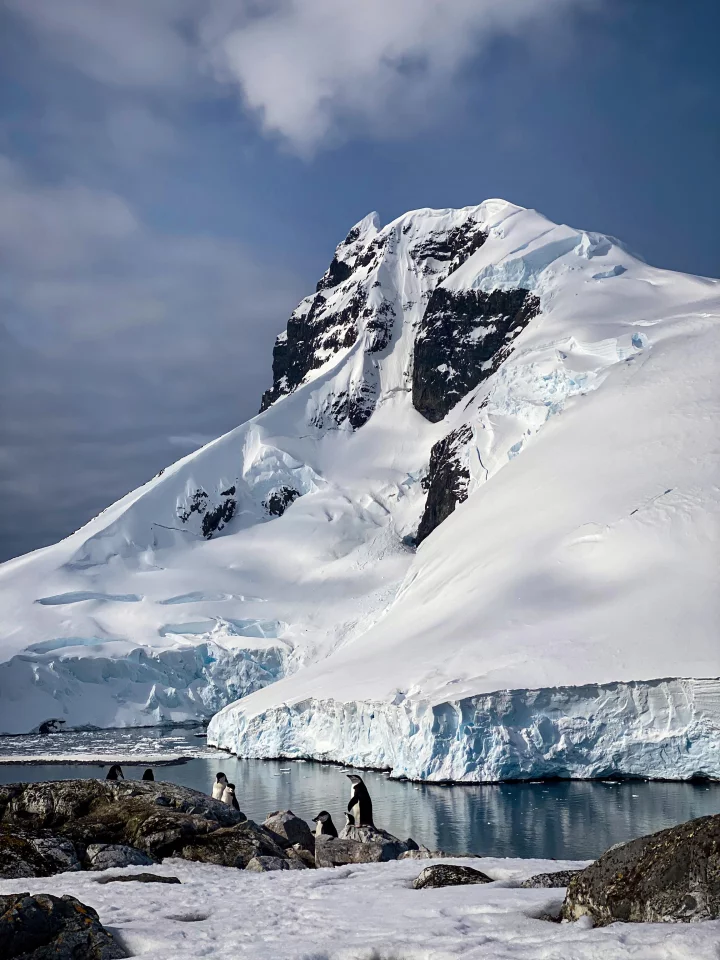
Cat Williams
With warmer temperatures escalating the rate of ice melting, the increase in water around the continent is disrupting ocean currents, including the Antarctic Circumpolar Current (ACC).
“The Antarctic Circumpolar Current is a series of currents and jets that flow around the Antarctic continent,” says Dr Taimoor Sohail, an oceanography and climate science researcher at the University of Melbourne. “It’s the most powerful current in the world, and it plays a really crucial role in driving our global climate because it connects all three major ocean basins – the Atlantic, the Pacific, and the Indian – together.”
The ACC helps redistribute heat and carbon, and sustains global marine biodiversity. Sohail explains that the impacts of melting ice on the ACC are an “active area of research and debate”, but working with colleagues at the University of New South Wales and a team from Norway, the latest results demonstrate that “in response to water melting around Antarctica, the ACC will slow down.”
Cat Williams
Historically, the ACC has been driven by a distinct temperature difference between Antarctica and the surrounding water. But now, melting ice is altering ocean salinity, which Sohail says will “dominate the changes” to the ACC.
Jones agrees. “As the ice sheet melts, it’s essentially fresh water that is then going into the ocean, which is salty, and that impacts how the currents flow around Antarctica,” he says.
“Even though the temperature difference remains – and actually gets exacerbated – these models suggest that … salinity ends up being the key driver for the slowdown of the ACC,” says Sohail. “We analysed a slowdown of 20% by 2050.”
Cat Williams
Much of the world’s atmospheric carbon dioxide and heat is absorbed by the Southern Ocean. As the ACC operates within the Southern Ocean, Sohail expects that slowing currents will also slow down heat and carbon uptake.
As well as this, the ACC provides a physical barrier between the rest of the world and Antarctica. It isolates the continent from warm waters further north and from invasive species. A slower current could potentially allow greater amounts of warm water to reach the continent, further exacerbating melting ice.
The slowdown of the most powerful current in the world has far-reaching consequences. Sohail puts it simply. “The ocean is interconnected. It’s one giant pool basically,” he says. “What we’re seeing is not an isolated impact; it’s something that’s related to things that are changing all around the global ocean.”
Negative feedback loops are forming. Vicious cycles of heat and more heat. Melting and more melting. There are undoubtedly uncertainties in the rates of these changes and feedback loops, but this doesn’t mean Antarctica should be made a future problem.
Cat Williams
“There’s already enough information to act,” says Jones. “Whether it’s reducing greenhouse gas emissions or even just starting to think about how we adapt to sea level rise.” For Fretwell, he’s got his dot-point speech for politicians down to a fine art: Emperor penguins are iconic, lots of species rely on the sea ice, and they’re threatened only by climate change. The scientists are doing their best to show us what the consequences of forgetting about Antarctica are.
Even though I’d seen pictures and read plenty of research, nothing helped me grasp how much ice is in Antarctica or what could happen with its downfall. And even though I’ve been to the continent, I’ve only seen the edges. Other than helping me win any icebreaker question of ‘Favorite place you’ve traveled’, going to Antarctica helped me see our future. Because we know where that ice is going to go. We know what the repercussions will be. And it’s not going to be pretty.