CFA Institute

Private Credit Secondaries: From Niche Strategy to Core Portfolio Tool

The topic of secondaries markets is a controversial one. On the one hand, secondaries are a vital source of liquidity for both limited partners (LPs) and general partners (GPs) in private markets. On the other hand, their growth can be a signal of anemic exit opportunities. In private credit, “secondaries” refers to the buying and selling of existing fund interests or loan portfolios — effectively a resale market that lets investors rebalance exposures and unlock liquidity ahead of fund maturity. Once a small corner of private markets, secondaries have become an essential portfolio-management tool. Higher rates are boosting yields but also slowing new deal activity and extending fund durations, tightening liquidity across private credit. For institutional allocators, the question is no longer whether a private credit secondary market will form, but how quickly it will scale and reshape price discovery. In private credit, secondaries currently represent just 1% to 3% of total allocations — a small share of the asset class. But they are expanding rapidly, doubling from $6 billion in 2023 to $11 billion in 2024. Evercore projects another ~70% increase to $18 billion this year. Even so, private credit accounted for less than 10% of total secondary market volume in 2024. The rapid growth has been the result of several factors: first and foremost, the explosion in primary private credit AUM, which has doubled since 2018. Another reason is the current macroeconomic framework. Higher rates are attractive for yield-hungry investors, who benefit from the typically floating rates of direct lending deals. A high-rate environment also dampens new deal flow for direct lenders, contributing to slower fund liquidation. Notably, the rise of secondaries is creating a dedicated investor base with capital earmarked specifically for these transactions. Reflecting the broad spectrum of private credit opportunities — from consumer and direct lending to specialty finance — some investors are using secondaries as a risk-mitigation tool to gain exposure to niche credit strategies. How do Secondaries Work? LP interests’ sales (historically most of private credit secondaries transactions) are typically done directly to a secondary buyer. Discounts vary, but they’re usually smaller for early-stage, diversified fund positions and higher for tail-end or highly concentrated positions. Transactions initiated by the GP include continuation vehicles — newly created vehicles that purchase a portfolio of loans from an older fund. Continuation vehicles are a preferred GP-led tool to recapitalize loan portfolios and offer investor liquidity. Continuation vehicles are increasing in volume and frequency, surpassing LP-led transactions in 2025. They have become the object of scrutiny recently, namely because they are seen to “kick the can down the road.” A positive development distinguishing private credit secondaries from private equity (PE) secondaries is the tightening of discounts. Average bids for quality credit funds and loans have climbed from about 90% of NAV a couple years ago to the mid-90s to roughly 100% of fair value in 2024–2025. The gap with PE reflects the yield cushion—buyers earn income from day one, reducing uncertainty and targeting low-teens returns (for example, an 8% to 10% coupon at 90% to 95% of NAV)—as well as floating rates, which potentially lessen risk, and lower volatility. In private credit secondary transactions, parties typically negotiate payment terms — often with deferred structures such as 20% of NAV paid upfront and 80% later to enhance IRR — as well as how to allocate accrued fees, determining which party receives interest accrued between the reference date and closing. Liquidity Solutions and Market Innovation One notable development is the rise of evergreen and semi-liquid vehicles channeling capital into private credit secondaries. In 2024–2025, several major secondary firms launched funds targeting the wealth management channel. Structured as interval or tender-offer funds, they provide periodic liquidity, balancing flexibility with the goal of broadening the investor base, particularly private wealth clients seeking income and downside protection. This democratization reflects not only rising investment demand but also gradual regulatory easing in many jurisdictions, which now permit greater access to private markets through vehicles with defined liquidity features. Additionally, and perhaps most interestingly, platforms and data services are emerging. In private credit, some firms are exploring trading platforms (“marketplaces” would be a better word) for loan portfolios. No dominant exchange exists, but over time, technology may make secondary transactions more efficient and transparent,  perhaps through some form of standardization. The word “blockchain” comes to mind, but it’s far-fetched at this stage. Outlook and Implications By late 2025, the global private credit secondaries market has grown exponentially, with deal volume hitting record highs and poised to accelerate further as secondary transactions become a routine portfolio tool. The market’s structure — originally dominated by one-off LP sales — is now increasingly characterized by GP-led restructurings and innovative liquidity solutions. Growth drivers such as private credit expansion, investor demand for liquidity, and a conducive interest rate environment suggest that secondaries will play a crucial role going forward, potentially growing to a $50+ billion annual volume. Expect new entrants — including specialist funds and crossover investors — along with greater convergence across secondary markets as integrated platforms span private equity, credit, and real assets. Standardization and transparency are also likely to increase as volumes grow. source

Private Credit Secondaries: From Niche Strategy to Core Portfolio Tool Read More »
Design Beats Luck: How AI Taxonomy Can Help Investment Firms Evolve

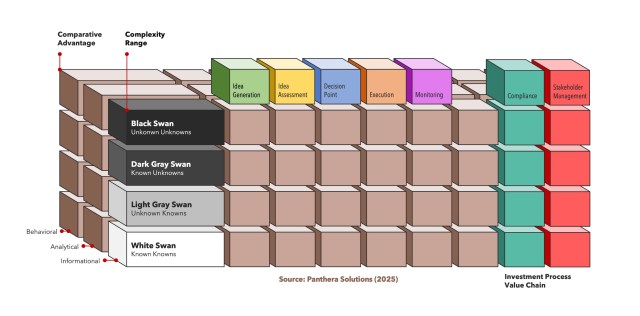
The Age of the AI Agent The investment management industry stands at an evolutionary crossroads in its adoption of Artificial Intelligence (AI). AI agents are increasingly used in the daily workflows of portfolio managers, analysts, and compliance officers, yet most firms cannot precisely describe the type of “intelligence” they have deployed. Agentic AI (or AI agent) takes large language models (LLMs) many steps further than widely used models such as ChatGPT. This is not about just asking a question and getting a response. Agentic AI can observe, analyze, decide, and sometimes act on behalf of a human within defined boundaries. Investment firms need to decide: Is it a decision-support tool, an autonomous research analyst, or a delegated trader?  Each AI adoption and implementation presents an opportunity to set boundaries and ring-fence the tools. If you cannot classify your AI, you cannot govern it, and you certainly cannot scale it. To that end, our research team, a collaboration between DePaul University and Panthera Solutions, developed a multi-dimensional classification system for AI agents in investment management. This article is an excerpt from an academic paper, “A Multi-Dimensional Classification System For AI Agents In The Investment Industry,” which was recently submitted to a peer reviewed journal. This system provides practitioners, boards, and regulators with a common language for evaluating agentic systems based on autonomy, function, learning capability, and governance. Investment leaders will gain an understanding of the steps needed to design an AI taxonomy and create a framework for mapping AI agents deployed at their firms. Without a shared taxonomy, we risk both over-trusting and under-utilizing a technology that is already reshaping how capital is allocated, which can lead to further complications down the road. Why a Taxonomy Matters AI taxonomy should not constrain innovation. If carefully designed, it should allow firms to articulate the problem the agent solves, who is accountable, and how model risk is mitigated. Without such clarity, AI adoption remains tactical rather than strategic. Investment managers today treat AI in two ways: solely as a functional set of tools or as a systemic integrated piece of the investment decision process. The functional approach includes using AI for risk scoring, natural language processors for sentiment extraction, and co-pilots that summarize portfolio exposures. This improves efficiency and consistency but leaves the core decision architecture unchanged. The organization remains human-centric, with AI serving as a peripheral enhancer. A smaller but growing number of firms are pursuing the systemic route. They integrate AI agents into the investment design process as adaptive participants rather than auxiliary tools. Here, autonomy, learning capacity, and governance are explicitly defined. The firm becomes a decision ecosystem, where human judgment and machine reasoning co-exist and co-evolve. This distinction is critical. Function-driven adoption results in faster tools, but systemic adoption creates smarter organizations. Both can co-exist but only the latter yields a sustained comparative advantage. Intelligent Integration Neuroscientist Antonio Damasio reminded us that all intelligence strives for homeostasis, balance with its environment. Financial markets are complex adaptive systems (Lo, 2009) and, so too, must maintain equilibrium, between data and judgment, automation and accountability, profit and planetary stability. A smart AI framework would reflect that ecology by mapping AI agents along three orthogonal dimensions: First, consider the Investment Process: Where in the value chain does the agent operate? Typically, an investment process comprises five stages—idea generation, assessment, decision, execution, and monitoring—which are then embedded in compliance and stakeholder reporting workflows. AI agents can augment any stage, but decision rights must remain proportional to interpretability (Figure 1). Figure 1. Mapping agents to the five stages below (Figure 1) clarifies accountability and prevents governance blind spots. Idea Generation: Perception-layer agents such as RavenPack transform unstructured text into sentiment scores and event features. Idea Assessment: Co-pilots like BlackRock Aladdin Co-pilot surface portfolio exposures and scenario summaries, accelerating insight without removing human sign-off. Decision Point: Decision Intelligence systems, (as exemplified by Panthera’s Decision GPS schematic above) are designed to build risk–return asymmetries grounded in the most relevant and validated evidence, with the aim of optimizing decision quality. Execution: Algorithmic-trading agents act within explicit risk budgets under conditional autonomy and continuous supervision. Monitoring: Agentic AI autonomously tracks portfolio exposures and identifies emerging risks. In addition to these five stages, this schematic can improve Compliance and Stakeholder Reporting. AI agents can perform pattern-recognition and flag breaches as well as translate complex performance data into narrative outputs for clients and regulators. Second, look at Comparative Advantage: Which competitive edge does it enhance: informational, analytical, or behavioral? AI does not create Alpha, but it could amplify an existing edge. One method of mapping taxonomy is to distinguish among three archetypes (Figure 2): Informational Advantage: Superior access or speed of data. Short-lived and easily commoditized. Analytical Advantage: Superior synthesis and inference. Requires proprietary expertise; defensible but time-decaying. Behavioral Advantage: Superior discipline in exploiting others’ biases or avoiding your own.  Figure 2 Strategic alignment means matching an agent type to a specific investor/firm skill set. For example, a quant house may deploy reinforcement learning for greater analytical depth, while a discretionary firm may use co-pilots to monitor reasoning quality and preserve behavioral discipline. Third, evaluate the Complexity Range: Under what degree of uncertainty does it function: from measurable risk to radical ambiguity? Markets oscillate between risk and uncertainty. Extending Knight’s and Taleb’s typologies, we distinguish four operative regimes. Figure 3 Governance: From Ethics to Evidence Forthcoming regulations, such as the EU AI Act and the OECD Framework for the Classification of AI Systems, will codify explainability and accountability. A taxonomy that links these mandates to practical governance levers would be considered best practice. A classification matrix then becomes both a risk-control system and a strategic compass. Strategic Implications for CIOs Finance’s adaptive nature demands augmented intelligence and systems designed to extend human adaptability, not replace it. Humans contribute contextual judgment, ethical reasoning, and sense-making; agents contribute scale, speed, and consistency. Together, they enhance decision quality, the ultimate KPI in investment management. Firms that design around decision architecture, not algorithms, will compound their advantage. Therefore:   Map your ecosystem: Catalogue AI agents

Design Beats Luck: How AI Taxonomy Can Help Investment Firms Evolve Read More »

ESG Affirmations and Surprises: Asset Managers Look to the Future

The progression of ESG investing in the global asset management community continues to be a source of fascination and a lightning rod for conversation, engagement, and innovation. As the “Index Industry Association 2023 ESG Survey” demonstrates, ESG considerations are transforming how asset managers approach their jobs and serve their clients. The first IIA ESG Global Asset Manager Survey in 2021 helped confirm that ESG considerations are here to stay. Of the 300 asset managers queried, 85% expected such criteria to play a greater role in portfolio construction and management in the coming decade. I outlined the key expected drivers of this growth in “ESG: Full Speed Ahead, with GPS” and unpacked the growth prospects in more detail with insights from the second IIA ESG survey in 2022, honing in on how ESG implementation had expanded beyond equities and into fixed income. Fast forward to 2023 and the IIA’s third annual ESG survey of global asset managers reveals even more affirmations of ESG criteria — along with quite a few surprises. On one level, the latest global ESG survey emphasizes the global asset management community’s strong commitment to ESG strategies even in the face of economic volatility and political and geopolitical friction. On another level, the survey illuminates how the community has embraced innovation in instituting ESG strategies on behalf of its clients. Environmental Factors That Are Most Important to Companies’ ESG Strategies, 2023 Base: Respondents who implement ESG criteria in their portfolios: US (n72), UK (n76), France (n58), Germany (n66) Indeed, asset managers are thinking more broadly and creatively around ESG factors, according to the survey. From an environmental standpoint, while climate is still king — 75% of asset managers prioritize the “E” over the “S” and the “G” — the scope of climate-related topics that concern asset managers has widened. For the first time, carbon emissions are no longer the top priority. At the same time, social as well as governance factors are much more top-of-mind. Yet, while global asset managers understand the need to keep sharpening their focus on ESG-related investment issues and expanding the depth and breadth of their analysis, they also know they need better data and metrics. Over half (54%) of the asset managers surveyed say that evaluating the social and governance performance of companies is a challenge and 56% say that keeping up with changing societal views and related expectations around ESG issues is difficult. Technologies That Asset Managers Expect to Have the Biggest Impact on ESG Measurement and Reporting over the Next Two Years, 2023 Base: All respondents (n300) Global asset managers are also thinking more creatively about ESG implementation and further reframing the asset class discussion. Though ESG implementation’s continued expansion into fixed income was expected given previous trends, the rapid rise of ESG criteria in commodities was more surprising. Just 37% of survey respondents said they applied ESG consideration to the asset class in 2021. This year, 62% said they did. But that is not the 2023 survey’s biggest revelation. To my mind, the key takeaway is the role asset managers expect emerging technologies to play in expanding and improving ESG metrics, data, and analysis. Asset managers are well aware of the current challenges. A lack of data standardization across markets, insufficient quantitative data, and a dearth of agreed-upon ratings and methods are nothing new. But survey respondents believe big data analytics, cloud computing, and other technologies will help address these deficits and improve the quality, scope, and content of ESG data and metrics. In fact, of the asset managers surveyed, 48% expect artificial intelligence (AI) and machine learning will have the most influence on ESG measurement and reporting over the next two years. Asset managers acknowledge how difficult and uncertain ESG implementation is today. But they see vast technologically driven improvements on the horizon, which suggests that ESG integration is still in its early stages, with much more to come. This is the seventh installment of a series from the Index Industry Association (IIA). The IIA celebrated its 10th anniversary in 2022. For more information, visit the IIA website. If you liked this post, don’t forget to subscribe to Enterprising Investor. All posts are the opinion of the author. As such, they should not be construed as investment advice, nor do the opinions expressed necessarily reflect the views of CFA Institute or the author’s employer. Image credit: ©Getty Images / SanderStock Professional Learning for CFA Institute Members CFA Institute members are empowered to self-determine and self-report professional learning (PL) credits earned, including content on Enterprising Investor. Members can record credits easily using their online PL tracker. source

ESG Affirmations and Surprises: Asset Managers Look to the Future Read More »

Aging Populations Demand Urgent Pension Reforms: Are We Prepared?

The world is aging at a much faster rate than we previously anticipated, even 10 years ago. Following the pandemic, life expectancies are continuing to rise around the world. That is, we are going to live longer than previously expected. On average, some of these extra years will be spent in good health while there also will be an increase in the years of poor health. In almost all countries, fertility rates are dropping quickly. Simply put, the world is having fewer babies with several societal changes driving this outcome. The following table indicates the change in fertility rates during the last 10 years for selected countries based on data from the United Nations (UN). Country 2014 2024 Australia 1.84 1.64 Canada 1.61 1.34 China 1.59 1.02 India 2.63 1.96 UK 1.89 1.55 USA 2.06 1.63 Given that a fertility rate of 2.1 is required to replace the population, most countries are now on track for a reducing population at some point in the future, if one ignores the impact of migration. China’s population has already begun to reduce. However, before populations reduce, the first consequence will be a rapidly aging population with fewer workers and a higher proportion of the population above retirement age. As the Organization for Economic Co-operation Development (OECD) has noted: “The question of how to address the impact of population ageing on pension systems has moved back to centre stage.” It is no longer an option for governments to review their pension systems; it has become a necessity. Yet, such reform is never easy as it affects the community’s expectations of the future. In particular, it may lead to lower pensions, longer working lives, and/or higher pension contributions or taxes. My research of pension systems over more than four decades reveals that some reforms have occurred, but it has often been gradual or haphazard without a long-term objective. The 2024 Mercer CFA Institute Global Pension Index (MCGPI) reviewed 48 retirement income systems around the world. It found only four have an A-grade system when assessed on the grounds of adequacy, sustainability, and integrity. They are the Netherlands, Iceland, Denmark, and Israel. The MCGPI uses more than 50 indicators with more than half the value of the index using data from international agencies such as the OECD, the UN, and the World Bank. The balance of the Index scores relies on inputs from pension experts familiar with the retirement income system in each country. The better systems within the MCGPI had most of the following features present: A state pension for the poor aged of at least 25% of the average wage for a full-time worker, thereby alleviating poverty amongst the aged A net pension replacement (including both public and private pensions) of at least 65% for a median-income earner with a full career Private pension coverage of at least 80% of the working age population, thereby ensuring a balance between public and private pensions for most individuals Pension contributions of at least 12% of wages are invested for the future Current pension assets of at least 100% of GDP A well-governed and well-regulated private pension system The MCGPI recommended several significant reforms to ensure that future retirees receive an adequate income from systems that can continue to deliver in a manner that encourages community confidence in this changing world. The recommended reforms include: Increase coverage of employees and the self-employed in the private pension system which should reduce pressure on government budgets in the future. Gradually increase the retirement age and/or state pension age to encourage people to work a little longer and thereby reduce their retirement period. Encourage or require higher levels of private savings, both within and beyond the pension system, so that workers can spread their consumption across their whole life. Reduce leakage from the retirement savings system before retirement, thereby ensuring that the funds are preserved for retirement purposes. Introduce measures to reduce the gender pension gap that exists in many pension systems. Improve the governance and transparency within private pension plans to raise the confidence level of members. These reforms will increase the importance of the funded private pension system. The growing aging population cannot rely heavily on future governments given the increasing costs of health, aged care, and public pensions. Naturally, increased pension fund assets will also generate new challenges and opportunities for CFA Institute members and charterholders. For example, as the world moves away from defined benefit to defined contribution pension plans, investment and other risks will shift from the employer sponsor to the individual members. As the average age of the pension plan members also increases, there will be implications for the investment strategy of pension plans as older members tend to be more conservative. The education of and communication with pension plan members will need to be done carefully to avoid any negative response from the older population. One should not assume that the current investment approaches should continue forever. The aging population provides challenges and opportunities for all of us, including governments, policymakers, fund managers, pension plans, and financial advisers. Pension reform is needed in most countries but the outworking of this will vary between economies. There is no single solution. Nevertheless, there are lessons we can learn from each other to ensure that our future aged populations can have both dignity and confidence during their retirement years. source

Aging Populations Demand Urgent Pension Reforms: Are We Prepared? Read More »

Sentiment Analysis Revisited

Daniel Kahneman earned the Nobel prize in economics for his research on prospect theory. His scholarship helped demonstrate how behavioral finance — and by extension, sentiment analysis — can improve our understanding of market behavior. Sentiment analysis applies algorithms to news articles, social media, and other data sources to gauge how people feel about the market, while behavioral economics identifies the cognitive biases that affect decision making. Sentiment analysis can help illuminate how these biases manifest in the financial markets. Of course, what people do is often more revealing than what they say, so sentiment analysis doesn’t always capture the complexity of human emotions in a domain as charged as the financial markets. Nevertheless, it can help us interpret and anticipate market behavior. Here’s how. Technical analysts tend to measure sentiment tangentially, by approximating when a turning point will occur. But their results are often inconsistent since their methods are associational and may not identify the “cause” behind market outcomes. Fundamental analysis takes a more causal approach, but its feedback loop is often longer than investor time frames and does not always differentiate value from a value trap. The best investors intuitively understand that markets are not good at discounting future outcomes. During the subprime crisis, for example, the pricing of subprime securities indicated that the market valued 80% of the underlying loans at roughly zero. This made for a highly favorable risk–reward proposition for those investors who knew what to look for. Similarly, last year, market sentiment largely anticipated a recession this year. “The best trades are the ones that will get you laughed off the set of CNBC.” — Jared Dillian Jared Dillian is one of my favorite sentiment traders, and his point is an important one. While he believes in sentiment analysis, he acknowledges that it is a hard strategy to raise money around. After all, a trade that inspires laughter doesn’t necessarily inspire confidence or investment capital. Moreover, many doubt sentiment analysis’s scientific rigor and see it as akin to astrology. But by reorganizing market data and applying the principles of auction theory, we can use sentiment analysis to classify market behavior. James F. Dalton has pioneered the application of the Market Profile technique, developed by J. Peter Steidlmayer, to recognize the behavior of different market participants. Specifically, Dalton’s technique observes the shape of a day and other “market-generated information.” For example, if the market is falling on a particular day and only a limited set of market participants is selling or the sales are driven by long liquidation and not new sellers, the shape of the day might resemble the letter “b.” At the other end of the spectrum, if speculation and short-covering activity are driving the buying, the shape of a day might resemble a letter “p.” These behaviors indicate weaker forms of buying and selling and may signal that the market may not be as strong or weak as price alone would make it seem. How can we know if these shapes are conveying important and actionable information? By applying artificial intelligence (AI), we can test whether the shape of a day is due to a truly random process. How? By modeling such a process and comparing that with the actual shapes observed in the market. If market moves are arbitrary, the distribution of shapes from a random process would match the actual distribution of shapes. But they don’t. Auction Process: Day Classification The test shows with 99% confidence that these results do not conform to a truly random process. If they’re not arbitrary, then they must yield valuable information. Indeed, the largest deviations from the random distribution occur when the shapes indicate the market is too long and too short due to short covering or long liquidation. This supports the intuition that these behaviors are both unique and potentially actionable from an investment perspective. In “Market Profile with Convolutional Neural Networks: Learning the Structure of Price Activities,” Chern-Bin Ju, Min-Chih Hung, and An-Pin Chen show that using similar image-recognition techniques can identify market patterns that may inform commodity producers’ hedging strategies. Such research could lead to a deeper understanding of the market’s price-setting process and help quantify investor sentiment. Investors tend to focus on price alone, and momentum strategies are widely followed. Such trades can get too crowded at times, leading to reversals. This is not random behavior, and now we have a way to objectively measure that behavior. This research provides a heuristics-based technique for causality testing. Markus Schuller and Andreas Haberl laid out the forward-looking case for causality in “Causality Techniques in Investment Management: Five Key Findings.” They observe that financial markets are “complex, dynamic, and forward-looking” and are driven by “market participants with imperfect information and bounded rationality.” The ability to objectively observe and measure the behaviors of these market participants is “both appealing and potentially very lucrative.” That’s how sentiment analysis can help uncover alpha opportunities and why it is worth including in our investment toolkits. For more market commentary from Joshua J. Myers, CFA, subscribe to his Substack at Cedars Hill Group (CHG). If you liked this post, don’t forget to subscribe to Enterprising Investor. All posts are the opinion of the author. As such, they should not be construed as investment advice, nor do the opinions expressed necessarily reflect the views of CFA Institute or the author’s employer. Image credit: ©Getty Images / vladystock Professional Learning for CFA Institute Members CFA Institute members are empowered to self-determine and self-report professional learning (PL) credits earned, including content on Enterprising Investor. Members can record credits easily using their online PL tracker. source

Sentiment Analysis Revisited Read More »

Quarterly Earnings: Signal vs. Noise, Cost vs. Benefit

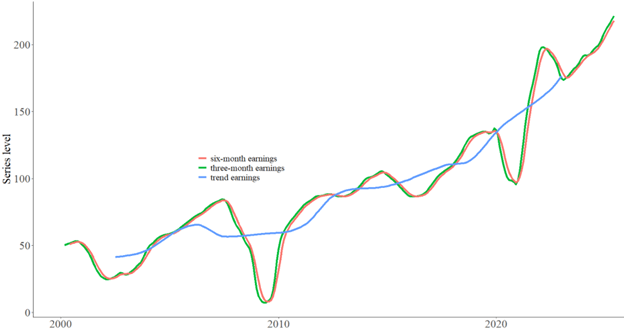
With the White House downplaying the value of quarterly reporting for companies, investors face a familiar question: does the cost of producing information outweigh the benefits? Using Robert Shiller’s long-run data, this post shows that quarterly earnings contain information that is likely valuable to both long-term allocators and short-term traders. Its benefits, which I don’t attempt to quantify, should be weighed against any savings from less-frequent reporting. Quarterly vs. Semi-Annual: What’s at Stake The White House this week called for a change from quarterly to semi-annual earnings reporting. President Donald Trump argued that such a shift would save companies money and time. That may be true. But would investors lose valuable information? To answer this question, I use earnings data from Robert Shiller’s online data from January 1970 (1970:1), the year in which the Securities and Exchange Commission made quarterly earnings mandatory, to 2025:6 to test relationships among the change in three-month earnings, six-month earnings, and the trend in earnings. I define the trend as a 61-month centered moving average change in earnings. Specifically, I test whether knowing three-month earnings’ changes helps an investor better estimate changes in the longer-term trend in earnings. Chart 1 shows three-month earnings in green, six-month earnings in red, and trend earnings in blue. Series start in January 2000 (2000:1), rather than 1970:1, for ease of visualization. Chart 1. 3-month, 6-month, and trend earnings, 2000:1 to 2025:6. Source: Robert Shiller online data, author calculations. Of course, three-month earnings are choppier than six-month earnings. But it is not obvious from visual inspection that knowing three-month earnings in addition to six-month earnings would help a long-term investor predict changes in trend earnings. (I test this below and find that they may). It is, however, obvious that a short-term investor, one perhaps interested in earnings changes in periods of less than a year, would benefit from knowing three-month earnings. This observation is confirmed empirically below. I start with the long-term investor, who I assume is interested in the long-term trend in earnings. A natural way to gauge the value of having three-month earnings in addition to (or instead of) six-month earnings is to model the change in trend earnings as a function of one or both, estimate that model using ordinary least squares, and compare model accuracy. In this post, I use R-squared as my measure of fit (or adjusted R-squared) — the larger, the better. At any point, the investor knows one-half the current trend in earnings. That is, they know the first 30 months’ earnings of the current 61-month window, my proxy for the trend in earnings. And they know either the last three months of earnings, or the last six months of earnings, or both. To determine whether receiving earnings information every three months as opposed to every six months would help the long-term investor to better predict the trend, I estimated specifications where the change in 30-month-ahead trend inflation is explained by the change in six-month earnings alone plus the prior earnings-trend change (Model 1). In Model 2, the trend change is explained by the same variables plus the three-month change in earnings. Results are shown in Table 1. Table 1. Regressions of trend inflation change on 3- and 6-month earnings changes, 1970:1 – 2025:6. Dependent variable = Trend inflation (30-month lead)   Model 1 Model 2 Six-mo. change (three-mo. lag) 0.073 (0.013) 0.061 (0.013) Three-mo. change – 0.124 (0.029) Trend change -0.223 (0.041) -0.234 (.040) Adjusted R-squared 0.098 0.126 Obs 547 547 Source: Robert Shiller online data, author calculations. Since I’m not interested in inference, I omit discussion of estimated coefficient values, other than to note that they enter with the expected sign. Notwithstanding this, I include the prior trend in earnings to reduce bias in my estimates and standard errors appear in parenthesis next to each estimate. The key result is that adding quarterly earnings (three-month change) improves fit — the adjusted R-squared increases from 0.098 for Model 1 to 0.126 for Model 2. While neither fit is impressive, these results suggest that quarterly earnings may help the long-term investor predict trend earnings. Other measures of fit, namely the Akaike and Bayesian information criteria (AIC and BIC), confirm that the specification which includes 3-month earnings is more accurate. As for what may be of interest to traders (short-term investors), one might guess that the three-month earnings change is related to the next three-month change. Quarterly earnings changes are indeed persistent. The scatter in Chart 2 shows the autocorrelation of quarterly earnings, where extreme values (earnings changes greater than 100%) have been removed for easier viewing. The estimated slope is 0.601 (se = 0.031) — the blue best fit line is flatter than the black 45-degree diagonal line — and the R-squared is 0.361. Chart 2. Three-month lagged earnings change vs. three-month earnings change, 1970:1 – 2025:6. Source: Robert Shiller online data, author calculations. And at the risk of estimating the obvious, the R-squared of a model explaining 12-month earnings with six-month earnings (from six-months before) is 0.699, whereas including three-month earnings (from three-months before) improves the fit to 0.953. Cost vs. Benefit It is nearly axiomatic that, in most applications, more data is preferable to less. And the results discussed here suggest that quarterly earnings contain valuable information for investors. But producing earnings is costly. As regulators consider reducing reporting frequency, they should weigh not just the savings but also the potential losses — losses to investors resulting from less transparency and to the economy resulting from impaired market efficiency. More to Think About Past CFA Institute member surveys show clear support for quarterly earnings. source

Quarterly Earnings: Signal vs. Noise, Cost vs. Benefit Read More »

Hong Kong’s IPO Boom: Gateway or Risk Trap for Investors?

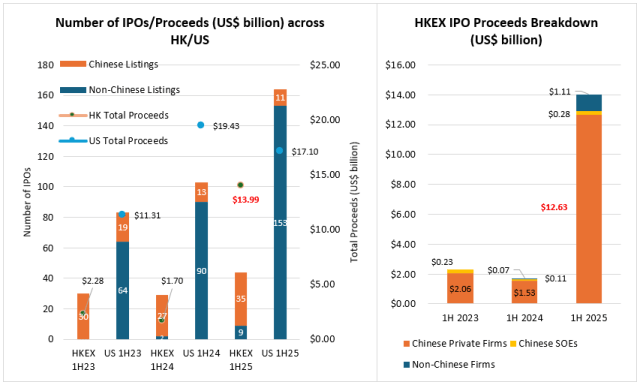
The Hong Kong SAR market’s IPO reforms, effective this month, reshape how deals are priced and who gets access. For investors, this marks a pivotal shift in market integrity and allocation fairness. The impact is already visible. In this year’s first half, companies listing on Hong Kong Exchanges and Clearing Limited (HKEX) raised $14 billion (HK$109 billion). Chinese Mainland battery manufacturer and technology company CATL’s $4.6 billion offering, the largest IPO worldwide so far this year, underscores investor appetite for Chinese Mainland listings. For investors, the surge signals both opportunity and risk: Hong Kong SAR has reasserted itself as the offshore gateway for Chinese Mainland firms, but with that dominance comes heavy exposure to its economy. The scale of the rebound marks a sharp break from the last three years, when global tightening, weak sentiment, and geopolitical shocks kept the Hong Kong SAR’s equity market subdued. What changed in 2025 was a convergence of push factors inside Chinese Mainland (deflation, tighter onshore rules, and slowing growth) with pull factors in Hong Kong SAR (reforms and capital flexibility making the city the natural outlet). Together, these forces explain why Chinese Mainland firms have returned in such strength, and why the resurgence of HKEX looks different from past cycles. Figure 1. HKEX IPO Trends Source: HKEX, SEC. Note: Minor differences in decimal values between charts resulted from FX conversion rounding. A Market Reawakens: The Drivers Behind HKEX’s 2025 IPO Boom After three years of market slowdown amid global monetary tightening and geopolitical fractures, the Hong Kong SAR capital market has witnessed a remarkable revival. The striking turnaround is driven predominantly by privately owned Chinese Mainland companies seeking offshore capital, which consists of 90% of the total fundraising. HKEX stands out as the top preferred listing venue for Mainland Chinese firms compared to its onshore counterparts. Since Mainland China’s economic reform in the late 20th century, three onshore stock exchanges were established: first Shanghai, followed by Shenzhen, and then Beijing. Together, these exchanges became engines of capital formation, enabling state-owned enterprises (SOEs), private firms, and innovative startups to raise capital at scale, as the Chinese Mainland’s economy bloomed from the 1990s through the 2010s. However, the political and economic nature of the Chinese Mainland market, with capital controls and strict regulatory requirements, limits foreign access. These factors contributed to the attraction of HKEX as an offshore listing venue and a point of access for foreign investors to gain exposure to the Chinese Mainland capital market. Figure 2. Comparison between Greater China Exchanges   Shanghai (SSE) Shenzhen (SZSE) Beijing (BSE) Hong Kong (HKEX) Established 1990 1990 2021 1891 Market Cap (USD) $ 6.6 trillion $ 4.38 trillion $63.6 billion $4.1 trillion # of Listed Firms 2,263 2,853 239 2,609 Trading Currency CNY CNY CNY HKD Daily Price Limit ±10% ±10% ±30% on debut, ±10% thereafter No limit Sector Focus SOEs, blue chips SMEs, startups Early-stage SMEs Global Listing Foreign Access Limited Limited Very Limited Full Access Regulator CSRC CSRC CSRC SFC (via HKEX) Source: ExpatInvestChina. Hong Kong SAR, established under British rule and preserved after the 1997 handover under “One Country, Two Systems,” retains features that set it apart from Chinese Mainland venues. This includes common law structure, global access, and free capital flows. These features continue to make HKEX the natural offshore gateway for Chinese Mainland firms. Push Factors from China Chinese Mainland’s post-COVID slowdown, marked by deflation and property market challenges, has left private firms squeezed by price wars and shrinking margins. Without state backing, many have little choice but to seek foreign capital, a dynamic pushing listings to Hong Kong SAR. The Chinese Mainland is a policy-driven economy. In 2024, the China Securities Regulatory Commission (CSRC) tightened IPO approvals, especially for unprofitable or early-stage firms. As a result, onshore fundraising collapsed to $9.3 billion across 101 IPOs, down 83% year over year. In the first half of 2025, mainland exchanges raised only $4.7 billion, less than one-third of what companies listed on HKEX raised in the same period. Pull Factors from Hong Kong The fundamental attraction of HKEX over its onshore counterparts lies in its fully open nature, with its currency, the Hong Kong dollar, as a freely convertible currency pegged to the US dollar. The free flow of capital and convertibility into hard currency are essential for any company operating on a global scale. That is also true for early-stage investors and founding members of the privately owned firms considering exit strategies. Hong Kong is regarded as a special administrative region by the Chinese Mainland, and the A+H listing model is highly encouraged. That is, dual listings where a mainland Chinese company has its shares traded on both a stock exchange in mainland China (A-shares) and Hong Kong’s exchange (H-shares). In this year’s first half, 21 out of 44 IPOs are A+H listings, an increase of 110% YoY. HKEX Structural Reforms Recent reforms have reshaped how companies come to market in Hong Kong SAR and how investors can access them. The new Technology Enterprises Channel[1] provides a confidential fast track for specialist tech and biotech firms, sectors heavily backed in the Chinese Mainland. A+H listings[2] can now be approved in just 65 days, accelerating supply. At the same time, HKEX lowered its public float requirement from 15% to 10% and cut the retail allocation cap from 50% to 35%. For investors, these changes mean two things: faster deal flow, but also less protection. Large Chinese Mainland issuers can now bring sizable offerings to market more quickly while retaining more control, which benefits institutional allocations at the expense of retail access. Reduced float and tighter retail caps may improve pricing efficiency in the short run, but they heighten concerns about liquidity and governance in the longer term. In short, access has improved for big investors, while risks for smaller investors have increased. What it Means for Investors For investors, Hong Kong SAR’s IPO boom presents both opportunity and risk. On the upside, HKEX offers access to the Chinese Mainland’s most

Hong Kong’s IPO Boom: Gateway or Risk Trap for Investors? Read More »

Book Review: The Tax-Smart Donor: Optimize Your Lifetime Giving Plan

The Tax-Smart Donor: Optimize Your Lifetime Giving Plan. 2025. Phil DeMuth. Alpha Dog Press Charitable giving is a way of life for many individuals and families. According to Giving USA 2024: The Annual Report on Philanthropy for 2023, more than $550 billion was donated, which includes more than $374 billion by individuals. The largest recipients were religious organizations, with more than $145 billion in donations. Despite the generosity of Americans, most individuals give inefficiently, thus reducing the impact of each dollar they spend. This is a problem for all but the ultra-wealthy, who are likely to have an army of attorneys, accountants, and financial advisors to assist in optimizing their giving. Even many of us who have studied and worked in the financial industry for decades are inadequately trained in the intricacies of charitable giving. Textbooks in investments generally make no mention of charitable giving, while the topic is beyond the purview of the CFA Program. Even the Certified Financial Planner program makes only a limited reference to charitable giving by briefly discussing some vehicles, such as charitable lead and charitable remainder trusts. This lack of coverage of the topic has left a void in financial planning. Fortunately, Phil DeMuth of Conservative Wealth Management LLC, a firm that caters to high-net-worth investors, has undertaken to fill that void with The Tax-Smart Donor: Optimize Your Lifetime Giving Plan. Many of the issues that make tax-smart donations difficult result from the Tax Cuts and Jobs Act of 2017, which raised the standard deduction and limited certain deductions such as mortgage interest and state and local property taxes. With more taxpayers unable to meet the threshold for itemizing, many individuals are spending more than $1 to give $1 to their favorite charity, something DeMuth refers to as negative giving power. Some strategies for tax-efficient donation are well known, e.g., giving appreciated assets or bunching contributions in one year. The key to doing this successfully is knowing what assets to donate and how to bunch donations. The Internal Revenue Service tax code has strict guidelines on the amount that can be donated, and these amounts differ depending on the type of asset donated and the type of vehicle used for the donation. DeMuth has broken the book into twelve chapters covering topics such as giving by cash and check, donating securities, retirement account philanthropy, and gifts of property. Different rules and regulations guide the various forms of giving. In many cases, a charity is likely to prefer regular, predictable giving rather than large occasional donations. The easiest way to donate in a tax-advantaged manner is to use a donor-advised fund (DAF), a vehicle pioneered by New York Community Trust in 1931. DeMuth explains that DAFs are easily created through investment company giants such as Fidelity, Vanguard, and Schwab, which will manage the money and handle all the relevant paperwork. Vanguard requires a modest $25,000 to open the account and a minimum of $5,000 to add to the account, while Fidelity and Schwab have no minimums for either. Many of the strategies in the book apply to a wide range of individuals. The author points out in his chapter on charitable trusts, however, that they apply only to very wealthy individuals, given their cost and complicated structure. For example, a charitable lead annuity trust (CLAT) is not a charity and is subject to capital gains tax. Who pays the tax depends on whether the CLAT is a grantor trust or a non-grantor trust. Although charitable trusts are not for most individuals, it is not uncommon for universities to encourage alumni to consider them. Throughout the book, DeMuth provides tables to compare the impact of different types of giving. Donations of property, cash, and retirement savings are all subject to numerous rules and regulations. DeMuth takes the reader through the procedures that the donor must follow to receive the tax benefits of the donation. The lesson is that the IRS is unforgiving, and mistakes cannot be undone later. Donors may think they can provide documentation at a later point, e.g., appraisals and letters from the recipient, but that is not the case. In the chapter titled “Three Scenarios for Tax Strategy,” DeMuth takes readers through the life of a fictitious individual, Renee, across various ages and with varying degrees of wealth. In each situation, he discusses whether Renee can afford to make charitable contributions and, if she can, how she can get the most bang for each donor dollar. The moral of the book is that charitable giving should be part of a lifetime plan, which may include waiting until it is most beneficial to give. The decision to defer giving may entail holding off until one has sufficient earnings and wealth, or until giving power is the greatest. Some individuals may choose to wait to give because they believe they can more effectively grow capital than most charities. Recognizing this, DeMuth provides a chapter on investing for charity. Most charities struggle to generate returns, so some individuals may feel they can do better by waiting to give and investing the funds themselves. Warren Buffett has successfully used this strategy, refraining from giving in the thousands or millions early in his career so that he could give tens of billions later in life. Although it is unlikely that anyone reading The Tax-Smart Donor will generate the kinds of returns Buffett has over his lifetime, his deferred approach may be a viable strategy for some types of giving. It could, for example, be a sound plan for donating to one’s alma mater, which might be willing to forgo annual donations in the thousands for a seven-figure donation several decades in the future. It is hard, however, to imagine informing one’s local pastor that waiting could mean a six- or seven-figure donation to the church three decades from now. In summary, DeMuth has produced a book that fills a void in the literature on financial planning by providing the reader with an understanding of the most effective

Book Review: The Tax-Smart Donor: Optimize Your Lifetime Giving Plan Read More »

It’s Not Just What You Own, It’s How Much: Machine Learning and the Portfolio Construction Imperative

Here is an uncomfortable truth: most portfolio managers obsess over stock selection while treating portfolio construction as an afterthought. Warren Buffett once called diversification “protection against ignorance,” yet he and his successor hold over 30 stocks, each with a vastly different position size. The best investors know: success depends not just on what you own, but on how much. Yet portfolio construction remains the investment industry’s neglected stepchild. Managers spend countless hours researching stocks and timing the market. But when it comes to determining how much to allocate to each position? Too often, that decision is relegated to simple rules of thumb or gut instinct. As Michael Burry noted, “Safeguarding against loss doesn’t end with finding the perfect security. If it did, the perfect portfolio would have just one.” Missteps in portfolio construction aren’t just academic. They can damage performance. While stock selection might determine whether you own Apple or Microsoft, portfolio construction determines whether a 30% decline in your largest holding destroys your entire year, or barely registers as a blip. It’s the difference between art and science, between hoping your intuition holds up and systematically engineering resilient portfolios. The traditional tools that served this overlooked discipline for decades are showing their age. Harry Markowitz’s modern portfolio theory (MPT), introduced in the 1950s, relies on stable correlations and predictable risk-return relationships that simply don’t exist in today’s volatile, interconnected markets. Meanwhile, a 2024 Mercer survey revealed that 91% of asset managers are already using or plan to use AI within their investment strategies in the next 12 months. The question is no longer whether to adopt these technologies, but whether you’ll continue to treat portfolio construction as a secondary concern while your competition transforms it into their primary competitive advantage. The revolution in asset management isn’t happening only in stock selection. It’s happening also in the systematic, scientific approach to portfolio construction that most managers are still ignoring. The question is: Will you be among those who recognize portfolio construction as a critical driver of long-term performance, or will you remain focused on picking stocks while poor allocation decisions turn your best ideas into portfolio killers? The Investment Process Revolution Traditional weighting methods like equal, market-cap, or conviction-based are prone to bias and structural limitations. This is where machine learning offers a step-change in approach. Equal weighting ignores the fundamental differences between companies. Market-cap weighting concentrates risk in the largest stocks. Discretionary weighting, while incorporating manager expertise, is subject to cognitive biases and becomes unwieldy with larger portfolios. This is precisely where ML transforms the investment process entirely, offering a systematic approach that combines the best of human insight with machine precision. The ML Advantage: From Art to Science Dynamic Adaptation vs. Static Models Traditional portfolio optimization resembles driving while looking in the rearview mirror. You’re making decisions based on historical data that may no longer be relevant. Moreover, traditional methods such as mean-variance optimization (MVO) assume linear and stable relationships between asset returns, volatility, and correlation — an assumption that often breaks down in turbulent, real-world market conditions characterized by non-linear dynamics. ML, by contrast, acts like a GPS system, continuously adapting to real-time market conditions and adjusting portfolios accordingly. ML’s core strength lies in its ability to recognize and adapt to these non-linear relationships, allowing portfolio managers to better navigate the complexity and unpredictability of modern markets. Consider the “Markowitz optimization enigma,”  the well-documented tendency for theoretically optimal portfolios to perform poorly in real-world conditions. This occurs because traditional MVO is hypersensitive to input errors. A small overestimate in one stock’s expected return can dramatically skew the entire allocation, often resulting in extreme, unintuitive weightings. ML-based methods solve this fundamental problem by thinking differently about diversification. Instead of trying to balance correlations between individual stocks — a notoriously unstable approach — ML algorithms group stocks into clusters based on how they behave in different market conditions. The hierarchical risk parity (HRP) method exemplifies this approach, automatically organizing stocks into groups with similar risk characteristics and then distributing portfolio risk across these clusters rather than relying on unstable correlation estimates. Superior Risk Management Recent research by the Bank for International Settlements demonstrates ML’s superiority in risk forecasting. Advanced ML algorithms (tree-based ML models) reduced forecast errors for tail risk events by up to 27% compared to traditional autoregressive models at three to 12 month horizons. This isn’t just academic theory; it’s practical risk management that can protect portfolios during market stress. ML doesn’t just analyze volatility or correlation; it incorporates a broader spectrum of risk signals, including extreme tail events that traditional models often miss. This comprehensive approach to risk assessment helps managers build more resilient portfolios that better withstand market turbulence. Real-Time Rebalancing While traditional portfolio management often follows set weekly or monthly rebalancing schedules, ML enables dynamic, signal-driven adjustments. This capability proved invaluable during the COVID-19 market turmoil and the volatility of early 2025, when ML systems could rapidly shift into defensive sectors before traditional models even recognized the changing landscape and then swiftly rotate into higher-beta sectors as conditions improved. Furthermore, ML can translate high-level investment committee views into specific, rule-based portfolio allocations while maintaining diversification and risk targets. This ensures that strategic insights don’t get lost in implementation, a common problem with traditional discretionary approaches. Asset managers must face an uncomfortable reality, however: AI and ML will inevitably become commoditized technologies. Within the next few years, virtually every asset manager will possess some form of AI system or model, but few will integrate them effectively. That’s where the real edge lies. This technological democratization reveals the true competitive battleground of the future: it’s not whether you have AI, but how you deploy it. The sustainable competitive advantage will belong to those who master the art of translating AI capabilities into consistent alpha generation. The following case study demonstrates exactly how this strategic implementation works in practice. Real-World Evidence: The CapInvest Case Study Theory means little without practical results. One firm’s experience illustrates how

It’s Not Just What You Own, It’s How Much: Machine Learning and the Portfolio Construction Imperative Read More »

Private Equity’s New Exit Playbook

Private equity (PE) exit strategies have adapted and evolved past the days of smooth IPO runways and quick M&A turnarounds to include continuation funds. The backdrop of low financing costs that encouraged record transaction volumes, rapid fund rotations, and steady exit opportunities have evaporated over the last five years. In today’s high-rate environment, exit options have narrowed, financing has become more expensive, and holding periods have lengthened. Last year, average buyout holding periods rose to 6.7 years from a two-decade average of 5.7 years with the exit backlog now bigger than at any point since 2005, according to McKinsey research. Enter the continuation fund, which has rapidly moved from niche to mainstream, offering opportunity to many investors while inviting caution from others. The emergence of continuation funds reflects a structural evolution in private equity rather than a temporary adjustment. These funds, a relatively new addition to the PE ecosystem, enable liquidity in a capital-constrained world while testing the boundaries of transparency and governance. Understanding Continuation Funds A continuation fund allows a PE firm to transfer one or more portfolio assets from an existing, maturing fund into a new vehicle, often managed by the same general partner (GP). Existing limited partners (LPs) can either cash out or roll them into the new structure, while new investors can acquire stakes in mature, high-performing assets with shorter holding periods. The market for continuation funds has expanded quickly. In 2024, 96 such vehicles were recorded, up 12.9% year-over-year, representing 14% of all PE exits. Single-asset continuation funds, like the $3 billion Alterra Mountain Company deal, underscore their growing scale. Analysts at Greenhill & Co. predict that continuation funds could account for 20% of PE exits in the coming years, driven by a maturing secondary market and challenging exit environments. Why the Rise? All of this has slowed strategic M&A. In 2023, global M&A recorded its lowest level in a decade, underscoring the post-pandemic slowdown in dealmaking. Global PE exit count declined to 3,796 from the 2021 peak of 4,383. While off its highs, global PE dry powder is still around $2.5 trillion as of mid-2025, and the pressure to deploy capital remains high even as exit channels tighten. Several forces underpin the recent proliferation. Among them: a lack of traditional exit paths, a looming maturity wall, and a need for LPs to free up cash. First, rising financing costs have constrained leveraged buyouts and widened the bid-ask gap in M&A deals. Continuation funds allow managers to retain high-conviction assets and provide investors with liquidity options. The impending maturity wall is another factor. More than 50% of PE funds are now six years or older, with 1,607 funds set to wind down in 2025 or 2026. Continuation funds allow firms to extend value creation without forced sales. Finally, these funds align with investor demand for flexibility. LPs can exit for immediate liquidity or roll over to chase future upside. New investors gain exposure to proven assets with lower blind-pool risk. Continuation funds boast a 9% loss ratio compared to 19% for buyouts, offering better risk-adjusted returns. The Benefits: A Win-Win-Win? Proponents argue that continuation funds benefit all parties involved: GPs, existing LPs, and new investors. For GPs, this extension allows them to continue managing high-performing assets, thereby generating continued management fees and carried interest. LPs gain liquidity without sacrificing potential upside, while new investors access mature assets with a clearer path to returns. Recent analysis suggests continuation funds have outperformed buyout funds across all quartiles in terms of multiple-on-invested-capital (MOIC) while also demonstrating lower loss ratios. Empirical evidence supports their appeal. Morgan Stanley found that upper-quartile continuation funds achieved 1.8x MOIC, compared with 1.6x for comparable buyout funds. Sector-specific examples, such as Lime Rock Partners’ use of continuation structures in energy assets, illustrate how managers can extend value creation through market cycles. The firms have utilized continuation funds to extend their ownership of assets in less favored basins, betting on future market shifts. This flexibility can turn a good investment into a great one, especially when market timing is suboptimal. Risks and Governance Challenges Despite their benefits, continuation funds have raised governance and valuation concerns. When GPs act as both seller and buyer, conflicts of interest are inherent. Investors have raised eyebrows at the nature of these transactions, with critics likening them to circular financing structures if not carefully governed. For a deeper understanding of this dynamic, read CFA Institute Research and Policy Center’s report Continuation Funds: Ethics in Private Markets. Transparency in valuation is also essential. LPs must trust that the purchase price for transferred assets reflects fair market value. Many firms address this by engaging third-party financial advisors for unbiased opinions or conducting auctions to ensure market-driven valuations. Yet, LPs often lack the resources to thoroughly vet these deals, and the concentrated risk of single-asset funds (vs. diversified secondary funds) can deter rollovers. Compounding these concerns, the 2024 Fifth Circuit Court of Appeals decision to vacate portions of the SEC’s Private Fund Advisers Rule removed mandatory fairness-opinion and disclosure requirements for continuation funds. This ruling reduces mandatory reporting requirements, potentially increasing conflict risks as GPs face less regulatory oversight but also allows for faster transaction execution. It also increases the onus on investors to perform thorough due diligence underscoring the need for voluntary and robust governance. Best Practices for Investors For those navigating continuation funds, several best practices can mitigate risks and enhance outcomes: Ensure Independent Valuation: : Demand third-party valuations from reputable advisors, such as Houlihan Lokey or Evercore, to verify fair asset pricing and seek auction processes where feasible. LPs should request detailed pricing methodologies and comparable transaction data. Align GP and LP Incentives: Require GPs to roll over 100% of their investment and negotiate carried interest and management-fee structures that balance long-term alignment with investor protection. Assess Concentration Risk: Single-asset continuation funds can introduce heightened exposure; investors should compare their risk-return profiles against diversified secondary funds and conduct stress tests under adverse market conditions. Negotiate Governance Early: LPs should

Private Equity’s New Exit Playbook Read More »