CFA Institute

Rebalancing’s Hidden Cost: How Predictable Trades Cost Pension Funds Billions

Rebalancing is a fundamental strategy for maintaining portfolio diversification, but it comes with a hidden cost that can significantly impact returns. Predictable rebalancing policies expose large pension funds to front-running, resulting in billions of dollars in annual losses. Rebalancing ensures consistent diversification in equity and fixed-income portfolios. Without it, a traditional 60-40 portfolio wouldn’t stay 60-40 for long. In a bull market, for example, the equity would eventually overwhelm the portfolio. But a rebalanced 60-40 portfolio is still an active strategy that buys losers and sells winners. As my previous research shows, such rule-based rebalancing policies can increase portfolio drawdowns. Portfolio rebalancing has a much larger issue, however, one that costs investors an estimated $16 billion a year, according to my new working paper, “The Unintended Consequences of Rebalancing,” co-authored with Alessandro Melone at The Ohio State University and Michele Mazzoleni at Capital Group. About $20 trillion in pension funds and target date funds (TDFs) are subject to fixed-target rebalancing policies. While US equity and bond markets are relatively efficient, the sheer size of these funds means rebalancing pressures move prices, even if the price impact is temporary. Large trades should not be preannounced, but since most funds are transparent about their rebalancing policies, often their rebalancing trades are effectively public knowledge well in advance. This exposes them to front-running. Threshold and Calendar Rebalancing Here’s how it works. There are two main rebalancing methods: threshold and calendar. In the latter, funds rebalance on a specific date, usually at the end of a month or quarter, and in the former, they rebalance after the portfolio breaches a certain threshold. For example, a 60-40 portfolio with a 5% percent threshold would rebalance at 55-45 if stocks were falling and at 65-35 if they were rising. Whatever the method, rebalancing is predictable and anything predictable appeals to front-runners. They know that the rebalancing trade will involve a market-moving amount of money and that a buy order will increase prices. So, they anticipate the rebalancing and make an easy profit. My analysis with Melone and Mazzoleni conservatively estimates that rebalancing costs add up to 8 basis points (bps) per year, or about $16 billion. So, if a fund that is rebalancing needs to buy equities and the price is $100, frontrunners will drive it up to $100.08. Although 8 bps may strike some as nothing more than a rounding error, given how much total capital pensions and TDFs manage, that 8 bps may, in fact, exceed their annual trading costs. Moreover, our estimate may be understating the true impact. Indeed, our paper shows that when stocks are overweight in a portfolio, at 65-35, for example, funds will sell stocks and buy bonds, leading to a 17 bps decrease in returns over the next day. Here is another way to put it: The average pension fund or TDF investor loses $200 per year due to these rebalancing policies. That could be the equivalent of a month’s worth of contributions. Over a 24-year horizon, it could add up to two years’ worth. Our results also indicate that this effect has strengthened over time. This makes sense. Given the rapid growth of pensions and TDFs, their trading is more likely to affect prices. Pension Managers: “We Know about This.” When we discovered that rebalancing costs might exceed the total transactions costs of trading, we were naturally skeptical. As a reality check, in June 2024, we presented our results to a private roundtable of senior pension managers who collectively represent about $2 trillion in assets. To our astonishment, their reaction was, “We know about this.” We delved deeper. If you know about this, why not change your policies and reduce this cost? They told us that that they would need to go through their investment committees and the bureaucratic impediments were too steep. One CIO who acknowledged the procedural difficulty said it was easier to “Send the signal to our alpha desk.” I paused. “Does this mean you are frontrunning your own rebalancing and other pension funds’ rebalancing?” I asked. The answer was “Yes.” Our paper describes the magnitude of this problem. While we do not propose a specific solution, end-of-month and end-of-quarter rebalancing need to stop. Pensions should be less predictable in their rebalancing. Too much retirement money is being left on the table and then being skimmed off by front-runners. On May 13, Alessandro and I will be discussing our paper in a webinar hosted by CFA Society United Kingdom. Join us as we identify hidden costs in traditional rebalancing strategies, explore methods to minimize market impact while maintaining disciplined asset allocation, and discuss innovative approaches to protect institutional portfolios from front-running activities.  source

Rebalancing’s Hidden Cost: How Predictable Trades Cost Pension Funds Billions Read More »

Book Review: Investing in U.S. Financial History 

Investing in U.S. Financial History: Understanding the Past to Forecast the Future. 2024. Mark J. Higgins, CFA, CFP. Greenleaf Book Group Press. Chronicling the United States’ entire financial history from the 18th century onward is a highly ambitious but essential undertaking. The most recent such effort, prior to the book under review, was Jerry W. Markham’s multi-volume Financial History of the United States series. Other century-spanning histories appeared much earlier and consequently do not capitalize on the experience and scholarship of the last several decades. These include Paul Studenski and Herman Edward Krooss’s Financial History of the United States and Margaret Good Myers’s A Financial History of the United States. In taking on this formidable task, Mark J. Higgins, CFA, CFP, strives not only to tick off key events dating back to Alexander Hamilton’s time but to demonstrate that learning from them has helped decision makers address new crises as they have arisen. For instance, he maintains that fresh memories of the Panic of 1907 preconditioned government officials and Wall Street leaders to respond swiftly and aggressively to the first sign of panic that followed the 1914 outbreak of World War I. In that instance, the appropriate response turned out to be shutting down the New York Stock Exchange, a step specifically avoided by J. Pierpont Morgan seven years earlier. Clearly, historical precedents require some interpretation, but as Higgins writes, “By applying lessons from the Great Depression over the last ninety years, U.S. fiscal and monetary authorities have avoided a repetition of the catastrophe.”  The author sets the record straight on some popular misconceptions about financial history. For instance, he rightly says that the 29 October 1929 stock market crash did not trigger the Great Depression. According to the National Bureau of Economic Research, the economic contraction began in September 1929. The crash was a less important contributor to the severity and duration of the downturn than monetary and fiscal policy errors.  Even well-informed practitioners stand to gain new insights from Higgins’s painstaking research. For example, it will be news to many of them that today’s closed-end funds represent a revival of a product that, on average, suffered a staggering 98% loss of value between July 1929 and June 1932.  On a different topic, just a couple of years ago, a Barron’s headline read, “The Culprits of the 1987 Market Crash Remain a Mystery,” but Higgins lists six specific causes of the Dow Jones Industrial Average’s record 22.61% plunge on 19 October 1987. He also debunks the notion, propagated by the real estate profession prior to the 2008 bust, that property prices could not possibly fall on a nationwide basis because it had never happened before. Higgins cites precedents that accompanied economic depressions of the 1820s and 1840s.  The author’s heroic, 585-page work is all the more impressive by virtue of his background. Higgins is not an academic historian but, rather, an institutional investment consultant. His practitioner-oriented book includes a section on the origin of the securities analyst profession and a tribute to the CFA charter. This orientation makes Higgins’s treatment particularly useful to investors and money managers. He has applied to his day job the knowledge he amassed through his voracious reading of financial history during the course of writing the book. By his account, his clients have benefited in the form of lower fees and improved performance. The book’s title, Investing in U.S. Financial History, crystalizes Higgins’s notion that studying the past can be much more than a pleasurable intellectual exercise. Still, the book contains hints of an attraction to history for its own sake in such digressions as a more than 25-page discussion of the leadup to World War II, followed by more than 14 pages on the war itself. That is surely more detail on the strategies and battles than extracting the relevant financial lessons requires. Bond specialists will question Higgins’s assertion that because of their complexity, structured mortgage products of the early 2000s “were well beyond the competency of ratings analysts — or any human being whatsoever in many cases.” Famously, Goldman Sachs had no difficulty identifying, on behalf of a major client who wanted to sell short, mortgage pools that were exceptionally susceptible to defaults. Credit ratings of mortgage-backed securities (MBSs) that proved to be far too lenient were instead a function of a rating agency conflict of interest — that is, the issuer-pay model, which was more successfully controlled in the corporate asset class. In corporates, unlike the MBS market at the time, investors demanded that issues be rated by both leading agencies. That prevented issuers from dangling the prospect of fees to play one agency off against the other. Another difference was that no single corporate issuer represented a large enough percentage of the agencies’ revenues to tempt them to sacrifice their reputations by putting a thumb on the scale to help the issuer lower its borrowing cost. In MBSs, by contrast, a few investment banks dominated deal origination and disbursement of rating fees. Some readers may scratch their heads when they see a graph that accompanies Higgins’s discussion of Moore’s law. Intel cofounder Gordon Moore predicted in 1965 that the number of transistors per chip — and, therefore, the chip’s power — would double roughly every two years. Intended to illustrate the accuracy of his prediction, the graph shows the number of transistors per CPU declining in 1965, 1967, 1969, and 1970. In a future edition, the author could clear up possible confusion by expanding on his statement that the graph “uses data from Fairchild Semiconductor and Intel Corporation to show the average number of transistors on silicon chips produced from 1960 to 1971.” Older-model, less densely packed semiconductors do not cease to be produced as soon as engineers achieve a new high in transistors per chip. The mix of older and newer chips that the companies manufacture varies from year to year, so the average density per chip may fall in a given year, even though the density of

Book Review: Investing in U.S. Financial History  Read More »

Amid The Noise, Active Management Quietly Reinvents Itself    

Despite the headlines proclaiming its demise, active investment management is not going extinct — it’s evolving. The traditional mutual fund may be fading, but active decision-making now shines through new channels: model portfolios, direct indexing, and self-service apps. Whether it’s a retail investor fine-tuning a separately managed account (SMA), an advisor allocating across ETFs, or an endowment selecting specialty managers to meet diverse investment policy requirements, the index is no longer the boundary between passive and active — it’s the starting point for active decision-making. Investment management is, after all, decision-making as a service. What’s changing is who (or what) is making which decisions, what tools are being used to make them, and how those decisions — and their results — are being delivered to end clients. While traditional active mutual funds have indeed seen significant outflows — $432 billion in the 12 months to 31 March 2025 — those dollars haven’t vanished from the market. According to Morningstar’s US Fund Flows research, they’ve largely rotated into passive vehicles, which took in $568 billion over the same period. On the surface, that shift supports the “passive takeover” narrative. But it actually reflects a reconfiguration of where and how active choices are being expressed. Beneath the surface, active decision-making is more widespread, more diversified, and more structurally embedded in the investment landscape than ever before. Beneath the Surface The packaging of active decision-making has evolved beyond the traditional mutual fund. Compelling trading apps combined with near-zero transaction costs have led to a boom in self-directed investing that, as Broadridge’s 2024 US Investor Pulse study points out, spans all generational cohorts. These self-directed investors increasingly focus on ETFs and direct equities rather than mutual funds. Meanwhile, as of June 2024, 79% of US equity investors maintained an investment relationship with a financial advisor. These advised assets are also shifting from mutual funds to ETFs and direct equities, facilitated by the proliferation of SMAs and unified managed accounts (UMAs). SMAs, in particular, offer individual investors unprecedented levels of access, transparency, and tax efficiency through strategies like tax-loss harvesting. In other countries, the trend is the same: self-service and personalization of investment solutions at scale. Source: Broadridge U.S. Investor Pulse Study – June 2024 Either way, someone — or something — is making active decisions. The self-directed investor wants hands-on control. They are active by definition, but are not willing to pay a third party for the decision-making. Implicitly, they either believe they can outperform professionals, they value the entertainment of market participation enough not to care, or both. The advice-channel investor, conversely, has outsourced decision-making to their financial advisor, trusting that a professional will deliver better outcomes. Financial advisors have never been more scalable as a business, partly because they can easily outsource the actual investment decisions to an expanding universe of model portfolios, ranging from strategic asset allocation models to tactical thematic strategies to risk-targeted solutions. These portfolios contain the same active decision-making found in mutual funds, just without the trade execution services. Institutional allocators continue to value alpha and will pay for it. As indexes have become increasingly concentrated, these sophisticated investors are turning back to active managers for diversification. But today’s allocators are less easily seduced by past performance; they demand evidence of skill. The industry is responding to these changes. Active equity portfolio managers, driven by cost-cutting imperatives, are reevaluating the division of labor within their investment teams. Product strategists are increasingly evaluating quant and fundamental strategies side-by-side, applying fresh eyes to the consolidation of multi-brand product ranges. In leading firms, formerly siloed investment teams are being integrated to foster collaboration and cross-pollination of ideas. This approach emphasizes decision-making quality, regardless of whether the signal originates from human insight or an algorithm. Key Takeaway Surface-level data suggests that active fund management is an industry in retreat: dollars flowing out of active funds and into passive alternatives. But under the surface, active decision-making is more widespread, more diversified, and more structurally embedded in the investment landscape than ever before. The imperative for active managers is no longer preservation, but adaptation. In a marketplace that demands personalization, transparency, and demonstrable value, relevance depends on embracing new delivery mechanisms and decision-making frameworks. The future of active investing will be shaped by those who evolve with it — quietly, strategically, and decisively. More to Think About from CFA Institute Research and Policy Center Smart Beta, Direct Indexing, and Index-Based Investment Strategies Beyond Active and Passive Investing: The Customization of Finance Future State of the Investment Industry source

Amid The Noise, Active Management Quietly Reinvents Itself     Read More »

Conundrum Cubed: Scope 3 for Financials

Scope 3 disclosures are complex, and Category 15 (Investments) is an obscure segment intended to cover emissions that arise from one company having a stake in another (i.e., financial transactions). For most companies, this represents a proverbial footnote in their overall emissions profile. Indeed, given Category 15’s unique set of conceptual and data challenges, it is not a coincidence that it sits at the tail end of the Scope 3 catalogue. For financial institutions, however, financial transactions are the business, making Category 15 emissions a critical component of their overall emissions disclosures. Compared to other industries, financial institutions typically produce low Scope 1 and 2 emissions, which mostly come from offices and electricity use. Financial institutions produce limited emissions from most Scope 3 categories, and these emissions are linked mostly to their purchased goods and services and business travel. In contrast, their Category 15 emissions are exceptionally large. On average, more than 99% of a financial institution’s overall emissions footprint comes from Category 15 emissions. Financed and Facilitated Emissions Financial institutions’ Category 15 emissions include financed emissions and facilitated emissions. Financed emissions are on-balance-sheet emissions from direct lending and investment activities. These include the emissions from a company that a bank provides a loan to or in which an asset manager holds shares. Facilitated emissions are off-balance-sheet emissions from enabling capital market services and transactions. An example is the emissions from a company that an investment bank helps to issue debt or equity securities or for which it facilitates a loan through syndication. Financed and facilitated emissions are key to understanding the climate risk exposure of financial institutions. This could be substantial, for example, for a bank with a large lending book focused on airlines or an insurance firm specialized in oil and gas operations. So, it is not surprising that various stakeholders have been advocating for more disclosures. These include the Partnership for Carbon Accounting Financials (PCAF), the Principles for Responsible Investing (PRI), the Glasgow Financial Alliance for Net Zero (GFANZ), the Science Based Targets Initiative (SBTi), CDP, and the Transition Pathway Initiative (TPI). As Scope 3 disclosures are becoming mandatory in several jurisdictions, this takes on even greater urgency for the finance industry. The European Union’s Corporate Sustainability Reporting Directive, for example, requires all large companies listed on its regulated markets to report their Scope 3 emissions, and similar requirements are emerging in other jurisdictions around the world. While disclosure regulations usually don’t prescribe which Scope 3 emissions categories should be included in disclosures, they typically ask for material categories to be covered, making it difficult for financial institutions to argue against disclosing their financed and facilitated emissions. This poses a considerable challenge. Exhibit 1 shows that financial institutions’ Scope 3 reporting rates are among the highest across all industries. Only a third disclose their financed emissions, and they often only cover parts of their portfolios. To date, only a handful have attempted to disclose their facilitated emissions. A recent report from the TPI examining the climate disclosures of 26 global banks shows that none have fully disclosed their financed and facilitated emissions. Three Key Challenges Financial institutions need to overcome three key challenges in disclosing their financed and facilitated emissions to improve corporate reporting rates. First, in contrast to other Scope 3 categories, the rulebook for reporting on financed emissions and facilitated emissions is in many ways still nascent and incomplete. Accounting rules for financed emissions were only finalized by PCAF and endorsed by the Greenhouse Gas (GHG) Protocol — the global standard setter for GHG accounting — in 2020. These codify the accounting rules for banks, asset managers, asset owners and insurance firms. Rules for facilitated emissions followed in 2023, covering large investment banks and brokerage services. Those for reinsurance portfolios are currently pending the approval of the GHG Protocol, while rules for many other types of financial institution (not least exchanges and data providers like us) currently don’t exist. Exhibit 1. Source: LSEG, CDP. Companies reporting material and other Scope 3 vs non-reporting companies, in 2022 FTSE All-World Index, by Industry Second, there are significant challenges around acquiring client emissions data. In principle, financed and facilitated emissions calculations are quite simple. They require two main inputs: the Scope 1, 2, and 3 emissions generated from a client’s business and an attribution factor that determines the share of a client’s emissions that a reporting financial institution has exposure to or is responsible for. In practice, financial institutions often lack robust emissions data for large parts of their diverse client base. Such data is often available for large, listed companies, but rarely available for privately held companies or SMEs that commonly make up large shares of financial institutions’ client books. This can lead to huge data gaps in the emissions data inventory of financial institutions. Exhibit 2.  Features of PCAF’s Financed and Facilitated emissions standards5,6 Third, there are complexities around attribution factors. For financed emissions, this is the ratio of investments and/or outstanding loan balance to the client’s company value. However, market fluctuations of share prices complicate this picture and can result in swings in financed emissions that are not linked to the actual emissions profile of client companies. The same problem persists for facilitated emissions, but worse. Determining appropriate attribution factors is often conceptually difficult due to the myriad different ways that financial institutions facilitate financial transactions, from issuing securities to underwriting syndicated loans. As the Chief Sustainability Officer of HSBC recently explained, “This stuff sometimes is hours or days or weeks on our books. In the same way that the corporate lawyer is involved in that transaction, or one other big four accounting firms is involved…they are facilitating the transaction. This is not actually our financing.” Next Steps? Given these complexities and the significant reporting burden, financed and facilitated emissions are likely to remain a headache for reporting companies, investors, and regulators alike for some time to come. Meanwhile, proxy data and estimates are likely to play an important role in plugging disclosure gaps.

Conundrum Cubed: Scope 3 for Financials Read More »

“Round-Tripping” Stocks and the Absurdity of Hedge Fund Fees

Hedge fund performance fees, I believe, are a rip-off for clients. Few phenomena illustrate this better than “round-tripping” stocks. These are stocks that, over the course of several years, for whatever reason, see enormous price gains only to fall back to about where they started. During the COVID-19 era, many companies have experienced such round-trip trajectories. That is not to say they were bad investments or their shares were overpriced: Stocks go up and down for reasons that are not always tied to fundamentals. But the degree to which hedge funds profit from these round trips at the expense of their investors is astounding. Consider the performance of the online used car retailer Carvana. Carvana generated 87% annualized returns between 1 January 2018 and year-end 2021 (1112% cumulative returns), boosting its market cap from $2.8 billion to $40 billion across that span. But 2022 has not been so kind. After peaking at $41 billion in 2021, Carvana’s market cap fell to $3.6 billion, with its shares down 91% for the calendar year as of 1 July. That means the stock returned a cumulative 9.7% since 1 January 2018 and has essentially “round tripped” . Carvana’s 4.5-Year Round Trip So, what would this mean for hedge funds and their limited partners (LPs)? Near Carvana’s Q2 2021 peak, using data from WhaleWisdom, we estimate that hedge funds owned about 21% of the company’s stock. These include such well-respected outfits as 683 Capital, Tiger Global, D1 Capital, Lone Pine, Whale Rock, Sands Capital, and many others with excellent long-term track records. Let’s assume that over the 4.5 years in question, hedge funds owned on average 20% of the outstanding shares of Carvana and charged a 20% annual performance fee over a 0% hurdle rate. How much would hedge funds have generated from clients by owning Carvana over the time frame? According to our calculations, they would have crystalized $1.2 billion in fees in the three years between 2018 and 2020. This is simply stunning. Between 1 January 2018 and 1 July 2022, Carvana’s market cap went from $2.8 billion to $3.6 billion. Yet hedge funds would have crystalized 150% of that market cap gain in fees. This constitutes a pure wealth transfer from the hands of allocators into those of hedge fund managers. 2018 2019 2020 2021 2022 Cum. Current Carvana SharePrice Return 71.1% 181.4% 160.2% –3.2% –91.0% 9.7% Carvana MarketCap, as of1 January (Billions) $2.8 $5.4 $12.0 $45.0 $40.1 $3.6 Percentage Owned byHedge Funds 20% 20% 20% 20% 20% Hedge FundPerformance Fee 20% 20% 20% 20% 20% Implied Hedge FundPerformance Fees(Millions) $79 $392 $771 $0 $0 $1,242 Note: 2022 returns through 1 July. Share price and market cap do not add up perfectly as Carvana issued equity most years. To be sure, this is only an estimate and may overstate the performance fees generated by this stock. For example, negative-returning stocks held by hedge funds mitigate the performance fees from positive-returning stocks like Carvana. Moreover, different hedge funds have various performance fee crystalization requirements, such as high-water marks, hurdles, etc. Nevertheless, ours is not an unreasonable approximation, and it actually understates the overall impact given the sheer number of stocks that have round-tripped. Oh Snap! Another Round-Tripper* Note: Snap performance as of 22 July 2022. Indeed, Carvana’s performance is hardly an outlier. Over the last several years, shares of Facebook, Roku, Sea Limited, Shopify, Snapchat, and Zoom, among many others, have experienced similar “round trips.” The takeaway is simply that the annualized performance fees paid to hedge funds lead to absurd outcomes that always come at the expense and to the detriment of LPs. Snap back to reality, ope there goes gravity pic.twitter.com/813RLGbgxs — Bucco Capital (@buccocapital) July 21, 2022 Why Wouldn’t Hedge Funds Do It This Way? Hedge fund managers are incentivized to act in their own self-interest and maximize their own wealth. They would be behaving rationally if they signed up for $1.2 billion in performance fees in exchange for delivering –5.6% in annualized net returns to clients. It’s a supremely attractive revenue stream for them, albeit an awfully poor one for their LPs. 2018 2019 2020 2021 2022 Cum. Ann. CarvanaShare Price Return 71.1% 181.4% 160.2% –3.2% –91.0% 9.7% 2.0% Carvana as aHedge Fund Net Return 56.9% 145.1% 128.2% –3.2% –91.0% –23.2% –5.6% S&P 500 TR –4.4% 31.5% 18.4% 28.7% –19.8% 53.6% 9.8% Carvana Hedge FundExcess Return 61.2% 113.6% 109.8% –31.9% –71.1% –76.8% –15.4% Note: 2022 returns through 1 July. Carvana hedge fund net returns assume a 20% performance fee over a 0% hurdle rate and that Carvana is the only hedge fund investment. While extreme, our example demonstrates how performance fees can create perverse incentives for hedge fund managers. Far from better aligning their interests, allocators that insist on paying for performance may be making a bad situation worse. With stocks like Carvana, hedge funds received a round-trip ticket over the last 4.5 years, with all expenses paid — by their LPs. If you liked this post, don’t forget to subscribe to the Enterprising Investor. All posts are the opinion of the author. As such, they should not be construed as investment advice, nor do the opinions expressed necessarily reflect the views of CFA Institute or the author’s employer. Image credit: ©Getty Images/BogdanV Professional Learning for CFA Institute Members CFA Institute members are empowered to self-determine and self-report professional learning (PL) credits earned, including content on Enterprising Investor. Members can record credits easily using their online PL tracker. source

“Round-Tripping” Stocks and the Absurdity of Hedge Fund Fees Read More »

Private Markets, Public Promise: Africa’s Investment Inflection Point

In Abidjan, Côte d’Ivoire this May, as delegates at the African Development Bank’s (AfDB) Annual Meetings debated economic futures, a new consensus emerged: Africa’s next growth wave will be capitalized not by aid, but by capital markets. New research from CFA Institute Research & Policy Center that was released at the meeting examines the case for mobilizing private capital to support the structural investment needs of sub-Saharan Africa. The research identifies and analyses existing barriers to the development of capital markets. It offers a series of recommendations for regulators, policymakers, the investment industry, and international institutions active in the region. The report’s country-level contributors, many of them CFA charterholders, bring deep local expertise to the report’s insights. “Their work, spanning 11 jurisdictions, helped ensure the recommendations reflect both regional diversity and shared structural needs,” according to Olivier Fines, CFA, Head of Advocacy for EMEA at CFA Institute. “Ultimately, the report aims to spark dialogue and coordination between those who shape policy and those who allocate capital,”  adds Fines, co-editor of the new research with Phoebe Chan, Capital Markets Policy Research Specialist, EMEA Advocacy, CFA Institute. Key Takeaways for Global Investors Africa is young, fast-growing, and under-capitalized: Development and integration of capital markets in the region is essential. Small- and medium-sized enterprises (SME) are the backbone of the economy, yet struggle to access efficient forms of capital: We think these challenges are solvable. Private market channels may provide the flexible capital structure required for the new economy, largely based on intellectual property and technology. Policy reforms and partnerships are already under way: Coordination between governments, regulators and the investment industry will be of the essence in order to build trust and predictability. Back capacity building,  not emergency solutions: Channel capital into skills, data, and infrastructure that power long-term development. Africa Isn’t Waiting—Investors Shouldn’t Either Africa is one of the fastest-growing regions in the world, and the optimism on the ground is real, Fines reports. “But investment strategies must be grounded in the region’s realities — its legal structures, data environments, and human capacity. That’s why our report focuses on actionable insights.” Fines was impressed with the level of optimism at the AfDB meeting. “It seemed to me like people were in general moving away from emergency discussions to the concept of capacity building. Can we move now to the next stage of this development? Can we focus on human capital development? Can we focus on research, on data aggregation to provide the market with the data that it needs to invest with confidence in what is likely to be one of the fastest growing regions in the world?” Why Private Capital, Why Now? Africa’s demographic and economic story is compelling. It’s the youngest, fastest-urbanizing region in the world, with rising consumer demand and entrepreneurial energy. However, traditional public market funding — and even donor-led models — have fallen short in meeting the region’s capital needs, Fines explains. “How do we fund, how do we help those entrepreneurs, is very much what we would like to solve through capital markets and provide innovative solutions through the concept of private markets, or private-public partnerships.” The report makes a focused case for private markets including private equity, venture capital, and private credit as critical engines of capital formation. “These markets offer flexibility, innovation, and faster deployment of funding, especially for SMEs that drive job creation and local economic growth,” Fines argues. But for these private channels to succeed, investors need predictable legal frameworks, transparent corporate governance, robust financial infrastructure, and skilled local talent, he adds. Barriers—or Opportunities in Disguise? In both the report and AfDB discussions, key barriers to capital market development were identified. “For global investors, these aren’t just red flags — they’re indicators of where smart policy action and collaborative investment can unlock long-term value,” Fines advises. These barriers include: Human capital gaps: Africa’s young population presents huge potential, but the region needs more financial professionals, market experts, and entrepreneurs trained in investment fundamentals. Data and information asymmetries: Investors face major obstacles in accessing reliable, comparable financial data across countries and sectors. Regulatory uncertainty: Inconsistent or opaque rules deter both local and foreign investment, especially in private assets. Weak public-private coordination: New policies often lack buy-in from the private sector, reducing effectiveness. Limited access to SME financing: Banks often underserve high-growth businesses due to risk constraints or lack of tailored financing tools. Key Policy Recommendations The report emphasizes that a thriving private capital market depends on a well-functioning ecosystem. It advocates for a cohesive package of reforms, including clearer and more consistent cross-border regulations to enhance investor confidence, stronger corporate governance to improve transparency and accountability, and broader access to education and training to build local financial expertise. It also highlights the need for more effective public-private collaboration to channel investment into strategic sectors and infrastructure, as well as greater efforts to educate retail and institutional investors to foster trust and encourage wider market participation. “By embracing these reforms, African countries can create an environment where private capital flows more freely, and where both economic development and investor confidence thrive,” according to Fines. AfDB Meeting: A Strategic Launch Point The African Development Bank’s Annual Meetings in Abidjan, where the report was launched, was an event that underscored growing momentum to mobilize private capital across the continent. As Fine notes, “The main theme of the African Development Bank this year was ‘Make Africa’s capital work better for Africa.’” That message closely aligned with the goals of the report, which was developed to inform regional policy direction and strengthen coordination between the public and private sectors. The timing was also significant. With a leadership transition at the AfDB and renewed interest in long-term development financing, the meeting provided a strategic platform to elevate market-based solutions. For global investors, the signal is clear: Africa’s moment is here. The only question is, will you be part of building it? To learn more, check out our AfDB Meetings Hub — complete with the full report, Capital Formation in Africa: A Case

Private Markets, Public Promise: Africa’s Investment Inflection Point Read More »

Top 10 Posts from Q1: Valuation Models, Inflationary Shocks, Private Markets

This quarter’s top reads reveal what’s capturing the attention of investment professionals: overreliance on traditional valuation models, the performance of real assets during inflationary shocks, AI-driven strategy development, and heightened tensions in private markets. From debates on discounted cash flow (DCF) and hedge fund value to bank liquidity risks and career opportunities in wealth management, these standout blogs reflect some of the most pressing questions shaping today’s investment landscape. 1. The Discounted Cash Flow Dilemma: A Tool for Theorists or Practitioners? Is the discounted cash flow (DCF) model a relic of financial theory, or a practical tool for today’s investors? Sandeep Srinivas, CFA, explores the ongoing debate surrounding the DCF model, examining its relevance and application in modern investment analysis. His post delves into the strengths and limitations of DCF, providing insights for both theorists and practitioners. 2. Did Real Assets Provide an Inflation Hedge When Investors Needed it Most? In times of rising inflation, do real assets truly offer the protection investors seek? Marc Fandetti, CFA, investigates how real assets performed as an inflation hedge during the 2021–2023 COVID-era surge. He analyzes index-level data and finds that most real asset categories underperformed as hedges, with only commodities offering modest protection against inflationary pressures.​ 3. What Lies Beneath a Buyout: The Complex Mechanics of Private Equity Deals Private equity deals are often shrouded in mystery. What really happens behind the scenes? Paul Lavery, PhD, uncovers the intricate mechanics of private equity buyouts, shedding light on the financial structures and strategies employed. His post offers a detailed look at the roles of acquisition vehicles and the impact on portfolio company performance. 4. The Endowment Syndrome: Why Elite Funds Are Falling Behind Elite endowments have long been seen as the gold standard in investment. So why are they underperforming? Richard M. Ennis, CFA, delivers a sharp critique of elite endowment performance, arguing that heavy allocations to alternative investments have consistently eroded returns. Drawing on years of data, he reveals that the more institutions invest in alts, the worse they perform — challenging the very foundation of the endowment model. 5. Volatility Laundering: Public Pension Funds and the Impact of NAV Adjustments Are public pension funds masking their true performance through NAV adjustments? Richard M. Ennis, CFA, delves into the practice of volatility laundering, where public pension funds adjust net asset values (NAVs) to smooth returns. He explores the implications of this practice on fund transparency and investor trust. 6. Six Reasons to Avoid Hedge Funds Hedge funds promise high returns, but are they worth the risk? Raymond Kerzérho, CFA, outlines six compelling reasons why investors might want to steer clear of hedge funds. From high fees to lackluster performance, his post provides a critical analysis of the hedge fund industry and its impact on institutional investors. 7. Using ChatGPT to Generate NLP-Driven Investment Strategies Can artificial intelligence revolutionize investment strategies? ChatGPT might just be the key. Baptiste Lefort, Eric Benhamou, PhD, Jean-Jacques Ohana, CFA, Béatrice Guez, David Saltiel and Thomas Jacquot, CFA, highlight the potential of AI to analyze financial data and predict market trends, offering a glimpse into the future of investment management. They homed in on a popular LLM, ChatGPT, to analyze Bloomberg Market Wrap news using a two-step method to extract and analyze global market headlines.  8. Beyond Bank Runs: How Bank Liquidity Risks Shape Financial Stability Liquidity risk is more than just a buzzword. It’s a critical factor in financial stability. William W. Hahn, CFA, examines the role of liquidity risk in the banking sector, using recent high-profile failures as case studies. He emphasizes the importance of robust liquidity risk management in maintaining financial stability and preventing crises. 9. Bank Runs and Liquidity Crises: Insights from the Diamond-Dybvig Model The Diamond-Dybvig model offers timeless insights into bank runs and liquidity crises. William W. Hahn, CFA, revisits the classic Diamond-Dybvig model to provide a deeper understanding of bank runs and liquidity crises. He discusses the model’s relevance in today’s financial landscape and its implications for policymakers and investors. 10. 2025 Wealth Management Outlook: Spotlight on Investment Careers What does the future hold for investment careers in 2025? April J. Rudin offers a comprehensive outlook on the wealth management industry, focusing on emerging trends and career opportunities. She provides valuable insights for professionals looking to navigate the evolving landscape of investment careers. source

Top 10 Posts from Q1: Valuation Models, Inflationary Shocks, Private Markets Read More »

AI to the Rescue? Overhauling the US Power Grid on the Path to Net Zero

We’re witnessing a dramatic transformation of the US utility sector, driven largely by climate change and the swift advancement of technologies such as artificial intelligence (AI). Rising infrastructure costs and the push toward renewable energy are shaking up traditional investment models that depend on fossil fuels. Institutional investors face potential harm to their reputations caused by the slow adoption of climate risk measures and a fall in coal asset values. This uncertainty casts a shadow over dividend stability, pushing investors to seek higher returns and driving up capital costs. At the same time, utility companies are being asked to provide more clarity on sustainability in their climate risk reports. They have an obligation to build resilience against climate impacts and secure their long-term financial sustainability. AI to the Rescue: The Path to Net Zero The path to attaining zero emissions by 2050 calls for a daunting overhaul of the global power grid, with the cost now estimated to be about $21 trillion. However, energy transition faces a complex web of regulatory and financial obstacles. Electricity grid operators in the United States have begun to use AI and other digital tools to analyze vast amounts of data and tackle complex problems. This is a practical alternative to overhauling the entire electricity grid infrastructure. Through public and private funding, it offers a financially feasible pathway to achieve net-neutral targets by 2050. Over the next 25 years, AI and other digital strategies will be deployed to substantially reduce the cost of revamping the US Power Grid. Integrating AI into the grid is critical for precise power forecasting and agile responses to challenges like equipment malfunction and fluctuating weather patterns. Regardless of the evident improvements in system reliability brought about by the integration of AI, broadening its application for all-encompassing control over the grid continues to confront resistance from traditional utilities and governing entities. Leaders in the US utility sector face several complex challenges including aged infrastructure, tighter regulations, and a broader shift to a digital, environmentally conscious economy. As they rise to these challenges, they will help mold an evolving operating environment. Reliable data regarding utility firms’ investment in AI and other digital tools for climate risk mitigation is sparse. But there is a significant rise in AI and machine learning applications in various operations in the sector. The US federal government, aware of AI’s potential to minimize costs and enhance efficiency, has taken decisive steps. The Department of Energy has committed $3 billion for AI-centric smart grid programs, for example. AI is a powerful tool for managing grid operations, providing real-time data and predictive analytics, and expediting routine planning tasks. Importantly, AI also lends a hand in estimating power interruptions by evaluating weather patterns and demographic data. AI also optimizes the physical maintenance of the grid, enabling utility companies to orchestrate infrastructure supervision efficiently and plan timely repairs. This growing reliance on AI underscores its pivotal role in the journey to update and administer the US power grid. Regulatory Spearheads Key regulatory bodies such as the North American Electric Reliability Corporation (NERC), the Federal Energy Regulatory Commission (FERC), and various Public Utilities Commissions (PUCs) are spearheading the transition to renewable energy. Their role is quintessential in sanctioning the deployment of digital technologies like AI in the utility sector, simultaneously scrutinizing cost-effectiveness, openness, and the potential impact on end consumers. Playing a pivotal role in the incorporation of AI to mitigate emissions is the National Energy Technology Laboratory (NETL). The NETL operates under the auspices of the Department of Energy and is dedicated to introducing improved technologies related to coal, natural gas, and oil that are in harmony with sustainability goals and climate resilience. No Walk in the Park Transitioning to renewable energy in the utility sector isn’t a walk in the park. The quest to ditch fossil fuel dependency faces opposition to rate increases and water shortages. These are reasons why embracing novel ideas to meet sustainability goals and improve grid robustness is crucial The economic repercussions of climate change are clear. The bankruptcy of Pacific Gas and Electric Company (PG&E) is just one example. The primary cause of the utility’s downfall was the enormous financial burden caused by 2019 wildfires. Natural disasters such as these underscore the need to integrate AI and other digital technologies as strategic measures to mitigate the effects of climate change.  In response to PG&E’s staggering $30 billion in wildfire-related liabilities, California orchestrated a novel wildfire insurance policy. The innovative approach involved the creation of a $21 billion fund and stipulated a compulsory $5 billion investment toward safety by utilities, highlighting the gravity of these expenses. Notably, the policy allows for the disruption of power supply as a preventive measure against wildfire threats. This, of course, presents its own set of complexities, particularly for vulnerable sectors of the population.  The marketplace tends to assume that ratepayers and insurers will shoulder the burden of costs associated with climate-related disasters. But, because climate threats are inherently unpredictable, calculating the risk is tricky. PG&E is participating in a pilot program through EPRI Incubator Labs that illustrates the future of AI-powered wildfire detection. The technology integrates data from various channels that include live camera broadcasts and satellite imagery to detect fires and prevent potential devastation. The growing adoption of AI in the utility sector is a striking contrast to 2019, when the absence of advanced technologies resulted in considerable loss of life in California and significant financial costs to investors in PG&E. The incorporation of AI serves as a turning point in PG&E’s commitment to boosting the safety and effectiveness of operations. The Changing Face of Utility Stocks Investors’ perspective on utility stocks in the United States has been shifted by the growing frequency of climate disasters. Once known as secure and profitable investments due to their rich dividends, utilities are now viewed as enterprises fraught with financial risks. Investors should favor utilities that employ AI and other digital strategies to minimize damage from natural disasters. The case of Hawaiian Electric, which is

AI to the Rescue? Overhauling the US Power Grid on the Path to Net Zero Read More »

Tariffs, Inflation, and Returns: How Investments Respond to Supply Shocks

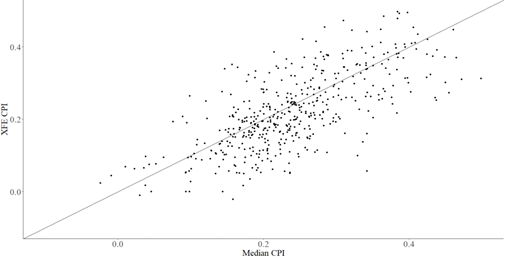
Tariffs have reclaimed the economic spotlight. But with their timing and magnitude uncertain, investors are on edge. A fascinating history of tariffs and their effects on investment returns is provided by Baltussen et al in a recent Enterprising Investor blog. This blog takes a complementary approach to exploring their possible implications for returns. Tariffs change relative prices. Just as large changes in oil prices pushes up energy costs compared to other goods, tariffs make imports relatively more expensive. In economics’ parlance, tariffs are “supply shocks.” And because price adjustment is costly to firms in the short run, import prices rise in response to large tariffs while other prices don’t immediately change despite possibly softening demand (see Romer 2019 for the modern macro explanation of “nominal rigidities”). This causes the average price level to rise. That is, tariffs cause the headline (all items) inflation rate to go up. This post offers a framework for thinking about the effect of tariffs on major asset class returns by estimating asset classes’ response to supply shocks. By separating inflation’s “signal,” or trend component (determined by fundamental forces) from its shock-driven “noise” component, we can estimate the past response of major asset classes to the latter. This may suggest lessons about the possible response of asset classes to one-time tariffs. Quantifying Inflation Shocks Using Core and Median CPI Economic theory and a little analysis allow us to guess at how asset classes might respond to the inflation-shock effect of tariffs. As for theory, modern macroeconomics describes inflation using a “Phillips curve” framework, named after the economist who first noted that economic slack and inflation were negatively related (Phillips used unemployment and wages). Phillips curves can be specified in various ways. Generally, they explain inflation with three variables: inflation expectations (consumer, business, or professional forecaster), an output gap (for example, the unemployment rate or the vacancy-to-unemployment ratio), and a shock term. This blog uses a Phillips curve approach to separate inflation’s signal or trend, driven by inflation expectations and the output gap, from noise or the fleeting factors that come and go. This sidesteps two issues: that tariff shocks pass through to trend inflation by raising inflation expectations and costs of production as well as other channels. There is in fact already evidence that consumer inflation expectations are rising. Incorporating these effects would make this analysis considerably more complicated, however, and so they are ignored for now. The Phillips Curve tells us that we can decompose inflation into trend and shock components. Typically, this is done by subtracting the trend in inflation from headline (all items) inflation. This blog instead uses the median consumer price index (CPI) inflation rate as calculated by the Federal Reserve Bank of Cleveland as its proxy for trend inflation because of median CPI’s attractive properties.[1] And instead of using headline CPI inflation as its starting point, it uses core CPI inflation, which excludes food and energy (XFE CPI). XFE CPI is preferred because the difference between XFE and median CPI yields a measure of shocks purged of large changes in the relative price of food and energy. This measure is referred to as “non-XFE shocks.” The charts in the panels of Exhibit 1 give a sense of the frequency and size of non-XFE shocks. The scatterplot shows monthly XFE versus median inflation. When they’re equal, points lie on the 45-degree line. Pairs above the 45-degree line are positive non-XFE shocks and vice versa. (The R-code used to produce charts and perform analysis presented in this blog can be found on an R-Pubs page). The histogram shows the distribution of these shocks. Large disturbances are rare. Exhibit 1. Top panel shows median vs. XFE CPI from 1983 to 2025:3. Bottom panel shows the distribution of the shocks (the distance from the 45-degree line in the top panel); frequencies for each of the 11 “bins” appear on the bars. Source: FRED Asset-Class Sensitivity to Inflation Surprises Having defined non-XFE shocks, we can estimate how major asset classes have responded to them. This may provide a preview of how these asset classes might react to inflation shocks resulting from tariffs. Relationships are estimated in the customary way: by regressing asset-class returns on non-XFE shocks. The resulting estimated coefficient is the left-hand-side variable’s non-XFE shock “beta.” This approach is conventional, and mirrors that taken in my Enterprising Investor blog Did Real Assets Provide an Inflation Hedge When Investors Needed it Most? Regressions use monthly percentage changes for non-XFE shocks as the right-hand side variable, monthly returns for the S&P 500 total return (S&P 500) index, Northern Trust Real Asset Allocation total return (real assets) index, Bloomberg Commodities Total Return (BCI) index, Bloomberg TIPS index, and 1–3-month Treasury bill return (T-bills) index as dependent variables. Inflation data comes from FRED and index returns from YCharts. Because sample size varies by asset class regressions are run over the longest available sample period for each asset class, which ends in March 2025 in each case. One caveat before discussing results. Non-XFE shocks could be due to any large relative price change, except of course changes in food and energy. That is, supply shocks include more than supply-chain shocks. Unfortunately, there’s no obvious way to isolate the disturbances we’re most interested in using public inflation data. But since we can’t know exactly what form such tariff-induced inflation disturbances will take, an examination of asset class response to non-XFE shocks is a reasonable place to start. With that said, results are shown in Exhibit 2. Exhibit 2. Regression results. Dep. variable TIPS BCI T-bills S&P 500 Real assets   Begin date 1998:5 2001:9 1997:6 1989:10 2015:12   Non-XFE shock “beta” 0.545 4.440* -0.248*** 2.628 1.365   95% CI (-1.191, 2.280) (-0.585, 9.465) (-0.432, -0.064) (-1.449, 6.704) (-4.015, 6.745)   Observations 323 283 334 426 112   R2 0.001 0.011 0.021 0.004 0.002   Notes: *p<0.1; **p<0.05; ***p<0.01; standard errors are adjusted as indicated by residual behavior. Sources: FRED, YCharts, Author’s regressions. A positive, significant estimate for the “non_xfe_shock” coefficient suggests that an asset class hedges against non-XFE

Tariffs, Inflation, and Returns: How Investments Respond to Supply Shocks Read More »

Rethinking Corporate FX Hedging: Seeing the Forest through the Trees

“It often happens that a player carries out a deep and complicated calculation, but fails to spot something elementary right at the first move.” — Alexander Kotov, Chess Grandmaster Introduction The FX impact on corporate earnings and guidance should be front of mind for both corporates and the analyst community. Indeed, more than 45% of revenues in S&P 500 companies originate internationally. But last year, the hedging performance of many US multinational corporations (MNCs) was well off the mark, and few CFOs explained their hedging decisions on earnings calls. Why such poor hedging performance? After all, treasury management system (TMS) providers claim to offer “push-button” capabilities for limiting the FX impact within $0.01 of earnings per share (EPS). The answer may not be as elusive as some of us may imagine. Though hedging earnings has its challenges, including exposure estimation and accounting-driven issues, very few corporates actually hedge earnings risk to the consolidated income. Around 60% of companies cite earnings volatility mitigation as a key risk management objective, but less than 15% actually hedge their earnings translation exposure, according to a Citibank survey. This raises an intriguing behavioral finance question: Could the varied financial accounting treatments of hedging transaction risk at the subsidiary level and translation risk at the consolidated income level be unduly influencing prudent decision making, resulting in a transference of financial accounting to mental accounting? Key questions to consider include: Are CFOs and corporate treasurers making effective hedging decisions? Are they substituting expediency for substance, making decisions based on financial accounting considerations? Is there too much career risk in putting on fair value hedges? On a broader level, how beneficial is it to categorize FX risk? Is it counterproductive to pigeon-hole FX exposures in neat boxes — transactional, translational, or structural? The Fungibility of FX: One Risk, Three Forms FX’s fungibility is easy to underestimate. For example, to better match client revenue to production costs, EU-based firms can reduce their structural risk by relocating production facilities to the United States. But they will just be substituting one core risk for another: transactional for translational. Moreover, if a subsidiary reinvests its earnings instead of upstreaming dividends to its parent, then the unrealized transactional risk over the corresponding will accumulate to match the translational risk to the consolidated income. The difference between transactional and translational risks is not fundamental but an issue of timing. Hedging vs. Accounting Accounting rules provide for three types of hedges: fair value, cash flow, and net investment hedges. Fair value hedges result in the recognition of derivatives gains or losses in the current-period income statement. With cash flow and net investment hedges, current-period derivatives gains or losses are deferred through other comprehensive income (OCI), which is recorded on the shareholders’ equity section of the balance sheet. Under IFRS, intercompany dividends can only be transactionally hedged once they are declared. This provides protection for the period between the declaration and payment, which is usually too short to significantly reduce the risk. If corporates are more inclined to execute cash flow hedges rather than fair value hedges — which can cover longer periods under an estimated exposure but must be dragged through the income statement — then adverse FX impacts should not come as a surprise whenever macro conditions deteriorate or during bouts of rapid USD appreciation.  There are accounting hacks: One way corporates address unfavorable accounting treatment around earnings hedges is to classify them as net investment hedges whenever possible, since they have similar recognition mechanics as cash flow hedges. Through holding companies or regional treasury centers, some MNCs deploy such accounting-friendly solutions to manage genuine timing issues, which can also potentially incorporate economic and structural hedges. Despite such methods, the broader questions remain: Why are publicly traded companies “routinely” blindsided by FX volatility? Do financial accounting rules influence hedging decisions? Do corporate treasurers and CFOs tend to avoid fair value hedges and, in the process, overlook earnings exposures? Is the tail wagging the dog? While the topic may receive limited attention in academia, sell-side practitioners catering to corporates know that accounting considerations often have an outsized influence on the types of “accounting exposures” that are hedged. Boardroom Dynamics: Holding the CFO Accountable Boardrooms need to do a better job of holding CFOs accountable. All too frequently, discussions regarding FX’s impact on EPS tend to trade the prosaic for the poetic. No asset class is better than FX for rhapsodizing on all things macro — from fundamentals, flows, institutional credibility, to geopolitical dynamics — but the elemental questions underlying the rationale for what is being hedged (or not hedged) are seldom, if ever, posed. Similarly, debates on technology can become a canard that distracts from the underlying issues. While firms need systems that “talk to each other” and provide gross and net exposures across the company, flawless visibility is not a panacea in and of itself. As Laurie Anderson put it, “If you think technology will solve your problems, you don’t understand technology — and you don’t understand your problems.” Smart hedging policies address a firm’s level of risk aversion relative to its market risks. A firm’s choice of risk measures and benchmarks is intricately linked to its specific circumstances: shareholder preferences, corporate objectives, business model, financial standing, and peer group analysis. “Know thyself” is a useful precept in this regard. For instance, if an MNC in the fast-moving consumer goods (FMCG) industry wants to maximize earnings while preserving its investment grade rating, then consolidated earnings-at-risk (EaR) ought to be among the appropriate risk-based measures. It’s essential that the right risk measures and benchmarks are pursued, regardless of accounting considerations. Conclusion To summarize, effective corporate hedging begins with understanding FX’s fungibility: Risk cannot be “categorized” away. Furthermore, there is no substitute for thoughtful hedging policies and selecting performance indicators that define success and ensure consistent interpretation and pricing of risk across the firm. These policies must also address the tension between the core hedging objectives and financial accounting considerations. If you liked this post, don’t forget to subscribe to Enterprising Investor. All posts are the opinion of the author. As such, they

Rethinking Corporate FX Hedging: Seeing the Forest through the Trees Read More »