CIO CIO

EXL Code Harbor streamlines platform migration, data governance, and workflow assessment

With their outdated technology and high costs, legacy codebases hold enterprises back. But in many cases, the prospect of migrating to modern cloud native, open source languages1  seems even worse. Migration projects typically require significant time and money. Artificial intelligence (AI) tools have emerged to help, but many businesses fear they will expose their intellectual property, hallucinate errors or fail on large codebases because of their prompt limits. And that leaves them with daunting manual migrations on their hands. EXL Code Harbor is a GenAI-powered, multi-agent tool that enables the fast, accurate migration of legacy codebases while addressing these crucial concerns. How Code Harbor works Code Harbor accelerates current state assessment, code transformation and optimization, and code testing and validation. Throughout each stage of the process, it relies on task-specific, finely tuned agents built to exceed the efficiency and expertise of humans.                                     Assessment: Deciphers and documents the business logic, dependencies and functionality of legacy code. Governance: Maps data flows, dependencies, and transformations across different systems. Migration: Chunks, simplifies, and moves the code to the desired language, then recompiles it to recreate its full logic. Optimizes code. Testing & Validation: Auto-generates test data when real data is unavailable, ensuring robust testing environments. Execute both legacy and converted code in parallel to identify runtime issues. Auto-corrects errors iteratively, flagging only critical issues for human review. To accomplish this, Code Harbor uses AI agents that replicate the entire migration journey. By taking EXL’s expertise in helping enterprises design both legacy and modern architectures and building it into these agents, the tool tackles every migration task with greater accuracy and efficiency: Business Analyst: Code explanation, documentation, pseudo code.     Code Assessor Agent: Workload analysis, dependency identification, and code composition and complexity. Data Navigator Agent: Maps data flows, dependencies, and transformations. Code Simplifier Agent: Logically chunks the source code. Code Migrator Agent: Translates legacy code while preserving functionality. Code Optimizer Agent: Enhances the code’s readability and refactors its logic. Synthetic Data Generator Agent: Ensures robust testing by creating test data. Code Executor Agent: Executes legacy and converted code in parallel. Debugger Agent: Autocorrects and flags errors. Data Validator Agent: Compares the source and migrated code outputs. Code Harbor’s orchestration layer automates workflows across these agents, allowing enterprises to lessen their risk by migrating code in phases. Real-world benefits  By eliminating redundant code and optimizing performance, Code Harbor reduces the manual effort required for assessment, conversion and testing by 60% to 80%. Let’s take a deeper look at the tool’s benefits: Increased performance and efficiency: Code Harbor analyzes the business context of code and utilizes the benefits of the target language instead of performing a line-by-line migration. Every agent is designed to enhance code efficiency, maintainability and adaptability at every stage of the process. Greater integration and scalability: This modular architecture distributes tasks across multiple agents working in parallel, so Code Harbor can perform more work in less time. And by chunking and simplifying code pre-migration, the tool ensures enterprises can move and manage even the largest codebases. Improved security and compliance: Code Harbor doesn’t store or use customer data for training or fine-tuning models, and businesses can choose which large language models to use to best protect their data: open source or proprietary, on-premises or in the cloud. Because the tool generates synthetic testing data gleaned from the context of the code, it’s able to optimize, debug and test code in a way that other tools simply can’t — all while protecting the privacy of an enterprise’s actual data and IP. It further avoids IP infringement by training AI models that are trained on coding data with permissive licenses. Backed by 20 years of expertise and a purpose-built multi-agent framework, Code Harbor provides the flexible, customer-centric approach that businesses need for complex code migrations. Banks see faster migrations Enterprises in the financial services industry are already reaping the benefits. A top UK bank worked with EXL to move its extract, transform, load codebase from SAS to Python. The migration, which included complete testing and number matching, was over 35% faster than previous manual migrations. In another case, a global financial institution used Code Harbor to optimize its BigQuery syntax, logic and explainability. EXL also generated synthetic data to use for iterative testing and other code improvements. Overall, the firm cut code compute time and memory usage by 25% and query plans by 10%. By using GenAI and a security-first approach, Code Harbor accelerates modern migrations, freeing enterprises to focus on innovation. To learn more about how it can benefit your organization, attend the upcoming webinar, AI in Action: Driving the Shift to Scalable AI. source

EXL Code Harbor streamlines platform migration, data governance, and workflow assessment Read More »


Six Sigma certification: The six-level path to Master Black Belt

Six Sigma certification overview Six Sigma follows a certification path using belts, starting with White Belt and going up to Master Black Belt. These certifications are designed to validate you have the knowledge and understanding to undertake Six Sigma projects in your organization, with different levels of responsibility as you move up the levels. Earning Six Sigma certification demonstrates you have the ability to address and solve complex process problems. Given its applicability across many industries, it is a versatile credential to earn, and because professionals with Six Sigma certification are skilled at improving process quality and efficiency, they are considered valuable employees for impacting but also affect the bottom line. Six Sigma White Belt White Belt is the first step on the Six Sigma certification path for those just starting to develop and hone Six Sigma related skills. To earn this level certification, you’ll need to demonstrate you have a basic understanding of the Six Sigma methodology. The exam tests your knowledge of definitions, history, and structure of the framework, as well as your awareness of who should be involved in Six Sigma implementation within the organization. There are no prerequisites to take the free online, open-book, 30-question multiple-choice exam, which you’ll need to score 70% or higher to pass. This certification never expires and there’s a free self-study guide available to prepare for the test. source

Six Sigma certification: The six-level path to Master Black Belt Read More »

EuroStack: Europe’s path to digital independence?

Resources: critical materials, energy and skilled labor; Chips: processors, memory technologies and quantum communication systems; Networks: Digital and physical connections, including cell towers and fiber optic networks; Connected devices and IoT: devices that enable real-time information processing and data collection Cloud infrastructure: Secure data storage and computing power; Software platforms, applications and algorithms: Operating systems, applications and cybersecurity frameworks; Data and AI: processing data to gain insights. EuroStack has already identified the leading European companies and existing alliances and networks for each level. These include companies such as Aleph Alpha, Bosch, Deutsche Telekom, NextCloud, SAP and Siemens. In order to close the gaps, the first step is to set up a European sovereign technology fund, which will initially provide ten billion euros to develop digital EuroStack demonstrators. These demonstrators, which will be selected as part of an open competition known as the EuroStack Challenge, will serve as minimum viable products (MVPs) to demonstrate Europe’s ability to innovate and scale in the field of digital enabling technologies. The status quo: Europe is dependent on foreign providers in almost all areas of technology. EuroStack Overall, the initiative envisages a total investment of €300 billion over a period of 10 years, with various sources of funding to be tapped into. These include existing EU programs such as Horizon Europe, Digital Europe and the European Innovation Council (EIC) as well as national contributions, private investment and venture capital. source

EuroStack: Europe’s path to digital independence? Read More »

CIOs in Dubai discuss the AI-Ready IT team of tomorrow

As organizations across the Middle East accelerate their adoption of artificial intelligence, a critical question arises: how do you build an IT team equipped to handle this transformation? This was the central theme of a panel discussion at the 18th edition of the IDC Middle East CIO Summit, held in Dubai, which brought together IT leaders to explore talent development strategies for the AI-infused enterprise. The panel recognized that IT organizations are undergoing a fundamental shift, requiring CIOs, data heads, and AI leaders to rethink their approach to talent management. The discussion revolved around key areas such as skill assessment, gap analysis, data architecture, security, governance, and the non-technical skills necessary for cross-functional collaboration and change management. “The biggest challenge is that people are not used to operating at a very fast speed and making decisions quicker than they currently do. This will cause some challenges when we start to see good use cases of AI implementation. How do we work with that speed? On the tech side, there is a big skills gap. Part of the problem is that when we start a course, the technology has already changed; it’s also changing so fast,” said Adam Lalani, CTO at Alliad (UAE). source

CIOs in Dubai discuss the AI-Ready IT team of tomorrow Read More »

How Birmingham’s $48M Oracle ERP project turned into an epic failure

“This was an abdication of responsibility on a grand scale, with costs once again falling on Birmingham residents,” BBC reported quoting Robert Alden, leader of the Birmingham Local Conservatives. Taxes are set to increase by 7.49% from April 2024, adding to the public backlash, the report added. The re-implementation challenge Birmingham’s current re-implementation effort presents an interesting test case for these principles. The success or failure of this second attempt will likely depend on whether the council can address not just the technical issues, but the deeper organizational and cultural patterns that contributed to the initial failure. While the road to full ERP functionality remains long, BCC is working to address the issues identified in the audit. source

How Birmingham’s $48M Oracle ERP project turned into an epic failure Read More »

Strategies for telecom executives: navigating the OPEX conundrum

As the market becomes increasingly competitive and technology evolves rapidly, telecommunications industry leaders must find ways to achieve more with less — managing operating expenses (OPEX) without sacrificing critical capabilities. This balancing act is especially difficult in a capital-intensive industry like telecom, where infrastructure investments and IT systems are crucial for ongoing operations. In this post, we’ll examine the key drivers behind OPEX pressures in telecom and how to navigate them with greater confidence. The telecom OPEX dilemma: Managing costs without sacrificing capabilities A keychallenge for telecom executives is managing the ratio between revenue and IT/technology OPEX. While OPEX can be controlled in areas like marketing with reductions in planned spending, lowering IT and technology costs is more complicated. These expenditures are tied to core business systems and services that power the business, such as network management, billing, data storage, customer relationship management, and security systems. Success in this area has always required structured review, negotiations and tough decisions to manage resources, systems, and vendors. Establishing a system roadmap is a critical component of OPEX efficiency. Determining what systems to retire, maintain, or invest in lays the foundation for cost reductions and more effective investments. An effective roadmap involves not only evaluating current system architecture, skills availability and cost of ownership, but also considering future business needs. By assessing the total cost of ownership (TCO) and the return on investment (ROI) for each system, organizations can make informed decisions about where to allocate resources. This process also highlights areas where automation or integration can improve operational efficiency, reducing manual effort and enhancing agility. To create a successful system roadmap, involve key stakeholders from IT, operations, finance, and leadership to ensure you consider all needs. Driving consensus requires aligning the roadmap with the company’s broader business objectives, prioritizing systems for efficiency, and using data-driven decision-making. Regular reviews and feedback loops will help adjust the plan as business needs evolve. Balancing Innovation and OPEX efficiency Whether it’s new product offerings, expanded 5G networks, or building out new infrastructure, telecoms are competing heavily to differentiate themselves against established and emerging players in the market. Telecoms must find ways to fund innovation without letting OPEX spiral out of control. Technologies like automation, AI, and cloud-based services require significant upfront CAPEX investment but can drive long-term OPEX efficiency. For example, AI-driven network optimization tools may have high initial costs but improve network management, leading to long-term savings. Most will require additional funding in areas of talent management as well as infrastructure to leverage these technologies effectively — a hit against the OPEX numbers. This is where a long-term strategy that prioritizes sustainable value over short-term savings comes in handy — but only if you can help sell the vision to the board, show a clear path to achieving the goals agreed upon with IT and Finance executives, and get support from across the business to take part in the successful execution of the plans. OPEX efficiency and innovation do not happen in a vacuum, so the closer IT leaders work with their finance counterparts, the stronger the outcome. Are software vendors crunching your OPEX? Telecoms often rely on software vendors for systems like ERP, network management, and CRM for operations. These are not strategic tools, but rather, mission-critical, taking up a significant portion of the IT budget. Adding to the cost are continuous upgrades and the push to the cloud, both of which may show little to no ROI for the business but come with the threat of losing support or being locked out of new innovations. To take greater ownership of one’s IT roadmap, reduce unnecessary spending, and maximize the value of existing systems, telecom leaders should explore third-party support options that can better align with their objectives and provide better, more expert support and services. Third-party support can extend the useful life of your system while avoiding the CAPEX costs and risks of upgrades. When your existing enterprise system is stable, robust and tailored to your needs, replacing it with new technology can introduce unnecessary risk. Instead, leverage your proven system as a foundation for business innovation through third-party support, while significantly reducing support costs and saving OPEX. More importantly, shifting funds from the treadmill of upgrades to real innovation helps to close the gap between tomorrow’s possibility and today’s capability, driving meaningful change for the business.  Building a sustainable approach to OPEX management In a competitive industry where technological evolution is constant, staying ahead requires not just cutting costs but investing wisely for the future. In part two, we’ll explore strategies for managing these OPEX challenges effectively and examine what it means to embrace a flexible, composable IT strategy. Discover how Rimini Street is helping telecom clients accelerate digital transformation, regain control of their IT roadmap and significantly reduce maintenance costs, while freeing funds to invest in strategic initiatives. Learn how you too can drive digital transformation without disruption while maximizing the full potential of your investments. source

Strategies for telecom executives: navigating the OPEX conundrum Read More »

To ensure AI success, map your value streams, says Neudesic

AI is no longer a luxury but a necessity. And while necessity is the mother of invention, Australian CIOs may struggle to get everyone in the boardroom, well, on board. Australian organisations are not moving as quickly as their counterparts in preparing for and fully adopting AI for business transformation. Research from IBM indicates that only 15% of global businesses have established themselves as leaders in AI implementation, while the majority remain in early experimental phases. One way to address this challenge is with clarity and direction. The top barriers hindering enterprises globally from adopting AI are a lack of a clear AI strategy and investment, highlights the IBM AI in Action report. What is value stream mapping? Value stream mapping is a powerful technique making a big difference in this space. Derived from Lean manufacturing principles, this technique essentially creates a visual representation of all the components necessary to deliver a product or service, considering the people, processes, information, and inventory involved from start to finish. “Value stream mapping lays bare the delays and inefficiencies in a given workflow,” explains John Hanna, Neudesic Australia. “This allows executives, leaders, and teams to work together to find gaps, understand pain points, and build a better AI strategy.” For utilities in particular, it helps teams identify high-impact opportunities. For example, mapping the time taken for tasks such as rate case submissions can pinpoint where AI can streamline processes. By evaluating metrics like lead time (time to start an action) and cycle time (time spent on productive work), utilities can identify repetitive tasks that can be automated. “Regularly reviewing the mapped process allows stakeholders to identify outdated approvals or unnecessary steps that slow progress. Knowledge like this is crucial to help utilities face today’s uncertain economic climate,” Hanna remarks. Such insights also reveal complexities and bottlenecks that may not be apparent when teams only view their part of the process. “By collaborating across departments, organisations can gain valuable insights into how each step impacts the entire workflow so that they can make meaningful, impactful improvements,” Hanna adds. Implementing AI with confidence Mapping like this represents the first step towards building a culture of continuous improvement and adaptability, ensuring that utility companies can rapidly respond to evolving regulations and changing market demands. Working with a trusted industry leader is a surefire way to do this confidently. Global professional services leader Neudesic, an IBM Company, is a proven expert in value stream mapping. Neudesic leverages extensive industry expertise and advanced skills in Microsoft Azure, AI, data engineering, and analytics to help businesses meet the growing demands of AI. The company’s approach, which comprises four pillars, helps organisations to transform legacy systems into AI-ready environments: People: Its diverse array of internal experts spanning industries, skillsets, and Microsoft Azure and OpenAI solutions help clients address a wide spectrum of business challenges for any type of organisation Approach: It achieves results not only by implementing Microsoft and OpenAI solutions, but also by addressing today’s challenges, identifying tomorrow’s opportunities, and designing the best path forward Technology: It focuses on innovation to develop solutions that meet clients’ needs while accelerating time to value Expertise: With 20 years of expertise in Microsoft’s stack, it offers clients expert knowledge to tackle critical IT challenges and unlock new opportunities Armed with insights through mapping, CIOs can start with small, quick successes and therefore gain stakeholder support early on. For instance, using AI to automate document preparation can cut processing time from hours to minutes. One utility that Neudesic worked with recently saved nearly $1 million by streamlining less than 40 documents. Hanna goes on to share three tips for CIOs to develop an effective AI strategy. First, set clear objectives and success metrics. Agree on clear, measurable goals for AI projects that match business priorities and ensure everyone understands the desired results. Understanding customer behaviour is key to shaping these goals as it helps businesses adapt to changes, connect better with customers, and increase revenue. Next, encourage cross-functional collaboration. Involve teams from various departments, such as IT, operations, and finance, from the outset. This ensures the AI models are selected and refined to meet project requirements effectively. Finally, apply the “Goldilocks” principle when evaluating AI projects. Choose use cases that balance complexity, feasibility, and value. Consider factors like data type, problem scope, resource availability, and interpretability. Value stream mapping isn’t just a tool. It’s the flashlight guiding you through a labyrinth of inefficiencies and untapped potential. With clarity and direction, Australian organisations can leap forward from aspiration to action. With the right strategy and partners like Neudesic, you can ensure your AI journey doesn’t just keep pace but sets the standard. Learn more about how Neudesic can help Australian organisations go forward in AI, confidently. source

To ensure AI success, map your value streams, says Neudesic Read More »

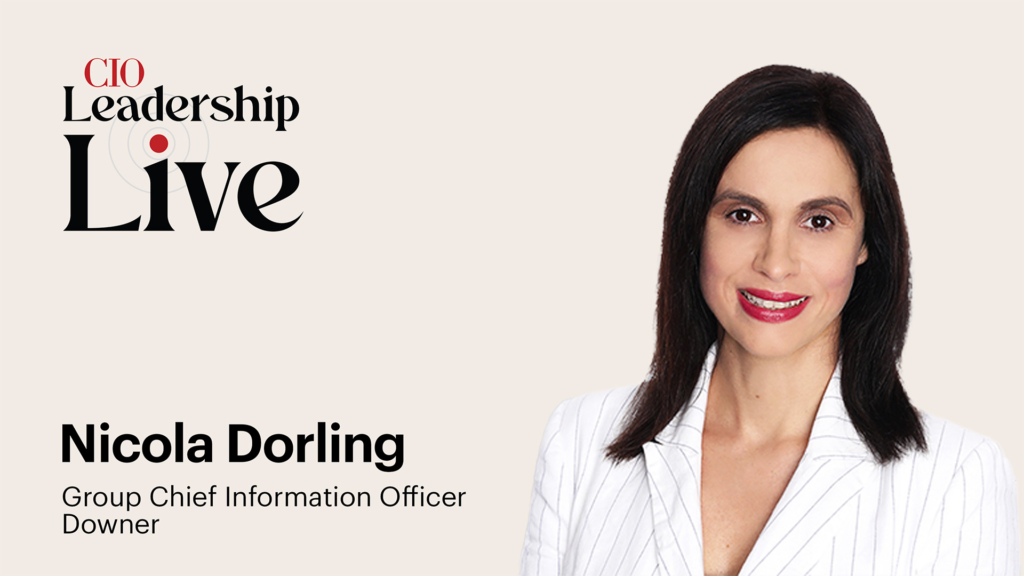
CIO Leadership Live Australia with Nicola Dorling, Group Chief Information Officer, Downer

Cathy O’Sullivan  00:05Hello. Welcome to CIO Leadership Live Australia. I’m Cathy O’Sullivan, editorial director for Foundry in Australia and New Zealand. And today, I’m delighted to be joined by one of our CIO50 alumni for Australia, Nicola Dorling, who is the Group Chief Information Officer for Downer. Welcome to the show, Nicola. Thanks for joining me today. Nicola Dorling  00:29Thanks, Cathy. I’m very much looking forward to this. Cathy O’Sullivan  00:32Excellent and listen, I hope 2025 is off to a good start for you. I know you’ve achieved a lot so in the last year or so but before we get into that, would really love to hear about your own start in technology, how you started your career, and what have been some of the highlights to date? Nicola Dorling  00:52Yeah so obviously, Cathy and I were talking about this just before we came online, and she said she always likes to hear about how people got into technology roles. I started my role in technology, first of all as a group CFO. So I was a CFO of a number of ASX listed organizations, and one of them being GrainCorp. And in that organization, we transformed the business. We created a fully integrated commodity management trading system integrated to SAP. So that was my first push into technology, utilizing technology to streamline the process, the data, the way that the people were working, and have it fully integrated into a full stack solution. And so that’s where I really got interested in technology. And then over the years, I focused on major technology transformation programs such as New South Wales Government equip program, Sydney trains, enterprise asset management program, and then multiple other digital transformation programs for engineering and operators and maintainers such as Downer. And while I was obviously driving my career as a CIO,  I went back to school to get some additional qualifications, and I also teach digital strategy and leading with digital technology at AGSM. Cathy O’Sullivan  02:20So interesting that you’ve had that that start as a CFO, because that role and the CIO-CFO role is also so such a fundamental relationship, so great that you have that view as well coming from that finance background. So look, you’re now at Downer, Nicola, so can you give us a bit of an overview of Downer as an organization and what you and your team are responsible for. Nicola Dorling  02:46Yeah, so Downer is a large organization. We have over 30,000 people at any one given time, and we design, build and sustain infrastructure assets and the facilities assets across Australia and New Zealand. So on any given day, we can be supporting the cleaning in a hospital, or we can be operating and maintaining the road networks that we have in Australia and New Zealand. So no one day’s the same, I think, is probably the first thing that I would say. So what do my team do? My team across the whole business support all of the run technology for all of the business units. We have heads of IT that report to me in each of the business units, and we also support the strategic programs of work. So anywhere where we think we can utilize innovation to make it more seamless for our customers to do business with them. We focus on on supporting the design and build an implementation of all of those as well. So it’s a really great team. We get to do everything from strategy, build, deployment and run and so we get to learn a lot about all the different businesses and what they need to be more efficient for their customers. Cathy O’Sullivan  03:59So speaking of strategy, then, how do you align that overall IT strategy for such a diverse organization with the overall business strategy of Downer? Nicola Dorling  04:11Yeah so as any company would do, we align to the Downer corporate strategy. So the Downer Digital strategy has got three overarching pillars and 12 strategic programs of work. And those 12 strategic programs of work align to the business unit strategies as well. So basically, everything that we do in the Downer Digital strategy is delivering for the businesses and ultimately delivering against the Downer overall strategy. So the 12 programs of work are really focusing on areas where we want to move the needle, and they’ll usually focus on areas such as innovation, such as digital twins for some of our customers, or it could be an AI solution that’s supporting safety on one of our road customers. And the 12 programs also support as how we uplift our middle office and so where we’re looking to get better at utilizing the data that we’ve got in our organization to make decisions. And then we’ve got a number of foundational programs of work that are looking at uplifting our infrastructure, making sure that we’ve got flexibility in our cloud solutions. Cathy O’Sullivan  05:22So you mentioned some of the big projects there. So tell us more about how that digital journey is tracking. What have been some of those big projects that you and the team have been driving. Nicola Dorling  05:34Yeah. So first of all, when we are kind of driving our digital journey, the most important thing for us is to be with our business. So we spend a lot of time working with our business on their customer journey. So how are they doing their work on a daily basis for their customers? So if you are working in our asset management business, what do you do from the minute that you wake up to the time when you’ve delivered to your customer and you go home? So we map out all those journeys, and we understand across those journeys, if they’ve got any pain points for our employees, but also our customers, we really try and understand what technologies they’re using today. Are they disconnected? Do they need an uplift. And then once we’ve got that really

CIO Leadership Live Australia with Nicola Dorling, Group Chief Information Officer, Downer Read More »

Outdated business apps can cloud your AI vision

Banking and insurance are two industries still steeped in the use of mainframes, and Ensono manages mainframes for several customers. While big iron and its software remain important to these organizations, and could have a future with AI, mainframe-dependent companies are losing their internal expertise as older IT workers retire. “These older apps that have been built on mainframe shouldn’t necessarily be replaced,” Klingbeil says. “It can either be that the mainframe could work perfectly fine, or it’s expensive to move, or it’s risky to move, or not worth the money. But they can be modernized.” Klingbeil and Ensono have seen the challenges that legacy apps present for AI firsthand. When building a machine-learning-powered tool to predict the maintenance needs of its customers, Ensono found that its customers used multiple old apps to collect incident tickets, but those apps stored incident data in very different formats, with inconsistent types of data collected, he says. source

Outdated business apps can cloud your AI vision Read More »

Beyond the hype: 4 use cases that show what's actually working with gen AI

“We don’t release financial ROI numbers,” he says, but Verizon does have internal measurements in place. For example, customers are surveyed right after a call to determine if their interaction was positive. “All of those measurements have increased,” he adds. Today, all customer service representatives use the gen AI tool, which is over 40,000 people. The fine-tuning and contextualization that Verizon adds to the base model means that accuracy is currently over 90%, says Higgins. Still, it’s not perfect, and Verizon has been cautious about how the technology is rolled out, says Vivek Gurumurthy, Verizon’s consumer CIO. “Today, we use it to primarily explain what happened, but we’re not in the business yet of taking actions on behalf of the customers,” he says. “For actions, we want to make sure there’s a human involved. And for the explanation, we want to be very careful and validate, verify, and certify everything.” source

Beyond the hype: 4 use cases that show what's actually working with gen AI Read More »