CIO CIO

Empowering Women in AI: Leading innovation in the UAE

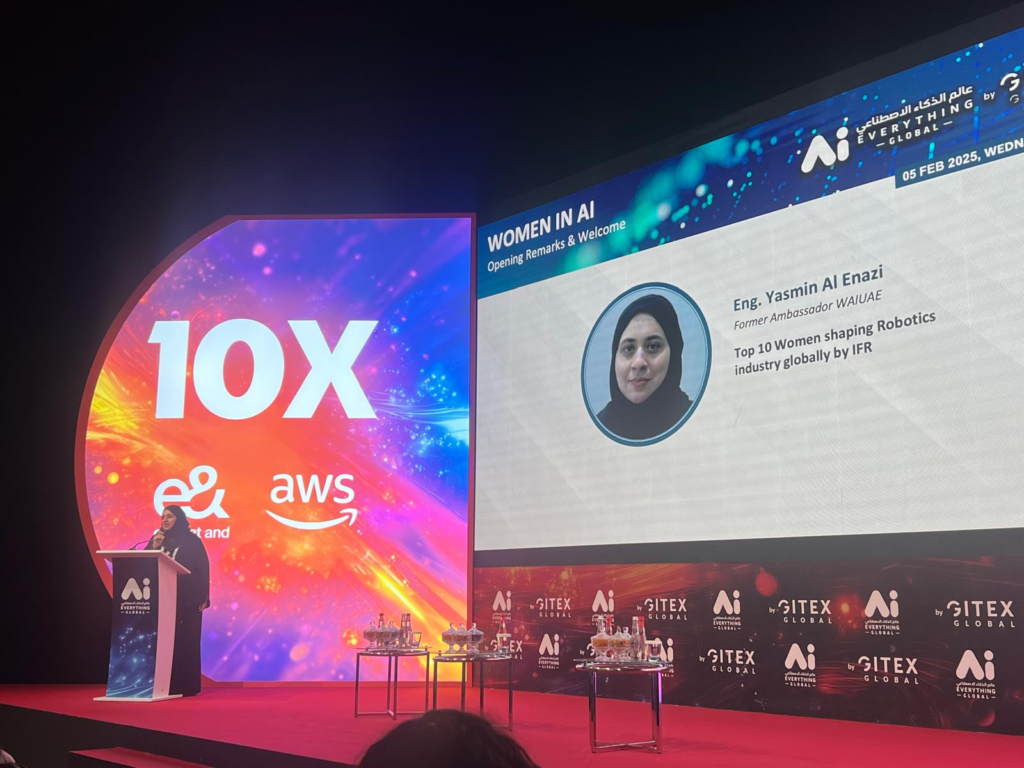
One of the key driving forces behind the increasing participation of women in AI in the UAE is the country’s robust initiatives in education, partnerships, and research. The UAE is home to numerous programs that nurture young women’s talent in STEM fields, ensuring that they have the resources and support to pursue careers in technology and AI. For instance, the UAE’s National AI Strategy 2031 includes a strong focus on diversity and inclusion, emphasizing the need for women to take an active role in shaping the future of AI. Women across the nation are being given access to world-class educational resources, AI labs, and tech-based initiatives aimed at empowering the next generation of innovators. This investment in women’s education is enabling many to break barriers and step into previously male-dominated fields like AI research and development. As Eng. Yasmin Al Enazi, Ambassador of Women in AI, UAE, aptly states: “Last year, the United Nations Development Program (UNDP) empowered more women with initiatives of education and partnerships in the UAE and beyond. With these initiatives, we are seeing more and more female AI engineers and AI researchers returning to the lab. Women are truly redefining what AI can do and how it can have an impact.” source

Empowering Women in AI: Leading innovation in the UAE Read More »

Why GreenOps will succeed where FinOps is failing

The next frontier in cloud operations  Combining GreenOps, sustainable architectures and technology transformational leadership represents the next frontier in cloud operations, addressing FinOps’ limitations by integrating sustainability into the equation. Organizations should begin by aligning their operational and sustainability goals, investing in training to build expertise in sustainable design and fostering collaboration across all departments. This proactive approach not only ensures a more efficient and eco-friendly cloud ecosystem but also positions businesses as leaders in the pursuit of technological and environmental excellence.  By combining a culture of collaboration, transparency and long-term value creation with the principles of transformational leadership, GreenOps offers a pathway to more sustainable and efficient cloud practices. As businesses prioritize environmental responsibility, GreenOps is poised to become a critical framework, shaping the future of cloud computing and ensuring a harmonious balance between technological innovation and ecological stewardship.   Kacy Clarke has held executive roles at Microsoft, Deloitte, Cloud Technology Partners/HPE, DTCC and Wellington Management where she has driven technology innovation and transformation initiatives guiding organizations through complex IT and business challenges. Kacy is currently the Chief Technology Officer for Chiefly & Co, a management consulting firm helping clients achieve both sustainability and profitability. She is an IASA Global Chief Architect, and is the co-founder of the SustainableArchitectures.org community, which is bringing together IT architects to establish principles, patterns, frameworks and guidelines for technology leaders responsible for ensuring organizational ESG and Sustainability business goals are met. She is also a sustainability advisor in the Responsible AI initiative at SustainableIT.org.   source

Why GreenOps will succeed where FinOps is failing Read More »

How global retailers like Orlebar Brown navigate local challenges to expand internationally

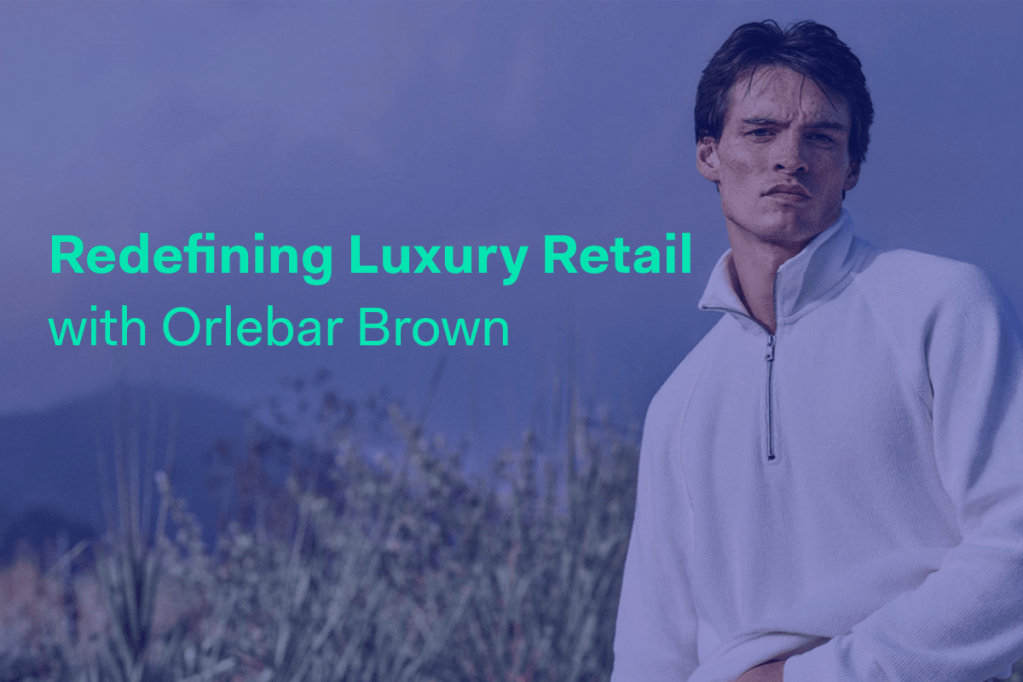
For some Australian retailers, their next frontier of business is global expansion. Recent data highlights this ambition: two in three conversations with Australian brands are about breaking into the US market, according to Guillaume Deront, ShipBob’s General Manager for ANZ. Furthermore, a separate study revealed that the majority of Australian SMBs plan to operate internationally within the next five years. As these businesses prepare to take their operations offshore, they must tackle challenges unique to global expansion, including cross-border logistics, navigating diverse markets, and delivering exceptional customer experiences that resonate locally and globally. The key to success lies in adopting a ‘glocal’ strategy, one that balances global ambitions with local relevance. Orlebar Brown, the iconic luxury holiday wear brand, offers a compelling example of how brands can strike this balance. Through a transformative partnership with Tryzens and Shopify, Orlebar Brown has optimised its international operations while maintaining a consistent, connected customer experience globally. This journey provides critical insights for CIOs and CTOs seeking to align their technology investments with business goals to drive growth and meet local market needs. Technology that powers glocal strategies For retailers embracing a glocal strategy, technology plays a pivotal role in overcoming operational and customer experience challenges. From inventory management to personalised interactions, the solutions offered by Tryzens and Shopify address critical needs for expansion. The first is simplifying cross-border operations. Shopify Markets is a unified home for global business expansion where brands can create customised online shopping experiences for different customer segments, manage compliance obligations, and sell in multiple currencies around the world. Retailers in ANZ can improve operational efficiencies and customer checkout experience by offering localised payment options while maintaining centralised control. Solutions are also designed to break down data silos. Unified systems consolidate data from online and offline channels, empowering businesses to make informed, data-driven decisions. Insights from Shopify’s ecosystem allow retailers to tailor their strategies to specific regions, ensuring alignment with local trends and customer needs. Lastly, Tryzens and Shopify are committed to delivering consistent customer experiences. Disjointed customer journeys are a common pitfall for global businesses. By leveraging connected platforms, retailers can create consistent, frictionless experiences that build trust and drive loyalty. Features like endless aisle, buy online/pick up in-store (BOPIS), and integrated gift cards provide customers with seamless interactions across every touchpoint. Getting started with global ecommerce Expanding internationally is a significant step for ANZ brands, but thoughtful planning is essential for success. Here’s how to get started: Understand your target markets:Research local preferences, cultural nuances, and regulatory requirements. Use data to identify demand for your products and tailor offerings accordingly. Optimise your operations for scalability:Adopt scalable systems like Shopify Markets to handle diverse currencies, payment preferences, and inventory management across regions. Break down data silos:Implement unified platforms to gain real-time insights into customer behaviour, inventory, and sales, helping you optimise strategies. Create connected customer experiences:Deliver consistent and personalised interactions across all touchpoints to foster loyalty and build trust. Partner with experts:Work with partners like Tryzens and Shopify who have a proven track record in global ecommerce strategy and implementation. A success story: Orlebar Brown One brand that exemplifies the power of a connected customer experience is Orlebar Brown, a luxury holidaywear retailer with operations spanning ANZ, Europe, the UK, and the US. For Orlebar Brown, balancing global expansion with local relevance was critical to their growth strategy. By partnering with Tryzens and Shopify, Orlebar Brown implemented a sophisticated commerce ecosystem that addressed key challenges: Managing inventory across borders: Real-time visibility into global inventory allowed Orlebar Brown to optimise stock availability across regions. Providing a personalised journey: A unified view of customer data enabled tailored interactions, both online and in-store. Simplifying transactions: Shopify Markets’ multi-entity functionality streamlined currency handling and checkout processes, reducing costs and enhancing the customer experience. “The transformation was about removing friction for our customers,” said Jamie De Cesare, Chief Technology Officer at Orlebar Brown. “With Tryzens’ guidance and Shopify’s technology, we’ve created a seamless omnichannel experience that puts the customer at the heart of every interaction.” The success of Orlebar Brown’s transformation underscores the value of strategic partnerships in navigating the complexities of international expansion. Shopify’s technology and Tryzens’ expertise in digital commerce created a solution that was both scalable and tailored to Orlebar Brown’s unique needs. Shaun Broughton, APAC Managing Director at Shopify, notes that Shopify’s unified technology empowers businesses to streamline operations and deliver seamless, personalised shopping experiences across all channels. “Together with Tryzens, we’re enabling retailers to focus on what matters most: building meaningful relationships with their customers.” Watch the full interview with Jamie De Ceasare, Chief Technology Officer at Orlebar Brown here. Looking Ahead Global expansion is an exciting opportunity for ANZ brands but requires careful planning and execution. By understanding markets, optimising operations, leveraging data, and delivering connected customer experiences, businesses can confidently take their local operations to the global stage. “For Australian brands, global expansion isn’t just about scaling operations, it’s about evolving strategically. Success lies in combining scalable technology with deep local customer informed insights to deliver seamless, personalised experiences that resonate with a brands customer base across diverse regions. At Tryzens, we empower businesses to navigate these complexities, helping them achieve sustainable growth while enhancing operational efficiency,” concludes James Lutchmaya, ANZ Managing Director at Tryzens. With the right strategy, tools, and partnerships, ANZ brands can unlock new growth opportunities and establish themselves as global leaders in e-commerce. source

How global retailers like Orlebar Brown navigate local challenges to expand internationally Read More »

EXL Insurance LLM offers industry-specific language model for insurance firms

00:00  Hi everybody, welcome to DEMO, the show where companies come in and they show us their latest products and services. Today, I’m joined by Sumit Taneja. He is the senior vice president and Global Head of AI consulting and implementation at EXL. Welcome to the show, Sumit. 00:12Thank you very much. 00:14Alright, so what are you going to show us today? Some really cool stuff, I hope. 00:16We’re going to talk about Insurance LLM. The world has been talking about LLMs in the last 18 to 24 months. We also thought we could solve all problems in insurance just using the LLMs like cloud or OpenAI, right? We tested them and we found them not accurate because they’re not trained on insurance data. They have been trained on open Internet data, which is not what our insurance clients want. And this is going to solve that problem. So we have created an Insurance LLM which has been made, curated, trained on insurance data. 00:57So I would imagine insurance companies are going to be interested in this offering, but specifically within those companies, are there specific roles that would really benefit from having this LLM in their in their system? 01:11Right now, we have trained our LLM on the claims data, so the claims adjusters would be the real users of this, but we’re expanding that to underwriters as well as we move forward. 01:23What problems do a lot of these claims adjusters and underwriters have with their current system that they would not get some benefit from from an LLM like this? 01:33If you look at a day in a life of a claimed adjuster, and especially let’s imagine they have to adjudicate a claim which has lot of a patient, which has a lot of medical issues, maybe an auto accident, and now he has to ensure that the claim is passed in a very fair manner. So you have to look at what’s covered in the policy. What are the exclusions and inclusions? What’s the medical history of that patient? What is the doctor saying? What procedures are being done? And this is a lot of manual documentation, so you have to understand the claims adjuster is not the doctor, right? They’re not so close to the patient or the context. They have to just read the documents and find out and do it fairly right. What we have seen in the past is one, there is a chance of errors, because you might miss some inclusion which they might have added to the policy, or they might misinterpret the medical documents, and that’s not good for them right now, some customers were or some clients would probably have stacks and stacks of paper, and the adjuster would have to go through that. But even if those documents were digitized, some of the older systems might not catch a like a keyword search or something like that, that they’d be looking for. So this adds another layer of all of the digital documents that companies have. I think today we do find lot of the documents scanned, but that doesn’t solve the problems, because if I have to look at 80 pages and make a decision, and that too, with so many claims in the pipeline, there are chances of error. 03:22Alright, so let’s get into the demo, and because I know you have a lot of cool features that you want to share. 03:26Let’s get into the demo. But before I get into the demo, I also wanted to share some stats, because we did compare the Insurance LLM, which we trained on medical records. And just to give you a sense of the training data, this is worth eight years of processing, which our teams have done. EXL does all of this historically, manually, and we have now automated it, but we could find the right level of data, and now it’s 30% more accurate than the models, and we have compared against the small models as well as the large models, for example, Mistral 7b or LLama3 70 B. And these are different kinds of models from a capacity perspective, but their accuracy is still far lower. Now, what does this accuracy mean? Because that’s important. It’s not just throwing some benchmarks and people should be happy about but when I am a claim adjuster, I have loads of these documents, so I will get these pages in a PDF, which can be 50 pages, 60 pages, 80 pages. Sometimes it’s a progress note, sometimes it’s a radiology report, sometimes it’s just an accident report. So first, what we do is ensure that we split those documents into logical chunks in the system. Nothing out of the ordinary, but that’s required. Then I need to extract the right information so that I can see what information is coming in these documents. So you’ll get a whole medical summary, whether it’s patient name, what the weight, BMI, simple stats are. So we have extracted all the relevant entities. Again, not rocket science. This was evolving, but this is the bare minimum you had to do. Okay, but most in the most important stuff is when the claims adjuster starts to ask or wants to know. And what we have also done is, if you will, you will be looking at these questions. So for example, what was the procedure that the subject underwent? Right now, these Q and A pairs have been designed for with the experience we have had over the last 8 to 10 years working on these documents, because you don’t want a claims adjuster to again start typing a query, because the claims adjuster may not type the query rightly and may not get the right output. So we have preconfigured the most common questions they might get, and you will automatically get all the answers. So for example, I’m looking what was the procedure based on that medical record. This is a procedure which, which the patient underwent. I need to

EXL Insurance LLM offers industry-specific language model for insurance firms Read More »

Goodbye digital transformation, hello AI-first business transformation

Imagine integrated functional and cross-functional workflows, people, and roles. AI serving as individual guides, contributors, and collaborators. Eventually, we’ll see Large Language Models that evolve into Large Action Models, creating a connected system of insights and action. AI doesn’t just help us automate our work, it augments our capabilities to do what we couldn’t do before. And as AI becomes more pronounced within the organization, AI agents will accelerate connecting disparate work across the enterprise. Eventually agents will learn how to take action on our behalf, making business transformation augmented, agentic, and exponential, something we’ve never seen before. New levels of performance, output, and effectiveness break the linear progress of the past, enabling growth at orders of magnitude we never imagined. We create the exponential enterprise all made possible by a connected, intelligent platform…the new OS of AI-first companies. For the first time, we have the potential not just to produce an Enterprise Operating System, we have the chance to create an intelligent Enterprise Operating System. A new era of intelligent, exponential transformation In an era of AI, we shift from digital transformation to AI-first business transformation. AI becomes an empowered reality where augmented intelligence is core to operations. AI agents will only continue to introduce new opportunities for AI to learn, optimize, and augment our work, capability, and potential. And it will exponentially compound year after year. Imagine where you can be just three years from now. In partnership with AI, you get to shape what integrated, augmented organizations look like. Wherever there’s curiosity, exploration follows. And once we venture out into new frontiers, innovation and transformation become inevitable destinations. As Open AI CEO Sam Altman recently observed, “This is the most interesting year in human history, except for all future years.” The next decade is going to be the most productive in human history. What an incredible time to not only witness but also shape what is to come. source

Goodbye digital transformation, hello AI-first business transformation Read More »

Pathways to Innovation: VMware Cloud Service Providers Driving Business Outcomes with Private Cloud

Over the past year, as a part of our larger transformation, we’ve doubled down on our commitment to enhancing our partner ecosystem. Combining their unique strengths to drive impact and scale provides the opportunity to achieve more than we ever could alone. And with every partnership connection, we build a future that’s not just bigger—but better for our mutual customers. A key differentiator for VMware Cloud Foundation as the industry-leading private cloud platform is flexibility. And our VMware Cloud Service Provider (VCSP) partners are a vital component of this flexibility. They provide cloud solutions, ranging from public cloud, community cloud to sovereign cloud, using VMware Cloud Foundation as their platform, thereby unleashing a seamless and robust architecture across all of their enterprise footprint. VCSP partners utilize VCF to bridge between public cloud benefits and the world of private cloud that enables benefits such as industry-specific compliance, advanced security, cloud expertise, license portability, workload portability, and other advanced technology and services to help customize a value pathway to customer specific business outcomes. It’s easy to sit here, from behind a keyboard, and wax poetic about working and co-innovating alongside our VCSP partners to enhance capabilities. But hearing it directly from them conveys the insights and energy they bring to the table, placing a proverbial exclamation point on how they aim to combine the very best of their expertise and services with the very best of our private cloud platform technology. In the words of Barry Brown, Technical Sales Director at IBM Cloud, VMware Cloud Foundation on IBM Cloud enables critical use cases, including data center and application modernization, disaster recovery, and cyber-resilience for SAP workloads. Brown highlighted how it helps businesses “lower operational costs and lower risk at the same time.” Simon Bennett, CTO and Technical Solutioning for Private Cloud at Rackspace, shared how VCF gives customers access to a comprehensive suite of tools while enabling Rackspace to deliver on even the most complex customer needs. “Customers are now benefitting from the use of VMware Cloud Foundation because it’s giving them access to the full suite of tools,” Bennett noted. Christoph Rhode, SVP Cloud Managed Services at T-Systems, emphasized the collaboration between Broadcom and T-Systems, particularly against challenges like cyber threats and AI. Reflecting on the clarity and innovation brought by Broadcom, he remarked, “It feels like a public cloud, but it’s a private cloud, and that is the benefit you get from VMware Cloud Foundation.” “It feels like a public cloud, but it’s a private cloud, and that is the benefit you get from VMware Cloud Foundation.” — Christoph Rhode, SVP Cloud Managed Services at T-Systems These vignettes speak to the strength of our VMware Cloud Service Provider partnerships and highlight their ability to deliver customer-focused solutions for real-world challenges. Together, we’re not just meeting today’s needs—we’re creating a foundation for tomorrow’s opportunities, proving that with the right partners, and the right technology, anything is possible. To learn more please visit us here. About the Author Broadcom Krish Prasad is the Senior Vice President and General Manager of Broadcom’s VMware Cloud Foundation Division where he oversees the company’s multi-cloud Infrastructure software portfolio that spans Private Clouds and Clouds from Service Provider partners and Hyperscalers. Before joining Broadcom, Mr. Prasad served as Senior Vice President and General Manager of the VMware Cloud Infrastructure Business Group (CIBG) and previously led the VMware vSphere business. He drove the strategy, roadmap and delivery of the SDDC cloud platform that powers VMware Cloud and led a wide range of functions including Product Management, Engineering, Cloud Operations, SRE and Product Marketing. Mr. Prasad has more than 30 years of experience in the enterprise software business across both R&D and general management. Prior to VMware, he held senior and executive management positions with HPE and BMC Software. source

Pathways to Innovation: VMware Cloud Service Providers Driving Business Outcomes with Private Cloud Read More »

How DeepSeek changes the gen AI equation for CIOs

“DeepSeek’s R1 model thus represents a pivotal shift, suggesting that the future of gen AI lies in innovative, cost-efficient approaches rather than the traditional paradigm of scaling through sheer computational force,” Gartner researchers, including Haritha Khandabattu, Jeremy D’Hoinne, Rita Sallam, Leinar Ramos, and Arun Chandrasekaran, wrote in a research note Wednesday. Peter Rutten, research VP for performance intensive computing and worldwide infrastructure research at IDC, says the key takeaway from DeepSeek’s results is that the current approach to AI training — which is based on the theory that AI can only improve with bigger, more, and faster architecture — is not justified. “New approaches to algorithm, framework, and software for AI development deliver comparable or even better results than, for example, the latest version of ChatGPT, with the same accuracy and at a fraction of the infrastructure cost,” says Rutten. “What this means is that AI training doesn’t need to be the sole domain of hyperscalers who can afford to invest billions of dollars into large infrastructure buildouts.” source

How DeepSeek changes the gen AI equation for CIOs Read More »

CIO Leadership Live Australia with Milad Kruze, Executive General Manager – IT, The Salvation Army

Cathy O’Sullivan  00:06Hello and welcome to CIO Leadership Live Australia. I’m Cathy O’Sullivan, editorial director for Foundry in Australia and New Zealand. And today, my guest is Milad Kruze, who is the Executive General Manager for IT at the Salvation Army, and he’s also one of our CIO50 alumni. Hello Milad, happy 2025 hope the new year is off to a good start for you. Milad Kruze  00:32Hello Cathy, and thanks for having me. And yes, we’re off to a flying start here in 2025. Cathy O’Sullivan  00:39Excellent, excellent. So look, one of my favorite questions to ask CIOs is about their origin story and how they got their start in tech. So can you share with us your journey and how you got your start and what have been some of the highlights of your career so far? Milad Kruze  00:56Yeah, absolutely. You know, it was about sort of 20 odd years ago now so it’s been a it’s been a while, but I came fresh out of uni, and I did a Bachelor of Information Technology, and I got right into my first formal job as a production control operator for a small company in Sydney and they did end of day processing and transactions for credit unions and banks. Sounds really exciting, right? I questioned my career options a few times as I was in that role, and it was shift work, and it was behind screens and all that sort of stuff, and I didn’t know much about the industry to go and search for other roles that I could do. And I quickly learned about sort of front facing roles and working with people. And I actually moved to Canberra and took up a service desk role, and I loved it. I love the having the ability to help people, and I sort of had this tool of trade that could do that. And I really enjoyed putting, you know, a smile on everyone’s face when I was able to help them, and that kind of started my career in it went from there and sort of went into more consulting roles, and then slowly started to manage sort of technology for small businesses. And because I was in Canberra, I naturally got into a lot of government work, and that led me to the Australian Defence Force, which ended up leading the systems engineering team for the Royal Australian Navy. And we took care of all the IT systems and all the Navy ships and ports across Australia. And that was a really cool gig. I got to exercise a few different skills there. And one day, someone asked me to do project management and lead a project. And I knew nothing about projects other than this buzzword of PRINCE2 and people going on the course. And it was a real juncture for me to figure out whether I stayed sort of in that technical world or move into management. And I decided to, yeah, sure, you know, start moving into sort of that project management realm a little bit, and that started to go to sort of more consulting areas and working for a systems integrator at the time, and the word, sort of transformation and cloud was born. So we’re very much at the forefront of working with multiple organisations across Australia, and I had the opportunity to see how well organizations did things and how other organisations didn’t. And, you know, even doing the same projects, it was easier sometimes to do it for 10,000 people than it was for 200 people. So I got real exposures to different industries, and then I decided to go out on my own, and I wanted to be the customer, because I was working with customers for so much and I’m like, well, let’s go and be the customer and do it inside organisations. And did more transformation work. Moved to Melbourne, and did some work there, around bringing organisations together, and these sort of multi year transformations, deploying productivity tools and changing the way businesses operate, and sort of landed into the CIO role. So, and I think everything through my career has kind of had a tech and mission connection there somewhere. And, you know, Tech for Good and purposeful stuff. So, yeah, it’s, it’s led me to the Salvos, and I’ve thoroughly enjoyed it. Cathy O’Sullivan  04:25So clearly helping people is something that’s a key driver for you, from those Help Desk days right through to the Defence Force, and now, as you say at the Salvation Army. And look, the Salvation Army is a household name for many, many households in Australia and New Zealand. But for anyone who’s listening who doesn’t know what the Sallies do, can you give us an overview of the organization and what you and the team are responsible for? Milad Kruze  04:52Absolutely, it’s, you know, depending on who you ask, I think you’ll get a different answer. You know, a lot of people know us for our famous Salvo stores. You know, we’ve got 400 retail stores across the country, but it’s so much broader than that. And I didn’t even know that before joining the Salvation Army, and even little over two and a half years now, I’m still learning about things that we do. We’re a Christian based organisation. We operate in about 140 countries worldwide, here in Australia, where the largest non for profit, if one of the largest for a lot of the social programs that we offer. So you know, we help everyone every 17 seconds across our social programs, and they range from anything from homelessness and housing support through to family domestic violence, disaster relief, youth services and a wide range of community services as well, such as financial counseling, etc. But we also have an aged care arm within the Salvation Army, employment services as well, and our salvo stores. And in addition to that, the other side of the

CIO Leadership Live Australia with Milad Kruze, Executive General Manager – IT, The Salvation Army Read More »

SAP throws a lifeline to large organizations with new ECC offering

The goal, said Kramer, is to “reduce risks, security vulnerabilities, and compliance challenges tied to outdated systems. This is not just a technical shift; it’s a business enabler that allows enterprises to modernize at a pace that’s manageable. Success will also fall back on the customer adopting effective change and data management, requiring full responsibility from them. For SAP customers, the key question is not if, but how — and how quickly — they can transition.” Jeremy Roberts, senior director of research and content at Info-Tech Research Group, said, “there is a careful conflation between modernization and the cloud. We’ve known for a long time that this is the direction that major software vendors are going, but they see the cloud as a destination where their people want to be. It’s the future of SAP. Not all customers are as gung ho about the transition, however.” This offering, he said, “feels like a response to the hesitancy of major cloud customers to change their operations quickly and in significant ways. The reality is that as you grow linearly, the complexity of your organization can grow exponentially. This complexity is embodied in your ERP.” source

SAP throws a lifeline to large organizations with new ECC offering Read More »