
AI benefits don’t scale
Just because the pundit class tells you what you want to hear doesn’t mean they’re making actual sense. source
AI benefits don’t scale Read More »

Just because the pundit class tells you what you want to hear doesn’t mean they’re making actual sense. source
AI benefits don’t scale Read More »
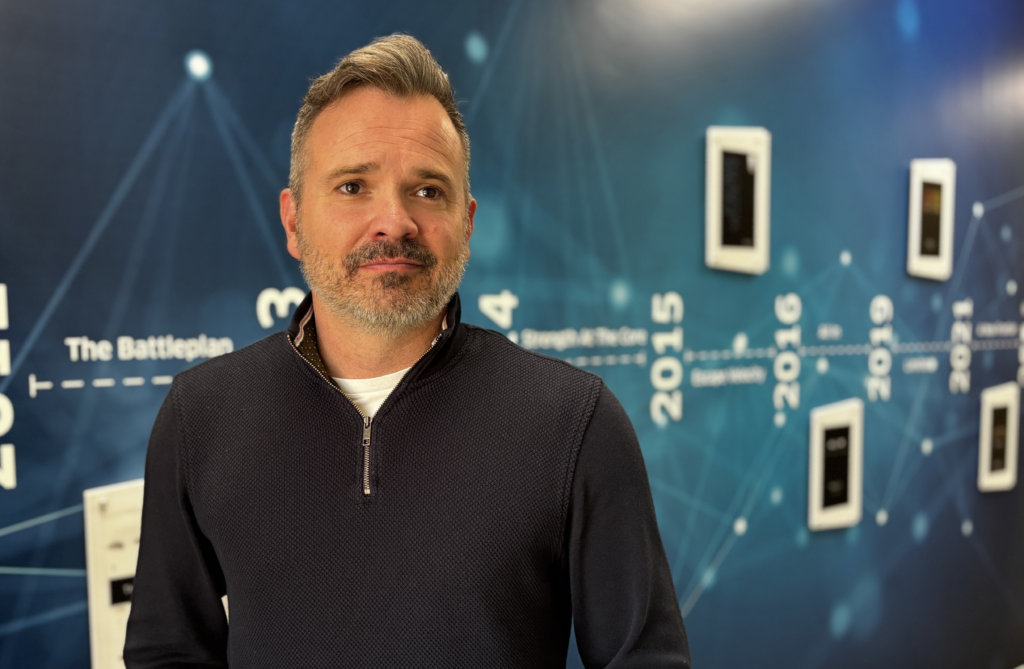
Many CSOs and CISOs in healthcare have spent their careers rooted in the industry. Heath Taylor, CISO at the St. Charles Health System, breaks that mold entirely. With a background shaped by years in Fortune 500 environments, Taylor brings a fresh, unconventional lens to one of the biggest complexities in healthcare today: cybersecurity. Taylor’s diverse experience outside of healthcare isn’t just a resume bullet, it’s a strategic edge. He’s known for questioning assumptions, moving fast, and building resilient systems that challenge the slow-moving status quo common in traditional hospital IT environments. “I’ve seen how tech outside healthcare operates at breakneck speed,” Taylor says. “That pace trains you to think big, act fast, and test ideas relentlessly. When I walked into healthcare, I saw all this potential to do things differently. I don’t just look for tools that work. I look for tools that disrupt.” Taylor’s current focus is driving innovation at the intersection of cybersecurity, artificial intelligence (AI), and human-centered security culture. His approach: reimagine what healthcare security can be – not just in theory, but in practice. Modernization and innovation Taylor is on a mission to elevate the human element in cybersecurity. At St. Charles, he’s moving from a reactive, compliance-driven mindset to a proactive, engagement-based culture—starting with a bold initiative called Human First. “We’re preparing to launch the Human First Initiative to embed security awareness into the everyday fabric of St. Charles,” Taylor explains. “The program is built around scenario-based training tailored to specific roles – whether it’s handling patient data, managing devices, or maintaining IAM hygiene.” He’s also introducing a cybersecurity ambassador program to empower department-level champions. “This isn’t just about teaching people what to do; it’s about building a shared responsibility for security across the organization,” he says. For Taylor, culture is just as critical as code. “Tech alone won’t save you,” he says. “Your firewall isn’t your last line of defense. Your people are. Everyone at St. Charles, from the ER nurse to the billing department, is starting to feel they have a role in keeping our patients safe. Security is now part of our DNA.” And when it comes to building next-generation defenses, Taylor sees AI as essential, not optional. “We are currently planning for an AI-driven threat intelligence platform that will transform how we identify, alert, and respond to cyber threats,” he says. “The goal is to deploy machine learning that can establish behavioral baselines across our environment. We’re also looking to integrate AI within our SOC, enabling continuous alerting and detection at a speed and scale no human team could match. This takes us from a reactive posture to true predictive prevention.” The bottom line With a fearless approach to change and a vision that blends technology, psychology, and strategy, Taylor is transforming how St. Charles protects its systems, people, and patients. For other cybersecurity leaders navigating similar environments, Taylor offers this advice: “Design your defenses like a startup, not a hospital. Move fast, test often, and be okay breaking things. Healthcare systems are too accustomed to long implementation timelines and rigid tools. The threats aren’t waiting.” For more, visit Heath Taylor on LinkedIn. source
Modernizing healthcare cybersecurity with lessons from the Fortune 500 Read More »

Quality data is vital for the success of any IT initiative. That’s especially true for AI projects. While bad data will always yield bad results, the stakes are exceptionally high for AI, where poor data could lead to serious financial loss, regulatory fines, and reputational damage. Good data that feeds a successful initiative, however, could deliver a significant and possibly game-changing strategic advantage. “In the world of AI, it’s garbage-in, garbage-out — squared,” says Satya Jayadev, vice president and CIO at Skyworks Solutions, a maker of semiconductors for wireless networks. “The secret of any good AI system is how well you build your data layers. It’s important to build that architecture and infrastructure — to understand the data source, to generate the data, and to build a single data platform,” Jayadev says. For Jayadev and others, that means doubling down on a data lake, data warehouse, or data lakehouse implementation as a single source of truth for AI, whether traditional machine learning (ML), generative AI, or agentic AI. source
How CIOs are getting data right for AI Read More »

AI agent marketing was off the charts; integration not so much… The marketing of AI agents was frankly overwhelming — virtually every vendor at RSAC claimed to offer an agentic AI solution. Whether it was AI management, compliance frameworks, identity mapping for agents or applications we haven’t yet conceived, the exhibition floor was a testament to how quickly this technology is transforming the security landscape. However, over the past year, CISOs have struggled to integrate AI into security processes, balancing the efficiency promises of AI against rigorous testing requirements and security protocols. The central question remains: Are enterprise security leaders, who last year were just beginning to consider and adopt co-pilots, prepared to deploy autonomous AI systems throughout their environments? More critically, how do organizations capitalize on the benefits of agentic AI, like automated security incident resolution, while addressing fundamental concerns around securing the agents themselves, establishing proper identity frameworks and maintaining organizational control? source
AI agents were everywhere at RSAC. What's next? Read More »

CIO ASEAN is pleased to launch the CIO100 ASEAN Awards 2025, recognizing the top 100 senior technology leaders and teams across Southeast Asia and Hong Kong The pace of digital innovation across ASEAN is accelerating, and with it comes the need to recognize the technology leaders and teams who are setting new benchmarks for excellence. The CIO100 ASEAN Awards 2025 provides a unique platform for organizations to showcase their most impactful achievements, gain both regional and global visibility, and join a distinguished community of innovators who are redefining the role of technology in business. Earning a spot among the CIO100 is more than a badge of honour – it is a testament to you and your team’s ability to turn vision into value. The awards are globally respected, celebrating not just individual leaders but the collective efforts of teams that drive transformation, operational efficiency, and sustained growth. source
CIO 100 ASEAN 2025 nominations now open Read More »

The US Department of Defense is struggling to adequately track performance and secure its major IT business systems despite planning to spend $10.9 billion on these programs through fiscal year 2025, according to a new Government Accountability Office assessment. The GAO’s sixth annual review of the DoD’s IT business programs found significant gaps in performance reporting and cybersecurity planning across the Pentagon’s 24 major IT investments, which support critical functions including healthcare, human resources, financial management, logistics, and contracting. The audit reveals that five of 19 operational IT programs failed to identify the minimum required performance metrics across key categories, leaving defense officials unable to assess whether these systems are improving customer satisfaction, delivering financial returns, or driving innovation. Only one program met all its performance targets, while 17 programs achieved at least some goals, and one program failed to meet any targets. source

Some vendors may overpromise, underdeliver, and sell systems that act unpredictably, Dhamani adds. “I see a lot of people marketing agentic AI, when in reality, it’s really just a chatbot with some RAG,” she says. “It’s a chatbot just retrieving some documents, or calling a calculator, and that’s not an agentic experience.” If an AI vendor can’t explain how its technology works, that’s a red flag, says Constant Contact’s Gutierrez. “It’s worth clarifying whether you’re buying a true agentic system or just a workflow agent dressed up in buzzwords,” he adds. “The biggest danger in this space is obfuscation — it’s not always intentional, but it is common to oversell what the technology actually does.” Without a full understanding of how agents and agentic AI work, CIOs and other IT leaders could also fail to realize the risks involved and the oversight needed, Dhamani says. source
How AI agents and agentic AI differ from each other Read More »

The pharmaceutical and biotech company recently combined its HR and IT departments under a single leader in a move that has raised eyebrows. Does this point toward a convergence of HR and IT at other companies? source
Moderna’s HR-IT merger: Trend or exception to the rule? Read More »

Now, he said, additional data sent from SAP to TranscendAP includes vendor master, purchase order header, lines, and receipts, the chart of accounts in general ledger, approval hierarchy, and historical invoices. Invoices and invoice details for AP and Vendor Master updates from the Supplier Portal now flow from TranscendAP to SAP. The rationale for the increased data flow was simple: “Our functionality has greatly increased,” he said, “and so we felt that we needed to keep our integration updated so the [newer] things that we had in it can be easily translated into SAP.” In addition, he said, there were a lot of things in SAP that could be pulled into TranscendAP. Additionally, the company said, by enabling bi-directional data flow between TranscendAP and SAP systems, customers can achieve greater accuracy, faster processing times, and improved visibility across their financial and accounts payable workflows. source
TranscendAP expands SAP support Read More »

As an established name in online travel, Booking.com has long maintained its position as a global leader—today, they attract over 500 million monthly visitors and more than a billion annual bookings. But sustaining their market position going forward, in the increasingly fast-evolving travel industry, has required Booking.com’s leadership to shift its attention toward accelerating their pace of software delivery and innovation. To help achieve this, the company is heavily leaning into rolling out AI across its 3,500 engineers. “We’re very excited about GenAI because it has the potential to multiply the impact of our engineering organization,” explains Amos Haviv from Booking.com’s Developer Experience team. “Our vision is to give every developer the equivalent of a senior engineer sitting beside them to pair program and tackle problems,” adds Bruno Passos, Group Product Manager of the team responsible for spearheading their AI efforts. Early challenges with AI adoption When Booking.com first began rolling out AI code assistants for developers, they faced challenges due to differing expectations of executives and developers. Due to the immense hype around AI, some executives had sky-high hopes for what could be achieved, while developers expressed skepticism toward the true utility of these tools. “The whole world was talking about AI, and the numbers we were hearing were astronomical: claims of hundreds of thousands of hours saved for developers,” shares Passos. “But nothing was backing it up. So our initial goal was simply to understand what GenAI could actually do for us and figure out a way to measure the value it was delivering to the organization.” In addition to measuring the true impact of GenAI on development, Booking.com also needed data to guide key decisions around vendor evaluations, as well as to focus its training and enablement efforts to drive successful adoption. “We needed to understand how AI affected engineering velocity, satisfaction, and code quality,” says Passos. “Without that insight, we wouldn’t be able to confidently talk about the ROI of Booking’s investment in AI with the rest of the business. We also wouldn’t know for sure whether we should be driving more adoption for a specific tool or use case.” Implementing a data-driven approach To measure AI tool adoption and impact, Booking.com partnered with DX, a developer intelligence platform designed by leading researchers. Using DX, Passos’ team was quickly able to begin quantifying the impact that AI code assistants were having on their software development teams. Their findings included: Developers who used AI daily had 16% higher code throughput than those who did not. AI users were saving time on routine tasks, allowing them to focus on higher-value work. Developer satisfaction with AI tooling had risen 15 points in the previous six months, thanks to internal enablement efforts. The above findings were derived from both qualitative and quantitative data collected through the DX platform. By combining direct signals from developers, along with longitudinal and cross-sectional analyses of multiple productivity signals, Passos’ team gained an in-depth view into the current state of AI impact across the organization. Zane Wright, Senior Product Manager, shares: “We’ve been able to use data to make tactical and strategic decisions on where to invest further in our GenAI program. Decisions like which vendors we should be going for, where we should be looking further to assess deeper impact on our company, and how we should be structuring our programs to best impact developers moving forward.” One insight that surprised Passos’ team: a large number of developers were still hesitant to adopt AI tools due to skepticism and confusion. To address this, further investments in developer enablement were needed. “We realized that education would be just as important to increasing adoption as improvements to the technology itself,” shares Passos. Moving beyond initial adoption Armed with data showing the positive impact of AI on developer productivity, Passos’ team set its aim on driving toward 100% adoption, as well as finding ways to encourage developers to incorporate AI tools in their work more frequently. “The data from DX showed us that developers were most effective if they used AI on a daily basis, or at least twelve days per month. So we set out on a mission to figure out how to drive not only adoption, but widespread daily usage,” says Passos. With this goal in mind, Booking.com has implemented several strategies: Segmentation and targeted outreach: The team uses DX to identify which developer segments are getting more or less value from AI tools. “We’ve found segmenting data particularly valuable for driving AI adoption,” explains Bailey Stewart, Principal Software Engineer. “This tells us which communities within Booking have not been finding as much value in GenAI tools. Then we reach out to them to figure out what we can do to help them find more value.” Education and hands-on experiences: The company is running a series of two-day events where day one focuses on GenAI education (LLMs, prompting techniques, and context handling) and day two focuses on applying these techniques to solve real problems. “We pick up a business problem from a specific business unit and attempt to solve it with GenAI by bringing in internal and external experts,” Passos explains. Continuous communication: The team regularly shares updates on new AI features and capabilities through internal content. “Every time we’ve updated our AI coding assistant with new features, we post and communicate what developers can now do,” says Passos. “For example, initially, we could only use one LLM; now developers can use several LLMs depending on their specific task. Each time we make a change like this, we communicate it internally to the rest of the organization.” Office hours and training: The team hosts regular office hours where developers can get help with AI tools and learn best practices. “We now have almost 100% of our developers adopting GenAI. Some of the biggest keys to achieving this have been our office hours, as well as producing content on how to use GenAI: for example, what’s an LLM, how to prompt… There’s a lot of
How Booking.com measures the impact of AI on developer productivity Read More »