CIO CIO

Google’s ChromeOS Flex turns old PCs into Chromebooks

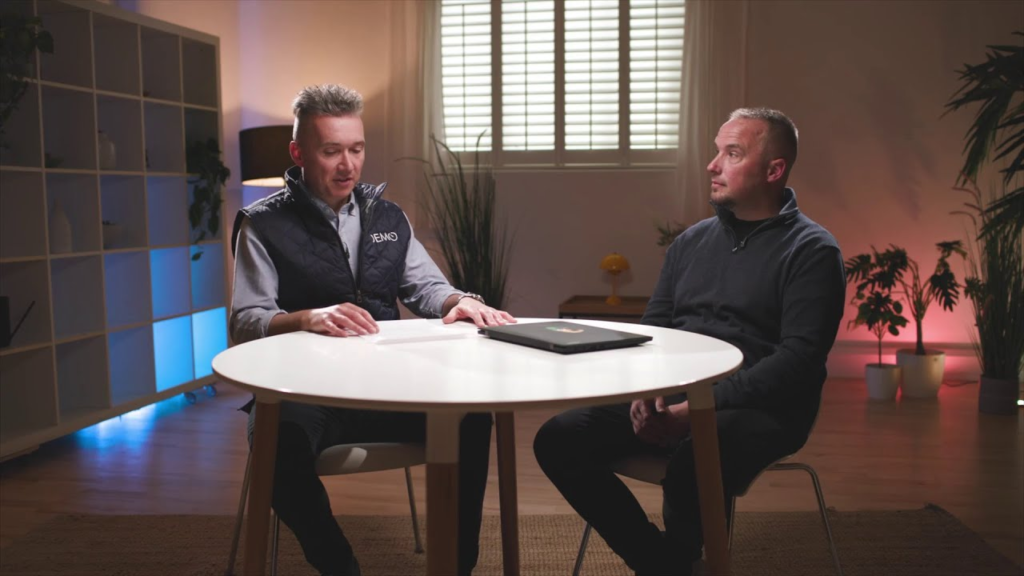
Overview Can you give your old PC a new life? In this DEMO episode, we travel to the U.K. to see Google’s ChromeOS Flex in action. ChromeOS Flex is a lightweight, secure, and cloud-first operating system that can be installed on nearly any laptop or desktop. Google ChromeOS Customer Engineer Jon Mooney shows Foundry’s Matt Egan how IT teams can repurpose aging hardware, reduce e-waste, and extend device life by up to 10 years — all while saving on hardware refresh costs. You’ll learn: ✅ How to install ChromeOS Flex using a USB stick ✅ How enterprises can enroll and manage devices remotely ✅ How this OS supports sustainability and reduces emissions ✅ The benefits for IT admins and end users alike 💡 Ideal for IT leaders, sysadmins, and sustainability-focused CIOs. 📌 Learn more about ChromeOS Flex: https://chromeenterprise.google/os/chromeosflex 📣 Subscribe for more product demos and tech innovations every week! Register Now source

Google’s ChromeOS Flex turns old PCs into Chromebooks Read More »

Custom AI models help MWAA deliver better airport experiences

The use cases keep growing. “We are training the models for seasonal, hourly, and event-based patterns, holiday surges, and weather disruptions,” the CIDO says. “It collects raw data from all these sources based on context, harnesses it in real-time, and we put together these models on top of it to deliver a smarter, faster, and seamless experience for our partners.” Aside from data collection pipelines and recommendation models, Queue Hub is connected to myriad other platforms to generate positive outcomes for passengers at Washington’s two major airports, Kundu says.  “We’ve got biometric systems, display systems, gate management systems, surface management systems, and all these ecosystems need to play together well in the sandbox,” he says. source

Custom AI models help MWAA deliver better airport experiences Read More »

How Booking.com measures the impact of GenAI on developer productivity

As an established name in online travel, Booking.com has long maintained its position as a global leader—today, they attract over 500 million monthly visitors and more than a billion annual bookings. But sustaining their market position going forward, in the increasingly fast-evolving travel industry, has required Booking.com’s leadership to shift its attention toward accelerating their pace of software delivery and innovation. To help achieve this, the company is heavily leaning into rolling out AI across its 3,500 engineers. “We’re very excited about GenAI because it has the potential to multiply the impact of our engineering organization,” explains Amos Haviv from Booking.com’s Developer Experience team. “Our vision is to give every developer the equivalent of a senior engineer sitting beside them to pair program and tackle problems,” adds Bruno Passos, Group Product Manager of the team responsible for spearheading their AI efforts. Early challenges with AI adoption When Booking.com first began rolling out AI code assistants for developers, they faced challenges due to differing expectations of executives and developers. Due to the immense hype around AI, some executives had sky-high hopes for what could be achieved, while developers expressed skepticism toward the true utility of these tools. “The whole world was talking about AI, and the numbers we were hearing were astronomical: claims of hundreds of thousands of hours saved for developers,” shares Passos. “But nothing was backing it up. So our initial goal was simply to understand what GenAI could actually do for us and figure out a way to measure the value it was delivering to the organization.” In addition to measuring the true impact of GenAI on development, Booking.com also needed data to guide key decisions around vendor evaluations, as well as to focus its training and enablement efforts to drive successful adoption. “We needed to understand how AI affected engineering velocity, satisfaction, and code quality,” says Passos. “Without that insight, we wouldn’t be able to confidently talk about the ROI of Booking’s investment in AI with the rest of the business. We also wouldn’t know for sure whether we should be driving more adoption for a specific tool or use case.” Implementing a data-driven approach To measure AI tool adoption and impact, Booking.com partnered with DX, a developer intelligence platform designed by leading researchers. Using DX, Passos’ team was quickly able to begin quantifying the impact that AI code assistants were having on their software development teams. Their findings included: Developers who used AI daily had 16% higher code throughput than those who did not. AI users were saving time on routine tasks, allowing them to focus on higher-value work. Developer satisfaction with AI tooling had risen 15 points in the previous six months, thanks to  internal enablement efforts. The above findings were derived from both qualitative and quantitative data collected through the DX platform. By combining direct signals from developers, along with longitudinal and cross-sectional analyses of multiple productivity signals, Passos’ team gained an in-depth view into the current state of AI impact across the organization. Zane Wright, Senior Product Manager, shares: “We’ve been able to use data to make tactical and strategic decisions on where to invest further in our GenAI program. Decisions like which vendors we should be going for, where we should be looking further to assess deeper impact on our company, and how we should be structuring our programs to best impact developers moving forward.” One insight that surprised Passos’ team: a large number of developers were still hesitant to adopt AI tools due to skepticism and confusion. To address this, further investments in developer enablement were needed. “We realized that education would be just as important to increasing adoption as improvements to the technology itself,” shares Passos. Moving beyond initial adoption Armed with data showing the positive impact of AI on developer productivity, Passos’ team set its aim on driving toward 100% adoption, as well as finding ways to encourage developers to incorporate AI tools in their work more frequently. “The data from DX showed us that developers were most effective if they used AI on a daily basis, or at least twelve days per month. So we set out on a mission to figure out how to drive not only adoption, but widespread daily usage,” says Passos. With this goal in mind, Booking.com has implemented several strategies: Segmentation and targeted outreach: The team uses DX to identify which developer segments are getting more or less value from AI tools. “We’ve found segmenting data particularly valuable for driving AI adoption,” explains Bailey Stewart, Principal Software Engineer. “This tells us which communities within Booking have not been finding as much value in GenAI tools. Then we reach out to them to figure out what we can do to help them find more value.” Education and hands-on experiences: The company is running a series of two-day events where day one focuses on GenAI education (LLMs, prompting techniques, and context handling) and day two focuses on applying these techniques to solve real problems. “We pick up a business problem from a specific business unit and attempt to solve it with GenAI by bringing in internal and external experts,” Passos explains. Continuous communication: The team regularly shares updates on new AI features and capabilities through internal content. “Every time we’ve updated our AI coding assistant with new features, we post and communicate what developers can now do,” says Passos. “For example, initially, we could only use one LLM; now developers can use several LLMs depending on their specific task. Each time we make a change like this, we communicate it internally to the rest of the organization.” Office hours and training: The team hosts regular office hours where developers can get help with AI tools and learn best practices. “We now have almost 100% of our developers adopting GenAI. Some of the biggest keys to achieving this have been our office hours, as well as producing content on how to use GenAI: for example, what’s an LLM, how to prompt… There’s a lot of

How Booking.com measures the impact of GenAI on developer productivity Read More »

8 things CISOs have learned from cyber incidents

Expectations rise in line with budget increases. The problem is that it takes time to do due diligence to bring in the right tools and the right skill sets. But if the budget hasn’t been used up in a certain amount of time, executives might reallocate it to other areas once the intense, post-incident focus has faded. This puts CISOs in the difficult position of having to explain to the board and other executives what the loss of funding means, when many would rather focus on metrics and improvements. “CISOs may talk about risks and progress made against the incident, but not talk about, potentially, how budget and positions are being taken away,” he says. 8. You must look after yourself at all times If there’s one common, overarching lesson for CISOs, it’s that you must look after yourself, legally, professionally and mentally throughout your tenure in the industry. With burnout, high stress and increasing responsibilities, many CISOs are feeling the pressure of the role. Incidents add to these stressors, but they’re becoming more commonplace as the frequency of attacks rises. “Incidents are commonplace, unfortunately; it’s part of the job,” says Thorsen. Brown encourages CISOs to recognize the potential health impacts of high-stress roles and establish the right support system, which will be vital when an incident occurs. And not to underestimate how stressful being in the eye of the storm can be on your coping mechanisms. “One of the big messages is although you might think you’re managing stress, you might not be doing it well,” Brown says. “CISOs jobs are hard enough, so people have to find an outlet. But during an event, it gets even worse. Acknowledge this and build a personal plan for yourself, because one approach doesn’t suit everyone for this type of thing.” source

8 things CISOs have learned from cyber incidents Read More »

Perfecting the patient, customer, and tech health plan at Ramsay

With hundreds of hospitals, primary care clinics, and mental health services across eight countries, and over 90,000 employees, Ramsay Health Care provides a broad range of healthcare services to millions of patients. Integral to that success is its commitment to utilizing the best technologies to ensure efficiency, accuracy, and safety. Lives are on the line, after all. Spearheading the IT initiatives and planning is global chief digital and data officer Rachna Gandhi, whose team won Team of the Year for customer value at last year’s CIO 50 awards. That recognition illustrates her understanding that nothing is done in isolation, and aligning with the right business partners is integral to success. “It’s not just about the digital or technology team looking for a partner,” she says. “We’re looking at patient-facing or employee-facing solutions. It’ll be the digital team procurement and the business owner looking to find, identify, and progress partners together. If vendors are good, they’ll deliver what they said they would in a timely way. But partnership is really about having a vested interest in a common outcome.” Having things in a safe pair of hands is one thing, but making sure that care remains for years to come is in the hands of those not yet in the IT workforce — and those who will look for roles that don’t exist yet. On the other hand, says Gandhi, a lot of important roles a couple of years ago aren’t critical anymore. So having that kind of lens into the future takes a good sense of balance, and a strong sense of belief in the fundamental vision of ambitious and cohesive teams. To Gandhi, having a diverse team is also essential. It’s not only good business and good thought leadership, but it’s a better way to solve problems and be more reflective of patients served, as well as the entire workforce. source

Perfecting the patient, customer, and tech health plan at Ramsay Read More »

Khaled Tawfik, CIO, City of San José on the AI Coalition to promote responsible and purposeful AI.

We founded the coalition about a year and a half ago with about nine cities founding members of the coalition. And there are two concepts why the whole thing started reflecting in the last 2530 years of technology, we we adopted a lot of technologies, like the internet, social media, without really thinking or learning what will be the consequences. And as a result, we have a lot of issues cybersecurity today. Right? We have issue with privacy. We have issue with transparency. And the list can, can is going day after day. So we, if we thought about cybersecurity back in 2000 and if we implemented 1% more as far as the safeguarding the technology, we will then 10 times more better to today compared to what we’ve so the first concept was, if we can think what AI would look like in 2050 and we can take some measures today to make it safer, more secure and more transparent, I think that will make a big difference in the long run. It just we need to start today. We cannot start 10 years from now, when it’s too late, right? And the second concept is we have hundreds and hundreds of government agencies, and primarily we do the same thing, right? And if it was challenging for a city of my size, San Jose, yeah, in the middle, in the heart of the capital of the world of Silicon Valley, yeah, and and we struggling with it because it’s new and it’s overwhelming. I can only imagine smaller cities how they can deal with it, and what kind of resources they’re lacking and funding and things like that. So when I introduced this concept with couple my CIOs from government about a year and a half two years ago, I was really excited or pleased to see their commitment to join the coalition and to help us start the coalition. So the coalition started about a year and a half ago. Today, we have like, 700 agencies and over 2000 members. And every month, we’re getting more agencies and more members. And the really, the advantage of it is the work can be done by a few of us and can be shared by the masses, right? And last March, I believe, in 2024 we released our first AI policy for government, and as of today, we got adopted by more than 115 agencies. Well, not only the policy was more matured from day one, because we had so many agencies working on it, yeah, but also saved hundreds of our development policies by just sharing and replicating. So it’s been really an overwhelming success for us, and we’re really proud to be part of it and to be leading the initiative nationwide. Well, that’s source

Khaled Tawfik, CIO, City of San José on the AI Coalition to promote responsible and purposeful AI. Read More »

6 ways to stay protected when system integrators use AI in RFP responses

Gen AI is rapidly transforming how system integrators engage with organizations, particularly in the way these vendors respond to requests for proposals. As more SIs leverage AI to draft and optimize their responses, organizations must rethink how they assess them and ensure vendor accountability. Here, we examine this difficult balance and discuss the importance of AI forensic capabilities, enhanced contractual terms to protect your organization, and AI literacy training to help maintain control against an AI-driven SI proposal. The AI-driven RFP response As economic pressures mount, the drive for efficiency will lead more SIs to integrate gen AI into their workflows. With promises of a 30% productivity boost by doing so, AI-driven responses will likely become the norm. But while AI can generate comprehensive and polished responses, it also introduces new risks for organizations evaluating these responses. source

6 ways to stay protected when system integrators use AI in RFP responses Read More »

Are we ready? 3 questions boards should be asking about resilience

The widespread blackout that recently affected parts of Spain, Portugal, and southern France serves as a stark reminder of how vulnerable critical infrastructure can be–even in well-developed regions. Power grid failures halted transport, disrupted services, and exposed the fragility of digital systems that most enterprises assume will “just work.” These events aren’t rare though. Cyberattacks, extreme weather, supply chain failures, regional political instability and even sabotage all cause widespread disruption without warning. For corporate board directors, understanding their organization’s true resilience is no longer optional, especially given so many mission-critical applications now rely on cloud infrastructure. Here are three questions directors should be asking their IT and cybersecurity executives–and what robust answers should look like. Is our IT infrastructure truly resilient–or just redundant? Redundancy alone is not enough. Having backup systems that operate in the same region as your primary infrastructure may meet compliance standards, but it won’t prevent disruption when large-scale, localized failures occur. True resilience means geographic diversity–not just across cities, but across regions or even national borders. It means working with cloud and data center providers that offer physically separated infrastructure with independent power sources, network carriers, and operational protocols. Organizations must also ensure that those providers maintain sufficient backup power capacity, including fuel contracts with guaranteed replenishment and priority access during crises. To demonstrate resilience, companies must be able to withstand a regional outage without material impact on operations. Scenario planning for how outages of one hour, one day, and one week might affect operations in different locations will yield valuable information and may identify gaps to be addressed. Are our continuity plans built to survive local failure–or only to satisfy compliance? Too many business continuity plans are designed to pass audits, not to endure real-world disruptions. This becomes painfully obvious during major outages, when delays in detection, reliance on under-tested failovers, or assumptions about the speed of recovery turn inconvenience into crisis. A resilient organization should be able to detect disruptions immediately, respond quickly, and operate–at worst–at a reduced, but functional capacity until full restoration is achieved. That requires integrated visibility across environments, not just for infrastructure teams, but also for executives who must have direct access to incident awareness and status. Crucially, bringing systems back online is not instantaneous. After a sudden outage, bringing systems back online safely can be a drawn-out process, especially when hundreds or thousands of systems are involved. To demonstrate real continuity readiness, management must show that critical services can continue functioning even when local infrastructure, providers, or applications become unavailable and that recovery plans have been proven under pressure, not just simulated on paper. Do we know how our cloud providers will perform when everything goes wrong? Enterprise IT resilience increasingly relies on third-party vendors and service providers, which means management must understand their resilience too. Resilience must be treated as a key selection criterion–not an afterthought. It should factor into vendor onboarding, procurement decisions, and ongoing risk assessment. SLAs alone are insufficient: they don’t tell you what happens when the power goes out and doesn’t come back for 24 hours. Does the provider own all of their infrastructure? Does the provider have multiple locations over a wider geographic area? How long can the provider operate if they have a catastrophic event or power outage? What additional dependencies do they have to maintain service? Uptime statistics only tell part of the story. Providers that have clearly prioritized reliability (and for that matter, security) over features are likely better positioned to weather a storm. And while resilience often comes with a higher price tag, it can be a price worth paying to avoid periods of disruption, lost business, and potential reputational damage. The bottom line The bottom line for boards is that resilience isn’t about bouncing back. It’s about taking strategic preemptive steps so the requirement to bounce back is minimized. Organizations must show they’ve planned, tested, and invested in surviving the unexpected because although we don’t know where, when, or how, we do know the next major outage is coming. To learn more, visit us here. source

Are we ready? 3 questions boards should be asking about resilience Read More »

Digital twins combine with AI to help manage complex systems

This means the synthetic data the digital twin can generate for training AI models can be more extensive and richer than traditional synthetic data techniques. Another potential use case for digital twins that might become more relevant this year is to help with understanding and scaling agentic AI systems. Agentic AI allows companies to automate complex business processes, such as solving customer problems, creating proposals, or designing, building, and testing software. The agentic AI system can be composed of multiple data sources, tools, and AI agents, all interacting in non-deterministic ways. That can be extremely powerful, but extremely dangerous. So a digital twin can monitor the behavior of an agentic system to ensure it doesn’t go off the rails, and test and simulate how the system will react to novel situations. Today, 75% of large enterprises actively invest in digital twins to scale AI solutions, McKinsey said in an April report. “In the next decade, successful Fortune 1000s will run their businesses and test their boldest strategies using digital twins,” says McKinsey partner Alex Cosmas. These digital twins will be replicas of their operations and simulations of their full value chains. As Cosmas says, they’ll be living, breathing, expanding assets that solve a growing number of problems. source

Digital twins combine with AI to help manage complex systems Read More »

Rimini Street extends SAP support until 2040

The end of ERP as we know it? “We predict the future of ERP will forever be changed in the next five to ten years, with ERP software replaced by new, faster and more flexible agentic ERP processes that we are already deploying for clients,” continues Ravin. The Rimini Street CEO was referring to a partnership that the company entered into with ServiceNow in October 2024. The new solution resulting from this partnership combines ServiceNow’s Now platform with Rimini Support and Rimini Manage. “Twentieth-century systems have created a chaos of complexity that hinders 21st-century innovation,” said Bill McDermott, ServiceNow CEO and former SAP CEO, at the time. “ServiceNow’s partnership with Rimini Street gives clients a unified, intelligent platform to maximize their existing software investments for a faster path to transformation.” SAP’s mainstream maintenance for ECC 6.0 runs until 2027, but for Enhancement Packages 0 through 5, the end date is December 31, 2025. Similarly, for SAP S/4HANA, mainstream maintenance has already expired or will end in 2025, 2026 or 2027, depending on the version. SAP’s extended maintenance is available for some versions of ECC 6.0 and S/4HANA, but not for all — and is accompanied by a significant increase in costs. source

Rimini Street extends SAP support until 2040 Read More »