CIO CIO

Legacy federal government HR systems: A billion dollar problem, says Workday survey

Improved vendor tools; Greater interagency collaboration and shared services models; Streamlined compliance and regulatory requirements; Improved workforce training and change management support; Stronger leadership buy-in. Respondents estimated that 61% of their team’s processes could be at least partially automated. Top opportunities they cited for automation included resume screening and interview scheduling, skills assessments and career planning, employee/applicant engagement, security/fraud detection, and compliance reporting. Many federal HR leaders also seem to be amenable to shared services, with 37% saying federal HR processes are a good fit for that kind of model, and 98% reporting they are open to it if implementation is well-planned. Shared capabilities could include, for instance, AI-driven skills-matching systems, standardized payroll/benefits, centralized recruiting/hiring platforms, unified employee records, and shared analytics dashboards. source

Legacy federal government HR systems: A billion dollar problem, says Workday survey Read More »

SAP wants to make AI ubiquitous — just don’t ask about S/4HANA

SAP cooperates with Palantir For BDC, SAP also announced new intelligent applications called Insight Apps. These apps are designed to optimize routine work through standard business metrics, AI models, and integrated planning functions. People Intelligence, for example, combines employee and skills data from SAP’s SuccessFactors HCM Suite for deeper insights into the workforce. With the help of AI-driven recommendations, managers can optimize team performance, promote employee growth, and ensure compliance with regulations, the company said. SAP also plans to work closely with Palantir on data analytics. But Saueressig points out that the use of the corresponding tools is optional, in an attempt to allay concerns about cooperation with the controversial software provider — though he did note that customers in the US, in particular, use Palantir’s tools. Who has seen S/4HANA? Completing SAP’s triad of business data, business AI, and business applications is the company’s Business Suite. SAP presented at Sapphire additional packages for dedicated application areas — for example, Finance, Supply Chain Management (SCM), Human Capital Management (HCM), Strategic Procurement, and Customer Management. source

SAP wants to make AI ubiquitous — just don’t ask about S/4HANA Read More »

AI and load balancing

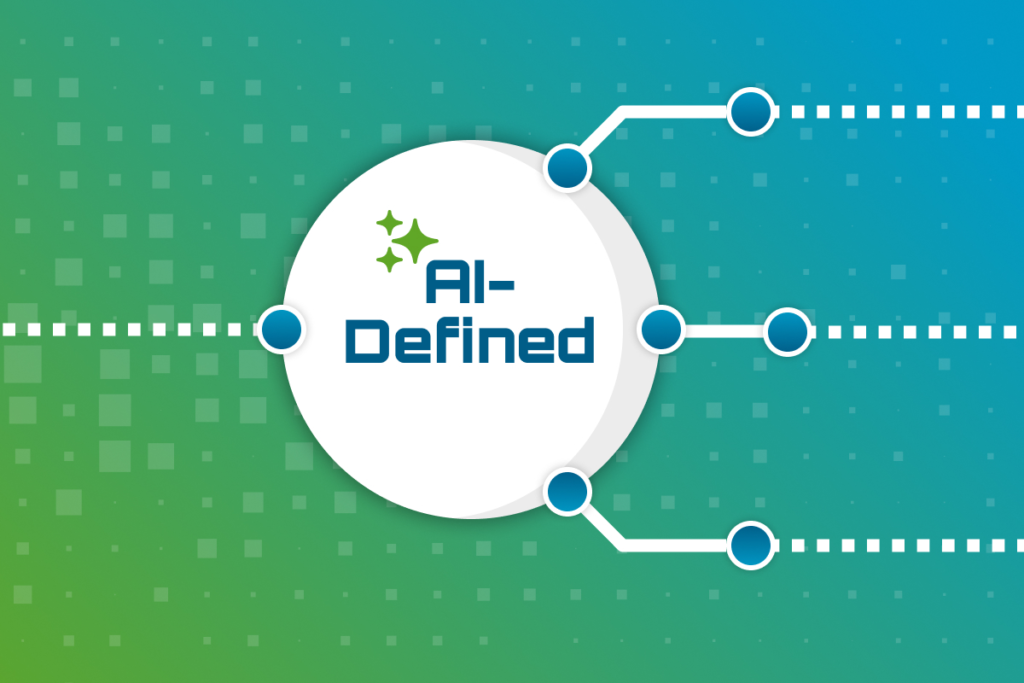
Just as cloud computing led to the emergence of software-defined (SD) load balancing, the artificial intelligence (AI) revolution is taking us a step farther, to AI-defined architectures. This transformation represents a significant shift in how enterprises approach their infrastructure to support modern AI workloads and bring AI benefits to existing workloads. AI applications present significant challenges with respect to load balancing. AI workloads, including agentic workloads, demand extreme performance: terabits/second, not the gigabits/second that’s been required for traditional applications. As a result, organizations need load balancers with extraordinary throughput capabilities and the scalability to support elastic operations. “When you build modern AI applications for enterprises, there has to be a very high level of performance, resilience, security, and elasticity,” says Chris Wolf, global head of AI and advanced services, VCF Division at Broadcom. “Load balancers in the AI era must be able to manage services and fulfill enterprise requirements across multiple servers and clusters, because of the distributed nature of large inference and training jobs in private AI environments.” Additionally, enterprise AI applications are almost exclusively built on Kubernetes with a microservices architecture. That means organizations need load balancers that can autoscale, autoheal, and operate “as code,” with built-in capabilities including global server load balancing (GSLB), web application firewalls (WAFs), and application programming interface (API) security. AI applications exchange vast amounts of sensitive data through APIs, requiring robust protection against attacks and data leakage through comprehensive web app and API security. Thresholding with anomaly detection and traffic pattern recognition should be employed to optimize resource allocation. AI-defined load balancing It’s only fitting that load balancing in the AI era employs AI to get the job done, and it does so across three key dimensions. First, predictive intelligence enables high resilience, by leveraging health score monitoring and dynamic thresholds that scale in real time as needed to accommodate bursts. In this environment, static thresholds aren’t feasible, because traffic is too dynamic and overprovisioning for max load would be prohibitively expensive. Active-active high-availability configurations ensure continuous operation, and autoscaling capabilities coupled with autohealing recognize traffic patterns and remediate most issues without an admin getting deeply involved, if at all. Second, generative AI (genAI) can dramatically improve operational efficiency by acting as copilots to assist teams in several ways. Admins can ask questions by using natural language, and the AI tools provide answers, analytics, and contextual insights based on information found in application health scores, application latency measurements, design guides, and knowledge base (KB) documentation. AI tools can also provide correlated analytics, contextual insights, and multifactor inference within admins’ work streams. Infrastructure-as-code capabilities reduce manual work, because configurations can be changed programmatically in software. Capacity management and performance troubleshooting assistance can flag emerging issues for admins to address long before they affect users, all of which dramatically improves productivity. Finally, AI-powered self-service capabilities create load balancing interfaces for DevOps teams that require zero training, because AI can provide intuitive assistance for engineers to follow. The result is faster deployment and configuration without sacrificing quality or security. A solution that meets all of these AI era requirements, such as Broadcom’s VMware Avi Load Balancer, delivers big dividends. Rigorous studies have shown that enterprise IT can achieve 43% OpEx savings, 90% faster app delivery provisioning, and a 27% DevOps productivity boost with this solution. Software-defined load balancing principles remain—ensuring scale-out performance, dynamic availability, and application-level security—and the AI era dramatically amplifies these requirements while infusing AI principles. Organizations that embrace AI-defined load balancing will not only support their AI and non-AI workloads more effectively but will also benefit from the intelligence embedded within their infrastructure. To learn more about how Broadcom can help your organization bring load balancing into the AI era, visit us here. About the author: Umesh Mahajan is Vice President and General Manager of Broadcom’s Application Networking and Security Division. He joined Broadcom from VMware, where he led the Networking and Security Business Unit and was responsible for the NSX software-defined network virtualization platform, which encompassed network connectivity, security, and load balancing. With more than three decades of experience in multi-cloud networking and networking services, Mr. Mahajan holds over 30 patents. Prior to joining VMware, he founded Avi Networks, which built the disruptive software-defined advanced load balancer. Earlier, he held senior leadership positions at Cisco, including Vice President and General Manager of the data center switching business, and was responsible for Nexus 7000 & MDS 9000 platforms, and the NX-OS operating system. Mr. Mahajan holds a Master of Science in computer science from Duke University and a Bachelor of Technology from IIT Delhi. LinkedIn: https://www.linkedin.com/in/umeshmahajan/ source

AI and load balancing Read More »

Snapdragon NPU powers AI code generation at the edge

Overview What happens when you move AI from the cloud to your PC? In this episode of DEMO, host Keith Shaw visits Qualcomm HQ in San Diego to explore the power of AI at the edge. Jeff Monday, VP of Global Enterprise & Channel Sales at Qualcomm, gives an in-depth look at how the Snapdragon platform — featuring an onboard Neural Processing Unit (NPU)—is enabling secure, low-latency code generation on device, without sending sensitive data to the cloud. Watch a full demo of on-device code generation using the LLaMA 3 model and Visual Studio, learn how this benefits developers and enterprise teams, and find out how Qualcomm’s AI Hub and unified architecture are driving innovation across PCs, phones, and IoT. 📌 Key topics include: * What is an NPU and how it compares to a CPU/GPU * Benefits of running AI on the device vs. the cloud * Real-world use case with Citibank * Qualcomm AI Hub & model deployment * Future AI experiences (translation, presentation generation, and more) 💡 Perfect for: Developers, CIOs, enterprise IT leaders, and AI enthusiasts. 👉 Don’t forget to like, comment, and subscribe for more tech demos every week! #Qualcomm #Snapdragon #EdgeAI #CodeGen #VisualStudio #NPUs #AIOnDevice #KeithShaw #DemoSeries This episode is sponsored by Qualcomm. Register Now source

Snapdragon NPU powers AI code generation at the edge Read More »

HUMAIN: Saudi Arabia’s bold bet on sovereign AI and Arabic LLMs

“Saudi Arabia is making massive investments in the AI space, both via public and private sector initiatives, as it looks to diversify its economy,” said Marc Einstein, research director at Counterpoint Research. “Focusing on Arabic language LLMs, which can be exported, is certainly a step in the right direction towards building a strong local ecosystem,” he added. The emphasis on local LLMs and a sovereign AI infrastructure marks a bold shift in a sector dominated by Western and Chinese entities. “Beyond language, it’s about cultural context, regional control, and data sovereignty, setting a precedent for emerging markets to build locally grounded AI systems,” said Prabhat Mishra, Analyst at QKS Group. According to Manish Ranjan, research director for Software & Cloud at IDC EMEA, this launch marks a key step in Saudi Arabia’s ambition to cultivate a robust sovereign AI ecosystem, building on the Middle East’s demonstrated leadership in AI and GenAI innovation, as seen in the UAE’s National AI Strategy (2017) and prominent regional LLMs like Falcon (TII) and Jais (G42 and MBZUAI). source

HUMAIN: Saudi Arabia’s bold bet on sovereign AI and Arabic LLMs Read More »

IBM’s massive SAP S/4HANA migration pays off

But Funai’s primary focus is achieving greater efficiencies in house. Standardizing on SAP from its mixed ERP past has also eased the process of merger and acquisitions of large enterprises, of which IBM has completed 191 in recent years, including Red Hat, Apptio, DataStax, Hakkoda, HashiCorp, and a number of Oracle consulting firms. “Having that single ERP system when you’re ingesting another global corporation is a streamline to the merger and acquisition process,” she says. SAP continues to make headway on enlisting customers to cloud transformation. According to Gartner, by the end of 2024, approximately 39% of worldwide ECC customers — about 35,000 organizations — had bought or subscribed to licenses to start their transition to SAP S/4HANA. As of that time, S/4HANA had close to 26,900 customers, with approximately 62% of those added late last year being net-new ones. source

IBM’s massive SAP S/4HANA migration pays off Read More »

AI security analytics: Turning your data into defenses

Artificial intelligence (AI) is helping security teams modernize how they detect, investigate, and respond to threats — not by replacing analysts or reinventing cybersecurity, but by making existing workflows faster, smarter, and more efficient. For enterprises with rich internal data and well-established security practices, AI is a natural next step. With the right foundation, organizations can quickly adopt AI to streamline detection, consolidate tooling, and speed up investigation and response. And unlike the hype around “AI-powered attacks,” the real value lies in using AI to extract insights from your own environment — so decisions are grounded in context that’s specific to your business. “The real key to effective AI in cybersecurity is giving it access to the data that makes your environment unique, and typically, this is data which is traditionally hard to operationalize in a cyber security context,” says James Spiteri, director of product management for generative AI and machine learning at Elastic. Elastic Security runs on the Elastic Search AI Platform, enabling fast, contextual analysis across vast volumes of enterprise data. What makes AI work in the enterprise Getting value from AI in security doesn’t require a complete overhaul. It’s about building on what you already have — data, processes, and people — with smart tools that enhance productivity and reduce complexity. Here are a few things to look for in a security analytics platform designed to scale with your team: Designed for security analysts Modern AI-powered platforms help analysts move faster — not start over. Natural language interfaces let them ask questions in plain English, generate queries automatically, and find answers without learning a new language or user interface. Tailored to your environment Prebuilt detections are a great starting point, but real precision comes from connecting your own data. Whether it’s endpoint activity, cloud telemetry, or business logic, the more the platform knows about your environment, the more useful its insights become. Elastic supports this through a rich set of connectors that bring structured and unstructured data — files, records, logs — into Elasticsearch. Once indexed, AI models can generate context-aware alerts, enrich investigations, and power automation with precision. Flexible and transparent by design Security teams need to understand how AI makes decisions. Platforms like Elastic emphasize transparency, with features that allow teams to inspect model behavior, track usage, and audit interactions. Flexibility also matters, so you can choose the right model (or models) for your use case, without being locked in. Making the most of AI: What leading teams are doing Across Elastic’s customer base, the most successful AI implementations share a few common practices: 1. Integrate organizational data early Customers that feed their internal data into the platform from day one unlock faster value. By syncing key sources to Elasticsearch, they give AI the context it needs to prioritize what matters. 2. Choose the right language model for the job With Elastic’s model-agnostic approach, organizations can use the large language models that best meet their latency, cost, or accuracy requirements — or even run multiple models to support different functions. 3. Embrace genAI for everyday tasks Whether it’s writing queries, troubleshooting detections, or customizing rules, generative AI assistants save time. Security analysts can ask virtually anything about day to day and get clear, in-context answers, reducing the ramp-up time for new tools. 4. Automate the right workflows AI doesn’t replace analysts — it frees them from repetitive, manual work. Detection, enrichment, and initial triage are increasingly being automated with confidence. With the right integrations, teams can extend automation into incident response and remediation. The bottom line Deploying AI for cybersecurity doesn’t have to be complicated. With platforms like Elastic Security, organizations can build on their existing data, tools, and team knowledge — and see value quickly. Whether you’re aiming to scale operations, reduce response times, or enable less experienced analysts to be more effective, AI-powered analytics help you do more with what you already have. For more information, click here. Credit: Elastic source

AI security analytics: Turning your data into defenses Read More »

Designing a technical framework for AI digital twins

Digital twins, a sophisticated concept within the realm of artificial intelligence (AI), simulate real-world entities within a digital framework. This digital representation allows for real-time monitoring, analysis and optimization of systems. Developing a robust technical architecture for digital twins necessitates a comprehensive understanding of several foundational components and integration of advanced technologies. A digital twin is a digital replica of a physical object, system or process that uses real-time data and AI-driven analytics to replicate and predict the behaviour of its real-world counterpart. This architecture allows for better decision-making, predictive maintenance and enhanced operational efficiency. When developing AI solutions, training the model and reducing common AI problems like hallucination, data protection, privacy and unlearning the model can be costly on the real system and hence developing a digital twin solution in AI can help to simulate the real system and tune the system before deploying to productionized environments. Core components of digital twin architecture The architecture of a digital twin comprises several critical components: source

Designing a technical framework for AI digital twins Read More »