
CIO CIO

Cloud costs are sky high. How do mid-sized businesses cope?

Gartner made a bold prediction two years ago that cloud computing will become a business necessity by 2028, and this has proven prescient. The reasons are clear: businesses need to be agile and innovative yet cost-efficient to stay competitive, and the cloud is the foundation of those objectives. This is reflected among Australia’s mid-sized businesses, which are on a growth trajectory driven by a strong emphasis on innovation. Many are prioritising investments in emerging technologies like AI, digital security, and data analytics. These capabilities demand a reliable, scalable computing infrastructure, and the cloud often marks the first step. Yet cost remains a major roadblock, even for enterprises. Foundry’s Cloud Computing Study 2024 found that the cost of cloud services, particularly with global hyperscalers, remains the single biggest impediment to cloud adoption. As a result, many mid-sized businesses are left with the choice of taking on significant financial risk with a transformation potentially beyond their means or facing potential decline with their legacy environment. Addressing the cost conundrum with a local solution According to James Braunegg, Managing Director at Micron21, monthly cloud spend for mid-sized businesses can range from A$2,500 up to A$50,000, depending on the complexity and scale of operations. This is on top of potential hidden costs such as data egress fees, underutilised resources, and unexpected spikes from dynamic workloads. Figures may not even include additional spending on essential SaaS tools like CRMs or ERPs, further inflating operational expenditure. This is worsened by recent shifts in licensing and pricing models. VMware’s move towards subscription-based pricing has disrupted many long-standing IT strategies, while global providers continue to raise their rates. For IT decision-makers in the mid-market, this environment calls for cautious budgeting and a more strategic approach to cloud investments. “VMware hyperconverged infrastructure was central to our cloud offering. However, price increases by Broadcom were going to hurt our customers,” explains Braunegg. “We looked around for alternatives but faced the same challenges of vendor lock-in and high prices, and found nothing that came close to what we were doing with VMware.” Seeing the gap in the market as an opportunity to provide a real alternative by leveraging its infrastructure and network at a fraction of the cost, Micron21—an Australian-owned and operated Tier IV data centre and cloud infrastructure provider—invested in building mCloud. Through mCloud, Micron21 offers a platform purpose-built for businesses that demand flexibility, performance, and cost-efficiency. Its design is rooted in the company’s proven infrastructure and commitment to resilience, providing 100 per cent uptime backed by enterprise-grade hardware and dedicated support. What sets it apart is its open-source foundation, which empowers users with greater control and flexibility. This not only eliminates the risk of vendor lock-in but also significantly reduces the TCO. With many global providers tying clients to complex, rigid pricing structures, the ability to operate with transparency and control is a needed breath of fresh air. Micron21’s cloud platform is built on an Australian Ceph cluster that spans three fully independent data centres. This architecture ensures data redundancy, resilience, and high availability, crucial for businesses with mission-critical workloads. It also utilises Intel® Xeon® Gold CPUs and enterprise-grade hardware to guarantee reliable and consistent performance across workloads. The result is a data centre solution that provides both affordability and performance. Service levels dedicated to Australia’s mid-market In contrast to the often remote and impersonal service offered by larger providers, Micron21 delivers hands-on, local support. This includes onsite assistance for deployments, troubleshooting, and ongoing infrastructure optimisation—enabling businesses to resolve issues faster and scale more efficiently. “Having worked closely with many Australian mid-sized businesses, we know full well the impact of the skills shortage on them. By working with a provider such as us, who knows the ins and outs of the local business environment and regulatory landscape, mid-sized firms gain cost and performance advantages as well as the expertise to make the most of their investment,” says Braunegg. Rob Hore, Director at Webres Solutions, echoes Braunegg’s point. “Having that is very important to us. Larger public cloud providers lack that personal connection and contact point. We appreciate Micron21’s localised support, they have been wonderful in that sense, not to mention a great initial experience running an instance on mCloud within just a few minutes,” adds Hore. With increasing focus on compliance, privacy, and cybersecurity, many Australian businesses are re-evaluating their data handling and storage strategies. Micron21’s 100% Australian ownership and operation ensure full data sovereignty, a crucial consideration for industries handling sensitive customer data or operating under strict regulatory frameworks. Equally important is how mCloud offers versatile deployment models across public, private, and hybrid cloud environments. This empowers businesses to design infrastructure aligned with compliance obligations, security requirements, and performance expectations. Critically, the platform also allows businesses to deploy their own hardware within the Micron21 ecosystem—a unique proposition that can unlock substantial savings while maintaining cloud scalability. For Grant Morschel, owner of The Web Factory, the takeover of VMware and rocketing prices have forced the company to look at all availability alternatives, but it couldn’t find one that offers the high availability needed. That was until it engaged with Micron21. “mCloud has given us a fantastic degree of flexibility and the ability to tailor our solutions to our customers, and with no limitations,” says Morschel. With the right tools, support, and cost controls in place, mid-sized businesses can fully harness the power of the cloud without being held back by cost uncertainty or one-size-fits-all providers. Want to experience the difference mCloud can make to your business? Try the free trial. source

Cloud costs are sky high. How do mid-sized businesses cope? Read More »
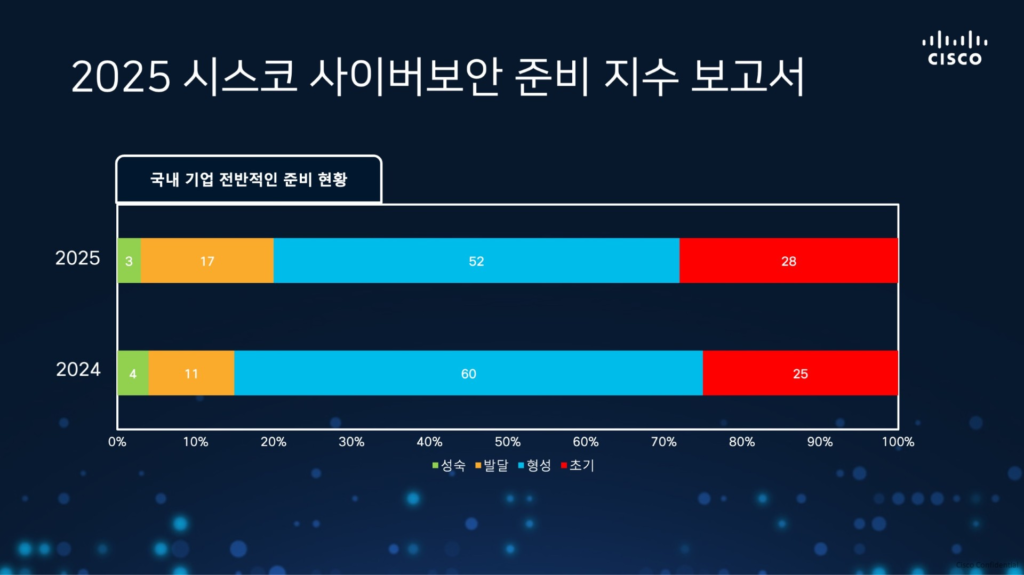
"사이버보안 '성숙' 단계인 국내 기업 3%에 불과" 시스코

시스코가 ‘2025 사이버보안 준비 지수(Cybersecurity Readiness Index)’를 8일 발표했다. 이에 따르면 국내 기업 가운데 단 3%만이 오늘날 사이버보안 위협에 효과적으로 방어하는 데 필요한 ‘성숙(Mature)’ 단계의 준비 상태를 달성한 것으로 나타났다. 지난해 조사에서 한국 기업의 4%가 성숙 단계로 분류되었던 것과 비교하면 소폭 하락한 수치다. source

"사이버보안 '성숙' 단계인 국내 기업 3%에 불과" 시스코 Read More »

액체 냉각 기술의 환경적 영향을 '숫자'로 도출··· MS 연구진, 네이처에 논문 게재

“소프트웨어, 칩, 서버, 랙, 탱크, 냉각 유체 등 데이터센터 생태계 전체를 분석하면 환경 영향 절감 가능성을 이해할 수 있다”라고 그들은 설명했다. 유체 공급업체 및 규제 기관과 조기에 협력해 화학 성분, 폐기 방법, 준수 위험을 이해하는 것도 중요하다. 아울러 관련 사회경제적, 지역 사회, 비즈니스 영향도 마찬가지로 평가해야 한다. 보다 구체적인 환경 고려 사항으로는 오존 고갈과 온실가스 배출 잠재력 등이 있다. 연구진은 운영자가 오존 고갈 잠재력(ODP)이 낮거나 없는 유체만을 사용해야 하며, 수소불화탄소나 이산화탄소는 사용하지 않아야 한다고 강조했다. 유체의 점도(두께나 점성), 가연성, 전체적인 휘발성도 분석해야 한다. 이 밖에 운영자는 생물체(특히 어류) 내 화학물질의 축적(생물축적)이 최소화되고 육상 및 수생 독성이 낮은 유체만을 사용해야 한다. source

액체 냉각 기술의 환경적 영향을 '숫자'로 도출··· MS 연구진, 네이처에 논문 게재 Read More »

The gen AI at Siemens Mobility making IT more accessible

“This is important so that we’re sought out and heard in this new environment,” says Bocuk. “To enable this, IT must speak a more accessible, and less technical language. We have to learn to inspire, engage people, and educate them about the pros and cons, not only those who are curious about gen AI, but those who may be wary of it,” she says. Gen AI offers IT an opportunity to position itself as experts and enablers. “As a globally positioned IT department, we can scale quickly and thus make exciting use cases available to everyone in a maintainable and affordable way,” she adds. “Not every department or location has to reinvent the wheel. Instead, we can roll out a promising solution that was developed in Singapore, for example, or Spain, the US, or Germany.” Not quite a complete solution Despite all the enablement, it’s also important to manage expectations in the direction of top management, according to Bocuk. “Gen AI can’t solve all challenges, but there are many areas in which it can support human work in a meaningful way,” she says. “IT must help to convey where human knowledge and skills are still in demand, what isn’t yet possible with AI technologies, and what will be possible in the future. We need to be flexible.” source

The gen AI at Siemens Mobility making IT more accessible Read More »

Mixed messages from Klarna about plans for more AI, fewer humans

She said, “over the past few decades, we’ve lost the human touch with the rise of dead-end chatbots and offshore call centers. In fact, during this time, automated and remote customer service has led to a significant decrease in satisfaction and plummeting [customer satisfaction] scores: 67% of customers report hanging up out of frustration, one in 25 report rage-clicking, and 65% say they’ve left a brand after just one bad experience.”  It does, she said, “take 12 positive experiences to make up for just one bad one. That’s how costly a service failure can be. Klarna’s move to reintroduce human interaction is not surprising. Customer service AI really is about providing an excellent experience to both employees and customers, and keeping a human in the loop increases trust, enhances usability, and helps build a stronger, more dynamic workforce.” In a recent report,  Higginson wrote that that the 4th evolution of customer service is “dramatically reducing wait times, personalizing customer experiences, and giving agents the tools they need to perform their jobs better. Over the next year, AI will revolutionize customer service by improving the experience for both agents and customers, driving efficiencies and potential cost savings. This rapid evolution of traditional call centers and chatbots means that those who don’t adopt will fall behind.” source

Mixed messages from Klarna about plans for more AI, fewer humans Read More »

오픈AI, 아시아 4국에 데이터 레지던시 도입··· 한국 기업 데이터는 한국 서버에 저장

이번 데이터 레지던스 정책은 챗GPT 엔터프라이즈(ChatGPT Enterprise), 챗GPT 에듀(ChatGPT Edu), API 플랫폼(API Platform)에 대해 엔터프라이즈급 데이터 개인 정보 보호, 보안 및 규정 준수 기능을 기반으로 제공된다. 챗GPT 엔터프라이즈와 챗GPT 에듀를 사용하는 아시아 고객은 챗GPT의 작업 공간을 해당 지역 중에서 하나를 선택해 생성한 콘텐츠를 설정한 지역에 저장할 수 있다. API 플랫폼을 이용하는 고객은 API 플랫폼 대시보드에서 새 프로젝트를 생성할 때 원하는 국가를 선택하는 방법으로 데이터 레지던시를 활성화하면 된다. 이렇게 하면 API 플랫폼에 대한 데이터 레지던시가 활성화되면 데이터가 선택한 리전에 저장되게 된다. 데이터 레지던시 기능이 있는 리전에 챗GPT의 작업 공간이 할당되면, 대화(텍스트, 이미지, 음성), 코드 인터프리터 및 데이터 분석 아티팩트 파일(업로드된 이미지, 문서), DALL·E 이미지 생성 입력/출력, 챗GPT 메모리(저장된 대화 컨텍스트), 사용자 정의 GPT(관련 프롬프트/출력), 캔버스(협업 작업 공간 콘텐츠)가 해당 지역에 저장된다. source

오픈AI, 아시아 4국에 데이터 레지던시 도입··· 한국 기업 데이터는 한국 서버에 저장 Read More »

Start small, think big: Scaling AI with confidence

AI is having its moment. There’s no shortage of headlines, hype, or hesitation. The conversation often swings between awe and anxiety — and I get it. It’s hard to know where to start without overcomplicating things. But that’s the point. You don’t need to start big. You just need to start smart. Keep it simple. Then keep going. The biggest myth I hear? That everyone else already has this figured out. They don’t. Most AI journeys start the same way — small experiments, some productive failures, and lessons that shape the next step. It’s less about racing ahead and more about building the right foundation. That begins by identifying two roles: A process owner with executive sponsorship A technology owner with eyes on scalability, security, and data governance AI is not plug-and-play. It’s iterative by design. Your internal process owner keeps the initiative grounded in business value and brings people along for the ride. Your tech owner ensures the solution is viable, secure, and built for what comes next. Skip either of those and even the smartest AI won’t deliver. Think of this phase as hiring an apprentice. Before you hand over responsibility, you need to make sure they understand the process, the purpose, and the environment they’re stepping into. AI is no different. AI doesn’t fix chaos — it reflects it We’ve all heard “garbage in, garbage out.” With AI, this still holds true. In fact, it matters more than ever. Before diving into AI, organizations need to take a hard look at the state of their data. If it’s messy, incomplete, or scattered across systems, AI will mirror that back — just with more confidence and fewer caveats. That’s why cleaning your data can’t be a back-burner task anymore. It doesn’t need to be perfect, but it does need to be in motion. Take a piece-by-piece approach. Start with a small, trusted data set. Let experience shape the next cleanup effort. You’ll build muscle memory — and trust — at the same time. Cleaning up your data estate doesn’t need to be a massive lift. Start with a well-maintained subset. Make incremental improvements. Learn as you go. Think of it as tuning the engine before taking the car on the highway. AI needs a test drive, not a moonshot We’ve seen success when companies focus on a single process — ideally one that’s simple, self-contained, and measurable. A summarization agent grounded in internal knowledge is a great example. Low risk. High learning value. Immediate feedback. Start with a small group of users. Collect input. Track both qualitative and quantitative metrics — from time saved to user satisfaction. And remember, perfect is the enemy of great. The goal is not perfection. The goal is progress. That early experience becomes your proof point. It’s easier to scale when you’ve already proven that the tech works, the data holds up, and the team sees value. AI isn’t replacing your people — it needs them Even the best AI still needs a second set of eyes. Think of it as onboarding a junior analyst. Would you trust that person with a critical decision on day one? Probably not. Someone needs to oversee how AI is deployed, what data it’s accessing, and how it’s being evaluated. That human involvement builds transparency, accountability, and — ultimately — trust. At this point, a human is still the best judge of whether the right data is feeding the AI. Human oversight isn’t optional — it’s what helps organizations ensure the results are reliable, explainable, and aligned with business intent. When we talk about AI working alongside people, this is what we mean. Each has a role. And it’s that collaboration that drives real outcomes. One conversation between IT and the business AI may live in the IT portfolio — but it doesn’t belong in a silo. The most effective teams are the ones where IT works closely with business stakeholders to understand what use cases matter, and why. That shared understanding sets the direction for tool selection, data access, and responsible deployment. With new AI tools emerging weekly — across a wide spectrum of usability and cost — that connection between business priorities and technical planning has never been more critical. Set expectations that match the mission If AI is new to your team, it’s important to manage expectations. Not every project is going to move the needle immediately — and that’s okay. The journey is just as valuable as the results. Success can look like time saved, tasks completed faster, or higher customer satisfaction. It can also be the ‘aha’ moments that help you think differently about how work gets done. Those insights are the seeds of transformation. That’s also why internal, low-risk use cases are the ideal place to start. When the stakes are lower, teams are more comfortable experimenting, sharing feedback, and proposing improvements. That creates a feedback loop that strengthens both process and performance. Build a planter box before you build a house. Complexity is a choice AI doesn’t need to be complicated. But it can become that way — fast — if processes aren’t clear or standardized. Multi-agent AI systems are exciting, but they’re still early in their maturity. These multi-agent workflows represent some of the most cutting-edge thinking in AI today — but they also introduce more room for fragmentation. Complexity tends to creep in when variance isn’t managed. Reducing variability upfront gives you a far better shot at consistent performance downstream. Start by reducing variability. Standardize where you can. Don’t build layers of automation on top of processes that don’t make sense to begin with. Clean first. Then scale. What the next five years will really look like Yes, we’ll see AI managing other AI. But that doesn’t mean humans are out of the picture. Most business processes still need human judgment, oversight, and decision-making. And while AI’s capabilities are impressive, we shouldn’t mistake sophistication for sentience. Today’s models are exceptional pattern recognizers. That’s it. Treating them like

Start small, think big: Scaling AI with confidence Read More »

The data Tower of Babel

AI is good at translation. The problem is that “speaking” data is not just a translation problem. Yes, in some environments, using one of the many variations of Text2SQL, you can type “top 10 customers by Q1 spend” and get a viable response from auto-generated SQL. But enterprise data requests also need to account for factors like lineage (“where did this data come from and when was it refreshed?”). They need documentation, testing, versioning and governance. And they need to support multiple iterations as analysts, business users and data engineers work together to get the right data. AI can generate the right answers, but it can’t get everyone on the same page.   Mitigating disconnects  So, if AI isn’t the answer, what is? You need to apply different approaches to bridge the gap between groups. This doesn’t mean teaching each group the other’s language, though there is an element of that. It’s more about designing communications with an awareness of the needs of whoever is receiving the message — crystallizing best practices and making communications consistent and effective.   For instance, when possible, analysts should develop visual prototypes using live data and actual data structures, rather than sketching approximations in PowerPoint. Pseudo-code can obscure edge cases that quickly become apparent when working with the actual database. More importantly, engineers work in code, and code requires specifics. The goal isn’t to make power users abandon their visual medium. It’s to include enough context that the visual metaphor can be cleanly translated to code. The less engineering needs to infer, the more accurate the results are likely to be. Most modern tools will let you do this with only a small representative “slice” of the data.  source

The data Tower of Babel Read More »

How to build an AI-ready organization: the Enterprise Intelligence Architecture

Data and the management of and access to data, is critical for the successful implementation of AI projects. I know from my own conversations with IT buyers that there is some tension between what AI can do conceptually, and what AI can do for a living organization, warts and all. IT leaders need to get their organizations AI ready.    Here Marlanna introduces the concept of Enterprise Intelligence Architecture for the AI fueled business. She says that organizations need to think about data in four planes:    The four planes of the Enterprise Intelligence Architecture  source

How to build an AI-ready organization: the Enterprise Intelligence Architecture Read More »