CIO CIO

Nvidia says NeMo microservices now generally available

He also detailed how Nvidia partners are leveraging NeMo microservices in their AI agent platforms. AT&T, for example, is using agentic AI to support its call centers. Working with Arize and Quantiphi, AT&T has built an AI agent that leverages NeMo microservices to process its knowledge base of nearly 10,000 documents, which are refreshed weekly. Conway noted that NeMo microservices helped improve the agent’s accuracy by 40%, which also lowered the compute overhead. Then there’s BlackRock, which is leveraging NeMo microservices for agentic AI capabilities in its Aladdin tech platform, unifying the company’s investment management process through a common data language. Cisco’s Outshift team, working with partner Galileo, is also using NeMo microservices for a coding assistant, resulting in 40% fewer tool selection errors and up to 10 times faster response times. Conway further added that NeMo microservices support open models including Llama, the Microsoft Phi family of small language models, Google Gemma, Mistral, and Llama Nemotron Ultra. Meta offers new connectors for Meta Llamastack, and AI software providers including Cloudera, Datadog, Dataiku, DataRobot, DataStax, SuperAnnotate, and Weights & Biases — have integrated NeMo microservices into their platforms. source

Nvidia says NeMo microservices now generally available Read More »

SAP NetWeaver customers urged to deploy patch for critical zero-day vulnerability

Attackers have been exploiting a critical zero-day vulnerability in the Visual Composer component of the SAP NetWeaver application server since early this week. SAP released an out-of-band fix that’s available through its support portal and it should be applied immediately, especially on systems that are directly exposed to the internet. “Unauthenticated attackers can abuse built-in functionality to upload arbitrary files to an SAP NetWeaver instance, which means full remote code execution and total system compromise,” Benjamin Harris, CEO of cybersecurity firm WatchTowr, told CSO. “This isn’t a theoretical threat — it’s happening right now. WatchTowr is seeing active exploitation by threat actors, who are using this vulnerability to drop web shell backdoors onto exposed systems and gain further access.” The vulnerability, tracked as CVE-2025-31324, received the maximum severity score of 10 on the CVSS scale. Customers should apply the fix in SAP Security Note 3594142 (requires authentication), but if they can’t immediately they should disable or prevent access to the vulnerable component by following instructions in SAP note 3596125, researchers from SAP-focused security firm Onapsis said in an advisory. source

SAP NetWeaver customers urged to deploy patch for critical zero-day vulnerability Read More »

NZ’s digital leaders seek government partnerships as cyber security rated top priority

“Several digital leaders struggled to pinpoint specific government initiatives in the digital technology space this year,” the report said. “Some leaders say they ‘haven’t really heard much about what they’re doing at all’, while others ‘struggle to see what they’ve done.’” A common view was that government restructuring and shifting priorities had sidelined digital technology and this was seen by many as a missed opportunity. “There is a strong perception that the government lacks a coordinated and strategic approach to digital transformation, with some leaders stating, ‘we don’t have a digital ambition’,” the report said. “While there may have been enthusiasm and rhetoric, many feel it has yet to translate into meaningful action.” source

NZ’s digital leaders seek government partnerships as cyber security rated top priority Read More »

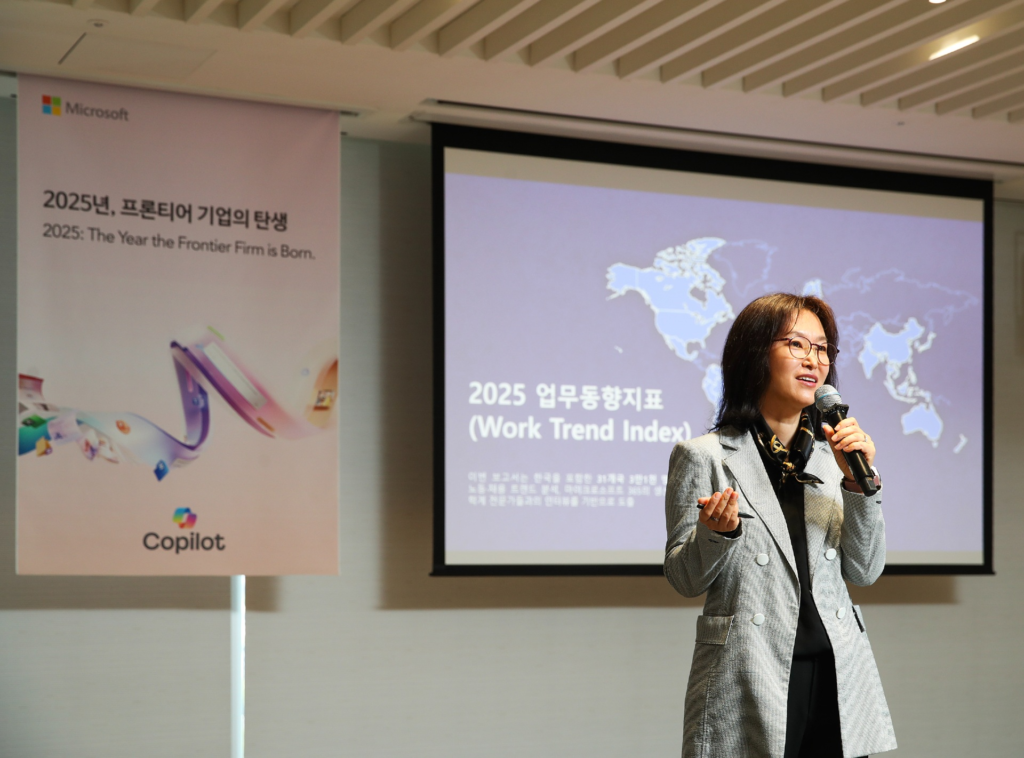
Microsoft sees AI agents shaking up org charts, eliminating traditional functions

Employees at frontier companies are particularly positive on AI’s potential to grow their companies rapidly. “Frontier company employees expect to be able to work more efficiently with AI in the future, which can be interpreted as meaning that they are looking forward to the future positively,” Oh Seong-mi explained. MS predicted that most organizations will shift toward becoming frontier companies in the next two to five years, redefining employee roles. Major examples include Bayer, Dow Chemical, and Wells Fargo. Bayer is currently introducing AI agents into product development, saving 6 hours per week, and Dow Chemical is introducing AI to delivery operations, with an expected cost savings of millions of dollars. Wells Fargo has used AI agents for customer service at more than 4,000 branches, reducing information search time from 10 minutes to 30 seconds. According to the report, companies are also significantly increasing their use of AI agents. 46% of leaders say their companies are fully automating work processes using agents, and they expected rapid expansion in customer service, marketing, and product development in the next 12 to 18 months. source

Microsoft sees AI agents shaking up org charts, eliminating traditional functions Read More »

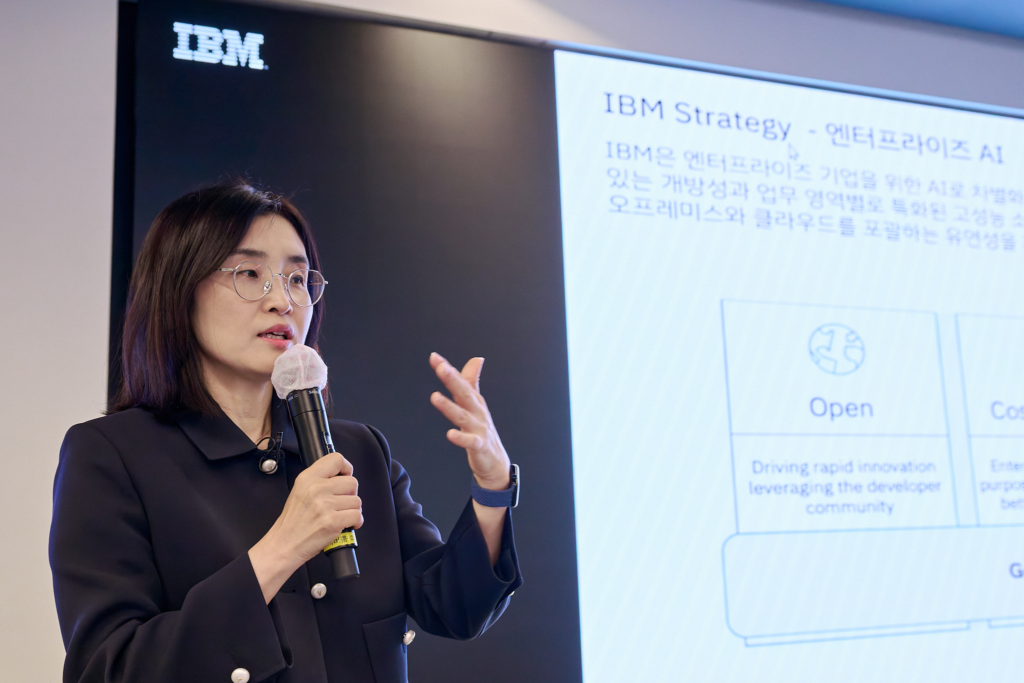
IBM claims $3.5 billion productivity boost through AI agent use

According to Lee Ji-eun, IBM is utilizing AI-based digital agents in areas such as human resources, finance, sales, and IT. In IBM’s human resources function, its AskHR agent has been used to automate 94% of simple tasks such as vacation requests and pay statements. In IT, AskIT has reduced the number of calls and chats for the IT support team by 70%, she said. Furthermore, IBM has integrated AI agents in each area into a single platform. Defining an ecosystem that links AI agents, assistants, and business applications in each area into a single integrated environment as “agentic AI,” CTO Lee Ji-eun explained that AI agents that perform tasks autonomously can focus on their own areas of expertise while being organically connected to each other like a network to efficiently execute complex work processes. This integrated approach enables IBM to manage work across various departments and functions from a single interface. Kim Ji-kwan, executive director of client engineering, who took part in the demo, introduced Watsonx Orchestrate as a core platform for agentic AI development. According to Executive Director Kim Ji-kwan, Watsonx Orchestrate integrates multiple business applications and AI agents into a single interface to intelligently analyze user requests and connect them to the appropriate path. source

IBM claims $3.5 billion productivity boost through AI agent use Read More »

9 IT skills where expertise pays the most

Tech companies still hold a competitive edge when it comes to salaries, despite mass layoffs across the industry in recent years. Despite reductions in staff, there are tech skills that continue to demand a premium salary, driving industry competition to hire talent with the right skills. The average annual salary for tech professionals inside the tech industry is $114,861, while those outside it earn about $108,674, according to the Dice 2025 Tech Salary Report. For salaries within the tech industry, that’s a 2.2% growth year over year, while tech salaries in outside industries have seen a slight decline of .5% year over year. However, expertise in these particular nine skills is likely to earn you a pay bump across any industry, as technology has become vital for typical business operations. Dice compared salary data from those who identified as experts in these skillsets to those who reported using the skills regularly, uncovering a premium for expert-level tech professionals with these skillsets. Read on to find out how such expertise can make you stand out in any industry. source

9 IT skills where expertise pays the most Read More »

Why diverse cloud environments require flexible security

Amazon Web Services, Microsoft Azure, Google Cloud, Oracle Cloud and more… organizations rely on these cloud service providers (CSPs) for flexibility and agility in the digital age. There’s a very high chance that your organization leverages multiple CSPs in order to avoid vendor lock-in, ensure geographic coverage, and help meet compliance standards. A 2025 Flexera report found that 86% of enterprises are running a multicloud strategy, with 70% of the respondents opting for a hybrid approach. Previous findings found that 82% of larger enterprises employ three or more clouds. As multicloud environments become standard in enterprise IT, businesses face a key security question: Can they rely on one CSP to secure all their cloud environments? While most security experts recommend against this, many organizations may eventually have no choice. This is because CSPs are strengthening their security capabilities by acquiring vendors that previously offered neutral cloud solutions. Conflicting interests At the heart of this issue lies a fundamental conflict of interest. Cloud service providers are in the business of selling cloud services, and their acquisitions of security companies are inherently designed to enhance their own cloud offerings. While acquired security products may initially retain their multicloud compatibility, in the long term, they have little incentive to continue supporting other cloud platforms. The primary focus of these products will inevitably shift to favor the host CSP’s ecosystem, often at the cost of cross-cloud compatibility. Even with the best of intentions, there’s an inherent conflict of interest. As security products become more tightly integrated into a CSP’s platform, they increasingly prioritize the needs of that platform, sidelining cross-cloud capabilities. This shift can hinder innovation, as security products within larger, CSP-owned organizations may find their resources constrained or misaligned with the core needs of enterprise security teams. Cloud-agnostic security benefits The solution to this challenge is simple yet profound: a cloud-agnostic security approach. For enterprises managing a multicloud infrastructure, security tools that are designed to work seamlessly across multiple CSP environments are critical. Cloud-agnostic solutions are not beholden to the interests of any single CSP, and they ensure that security priorities remain in line with those of the organization, rather than the vendor. A cloud-agnostic security approach decouples security from the underlying cloud infrastructure. This ensures that security policies and capabilities are universally applicable, whether your organization operates in AWS, Azure, GCP, or a combination of all. By using a unified security solution that integrates seamlessly across clouds, organizations can reduce complexity, streamline compliance efforts, and minimize gaps in threat detection and mitigation. In a multicloud world, a common threat model enables security teams to protect their infrastructure consistently across different environments. This unified approach is essential for reducing the risk of blind spots in security posture and provides the agility needed to adapt quickly to evolving threats. Staying neutral As competition among cloud providers intensifies and digital transformation accelerates, security must remain anchored to the priorities of the organization — not those of any individual cloud vendor. While CSPs continue to expand their offerings, often through acquisitions of formerly neutral security companies, their long-term incentives will naturally align with deepening adoption of their own platforms. This makes it increasingly difficult for enterprises to rely on CSP-owned solutions to meet the needs of complex, distributed environments. A cloud-agnostic approach helps organizations maintain strategic alignment across all environments. It ensures that visibility, threat detection, and policy enforcement remain consistent and independent of the underlying infrastructure choices. This neutrality isn’t just about supporting multiple clouds — it’s about enabling flexibility, avoiding lock-in, and ensuring that security posture is shaped by business needs rather than platform constraints. Cortex Cloud was built with these principles in mind. It delivers unified security across diverse cloud environments, providing consistent visibility, automated protection, and intelligent prioritization — all without being tethered to a single provider. For security leaders navigating a rapidly evolving cloud landscape, this approach offers the clarity and resilience needed to protect their organizations effectively, both today and into the future. Step into the future of real-time, multi-cloud security and learn more about Cortex Cloud. source

Why diverse cloud environments require flexible security Read More »

Beyond the inbox: ThreatLabz 2025 Phishing Report reveals how phishing is evolving in the age of genAI

Gone are the days of mass phishing campaigns. Today’s attackers are leveraging generative AI (GenAI) to deliver hyper-targeted scams, transforming every email, text, or call into a calculated act of manipulation. With flawless lures and tactics designed to outsmart AI defenses, cybercriminals are zeroing in on HR, payroll, and finance teams—exploiting human vulnerabilities with precision. The Zscaler ThreatLabz 2025 Phishing Report dives deep into the rapidly evolving phishing landscape and uncovers the latest trends, including top phishing targets, real-world examples of AI-driven phishing attacks, and actionable best practices to defend against the next wave of AI-powered phishing threats. Key findings on phishing attacks The ThreatLabz research team analyzed over 2 billion blocked phishing transactions captured across the Zscaler Zero Trust Exchange™ cloud security platform from January 2024 to December 2024 and uncovered several key findings: Phishing is down but is more targeted: Although global phishing volume dropped 20% in 2024, attackers are shifting strategies, focusing on high-impact campaigns targeting high-value targets to maximize their success rates. United States phishing declines but remains #1: TheUS remains a top target even though phishing in the US dropped 31.8% as a result of stronger email authentication protocols like DMARC and Google’s sender verification, which blocked 265 billion unauthenticated emails. Education is under attack: Phishing in education surged 224%, with threat actors exploiting academic calendars, financial aid deadlines, and weak security defenses. Crypto scams rise with fake wallets: Fake cryptocurrency platforms are on the rise, luring users into credential-harvesting sites disguised as wallet alerts or login pages under the guise of legitimate transactions. Tech support and job scams thrive: With over 159 million hits in 2024, scammers use job sites, social media, and live chat tools to impersonate recruiters or IT staff, stealing sensitive information, credentials, and payment details. Evolving phishing trends to watch in 2025 ThreatLabz uncovered many significant evolving trends in phishing attacks, with attackers adopting advanced tactics to bypass defenses and exploit human trust. The report highlights five key trends shaping the phishing landscape: Vishing takes center stage: Voice phishing (vishing) has become a prominent tactic, with attackers impersonating IT support to steal credentials in real time. CAPTCHA as a shield for phishing sites: Attackers are using CAPTCHAs to make phishing pages appear legitimate and evade security tools. Crypto scams on the rise: Fake cryptocurrency exchanges and wallets lure users through convincing decoy sites, enabling attackers to steal credentials and access victims’ digital funds. Phishing targets AI hype: Fraudulent “AI agent” websites that mimic real platforms are exploiting the growing trust in AI to steal user credentials and payment details. Zscaler Zero Trust Exchange mitigates AI-powered phishing attacks Phishing is no longer just spam that clogs inboxes—it is now powered by AI to exploit human vulnerability. The Zscaler Zero Trust Exchange is designed to combat these increasingly sophisticated attacks at every stage of the attack chain, turning the tables on cybercriminals. Preventing Initial Compromise Phishing attacks strike where trust is most fragile. Zscaler decrypts and inspects TLS/SSL traffic inline to block malicious content in real time, using AI-powered threat detection to identify phishing sites, malware, and zero day payloads. Suspicious websites are isolated in Zero Trust Browser sessions, shielding users from drive-by downloads, malware, and zero-day infections. Dynamic access controls continuously adjust user permissions based on risk signals, helping block threats without disrupting legitimate user activity and workflows. Eliminating Lateral Movement Phishing doesn’t stop at initial compromise—attackers aim to infiltrate and expand. Zscaler prevents lateral movement by connecting users directly to applications—not networks—ensuring compromised accounts can’t cascade into systemic breaches. AI-powered segmentation enforces least-privileged access at the application level, reducing the blast radius to a single siloed application and containing threats before they can spread. Shutting Down Compromised Accounts and Insider Threats Zscaler enforces context-aware policies, leveraging signals like user identity and behavior and device posture, to ensure only authenticated users and devices gain access to applications, data, and workloads, strengthened by integrated multi-factor authentication (MFA). For the attackers hiding in the shadows, deception technology deploys fake assets that detect and trap attackers early—catching them before they do real harm. Preventing Data Theft at Every Level Zscaler safeguards sensitive data with real-time traffic inspection, even for encrypted data flows, ensuring no exfiltration takes place. Data Loss Prevention (DLP) policies extend these protections across apps, email, and even emerging GenAI tools, securing what matters most. Phishing may be evolving, but with Zscaler’s Zero Trust Exchange, organizations can stay ahead and redefine their cyber defense for a new generation of threats. Stay ahead of AI-powered phishing attacks Cybercriminals are raising the stakes and using AI to evade detection and personalize and amplify their attacks. As phishing evolves into more sophisticated and targeted threats, staying ahead requires understanding the latest tactics and adopting proactive defenses. The Zscaler Threatlabz 2025 Phishing Report delivers: In-depth analysis: Learn how attackers are weaponizing AI to craft personalized phishing lures. 2025 predictions: Get expert insights into the emerging strategies and technologies shaping the future of phishing. Actionable best practices: Deploy proven strategies to fortify your defenses against targeted phishing campaigns. The battle against phishing requires relentless vigilance. Dive into the full report for the insights and tools needed to protect your organization from evolving threats. Download your copy today. source

Beyond the inbox: ThreatLabz 2025 Phishing Report reveals how phishing is evolving in the age of genAI Read More »

Customer-centric IT: Strategies for delivering winning customer experiences

7. Speed AI adoption CIOs should also be accelerating adoption of all variations of artificial intelligence, such as generative AI-powered chatbots, to create better customer experiences, West Monroe’s Cheng says, noting that agentic AI in particular shows potential as a powerful tool for delivering efficient, effective customer experiences. Whether the agentic AI is enabled to execute decisions on its own or designed to require a human to approve certain actions, the technology is demonstrating that it can resolve customer needs faster and more accurately than humans can, Cheng explains. Likewise, Seiler says adding more automation and AI — from chatbots to virtual assistance — throughout the customer journey is essential to meeting rising customer expectations. KPMG, in its 2024 Global Customer Experience Excellence report, says that leading organizations “are humanizing their AI interfaces, making them more engaging and relatable through anthropomorphism — that is, attributing human traits to non-human things — to create more engaging and relatable experiences. This approach taps into our innate tendency to connect with human-like characteristics, enabling AI bots, like Microsoft’s Cortana and Apple’s Siri, to offer more personalized, emotionally resonant experiences with their distinct personalities and conversational styles.” source

Customer-centric IT: Strategies for delivering winning customer experiences Read More »