CIO CIO

3 ways SJ is able to fuel its digital journey

“The goal is to have a best of breed to be able to quickly handle and adapt to changes,” he says. “It also enables other types of efficiency improvements, such as building good conditions for a data platform, which is a prerequisite for using new technology like AI.” Some might say that making a cloud journey now is quite late, and there might be something to that, admits Caddeo, but positioning is good and he’s encouraged by what’s being done. “We’re doing what we can, and we have good momentum, good speed, and a good team,” he says. “The cloud gives us greater flexibility and dynamism, so it’s part of the optimization of the platform we’re working with.” source

3 ways SJ is able to fuel its digital journey Read More »

Broadcom wins Google Cloud Partner of the Year award for fifth year

Broadcom has once again been recognized with a prestigious 2025 Google Cloud Infrastructure Modernization Partner of the Year for virtualization. This marks our fifth consecutive time being recognized with the honor, a testament to our unwavering commitment to collaborating with Google Cloud to deliver exceptional hybrid cloud solutions. Together, we’ve built our partnership with customer choice as a top priority, offering flexibility in deployment and unique license portability between on-prem and Google Cloud environments. With VMware Cloud Foundation license portability and Google Cloud VMware Engine, customers can tailor their hybrid cloud experience to perfectly match their specific needs. The cornerstone of our success lies in the powerful synergy between Broadcom and Google Cloud. Our collaboration fuels innovation and flexibility, allowing organizations such as HD Supply to complete their cloud migration in 50% of the projected time, and ADT to scale their virtual desktop environments to support 20,000 employees in just 10 days. Our mutual customers have increased efficiency and performance, reduced operational expenses, and gained the ability to scale rapidly to meet their evolving business needs – all key elements of their digital transformations. “Google Cloud’s Partner Awards recognize partners who have created outsized value for customers through the delivery of innovative solutions and a high level of expertise,” said Kevin Ichhpurani, President, Global Partner Ecosystem, Google Cloud. “We’re proud to announce Broadcom as a 2025 Google Cloud Partner Award winner and celebrate their impact enabling customer success over the past year.” At the core of our partnership lies Google Cloud VMware Engine (GCVE), a solution that combines the power of VMware Cloud Foundation (VCF) with unique Google Cloud capabilities, setting a new standard for the hybrid cloud experience. GCVE delivers: An impressive four 9’s of uptime SLA within a single zone Flexible node families with 8 node shapes for optimized capacity management Up to 200 Gbps of east-west networking Native VPC integration and much more. One of the most significant achievements of this collaboration is GCVE’s full support for VCF. This powerful combination empowers enterprises to seamlessly extend their on-prem environments to the cloud. VCF provides a modern software-defined infrastructure, built-in cyber resilience and threat prevention, as well as industry-leading compute, storage, networking, automation, and management capabilities. This robust platform enables organizations to effectively virtualize their entire infrastructure on Google Cloud. A key milestone in this partnership was Google Cloud becoming ready to offer VCF license portability, since last year. This capability allows customers to extend their entitlements from on-prem to GCVE, leveraging a consistent operational experience across environments. Together we are bringing customers enhanced choice, flexibility, reduced operational complexity and costs, and guaranteed investment protection. Complementing VCF license portability, customers continue to have the option to purchase a VCF-licensed GCVE environment, inclusive of VCF software, directly from Google Cloud. This flexible approach provides organizations with a range of deployment options tailored to their specific needs. We are incredibly proud to have earned this 2025 Google Cloud Partner of the Year award, a testament to the remarkable impact of our collaboration with Google Cloud. We’re excited to continue building on this shared success, driving innovation and delivering exceptional value to our customers. Together, we are shaping the future of hybrid cloud, empowering businesses to achieve their full potential. To learn more, read the IDC Business Value of Google Cloud VMware Engine paper. source

Broadcom wins Google Cloud Partner of the Year award for fifth year Read More »

Future-proofing your mainframe: three takeaways from the frontlines of innovation

The mainframe is no longer a system to modernize away from, but a critical foundation to build the future on. Over the past few months, the Rocket Software team has participated in some of the biggest tech events and this message has been heard loud and clear. At every gathering of CIOs, IT leaders, and technologists there has been a shared sense of urgency—and opportunity—centered around one idea: future-proofing the mainframe. To prepare your mainframe for the future, these events highlighted three key conversations tied to the modernization journey. 1. AI can’t work without the right data—and that data lives on the mainframe At the recent Gartner Data & Analytics (D&A) Summit in Orlando, one of the hottest topics was how to operationalize AI in a way that delivers business value. Yet, as organizations race to build AI models, many overlook a crucial asset: the mainframe. Mainframes still run critical operations for industries like banking, healthcare, retail, and transportation. They house decades of rich transactional data—precisely the kind of high-value, high-integrity data that AI models need to produce reliable insights. But tapping into that data can be challenging. Silos, outdated tools, and integration gaps often stand in the way. To future-proof the mainframe, organizations need to ensure frictionless access to mainframe data, not only for reporting and compliance but also to feed modern data pipelines and AI workflows. As we heard in Orlando, the message is clear: your AI is only as good as the data you feed it—and much of that data still lives on the mainframe. 2. The talent gap is real—but so is the opportunity As we look to the future of the mainframe, an adjacent conversation took place at SHARE Washington D.C.: the accelerating retirement of seasoned mainframe professionals. This isn’t just a staffing issue—it’s a knowledge management crisis. Years of expertise in COBOL, JCL, and system administration can’t be replaced overnight. But this transition also opens the door to empowering the next generation with modern tools, languages, and interfaces that abstract away complexity while preserving the power of the platform. We heard inspiring stories of companies creating mentorship programs, investing in mainframe bootcamps, and using DevOps tools to help new developers ramp up faster. These efforts don’t just bridge the skills gap—they create a culture of innovation around the mainframe. To future-proof your workforce, not only do you need to rethink who works on the mainframe, but how they work on it. 3. Modernization isn’t a one-time event—it’s a continuous strategy Modernization was a major throughline at both events, but with a clear shift in tone. It’s no longer about “ripping and replacing” mainframes with cloud-native architectures. Instead, organizations are looking for hybrid approaches that modernize without disruption. That means taking a measured, iterative approach to modernization, and finding the infrastructure that works best for the unique needs of your enterprise. The most successful organizations are the ones who view modernization as a strategic, ongoing capability, not a one-time project. As one CIO put it at SHARE: “The goal isn’t to move off the mainframe. The goal is to move forward—with it.” Final thoughts: the mainframe as a modern platform The future of enterprise IT will be powered by AI, automation, and hybrid cloud. But none of these trends can succeed without a solid data foundation, a skilled workforce, and a modernization strategy that respects what already works. Learn more about modernization strategies at the Rocket Software Insights Hub. source

Future-proofing your mainframe: three takeaways from the frontlines of innovation Read More »

Invest in AI search as an enterprise business asset

Nearly every enterprise is experimenting with AI, but an overwhelming 90% of AI projects never scale beyond the proof-of-concept stage, and more than 97% of organizations experience difficulties demonstrating the business value of generative AI (genAI), according to an Informatica survey.[i] A major reason is that many cautious business leaders treat AI as a source of incremental improvements to existing processes rather than a tool to reshape core business functions. Too often, business leaders underestimate the people, behavior, and organizational changes entailed by strategically using AI. In particular, the transformative potential of AI-powered search is overlooked. That’s despite the fact that search is a function knowledge workers use every day. As data volumes continue to grow, employees and customers are increasingly challenged to find the information they want.[ii] Various studies have found that employees spend between 20% and 30% of their time looking for information.[iii] They have become accustomed to instant gratification on the web, but the lack of investment many organizations make in relevance and content curation makes searching inside the corporate firewall maddeningly unproductive. AI search not only incrementally improves productivity but can radically reshape core business capabilities. It replaces simple keyword searches with advanced semantic techniques that understand the intent and context behind a query. Semantic search combines technologies including natural language processing, vector data stores, and machine learning to deliver results that more closely match what users need than keywords without requiring major investments in content curation.  “We can now understand context better than was possible with keyword search alone,” says Steve Mayzak, global managing director of Search AI at Elastic. “With semantic search, you can search across an entire book instead of relying on the index alone.” By leveraging genAI assistants and large language models, AI search can interpret a user request and deliver results in a business context.  When considering an AI search platform, look for these features.  Flexible integration with multiple data types and sources – Enterprise data is spread across a multitude of databases, internal applications, and software-as-a-service. An AI search engine should connect seamlessly to the data sources you need and deliver integrated results regardless of the location or type of data. Near real-time data ingestion and indexing – The pace of business is too fast to permit most organizations the luxury of waiting hours or days for critical data. AI search should make data available seconds after it’s ingested. APIs – These make the onboarding of new applications and data sources easier. Look for an open ecosystem that integrates with all the major AI foundation models and supports your own models so existing investments aren’t wasted. A serverless architecture that scales up and down on demand to deliver maximum efficiency at the lowest cost.  Multimodal capabilities that support searching of images, video, and audio.  AI search makes it possible for organizations to consolidate a multitude of application-specific search engines into a single utility that works across all the organization’s data.  Elastic’s powerful, scalable, and AI-driven search solution delivers fast, relevant, and secure search experiences across structured and unstructured data in batch and real time. It offers advanced full-text search, vector search, and AI-powered relevance tuning, making it ideal for diverse use cases. To learn more about Elasticsearch click here.  [i] “CDO Insights 2025 – global data leaders racing ahead, despite headwinds to being AI ready, latest survey finds,” March 14, 2025, Informatica.com. [ii] “Amount of Data Created Daily (2025),” April 24, 2025, ExplodingTopics.com. [iii] “Various survey statistics: Workers spend too much time searching for information,” Cottrill Research.    source

Invest in AI search as an enterprise business asset Read More »

5 tips for transforming company data into new revenue streams

Ensure your data has actionable value The most monetizable data types provide insights that can’t be found elsewhere, ISG’s Rudy says. “This includes benchmark data for comparison to peers to help drive actionable change, competitive intelligence that’s specific, predictive analytics to help drive fact-based decisions, and AI-driven insights that pull from multiple sources of data that are typically siloed.” User behavior data is one of the most monetizable data types, says Agility Writers’ Yong, pointing to Google Analytics as an example. “It tracks user interactions, which enterprises can then use to fine-tune their website or marketing efforts,” he explains. Even deeper data, such as purchase intent or churn rates, can be sold to third parties or used for targeted marketing, making it highly valuable. The types of data that aren’t worth monetizing include outdated data, third-party data anyone can access, data your organization lacks the specific rights to use — which could lead to potential lawsuits — or inconsistent or partial data that could lead to bad decisions, Rudy says. source

5 tips for transforming company data into new revenue streams Read More »

Trade routes of the digital age: How data gravity shapes cloud strategy

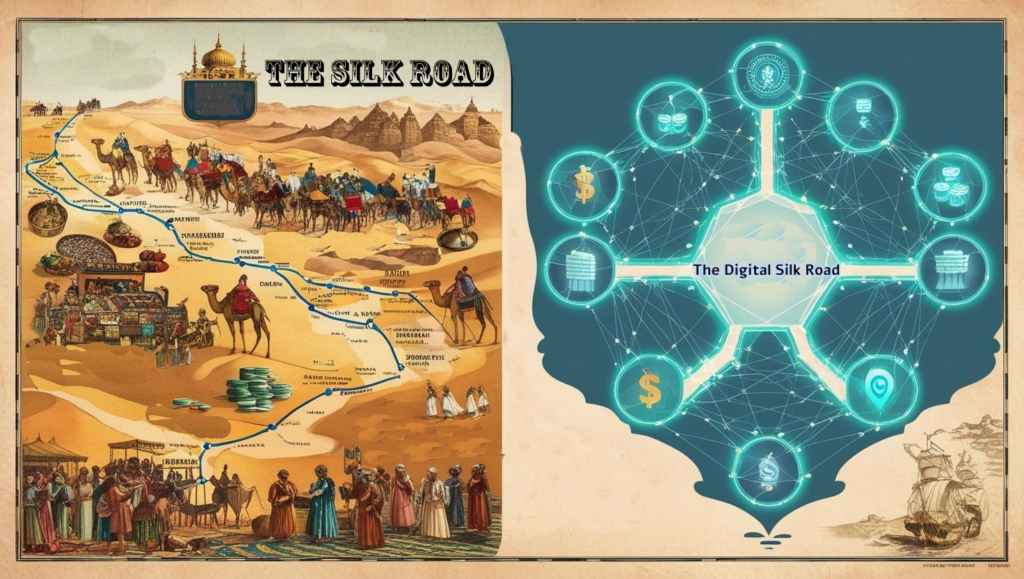
Every strategic decision, from customer engagement to AI-driven automation, relies on an organization’s ability to manage, process and move vast amounts of information efficiently. However, as companies expand their operations and adopt multi-cloud architectures, they are faced with an invisible but powerful challenge: Data gravity. Data gravity is a term coined by Dave McCrory in 2010 to describe the tendency of large datasets to attract applications, services and even more data, making them increasingly difficult and costly to move. Just as celestial bodies exert gravitational pull, keeping objects in orbit around them, data exerts a similar force in cloud computing. Once data reaches a critical mass within a given platform or region, it becomes a magnet for computing workloads, applications and analytics services, creating a self-reinforcing cycle — just like cities along the Silk Road pulled in traders, wealth and innovation. This gravitational effect presents a paradox for IT leaders. While centralizing data can improve performance and security, it can also lead to inefficiencies, increased costs and limitations on cloud mobility. Organizations that fail to account for data gravity risk being trapped in a single cloud provider’s ecosystem, incurring high egress fees, experiencing latency issues and struggling with compliance requirements. Those who manage it strategically, however, can turn data gravity into a competitive advantage, using it to enhance performance, security and agility across a distributed cloud infrastructure. source

Trade routes of the digital age: How data gravity shapes cloud strategy Read More »

Agents are here — but can you see what they're doing?

“The agent is able to make its own choices about where to send it in the decision tree,” says Moldovan. In some cases, the final agent in the chain might send it back up the tree for additional review. “It allows humans to go through a much more manageable set of signals and interpretations,” he adds. To keep the systems going off the rails, several controls are in place. First of all, OpenAI itself has a set of controls in place, including a moderation API. Then, the system is extremely limited in what information comes in and what it can do with it. Finally, all decisions go to humans for review. “We’re risk managers, not boundary pushers,” Moldovan says. “We use this system to properly identify a set of content that needs human review, and all final moderation decisions are human. We believe content moderation, especially on a platform like ours, requires a level of nuance we’re not yet ready to cede to robots.” source

Agents are here — but can you see what they're doing? Read More »

Inside Salesforce’s Agentforce: AI agents, digital labor and the Agentic Maturity Model

Overview Join host Keith Shaw in this episode of Demo as he sits down with Shibani Ahuja, SVP of Enterprise IT Strategy at Salesforce; and Mike Jortberg, Global Sales Director at Slalom, to explore Agentforce — Salesforce’s innovative AI-powered agent platform — and the groundbreaking Agentic Maturity Model. Discover how enterprises can harness autonomous agents to drive digital labor, boost productivity, and transform operations across sales, service, HR, IT, and more. 🚀 What you’ll see: * Live demos of AI-driven agents in action* Real-world use cases in sales, insurance, and hospitality * Automation that compresses 30-minute tasks down to 2 minutes * Integration of AI, CRM, and enterprise data * Sentiment analysis and multi-agent orchestration * Insights from Salesforce + Slalom on the future of autonomous enterprise systems 📍 Featuring: Shibani Ahuja, SVP at Salesforce; and Mike Jortberg, Global Sales Director at Slalom 📅 Learn more and get hands-on: Attend an AgentForce World Tour event near you – visit salesforce.com for dates & locations. This episode is sponsored by Salesforce & Slalom. 📢 Like, comment, and subscribe for more cutting-edge tech demos every week! #salesforce #AgentForce #AI #DigitalLabor #AgenticAI #AutonomousAgents #CRMAI #EnterpriseTech #DemoShow #KeithShaw Register Now source

Inside Salesforce’s Agentforce: AI agents, digital labor and the Agentic Maturity Model Read More »

Thanks to AI, the data reckoning has arrived

2. Data classification As data gets housed in data lakes and other increasingly connected ways, another challenge is classification. Who is allowed to look at particular data? From government security classifications to confidential HR information, data shouldn’t be accessible to everyone. Data must be properly classified, and those categories and the limits they entail must be maintained and live on as companies integrate and harness data in new ways. 3. Stability A lot of data is transient. If you’re taking data from sensors, for example, you need to understand how often you’ll refresh the data based on sensor readings. This is an issue of data stability, as constantly changing data may lead to different results. Data is also aging. For example, imagine you had a specific process for raising a job requisition for a new employee for nine years, but you revised the process last year. If you use all 10 years’ worth of data to train a model and then ask how to open a job requisition, most of the time, you will get a wrong answer because most of the data is outdated. source

Thanks to AI, the data reckoning has arrived Read More »

When AI writes the laws: UAE’s bold move forces a rethink on compliance and human touch

Paving the way for smarter compliance The UAE’s new AI system marks a major shift for businesses facing complex regulations. With the global AI legal tech market set to grow from $1.2 billion in 2024 to $3.5 billion by 2030, there’s a clear demand for automation in tasks like eDiscovery and regulatory reporting, according to Grand View Research. In the UAE, where rapid economic growth is a priority, AI is set to play a critical role. Manish Bahl, Founder and CEO of Curious Insights, sees a clear path: “Over the next five years, AI will automate compliance monitoring, deliver real-time risk alerts, and simplify due diligence, helping organizations stay ahead of regulatory changes.” However, as AI enters the legal space, experts caution that integration must be done thoughtfully. Ekhlaque Bari, AI Strategy Consultant at Minfy Technologies and a former CIO, stresses that if legal systems aren’t central to a business, AI-driven tools can still serve as standalone solutions for legal and contracting teams. But Bari also pointed out the challenge of balancing data security and privacy while keeping the system up to date with evolving laws. source

When AI writes the laws: UAE’s bold move forces a rethink on compliance and human touch Read More »