CIO CIO

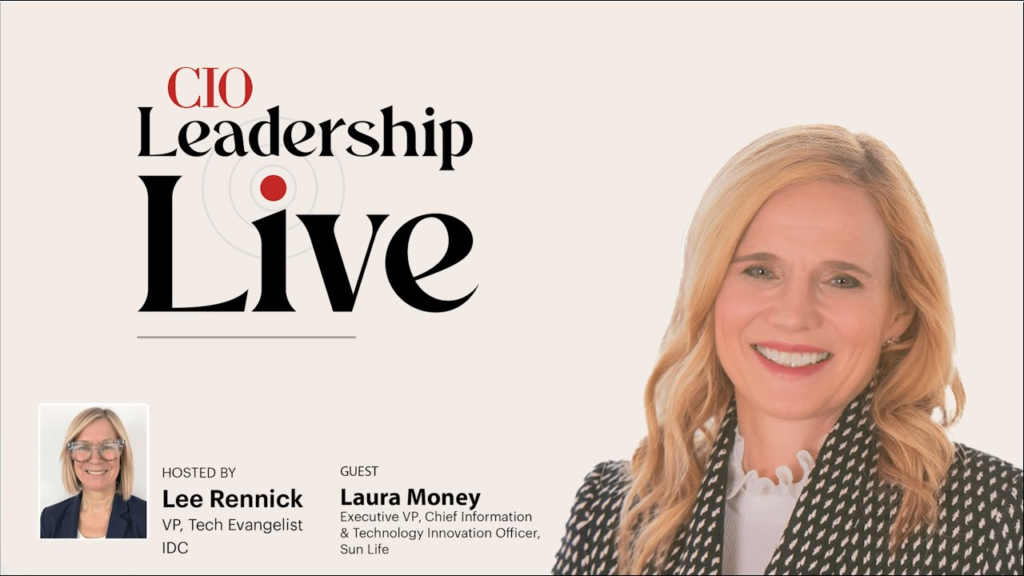
Sun Life’s Laura Money on driving innovation with AI and championing women in tech.

sure, you can’t go anywhere and still, and it’s been a couple years now, you can’t go anywhere in tech and not talk about generative AI or AI in general, in fact. And it really has been an incredible opportunity to use a new tool to help our business, businesses progress and help technology be more efficient as well. And it really does transform the way we’re working, so we can be better at our meeting our clients needs and moving faster. And all those aspects and everything, everything you read at you know we’re I think what we were lucky about is our CEO, Kevin strain was really keen right from the start that we understand the technology and understand how it could be used. And one of the very first things we did was to create a safe and secure internal chat bot. We call it sunlight pass. It’s got well over a million queries. We’re seeing over 20,000 visits to beat. And employee. Employees are using it for a whole variety of tasks. I love what they’re using it for. I’m less concerned about what they’re using for other but I what I’m thrilled about is people are using it, and they’re starting to understand what this technology is capable of. And to me, that’s the most important thing. Sure, people have used it to build scripts for videos. They’ve used it to analyze reports. In some case, people have used it for coding, even though we have, you know, copilot for GitHub. But we are actually finding that it’s the learning and understanding of it that is really perhaps the most valuable thing, and we’ve provided training to all our employees around AI and generative AI. Again, that’s more from the point of view of if all the employees understand the capabilities and what the potential of this technology is, then we have all those different ways that we might be able to innovate. In fact, in 2024 just last year, we were recognized by CIO awards Canada for our innovation with some like that. Yeah, but we’ve, you know, we’ve taken it. We have, we have a Gen AI Iris, our chat bot, which is helping our Service Desk support our employees. So that’s our internal IT help desk, so it’s actually able to answer about 80% of employee queries, which reduces, for those 80% of queries, the resolution time from 12 to two minutes. And that’s where we’re really starting to test and learn in a real environment with agentic AI. So the intent is that IRIS will be able to do everything that the Service Desk can do in terms of those simple asks, and, you know, order a new phone, order a new screen, reset passwords. Of course, that’s been around for a while, but it’s, it’s been really helpful, and because of that, we now have saw squads. Jenny I squad seated in each of our business groups, and they have a big, long backlog of things that they’re they’re working through. So our employees are have been so enthusiastic that they actually organize themselves into functional a multi function team to actually have set our guardrails. So up until now, we have not had Gen AI interact directly with clients. We’ve always kept the people in the loop, and that was one of the first guardrails. And of course, there’s guardrails around data, there’s guardrails around privacy, there’s guardrails around new technologies, but they’ve also allowed us to go fast with certain types of Gen AI. So Chatbot is a good one, we now have the ability to build, in a matter of days, a chat bot that can be based on any knowledge base. And so because we can do that, you can imagine, there’s literally backlogs. And I would say probably we now have 10s of these that are live, and hundreds in backlogs, because, for example, one of the first ones we did was the HR policies and procedures. How many times have you wanted to know? Oh, you know, what’s the limit for, I don’t know, lunch for two colleagues when you’re doing the coaching session. Well, now you can put that in and immediately get an answer, rather than having to find the email, where is that linked? Policy, etc, etc. So, so that proved really useful. It proved useful in different contact centers for different types of you know, when we have complex knowledge bases and and again, those are just evolving to be more and more sophisticated. And so that safe adoption is something that we’re really focused on as well and as part of the training, and has been part of the guardrails that people have have put in place, that they actually self organized and realized as employees. If we don’t do this safely, we’re not going to be able to be effective at it. So that’s probably our biggest learning, is involve, involve the and help entice the broader team into understanding the capabilities of the technology. And then the other one that we’re really thinking a lot about now is change management. So there’s a good portion of our employees who just immediately embrace Gen AI. They love it. They want to use it for all sorts of things. But that’s not everybody. So you really need to think about, how do you manage through some of the change for some of our employees? And of course, that helps with the communication, leader, advocacy, great stories and testimonials. So those are, those are some of the, those are some of the things that we’re we’re doing, but it’s, yeah, and don’t be afraid to fail. We’ve worked a lot on that. Don’t be afraid to fail. Pivot and, yeah, you know, move Unknown Speaker forward. source

Sun Life’s Laura Money on driving innovation with AI and championing women in tech. Read More »
CIOs could improve sustainability with data center purchasing decisions

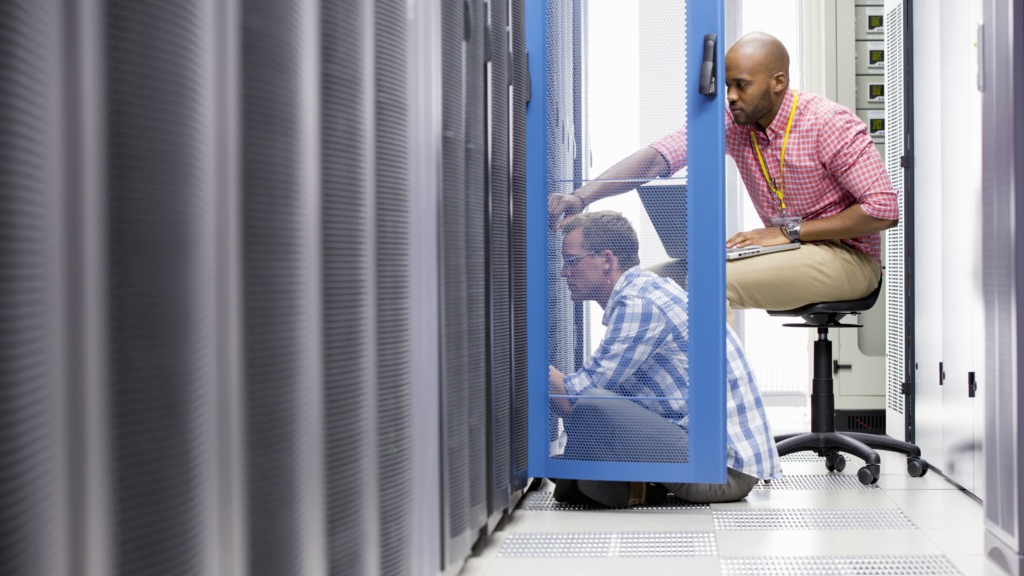
CIOs can drive change Even though it’s difficult to calculate an organization’s carbon footprint, CIOs and IT purchasing leaders trying to reduce their environmental impact can influence data center operators, experts say. “Customers have a very large voice,” Seagate’s Feist says. “Don’t underestimate how powerful that CIO feedback loop is. The large cloud accounts are customer-obsessed organizations, so they listen, and they react.” While DataBank began using renewable energy years ago, customer demand can push more data center operators to follow suit, Gerson says. “For sure, if there is a requirement to purchase renewable power, we are going to purchase renewable power,” she adds. source

CIOs could improve sustainability with data center purchasing decisions Read More »

Shaken, Not Stirred: Tech Buying Process in 2025

The year of 2025 is expected to a massively disruptive year from ‘Core to Cloud to AI to Gen AI’ as the futuristic CIO expects tech OEMs and ecosystem partners to declutter tech complexity, demystify hyped technologies to help navigate their career graph and accelerate their company’s business. The tech buying process unlike in the past has not stirred across CIOs and their teams in recent years, but it has completely got shaken. And if you thought AI will perhaps make technology buying process less complex than the ‘already complex’ tech architecture for organizations, you may have erred a bit. Around 66% of ITDMs in APAC agree that the purchase process for technology products and services is becoming increasingly complex as per Role and Influence of the Technology Decision-Maker Study 2024 by Foundry and CIO. Why is it more complex? More people are involved as business and IT leaders present and explore new technologies to efficiently run their companies (31 is the average number of influencers in APAC buying team, and almost 50% are LOBs). source

Shaken, Not Stirred: Tech Buying Process in 2025 Read More »

How today's enterprise architect juggles strategy, tech and innovation

Technology and business sustainability: Enterprise architects must manage the health status of technology ensuring that technology solutions continue to meet SLAs, are secure, sustainable, avoid technical debt and can evolve as business needs change. This requires long-term thinking and investment. Distributed responsibility ownership model: Responsibility for technology solutions may not be clear and spread across multiple teams, departments and organisations. enterprise architects must create systems that enable distributed ownership while maintaining coherence and alignment of the solutions and the end to end nature of the value chain they serve. Contracts, SLAs and supplier management: Managing vendor relationships, ensuring clear terms for service levels and mitigating risks associated with external suppliers are critical. enterprise architects need to balance innovation with the practical realities of contracts and service agreements. They must ensure any gaps are identified and addressed accordingly. Aggregated TCO: Evaluating the total cost across hardware, software, services and operational expenditures is key. enterprise architects help ensure that technology investments are optimized to deliver value without exceeding budget capex and opex constraints. Prioritization and planning: Enterprise architects must balance competing demands and prioritise initiatives that offer the most value. Strategic planning and demand/supply management is crucial to aligning resources with business goals and the enterprise architect has key input to this. Change management (technology and business): As technology evolves and landscapes become more complex and interconnected enterprise architects must manage transitions and ensure smooth adoption of new systems and changes. Technology can stretch deep into the business (including IT!) and enterprise architects need to be cognizant of the persona impact, any organizational shifts, training, disruption (particularly when urgent changes like vulnerability patches cause conflicts) and the pace of change that businesses are capable of absorbing. Pace of delivery and releases: Enterprise architects must find the balance between speed and quality. While businesses demand rapid releases (particularly for B2C channels), enterprise architects ensure that solutions are robust, secure and scalable. Fragmented customer experience: Ensuring that customers experience a seamless and integrated service across multiple touchpoints requires careful enterprise architecture to avoid siloed systems and fragmented user journeys. Compliance management: Enterprise architects are responsible for ensuring that systems comply with internal requirements, industry regulations, security standards and data protection laws. This requires close attention to the detail, auditing/testing, planning and designing upfront. Risk management: Enterprise architects must address data, security and operational risks, ensuring that technologies and systems are secure, resilient and compliant with regulatory requirements and at a level appropriate to the risk appetite of the organization. Navigating emerging trends: AI and beyond ImageIn addition to the complexity of managing ecosystems, enterprise architects face the challenge of navigating emerging technologies like AI, machine learning and automation. These technologies introduce both opportunities and challenges and enterprise architects must carefully evaluate how they fit into the broader technology strategy, cognisant of where these technologies are in the maturity cycle and make incremental gains (learning, value). As AI continues to reshape industries, enterprise architects must balance innovation with caution. They need to ensure that AI systems are scalable, secure and aligned with business goals. They must also address risks and challenges related to organisational readiness, data privacy, security, ethical concerns and regulatory changes as they evolve. The pace of technological change means enterprise architects must keep an eye on emerging trends without losing sight of long-term strategic goals. enterprise architects must balance the urgency of adopting new technologies with the need for stability, scalability and sustainability. source

How today's enterprise architect juggles strategy, tech and innovation Read More »

From banquet to bistro: How the product model is transforming the business of technology

Instead of organizing by skillset—developers here, testers there—product teams are cross-functional by design. They bring together the full lifecycle of expertise required to support a capability like configure-price-quote (CPQ), digital commerce, or fulfillment. They don’t just build software; they own strategy, delivery, iteration, and ultimately, outcomes. And that last word is key: outcomes. In a project model, teams are measured by what they deliver—how many story points they burn down, how fast they release features. In a product model, the question is different: Did we move the needle on a meaningful business metric? For a commerce team, that might mean increasing pipeline velocity or boosting conversion rates. For an internal team, success might be defined by time savings, productivity improvements, or reductions in operational risk. Regardless of the domain, the emphasis is the same: value over volume. source

From banquet to bistro: How the product model is transforming the business of technology Read More »

From legacy to lakehouse: Centralizing insurance data with Delta Lake

This unification of data engineering, data science and business intelligence workflows contrasts sharply with traditional approaches that required cumbersome data movement between disparate systems (e.g., data lake for exploration, data warehouse for BI, separate ML platforms). Lakehouse creates a synergistic ecosystem, dramatically accelerating the path from raw data collection to deployed AI models generating tangible business value, such as reduced fraud losses, faster claims settlements, more accurate pricing and enhanced customer relationships.  Legacy out, Delta in To sum up, an important strategic change for insurance businesses striving for long-term growth and operational excellence is transitioning from outdated, rigid legacy systems to contemporary, resilient lakehouse architecture supported by Delta Lake. This shift involves more than just implementing modern technology; it involves radically re-architecting the data foundation to realize its full potential. Effectively utilizing artificial intelligence’s revolutionary power requires centralizing data, guaranteeing its dependability with features like ACID transactions and schema enforcement, and enabling unified processing of all data types. Successfully establishing this approach will put insurers in a strong position to innovate more quickly, run more smoothly, control risk more skillfully, and provide better customer service.  source

From legacy to lakehouse: Centralizing insurance data with Delta Lake Read More »

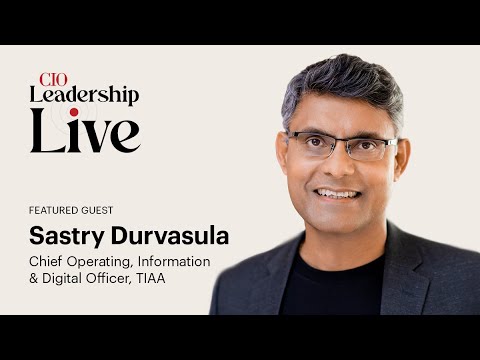
TIAA’s CIO Sastry Durvasula on merging the CIO and COO roles

Maryfran Johnson Hi. Good afternoon, and welcome to CIOLeadership Live. I’m your host, Maryfran Johnson, CEO of Maryfran Johnson Media and the former editor in chief of CIO magazine and events. Since November of 2017 this video and audio podcast has been produced by the editors of cio.com and the digital media division of foundry, which is an IDG company, our growing online library of past interviews all still openly available on both CIO.com and our YouTube channel includes more than 150 chief information technology and digital officers from mid sized to large companies across every industry, joining our esteemed lineup of CIOs, actually, for the second time in our show history, is Sastry Durvasula, who is the Chief Operating information and Digital Officer at TIAA. This is the Fortune 100 financial services firm that started out more than a century ago as the Teachers Insurance and Annuity Association of America. It was founded by Andrew Carnegie to build a sustainable Retirement System for teachers today. TIA is a $40 billion nonprofit organization with 16,000 employees globally providing retirement and investment products and financial advice, mostly to people working in the academic, research, medical, nonprofit and government sectors. Sastry joined the organization in February of 2022 in what was then an unusually broad CIO plus role where he combined technology leadership with client services across a company that is managing $1.4 trillion in assets. And six months ago, in November of 24 he was promoted into yet another unique role, overseeing the four connected pillars of the company globally, that is technology, digital and client services, operations and shared services. Before he joined TIAA, he was the global chief technology and digital officer and a partner at McKinsey and Company. And before that, served in various digital data and Chief Information Officer roles at insurance broker Marsh McLennan and also at American Express. Then just last month, when the latest honorees to be inducted into the CIO Hall of Fame were announced. Sastry’s name was, not so surprisingly, on that list of seven outstanding business technology leaders who are making a real difference in the world of it. Leadership. Sastry, welcome and congratulations on your latest honor. Thank you. Thank you so much, Maryfran, It’s always pleasure to be on your show and appreciate your very kind introduction. Thank you. Well, you’re absolutely welcome, and there’s not that many CIOs that have made two appearances on the show over these years. So it’s great to have you back. Let’s talk about let’s start out talking about what has changed for you in this unusual compounded role of CEO, COO and CIO and digital chief. Talk about how the role came to be and what your marching orders were from your CEO. Sastry Durvasula Yeah, you know, as you said, I joined in 2022 in fact, on Valentine’s Day of 2022romantic, yes, with lots of love for TIAA. And you know, this is, you know, as I discussed in our last episode, you know, I’ve only worked for 100 year old companies most of my career. So, yeah, so I just, I love the culture aspects. I love the power of technology, you know, transforming and reimagining businesses. So that was the reason why, you know, I was gravitated to TIAA, and obviously working with a very progressive CEO like Shawna Brown Duckett was a big plus for me when I, when I made the decision to join TIAA since, you know, obviously, it’s been now three plus years, and the world has changed quite a bit. Financial services industry changed a lot. Technology changed a lot with the advent of same year, actually the year I joined in 2022 in A4 ChatGPT was born, and the world changed since then. So tech changed a lot. You know, the way we serve our clients changed a lot. And hence my role change. So, you know, it’s a very, I would say, progressive set of opportunities that I took onbeyond technology and client services. You know, we’re putting our technology, especially AI, you know, in delighting our clients through, you know, digital and client experience. Of next generation, you know, driving a level of operational efficiencies, elevating our shared services. So basically, my remit now has what was originally my role, which is technology and client services. But as you said, we’ve added the digital and client experience with Jessica Austin Barker, who’s our Chief Digital and client experience officer who’s on my leadership team now, as well as a lot more focus on, you know, operational excellence and elevating our shared services. Because fundamentally, I believe that, you know, digital transformation, or AI power transformation, or technology transformation, ultimately, is here to serve the business. And these four connected pillars, you know, are the pillars that the businesses of TIAA, all three businesses, you know, stand on, whether it’s retirement that we started with our wealth management, where we serve, you know, our participants, and then you know, asset management, where we manage, as you said, you know, manage $1.4 trillion of assets out across the globe. So I think it’s a great set of pillars to be responsible for. You know, it’s over with over half of the organization from a colleague standpoint. So it’s, that’s the other thing that changed from a people, you know, leadership, responsibility and and driving, really, this ai, ai powered world that we are all fast walking into and driving up reskilling and upskilling, I think that’s what really changed. I’m I’m super excited, you know, with the set of responsibilities and the leadership team that we’ve assembled and the opportunities that we have in front of us, well, I’ve started when in a lot of my recent recordings with CIOs, I’ve started kind of watching the clock to see whether it’s the first five minutes or the first 10 minutes when we start talking about AI, and we’re mostly at the five

TIAA’s CIO Sastry Durvasula on merging the CIO and COO roles Read More »

CIOs increasingly dump in-house POCs for commercial AI

“We’re used to CIOs going out and buying software, and this year, they’re going to be sold [AI] software,” he says. “In the past, they had an idea in mind, a problem to solve, and it is directional, intentional. They are in control.” In some cases, the CIOs won’t have a choice about whether to purchase the add-on AI, Lovelock says. “This year, virtually every software company, for virtually every product, will have a gen AI feature this year, if they don’t already,” he says. “The salespeople are going to be calling their customers and saying, ‘We have gen AI,’ and in some cases, you come in one morning, and you have a slightly higher bill and a new button.” source

CIOs increasingly dump in-house POCs for commercial AI Read More »

From Alexander Graham Bell to an AI assistant guiding your customer journey, CX has come a long way (baby)!

Cutting-edge technology solutions such as Maximus TXM embodies the innovative customer experience of the future, integrating emerging technologies, advanced AI, and human-centered design principles — all in order to improve efficiency and effectiveness within contact center operations, such as reducing onboarding costs, improving quality performance, and decreasing employee turnover. The next-generation CX integrates customer interactions and data insights about them and provides these in one seamless experience with secure connections to major cloud services such as AWS and Salesforce. AI virtual agents become conversational and multi-language across web chat and voice channels. The human customer can either be fully serviced by the AI engines or be routed to a live agent with an accelerated path to resolution based on the bot’s analysis and intelligent routing methodology. Integration with CRM clouds like Salesforce allows for the storage, analysis, and annotation of each call or chat recording, within the context of other relevant information, enabling real-time intent, sentiment, and outcome analysis.    source

From Alexander Graham Bell to an AI assistant guiding your customer journey, CX has come a long way (baby)! Read More »

Lumen: Building the trusted network for AI

Jeff Sieracki, senior director of product management at Louisiana-based Lumen, is quick to point out that the networking requirements of the modern enterprise are changing rapidly. It is an evolution being driven by several transformative computing trends, chief among them the rapid proliferation of AI workloads. “More organizations are coming to the harsh realization that their networks are not up to the task in the new era of data-intensive AI workloads that require not only high performance and low latency networks but also significantly greater compute, storage, and data protection resources,” says Sieracki. “The widespread adoption and deployment of more powerful technologies and innovations never happens in a vacuum. There are always corresponding networking, infrastructure, and management needs to consider.” Recent research validates Sieracki’s observations on the front lines. IDC’s Enterprise Horizons 2024 report, published last June, found that a staggering 86% of CIOs do not think their enterprise networks are prepared for the AI revolution. “As IDC’s findings confirm, the proliferation of AI-powered applications and workloads is itself a singular challenge for most enterprises because it requires large amounts of data to be moved quickly, but it is of course not the only challenge CIOs and IT leaders must consider,” adds Sieracki. “Today’s highly distributed organizations also demand greater collaboration, more efficient and powerful applications, and greater cybersecurity. And just as importantly, all of these needs must be met as the edge of the network continues to expand.” Sieracki notes that Lumen is ideally qualified to address this new reality with its exceptionally powerful networking capabilities, robust solutions portfolio – including public, private, and hybrid cloud offerings – and an extensive array of managed and professional services honed through decades of work empowering leading brands to achieve their digital transformation goals. “Our technology solutions and services rival any offered in the market today, but what really sets Lumen apart on the most fundamental level is the connectivity we offer in conjunction with our offerings,” he says. “Our Lumen Private Connectivity Fabric is designed and built to make Lumen the #1 provider of AI-ready infrastructure and offers 25% less optical loss than the competition1, less than 5 milliseconds of latency at the edge to handle 97% of U.S. business demand, and delivers 60% more capacity than traditional fiber.” The footprint of the Lumen network that delivers such capabilities is equally impressive and comprises 340,000 miles of fiber. Lumen also owns and operates more than 55 edge locations throughout North America and Asia-Pacific. The company also offers direct connections to more than 2,200  third-party data centers around the globe. This extensive reach allows low-latency compute and private cloud services to be placed within an extensive and ever-growing array of endpoints. In this global environment, Lumen’s customers are also aggressively safeguarded by the company’s world class network security. Providing the full array of cloud services enterprises need Lumen’s extensive network provides direct connectivity to all of the major cloud service providers and hyperscalers. Such flexibility, Sieracki notes, is imperative. “The most common misconception about the cloud is the belief that everything must be in it,” he says. “In years past we saw many organizations mistakenly rushing to put everything into a hyperscale environment, but today it is important to remember that it is truly a hybrid cloud world. Enterprises that embrace a multi-cloud architecture will get the most out of their IT infrastructure, but that more often than not also requires a partner who has experience addressing all of the challenges that arise when you have to manage workloads that span the complex environment that results.” That expertise is inherent in the Lumen Edge Private Cloud based on VMware Cloud Foundation (VCF), a fully managed Infrastructure-as-a-Service offering on Lumen’s high-performance networks that is seamlessly integrated with additional services such as Lumen Data Protect, Lumen’s Edge Bare Metal offerings, and Lumen Defender powered by Lumen Black Lotus Labs. Centralized management through Lumen’s platform and across each customer’s digital ecosystem is also made easy and intuitive through a single pane of glass. Customers, including stalwarts in industries like finance and healthcare, appreciate the unified platform VCF enables which integrates storage, networking, and data services into a cohesive private cloud solution in which they can provision and manage their resources with ease. The integrated nature of the platform also simplifies the management and deployment of workloads across various environments. “VCF enables customers to manage Kubernetes clusters, virtual machines (VMs), and AI workloads consistently from deployment to management while enhancing efficiency and ability to reduce the total cost of ownership,” says Sieracki. “It has never been easier for enterprises to manage the entire Software Defined Data Center Stack to maximize their compute, storage, and networking resources. As a Broadcom Pinnacle Partner and with Lumen Edge Private Cloud we are uniquely qualified to build a solution that meets each customer’s desired outcome.” To learn more, visit us here. 1 25% less fiber optic loss per km; less loss translates to less frequent need for fiber optic signal regeneration, decreasing equipment costs; figure is based on a comparison to vintage 2000 fiber (decrease from .22 db/km loss to.17 db/km). source

Lumen: Building the trusted network for AI Read More »