marketing interactive

ZUS Coffee turns up the beats with its first-ever Singapore coffee rave

ZUS Coffee Singapore brought music, lifestyle, and caffeine together last weekend with its first-ever coffee rave, “Drip & drop”, at Marina Bay Link Mall on 8 November. The event combined the brand’s signature drinks with a live DJ set, early access to upcoming beverages, and exclusive giveaways for fans. In teasers leading up to the activation, ZUS Coffee described “Drip & drop” as a “party in the morning,” promising unreleased ZUS buddy plushies and the ZUS Frozee cold cup for the first 100 customers. Visitors also got early access to new drinks ahead of their official launch. Adding to the buzz, Korean content creator Sean Solo, popularly known as “Hongdae Guy”, attended for an exclusive meet-and-greet. The first 40 fans who completed event activities received a photo opportunity and a signed ZUS cup sleeve from the influencer. Don’t miss: ZUS Coffee brews big Southeast Asia push, but can it stand out? The rave coincided with a broader celebration for ZUS Coffee: six years after opening its first kiosk in Kuala Lumpur in 2019, the homegrown brand has reached its 1,000th store across Southeast Asia. To mark the milestone, ZUS launched the “Taste the world” regional drink series, featuring multicultural flavours inspired by the communities where it operates, including Malaysia’s ZUS gula melaka, the Philippines’ iced ube latte, Singapore’s Iced kopitiam double espresso, and Thailand’s Thai milk tea. Featuring local DJ Highness, “Drip & drop” reflected ZUS’s ethos of curiosity and boldness, rethinking how coffee experiences can evolve. Although the event was scheduled for 11am, ZUS Coffee noted that enthusiastic fans began queuing as early as 6am to meet Sean Solo. The brand said the event will travel to other countries where it operates, continuing its push to combine coffee, culture, and community across Southeast Asia. The “Drip & drop” activation marks ZUS Coffee’s latest attempt to blend lifestyle and culture into its brand experiences, turning its outlets into social spaces for fans rather than just caffeine stops. The concept also mirrors a broader regional trend of coffee brands embracing music-led experiential marketing. In August, Marriott Bonvoy rolled out a travelling coffee rave across Malaysia titled “Brew with benefits”, blending café culture with music, storytelling, and national pride. The campaign transformed hotel cafés and lounges into lively social spaces featuring limited-edition coffee creations and cultural experiences designed to connect guests through a shared love of coffee. That same trend continued into October, when Wonda Coffee hosted its first daytime coffee rave in conjunction with Malaysia Day. The event combined music, culture, and ready-to-drink coffee in a high-energy, alcohol-free setting — a reflection of the growing demand among younger consumers for immersive yet health-conscious experiences. Related articles: ZUS Coffee’s ‘We’re closing’ prank brews massive love from Malaysians   Secret Recipe and ZUS Coffee whip up dessert collab   ZUS Coffee Philippines weaves heritage into first Filipino-inspired drinks series source

ZUS Coffee turns up the beats with its first-ever Singapore coffee rave Read More »

Isetan Tampines bids farewell after 30 years

Isetan has shuttered its Tampines branch after three decades of operations, marking the end of an era for one of Singapore’s most recognisable Japanese department stores. The closure took effect on 9 November 2025, following the expiry of the store’s lease. In a post on 10 November, Isetan thanked customers and stakeholders for their support over the years, and encouraged shoppers to continue visiting its remaining outlets at Scotts and Serangoon Central. A video circulating on TikTok shows an Isetan representative thanking shoppers for their years of support and expressing pleasure in serving them, before wishing them well and inviting them to continue visiting the remaining stores. Shoppers responded with cheers and applause as the store’s shutters closed one last time. Don’t miss: Nostalgia is not enough: How brands can get the rising trend right  Isetan, headquartered in Tokyo, has a history spanning more than four decades in the fashion retail industry. Its Singapore branch was its first overseas expansion, followed by stores in Kuala Lumpur, Bangkok, Tianjin, Chengdu, and Shanghai. The brand has been widely recognised for its customer service, curated product selection, and commitment to quality, and has maintained a loyal following across Asia. Despite the Tampines closure, Isetan remains present in Singapore through its Scotts and Serangoon Central stores, continuing its mission of providing quality Japanese retail experiences. MARKETING-INTERACTIVE has reached out for more information.  The closure of Isetan Tampines adds to a growing list of iconic Singapore spaces that have recently shut their doors. In August, independent cinema and arts venue The Projector unveiled it would enter voluntary liquidation after more than a decade of showcasing alternative films and community-focused programming. Rising operational costs, shifting audience habits, and a global decline in cinema attendance forced the closure, with founder Karen Tan describing the decision as heartbreaking and expressing gratitude to patrons and collaborators who had helped build the venue. The following month, Cathay Cineplexes, one of Singapore’s longest-standing cinema operators, revealed it would enter creditors’ voluntary liquidation after failing to reach restructuring agreements with multiple landlords and creditors. Attempts to negotiate proved unsuccessful, with the board citing the company’s financial position and the absence of viable restructuring outcomes. Related articles: Twelve Cupcakes SG criticised for ‘irresponsible’ closure and lack of due process     Singapore private club 1880 abruptly shuts down as financial troubles mount    Prive Group shuts all outlets amid rising costs source

Isetan Tampines bids farewell after 30 years Read More »

Audi unveils new F1 Identity as part of 2026 global brand strategy

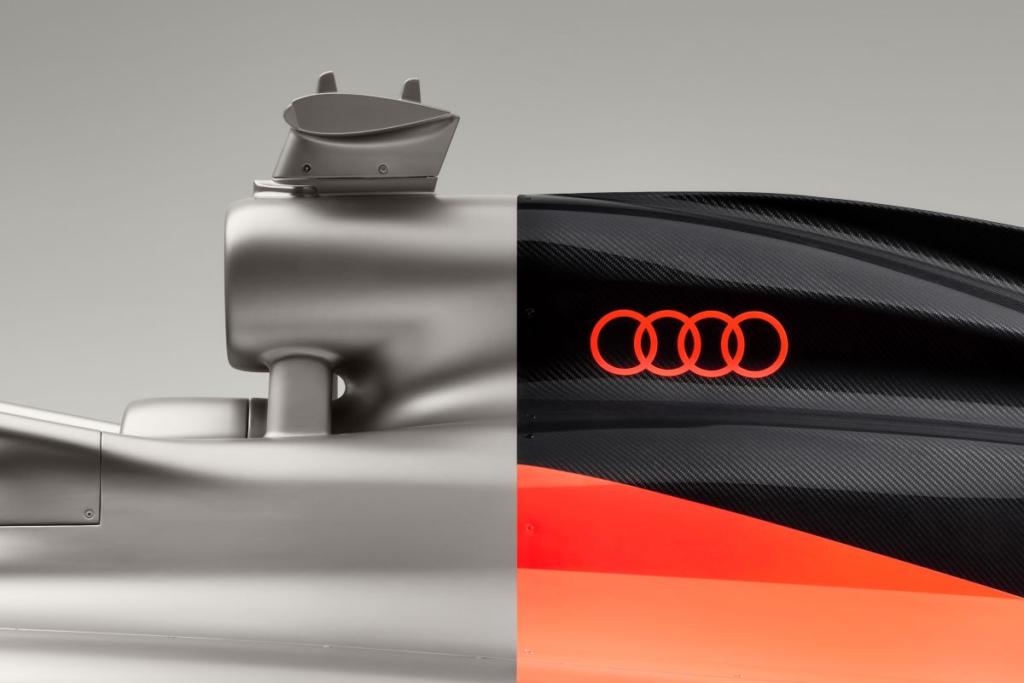
Audi has unveiled its new Formula 1 identity through the “Audi R26 Concept”, positioning the global motorsport platform as the launchpad for a sweeping brand transformation set to define the company from 2026 onwards. Revealed at the Audi Brand Experience Center in Munich, the “R26 Concept” offers the first look at the brand’s refreshed visual identity and design philosophy. The move marks Audi’s attempt to leverage Formula 1’s global reach — and its rapidly growing younger fanbase — as a catalyst for brand renewal. According to Audi CEO Gernot Döllner, entering Formula 1 is “the next chapter in the company’s renewal,” signalling more than just participation in the sport. He described the programme as a strategic driver for changing how Audi thinks, operates and presents itself globally, noting that the F1 project is intended to make the brand “leaner, faster and more innovative.” Don’t miss: From courts to feeds: How APAC fans are shaping the future of sport  Central to this transformation is Audi’s new design language, which the “R26 Concept” embodies in full. The concept showcases minimalist graphic surfaces and precise geometric cuts that align with four core principles: clear, technical, intelligent and emotional. It also introduces a new colour direction featuring titanium, carbon black and Audi red, alongside a notable design shift in which the brand will deploy red Audi rings exclusively for its Formula 1 presence. Chief creative officer Massimo Frascella said the F1 programme acts as the pioneer for the brand’s wider identity overhaul. “We are implementing a unifying design language that draws together every aspect of our organisation,” he said, adding that the Formula 1 project offers a globally visible testing ground for the refreshed aesthetic.  Beyond design, Audi is using its F1 entry as a strategic marketing platform. Formula 1’s reach, with more than 820 million fans and significant year-on-year growth among younger demographics, provides Audi with a high-impact stage to engage new customer segments. Jürgen Rittersberger, CFO of AUDI AG, said the sport’s popularity offers “the opportunity to attract new customers for our brand, especially in the younger target group.” The commercial ecosystem surrounding the team is also taking shape. Audi has already secured three major partners — adidas, bp and Revolut, the latter joining as future title partner — underscoring strong sponsorship confidence ahead of the 2026 debut. The acquisition of the Sauber Group earlier this year further strengthened the team’s structure and opened the door for investment from Qatar’s sovereign wealth fund. Internally, Audi is positioning the F1 programme as a blueprint for organisational change. The company aims to apply the fast-paced, efficiency-driven development cycles of Formula 1 to its broader operations, signaling a cultural shift intended to influence future product strategy and brand execution. Audi’s full Formula 1 team will make its public debut in January 2026, followed by testing in February and the brand’s first race appearance in March in Melbourne. Audi’s move comes at a time when sport has become one of the last true forms of appointment viewing, cutting through an increasingly fragmented media landscape. According to a recent report by We Are Social, live sport continues to attract massive, real-time audiences across Asia Pacific, fuelling billions of online conversations shaped by memes, TikTok-led discovery, creator commentary and the increasingly porous boundaries between sport, fashion, music and entertainment. Against this backdrop, Audi’s entry into Formula 1 positions the brand to tap into a fast-evolving, culture-driven fandom — using sport as a powerful platform for storytelling, relevance and long-term brand expression. This year alone, the Singapore Grand Prix generated more than 431,000 posts and reposts, reaching over two billion users worldwide. Brands such as DHL, Aramco and Singapore Airlines emerged as standout conversation drivers. Related articles:    Perplexity taps Lewis Hamilton and Eric André to bring AI to life in comedy short  Sports and concerts drive APAC travel as fans prioritise experiences  Beyond the track: How brands took pole position online at 2025 Formula 1 Singapore GP  source

Audi unveils new F1 Identity as part of 2026 global brand strategy Read More »

Apple and ISSEY MIYAKE stitch style into tech with new iPhone Pocket

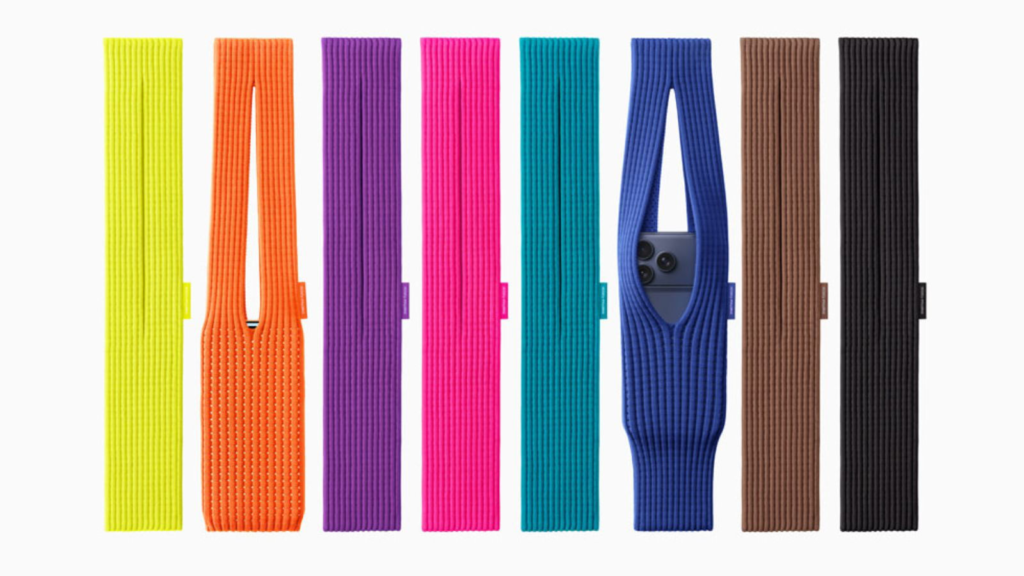
Apple has partnered with Japanese fashion house ISSEY MIYAKE to launch a new accessory dubbed “iPhone Pocket”, a 3D-knitted, pleated case that blends fashion and function. Inspired by ISSEY MIYAKE’s design philosophy of “a piece of cloth”, the iPhone Pocket reimagines how users carry their devices, combining Apple’s sleek minimalism with the brand’s textile craftsmanship. The special-edition accessory will be available from 14 November at select Apple Stores and on the apple website. Crafted in Japan, the iPhone Pocket features a ribbed open-knit design that adapts to fit any iPhone and small daily items. Its semi-transparent texture subtly reveals what’s inside, while allowing users to glimpse their screen without removing the phone. Don’t miss: From long queues to AI debates: Singaporeans react to Apple’s iPhone 17 launch The accessory can be handheld, tied to a bag, or worn across the body, with two strap styles, short and long, and a vibrant palette of up to eight colours. The short strap version comes in lemon, mandarin, purple, pink, peacock, sapphire, cinnamon, and black, while the long strap is available in sapphire, cinnamon, and black. The launch marks a deeper creative exchange between ISSEY MIYAKE’s research-driven design process and Apple’s product design ethos. The Apple Design Studio reportedly collaborated closely on both development and production. The iPhone Pocket retails at SG$219 for the short strap and SG$329 for the long strap, and will be available in markets including France, Greater China, Italy, Japan, Singapore, South Korea, the UK, and the US, just in time for the holiday season. Singapore shoppers can find it at Apple Orchard Road, while other flagship locations include Apple Ginza in Tokyo, Apple SoHo in New York City, and Apple Regent Street in London. “Apple and ISSEY MIYAKE share a design approach that celebrates craftsmanship, simplicity, and delight. This clever extra pocket exemplifies those ideas and is a natural accompaniment to our products,” said Molly Anderson, vice president of industrial design at Apple. She added, “The colour palette of iPhone Pocket was intentionally designed to mix and match with all our iPhone models and colours — allowing users to create their own personalised combination. Its recognisable silhouette offers a beautiful new way to carry your iPhone, AirPods, and favourite everyday items.” In tandem, Yoshiyuki Miyamae, design director of MIYAKE DESIGN STUDIO said, “The design of iPhone Pocket speaks to the bond between iPhone and its user, while keeping in mind that an Apple product is designed to be universal in aesthetic and versatile in use. iPhone Pocket explores the concept of ‘the joy of wearing iPhone in your own way.’ The simplicity of its design echoes what we practice at ISSEY MIYAKE — the idea of leaving things less defined to allow for possibilities and personal interpretation.” The launch comes as brands continue experimenting with creative crossovers that fuse design, storytelling, and nostalgia. In October, Malaysian footwear brand Christy Ng teamed up with Mamee Monster for a collection of bags inspired by the beloved blue mascot, transforming childhood memories into modern, wearable pieces that celebrate local culture and emotional connection. Meanwhile, Toblerone turned the runway into a “Diamond heist” at the Ayala Museum during Philippine Fashion Week, where designers Jaggy Glarino, Ram Silva, and Jerome Salaya Ang unveiled couture pieces inspired by the brand’s new Toblerone Truffles. Both campaigns highlight how brands are turning creative partnerships into cultural moments, connecting with audiences through emotion, craft, and a touch of whimsy. Related articles: AI is reshaping beauty, but can fashion keep its soul? Pos Malaysia steps into fashion with limited edition sneaker release      adidas and BAPE blur the lines between football and fashion source

Apple and ISSEY MIYAKE stitch style into tech with new iPhone Pocket Read More »

The new personalisation paradox: Can Meta balance AI chat relevance with privacy?

Recently, Meta has unveiled plans to enhance personalised user experiences by incorporating interactions with its generative AI (GenAI) features. Beginning 16 December this year, conversations with Meta AI—via text or voice—will influence the content and advertisements users encounter across platforms such as Facebook and Instagram. According to Meta, the goal is to deliver more relevant recommendations by better understanding individual interests and behaviours. “Soon, interactions with AIs will be another signal we use to improve people’s experience,” the company shared in a blog post. This push for personalisation aligns with modern consumer expectations. A McKinsey report highlights that 71% of consumers now expect companies to deliver tailored interactions, and 76% become frustrated when this doesn’t happen. Don’t miss: Meta to use AI chats to personalise ads and content across platforms A new channel to understand consumer intent With the upcoming shift toward AI interactions, new ways to understand consumer interests are being introduced, providing additional signals that help advertisers recognise intent more accurately, according to Kenzo Selby, managing director, Japan, GumGum. AI can help marketers interpret what topics, products, and ideas capture people’s attention at scale, giving brands a clearer sense of real-time intent without compromising privacy, he said. However, AI interactions should not be viewed as a replacement for first-party data, which is collected and managed directly by brands through their own channels with user consent, allowing for long-term accumulation and leverage, he added.  First-party data includes transactional and demographic information, as well as web analytics, behavioural data, and implied interests, but AI interactions are simply another data source that falls under behavioral data and implied interests, according to Jessica Liu, principal analyst at Forrester. “Marketers will continue to identify consumer intent using whichever of the aforementioned data categories are available to them.” Is Meta’s exclusion of sensitive topics enough for ethical targeting? While Meta has clarified that sensitive topics—such as religion, health, and sexual orientation—will not be used for ad targeting, experts are skeptical about the effectiveness of this safeguard. Stephanie Liu, senior analyst, Forrester pointed to Meta’s track record, citing multiple accusations of allowing illegal ad targeting based on age, gender, and race. She warned that simply excluding obvious keywords is a minimal approach, as advertisers could easily use proxy variables to target the same groups, whether intentionally or not. “Meta has faced multiple accusations of letting advertisers target ads illegally — things such as targeting job ads based on age or gender, or financial services ads based on race.” Back in July, a California jury has ruled against Meta in a privacy lawsuit concerning the alleged collection of sensitive user data from Flo, a period-tracking app. Flo Health assured users that their sensitive reproductive health data and responses to survey questions would remain private. However, that personal information was ultimately shared with companies such as Meta and Google through their respective advertising tools. Excluding sensitive topics is a responsible starting point; however, ethical targeting requires a deeper understanding of the audience’s mindset and environment, according to GumGum’s Selby. He cited the death of US political activist Charlie Kirk on 10 September as an example, noting that GumGum’s data reveals that attention on ads appearing on related pages dropped sharply to just 1.5 to two seconds, even as page views surged.  This shows that ads placed beside polarising stories not only risk brand safety but also lose effectiveness, despite increased traffic. Echoing his perspective, Stella Leung, SVP of Greater China and Korea at The Trade Desk, emphasised that AI interaction data is typically generated within large, closed platform ecosystems, making it inaccessible for brands to directly own or analyse. This creates a “black box” situation, complicating ethical considerations. Moving forward, the crucial challenge for brands will be to responsibly integrate signals from these closed platforms with their own first-party data, as well as third-party and retail media data within the open internet ecosystem, all while respecting user privacy, according to Leung.  How to balance AI-driven personalisation with consumer demands for privacy? Consumers today value personalisation but expect it to be handled with care and respect for privacy. According to GumGum Japan’s Digital Advertising Pulse Check, 81% of Japanese consumers find it important to protect their personal data while receiving ads, and 37% pay more attention to ads relevant to their interests.  However, many feel uneasy when ads appear overly personal; when confronted with ads that seem to know too much about their private lives, 31.9% become more determined to protect their data, while 17.9% question how brands obtained that information, according to the report.  To meet these expectations, brands must establish a personalisation vision grounded in customer needs and mutual value exchange to inform product updates, such as those implemented by Meta, according to Forrester’s Jessica Liu.  A significant technical hurdle, according to The Trade Desk’s Leung, is that AI interaction data is often locked within “closed platform ecosystems,” creating a “black box” for advertisers. She argued that the future challenge will be responsibly integrating signals from these closed platforms with a brand’s own first-party data in the open internet, all while respecting user privacy. Leung believes solutions such as Unified ID 2.0 demonstrate that personalized advertising can coexist with user control. The same principle, she said, must apply to AI: users should understand how their interaction data is used and have the ability to opt out. To balance AI-driven personalisation with privacy expectations, advertisers must understand the right mindset and connect at the right moment. AI can facilitate this by combining insights about audience mindset and attention, enabling brands to deliver meaningful experiences that respect privacy while maintaining impact, said GumGum’s Kenzo Selby.  When advertising aligns with what a person is actively thinking about, it becomes relevant without relying on personal or behavioural data. Related articles: Meta to use AI chats to personalise ads and content across platformsMeta partnership powers SM’s data-led future as new China mall nears openingMeta joins SPF and NCPC to beat scammers at their own game source

The new personalisation paradox: Can Meta balance AI chat relevance with privacy? Read More »

Report: 86% of APAC C-suite execs plan to increase AI investment, yet skill gap remains

Accenture’s latest Pulse of Change survey has revealed APAC business leaders’ strong confidence in AI – and a widening gap in workforce readiness. According to the report, 86% of APAC C-suite executives plan to increase AI investment, undeterred by economic uncertainty. Yet, over half admit that the pace at which AI is advancing is making it difficult to keep up, as fewer than half (41%) are prioritising employee upskilling and reskilling. The findings, based on responses from 700 C-suite leaders and 713 employees across the region, suggest that while executives are bullish on AI’s potential, employees are being left to bridge the skills gap on their own. Don’t miss: Marketers to slash display spend by 30% as AI and CTV redefine engagement: Forrester AI becomes a teammate, not just a tool Both leaders and employees agree that AI is no longer just a productivity tool – it is fast becoming a collaborator in daily work. More than half of employees (55%) say they turn to AI first for support with tasks, particularly in data analysis (51%), learning and development, and research. However, this enthusiasm for AI adoption is tempered by concerns about preparedness. Nearly three-quarters (73%) of employees say AI is evolving faster than their organisation’s ability to train them. Still, optimism remains strong. Among the surveyed employees, 82% trust their organisation to help them stay relevant in an AI-driven future, even if only 48% report having a moderate understanding of how generative AI creates value. Across the region, executives are confident that their businesses are ready to harness AI. Some 58% report productivity gains in IT and tech functions, followed by operations (43%) and R&D (41%). But fewer are translating that progress into people strategies.  “Southeast Asia is operating in a time of continuous disruption, where change is now the only constant. Across the region, we’re seeing strong momentum behind AI investments, but enthusiasm alone doesn’t drive impact. Many leaders are still underinvesting in workforce training, creating a readiness gap that limits AI’s true potential. When employees show a willingness to adapt, it’s not just a signal – it’s an opportunity to build the skills needed to fully harness AI,” said Anoop Sagoo, CEO, Southeast Asia, Accenture. Agentic AI gains ground The next frontier of adoption, agentic AI – systems that act, decide, and collaborate with minimal human input – is already being piloted across APAC. Some 83% of C-suite leaders believe their technology landscape is ready for AI agents, while 63% are actively investing in this technology and 57% have begun deployment. Among employees, uptake remains lower, with 45% regularly using AI agents. Yet, receptiveness is strikingly high: 83% are comfortable delegating routine tasks to AI agents, and 82% believe these tools can free them to focus on more creative or strategic work. Indonesia’s turning point Jayant Bhargava, country managing director, Indonesia at Accenture, said the findings mirror the transformation underway in Indonesia’s economy.  “The Pulse of Change findings reflect what we’re seeing in Indonesia – the pace of reinvention is accelerating, driven by AI, automation, and digital transformation. Too often, organisations focus on deploying technology without fully enabling people. True transformation happens when human capability and intelligent technology advance together – when culture, skills, and processes evolve alongside innovation,” Bhargava said. He added that Indonesia is now entering a pivotal phase of AI adoption. “With its dynamic digital economy, thriving startup ecosystem, and strong government commitment through initiatives like the National AI Strategy, the country is building the foundation for responsible and scalable AI growth. By leveraging its young talent base and expanding digital infrastructure, Indonesia is well-positioned to drive transformation across industries.” The report highlights a clear mismatch between ambition and enablement. Employees are embracing AI tools and even pursuing self-learning through online courses (57%) and social media (52%), while many organisations still lag in offering structured training. Accenture’s findings signal that for the region to fully capitalise on AI’s promise, leaders must invest not only in systems but in skills – ensuring that human capability evolves alongside technological advancement. Related articles:Getty Images suffers partial defeat in UK copyright lawsuit against Stability AICoca-Cola’s 2025 AI-driven holiday ad draws mixed reactionsReport: Sovereign AI could add US$140b to Indonesia’s GDP by 2030 source

Report: 86% of APAC C-suite execs plan to increase AI investment, yet skill gap remains Read More »

OpenAI pushes back against order to hand over millions of ChatGPT convos

OpenAI is pushing back against a US court order requiring it to hand over 20 million anonymised ChatGPT conversations to The New York Times and other publishers as part of an ongoing copyright infringement lawsuit. In a filing on Wednesday (13 November), the company reportedly asked a federal judge in New York to reverse the order, arguing that producing the chat logs would expose confidential user information. OpenAI claimed that “99.99%” of the transcripts have no connection to the copyright claims raised in the case. OpenAI warned in its filing that the order could mean any ChatGPT user from the past three years might see their personal conversations handed over to The New York Times for review as part of the case, according to Reuters.  Don’t miss: OpenAI’s APAC comms head on leveraging ChatGPT as a strategic partner The New York Times and other outlets reportedly maintain that the data is crucial to determine whether ChatGPT reproduced their copyrighted material and to challenge OpenAI’s accusation that they “hacked” the chatbot’s responses to create evidence. The lawsuit alleges OpenAI unlawfully used the publishers’ articles to train its large language models. Magistrate Judge Ona Wang, who previously ruled in favour of disclosure, reportedly said the chat data would undergo “exhaustive de-identification” and other safeguards to protect user privacy. OpenAI faces a Friday deadline to comply with the order. In a blog post, Dane Stuckey, chief information security officer at OpenAI, condemned the court order, describing it as “an invasion of user privacy”. “The New York Times is demanding that we turn over 20 million of your private ChatGPT conversations,” he said. “This demand disregards long-standing privacy protections, breaks with common-sense security practices, and would force us to turn over tens of millions of highly personal conversations from people who have no connection to The Times’ baseless lawsuit.” Stuckey said the company had previously resisted broader demands from The New York Times to access 1.4 billion chat logs and to restrict users’ ability to delete private conversations. He added that OpenAI had proposed “privacy-preserving alternatives”, such as targeted searches for chats containing NYT text, but those were rejected by the publisher. The company also reiterated that its enterprise, education, business, and API customers are not affected by the court order, which applies only to a random sample of consumer ChatGPT conversations from December 2022 to November 2024. According to Reuters, a New York Times spokesperson countered that OpenAI’s post misrepresented the situation, noting that user privacy would remain protected since the court had only ordered the release of anonymised chat samples under a legal protective order. MARKETING-INTERACTIVE has reached out for more information.  The OpenAI lawsuit is part of a growing wave of legal challenges testing how generative AI companies source data to train their systems, and where copyright boundaries lie. Earlier this month, the long-running legal clash between Getty Images and Stability AI became one of the first major test cases for copyright in the generative AI era. According to reports, Getty largely lost its London lawsuit accusing Stability AI of unlawfully using its copyrighted photos to train the image generator Stable Diffusion. Judge Joanna Smith ruled that Getty succeeded only “in part” on trademark infringement, specifically in relation to Getty watermarks reproduced by users of Stable Diffusion, while dismissing broader copyright claims. The case underscored how courts are still grappling with whether training AI models on copyrighted works constitutes infringement, an issue now central to OpenAI’s own legal fight with The New York Times. Related articles:  How brands can stay relevant as ChatGPT Atlas redefines discovery     Salesforce deepens ties with OpenAI, brings enterprise data to ChatGPT    OpenAI turns ChatGPT into a personal shopping assistant    source

OpenAI pushes back against order to hand over millions of ChatGPT convos Read More »

Finding the balance between human behaviour, AI, and creativity

This post is sponsored by Ampersand Advisory. There is a growing belief that humans have quietly surrendered their decision-making to machines. Algorithms decide which headlines we read, which songs we hear, and which of our friends’ updates reach us first. In marketing, artificial intelligence filters and prioritises every step of the consumer journey: what we search for, watch, and buy. This raises an important question. Have we handed over our choices to algorithms or do we still retain the freedom to decide for ourselves? In boardrooms and agencies, this tension plays out every day. Media teams rely on automated bidding systems, eCommerce platforms personalise storefronts in real time, and recommendation engines claim to know our preferences better than we do. Every marketing interaction feels precise, predictive, and perfectly timed. Yet beneath this appearance of control lies a paradox. For all its analytical power, AI struggles to grasp the emotional, situational, and often contradictory ways people think and act. We have all experienced moments when the machine’s version of relevance misses the human point. Buy a suitcase online and continue to see luggage ads for weeks afterward. The algorithm registers your purchase, but fails to understand that the journey is complete. Streaming services make the same mistake. Watch a single true-crime documentary and your screen fills with grisly recommendations, even when your next search is for comedy. AI equates attention with obsession and overlooks the fluidity of human moods. Such examples reveal an essential truth: algorithms can mirror behaviour patterns, yet they often fail to interpret motivation or emotion. The illusion of inevitability Many marketers speak of AI as if it governs the marketplace. In reality, algorithms optimise rather than decide. They process what has already happened and estimate what might occur next. Humans still control the final action: to click, to buy, or to ignore. The distinction between influence and choice remains meaningful. This human independence surfaces constantly: revisiting old songs that platforms forget, choosing independent artisans over algorithmically ranked brands or travelling to destinations absent from trending lists. These acts of independence – spontaneous, emotional, and deeply human – keep the decision-making process alive. A case for human creativity Some of the most effective campaigns succeed precisely because they embrace unpredictability. Consider the renewed interest in analogue forms: vinyl records, film photography, and handwritten letters. No predictive model could have anticipated this return. Their charm lies in texture, nostalgia, and imperfection – qualities beyond data. Marketing stories that touch hearts work the same way. Thailand’s witty humour, Malaysia’s emotional festive films or Brooke Bond’s inclusive storytelling reach people because they speak from human insights rather than statistical correlation. Even within AI systems, human direction continues to shape the outcome. People define the model’s parameters, select the data, and interpret success. Values and biases remain embedded within every digital framework. Creativity, empathy and judgement still drive how technology serves us. The Enfagrow A+ MindPro example Few categories combine emotion and competition as intensely as parenting. For Enfagrow A+ MindPro, the challenge during Mother’s Day was to stand apart in a market overflowing with promotions and sentiment. The brand chose to celebrate the sound of early childhood – a toddler’s laughter and babble, transforming it into a musical tribute. Mothers were invited to record their children’s voices, which were combined through AI sound synthesis to create a song. More than 240 recordings arrived from Malaysia, and participation in Singapore was five times higher than projected. The final piece, composed entirely of these joyful sounds, was shared across social media and radio. The campaign generated over two million views, a 3.5-fold increase in positive sentiment, and a 7% rise in sales in both markets. It also entered the Malaysia and Singapore Books of Records for featuring the most toddlers’ voices in an AI-generated composition. Technology handled the orchestration, but emotion powered the experience. The mothers became collaborators in creativity. Their involvement transformed the initiative from a marketing campaign into an act of collective expression. The Enfagrow example demonstrates how machines can extend human imagination when guided by empathy and purpose. AI enhanced the story; it did not define it. The limits of automation When brands treat AI as a shortcut to creativity, the results can feel lifeless. A few festive films in India that used AI-generated visuals, such as the Apsara Ice Cream Diwali ad, drew criticism for lacking emotional depth. Even established global names have faced backlash. Coca-Cola’s recent AI-created Christmas ad was judged competent, yet soulless, missing the warmth that had long defined its storytelling. Automation can refine production and improve efficiency, but it cannot generate human connection on its own. Creativity needs context, memory and feeling. These are qualities that no dataset can reproduce. The need for mindful design and human filter A more sustainable path lies in collaboration, with machines handling the scale and speed of data, and humans contributing judgement, ethics and imagination. When an AI engine suggests product variants or creative routes, strategists must still decide which ones align with purpose and resonate with a lived experience. True intelligence depends on discernment. The ability to ask why remains the human advantage that technology cannot replace. Every algorithm ultimately meets its boundary in the person it seeks to influence. Each small action reaffirms our control. AI can flood screens with options, but meaning arises only when people choose what feels authentic to them. The rise of artificial intelligence does not erase human creativity; it challenges us to use it wisely. The future of marketing will favour those who balance data with empathy, precision with imagination, and scale with soul. Technology can reach audiences with remarkable efficiency. Empathy ensures the message lands with warmth and purpose. The most powerful algorithm remains the one that resides in the human mind: curious, unpredictable, and endlessly creative.

Finding the balance between human behaviour, AI, and creativity Read More »

How HK menswear DETERMINANT is taking on fast-fashion giants in Singapore

Hong Kong-based menswear brand DETERMINANT is making its first standalone foray into Singapore with a store at Plaza Singapura, aiming to carve a niche in a market long dominated by fast-fashion favourites. The 1,300-square-foot space combines precision, performance, and sustainability into a retail experience designed for the modern professional, reflecting the brand’s ambition to do more than just sell shirts. “Singapore has always been a market that values quality, innovation, and purpose — values that are at the heart of DETERMINANT,” said Clement Chan, general manager for DETERMINANT APAC in conversation with MARKETING-INTERACTIVE. “We wanted to create more than just a retail space. It’s a destination where men can explore the science behind their shirts, discover their perfect fit, and build a wardrobe that supports them from boardroom to weekend. True confidence, we believe, begins with precision, comfort, and purpose.” DETERMINANT’s choice of Singapore was strategic. The city is a hub for style-conscious professionals who seek both functionality and aesthetics in their wardrobes. Chan noted that Plaza Singapura, with its mix of busy office-goers and family-oriented shoppers, mirrors the profile of a “DETERMINANT man” — someone who moves with clarity and precision and values clothing that performs across every part of life.  Don’t miss: DETERMINANT elevates retail experience with revamped Hong Kong flagship store  The store itself is designed to feel like a wardrobe workshop. Visitors can explore the engineering behind each shirt, receive personalised fit consultations, and engage with interactive displays that showcase the technology and craftsmanship involved. Modular racks, geometric columns, and prefabricated systems create a clean, orderly environment, while sustainable touches, such as recycled paneco boards and cotton-based performance fabrics, reflect the brand’s commitment to circular design. At the centre of the store, the water cube ensemble installation evokes the rhythm of ocean waves, a visual representation of continuous progress and precision. All of which are values that the brand lives by in every product. Carving a niche in a crowded market In a market crowded with mass-market and fast-fashion options, DETERMINANT has made personalisation, performance, and purpose its key differentiators. Its proprietary Repel+ technology allows shirts to repel water, oil, and stains while remaining breathable and comfortable, giving it a practical edge over synthetic-heavy alternatives. But the brand’s real strength lies in its commitment to fit: offering 61 sizes ensures that every customer can find a shirt tailored to their body, a level of personalisation rarely found in Singapore’s menswear landscape. “Together, these elements allow DETERMINANT to carve a niche as Asia’s leading shirt expert focused on performance, sustainability, and timeless design,” Chan said. The launch also coincides with the brand’s “The 61S [61 sizes]” campaign, a creative initiative that celebrates individuality through design and fit. Featuring personalities Jonathan Chua, Paul Foster, and Josephus Tan, the campaign highlights stories of resilience, reinvention, and authenticity. “Through their journeys, the campaign underscores the message that success, no matter how you define it, begins with the right fit,” Chan explained. The campaign reinforces the idea that clothing can be both practical and empowering, helping men present their best selves without compromising on style or purpose. DETERMINANT has also introduced the ‘Bespoke photoshoot’ experience to mark the store opening. Running from 5 to 16 November 2025, shoppers who spend over SG$150 can receive professional headshots with basic styling. The activation goes beyond promotion, reflecting the brand’s belief that confidence begins with clarity, precision, and self-expression, helping men translate their wardrobe choices into how they present themselves professionally and personally. From engineered shirts to sustainable materials and immersive experiences, DETERMINANT is staking its claim in Singapore’s menswear scene as a brand that prioritises precision over volume, craftsmanship over mass production, and individuality over uniformity. It’s a measured but bold approach: one that challenges fast-fashion norms while offering a thoughtful alternative for men who care about fit, function, and purpose. Related articles:   DETERMINANT and Project Melo turn T-shirt sales into AI training  DETERMINANT elevates style with Nicholas Tse in a journey of clarity   HK men’s clothing brand DETERMINANT redefines sizing with 61 options  source

How HK menswear DETERMINANT is taking on fast-fashion giants in Singapore Read More »

NOVI Health urges Singaporeans to take charge of their diabetes risk

NOVI Health has launched its latest initiative, “It starts with one: Taking charge this world diabetes month,” a campaign aimed at raising awareness, promoting healthy living, and supporting the diabetes community in Singapore. The campaign, which runs throughout November, will feature a mix of educational events, digital content, and community activities designed to help Singaporeans take charge of their metabolic health. Don’t miss: Novi Health nabs ex-Flash Coffee CMO as head of growth At the heart of the initiative is a live webinar titled “Thriving with diabetes at work and beyond,” led by Dr Sue-Anne Toh, founder, CEO and medical director of NOVI Health. A senior consultant in endocrinology with nearly two decades of experience, Dr Toh will share practical insights on managing diabetes and fostering healthier, more supportive workplaces. Beyond the webinar, NOVI Health will launch a digital content series featuring doctor-verified videos on diabetes prevention, a “This vs That” nutrition guide, and a healthy recipe showcase led by its in-house dietitians. The content aims to make preventive care more accessible and empower individuals to make sustainable lifestyle changes. As part of its community outreach, NOVI Health doctors will also join the World Diabetes Day Festival at Toa Payoh HDB Mall on 16 November, offering free lifestyle consultations to help attendees assess and manage their diabetes risk. “At NOVI Health, we see firsthand how early intervention changes lives. Diabetes isn’t an overnight diagnosis — it’s a gradual process. Through this campaign, we want Singaporeans to know that prevention can start today, with one choice, one meal, one step,” said Dr Toh. The campaign will culminate with the Diabetes Walkathon 2025 on 22 November, a 5km fundraising event in support of the Diabetes Society of Singapore. Proceeds from the walkathon will go towards boosting diabetes awareness and funding community programmes for those living with the condition. With “It starts with one,” NOVI Health hopes to spark small, actionable changes that collectively build a healthier and more diabetes-aware Singapore. The campaign comes after the health tech brand appointed former Flash Coffee chief marketing officer Tempest-Jody Larrichia as its head of growth to cement its position as a leading destination in the space. Larrichia’s immediate focus in the new role will be a full brand alignment — spanning social, advertising, community, partnerships, copy, website, and the overall look and feel of NOVI’s clinics. This extends to client-facing experiences as well, with efforts to unify communications, customer service, and packaging, Larrichia told MARKETING-INTERACTIVE in August.  At the time, Larrichia teased a campaign in Q3, as well as initiatives with the likes of Vogue, Rekoop and Avenue.  Related articles:   Merz Aesthetics flips medical beauty from correction to confidence  Mount Elizabeth Royal Square highlights a day in the life of its patients in new campaign Luckin Coffee and IMH turn art into action for mental health awareness  source

NOVI Health urges Singaporeans to take charge of their diabetes risk Read More »