marketing interactive

Lenovo Singapore taps Fandi Ahmad as World Cup fever builds

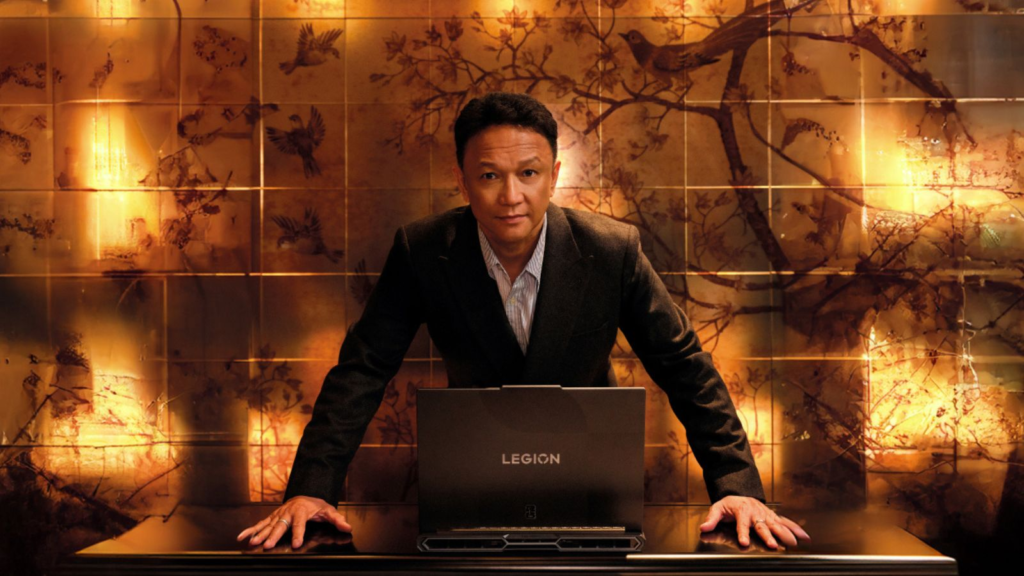
Lenovo Singapore has appointed local football icon Fandi Ahmad as its official brand ambassador, as the brand ramps up its FIFA World Cup 2026 campaign with fan experiences, creator-led activations and an AI-powered sports coaching pilot. The move marks Lenovo Singapore’s local rollout of its role as the official technology partner of the FIFA World Cup 2026, with the brand aiming to connect football, technology and youth culture through a series of on-ground and community-led initiatives. As part of the partnership, Fandi will front Lenovo Singapore’s upcoming marketing and community campaigns in the lead-up to the tournament. The collaboration is centred on the idea that technology can help people perform better, stay connected and pursue their ambitions. Don’t miss: Why the World Cup’s biggest screen may no longer be the only one that matters  Speaking on the partnership, Fandi said that Lenovo’s commitment to progress aligns with his own values and the spirit of football.  He added that Lenovo’s technology represents “positive evolution” by creating adaptable tools that connect people, while encouraging the next generation of football fans and players in Singapore to dream big, push their limits, and welcome both sports and technology into their journey. As Lenovo’s official brand ambassador, Fandi will officiate the launch of “Lenovo’s Re:Match” experience store alongside his son and Lenovo FIFA Creator Irfan Fandi.  The experience store forms part of “X _SCAPE: Sports Edition”, which is being held alongside Singapore’s Youth Month celebrations. Running until 31 July 2026, “Lenovo Re:Match” is positioned as a tech-and-football experiential activation that showcases how Lenovo’s devices, services and solutions are supporting the tournament, from fan engagement to operations intelligence. Fandi will also appear at The Kickback’s meet-and-greet at *SCAPE, where he will share insights from his sporting career in a moderated session focused on resilience, career pathways and experiences in football. The session will include an open-floor Q&A, followed by a ceremonial kick-off for The Kickback’s 3v3 Futsal final matches. In addition, Fandi will host “Breakfast with the legends” on 18 July, from 8.30am to 10.30am at Adventure Cove Waterpark, alongside former England footballer Michael Owen. Fans will be able to hear from both football personalities, take photos and get memorabilia signed. Beyond *SCAPE, Lenovo is rolling out immersive fan engagement activities across live screening hubs at CHIJMES and Capitol Singapore from 11 June to 20 July. At the CHIJMES mini lawn and Arcade @ The Capitol Kempinski, fans can participate in Lenovo’s AI photobooth, which transforms user photos into personalised digital footballer avatars. Participants can select their favourite team jersey and download their AI-generated avatar via QR code. Lenovo will also power live match screenings at both lifestyle destinations. CHIJMES’ main lawn will feature a 360-inch screen, while screenings at Arcade @ The Capitol Kempinski and the outdoor plaza will be available daily, with outdoor plaza screenings running from 9am to 10pm. To further drive engagement, Lenovo is sponsoring prizes for the “Spend & score” campaign across CHIJMES and Capitol Singapore. Visitors who spend a minimum of SG$40 at either location can upload their receipts via QR code to play an instant-reward digital football game. All participants will automatically qualify for a grand draw, with prizes including the Lenovo yoga slim 7i ultra FIFA World Cup 26 edition laptop. During the knockout stages, fans can also earn 10X bonus chances by correctly predicting the tournament champion. Lenovo is also extending its football and lifestyle presence to WEAVE, Resorts World Sentosa, where it is supporting the Hypebeast Cup Singapore as an official technology partner. The four-week experience runs from 22 June to 19 July and includes a three-week EA SPORTS FC tournament, prizes such as the PlayStation 5 Pro, and the debut of the exclusive Hypebeast Cup Singapore 2026 jersey. Furthermore, a key part of Lenovo Singapore’s campaign is its Lenovo AI Foundry x ITE collaboration, a year-long applied technology pilot with the Institute of Technical Education (ITE).  The pilot uses motion-capture sensors and AI prediction models to support the development of junior football coaches. It will draw on Fandi’s coaching experience and involve students from ITE College Central’s School of AI and School of Sports Science, who will contribute to the project as part of their industry attachment. According to Lenovo, the initiative is the first of several sports-sector collaborations it plans to pursue locally. The company said the project reflects its ambition to use its FIFA World Cup 2026 technology partnership as a platform for deeper engagement with Singapore’s sports development ecosystem. Nigel Lee, general manager at Lenovo Singapore, said Fandi’s appointment reflects the brand’s focus on resilience, growth and empowerment.  “Fandi Ahmad is an icon who has spent a lifetime inspiring generations of Singaporeans both on and off the pitch, and we are proud to welcome him as Lenovo Singapore’s official brand ambassador,” said Lee. He added that the partnership, alongside the *SCAPE activation and ITE pilot, reflects Lenovo’s commitment to supporting Singapore’s sports development ecosystem with the right tools and smarter technology to learn, connect and grow.  Lee also said the campaign brings Lenovo’s global FIFA partnership closer to local audiences: “As the excitement of the FIFA World Cup 2026 takes over the world, Lenovo Singapore is proud to anchor that global energy right here in Singapore through meaningful local connections.”  “Smarter AI for All truly comes to life when it intersects with human passion, and football is undeniably one of Singapore’s most beloved sports,” he added.  This local push builds on Lenovo’s wider football marketing strategy, following its recently announced global partnership with David Beckham as the technology company deepens its focus on football and AI-led innovation. As ambassador, Beckham fronts Lenovo’s FIFA World Cup 2026 global campaign and supports the brand’s work in showcasing sports-focused AI solutions, from performance analytics and real-time digital avatars to enterprise knowledge assistants for coaches, players and analysts. Photo courtesy of AUGUSTMAN Singapore, shot by Stefan Khoo.  Related articles:   David Beckham bends Lenovo’s AI capabilities to the max Scoring big: How HK brands can tap into World

Lenovo Singapore taps Fandi Ahmad as World Cup fever builds Read More »

Herbal tea meets football: Can Wang Lao Ji and Erling Haaland 'beat the heat' worldwide?

The recent appointment of Norwegian football superstar Erling Haaland as global brand ambassador for WALOVI, the international sub-brand of Wang Lao Ji (王老吉), has generated significant global buzz. The 195-year-old Chinese herbal tea brand, traditionally famous for its “heat-reducing” properties, surprised netizens when Haaland appeared across Instagram, Facebook, and Weibo greeting fans in Mandarin. The football icon concluded the video clip with the brand’s classic slogan, “Afraid of excessive internal heat? Drink Wang Lao Ji.”(怕上火,喝王老吉。) In tandem with the announcement, Haaland and Wang Lao Ji released a 30-second video featuring an adaptation of the Manchester City fan anthem dedicated to the striker. The rewritten, branded lyrics encouraged consumers to drink WALOVI during the summer heat, at barbecues, or while watching football.  Don’t miss: FIFA’s image gets red card as World Cup controversy kicks off early  Data from media intelligence firm CARMA revealed that the announcement drove a 214.6% surge in brand mentions, peaking at 50 million on the day of launch. The video garnered over 8.91 million views within its first 24 hours. While domestic Chinese netizens largely embraced the campaign, some labelled the catchy lyric rewrite as “brainwashing.” On international platforms such as Instagram, users expressed surprise, with several admitting they initially mistook Haaland’s Mandarin speech for an AI-generated deepfake. Despite the shock value, Dennis Wu, general manager, CARMA, noted that sentiment remained over 90% positive, heavily driven by praise for Haaland’s linguistic efforts and trending keywords such as “excessive internal heat” (上火), “barbecue,”(燒烤) and “culture” (文化). From Chinese remedy to sports recovery  Industry players MARKETING-INTERACTIVE spoke to deem the partnership to be bold and disruptive. Sunny Yeung, managing director and co-founder, Butter Creative said that the “low risk of dilution” made the partnership a success. While Western consumers may not know herbal tea, Haaland’s endorsement sparks instant curiosity and credibility, breaking cultural barriers faster than traditional ads as the ultimate international bridge. He said: For the domestic market, the sheer ‘shock value’ of seeing a Western football titan such as Haaland speak Mandarin and recite a classic heritage slogan creates massive viral traction. Meanwhile, Rudi Leung, director and founder, Hungry Digital said the interesting part aspect of the campaign isn’t just that Haaland spoke Mandarin in the ad, but that he had to sell a very Chinese idea – “heaty” (上火) – a concept rooted in traditional Chinese medicine that is largely unfamiliar to Western consumers. According to Leung, Wang Lao Ji’s real challenge in going after the global market is translating a traditional Chinese wellness concept such as balance, recovery, refreshment and plant-based wellness, into universal terms that people everywhere can understand.  Echoing his sentiment is Phoebe Chan, regional creative director, BBDO Hong Kong who said that the campaign is a smart first step to pivot consumption occasions globally by translating Chinese wellness logic into universal sports logic. Instead of explaining “internal fire”, it reframes “cooling down” as athletic recovery, just as Haaland mentioned in the ad.  “Fire from hotpot isn’t something Western athletes would relate to, but the need to reset after pushing your body to extreme temperatures especially in the sun is,” said Chan. She added:  By positioning the drink as a botanical ice bath for elite performance, Wang Lao Ji transforms a traditional post-dinner remedy into a post-match reset tool. However, with wellness ideologies taking over both east and west, the concept of “internal heat” may be more familiar to Western consumers today than years prior. “The gap is smaller than people assume,” said Jacopo Pesavento, founder and CEO of Branding Records. This is largely because in recent times, Western sporting athletes have been moving in the direction of herbal and holistic remedies. For example, elite athletes now drink beetroot juice, cherry concentrate, and herbal blends. This would have sounded strange five years ago, said Pesavento. Haaland’s job is to make a recipe from 1828 feel relevant to performance. When one of the fittest athletes in world football drinks it, you stop asking whether it works. Fight the giants or start a new game? The campaign gives WALOVI a stronger foothold with global sports audiences, broadening its narrative from health and heritage to one fuelled by celebrity endorsement and viral momentum. According to Michael Ashton, chief operating officer of Capel Group, this comes as food and beverage brands increasingly look beyond taste and convenience, leaning into functional and health-driven benefits to stay relevant. However, Wang Lao Ji should not position itself against mainstream energy and sports drinks, cautioned Ashton. Instead, it should carve out a completely new “healthy, functional wellness” category, positioning itself as a drink for cooling and recovery with Chinese herbal roots. Industry players also noted that Wang Lao Ji’s opportunity lies in creating a new space: a modern herbal wellness drink rooted in Chinese cultural depth.  This could come in the form of positioning itself as a lifestyle beverage tied to the culture of sports enjoyment.  “By carving out a niche as a ‘healthy, natural refreshment for sports lifestyle,’ it can capture both the health-conscious consumer and the global football fanbase without trying to replicate Red Bull or Gatorade,” said Butter Creative’s Yeung. In addition, traditional energy drinks tend to rely on synthetic ingredients, neon-led packaging and high-energy branding built around hype and short-term energy spikes. Wang Lao Ji, however, has an opportunity to disrupt the category as a plant-based alternative, bypassing the crowded pre-game energy market and more aggressively owning the recovery space, said BBDO’s Chan.  “Now is the best time to weaponise its product heritage, as Western consumers become increasingly obsessed with Eastern botanical wellness,” she explained.  Branding Records’ Pesavento agrees, adding that WALOVI should position itself inside functional wellness, a space where kombucha and coconut water have already done years of consumer education, as well as own the natural, caffeine-free corner of it. Inventing a brand-new category from scratch is just as risky, as educating consumers from zero takes decades and significant money.  The strongest positioning usually isn’t invented in a boardroom. You dig it out of what the brand has genuinely been

Herbal tea meets football: Can Wang Lao Ji and Erling Haaland 'beat the heat' worldwide? Read More »

Rexona takes the World Cup hype train, literally

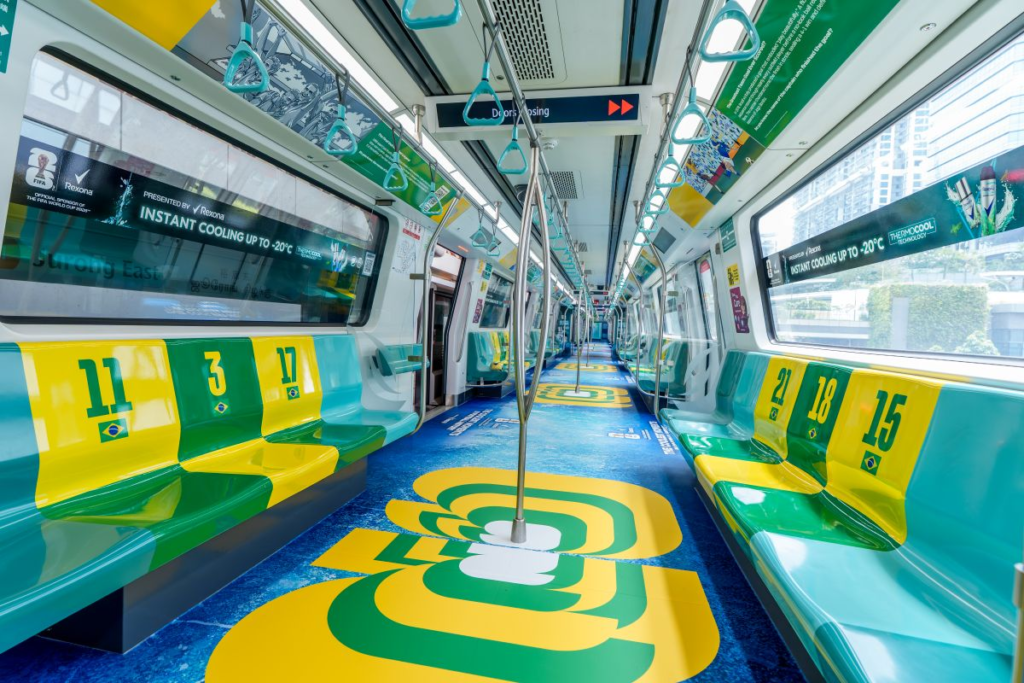
Rexona is bringing football fever onto Singapore’s MRT network with the launch of the “Coolest football moments museum train”, an immersive six-cabin moving gallery created in celebration of its FIFA World Cup 2026 sponsorship. Running from 10 June to 19 July 2026, the activation, created in collaboration with Stellar Ace, will operate as a regular MRT service along the East-West and North-South lines, with no fixed schedule. Commuters may encounter the train at any station, turning an everyday journey into a football-themed brand experience. The campaign is led by Rexona men arctic rush, the brand’s new anti-perspirant range designed to deliver instant cooling of up to -20°C. Centred on the idea of “keeping cool under pressure”, the museum train showcases some of football’s most composed and memorable moments, linking the sport’s high-stakes intensity with Rexona’s cooling proposition. Don’t miss: The biggest football rivalry this season might be in your neighbourhood  The MRT network was chosen for the activation because of its daily reach and relevance, allowing the brand to connect with commuters as part of their everyday journeys across Singapore, according to Stellar Ace. The media arm of SMRT said the intent, together with Rexona, was to bring the energy, emotion and excitement of football closer to fans in a way that felt accessible and naturally integrated into the daily commute. Transit spaces such as train cabins, platforms and stations offer high-dwell and high-visibility environments where brands can create memorable moments beyond traditional advertising, Stellar Ace added. For the activation, the train has been transformed into a six-cabin editorial-style museum. Five cabins spotlight footballing nations with strong World Cup heritage — Brazil, Germany, Argentina, France and Spain — with each cabin featuring country-inspired visuals, themed seating, frozen-effect flooring, illustrated panels and stories of comebacks, last-minute victories and defining moments of composure. The sixth cabin pays tribute to Singapore’s footballing spirit, highlighting the passion of local fans and the country’s ongoing football journey. The football-themed museum on rail concept train was designed to create a memorable experience for commuters, Stellar Ace said. Spanning six train cabins, the moving museum incorporates interactive touchpoints across all in-train panels to invite commuters to test their football knowledge, spark conversations and create moments of discovery. As part of the campaign, Rexona is also rolling out a nationwide trivia challenge. Commuters can scan a QR code onboard to take part in football trivia and receive a personal “Chill factor” score. Participants can submit their results for a chance to win tickets to watch the FIFA World Cup 2026, as well as Rexona products and merchandise. They are also encouraged to share their scores on social media. Shermaine Chen, head of marketing, Unilever Singapore, said the campaign brings to life the composure that defines football’s greatest moments.  “The greatest moments in football have always come down to keeping cool when it matters most. As official sponsor of the FIFA World Cup 2026, Rexona is bringing that spirit to life on Singapore’s MRT, celebrating composure in the beautiful game, paying tribute to our own football story, and delivering the cool, on and off the pitch,” said Chen. In tandem, Tony Heng, president, Stellar Ace, said “By bringing iconic football moments directly to commuters, Stellar Ace is transforming everyday journeys into opportunities for discovery, engagement and celebration.” “As excitement builds up, we hope this gives fans and commuters alike a chance to experience the energy, emotion and enduring appeal of football in a fresh and memorable way,” he added.  For Stellar Ace and Rexona, success will be measured through a combination of reach, engagement and brand impact. Stellar Ace said it will gather data points from commuters through KOL feedback and a brand lift study to provide deeper insights into key brand metrics such as awareness, recall, message association, consideration and overall campaign resonance. While the MRT network provides audience scale and visibility, Stellar Ace said the true measure of success lies in how effectively the campaign resonates with commuters and enhances their journey experience. The activation also supports the launch of Rexona men arctic rush, which features the brand’s latest cooling technology. Stellar Ace said it sees strong potential for more immersive and themed train experiences in the future, adding that it is constantly exploring new and creative ways to engage commuters across the MRT transit network. Rexona is not the only brand in Singapore going all out for the FIFA World Cup 2026. Lenovo Singapore has appointed local football icon Fandi Ahmad as its official brand ambassador as it ramps up its own World Cup push, tied to its role as official technology partner of the tournament. The brand is rolling out a series of fan experiences, creator-led activations and community initiatives, including the “Lenovo Re:Match” experience store at *SCAPE, appearances by Fandi and Irfan Fandi, live screening hubs at CHIJMES and Capitol Singapore, an AI photobooth that turns fans into digital footballer avatars, and prize-led engagement mechanics such as its “Spend & score” campaign. Lenovo is also extending its football presence to Resorts World Sentosa through the Hypebeast Cup Singapore, while piloting a year-long Lenovo AI Foundry collaboration with ITE focused on applied sports technology. Changi Airport is also tapping into football fever with a campaign centred on Singapore football talent, free match screenings and football-themed activities across its terminals. Its new film, “Where the world comes to play”, features Singapore national team captain Hariss Harun, head coach Gavin Lee, national players Jacob Mahler, Shawal Anuar, Kyoga Nakamura and Tyan Foong, with a cameo by Fandi, as it follows a football relay through Changi Airport and Jewel landmarks such as the Jewel Rain Vortex, The Wonderfall and Dreamscape. Beyond the film, fans can catch free live screenings from 12 June to 20 July at Terminal 3 and transit TV lounges, take part in the “Football champions trail” for shopping and dining rewards, and join football-themed games in transit areas for a chance to win prizes, as the airport positions itself as a gathering point for travellers,

Rexona takes the World Cup hype train, literally Read More »

Agoda Corporate picks PR agency

We. Communications Singapore has been appointed as the public relations agency of record for Agoda (Corporate).  As part of the appointment, We. Communications will support Agoda across a range of communications functions, including media relations, regional campaigns and content development. The remit will focus on enhancing Agoda’s visibility among corporate audiences across Asia Pacific, as the travel and technology landscape continues to evolve across the region. The partnership will see We. Communications bring its regional communications expertise and understanding of the travel and technology sectors to Agoda’s corporate communications efforts. It also comes at a time when inter-Asia travel is becoming an increasingly important focus for the region’s travel industry. Don’t miss: Sentosa names PR agency  In a statement to MARKETING-INTERACTIVE, We. Communications Singapore said it has been working with Agoda since earlier this year and is already supporting communications programmes across the region. “We are extremely excited to be partnering with Agoda and look forward to continuing to build on the work already underway,” it added.  The appointment adds to We. Communications’ portfolio of regional communications work, particularly in sectors where technology, consumer behaviour and market transformation intersect. For Agoda, the appointment comes as travel brands continue to navigate shifting consumer demand, growing digital adoption and intensifying competition across Asia Pacific. With travel patterns increasingly shaped by regional movement and digital-first booking behaviour, corporate communications has become a key lever for travel technology companies looking to build trust, visibility and relevance among business and industry audiences. Agoda, which is headquartered in Singapore, is a digital travel platform offering accommodation, flights and travel-related services. The company has a strong presence across Asia Pacific, a region that remains central to both its brand and business growth. Meanwhile Agoda in Malaysia has appointed Alpha Story as its PR agency, tasking the agency with supporting traditional PR and content creation on a 1+1 contract.  Related articles:  Agoda and Philippine tourism authorities launch joint travel marketing push  Agoda unveils 4,000-strong Bangkok tech hub to drive regional innovation  Agoda, Artotel Group unveil flagship store to capture intra-Asia travel surge  source

Agoda Corporate picks PR agency Read More »

Perplexity eyes 2028 IPO

Perplexity is planning to go public in 2028, regardless of how investors respond to the upcoming listings of Anthropic and OpenAI, according to comments made by CEO Aravind Srinivas in an interview with CNBC. Srinivas reportedly said the company’s IPO plans remain unchanged despite growing attention on a wave of anticipated AI public offerings. He had previously indicated that Perplexity did not intend to pursue a public listing before 2028. The CEO reportedly stated that the performance of listings from other competitors could have broader implications for the AI sector, adding that successful debuts would be positive for the wider industry.  Don’t miss: CNN reportedly sues Perplexity over alleged AI copyright infringement Srinivas also defended the high valuations attached to frontier AI firms such as Anthropic and OpenAI, saying that their position at the forefront of AI development continues to justify investor confidence, though a sustained slowdown in model innovation could put pressure on those valuations. The Perplexity chief also touched on changing enterprise attitudes towards AI spending. He reportedly said businesses are becoming more selective about how they deploy AI models, prioritising performance and cost efficiency rather than simply increasing usage. He added that lower-cost open-source models could increasingly play a role where they are able to deliver comparable results, suggesting that enterprise AI spending is likely to become more measured over time. Perplexity’s plans come amid a growing wave of AI companies positioning themselves for public markets. Last week, Anthropic confidentially submitted a draft registration statement for a proposed IPO to the US Securities and Exchange Commission (SEC), giving the company the option to go public once the regulator completes its review process. Shortly after, OpenAI also confidentially filed a draft registration statement with the SEC, describing the move as part of what its leaders see as the company’s “third phase” of evolution. While OpenAI has not committed to a timeline for a potential listing, it said the filing provides flexibility to pursue a public offering should it decide that going public is in the company’s best interests. Related articles: OpenAI reportedly plans ChatGPT ‘superapp’ overhaul   Anthropic builds Singapore footprint with hiring push  Inside Claude Design, Anthropic’s bid to reinvent creative work source

Perplexity eyes 2028 IPO Read More »

HP hands global media account to new agency

Hewlett-Packard has appointed Publicis as its global media agency partner, bringing an end to a 17-year relationship with Omnicom Media Group, according to reports. The appointment follows a closed agency review involving the two holding company networks, which concluded earlier this year. The account is estimated to be worth approximately US$250 million. Publicis Media will oversee media responsibilities for the technology giant across global markets. MARKETING-INTERACTIVE has reached out to Publicis Groupe for more information.  Don’t miss: Omnicom launches dedicated client success unit Omnicom’s relationship with HP dates back to 2009, when PHD was first awarded the company’s global traditional media business. The remit later expanded in 2017 to include global digital media duties. PHD successfully defended the account in 2024, retaining responsibility for strategy, planning and media buying, while HP continued to manage much of its digital media activity in-house. The development follows a series of major global account reviews across the advertising industry. Earlier in April this year, Microsoft shifted its global media account from Dentsu to Publicis, while IBM appointed Omnicom as its global media agency. IBM called a global media review in December last year, but the company’s broader agency reset is still in progress. Heineken concluded its global marketing agency review in May, appointing a roster of creative, production and media partners as it looks to accelerate the next phase of growth for its global and power brands portfolio. The brewer reappointed dentsu as its global media agency and Publicis Groupe for global secondary production duties. Its global creative roster has been consolidated across three holding companies: Publicis Groupe, WPP and Stagwell.Related articles: Coca-Cola launches global media reviewSuntory concludes media pitch for Asia IBM picks new global media agency source

HP hands global media account to new agency Read More »

The end of the one-off delivery: Why an experience now needs a performance model

This post is sponsored by Trinax. Great experiences do not fail at launch. They decay over time. Across industries, brands invest significant effort and resources into designing and launching digital products, platforms, and public-facing touchpoints. And launch day is celebrated as a milestone. Yet quietly, weeks and months later, the quality of the experience begins to slip. Content becomes stale. Usability issues compound. Engagement drops. What was once compelling slowly loses its impact. The problem is not poor execution. It is the absence of a structure to sustain the performance after the launch. In today’s always-on digital environment, the experience is no longer a moment in time. It is a living system, one that must be continuously validated, optimised, and cared for. And this reality demands a fundamental shift in how an experience is designed and delivered. Why delivering a one-off experience no longer works For years, experience designs have been delivered as bespoke, project-based engagements. This model worked when campaigns were finite and touchpoints were static. But that world no longer exists. Digital products, platforms, and public-facing touchpoints now evolve continuously. User expectations reset faster than ever. Regulatory requirements shift. Technologies change. What performs well today may underperform tomorrow, even if it was well designed at the launch. When the experience delivery ends at handover, organisations are left with: Unvalidated assumptions post-launch. Limited visibility into real performance. Growing experience debt over time. In short, great experiences decay when no one owns their performance. Why Trinax turned experience design into a product At Trinax, we believe that to sustain great experiences, the experience delivery itself must evolve from one-off projects to structured systems – and from a creative execution to performance ownership. Through years of work across both public institutions and commercial enterprises, we observed the same challenges repeating themselves: Teams struggled to make confident decisions early. Validation often happened too late. Experience quality declined after the launch. Optimisation was reactive rather than deliberate. The answer was not more creativity, nor more bespoke work. It was productisation. This belief led to the creation of the DIGITAL PRODUCT EXPERIENCE & PERFORMANCE SUITE™, a productised, evidence-led approach to designing, validating, and optimising enterprise digital products and public-facing touchpoints. The suite operates across two tracks: Product Design – for digital products, platforms, and enterprise tools; and Experience Design, for immersive environments, interactive installations, and physical-digital touchpoints. Both are grounded in the same discipline and the same belief that performance must be designed for, not assumed. By productising the experience design, we enable organisations to: Reduce risk early. Make decisions with evidence, not opinion. Scale quality and consistency. Build experiences designed to perform over time. Productisation is not about rigidity. It is about discipline, and discipline is what enables performance. Why performance must sit at the centre Design quality alone is no longer enough. An experience that looks good, but underperforms fails the business. An experience that launches strong, but degrades over time fails the user. Performance, usability, clarity, adoption, engagement, and continuity is what ultimately determines value. Yet performance is often assumed, not measured. Optimisation is often reactive, not structured. Ownership is often unclear. At the core of how we think about performance is a principle from behavioural science: the “Peak-End Rule”. Research by Nobel laureate Daniel Kahneman found that people do not judge an experience by its average quality. They judge it by how it felt at its most intense moment, and how it ended. Everything in between matters far less than most organisations design for. This has a direct consequence for how an experience should be designed and sustained. If the peak deteriorates because no one is monitoring it, the memory of the experience deteriorates with it. If the ending of a user journey becomes friction-heavy because the content has gone stale or a flow has not been optimised post-launch, the entire experience is remembered poorly, regardless of how strong it was at the launch. People judge an experience by its peak and its ending. Not its average. Designing for performance means owning both, long after launch. At Trinax, we believe an experience performance must be intentional, measurable, and continuously managed. This belief sits at the core of our productised suite, and it is what naturally leads to the next evolution. Performance models are the future As digital products and experiences become long-lived systems, an experience delivery must extend beyond design and build. This is where experience optimisation and continuity comes in. Experience optimisation and continuity represent a shift from: Delivery to stewardship. Launch to longevity. Projects to partnerships. Through our continuous experience care model, this provides ongoing maintenance, optimisation, content refreshes, monitoring, and ROX-driven insights, ensuring the experiences remain secure, relevant, and impactful long after their launch. The reason this model exists is the “Peak-End Rule”. Peaks and endings cannot be owned at the launch and then forgotten. They require deliberate, ongoing design attention. This is not a retainer for its own sake. It is the structural answer to a behavioural reality. In this model, performance is not a by-product. It is the product. The people behind the system The Trinax creative and research team. Productised systems only work when they are backed by disciplined and experienced teams. At Trinax, that means senior-led engagements where research, design, and communication work in parallel from day one, not sequentially. Each discipline owns a clear role within the system which ensures continuity, accountability, and depth. Rather than heroics or ad-hoc brilliance, our teams operate within a shared framework that prioritises evidence, validation, and long-term performance. This is what allows productisation, experience optimisation and continuity to work in practice, not just in theory. Experience at scale requires more than talent. It requires structure. Why this matters for brands and marketers For

The end of the one-off delivery: Why an experience now needs a performance model Read More »

Mandai Wildlife Group picks agency for China

Mandai Wildlife Group has appointed Tribe China as its China digital and social media agency of record, tasking the Shanghai-based integrated brand communications agency with growing the destination’s presence and engagement among Chinese travellers. The remit, which began on 26 May 2026, spans always-on social media management and content across Xiaohongshu, also known as RED, Douyin, WeChat and Weibo. It also includes China digital and social strategy, KOL and KOC programmes, and paid amplification. Through the appointment, Tribe China will work to position Mandai Wildlife Reserve as a must-visit destination for the China market. Don’t miss: EDB and Enterprise SG open China agency pitch  Speaking on the appointment, Agatha Yap, chief marketing officer for Mandai Wildlife Group said the company looked for a local agency partner who could bring its wildlife and nature stories to life in a way that resonates authentically with Chinese travelers.  “Tribe China’s deep roots and understanding in China’s social and digital space, their approach to content storytelling and the sense of purpose from their leadership team made them the right fit for Mandai.” said Yap.  Meanwhile, Liz Yin, founder and managing director of Tribe China, added that the appointment comes at an exciting moment for Mandai Wildlife Group, following the completion of its precinct and the launch of a new destination campaign. “We look forward to building an always-on, locally relevant social presence — from everyday wildlife storytelling to destination campaigns — across China’s unique digital platforms that not only drives awareness but inspires a genuine desire to visit,” added Yin.  Mandai Wildlife Group is the steward of Mandai Wildlife Reserve, Singapore’s wildlife and nature destination. The precinct is home to five wildlife parks, nature-themed indoor attractions, a resort, glamping sites and more. The appointment comes as Mandai Wildlife Group sharpens its focus on China’s outbound travel market. According to the Singapore Tourism Board, China remained Singapore’s largest source market in 2025, with 3.1 million visitors. Mandai Wildlife Group recently marked the grand opening of its precinct following the completion of Rainforest Wild Adventure East, an expansion of Asia’s first adventure-based wildlife park. Alongside the opening, it launched a new destination campaign, “Imagine wilder”, inviting visitors to go beyond the familiar and reimagine how they engage with nature through more immersive encounters across the precinct. In addition to its China-focused appointment, Mandai Wildlife Group has also been building out its broader media agency line-up. Earlier this year, the group appointed Omnicom Media agency PHD as its global media agency of record, with the remit covering integrated media strategy, planning, buying, activation and performance optimisation across all paid channels. The PHD remit, which began in January 2026, spans Singapore, Australia, India, Indonesia, the Philippines, Japan and South Korea, with strategic leadership based in Singapore. The appointment underscores Mandai Wildlife Group’s wider push to strengthen its regional and global marketing ecosystem, combining global media strategy with locally relevant digital and social engagement in key visitor markets such as China.  Related articles:   Chris Chiu exits Mandai Wildlife Group and Mandai X after five years Mandai Wildlife Group nabs Agatha Yap as CMO  Mandai becomes Asia’s first real-life Minecraft adventure  source

Mandai Wildlife Group picks agency for China Read More »

Luckin Coffee surpasses 35,000 stores globally

Luckin Coffee has expanded its global store network beyond 35,000 outlets, marking a new milestone for the Chinese beverage giant as it continues to broaden its offerings beyond coffee. The company said its global store count surpassed 35,000 as of 31 May 2026, supported by growing demand for its expanding portfolio of coffee, tea and fruit-based beverages. According to Luckin, cumulative sales of its non-coffee beverage range have exceeded RMB20 billion, with 22 products individually surpassing 100 million cups sold. Don’t miss: Why Luckin Coffee is borrowing from the toy aisle to sell more coffee Among its top-performing products, the ‘Coconut latte’ has sold more than 2.1 billion cups since launch, while the ‘Orange Americano’ has surpassed 500 million cups. Its ‘Light jasmine milk tea’ has recorded sales of more than 400 million cups, while the ‘Little butter latte’ and ‘Active apple kale tea’ have sold nearly 300 million and more than 100 million cups respectively. Luckin said the growth of its non-coffee portfolio has helped the company serve consumers across a wider range of occasions, from work breaks and afternoon tea to social gatherings. The expansion comes as beverage brands increasingly move beyond their traditional categories in search of new growth opportunities. Luckin said it has invested heavily in supply chain and operational capabilities to support rapid product innovation across multiple beverage segments. The company has expanded its sourcing network across key markets including Brazil, Ethiopia and Indonesia, as well as China’s Yunnan and Guangxi provinces, securing ingredients ranging from coffee beans and coconuts to jasmine flowers and navel oranges. It has also strengthened its manufacturing footprint through investments in self-operated facilities, including its green coffee bean processing plant in Baoshan, Yunnan, and roasting centres in Qingdao, Kunshan, Pingnan and Xiamen. According to Luckin, these investments have enabled it to build an integrated value chain spanning ingredient sourcing, processing, product development and digital distribution, providing the foundation for its growing beverage portfolio and expanding retail footprint. The company added that the combination of a diversified product range, integrated supply chain capabilities and a network of more than 35,000 stores positions it to capture a broader share of China’s freshly made beverage market, which is increasingly being shaped by scale, innovation and operational efficiency. The latest milestone builds on Luckin’s earlier efforts to strengthen both its retail footprint and brand credentials. Earlier this year, the company opened its 30,000th store in Shenzhen, using the occasion to unveil its first “origin flagship” store. Designed to spotlight Luckin’s sourcing strategy and premium ambitions, the concept reflected the brand’s broader shift from rapid domestic expansion towards deeper brand-building and greater control of its global coffee supply chain. Beyond China, Luckin has also been leaning into localised marketing efforts across regional markets. In Singapore, the brand partnered with Japanese lifestyle brand OSAMU GOODS for a limited-time campaign inspired by “520”, a Chinese internet slang term that phonetically resembles “I love you”, alongside the return of its ‘Pink blossom latte’. In Malaysia, Luckin reunited with local fashion label FIZIWOO for a second consecutive Hari Raya collaboration. Building on a partnership launched last year, the “Nikmat dikongsi, Raya dirai” (“Sharing life’s joys, celebrating Raya together”) campaign combined coffee and fashion to create a festive brand experience tailored to Malaysian consumers. Related articles: How Luckin Coffee is brewing a sense of belonging in Malaysia   Luckin Coffee backer reportedly buys Blue Bottle Coffee   Luckin Coffee refreshes menu, eliminates Nutri-Grade D items in Singapore source

Luckin Coffee surpasses 35,000 stores globally Read More »

IAS expands brand safety measurement to YouTube Audio Ads

Integral Ad Science has expanded its Total Media Quality brand safety and suitability measurement to YouTube Audio Ads campaigns. The rollout gives advertisers access to third-party measurement for audio campaigns on YouTube, including reporting on whether ads appear next to content that aligns with a brand’s safety and suitability standards. The expansion adds audio to IAS’ existing YouTube measurement coverage, which includes Shorts and long-form video. Don’t miss: YouTube to hold back ads during peak livestream moments  According to IAS, its measurement for YouTube Audio Ads will provide reporting across YouTube formats, including Shorts, long-form video and audio. The company said the feature will be available globally. Lisa Utzschneider, CEO of IAS, said the move comes as advertisers increase their focus on digital audio. “Digital audio is experiencing a surge in engagement, with US adults due to spend an average of one hour and 26 minutes per day with the format across platforms in 2026,” said Utzschneider. “As more brands shift their budgets toward audio to reach these highly engaged audiences, it is essential that they have the same level of granular, content-level transparency they have come to expect from IAS,” she added. The launch builds on IAS’ existing work with YouTube. In 2024, the company introduced IAS Optimization for YouTube, which offers pre-screen suitability controls for advertisers. IAS has also launched a pre-screen brand safety solution for Google’s Search Partner Network. The company said it received MRC accreditation last year for integrated third-party calculation and reporting of YouTube video viewability. According to Google data cited by IAS, YouTube has more than one billion monthly active podcast users across formats.  The expansion follows IAS’ recent extension of its AI-driven Meta content block list optimisation solution to Threads feed, giving advertisers additional brand safety controls on the platform. The move builds on IAS’ wider partnership with Meta, after the company was selected in 2024 as the first provider to develop an independent optimisation solution for Meta’s platforms.  Related articles:  Indonesia emerges as safe haven for advertisers amid global ad fraud surge, IAS says  IAS rolls out global media quality tools on Reddit, expanding third-party insights  Spotify and IAS tie-up for third-party podcast brand safety tools  source

IAS expands brand safety measurement to YouTube Audio Ads Read More »