marketing interactive

BCA Digital joins Singapore Tourism Board to elevate trips for Indonesians

BCA Digital, the digital arm of Indonesia’s Bank Central Asia (BCA), has entered a strategic partnership with the Singapore Tourism Board (STB) to offer Indonesian travellers more seamless and meaningful experiences when visiting the city-state. The collaboration, launched under the theme “Made for the way you travel, made in Singapore”, will roll out exclusive programmes and offers aimed at making trips to Singapore more personal, relevant and accessible for BCA Digital customers, known as sobatblu. At a time when rising costs and economic uncertainty make families more cautious about travel, BCA Digital is positioning itself not just as a digital banking service, but also as a lifestyle partner that supports its customers’ needs beyond financial services. Through blu by BCA Digital, the bank plans to integrate payment convenience, exclusive promotions, and curated experiences to help customers create more memorable journeys. Don’t miss: BCA confronts exclusivity in loyalty rewards with retired sports icons “Singapore has an appeal for all types of travellers, from solo adventurers and families to senior visitors. Together with the Singapore Tourism Board, we want sobatblu to enjoy a seamless and meaningful experience in Singapore. With blu’s digital convenience as well as culinary promotions and exclusive experiences, every trip can be both easier and more memorable,” said Ruli Himawan Nugroho, VP, head of marketing and communications at BCA Digital. Singapore remains one of the top travel destinations for Indonesians, thanks to its proximity, ease of access, and diverse attractions. From hawker centre cuisine and world-class entertainment to child-friendly green spaces and a cosmopolitan lifestyle, the city appeals across generations. “Indonesia is one of the key markets for Singapore’s tourism, and we see significant opportunities to continue offering authentic experiences for travellers across segments, from families and couples to younger generations. Through this collaboration with BCA Digital, we want to open up more opportunities for Indonesian visitors to enjoy Singapore’s diverse attractions – from food and culture to its ever-evolving urban lifestyle,” said Mohamed Hafez Marican, area director, Indonesia, STB. The collaboration will run through 2025 and 2026, with plans to introduce a range of initiatives tailored for Indonesian travellers. Among the upcoming highlights is blu Travel Week in October 2025, which will feature travel inspirations and special offers designed to make trip planning easier and more enjoyable. BCA Digital reinforces this message in its web article, highlighting Singapore as an ideal family destination – safe, child-friendly, and rich in everyday lessons such as discipline, empathy, and responsibility. To support these experiences, blu has introduced several practical features. Families can plan ahead with bluSaving, creating dedicated budgets that keep expenses organised across transport, attractions, and daily needs. Children are encouraged to take on more responsibility through bluAccount for Teens, which provides them with their own debit card for use abroad while parents maintain oversight of every transaction. Currency management is made easier with bluValas, allowing parents to exchange and save foreign currency directly in the app, reducing the stress of queues or handling excess cash. Meanwhile, bluGether helps families and groups coordinate shared expenses transparently, ensuring financial arrangements remain smooth throughout the trip. Together, these solutions show how blu by BCA Digital goes beyond digital banking to become a travel partner that strengthens family connections and fosters learning along the way. “With careful preparation and financial readiness, a holiday can become an opportunity to grow closer and learn together, both for children and parents. blu aims to be a relevant travel companion for many families,” Nugroho said. Digital Marketing Asia returns to Jakarta on 15 October, bringing the hottest trends, tech, and insights to future-proof your strategies. Network with 150+ industry leaders, discover cutting-edge tools, and learn from real-world case studies – all designed to propel your brand growth. Don’t miss this chance to stay ahead of the curve! Related articles: BCA, Flock unveil emotional campaign redefining victory during RamadanBCA sees gold at the Marketing Excellence Awards Indonesia 2024STB names veteran Oliver Chong assistant chief executive of international group source

BCA Digital joins Singapore Tourism Board to elevate trips for Indonesians Read More »

How Instagram’s skinny cinematic reels are stealing the scroll

Thin is in this September. In recent weeks, Instagram is seeing a new visual obsession: the ‘thinnest video’ trend. Also known as the 5120 x 1080 cinematic wide video trend, it turns ordinary vertical reels into long, slim cinematic strips by cutting off the top and bottom of standard footage. The result is a narrow, panoramic reel that stretches across the screen, creating a rare eye-catching format that varies from the standard vertical Reels and posts. While creators are using it to repurpose old content or simply elevate aesthetics, brands are also getting in on the action. KitKat India, for instance, leveraged the trend to play with dimension, nudging users to take a break from endless scrolling. Its video featured the message “A break can fit anywhere”, as a single KitKat piece slid across the screen. Closer to home, Hougang Mall in Singapore embraced the format to highlight quiet, everyday moments such as elderlies sitting on a bench, a local treat being made with care, and a father returning home from work carrying his daughter’s schoolbag. The thin frame amplified intimacy, drawing viewers into small, relatable stories. Don’t miss: You’ll never scroll alone: How Liverpool’s social strategy is ruling the internet So, what is it about the trend that users are loving? For starters, the ultra-wide format is disruptive, creating a sense of curiosity and novelty in a sea of vertical Reels. According to Fiona Wai, senior strategist and post creative strategist, VaynerMedia APAC, the format has a ‘curiosity factor’, where users often try to decode the purpose of the format. She added:  The exaggerated width immediately breaks the scroll pattern and almost feels ‘wrong’. This is why it works as a hook.  Adding to her point, Hajar Yusuf, head of digital experience at Naga DDB Tribal frames the trend as a part of a layered content strategy. “People are always looking for new ways to stand out in an endless scroll of sameness. Certain formats are designed to reach new followers, while others engage existing one,” she explained, adding that the horizontal crop is tricky, but allows creativity to come in. This is especially since social media has never been bound by ratios.  Over time, users have seen everything from 16:9 to 1:1 to 4:5 and 4:3. One thing that never goes out of style, however, is finding different ways to tell a story. “This format is just another canvas. You can lean into the cinematic feel or push the boundaries of creativity. It all depends on how you use the space,” said Hajar. Building on this, Florence Kong, founder and managing director of We Glow HK, said the format creates a ‘wow’ factor that vertical Reels may struggle to deliver. “This format is perfect for showcasing expansive landscapes, panoramic cityscapes or can be used for dramatic reveals of products or to create a high-fashion, editorial feel for campaign videos,” she said.  That said, while the ultra-wide ratio borrows from cinema and can make content feel dramatic, it undoubtedly reduces the space brands can work with. “The trend makes storytelling more cinematic, but there are creative limitations to fit the frame size. This may or may not work to the brand’s advantage,” said Alvin Kok, managing director and co-founder of Actstitude. Realistically, with such a small frame, brands can’t fit many text layers, graphics or product demos. “This new look appears to be a ‘content breaker’, While it is a great attention grabber, the story may not be properly communicated through this,” added Kok.  Roni Chik, group managing director, CMRS Group also presents a differing view, calling it “nonsense”:  It defies the original rules of cinematics. But in the world of social media, it makes sense to play with nonsense. To Chik, the format doesn’t allow for products or scenes to be curated beautifully without squeezing the eyes, going as far to claim that the format is like “playing peekaboo” with babies. One size, fits all? Not all brands are created equal when it comes to leveraging the 5120 x 1080 ultra-wide format. However, almost any brand can make the trend work if they approach it with creativity. Wai pointed out that the trend is especially useful for brands trying to stand out in crowded feeds. “Meme and pop culture accounts are using it well because the odd format makes their humour land harder,” she said. “Photographers, fashion, gaming, automotive and travel creators can also lean into it because the panoramic feel shows off their visuals,” Wai added, emphasising that for brands, it’s less about it being a long-term format and more about signalling that they’re quick to experiment and be part of the conversation while the trend is still fresh. The opportunity extends beyond lifestyle and consumer categories. Abdul Sani Abdul Murad, group CMO at RHB Banking Group, illustrates how even traditionally dry sectors such as banking can benefit. “The obvious answer is travel, luxury, cars — things that naturally lend themselves to cinematic storytelling benefit from this format. But I think the bigger opportunity lies in categories that don’t usually get that treatment,” he said. RHB’s take on the trend featured a blue strip with red, white and blue abstract shapes bouncing, sliding and swirling onto the screen. Accompanying the visual are texts that read “Together we adapt, reinvent, transform, reshape and innovate.”  “Banking usually lives in spreadsheets. We decided to give it a cinema screen instead. That mismatch catches people off guard and makes them rethink what banking is really about. It’s not just money, but progress in people’s lives,” he explained.  The ultra-wide debate Fashion trends can cycle from supermodel-thin to Kardashian curves, but social media trends move even faster — born and dying within weeks. So, what about the 5120 x 1080 ultra-wide format? According to Abdul Sani, the format is unlikely to become the new standard, but the underlying impulse of novelty and surprise will endure.  “Formats are fickle but the impulse behind it will stay,” said Abdul Sani. “At RHB, we didn’t use widescreen

How Instagram’s skinny cinematic reels are stealing the scroll Read More »

Havas and Horizon Media join forces on US$20b AI-driven global network

Horizon Media and Havas have joined forces to launch a new agency network Horizon Global, aimed at meeting the demands of global marketers. With a combined US$20 billion in billings, the network is positioning itself among the world’s largest media agency networks. Horizon Global will focus on US-centric global client opportunities, while both Horizon Media and Havas Media Network continue to operate independently across their existing portfolios. The business will be headquartered in New York and said it will have a presence in some 100 markets. The network will merge Horizon’s Blu platform with Havas’ Converged.AI platform, creating an integrated AI solution branded BluConverged. The platform is designed to deliver “smarter insights, faster outcomes and true transparency” for global clients. Don’t miss: HAVAS Red and H/Advisors launch joint venture in SG to deepen regional comms footprint Bill Koenigsberg (pictured left), CEO and founder of Horizon Media Holdings, said Horizon Global was “built exclusively for the needs of the modern global marketer.” “With an open ecosystem approach, Horizon Global fosters cooperation, prioritizes transparency and places power back in the client’s hands. As the first agency network built in the AI era, we’re leading with future-forward ways of working, collaborating and delivering outcomes for clients – and we’re doing it responsibly at global scale,” he said. In tandem, Yannick Bolloré, chairman and CEO of Havas, said the partnership marks a “significant moment for our agencies”. “I’ve known Bill for years, and I’m incredibly proud Horizon has turned to Havas as its global partner. In a shifting industry, we look forward to a very exciting partnership, combining our complementary strengths,” he said.  Bob Lord has been appointed interim CEO of Horizon Global, while retaining his role as president of Horizon Media. He will oversee Horizon Global’s growth strategy and client delivery. Based in Paris, Renata Spackova has been named global COO, tasked with driving deployment across the network’s 100+ markets. The duo will work closely with a board that includes Koenigsberg, Bolloré, and Peter Mears, global CEO of Havas Media Network. Lord said Horizon Global enters the market at a dynamic moment, with a global offering that puts clients first. “We intentionally designed Horizon Global to usher in a new chapter of connected intelligence, innovation, and client value,” he said. “Through the BluConverged Platform, and together with our teams and partners, we can now meet the growing demands for performance-based media models and drive enduring growth for the incredible brands we are privileged to represent,” he added.  The launch comes amid a period of expansion for Havas.  In July, the network strengthened its Havas Market offering in Spain with the acquisition of leading independent performance agency Tidart. A month earlier, it acquired Enverta Digital, a Toronto-based CRM and digital transformation specialist. Both moves mark important steps in advancing Havas’ Converged global media strategy. Closer to home, Havas Health officially launched in Taiwan earlier this month. Operating within the Havas Taiwan Village, the new healthcare-focused agency reflects the network’s commitment to delivering world-class, data-driven healthcare communications in key global markets.   Related articles:   Meet the CEOs: Havas Ortega’s Jos Ortega James Wright appointed group CEO Havas Media ANZ amid leadership transition Havas Media Network doubles down on SEA commerce with Toni Ruotanen at the helm source

Havas and Horizon Media join forces on US$20b AI-driven global network Read More »

We. Communications lays off staff in SG

We. Communications has laid off staff in its Singapore office.  According to The Straits Times, an email was sent to staff on 25 September, citing rising competition and a growing trend of clients moving PR functions in-house over the past six to 12 months. The email added that these challenges have created “significant budget gaps for the agency”.  The affected roles spanned the agency’s creative, digital, PR and communications, operations, special projects, and integrated marketing teams. Don’t miss: WE Communications rebrands to We. Communications When MARKETING-INTERACTIVE reached out, a We. Communications spokesperson said “We have made the difficult decision to realign parts of our business, which has impacted a small number of roles.”  “Our priority is to support affected colleagued with care and respect. This includes providing strong references and transition assistance. We have also followed the responsible retrenchment recommendations outlined by the Singapore Ministry of Manpower (MOM), and have informed MOM of the affected employees. We continue to maintain a significant presence in Singapore, and are committed to serving our clients and investing in our long-term future here,” added the spokesperson.  The layoff follows other recent cuts including IPG Mediabrands earlier in May this year and Edelman in December 2024.  Related articles:  TikTok lays off staff in SG as part of global restructure Tech in Asia shuts Indonesian site, lays off 18% of staff amid strategic pivot  SPH Media lays off staff amid tech division restructure  source

We. Communications lays off staff in SG Read More »

From AI to aisles: How shoppers are balancing tech and touch in retail

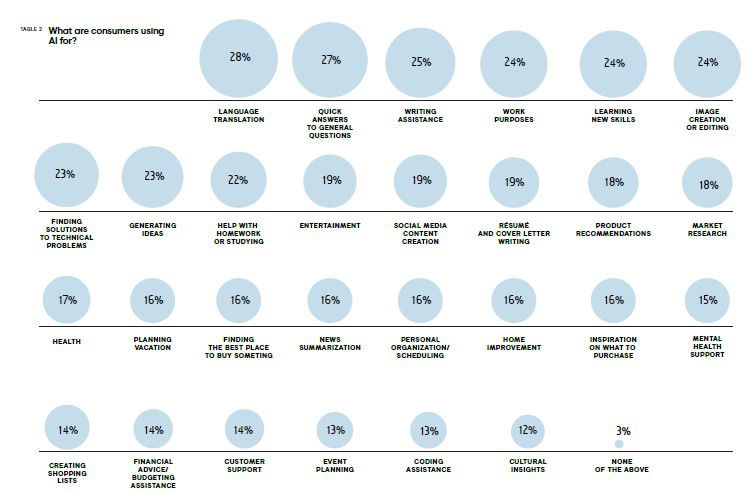
Shoppers are warming up to AI, with nearly half (47%) approving of retailers’ early uses of the technology, according to VML’s ninth annual “Future shopper” report, which surveyed more than 25,000 consumers across 16 countries. Overall AI adoption is high, with 68% of global shoppers saying they have used ChatGPT or alternatives such as Google Gemini or Microsoft Bing Chat. Usage is highest among 16- to 34-year-olds (78%), followed by 35- to 44-year-olds (72%), 45- to 54-year-olds (62%), and lowest among those 55 and above (41%). Currently, AI is primarily used for practical purposes. Language translation (28%) and quick answers to general knowledge questions (27%) lead the list, followed by writing assistance (25%), work tasks (24%), and learning new skills (24%). Don’t miss: Study: 81% of APAC shoppers want AI-powered shopping tools Shopping applications lag behind, with 18% using AI for product recommendations, 16% to find where to buy something, 5% for product research, and 3% for shopping inspiration. This suggests that consumers are more comfortable using AI as a productivity and information tool than a direct shopping assistant. Interest in agentic AI, technology that can act autonomously on a shopper’s behalf, is strong. Nearly half (48%) say they are excited by the idea of AI interacting with brands to secure the products and prices they want, while 52% look forward to AI acting for them in their personal shopping. Trust in AI is already notable: 37% would let AI manage their food shopping, including delivery and payment, while 40% would let AI organise their lives, from purchases to weekend plans. Generative AI is also broadly accepted, with 46% unconcerned that content could be AI-generated. Yet, apprehension remains. Forty percent of consumers report not fully understanding AI’s potential impact, 57% are worried about its effects, and 44% express concern about AI-related job risks. Confusion is common, with 45% unsure what retailers mean when they claim AI integration in products. Despite these concerns, optimism persists. Half of global shoppers believe AI’s benefits outweigh its drawbacks, just 18% disagree, and 52% see AI as a tool to free them from mundane tasks. While AI reshapes online shopping, the appeal of physical stores remains strong, and consumers’ expectations for the in-store experience are higher than ever. Even with rapid advances in online delivery, nothing beats the instant sensory and social satisfaction of picking up a product in-store, according to VML. With that, 33% of shoppers cite immediate gratification as their top reason for shopping in-store. The data shows that shoppers are increasingly seeking experiences, from store atmosphere and sensory stimulation to social interaction and entertainment. This demand is evident in complaints that online shopping lacks fun, with more than half of consumers highlighting the gap. Shoppers also value basic operational excellence: good product availability and well-stocked shelves remain crucial, along with helpful, knowledgeable staff and a clean, organised, and comfortable environment. 39% of shoppers say product availability is the number one factor in evaluating their in-store experience. However, barriers persist. Overcrowding is a major turn-off, with 37% citing it as the main reason to avoid stores. Retailers must also contend with parking challenges, travel time, and the pressure to compete on price with online alternatives. Consumers are also looking for more excitement. 56% want immersive, futuristic, and creatively designed shopping experiences, a finding consistent in “Future shopper” research year after year. Looking ahead, technology is shaping the store of the future. 52% of shoppers are excited about entirely cashless payments, and 46% are intrigued by biometric payment methods, which use fingerprints, facial recognition, or other unique traits to authorise purchases. Reducing friction is another priority. 63% percent of consumers are interested in “checkoutless” stores, such as Amazon Go, which automatically charge items to a user account. While high costs have slowed adoption, advances in computer vision AI, capable of identifying items via cameras, could make such experiences more feasible soon. “The ‘Future shopper’ 2025 report highlights a critical inflection point for brands in APAC. Our region’s consumers are among the world’s most digitally savvy, yet 45% still abandon purchases due to frustrating online experiences, and half feel brands don’t understand their needs,” said Nick Pan chief commerce and connections officer, VML APAC.  He added, “Shoppers are embracing AI-powered tools at an extraordinary pace and are excited by the promise of personalised, seamless journeys. Expectations are rising quickly: people want faster delivery, smarter recommendations, and a truly omnichannel experience that fits their lifestyles. For brands in APAC, winning in this market means relentlessly focusing on customer experience, harnessing AI to add real value, and building trust at every stage of the journey.”  Accelerate your brand’s growth with AI-first strategies, emerging tech and data-driven experiences. Join the industry’s leading marketers at Digital Marketing Asia 2025 Malaysia on 30 October to uncover transformative trends, real-world wins and powerful ideas for 2025 and beyond. Related articles:OpenAI rolls out shopping feature for ChatGPT users  Skechers SG launches AI stylist Luna to reinvent shopping  YouTube Shopping lands in SG amid demand for content-driven experiences  source

From AI to aisles: How shoppers are balancing tech and touch in retail Read More »

Chevron and Epsilon celebrate multiple wins at Loyalty & Engagement Awards Singapore 2025

This post is sponsored by Epsilon. Chevron, in partnership with Epsilon, has been honoured with multiple accolades at the Loyalty & Engagement Awards Singapore 2025 hosted by MARKETING-INTERACTIVE. This recognition underscores the strength of Epsilon’s data-led strategies, innovative customer journey design, and commitment to delivering exceptional member engagement and experience across multiple markets. Out of the four submissions entered, Caltex Rewards by Chevron was shortlisted as a finalist in all four categories: Best Loyalty Strategy – Automotive, Best Customer Relationship Management Strategy, Best Customer Retention Strategy, and Best Use of Consumer Insights/Data Analytics. In the Best Customer Retention Strategy category, Chevron took home Gold for its thoughtfully designed and well-executed member journeys, where retention metrics were tailored and redefined for the fuel industry. These member journeys were successful in reactivating inactive members and deepening the relationship with high-value members. In the Best Customer Relationship Management Strategy category, Chevron was awarded Bronze for its advanced use of RFM segmentation, personalisation frameworks, and the execution of the customer journeys. Beyond focusing on acquisition and retention, Caltex Rewards also looked at how it could continuously engage and delight drivers with different refuelling habits while keeping the mechanics simple to understand. For the category Best Use of Consumer Insights/Data Analytics, Chevron secured Bronze for its practical approach on defining loyalty metrics, designing dashboards, and running targeted campaigns that were driven by profitability. Further cementing its leadership in loyalty marketing, Epsilon won Bronze in the category Team of the Year – Agency for showcasing its end-to-end expertise – from strategy and insights to design and technical implementation – with Chevron’s Caltex Rewards as a best-practice example. “Partnering with Chevron on the Caltex Rewards programme exemplifies how combining data, personalisation, and journey design can drive measurable business outcomes,” said Rob Odd, regional managing director, APAC, Epsilon. “This recognition reinforces our vision of helping brands unlock the full potential of loyalty by turning insights into impact.” Epsilon is the industry leader in outcome-based marketing. The PeopleCloud Loyalty platform supports brands to engage their members meaningfully and drive measurable outcomes across multiple touch-points. Epsilon’s suite of identity-based solutions and deep consumer insights positions brands ahead of the competition with faster time to value, robust programme performances, and the ability to nurture customer relationships for long-term success. With more than 50 years of experience in personalisation and performance working with the world’s top brands, agencies and publishers, Epsilon is a trusted partner leading CRM, digital media, loyalty and email programmes. Positioned at the core of Publicis Groupe, Epsilon is a global company with over 8,000 employees in over 40 offices around the world. For more information, visit epsilon.com. source

Chevron and Epsilon celebrate multiple wins at Loyalty & Engagement Awards Singapore 2025 Read More »

MAS tightens rules on online financial content, issues warning to 'finfluencers'

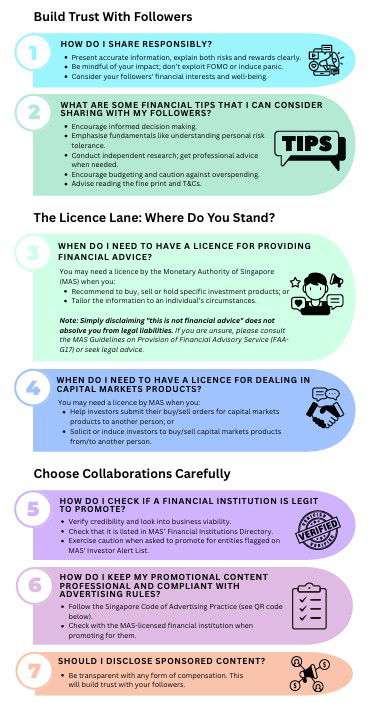
The Monetary Authority of Singapore (MAS) has introduced new measures to strengthen responsible online financial content sharing and digital advertising practices. The regulator has issued its “Guidelines on standards of conduct for digital advertising activities”, which apply to all financial institutions and their appointed third parties, including online content creators. MAS said the rules aim to address risks associated with digital advertising, such as misleading or unbalanced promotions, inappropriate use of social media, and non-compliant ads being circulated without an institution’s knowledge. Don’t miss: Rise in govt official impersonation scams in SG, says police and MAS The guidelines will take effect from 25 March 2026. According to MAS, institutions will be required to adopt safeguards including clear disclosures, stronger governance, and stricter monitoring of digital campaigns. MAS also worked with the Advertising Standards Authority of Singapore (ASAS) to publish a guide titled “Seven must-knows when sharing financial information online”. The guide sets out key considerations for creators, including when a licence from MAS may be required, steps to take before promoting products, and the need to disclose compensation. In addition, MAS said it will issue advisory letters to five content creators who may have provided financial advice without a licence. They have been told to adjust their practices to comply with regulations. MAS warned that individuals who continue to provide advice without approval will face enforcement action. “In today’s digital age, where there is increasing reliance on digital platforms that transmit information rapidly, financial institutions and content creators must ensure that the sharing of financial information and advertising of products and services are performed responsibly,” said Lim Tuang Lee, assistant managing director (capital markets) at MAS. He added, “They must adopt the appropriate safeguards to adhere to regulatory requirements and uphold consumer interests.”  The guidelines come amid a rise in complaints against financial influencers (“finfluencers”). By April, MAS had already received eight complaints in 2025, up from an average of five per year over the past five years. Most were linked to two finfluencers who shared reasons for liquidating investments on a financial platform. MAS has responded to all complaints, with no outstanding cases. Alvin Tan, minister of state for trade and industry and MAS board member, said at the time that finfluencers can help promote financial literacy but must avoid providing regulated financial advice. MAS considers advice to be regulated if it is remunerated or given regularly, and those providing it must be licensed under the Financial Advisers Act and appointed by a licensed advisory firm. Misleading statements may also be an offence under the Securities and Futures Act. Related articles:    Why it’s hard to differentiate leaders from the laggards in the financial services space Report: Local nuance and trust needed for influencer marketing in SEA Study: 82% in SEA make purchasing decisions based on influencers and celebrities  source

MAS tightens rules on online financial content, issues warning to 'finfluencers' Read More »

‘Everything can be reimagined’: Piyush Gupta on building intelligent, resilient brands

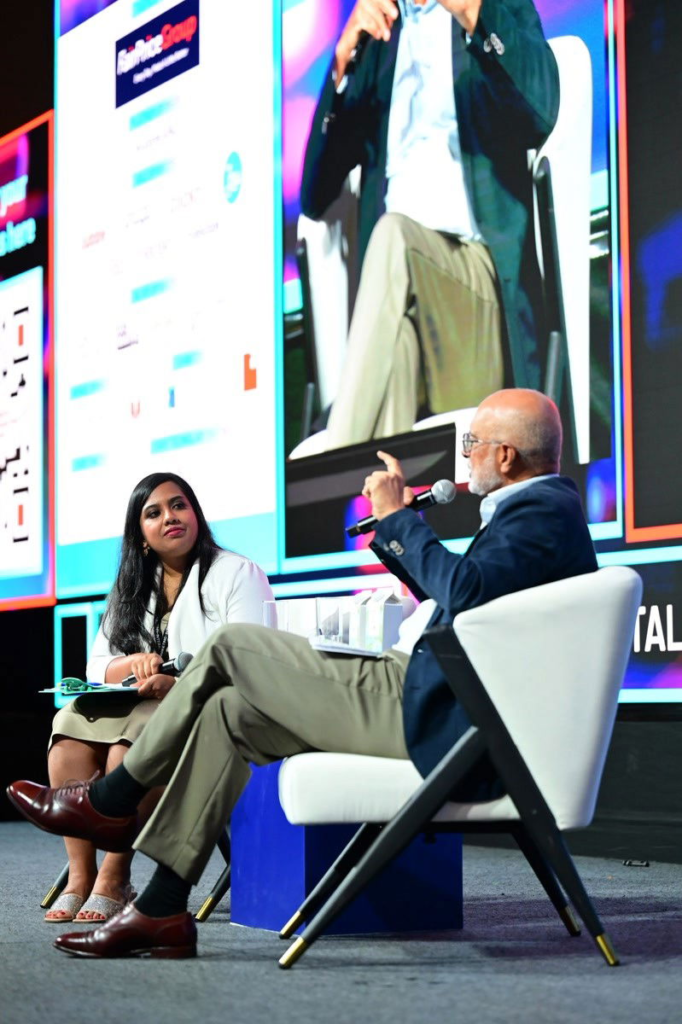
For Piyush Gupta, former chief executive at DBS Group, marketing is the most strategic function within an organisation, but its success depends on three things: clarity of purpose, a culture of innovation and removing the fear of failure. Opening the Digital Marketing Asia 2025 annual conference in Singapore yesterday, Gupta reflected on 15 years at the helm of DBS, a period in which the Singaporean bank transformed from a legacy institution into a global case study for digital reinvention. Harvard Business Review ranked DBS among the top 10 transformative organisations of the 2010–2020 decade, alongside the likes of Amazon and Netflix. “The message is simple,” Gupta said. “Everybody can change and everybody has the power to change. The question is: what environment allows them to do it?” At DBS, he said the starting point was purpose. Gupta and his leadership team framed the bank’s mission around “making banking joyful” – shorthand for becoming obsessively customer-centric by delivering simple, fast solutions to enrich lives and transform business. Purpose, he said, was more than just a slogan. DBS leaned into uncomfortable moments, asking staff and customers to share their biggest frustrations, such as rules preventing call centre staff from resolving credit card disputes without multiple approvals. “Why not let the agents make these decisions?” he said. “We believed the strength lay in what made sense for the customer. That clarity liberated people to act.” Learning by doing The second lever was creating an environment where staff could learn and innovate at every level of the organisation. Under his leadership, DBS launched its first hackathons, mixing employees with startup founders to solve customer problems. Staff built prototypes in a week, often surprising themselves. “When you can go home and show your kids an app you created at work, something lights up and changes,” Gupta said. Similar experiments later included company-wide AI challenges using Amazon’s DeepRacer, drawing thousands of employees into hands-on learning. Similar experiments included company-wide AI challenges like Amazon’s DeepRacer, which resulted in the DBS x AWS DeepRacer League, drawing thousands of employees into hands-on learning. The third pillar was eliminating the stigma of failure. Gupta introduced a KPI for 1,000 experiments a year and created awards for failed projects that yielded lessons. “We made heroes of people who tried and failed,” he said. “When regulators came down on us after a failed ATM upgrade, we told them we weren’t punishing the employee – we were recognising them for thinking differently.” This cultural shift extended to feedback. Gupta launched an anonymous email channel called Tell Piyush, open two weeks each quarter. At first most submissions were anonymous, but as trust grew staff began attaching their names. A third of the suggestions proved to be “gems” that led to policy changes. “We were very serious about how we responded. We spent months working through some of those emails,” he said. The heart of transformation Gupta positioned marketing at the heart of this transformation. Performance marketing, he argued, had been revolutionised by AI-driven personalisation and predictive modelling, producing billions of dollars in incremental revenue lift at DBS. “Today everything can be reimagined,” he said. “The question is, can you influence it, and how well can you influence it. So I don’t think people have questions over whether the technology works or not – it’s how well you can customise it. “That requires you to have architecture around your technology and be fundamentally focused on data. That makes all the difference.” Gupta stepped down in March 2025 after 15 years as DBS CEO. He now chairs Singapore Management University, Mandai Park Holdings and serves as deputy chairman of Keppel Ltd. He said he planned for years to ensure his post-DBS life balanced board roles with travel, reading, family and nature. Four days after retiring, he set off trekking in the Himalayas. Reflecting on his journey, Gupta returned to marketing’s central role. “It’s perhaps the most strategic function in the organisation,” he said. “Seventy-five per cent of DBS’s success came from what we did, but 25% came from the stories we told. Storytelling is very powerful, and marketing’s job is to tell that story.” source

‘Everything can be reimagined’: Piyush Gupta on building intelligent, resilient brands Read More »

Lonsdale Singapore names new strategy director

Lonsdale Asia has elevated Anjali Vasudevan to strategy director in its Singapore office. In her new role, Vasudevan will lead strategy for the hub, partnering with clients across APAC to shape brand journeys and drive creative excellence. The promotion comes as recognition of Vasudevan’s contribution to Lonsdale’s growth since joining in 2022 and reflects the agency’s commitment to developing talent from within. Over the past three years, Vasudevan has played a key role in projects for local and global brands including Ensure, Sengur beer in Mongolia, and Vaseline’s internationally awarded Transition Body Lotion. She has been credited for bringing strategic depth and cultural relevance to the agency’s work. Don’t miss: AirAsia takes flight with new custom typeface With more than two decades of experience in advertising and design, Vasudevan began her career in India before moving to Singapore in 2012. She has held roles at McCann, Design Bridge, Jones Knowles Ritchie, PI Global and Bulletproof. She joins a leadership team that includes managing director Nadia Romanis, executive creative director Muriel Schildknecht, associate creative directors Christine Natalia and Katrina Crescenzo, and business growth director Tara Howard. “Anjali’s promotion reflects not only her incredible talent and impact on our clients’ businesses, but also our ambition to grow a diverse and dynamic leadership team in Singapore and across our global network,” said Romanis. “Her strategic vision, cultural insight and ability to connect brands with people in authentic ways will be invaluable as we continue to expand into new markets in partnership with our Paris and New York hubs,” added Romanis.  Speaking to her appointment, Vasudevan said: “For me, strategy can unlock the magic in the spaces between a brand and its audience – with empathy, imagination and a strong point of view. In my new role at Lonsdale, I’m looking forward to working with the team to help more global and local brands connect meaningfully with their customers.” Vasudevan’s appointment follows the promotion of Christine Wiryakartika and Katrina Crescenzo to associate creative directors in its Singapore studio earlier in January this year. Both Wiryakartika and Crescenzo were senior designers in 2021 and 2019 respectively.  Related articles: TEAM LEWIS Singapore names new director Design consultancy Elephant stomps into Singapore with new APAC hub LePub Singapore names new chief strategy officer   source

Lonsdale Singapore names new strategy director Read More »

SBS Transit turns Tampines MRT into a 15,000 sq ft wellness village

SBS Transit has launched its first wellness village at Downtown Line Tampines MRT station, in a move to reimagine public transport spaces as community hubs. The initiative, inspired by the kampung (village) spirit, was officially opened by Baey Yam Keng, minister of state for the Ministry of Transport (MOT) and the Ministry of Culture, Community and Youth (MMCY). Spanning 15,000 square feet, the wellness village includes a communal plaza and features fitness classes such as yoga, pilates, and zumba. It also hosts talks, workshops, and exhibitions covering health, nutrition, and mental wellbeing. Don’t miss: Standard Chartered redefines wealth through wellness via content push Commuters can access healthy food and beverage options in a space decorated with community art murals. Alongside the launch, SBS Transit introduced “GROW”, a wellbeing framework aimed at supporting the physical, mental, and financial wellbeing of its employees. The framework, which stands for ‘Growth’, ‘Resilience’, ‘Openness’, and ‘Wellness’, will underpin the organisation’s internal programmes. SBS Transit said the Tampines MRT launch is the first of four villages planned across its network, with three more set to open over the next 15 months, each carrying a different theme. MARKETING-INTERACTIVE has reached out for more information.  Beyond transport, wellness has also become an area of focus for other companies in Singapore. Earlier this month, StarHub launched its “Digital BMI quiz” and announced its 5G Wellness Festival at Capitol Outdoor Plaza on 13 and 14 September 2025. The two-day festival encouraged people to reconnect offline through activities ranging from live DJ sets and silent disco yoga to mindful journaling, life-sized board games, and leather crafting workshops. The Digital BMI, or balanced media index, is an online quiz that helps participants assess the impact of screen time on their mind, body, and emotions, and connects to StarHub’s five 5G wellness pillars: ‘Gather’, ‘Glide’, ‘Glow’, ‘Ground’, and ‘Grow’.  Related articles: Shangri-La Singapore turns music into a full-body wellness experience   Harry Styles’ Pleasing beauty brand enters sexual wellness, sells out in minutes Study: 90% of APAC luxury travellers book with wellness in mind source

SBS Transit turns Tampines MRT into a 15,000 sq ft wellness village Read More »