marketing interactive

Confessions of a CMO: Why I’m opting out of the 'Mother’s Day circus'

I’ve spent my career in the think-tanks and ‘war rooms’, sat through the brainstorms where we discuss how to capture the hearts of our guests, and leverage emotional triggers to drive revenue over special moments and occasions. Here’s my confession. Every time a Mother’s Day promo hits my personal inbox, I don’t feel honoured. It actually feels targeted. As a mother who lives life at 120km/h (sometimes more), balancing work, family, raising a child, being a wife and daughter, I’m officially calling time-out on the Mother’s Day specials. Shouldn’t every day be Mother’s Day? I have the same thoughts for Valentine’s Day and Father’s Day. The fundamental problem with Mother’s Day marketing is that it’s a performance. It’s a 24-hour window where society and brands pretend that a scented candle or a 15% discount on a floral arrangement is a fair trade for the invisible, relentless labour of motherhood. More than a promo code We treat Mother’s Day like a tactical peak period to be conquered. We look for that white space in our consumer’s mind, hoping to fill it with a tear-jerker video that ends with a logo. Now, as a mother, I see the void. If you’re only “celebrating” me in May, you don’t actually see me. You see a demographic, a wallet. You don’t see the woman who is navigating the “mental load” every other Tuesday of the year when a family member is sick, deadlines are looming and groceries haven’t been bought. My philosophy is simple: Every day should be Mother’s Day. That sounds like a greeting card sentiment, but from a marketing perspective, it’s a radical shift. It means moving away from too much “moment-based” marketing and toward “consistency-based” marketing. If you want my loyalty, don’t give me a promo code in May. Share a product that works every time or to celebrate milestones. We’ve reached a point where opt-out buttons for Mother’s Day emails are the most innovative thing to happen. Why? Because they acknowledge that the day is fraught. They acknowledge that for many women, the constant bombardment of “Celebrate mum!” is either a painful reminder of loss or an annoying reminder of societal expectations. As brands, we should look for authenticity. We should recognise milestones that mean something to individuals. Birthdays should still be a thing because it allows reflection on your last chapter and what lies ahead. Motherhood isn’t a campaign. This article was written by Adora Sarah Chou, chief marketing officer at GYG Singapore (Guzman y Gomez Mexican Kitchen). source

Confessions of a CMO: Why I’m opting out of the 'Mother’s Day circus' Read More »

Singapore’s Encik Tan serves up Malaysia debut in regional push

Singapore-based hawker concept Fei Siong Group has brought its halal-certified brand Encik Tan to Malaysia, opening its first outlet at Sultan Abdul Aziz Shah Airport’s Subang SkyPark. The outlet marks Encik Tan’s first entry into the Malaysian market, following its existing network of 21 outlets in Singapore and one in Jakarta. The move is part of the brand’s wider regional expansion strategy focused on accessible halal Chinese hawker fare. In a statement, the company said the Subang SkyPark outlet serves as a strategic entry point due to its mix of transit and everyday dining traffic. It added that the location also allows the brand to refine its offering in an environment aligned with its positioning around convenient, daily hawker meals. Don’t miss: Fei Siong Group taps social media agency for Encik Tan, Popeyes and more Spanning approximately 1,800 square feet, the outlet can seat up to 50 diners and features a contemporary design anchored by orange-and-white interiors, banquette seating and an open ordering counter. The store operates daily, targeting travellers, airport staff and nearby residents. To mark its Malaysia debut, Encik Tan is offering a complimentary drink with every meal purchase from 7 to 8 May 2026. Diners can choose from iced rose syrup, iced blueberry or iced calamansi drinks, with the promotion available to passengers presenting a valid boarding pass and airport staff with a valid staff pass. The Malaysia expansion is being carried out in partnership with Bake With Yen, a Malaysian baking supplies retailer with more than three decades of experience in the food and hospitality sector. The partnership is expected to support Encik Tan’s plans to build a scalable presence in the country. According to the company, the Malaysia outlet is currently in the process of obtaining halal certification in line with requirements set by Jabatan Kemajuan Islam Malaysia (JAKIM). In the meantime, the menu is prepared using halal-certified ingredients. Looking ahead, the brand said it is continuing to pursue expansion across Southeast Asia, while also exploring future entry into markets including Australia and the United Kingdom. It is also considering ready-to-eat product formats as part of its longer-term growth plans. In other recent expansion moves, Chinese luxury car brand Hongqi, under state-owned First Automotive Works (FAW) Group, is set to enter the Malaysian market through a partnership with Quill Group of Companies. According to local media reports, the move will be formalised via a memorandum of understanding (MoU), with Quill Group appointed as the official importer and complete knock-down (CKD) distributor, as well as the party responsible for appointing authorised dealerships nationwide. The brand is expected to make its official debut in Malaysia in the middle of this year, with its model line-up and dealership network to be announced in due course. Related articles: Mary Grace Café draws crowds and warm reception in Singapore debut  Jollibee Group opens first Tiong Bahru Bakery branch in the Philippines   Grab secures first cross-border licence, pilots SG-JB ride-hailing service source

Singapore’s Encik Tan serves up Malaysia debut in regional push Read More »

Creative agency founder calls out Pizza Hut Singapore over 'OG' campaign concept

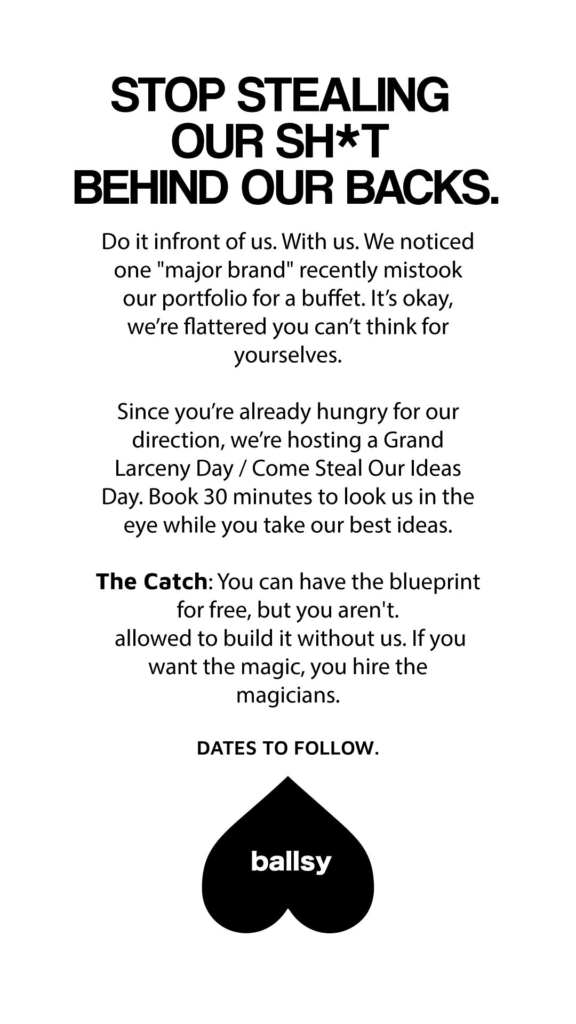
The founder of creative shop Ballsy has put out a series of bold statements calling on clients to stop “stealing” ideas from creative agencies. In an image-based LinkedIn post, founder VJ Anand said a “major brand” had recently mistaken its portfolio “as a buffet”. “It’s okay, we’re flattered you can’t think for yourselves,” the post read. Don’t miss: UNIQLO ‘Cai fan’ keychain kerfuffle: Where does inspiration end and imitation begin? The post also invited clients to book a 30-minute consultation where the agency would “open the vault” of its ideas for free, on the condition that execution remains with Ballsy. The move comes shortly after Anand published another LinkedIn post that drew attention and support from advertising professionals across Singapore and Malaysia. In the post, Anand called out Pizza Hut Singapore over its latest campaign centred around the idea of being an “OG”. The campaign video, which was launched yesterday, rolled out with a theme around “OG of good times”. The short clip featured various groups of people enjoying Pizza Hut together across different social settings. According to Anand, Ballsy had pitched the “OG” concept to the brand earlier this year. He claimed the client appeared impressed and had expressed interest in working with the agency, post the presentation. However, the partnership did not come to light as Pizza Hut was already tied to another agency partner. Anand also attached details from the agency’s presentation deck to the post. “They never had the OG in the brief. It’s just annoying when clients do this to us. We are small. Every presentation and idea is important for us. We need all the support we can get, yet a brand as legendary as this does it to us,” he said. He added that he hopes such practices will stop within the industry and urged advertising professionals to “call out things like these”. At the time of publishing, the post has over 270 likes and support and 47 comments. Anand also put out a follow-up post not long after, adding that the agency is also “blessed” to work with supportive clients who “care for [us] and build on our ideas”. He said:  I don’t know if I will be cancelled by brands but someone has to call out if something wrong has happened. I am not even demanding anything. I just want to call out toxic behaviour like this and why must we be afraid to state what we feel. This morning, in a statement to MARKETING-INTERACTIVE, a spokesperson for Pizza Hut Singapore said the team is aware of the comments regarding its recent 45th anniversary campaign and would like to provide some clarification. “Earlier this year, Pizza Hut Singapore conducted a project-based pitch process as part of our brand refresh and 45th anniversary campaign development. The ‘OG’ theme did surface across concepts we received. That was not surprising to us as ‘OG’ had already been incorporated as part of our creative approach since March 2024, as we’re proud of our heritage as one of Singapore’s original pizza brands,” it said, adding: “With our global brand refresh of ‘Feed good times’, coinciding with the 45th anniversary, this became a natural moment to bring the two elements together and thus the ‘OG of good times’.” The spokesperson also said that as with many creative processes, overlaps in themes and expressions can occur. The final campaign direction was selected based on overall alignment with the brand’s long-term brand strategy and objectives. “We sincerely appreciate the time, creativity and effort contributed by all participating agencies, and remain committed to engaging our partners in a respectful, fair and professional manner,” the statement added.  The incident also comes amid broader conversations around originality and creative ownership in Singapore’s marketing scene. Last year, Uniqlo Singapore drew comparisons to local label PointyRice over a customisable mixed rice keychain released as part of its “Thank you festival” activation. The campaign rewarded customers with a plate-shaped keychain featuring acrylic “dishes” that could be mixed and matched on-site. Many online pointed out similarities to PointyRice’s customisable mixed rice-themed merchandise concept. In an Instagram post at the time, PointyRice founder Caitanya Tan acknowledged the resemblance but clarified that the brand was not accusing Uniqlo of copying its ideas. She added that the team had previously explored a potential collaboration with the retailer and remained open to future opportunities together. In a separate incident last year, Penang-based artist Ernest Zacharevic said he had decided to take legal action against AirAsia. In a statement at the time, the artist alleged that his work had been used without consent, with his murals appearing across the airline’s email campaigns, in-flight magazines, printed banners and other materials. He said he had formally requested AirAsia to stop using his artwork without proper credit, consent or compensation. While the airline had responded to these requests, he added that new instances of unauthorised use continued to emerge. Related articles: Pizza Hut Singapore director of marketing and food innovation to exit   45 years on, Pizza Hut SG refreshes brand for a slice of everyday life  KFC and Pizza Hut conclude media pitch for SG source

Creative agency founder calls out Pizza Hut Singapore over 'OG' campaign concept Read More »

StarHub asks, does AI really know you better than your mum?

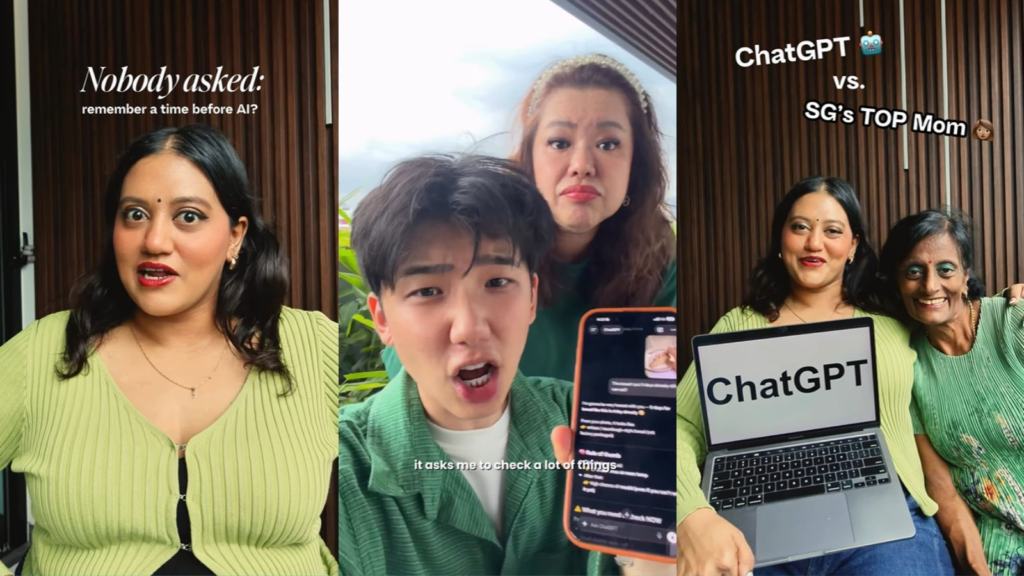
StarHub is leaning into the AI conversation this Mother’s Day with a campaign that argues the best advice still comes from mum. Dubbed “MumGPT”, the social-first campaign playfully reimagines mums as the original source of answers, powered not by algorithms, but by years of lived experience, care and knowing their children better than anyone else. The campaign comes as consumers increasingly turn to AI tools for life hacks, recommendations and everyday advice. Through humour and creator-led storytelling, StarHub aims to bring the focus back to more human connections, spotlighting the calls, texts and check-ins with mum that often provide the comfort and honesty technology cannot replicate. Don’t miss: Confessions of a CMO: Why I’m opting out of the ‘Mother’s Day circus’ The campaign features a series of Instagram content pieces with local creators including Preeti Nair, Benjamin Toh and Brenda Tan, each sharing humorous takes on the sometimes painfully accurate advice only mums can give. In the clip featuring Benjamin Toh and his mother, Toh shows viewers a Telegram exchange in which he asks his mum whether bread he has kept for five days is still safe to eat. After checking the softness of the bread, she laughs and assures him it is fine. Toh then compares her response to one from ChatGPT, sharing that the AI tool had asked him to check several conditions before consuming it. Cutting in, his mother jokes that she has more experience than ChatGPT. While Toh admits he speaks to ChatGPT every day, he said he still turns to his mother, or “MumGPT”, for life decisions and emotional advice. “ChatGPT gives answers, but mum gives wisdom,” he said, encouraging viewers to ask their mothers before turning to AI. The video ends with a Mother’s Day message. Meanwhile, Preeti Nair also joined the campaign, asking viewers if they remembered a time when people turned to adults for advice instead of ChatGPT. In the video, Nair pits her mother against AI, posing questions such as “Should I quit my job?” and “Why am I having a headache?”. Her mother responds with humorous yet direct answers, contrasting ChatGPT’s more measured replies. Similar to Toh’s video, Nair ends by highlighting the wisdom her mother offers and encourages viewers to consult their mums before asking AI. According to StarHub, the campaign reflects its broader belief in championing meaningful connections through culturally relevant and social-first storytelling. It also aims to celebrate the people many consumers still turn to as their first source of wisdom, despite the rise of AI-driven tools. StarHub is not the only brand tapping into Mother’s Day storytelling this year. Recently, wellness brand Eu Yan Sang Singapore rolled out a seasonal campaign featuring brand ambassador Jeanette Aw, blending cinematic storytelling with messaging around the purity credentials of its premium bottled bird’s nest products. The campaign film sees Aw preparing bird’s nest for her mother before gifting her a bottle of the brand’s ready-to-drink bird’s nest. Through narration, Aw compares a mother’s unconditional love to the care and purity behind the brand’s ingredients and products. Related articles: StarHub scoops up Orchard Road with unlimited ice cream    StarHub introduces Hublings in playful ‘We got you’ brand push   StarHub concludes media pitch source

StarHub asks, does AI really know you better than your mum? Read More »

Heineken turns Keong Saik into a three-storey afterwork escape

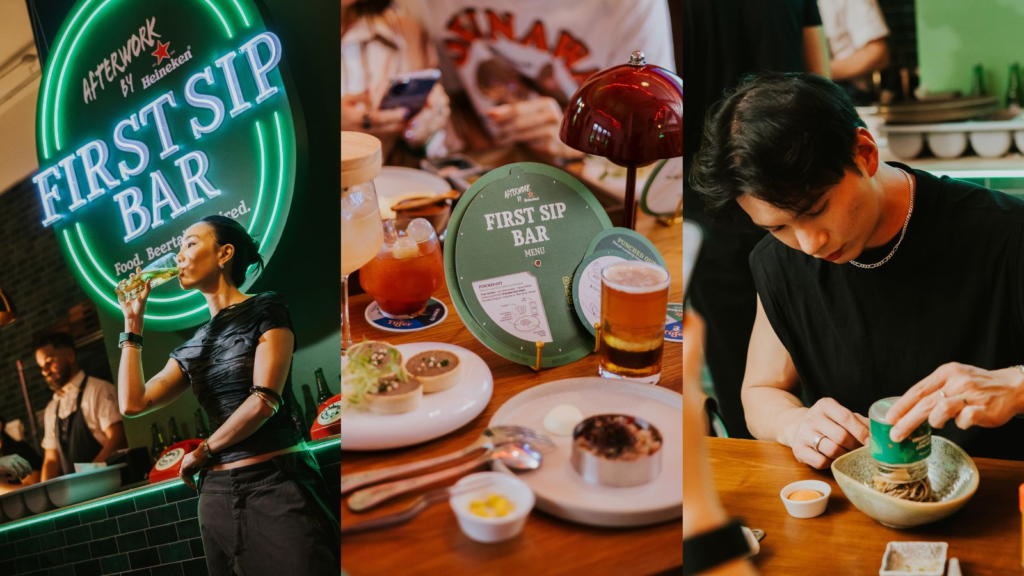
Heineken is turning afterwork drinking into a full-blown experience with the launch of “First sip house”, a three-storey pop-up designed to get CBD workers to rethink the moment they clock out. The activation runs from 7 to 16 May 2026 at Keong Saik Road, positioning itself as an afterwork destination where the first sip sets the tone for the night. The concept follows a recent CBD stunt by Heineken where the brand brought the “first sip forward” through a surprise elevator activation targeting office workers. “First sip house” builds on that idea, stretching it into a physical space that encourages guests to prioritise their first beer over their final email. Entry is free for guests aged 18 and above, with the experience centred on Heineken’s pure malt, premium quality proposition. Visitors can move through curated food, drink and experiential zones designed to make afterwork feel more intentional, social and immersive. Don’t miss: Heineken unites football, F1 and music under new sponsorship platform At the core of the pop-up is the “First sip bar”, where award-winning mixologist June Baek and culinary creator Justin Hammond return with a new menu of four pairing experiences. The concept leans into intentional incompletion, with chefs stepping away mid-prep for their own afterwork drink, leaving guests to finish the dishes themselves. Pairings range from tuna tartare with pure malt crostini matched with a Heineken Original and Omija berry soju bomb, to a mushroom parfait with malt caramel paired with a grapefruit and ginger Heineken Silver spritz. Other highlights include malted peanut butter soba with a layered malt sour, as well as slow-cooked beef short rib tacos paired with a customisable michelada (Mexican cocktail). Beyond food and drink, the experience expands into interactive zones built around social play and participation. “Star tap” turns networking into a gamified activity where wristband taps unlock rewards and leaderboard rankings, while “Art jam” offers a free-form creative space for guests to build personalised graffiti-style pieces without rules or structure. The “Pourfection lounge” shifts focus to craft, where guests are guided through a five-step perfect pour led by draught masters. Participants also get early access to the StarMark glass, a precision-designed glass aimed at enhancing aroma, carbonation and flavour, with successful pourers taking one home while stocks last. The brand has also been experimenting with city-based experiential formats in other markets recently. In Seoul last year, Heineken rolled out “Rooftop revival“, a campaign that transformed unused urban rooftops into social hubs to address what it called the “proximity paradox” of city life, where people live close together but still feel disconnected. Created by LePub, the activation used satellite imagery to reveal rooftop event locations marked with Heineken’s red star, drawing more than 8,000 applicants. Experiences included a K-pop set by SEVENTEEN’s DINO, a design workshop with artist Cha Inchul, and an interactive tasting led by chef Cho SeoHyeoung. Each event centred on a red star Pyeong-sang, a modern take on a traditional Korean communal platform redesigned with built-in icebox storage and Bluetooth speakers. Related articles: Heineken opens self-service bars for late-night football fans   Heineken taps Joe Jonas to ditch social media and pour into real connections   Heineken creates immersive pop-up music series at unconventional venues source

Heineken turns Keong Saik into a three-storey afterwork escape Read More »

How adidas turned backyard football into World Cup mythology

Athletic apparel brand adidas is leaning into nostalgia, star power and street football mythology with its latest FIFA World Cup 2026 campaign, Backyard Legends, a five-minute film that reframes everyday play as the origin story of global legends. Built on its long-running “You got this” platform, the film pushes a simple idea, that greatness does not start under stadium lights, but in backyards, cages, parking lots and any patch of ground where the ball rolls. Fronted by Academy Award-nominated actor Timothée Chalamet, the film follows a fictional narrative where he assembles a team to challenge a feared local trio, Clive, Ruthie and Isaak, whose undefeated run has reportedly survived generations. Their legend is so entrenched it has already seen off imagined challengers including 90s football icons Zinedine Zidane, David Beckham and Alessandro Del Piero. Don’t miss: adidas Trefoil logo makes a World Cup comeback after 36 years The cast expands into a cross-cultural mix of sport and entertainment. Lionel Messi appears alongside Bad Bunny, with younger football stars Lamine Yamal, Jude Bellingham and Trinity Rodman adding generational contrast to the storytelling. Cameos from Ballon d’Or winner Ousmane Dembélé, Raphinha, Pedri, Florian Wirtz and Santiago Gimenez further build out the mythos of backyard football as a breeding ground for greatness. The film leans heavily into 90s-inspired football culture, blending street and terrace aesthetics with analogue tech, retro styling and era-specific haircuts. This is layered with modern CGI and visual effects to elevate everyday playground moments into something almost cinematic in scale. At its core, the campaign circles back to a familiar adidas message: pressure disappears when the game is played freely. Whether it is a cage pitch or the World Cup stage, the pitch is framed as equal ground for expression, creativity and chaos. “Everyone remembers that feeling: playing for the joy of it, no pressure, no expectations. With ‘Backyard Legends’, we celebrate that freedom. It’s a reminder that self-belief and playfulness are the real winning mindset,” said Florian Alt, VP global brand communications at adidas. According to Alt, the brand is cognizant of the pressures that the athletes and federations go through as part of the sport, as they take to the biggest sporting stage this summer. He added, “While we encourage competitiveness, our ambition is to inspire everyone, to disarm that pressure through playing free and believing, ‘You got this’. The game isn’t defined by the stage, the crowd, or the cameras. It’s defined by those who play free, where everyone can create a legend.” Chalamet reflects on growing up immersed in football culture, saying he used to idolise moments from players such as David Beckham, Alessandro Del Piero and Zinedine Zidane while playing at Pier 40 as a kid, recreating their moves in his own way. He describes football as a lifelong passion and calls the opportunity to work with adidas alongside some of the game’s most iconic names “unbelievable”, adding that the campaign brings together his love for the sport with its biggest legends. “Backyard legends” follows adidas’ broader World Cup storytelling push, where the brand had previously set the tone for its 2026 campaign direction last November with another cinematic release, “LA PREPARACIÓN AMERICANA” (“The American preparation”). The short film followed world football stars experimenting with unconventional training environments ahead of the FIFA World Cup 2026. According to the brand, it signalled adidas’ wider creative direction for the World Cup cycle, blending humour, surrealism and global football star power to reframe preparation as something unpredictable, cultural and increasingly entertainment-led. Related articles: Get paid to watch the World Cup? Yes, it’s a real job  LEGO builds its own World Cup lineup of football heavyweights     Coca-Cola pops the lid on fan emotions in high-drama World Cup film source

How adidas turned backyard football into World Cup mythology Read More »

Is AirAsia flying into hospitality next?

Capital A is exploring a significant expansion of the AirAsia brand beyond aviation, with the group confirming it is in discussions with a major hotel chain to extend AirAsia into the hospitality sector through a licensing agreement. The update was disclosed as part of the group’s first-quarter 2026 financial commentary, where AirAsia Next was positioned as a key driver of Capital A’s brand licensing, technology and ecosystem strategy. The unit currently manages the AirAsia, AirAsia MOVE and Santan brands, and is also in the process of finalising agreements to oversee two additional Capital A entity brands. The potential move into hotels signals a broader ambition to evolve AirAsia from an airline-led identity into a multi-category lifestyle ecosystem spanning travel, food, mobility and potentially accommodation. If finalised, the agreement would mark one of the most direct extensions of the AirAsia brand into a physical hospitality environment to date.Don’t miss: Did AirAsia just flip a flight fiasco into a brand win? Tune Hotels, the budget hotel chain owned by AirAsia’s founder Tony Fernandes and Kamarudin Meranun, operates independently under Tune Group. Beyond the hotel discussions, Capital A highlighted continued momentum across its wider ecosystem businesses. Capital A reported steady first-quarter FY2026 growth across its aviation-adjacent and digital ecosystem businesses following completion of its PN17 regularisation plan. Asia Digital Engineering (ADE) saw workshop orders rise 12 percent year-on-year to 7,331, supported by stronger third-party demand and an expanded airline client base. Teleport recorded strong logistics growth, with tonnage up 25 percent and parcels surging 122 percent, driven by eCommerce demand and its hybrid cargo network. MOVE Travel’s monthly active users increased 23 percent to 17.7 million, lifting AirAsia seat sales by 4 percent and ancillary sales by 15 percent. The wider ecosystem, including BigPay and Santan, also posted steady incremental growth. This also comes as AirAsia X took a formal step towards rebranding itself as AirAsia Group Berhad, in a move that would cement the airline’s role as the listed aviation arm of the wider AirAsia ecosystem. The move follows earlier signals from the group that AirAsia X would eventually house the consolidated airline business under a single AirAsia-branded listed vehicle, after confirming plans to acquire 100% equity interest in AirAsia Berhad and AirAsia Aviation Group from Capital A. Be part of #Content360 Malaysia, 13 May 2026, where creativity and community collide. Explore how AI-powered imagination, culturally resonant storytelling, and platform-savvy strategies are shaping the future of content. Gain practical insights, discover new tactics, and learn how the region’s top creators and brands are crafting campaigns that truly resonate.Related articles: AirAsia X moves to rename itself AirAsia Group as consolidation completes AirAsia responds to US-Iran ceasefire with peace campaign Can a Raya anthem sell flights? AirAsia taps Siti Nurhaliza for festive MV  source

Is AirAsia flying into hospitality next? Read More »

ChatGPT introduces 'Trusted Contact' feature for self-harm safety alerts

OpenAI is rolling out a new safety feature in ChatGPT called Trusted Contact, allowing adult users to nominate a person they trust who may be notified if the system detects signs of serious self-harm-related risk during conversations. The feature is positioned as an additional layer of support for users who may be in distress, designed to help connect them more quickly with someone they already know, alongside existing crisis helplines and in-app safety resources. It is currently being rolled out as an optional setting for users aged 18 and above globally, and 19 and above in South Korea. Users can select one Trusted Contact, such as a friend, family member or caregiver, through ChatGPT settings. That person receives an invitation explaining the role and must accept within a week before the feature is activated. If they decline, users can choose someone else. Don’t miss: OpenAI eyes deeper APAC growth with new marketing head If automated systems detect potentially serious self-harm-related content, ChatGPT will prompt the user with a suggestion to reach out to their Trusted Contact and may offer conversation starters. The case is then reviewed by trained human reviewers. If the reviewers determine there is a serious safety concern, the Trusted Contact may receive a notification via email, text message or in-app alert if they use ChatGPT. OpenAI stressed that the notification is intentionally limited. It does not include chat logs or transcripts, and only indicates that self-harm was raised in a potentially concerning context, encouraging the recipient to check in. Every alert is subject to human review before being sent, with the company aiming to complete reviews within an hour where possible. Trusted Contact does not replace professional care or crisis services, which remain part of ChatGPT’s safety responses. Users can also edit or remove their Trusted Contact at any time, and the contact can opt out through OpenAI’s help centre. The feature builds on existing safeguards, including parental safety notifications for teen accounts and crisis resource prompts within ChatGPT. It also forms part of OpenAI’s broader safety framework, which includes collaboration with clinicians, researchers and mental health organisations such as its Global Physicians Network and the American Psychological Association. OpenAI said it works with more than 170 mental health experts to refine how ChatGPT detects distress signals, responds to risk, and encourages real-world support. In addition to Trusted Contact, ChatGPT may suggest breaks during extended use, refuse self-harm-related instructions, and surface local crisis resources when needed. The company said the aim is to ensure AI systems do not operate in isolation, but instead help connect users to real-world care, relationships and support networks when it matters most. The launch of Trusted Contact comes as OpenAI continues to expand ChatGPT’s role beyond conversation into more functional, real-world use cases. Earlier this month, BBC reported that a neurologist identified only as “Taka” became deeply reliant on ChatGPT after using it for work discussions, eventually developing delusions that led him to believe he was carrying a bomb in his backpack. The incident escalated into police involvement and later hospitalisation following violent behaviour at home. OpenAI responded by expressing sympathy and stating that it is continuing to train its models to better support users in real-world contexts. Meanwhile according to a Guardian report, a UK inquest heard that 16-year-old Luca Cella Walker asked ChatGPT for the “most successful” way to die on a railway line hours before his suicide. The case intensified scrutiny over AI chatbot safeguards, with OpenAI saying it has since strengthened mental health intervention responses. Related articles: OpenAI shuts down Sora, reportedly ending Disney partnership talks   OpenAI pushes back against order to hand over millions of ChatGPT convos   PayPal partners OpenAI to drive agentic commerce in ChatGPT source

ChatGPT introduces 'Trusted Contact' feature for self-harm safety alerts Read More »

Sorry millennials, Gen Z isn’t reading all that copy

The internet has found a new way to pit millennials against gen Z, and this time, brands are joining the group chat. A growing social media trend is seeing brands rewrite their marketing copy for both audiences, spotlighting just how differently each generation communicates online. Millennials tend to favour fuller explanations, polished storytelling and structured messaging. Gen Z, meanwhile, prefers speed, brevity and vibes. Think fewer words, more emojis, lowercase captions and an “if you know, you know (iykyk)” energy. What began as light-hearted jabs over side parts, skinny jeans and crying-laughing emojis has now evolved into a commentary on marketing itself. Same product, same campaign objective, completely different language instincts. Naturally, brands wasted no time jumping in. From food and beverage players to lifestyle and finance names, companies are using the trend to show they can speak fluent millennial and gen Z, sometimes with surprising accuracy, and sometimes with the energy of a dad discovering slang on TikTok. Here’s how some brands are putting their “Millennial vs Gen Z” marketing personas to work. Don’t miss: Here are the brands strutting The Devil Wears Prada 2 runway 1. American Express 2. Care Bears 3. Cerave 4. Crocs 5. Darlie Singapore 6. DBS Bank 7. Dutch Lady Malaysia 8. Gong Cha Malaysia 9. Listerine 10. MAMEE MONSTER 11. Nespresso 12. Secret Recipe Malaysia 13. Stanley1913 14. Typo  15. ZUS Coffee Related articles: Over 400,000 KitKats were stolen, but no one is taking it seriously  April Fool’s Day pranks that had us doing double takes this year   Why marketing leaders are ditching polished headshots for AI caricatures source

Sorry millennials, Gen Z isn’t reading all that copy Read More »

Gen Z Perspectives: Lazada CMO exits and The Devil Wears Prada 2

Happy Friday, MARKETING-INTERACTIVE readers and welcome back to Gen Z Perspectives, your go-to feature where we unpack the week’s top stories and trending topics through the eyes of Gen Z. From the biggest industry moves to viral moments and marketing controversies worth dissecting, we’re bringing the heat with authenticity, awareness and probably a few unfiltered takes. This week, Lazada Group CMO Marcus Chew stepped down, Pizza Hut Singapore served up a 45th anniversary brand refresh, and we dug into some standout campaigns inspired by The Devil Wears Prada 2. Trust us, you won’t want to miss this.  Don’t miss: Gen Z Perspectives: Sameer Gupta exits DBS, Claude Design & Content360 SG 1. Lazada Group CMO Marcus Chew steps down Marcus Chew (pictured above), group chief marketing officer at Lazada Group, has stepped down from his role, MARKETING-INTERACTIVE understands. Chew joined Lazada in 2021 as group CMO, overseeing the eCommerce platform’s end-to-end marketing strategy across Southeast Asia and South Asia, including its Daraz business. In the role, he led brand strategy, creative development, media execution and go-to-market planning across 11 markets. Read more here.  2. 45 years on, Pizza Hut SG refreshes brand for a slice of everyday life Pizza Hut Singapore is marking its 45th anniversary with a brand refresh anchored on its global “Feed good times” platform, as it shifts from being associated with special occasions to becoming part of everyday dining habits. The move reflects changing consumer behaviour, with the brand aiming to show up more frequently across day-to-day moments such as solo meals, midweek breaks and spontaneous gatherings. It is positioning itself as a go-to option beyond traditional group occasions. Read more here.  3. Here are the brands strutting The Devil Wears Prada 2 runway Nearly two decades after The Devil Wears Prada first turned fashion into a cultural shorthand for ambition, its sequel has made a sharp, high-heeled return. The Devil Wears Prada 2 hit theatres on 1 May 2026, reuniting its original cast at a time when nostalgia is doing serious box office heavy lifting. However, the real story is happening off-screen. The sequel has quickly become a marketing playground, with fashion-led playlists, character-driven menus, and even vodka-fueled runway cocktails all pulling from the same cultural playbook. Read more here.  Related articles: In conversation: How Airwallex channels sports energy into B2B impact   If social goes more private, where do brands go next?   Visa names new APAC head of media, social, data, content, and digital innovation source

Gen Z Perspectives: Lazada CMO exits and The Devil Wears Prada 2 Read More »