marketing interactive

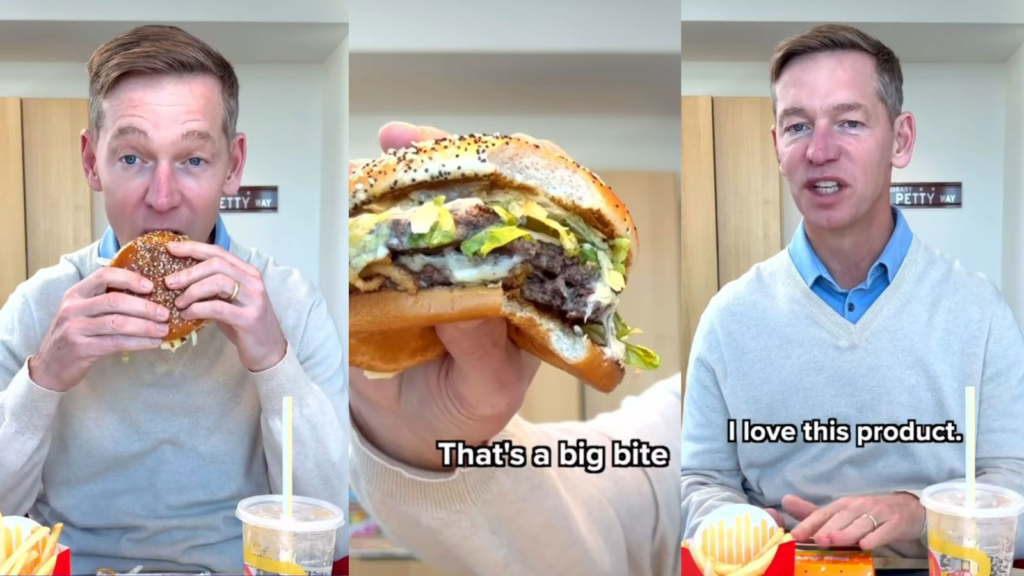
Was the McDonald's CEO's Big Arch burger bite just a big act?

When McDonald’s CEO Chris Kempczinski took a bite of the chain’s new Big Arch burger on camera, not everyone was convinced he actually liked it. Filmed at an office desk with the burger, fries, and a drink neatly in front of him, Kempczinski took careful bites, repeatedly calling it a “product” and walking viewers through every layer. Social media users flagged the moment as stiff and staged, with some questioning whether the CEO actually consumes McDonald’s in this manner.  “What’s the opposite of genuine and authentic,” one user asked in the post’s comments section, while another said, “This was the most unnatural thing I’ve ever seen. We need to see less CEOs doing normal stuff.”  Don’t miss: Is messy content the new route to authenticity? So why did the video feel off, even though Kempczinski technically didn’t do anything wrong? Industry professionals MARKETING-INTERACTIVE spoke to said it comes down to believability. Charlotte McEleny, former senior director of marketing and PR at Monks, called the clip performative. “Marketing is inherently a performance, but we still want to believe the person in charge actually consumes the product,” she said.  “We can even suspend our disbelief that a very slim, healthy-looking, rich man actually eats McDonald’s if he can sell it convincingly, but he didn’t,” she added. Beyond the screen, Oliver Budgen, founder and CEO of Bud, noted that language matters too. Referring to the burger as a “product” creates distance. Combined with controlled body language, the video signals corporate mode, not customer mode. Allen Looi, head of social at Mutant Communications, added that context matters even more in today’s hyper-personalised feeds. “When something from a CEO lands in someone’s social space, the scrutiny is amplified tenfold,” he said. “A mukbang video featuring corporate terms such as ‘product’ automatically signals corporate intent rather than authenticity, and that leaves a bad taste in viewers’ mouths.” The camera-ready CEO However, to be fair, not every CEO is comfortable in front of the camera. Possibly, in this instance, forcing them into a role they’re not natural in can backfire. McEleny added the invisible pressure to produce content has reached the boardroom, influencing even McDonald’s to push a CEO taste test that some viewers felt unnecessary. She added: Just because you can doesn’t mean you should. Manisha Seewal, group president at Redhill, highlighted the importance of matching the spokesperson to the story. CEOs work best for vision, accountability, and big-picture narratives; taste tests or playful demos often feel more authentic coming from employees, chefs, or franchisees. “A tightly controlled, jargon-heavy clip feels less like leadership in action and more like an ad read,” she said. Ashvin Anamalai, CEO of DNA Creative Communications, echoed the sentiment but zooms in on why audiences react the way they do – they’re forgiving of imperfections, yet crave relatability. Careful bites, corporate phrasing, and overly polished delivery can signal inauthenticity, even if the intention is to showcase the brand. In this case, he said:  It’s less about the burger and more about trust. Keeping it real Experts emphasise preparation and purpose. CEOs should go on camera only when they can add clarity, trust, or insight, not simply for optics. Budgen said natural language and believability matter more than polish; comms teams can guide without controlling the moment. “They need to speak in their own words and sound like themselves. That often means stripping back the corporate phrases that signal message control,” he said, noting that if the CEO is not a natural int that format, then change the format.  Anamalai added that coaching can help leaders relax and speak as humans, rather than institutions. At the end of the day, he said, whether a CEO is ready boils down to one question: are they adding real perspective, or just symbolic presence? Others also emphasised the importance of format and tone. Looi pointed out that putting a CEO in front of a social-first audience can work for big announcements or product launches, but it’s critical to choose the format, channel, and tone wisely. “The content has to feel genuine rather than shoehorned,” he said. For McDonald’s, the takeaway is clear: authenticity isn’t about a perfectly staged CEO bite. It’s about real reactions, genuine enjoyment, and letting someone who naturally connects with the audience showcase the product. A CEO presence alone doesn’t sell a burger, but a believable, human moment might. Related articles: Outlasting the gossip: Why Astronomer doesn’t need to kiss its reputation goodbye  Why leaders can no longer keep personal affairs private   Crisis comms or copy-paste? Air India draws scrutiny for CEO’s mirrored statement source

Was the McDonald's CEO's Big Arch burger bite just a big act? Read More »
Shake Shack names director of global marketing

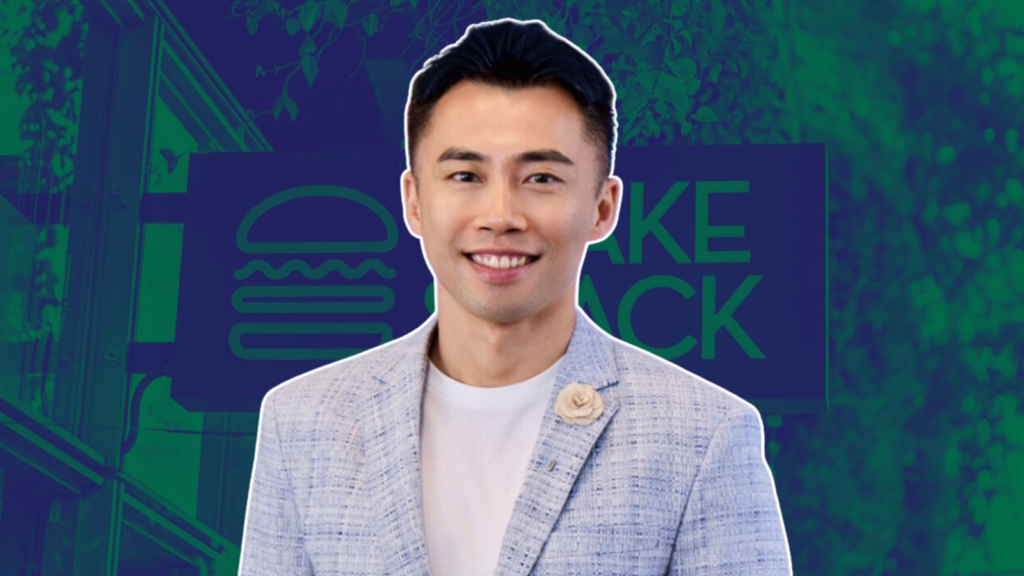
Shake Shack has promoted Alaric Sng (pictured) to global marketing director, reporting to Matthew Silverstein, managing director, APAC & Middle East. In his new position, he will oversee marketing for Mainland China, Southeast Asia, and select new APAC markets. The role is an evolution of his previous position rather than a replacement of an existing director-level post. In his LinkedIn post, Sng said the past few years saw him work closely with teams and licensees worldwide to grow the brand and expand the Shack experience. He added that he looks forward to deepening Shake Shack’s presence across its global markets in his new role. Don’t miss: Shake Shack Singapore appoints media agency Sng joined Shake Shack in 2022 after a stint as loyalty marketing manager at Shangri-La’s corporate office in Hong Kong, where he worked on evolving the Golden Circle loyalty programme into Shangri-La Circle. Earlier, he held roles at Digitas Hong Kong and Jack Morton in Shanghai, focusing on brand, digital and experiential marketing across Asia. In conversation with MARKETING-INTERACTIVE, Sng said, “I’m incredibly excited to step into the director of global marketing role at Shake Shack at such a pivotal time for our growth in the region. My focus will be on opening new markets, deepening strategic partnerships and crafting collaborations that feel uniquely ‘Shack’ in every city we enter.” “At the heart of it all, we want Shake Shack to be the brand guests are most excited to see in their neighbourhood – and to keep coming back to – as we continue to grow across the region,” he added.  The appointment comes as Shake Shack continues to push its brand into more premium and experiential territory. In October last year, the burger chain partnered with Regent Hong Kong on a world-exclusive collaboration that blended fine casual dining with five-star hospitality. Available from 12 November to 12 December at The Lobby Lounge, the pop-up marked the first tie-up of its kind between a luxury hotel and the brand. At the centre of the partnership was the Foie Gras Shack, a reimagined ShackBurger layered with foie gras torchon, Gruyere cheese and black truffle mayo, alongside Shack Caviar Fries topped with crème fraîche bavarois and caviar. The limited-time experience also featured panoramic Victoria Harbour views and exclusive merchandise for early guests, underscoring the brand’s appetite for high-impact, culturally resonant collaborations. Related articles: Shake Shack and HUMAN MADE foster cross-cultural appreciation in new collabShake Shack HK on how to appeal to Gen Z with innovative productsShake Shack HK and ONLY Beverages share ‘something good’ with new campaign source

Shake Shack names director of global marketing Read More »

SG reinforces public service media as trusted platform amid AI misinformation

Public Service Media (PSM) will continue to play a central role in safeguarding trust and credibility in Singapore’s information space, amid the rise of AI-driven disinformation, minister for digital development and information Josephine Teo said during Parliament’s Budget 2026 debate yesterday (2 March).  Speaking in response to member of parliament for Kebun Baru Henry Kwek, who urged the government to “adequately and sustainably” fund public media, Teo highlighted the risks posed by online falsehoods. “Another risk we face is the spread of disinformation and misinformation, fueled by technologies like AI. As a diverse society, we are particularly vulnerable to online falsehoods that erode trust in our society and institutions,” she said. Teo emphasised that Singapore has been strengthening its libraries and archives to cultivate information literacy and a discerning population. Don’t miss: 5 key takeaways for SG marketers from Budget 2026 The minister also underscored the central role of PSM entities in countering misinformation, noting their wide reach and high public trust. “Our PSM entities reach over 90% of Singaporeans. They remain highly trusted by the public, more so than reputable international and online media outlets,” Teo said. “Consequently, our PSM entities have become indispensable in countering misinformation,” she added.  Furthermore, Teo outlined ongoing initiatives to strengthen the sector, including the establishment of a digital verification team at CNA and collaborations with The Straits Times on the AskST series. “MDDI will therefore continue working closely with our PSM entities to maintain their reach and strengthen their fact-checking capabilities,” Teo said. Addressing Kwek’s concerns about relevance, visibility, and financial sustainability, Teo noted that PSM content also plays a role in nurturing national identity and cultivating news literacy among the young. “Besides delivering timely and credible news, our PSM entities produce content that strengthens our sense of identity as one people. They also play a role in cultivating news literacy among our young, through regular student publications and school competitions,” she said. Teo added that the government will continue investing in PSM and supporting new capabilities as the media landscape evolves. “We are studying approaches in other countries and will consult the industry to ensure that initiatives are implemented reasonably and effectively,” she said. Previously, Kwek had argued that public service media forms the backbone of Singapore’s trust infrastructure, particularly in an AI-driven information environment. “In the age of AI generated disinformation, [public service media] stand between our people and manipulated information space,” he said. He called for sustainable funding to ensure the sector remains credible and to give media professionals confidence in their careers. Kwek also highlighted the broader implications of AI on society and business. He suggested co-developing Singapore’s AI-centric development stack with major tech firms, mandating AI-focused approaches in IT contracts to accelerate adoption, and providing innovation grants and support for SMEs to build AI capabilities. “In the AI-centric world, where AI agents transact and AI systems make decisions, trust becomes the precious commodity in digital economy,” Kwek said. Photo courtesy of Josephine Teo, Facebook. Related articles:   ‘Adequate’ public media funding urged as AI disinformation rises  Singaporeans demand trust online as misinformation shapes digital behaviour   IMDA sets guardrails for agentic AI with new framework  source

SG reinforces public service media as trusted platform amid AI misinformation Read More »

Venezuelan quesillo causes social media stir at SG Ramadan bazaar

Ramadan bazaar vendor Ministry of Spud’s Venezuelan quesillo (a traditional flan) has become the centre of social media attention, drawing focus to the balance between food influencer culture and vendor reputation. On the second weekend of Ramadan bazaar (21-22 February), Ministry of Spud’s founder Abdul Khalil Abdul Mohsen posted a TikTok video responding to a review posted by TikToker Gunbuttock with the caption “In this video, I share my heartfelt response to Gunbuttock, expressing my gratitude for the free advertising and support. It is vital to acknowledge the contributions and kindness from fellow creators. The love and appreciation I feel are genuine, and I want to convey this to Gunbuttock and everyone watching.” While the caption of the post was meant to be uplifting and positive, the video began with Khalil mocking the influencer, saying, “Gunbutt sounds like a rejected autobot, but never mind.” “You love me so much, you’re giving me free marketing. Bad marketing is still marketing, thank you so much for the free marketing,” he added. Don’t miss: When reviews can make or break a business, can influencers be honest without causing harm? In the same video response, Khalil claimed that people who should be reviewing his food, are people who have tried quesillo. He shared that a customer from Colombia visited his Ramadan bazaar stall and said that the quesillo tastes similar to the ones in his home country. Khalil added that feedback and criticism are two different things, stressing that he has accepted and responded to constructive feedback. Following which, he said: Once again Gunbutt, your opinion is void because you have not tasted quesillo and you have not gone to Colombia. Khalil ended the video saying that he has a personal video of the influencer, later claiming that he looks “so cute.” Khalil had previously commented a photo of Gunbuttock and his friends at the bazaar, with the text “I know who you are”. The comment was on Gunbuttock’s initial video review. In response, Gunbuttock posted a video with a screenshot of Khalil’s comment. The accompanying text on the video read “Left an honest review about pasar malam food. Instead of improving it, the owner decided to post pictures of my face saying, ‘I know who you are’, as if it bothers me.” “If your food is solid, you don’t need intimidation tactics,” wrote Gunbuttock. Social media analysis The conversation peaked on 23 February with 2,473 social engagements, driven by comparisons between Ministry of Spud and competitor Mangobossku. A public exchange between the food influencer and the bazaar vendor over the quesillo review highlighted the growing influence of digital reviewers in shaping public opinion. According to media intelligence firm Truescope, social media sentiment showed a mix of reactions, with critics arguing that feedback should serve as a roadmap for improvement rather than a personal attack. Some have also questioned the price of the quesillo, which was retailing for SG$10 per slice. Others saw Ministry of Spud’s response as a calculated marketing tactic and praised Gunbuttock for providing an honest review. A smaller group warned that such reviews could damage the brand’s reputation and affect business operations. Key themes that appeared in social media conversations include the broader trend of culinary diversification in Singapore’s Ramadan bazaars where vendors are expanding offerings beyond traditional Malay and Middle Eastern foods and are focused on engaging audiences seeking new experiences. In addition, social media platforms such as Instagram and TikTok played a central role in driving visibility and engagement, placing Ministry of Spud within the wider conversation about influencer-vendor interactions. “The analysis of Ministry of Spud reveals a brand navigating a complex media landscape defined by public scrutiny. Two distinct narratives have emerged: the brand’s role within the ethics of food influencer culture and the critical importance of a measured response to feedback,” said Truescope. “Engagement patterns suggest that audiences are drawn to issue-oriented discourse. Ultimately, Ministry of Spud has converted this attention into a visible market presence,” added Truescope. Do influencers have an ethical responsibility? Gunbuttock’s initial video review saw the influencer trying a slice of quesillo from vendors Mangobossku and Ministry of Spud, He compared which of the two quesillos was better. The influencer said that Mangobossku’s caramel flavour was “solid” but was slightly too sweet. He commented how the texture was noticeably dense when a quesillo should feel light and silky. He rated Mangobossku’s quesillo a 7.8 out of 10.  When reviewing Ministry of Spud’s quesillo, Gunbuttock said the dessert tasted similar to a “sweet, steamed egg than a proper caramel custard.” While he complimented the wobble of the dessert, the influencer said the egg taste dominated the dish and that the caramel lacked depth. He added that the overall experience was “confusing” and rated the dish a 2 out of 10.  In a previous conversation with MARKETING-INTERACTIVE, food influencers shared that reviews should be honest and have to be delivered constructively. This includes avoiding unnecessarily harsh language. Brandon Chai (@brandononc) noted that providing actionable feedback could help distinguish between critique and cruelty. Meanwhile, Sofia Arissa (@sofiaarissa.a) said she would share her experience with the business privately and directly.  Where the influencers largely opined differently is whether or not reviewers and creators have an ethical responsibility to local businesses. Chai, for example, said that an influencer’s primary duty is to their audience. This is especially since their recommendations impact where followers invest their time and hard-earned money.  On the other hand, TikToker @Pristyq who deems herself to be a “smaller influencer” and wants to be known as ‘Priscilla’, suggests that ethical responsibilities may only apply to influencers with bigger reach. “Micro-influencers don’t necessarily have an ethical responsibility to local businesses. In fact, we might focus more on our audience in order to grow it,” she explained. “But as influencers become bigger, this responsibility to support local businesses may grow,” added Priscilla. Related articles:    Credibility trumps clout in Singapore’s influencer landscape Can Publicis’ HEPMIL acquisition unlock new opportunities for boutique influencer agencies?  Study: 62% of Singaporeans engage with

Venezuelan quesillo causes social media stir at SG Ramadan bazaar Read More »

Chow Tai Fook appoints first global creative director

Chow Tai Fook Jewellery Group has appointed David Tse (pictured) as its first global creative director, effective immediately. This marks a significant step in the brand’s transformation as he leads its next phase of global influence. In this newly created role, Tse will lead the team in further developing the brand’s creative identity and conceptualising, developing, and executing the overall creative strategy across all touchpoints. As part of the branding department, he will report directly to vice-chairman Sonia Cheng. Tse will lead Chow Tai Fook Jewellery’s next era of global influence and collaborate with various teams and business functions worldwide to ensure a consistent, compelling, and emotionally resonant brand expression. Having developed a diverse creative career in China and global markets, Tse brings to the group a rare blend of visionary brand storytelling, cultural diversity, and creative leadership, according to Chow Tai Fook. A veteran of the international luxury and creative arena, Tse began his career as an entrepreneur focusing on creative production. Over the years, Tse has worked with some iconic brands such as Burberry, Golden Goose, Uniqlo, Google, PayPal, Volvo, and Starbucks. Most recently, Tse served as creative director at Hermès in Shanghai, the first creative director to be based beyond the Paris headquarters. There, he worked closely with the Paris headquarters team and collaborated with artists and creatives across various disciplines worldwide. Sonia Cheng, vice chairman of Chow Tai Fook Jewellery Group, said, “I am delighted to welcome Tse as global creative director for our brand. His appointment is timely as we continue to transform and globalise the brand. His deep understanding of luxury, strong creativity and proven track record to translate brand strategy into powerful storytelling will play a key role in shaping our brand equity globally. I look forward to working with Tse to take our brand to the next level.”  “I am excited to join Chow Tai Fook Jewellery Group at this pivotal moment as we approach our centenary celebration. I have long admired the brand as a distinctive global symbol of Chinese luxury. My focus will be on honouring our rich heritage while fostering innovation and creativity, always keeping our customers at the heart of everything we do,” said Tse.   Don’t miss: Chow Tai Fook launches first flagship on Canton Road Chow Tai Fook has been launching various initiatives to convey its positioning as a global Chinese luxury brand, rooted in nearly a century of trust and innovation. For example, the brand opened its first flagship store in February, located on Canton Road in Tsim Sha Tsui, which offers a refreshed and immersive customer experience. The opening also marks the debut of HOME Collection, the group’s first luxury lifestyle brand, now available alongside the widest product assortment in any Chow Tai Fook store globally. The flagship launch reflects the Group’s ongoing effort to elevate customer experience and strengthen its position as a leading force in global luxury. Mark your calendars for 24 June! #Content360 Hong Kong returns with a dynamic, one-day event dedicated to pivotal trends—from the silver economies to breakthrough IP collaborations, sports, and beyond. Let’s dive into the art of curating content with creativity, critical thinking and confidence! Related articles: Chow Tai Fook launches first flagship on Canton RoadChow Tai Fook taps Yang Yang as global brand ambassadorChow Tai Fook drives jade internationalisation with high jewellery collection source

Chow Tai Fook appoints first global creative director Read More »

Why the Premier League's new streaming app is a game-changer

Football fans, your matchday ritual is about to get a software update as the Premier League (PL) looks to launch its own direct-to-consumer (DTC) streaming service, Premier League Plus. Happening in Singapore for the 2026–27 season, this will be the first time PL will sell matches directly to fans in a market. Developed in partnership with StarHub, the move signals more than just another app entering an already crowded screen. It represents a fundamental shift: for the first time, fans will be able to stream all matches live directly through a league-owned platform. Currently PL has its own app, but it does not stream live games and has so far served mainly as a companion for stats, highlights, and scores. With the new upgraded offering, PL hints at something more profound – a change in who owns the fan relationship, and the data that comes with it. Don’t miss: Interview: Liverpool legend Robbie Fowler on brand loyalty in the world of football For Jake Abdullah, media veteran and entertainment leader who was previous with the likes of Astro for over 23 years in various leadership positions, the move was inevitable. “When you own the biggest football league in the world, you don’t rent shelf space forever. The Premier League wants control. Data. Margin. Simple.” He added that the move does not spell the end for broadcasters overnight. It does, however, changes leverage – and leverage, he said, changes everything.  However, the implications stretch beyond leverage. For Basil Chua, managing director of global media buying firm Multiverse Partners Network, the launch is “a watershed moment for brands targeting live sports fans in Singapore”. Chua previously worked with the likes of Asia MX, StarHub, FOX and many others. “Today, advertising against Premier League content means buying through a traditional broadcaster’s sales team that could only offer broad audience segments, limited personalisation, and boring rigid ad formats,” he said. Premier League Plus, he argues, flips that model. With a DTC platform, the league would own first-party data, viewing habits, team loyalties, device preferences, engagement depth. That intelligence does not just reduce media wastage. It reshapes how brands can show up. Chua added:  This is not just DTC. It’s direct-to-advertiser. By owning the platform, the league can deal with brands and agencies directly, removing the traditional broadcast middle layer. In theory, that means faster negotiations, bespoke sponsorship integrations and advertising products built on verified audience intelligence rather than estimated ratings. For marketers, the implications are specific. An airline could target fans based on travel intent. A B2B brand could reach affluent mobile users during midweek fixtures. A lifestyle label could dynamically adjust creative during blockbuster clashes. “DTC and DTA is a twin disruption for live sports. One captures the fan. The other captures the advertiser. Together, they redraw the commercial architecture of live sports,” Chua said.  Singapore, in this view, is not just a pilot market. It is a test lab for a global playbook. Substituting the middleman  While the league experiments with fan data and advertiser control, the move inevitably reshuffles relationships with existing broadcast partners. Jake points to Malaysia, where pay TV operator Astro has long anchored subscriptions around Premier League rights. “I subscribe to Astro for one reason, to watch the Premier League. Football is the glue,” he said. If fans are eventually able to subscribe directly at competitive pricing, broadcasters risk shifting from gatekeepers to resellers. The real pressure, Jake argues, will surface at the next rights negotiation cycle. Vishnu Mohan, partner and CEO of Dept Agency, APAC who ran Havas Media in Asia for over 17 years, adds nuance: Singapore is a test precisely because the ecosystem is complex. Broadcasters, long-term contracts, and global rights holders make sudden disruption difficult. AI localisation, such as commentary in multiple languages, regionalised content, could help the league scale without alienating partners. Mohan noted that for now, Premier League Plus will likely operate as a complementary offering rather than a full replacement of broadcasters. Keeping fans onside Even with the league’s massive fanbase, launching a standalone app comes isn’t a cakewalk in the park (or in this case, the field). Mohan frames the practical hurdles. “It may work, but it’s a big challenge. A league-only app surviving on its own is not an easy job,” he said. Fans themselves are a challenge. App fatigue is real. As Jake put it, “We already pay for Netflix, Amazon and Disney+. But live football isn’t a drama series. Liverpool versus Manchester United doesn’t wait. Fans complain. Then they subscribe. That’s the reality. I am living proof.” Echoing this sentiment, Mohan said, “Will people download it despite app clutter? Yes. It’s the Premier League. Large, loyal fan bases have historically been used to build entire ecosystems around them. The real question is whether this becomes the default destination, or simply an additional touchpoint.” Both experts agree that stickiness will come from culture and community, not just match streaming. Behind-the-scenes content, transfer drama, club documentaries, archive matches, fantasy integration, and other fan experiences can turn a one-off download into a daily habit. Without that ecosystem, engagement spikes and drops. The bottom line, as Jake sees it, isn’t about an app. It’s about power. “The Premier League doesn’t want to share the pie forever. And if I’m Astro, I’m not panicking. But I’m definitely preparing,” he said, adding:  When the content owner builds its own stadium, you don’t want to be the guy just selling snacks outside. In the end… football is life. Related articles: You’ll never scroll alone: How Liverpool’s social strategy is ruling the internet  Offside or on track: Why Manchester United fans have mixed reactions to the new stadium  Amazon Ads and Netflix team up for programmatic access to streaming inventory  source

Why the Premier League's new streaming app is a game-changer Read More »

Dr. Seuss' travel agency turns storybooks into passport-free destinations

Dr. Seuss Enterprises has launched a new travel agency that turns its classic storybook settings into bookable-style destinations audiences can explore without leaving home. The initiative, created in collaboration with marketing agency Known, was first teased in an Instagram post hinting at a whimsical travel hub. Shortly after, the company released a short clip styled as a retro travel agency ad, featuring Dr. Seuss taking calls via a headset and pitching trips packed with wordplay and familiar puns drawn from his best-known titles. The campaign directs fans to a dedicated website designed as a story-led booking portal. Instead of flights and hotel deals, visitors can browse themed itineraries to fictional locales including The Lorax’s Truffula Forest, the Jungle of Nool from Horton Hears a Who!, and Sally’s house from The Cat in the Hat. Don’t miss: Real life incarcerated parents write stories for their children in Geneco’s new book The website also features downloadable materials such as printable maps, postcards and a travel diary, encouraging families and young readers to chart their own “journeys” through the Seuss universe. Mark Feldstein, partner and president of Studios at Known, highlighted the initiative in a LinkedIn post, “There isn’t a person I know, young or old, that didn’t grow up reading Dr. Seuss. For generations, he’s taken us on amazing, colorful journeys. That’s why we’re thrilled to partner with Dr. Seuss Enterprises to launch ‘The Dr. Seuss Travel Agency’.” “This is an incredible opportunity for kids and families to ‘book’ now and escape to the most fantastic destinations you could ever imagine. It’s just the start of all the surprising places we’re going together,” he added.  MARKETING-INTERACTIVE has reached out for more information.  The launch also lands amid a wider wave of brands reimagining legacy characters for new cultural moments. This week, Kellogg’s Frosted Flakes revived its iconic mascot Tony the Tiger through a music collaboration with hip hop artist J.I.D. In its latest campaign, the duo reimagined the brand’s ‘90s jungle setting into a cultural anthem titled HEY TONY!, aimed at inspiring teens to “flex their inner tiger”. The full-length track blends J.I.D’s rhythmic flow with new verses that echo Tony’s long-standing message of confidence and optimism. The collaboration extends beyond music. A limited-edition “Day Ones” merchandise line includes a jersey, T-shirt and collectible cereal box featuring J.I.D front and centre, complete with a custom illustration, Spotify QR code and crossword puzzle. Showcase your most innovative content and gain recognition from a panel of industry leaders by entering the inaugural Content360 Awards. Submit your work today and be part of the celebration that honours the campaigns defining the future of content marketing. Related articles: Baby Shark swims deeper into SEA with experiential expansions   Toys “R” Us Asia embraces ‘kidults’ with new brand promise   How LEGO and IKEA Malaysia are redesigning homes through play source

Dr. Seuss' travel agency turns storybooks into passport-free destinations Read More »

AI-generated ads under scrutiny, but no complaints lodged with Singapore watchdogs

The Consumers Association of Singapore (CASE) and the Competition and Consumer Commission of Singapore (CCS) have not received complaints about misleading or false advertisements using AI-generated content. This is according to a written reply by deputy prime minister (DPM) and minister for trade and industry Gan Kim Yong, reported The Straits Times. Gan reportedly made the remark in response to a parliamentary question from Dr Charlene Chen. During a parliament session yesterday (25 Feb) Chen asked if the government was collaborating with consumer watchdogs and digital platforms, such as eCommerce and property listing sites, to detect and take down AI-generated content that misrepresents products and services. The concern comes amid reports of property agents using AI-generated renderings in property listings in November last year. Don’t miss: Can an ‘AI generated’ label really build trust, or will it slow the industry down?  The minister reportedly said that the Council for Estate Agencies’ (CEA) code of ethics and professional client care sets the minimum standards for real estate agents. The code of ethics and professional client care requires marketing materials to accurately reflect properties. Agents are also required to provide clear disclaimers when AI used to alter or enhance images or videos. Those who fail to meet the requirements will face enforcement action.  In addition, the CEA is reviewing its regulations to provide further guidance on the use of AI in ads.  Meanwhile, consumer protection laws, including the Consumer Protection (Fair Trading) Act, cover misleading claims by businesses, including those involving AI-generated content, Gan added. Consumers encountering such claims are encouraged to approach CASE for assistance. When MARKETING-INTERACTIVE reached out, CCS said that it “continuously monitors market practices and emerging trends, including overseas developments.” In 2025, CCS took action against Quantum Globe, owner and operator of the “Lambency detailing” brand, for AI-generated fake reviews on Sgcarmart.com for the past 2 years. Quantum Globe admitted that it had used ChatGPT to generate customised review content based on services provided to customers, said CCS.  “Cases are assessed on a case-by-case basis. While generative AI can unlock productivity and creativity gains for businesses, the onus remains on businesses to ensure that the content created does not deceive or mislead consumers. In this regard, CCS has published a guide on quality-related claims, which both consumers and businesses can familiarise themselves with to become better aware of false marketing claims and misleading representations,” added CCS. Similarly, in the AI governance space, CCS collaborated with Infocomm Media Development Authority to develop the AI Markets (AIM) Toolkit. AIM is designed to help AI developers and deployers self-assess to ensure that their AI models and business practices are compatible with the competition and consumer fair trading rules. MARKETING-INTERACTIVE has reached out to the Ministry of trade and industry and CASE.  In September last year, the CCS released an enhanced eCommerce guideline (TR 76), guiding industry players on the appropriate use of automated tools and AI. The guidelines were enhanced to address emerging challenges in Singapore’s eCommerce market, as well as to enhance consumer trust and promote market competitiveness. “The enhanced TR 76 represents a major step forward as it now covers more comprehensively the different aspects of a consumer’s purchasing journey, starting from pre- to post-purchase. We also now provide guidance to businesses operating in the online space so that they contribute to a fair and open environment,” said Alvin Koh, chief executive of CCS at the time. “CCS encourages online businesses to incorporate these updated guidelines, which will help build greater trust and efficiency in our e-commerce ecosystem for the benefit of both consumers and businesses,” he added.  Showcase your most innovative content and gain recognition from a panel of industry leaders by entering the inaugural Content360 Awards. Submit your work today and be part of the celebration that honours the campaigns defining the future of content marketing. Related articles:    Singapore welcomes first AI property agent MAIA Consumer watchdog flags misleading website tactics by Courts and PRISM+  Consumer watchdog calls out Agoda over ‘misleading’ website and app features   source

AI-generated ads under scrutiny, but no complaints lodged with Singapore watchdogs Read More »

ComfortDelGro picks brand, media and data partner

Zig by ComfortDelGro has appointed S4 Capital’s Monks Singapore as its lead brand, media and data partner. The contract is for 12-months retainer contract from January to December 2026.  The appointment comes as Zig (“劲”) consolidates its taxi, private-hire rental, payment, and ride-hailing services under a single, tech-enabled identity. The partnership begins with a brand refresh and a multi-channel integrated campaign, aimed at retaining the brand’s distinctive character while injecting new energy and personality. The new brand platform, “Time to Zig”, celebrates the choice and freedom Zig offers everyday Singaporeans as well as its taxi and PHC drivers. Don’t miss: Grab rebrands GrabRewards programme across SEA The campaign will roll out across OOH, social, digital, events, and a series of films that highlight everyday moments. The campaign will feature local Singapore references, cringeworthy situations, and relatable experiences designed to foster meaningful connections with both riders and drivers. It will roll out in phases starting from 16 March. Monks is also supporting Zig through its media and data capabilities, optimising campaign reach while enhancing the brand’s data infrastructure. “The appointment marks a timely and thoughtful evolution of ComfortDelGro’s point-to-point mobility business, uniting the Group’s deep operational strengths with a renewed focus on freedom, trust, and the human experience. This is not only about delivering more and better rides but also building a customer-centric point-to-point ecosystem that empowers people with greater freedom to move, earn, and connect with confidence,” said Joshua Kwah, head of marketing, Zig by ComfortDelGro. “We’re proud to partner with ComfortDelGro P2P at this pivotal moment for Zig. Our role is clear: ensure the brand works as hard as the platform does, with ambition, integration, and a relentless focus on measurable impact. This is the foundation for long-term growth,” added Yasmine Mansour, head of growth, Monks South East Asia. In tandem, Bill Davies, creative director, Monks Singapore, added “It’s exciting to work with a brand that touches the lives of so many Singaporeans. We wanted to have fun with the brand, give it new meaning and bring joy to people in a way that felt authentic and relatable. It’s a brand platform that we hope can keep running and running, with lots of ways to put a smile on people’s faces.” MARKETING-INTERACTIVE first reported on the refresh last month. The refresh introduced a re-energised visual identity, including updated colours and a dynamic logotype that builds on its signature blue. According to ComfortDelGro at the time, the refreshed Zig identity will be implemented progressively across ComfortDelGro’s P2P mobility operations in Singapore. The move also builds on ComfortDelGro’s broader branding efforts. In March last year, the group rolled out a refreshed corporate brand as part of its evolution into a global multi-modal transport player. Related articles: Weekly roundup: ComfortDelGro’s refresh and our favourite Raya campaigns Iconic ComfortDelGro cabs form Swedish flag to welcome king and queen to SG Gojek and ComfortDelGro to send untaken rides to either platform source

ComfortDelGro picks brand, media and data partner Read More »

UNIQLO nets tennis star Emma Raducanu as global brand ambassador

UNIQLO has tapped Emma Raducanu, Britain’s top-ranked female tennis player and 2021 US Open winner, as its newest global brand ambassador. She will make her debut representing the brand at the Indian Wells Open in the US this March, marking the start of her international LifeWear promotion. Raducanu joins a roster of high-profile UNIQLO ambassadors, including tennis legends Roger Federer and Shingo Kunieda, and Academy-Award-winning actor Cate Blanchett. Together, they champion the LifeWear philosophy, which emphasises excellence, positive societal contribution, and nurturing the next generation. Raducanu will also contribute to the design and functionality of her on-court apparel. Don’t miss: UNIQLO unveils first girl-group UT collab with BABYMONSTER, dropping 2026 Beyond tennis, Raducanu will participate in UNIQLO’s community programs, including the Next Generation Development Program for young and underserved tennis players, as well as global initiatives such as “UNIQLO Peace for All” and “The Heart of LifeWear”. Her role underscores UNIQLO’s approach of pairing professional expertise with broader social impact. In a statement, UNIQLO said its ambassadors are chosen for their integrity, optimism, and humility. The brand combines their professional insight with proprietary technologies to create apparel that enhances performance while delivering everyday comfort. Current ambassadors include Roger Federer and Kei Nishikori in tennis, Shingo Kunieda and Gordon Reid in wheelchair tennis, Ayumu Hirano in snowboarding, Adam Scott in golf, and Cate Blanchett in acting.  “We are honoured to welcome Raducanu to UNIQLO. Even under intense pressure, she consistently demonstrates a bold and proactive mindset, embracing challenge with determination. Off court, she is an intelligent and well-read young person who values her connection to family and friends. We believe she will be an exceptional ambassador and look forward to making positive change together in the world,” said  Koji Yanai, group senior executive officer, Fast Retailing.  Speaking on her position, Raducanu said, “I am very pleased to join UNIQLO and to work closely with its amazing team of global brand ambassadors. UNIQLO and I share many values and perspectives on life, culture, and society. I am excited to promote LifeWear through my tennis career, and to working with everybody at UNIQLO to inspire and engage young people everywhere.” UNIQLO’s LifeWear approach has also seen local representation in the region. In April last year, UNIQLO Malaysia appointed singer and actress Daiyan Trisha as its first-ever brand advocate in the country. Selected for her timeless style, Daiyan brings the LifeWear philosophy closer to Malaysians, making the brand’s simple, functional, and comfortable apparel more relatable and accessible. Related articles: UNIQLO Singapore cooks up first global UTme! collection with Nissin       UNIQLO names contemporary designer KAWS as first artist in residence   UNIQLO taps local artists to celebrate 20 years in HK source

UNIQLO nets tennis star Emma Raducanu as global brand ambassador Read More »