marketing interactive

The MC Collective expands luxury travel and lifestyle portfolio

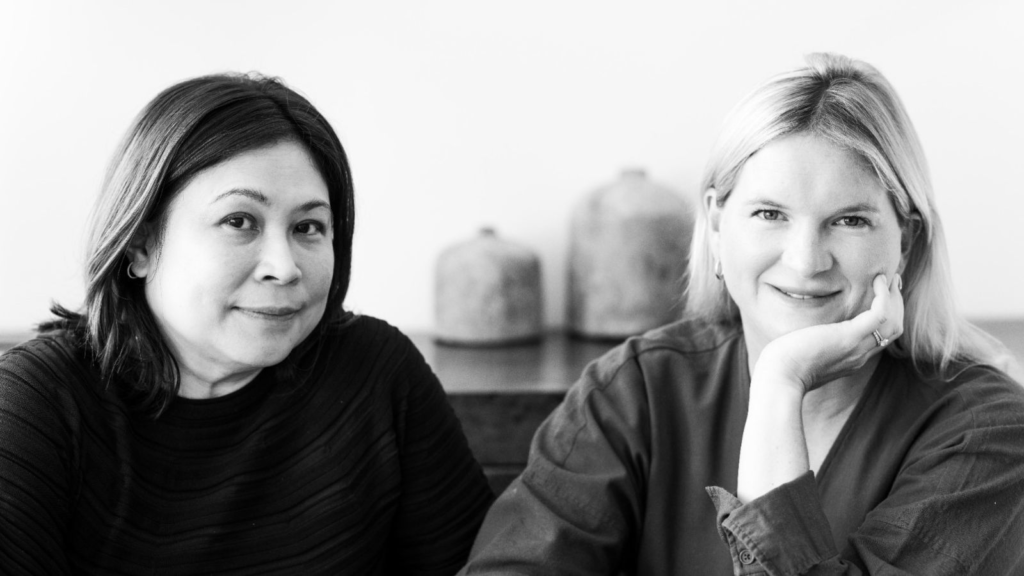
The MC Collective has secured new partnerships with luxury travel company Lightfoot Travel and the Singapore Yachting Festival, expanding its footprint across the luxury travel, hospitality and lifestyle space. Under the new partnership, Lightfoot Travel has appointed The MC Collective to support its strategic communications efforts in Singapore and across Asia Pacific. The travel company is known for its personalised, tailor-made luxury holidays worldwide. Meanwhile, The MC Collective will lead strategic communications and media engagement for the Singapore Yachting Festival ahead of its 2026 edition, which will take place from 23 to 26 April 2026 at ONE°15 Marina Sentosa Cove. Don’t miss: The Kallang seeks PR agency According to the agency, the new client wins underscore continued demand for The MC Collective’s operating model, which centres on senior-led, lean teams focused on reputation-building, experience-driven storytelling and commercial impact, particularly for high-consideration travel and premium lifestyle brands. The appointments also reflect the agency’s broader push into corporate communications. “Lightfoot Travel and Singapore Yachting Festival are both distinctive brands operating in high-expectation categories. These are audiences who value detail, trust and credibility, and that’s exactly where senior-led communications makes the difference. We’re proud to support both teams with a strategy that is clear, efficient and outcomes-focused,” said Eliza Marriott-Smalley (pictured right), founder of The MC Collective.  The wins follow the recent appointment of Michele Batchelor (pictured left) as The MC Collective’s lead consultant, corporate. Batchelor was most recently director of corporate affairs and communications for Southeast Asia at American Express and is a former Bloomberg journalist. With more than 20 years of experience across American Express, Singtel and Bloomberg, Batchelor strengthens The MC Collective’s capabilities in corporate positioning, executive profiling, issues management, stakeholder engagement and internal communications, complementing its existing strengths in lifestyle, hospitality and F&B. Speaking on her role, Batchelor said, “I’ve led communications in complex, fast-moving environments and worked with agencies of every shape and size. What I value about The MC Collective model is the clarity and pace: senior people delivering strong thinking quickly, with no layers. It’s less like managing an agency, more like extending your own leadership bench.” The latest wins build on The MC Collective’s growing presence in the hospitality space. In June last year, the agency was appointed regional public relations partner for Mama Shelter as the lifestyle hotel brand geared up to open its first Asia property in Singapore in September 2025. Under the remit, The MC Collective is handling media relations, key opinion leader marketing and strategic partnerships for Mama Shelter Singapore locally and across the region. The property, located on Killiney Road, marked the Paris-founded brand’s Singapore debut, bringing its signature mix of bold design, community-led programming and laid-back hospitality to Orchard Road. Related articles: Singapore Tourism Board on the search for PR agency    OPPO appoints PR and media agency partners in Singapore    CASETiFY picks new PR agency in Singapore source

The MC Collective expands luxury travel and lifestyle portfolio Read More »
Klook seeks for chief spring officer to navigate cherry blossom season

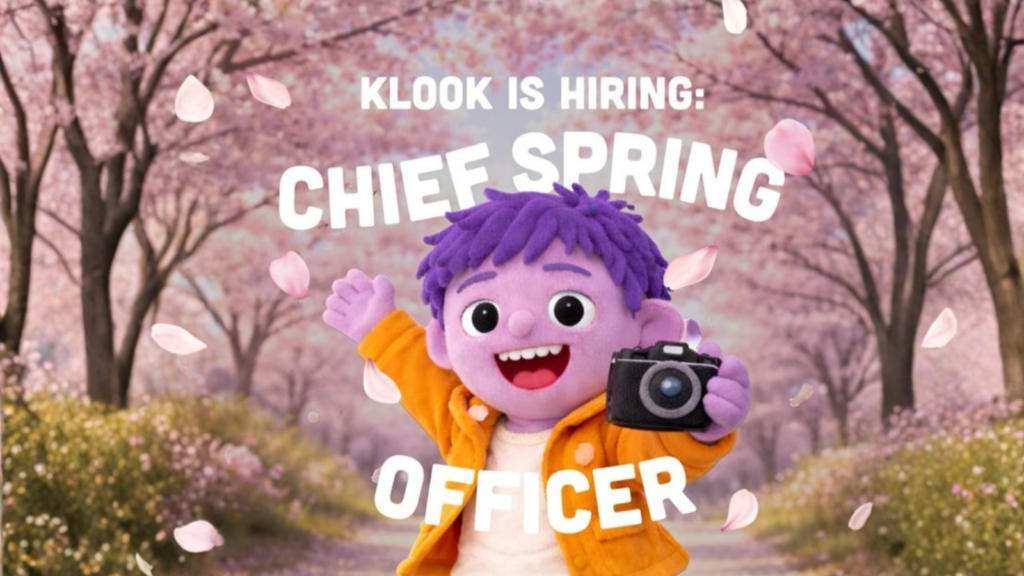
Klook is seeking for a chief spring officer, a new time-sensitive role created to help travellers better navigate the complexities of spring travel across Japan, South Korea, and Mainland China. This comes as the March–April spring season is one of the most operationally demanding travel periods in the region, shaped by a shifting short-lived cherry blossom window, unpredictable weather conditions, and peak-period crowds. Despite these challenges, spring travel demand remains strong. Comparing the March–April period year-on-year, Klook saw experience bookings increase by 34% in Japan, 92% in South Korea, and 46% in Mainland China from 2024 to 2025, and anticipates this growth momentum in 2026. As spring travel demand continues to grow, Klook sees an increasing need for specialised spring expertise — people who have navigated peak bloom season firsthand and understand what works, what doesn’t, and how to adapt in real time. This is a time-bound role aligned with Klook’s 2026 spring campaign, covering the peak spring travel period. It is designed to address a specific seasonal travel need rather than being a permanent position. The chief spring officer will lead Klook’s spring travel content and share insights across Japan, South Korea, and Mainland China. The chief spring officer will deliver live insights during peak spring season, translating firsthand travel experiences into practical guidance, content, and recommendations that help travelers plan and move with greater ease. This role will also be responsible for discovering the best spring travel experiences, helping travellers navigate peak travel periods with less stress and more ease, as well as translating firsthand spring travel experiences into actionable content, insights, and recommendations. The candidate will also be making fast, informed decisions in dynamic environments, responding to changes in weather conditions, crowd density, and bloom progression. The role reflects Klook’s continued focus on experience-led discovery and travel intelligence. The successful candidate will monitor bloom progression, respond to changing on-ground conditions in real time, and test curated Klook experiences, from rail passes to walking tours, to ensure recommendations remain relevant as spring unfolds. Applications for the chief spring officer role are open for a limited time. Individuals who have traveled to Japan, South Korea, or Mainland China during spring in the past three years — and therefore have firsthand understanding of recent peak-season travel challenges — may be a strong fit. The role also requires strong stamina and resilience, given the need to sustain long days of on-ground exploration during a compressed seasonal window. The successful candidate will have sponsored travel opportunity to at least one spring destination across Japan, South Korea, or Mainland China between 20 March 2026 and 10 April 2026; as well as full coverage of in-destination activities and early access to exclusive seasonal spring experiences on Klook. Interested applicants will need to share a video on Instagram or TikTok (at least 30 seconds) that demonstrate their firsthand knowledge and expertise in spring travel, as well as the application form by 12 February.  Related articles: Klook kicks-off campaign filled with internet slang and viral online topicsKlook doubles down on digitisation efforts and workforce growth source

Klook seeks for chief spring officer to navigate cherry blossom season Read More »

Yeo’s bets on fortune horse packaging and gamified social play this CNY

Yeo Hiap Seng (Yeo’s) has refreshed the packaging of three of its heritage drinks for the Lunar New Year, introducing limited-edition fortune horse designs across chrysanthemum tea, first harvest green tea and longan red date drink. Launched under the theme “Wherever you go, fortune follows”, the updated packs feature a vibrant horse mascot, aimed at appealing to younger consumers while retaining the brand’s familiar taste profile. To support the launch, Yeo’s has rolled out a Lunar New Year Instagram giveaway featuring a ‘GRWM’ (get ready with me) essentials kit. Designed to help consumers prepare for festive reunions, the kit includes a red packet pouch, hair pins and an ingot keychain, alongside other themed items. Don’t miss: Yeo’s brews holiday magic with gifts you can sip The campaign also includes a gamified personality filter on social media, which matches users to their “perfect Yeo’s drink” through a series of short questions. Positioned as a festive icebreaker, the game is intended to encourage interaction and conversation during holiday gatherings. The limited-edition fortune horse packs are now available at leading supermarkets islandwide. The digital personality game can be accessed via a website, while the Instagram giveaway runs from 4 to 11 February 2026. “We are excited to debut our fortune horse packaging, which brings a playful, modern energy to our beloved drinks. This year is about the ‘GRWM’ spirit, sharing moments of joy while getting ready with loved ones. By pairing our refreshed packs with a digital personality game, we are offering fans a fun way to connect and keep the festive mood light-hearted,” said Alex Chen, head of marketing and business development at Yeo’s Singapore.  The fortune horse refresh builds on Yeo’s Lunar New Year efforts in 2025 to update its festive branding. During Lunar New Year 2025, the brand rolled out limited-edition packaging featuring the fortune cat across three of its beverages, alongside immersive festive installations. As part of that campaign, Yeo’s unveiled two 1.2-metre-tall 3D fortune cat installations made from 1,700 recycled Yeo’s plastic bottles each, which were displayed at FairPrice Hougang Mall and FairPrice Xtra @ Jurong Point. The Hougang installation was recognised by the Singapore Book of Records as the largest 3D-printed fortune cat made from recycled plastic bottles. Showcase your most innovative content and gain recognition from a panel of industry leaders by entering the inaugural Content360 Awards. Submit your work today and be part of the celebration that honours the campaigns defining the future of content marketing. Related articles: Yeo’s backs para-athletes in new Singapore Disability Sports Council partnership     Yeo’s ignites dragon fever with fiery beverage collab    Yeo’s rallies a new wave of tea lovers with cheeky campaign   source

Yeo’s bets on fortune horse packaging and gamified social play this CNY Read More »

UNIQLO flips Tanjong Beach Club into an invite-only European getaway

When UNIQLO Singapore set out to launch its 2026 Spring/Summer collection, it deliberately moved beyond store-led or digital-first approaches. Instead, the brand staged a closed-door takeover of Tanjong Beach Club, transforming the space into an immersive preview and a physical expression of its LifeWear philosophy. For Paulene Ong, marketing director at UNIQLO Singapore, the decision to anchor the launch in a live experience was not about novelty, but about relevance. “Having an event, season after season, is not something new, but as time goes by, and how the marketing ecosystem and landscape is changing, we’re also recognising the importance of earned media,” she said in an interview with MARKETING-INTERACTIVE. While paid media and influencer placements remain part of the mix, Ong noted that audiences are increasingly discerning. “More and more, consumers are being more discerning. There is a need to drive more earned organic content,” she said, adding that people are far more likely to share an experience online when it genuinely delights them. Don’t miss: What ‘authentically Singaporean’ means for global brands like adidas The Tanjong Beach Club takeover was designed to immerse guests in two distinct environments inspired by Urban Rome and the Amalfi Coast, aligning with the collection’s relaxed silhouettes, breathable materials and refreshed colour palette. But Ong stressed that the venue choice was not just aesthetic. “First and foremost, wanted our guests to feel inspired by the whole collection. It also meant that we needed a space that was capable enough to bring the collection to live,” she said. “The goal was to place guests in a holiday mindset — not just to view the clothes, but to imagine wearing them.” With the takeover, UNIQLO aimed to create an experience that allowed guests to imagine themselves on vacation, whether along the Amalfi Coast or in Urban Rome, and be inspired to try on the pieces and envision the outfits they could take with them. According to Ong, the European summer narrative was intentional, but not aspirational for its own sake. Instead, it was meant to show versatility. “When we brought the so-called European summer to life, it was all about helping people to think of different ways to reuse their pieces again and again,” explained Ong. That flexibility sits at the heart of UNIQLO’s LifeWear proposition of everyday essentials designed to move seamlessly across contexts, from travel to daily life in Singapore. Translating product into physical experience  Beyond visuals, the activation leaned heavily into materiality. Linen, a core focus of the Spring/Summer range, was emphasised through open layouts, natural light and flowing fabrics that moved with the sea breeze. “When we think about summer, it’s very natural to think about materials that are breathable, that can flow,” Ong said. “Not only look good from a colour palette standpoint, but also have that functionality to keep you cool and still looking fresh.” This, she added, is something a store environment alone cannot fully communicate. While UNIQLO’s retail spaces are designed for efficiency and ease, pop-ups and takeovers serve a different role. “When it comes to the concept of the store, it’s all about making the shopping experience seamless. If I’m a mom and I have kids with me, I would want the kids’ section and the women’s section to be side by side to make my shopping experience easy. Meanwhile, the goal of a pop-up experience is to bring inspiration, aspiration, touch and feel,” said Ong.  She added that feedback from past experiential launches often shows how perceptions shift in these settings, with guests frequently telling the brand that they “didn’t think the clothes could look this good.” Building brand meaning beyond buzz  While social amplification was built into the activation through celebrity appearances, doorstop interviews and Instagram takeovers, Ong was clear that the objective extended beyond short-term reach. She explained that UNIQLO deliberately leaned on long-standing celebrity relationships to amplify the event, including bringing back former ambassadors Desmond Tan and Rebecca Lim more than a decade after their initial collaboration with the brand. This continuity, Ong said, helps strengthen long-term affinity, noting that other familiar faces such as Germaine Tan, Sonia Chew, Joakim Gomez and Benjamin Kheng are talents the brand continues to work with season after season. Beyond celebrity presence, UNIQLO also activated its media relationships through on-site interviews and extended the experience across its owned platforms. Instagram takeovers by Chew and Gomez during the event played a key role in bringing the beach club experience to a wider audience, with Ong noting that the content resonated strongly with viewers and drove some of the brand’s strongest engagement in recent months. At the same time, she stressed that amplification was only effective because the experience itself felt authentic. Guests were encouraged to explore, interact and create content organically, resulting in what Ong described as high-quality posts that reflected genuine enjoyment rather than staged promotion. “The first and foremost thing we really want to convey is our LifeWear philosophy,” Ong said, acknowledging that the concept can feel abstract. “It guides everything that we do but we understand that it’s made up of so many different things.” Experiential launches, she added, help make that philosophy tangible. “By having experiences that can delight, inspire and help us tell this story a little bit more, that’s one step forward in conveying what’s unique about our brand.” Ultimately, the test of any activation is whether it feels natural to consumers. “The most natural way for people to feel engagement is if the brand is naturally a part of their lives,” Ong said.  For UNIQLO, that excitement is rooted not in spectacle, but in reinforcing what the brand has always stood for: simple, functional clothing that fits seamlessly into everyday life, wherever that life happens to be. Showcase your most innovative content and gain recognition from a panel of industry leaders by entering the inaugural Content360 Awards. Submit your work today and be part of the celebration that honours the campaigns defining the future of content marketing. Related articles:   UNIQLO unveils first girl-group UT

UNIQLO flips Tanjong Beach Club into an invite-only European getaway Read More »

ZEAL acquires majority stake in creative agency Tommy

Independent brand activation agency ZEAL has acquired a 51% stake in social-first creative studio Tommy, as it looks to strengthen its offering amid shrinking attention spans and increasingly fragmented buying journeys. The acquisition brings together ZEAL’s expertise across shopper marketing, experiential and partnerships with Tommy’s capabilities in social-first content, AR, out-of-home and experiential work. Tommy counts Amazon, TikTok, Netflix, Mastercard and Google among its clients. In a statement, ZEAL said the move is aimed at helping brands close the gap between inspiration and purchase, delivering ideas designed to drive both brand equity and sales in the same moment. Don’t miss: VCCP acquires GOVT, forms new regional hub in SG Founded in London, Tommy operates studios in Singapore and Los Angeles, adding global reach to ZEAL’s existing London and Manchester hubs. The studio will retain its brand and creative independence while integrating into ZEAL’s wider offering to serve clients across markets and disciplines. The combined offering will be underpinned by Zeal EQ, ZEAL’s proprietary methodology focused on driving emotional impact and effectiveness across touchpoints. The acquisition forms part of ZEAL’s broader growth strategy, following the launch of its experiential arm ZEAL X and partnerships unit ZEAL Collab in 2024. According to the agency, these moves have supported the expansion of ZEAL’s global client roster, which includes Nestlé, Arla, Suntory and Kraft Heinz. It also deepens ZEAL’s presence in the tech and entertainment space, a key growth area for the agency. Through ZEAL X and ZEAL Collab, ZEAL already works with brands such as PlayStation, Sony, Spotify and Sky. With Tommy’s client base spanning Amazon, Netflix, TikTok, Adobe and Google, the group said it is doubling down on culture-led and content-driven creativity. “Since 2017, Tommy has been built on the belief that creativity should move at the speed of culture and technology. Joining forces with ZEAL allows us to accelerate that vision at scale, pairing our strength in social-first activations, innovation and interactive experiences with ZEAL’s award-winning brand and retail activation expertise,” said Chew Guo-You, managing director at Tommy Singapore. “Together, we’re uniquely positioned to help global brands create meaningful impact across APAC at every key moment of engagement,” he added.  In tandem, Stewart Hilton, co-founder of ZEAL, said, “We’re in the middle of the biggest disruption to brand building since TV advertising. The funnel has collapsed. Culture moves faster than campaigns. And people can discover, consider and buy in a single scroll. At ZEAL, our mission has always been to create energy that cuts through that noise and drives action, especially for the world’s biggest FMCG brands.” “Partnering with Tommy gives us world-class creative craft and global reach, with new hubs in APAC and LA extending our ability to serve clients across regions. Together, we’ll deliver ideas that inspire action and build brands in the same moment – whether that’s in London, Los Angeles or here in Asia,” added Hilton. The acquisition builds on Tommy’s efforts to strengthen its regional leadership. In August last year, Tommy Singapore appointed Pearlyn Ong as its creative director, signalling a continued push for bolder, social-first work in the market. Ong joined from Lazada, where she led creative for the beauty vertical across Southeast Asia, and previously held senior creative roles at Grey. At Tommy, she oversees creative strategy and output, with a focus on work that balances originality with commercial impact. Showcase your most innovative content and gain recognition from a panel of industry leaders by entering the inaugural Content360 Awards. Submit your work today and be part of the celebration that honours the campaigns defining the future of content marketing. Related articles:   Gushcloud acquires Dubai-based talent and influencer firm TalentPlus     Publicis Groupe to acquire SEA influencer agency HEPMIL       FINN Partners acquires SG firm Rice Communications source

ZEAL acquires majority stake in creative agency Tommy Read More »

Pepsi turns viral kiss cam moment into cola smackdown in new Super Bowl spot

This year, Pepsi is taking a fresh swing at the cola wars, with a little help from an unlikely protagonist. In its latest global campaign The choice, directed by Academy Award–winning filmmaker Taika Waititi, a polar bear confronts decades of assumptions about cola preference, discovering that when labels and bias disappear, Pepsi wins on taste. The Choice leans into what Pepsi calls the Pepsi paradox, the phenomenon that cola drinkers often prefer Pepsi over Coke when taste, not brand, is the only factor. In the spot, the bear participates in a blind taste challenge and chooses Pepsi Zero Sugar over Coke Zero Sugar. The bear’s world flips upside down as he comes to terms with this revelation in therapy, providing both comic relief and a nod to the playful, irreverent spirit of the brand. Set to Queen’s I Want to Break Free, the polar bear’s initial shock at choosing Pepsi Zero Sugar turns into a journey of self-discovery, as he unapologetically celebrates his newfound identity and meets another polar bear who drinks Pepsi too. Don’t miss: Why leaders can no longer keep personal affairs private  The spot also riffs on last year’s viral Coldplay kiss cam moment, where CEO Andy Byron and HR chief Kristin Cabot were caught getting cosy before quickly pulling away. In contrast, the lover bears at the concert initially react to being on screen but then wave to the camera and sip their Pepsi, unapologetically enjoying the moment. “For decades, Pepsi has embraced being the challenger cola brand, yet we keep proving we’re #1 where it matters most: taste,” Gustavo Reyna, vice president of marketing, Pepsi, said. “Cola drinkers care about taste, but when they choose anything other than Pepsi, they leave taste on the table. With Waititi adding his unmistakable touch to the spot, we’re on a mission – alongside our newest and furriest fan – to showcase the universal human truth that Pepsi tastes better,” added Reyna.  The campaign cleverly blends humour, music and taste proof, giving audiences a story that works beyond the US. While the US campaign leaned heavily on Super Bowl activations, audiences in this part of the world can still enjoy the narrative online via Pepsi’s YouTube and social channels, along with interactive digital taste tests that invite fans to see if they, too, experience the Pepsi Paradox.  The Choice follows last year’s Superbowl ad where the brand revived the 1975 Pepsi Challenge, revealing how Pepsi wins the taste test over its competitor Coke. The spot also teased that The Pepsi Challenge was coming soon, with the brand later sharing that Pepsi Zero Sugar saw 30.8% growth, nearly double the zero-sugar cola category, and reaching more than one million new households.  Showcase your most innovative content and gain recognition from a panel of industry leaders by entering the inaugural Content360 Awards. Submit your work today and be part of the celebration that honours the campaigns defining the future of content marketing. Related articles:  Pepsi pays tribute to football heritage with nostalgic global campaign  Pepsi proves actions speak louder than words in new brand platform  Pepsi takes to the sky to unveil bold new look in Singapore  source

Pepsi turns viral kiss cam moment into cola smackdown in new Super Bowl spot Read More »

The agentic shopper is running the cart. Can you keep up?

Southeast Asia’s eCommerce engine continues to roar, yet cart abandonment rates continue to soar. While the region’s internet economy is set to hit US$330 billion by 2025, led by Indonesia, Vietnam, Thailand, and the Philippines, Asia Pacific is still recording some of the world’s highest cart abandonment rates, exceeding 75% to 87%, according to the US Department of Commerce. This is well above the global benchmark of 70%. For marketers, this signals a breaking point. The old funnel of search, click, and convert is collapsing under consumer impatience and information overload. Enter the agentic shopper. Today, as conversations around generative AI continue to grow, more and more consumers are getting comfortable in turning to agentic AI to ease any and all friction points in their lives – be it at discovery or at purchase. And shopping has always been a rather friction-filled activity, say consumers globally. In fact, according to VML’s “Future Shopper 2025” report, 45% of global shoppers often abandon purchases due to frustrating online experiences, while half feel brands don’t understand their needs. This means brands must embrace the idea of the agentic shopper to stay relevant, and to truly understand their customers, while relieving them of their pain points in this next commerce wave. But what exactly is the agentic shopper? Well, the agentic shopper represents the next evolution of customer empowerment – a consumer who entrusts discovery, comparison and even purchase decisions to intelligent digital agents. These AI-powered assistants interpret intent, recall context, and act on the user’s behalf. Unlike traditional shoppers who browse and click, agentic shoppers articulate their needs conversationally and expect systems to anticipate, negotiate, and execute. This means the shopping journey will no longer unfold as a series of manual steps, but as a dialogue orchestrated by autonomous systems aligned with human intent, not just human input. How are agentic shoppers changing the conversational journeys? Agentic commerce marks a shift from retrieval to resolution. Instead of searching, scrolling, and restarting, shoppers now express intent. For example, one might say: “Find me a laptop that’s great for photo editing and under SG$2,000” and expect the system to deliver tailored recommendations, clarify trade-offs, and complete the purchase seamlessly. This journey typically unfolds in three phases: Discover, explore, and decide. In the “discover” phase, shoppers use natural language to express intent, and AI surfaces both organic and sponsored answers that match user intent. In the “explore” stage, immersive, conversational product comparisons such as Copilot Shopping raise confidence and reduce friction. And in the “decide”, AI-powered brand agents take over within retailer sites, preserving context so shoppers don’t have to start over. These brand agents act as always-on – brand-trained assistants that can remember, recommend and resolve, functioning similar to empathetic digital salespeople, but available around the clock. The impact is measurable. Microsoft’s first-party data shows that customer journeys featuring ads in Copilot have around 40% fewer touchpoints per conversation than organic chat responses, indicating a shorter path to purchase. Within 30 minutes of a Copilot exposure, consumers are 53% more likely to make a purchase, a figure that climbs to +194% for chats showing clear shopping intent. In other words, conversational ads don’t just capture attention, they convert intent into action. Alexander Del Rossa, a premium sleepwear retailer, saw over three times higher conversion rates in brand agent-assisted sessions compared to unassisted sessions. What else is leading to the rise of the agentic shopper? The need for hyper-personalisation certainly plays a part. Globally, 71% of consumers expect brands to deliver personalised interactions, and 76% say they get frustrated when that doesn’t happen, according to McKinsey’s 2025 insights on the next frontier of personalised marketing. Research from APAC CIOOutlook also found that 91% of consumers say personalised experiences significantly increase brand loyalty, and that they are willing to spend 24% more with brands that deliver them. This appetite for tailored, intelligent engagement, is accelerating as Southeast Asia becomes a hub for AI innovation and acceptance. In Asia Pacific, the stakes are even higher. Consumers in the region are already fluent in chat apps, social commerce and super-app ecosystems, demanding immediacy, personalisation, and seamlessness at every touchpoint. This is especially since more than 88% of the region’s internet users go online via smartphones, and most eCommerce transactions already originate on mobile. These habits have conditioned consumers to expect immediacy, conversational interfaces, and seamless end-to-end journeys in a single thread. As a result, the region’s shoppers are naturally primed for the agentic era where AI agents can understand intent, respond contextually, and resolve needs in real time. Agentic shoppers can truly ease pain points for consumers, while making them feel seen and heard. What’s next for search? According to a Forrester report, conversational AI-driven search is accelerating at double-digit rates, adding a new layer to how people discover information. While traditional search remains a core behaviour, users are increasingly complementing it with interactive, AI-powered experiences, that anticipate their needs and guide them to a resolution. Generative search has evolved from a simple retrieval to a system that fuses generation, intelligent sourcing, and contextual reasoning – delivering responses that are accurate, relevant, and personalised to intent. This allows users to move seamlessly from awareness to a decision in a single conversational thread, collapsing multiple stages into one fluid interaction. For the agentic shopper, this shift is transformative. Search is no longer a passive query: it becomes a dialogue where systems remember context, resolve trade-offs, and proactively suggest next steps. Consumers increasingly expect digital partners – assistants that guide, clarify, and anticipate needs. For a brand, the implications are profound. Visibility is no longer about keyword rankings, but about being relevant, structured, and AI-readable so you can naturally integrate it into conversations. Content must be designed to deliver value, context, and clarity –

The agentic shopper is running the cart. Can you keep up? Read More »

Deckers nabs Rosewood HK's Tim Sedo as APAC marketing lead

Deckers Brands, the parent company of UGG and HOKA, has onboarded Rosewood Hong Kong’s Tim Sedo (pictured) as its new APAC marketing director.  Reporting to the general manager of Deckers Asia Pacific, Sedo oversees marketing across 12 markets in Asia Pacific, covering the three brands – HOKA, UGG and Teva. He will be tasked at guiding a diverse team to bring global brand strategy to life through locally relevant storytelling, partnerships, and demand creation—delivering growth with both consistency and creativity. Sedo brings over a decade of experience in marketing and communications industry. Most recently, he was the director of marketing and communications of Rosewood Hong Kong. Prior to Rosewood, he had helmed various senior roles at renowned brands such as Dickies and The North Face.   Speaking exclusively to MARKETING-INTERACTIVE, Sedo said, “Working at Rosewood—both at the corporate office and later at Rosewood Hong Kong—was an absolute privilege. It was my first foray into hospitality, and the experience was truly unforgettable. From the major milestones—awards, campaigns, brand refreshes—to the small, everyday moments with the team, I felt lucky to work alongside some of the best in the business and accomplish what we did together.” “When the opportunity with Deckers came along, I was immediately drawn to it. As both an avid runner, joining a company that champions performance and lifestyle through brands such as HOKA, UGG, and Teva felt like a natural next step. These are brands that live at the intersection of motion, comfort, and style—how people move through their days from mountain trails to city streets.” He added that there’s huge potential to grow that story with consumers across Asia who value design, comfort, and authenticity in equal measure. “I wanted to be a part of that story and growth and feel that with my experience both In regional and global roles – working across performance and lifestyle – with brands such as the North Face, Dickies and Emigre – I have much to offer this role.” “After years of working across the region, I’m energised to return to an expanded regional role based in Hong Kong—collaborating with diverse markets while staying close to the communities that inspire our brands. Deckers brings together everything I care about: dynamic, optimistic brands; a culture that values creativity; and the chance to help more people lace up, step out, and feel good in motion,” he explained. Related articles: HOKA HK highlights the power of community with coffee shop collabHOKA ONE ONE concludes media pitch for China source

Deckers nabs Rosewood HK's Tim Sedo as APAC marketing lead Read More »

Apple’s CNY film finds warmth in unexpected companionship

Apple has launched its annual Chinese New Year film titled Glad I met you, showcasing the camera capabilities of the iPhone 17 Pro through a mix of live action and stop-motion animation. Directed by award-winning filmmaker Bai Xue and created in collaboration with TBWAMedia Arts Lab, the film follows Lin Wei and a lost dog named Little White as they navigate a series of humorous and heartwarming encounters during the festive period. The story centres on companionship, illustrating the emotional impact animals can have on people’s lives. The 12-minute film opens with Lin Wei questioning what it means to be a “non-player character”, before moving through her monotonous daily routine at work, from repetitive meals to the grind of office life. The narrative then shifts into stop-motion, where Lin Wei bristles at a colleague’s assumption that she has no plans over the Lunar New Year. While commuting to the colleague’s home to feed her pet hamster, she encounters Little White, a playful stray dog. More animals soon appear, and in another stop-motion sequence, urge Lin Wei to help the lost dog find his way home. Don’t miss: Apple’s holiday film stars a bunch of whimsical puppet critters and an iPhone 17 Pro Reluctantly, Lin Wei agrees, and the pair embark on a small adventure through neighbourhood shops and city streets. Their journey continues at her friend’s home, where a hamster escapes, prompting Lin Wei and Little White to chase it down together. In stop-motion, Little White encourages Lin Wei to stand up for herself and stop letting others walk all over her. Overwhelmed, Lin Wei breaks down at a playground, where Little White returns with his favourite meat bun as a gesture of comfort. When she eventually brings him home, an elderly woman reveals that Little White’s family had moved away long ago, leaving him behind. Shot entirely on iPhone 17 Pro, the live-action sequences highlight features such as 8x optical-quality zoom enabled by the 48MP Telephoto camera, 48MP Ultra Wide camera, 4K 120fps slow-motion recording, Cinematic mode, Action mode and low-light performance. These were used to capture both crowded urban scenes during Chinese New Year and more intimate moments between the two characters. The film also incorporates stop-motion animation to represent the inner voices of Lin Wei and Little White. The stop-motion segments were created using handcrafted puppets, sets and props by creative studio BUCK, and demonstrate the still photography capabilities of the iPhone 17 Pro’s 48MP rear camera system. Each character was built with custom internal armatures designed to withstand thousands of micro-movements. More than 20 unique mouth expressions per character were 3D printed, hand-painted and swapped frame-by-frame to match voice performances by well-known Chinese actors, revealing detailed textures and fabrics in the animation sequences. Beyond the hero film, Apple has rolled out an integrated campaign encouraging users to capture their own pets during Chinese New Year. Douyin pet content creator Ke Ming, who voices one of the animated characters, hosts a behind-the-scenes interview-style vlog using Dual Capture to film both himself and the production set simultaneously. Additional how-to videos and creator collaborations highlight features such as 8x zoom and the Center Stage front camera. The campaign runs across broadcast, digital and social platforms as part of Apple’s wider Shot on iPhone initiative. Reflecting on the film’s emotional core, director Bai Xue said the most important moment comes when Little White runs toward Lin Wei. Using slow motion, she explained, helped extend the moment and heighten its emotional impact. The latest film follows Apple’s 2025 Chinese New Year campaign, I made a mixtape for you, which was also on iPhone 16 Pro and centred on themes of love and connection. The film followed Wei, a young man navigating intrusive questions about his dating life at a reunion dinner, before being transported into a 1990s dance club after playing a mysterious mixtape left by his father. Created with TBWAMedia Arts Lab Shanghai and directed by The Greatest Showman’s Michael Gracey, the musical-style film showcased the iPhone 16 Pro’s camera and audio capabilities, including 4K recording at 120 frames per second and Audio Mix for cinematic dialogue. Showcase your most innovative content and gain recognition from a panel of industry leaders by entering the inaugural Content360 Awards. Submit your work today and be part of the celebration that honours the campaigns defining the future of content marketing. Related articles: Stanley Tucci fronts Apple Pay’s holiday push with food, family and frictionless payments   Apple puts accessibility in the spotlight with college-life short   Apple’s final collab with Jane Goodall celebrates creativity’s first spark source

Apple’s CNY film finds warmth in unexpected companionship Read More »

Havas People unveils APAC arm to strengthen talent communications

Havas has unveiled Havas People APAC, a dedicated regional arm of its talent communications network, aimed at helping brands in Asia Pacific strengthen employer branding, employee experience and internal culture. In a LinkedIn post, Havas People APAC described itself as “a space to share how we help brands across Asia Pacific, from employer brand and employee experience to learning, culture and internal communications.” The network said the region’s diversity of markets prompted the dedicated platform, promising “regional perspectives, global work with local impact, and practical stories from across the Havas People network.” Don’t miss: Agency agenda: Rana Barua charts Havas’ growth across Asia Fiona Warren, business director for Havas People APAC, told MARKETING-INTERACTIVE that the regional launch formalises services already offered in Hong Kong, Singapore, Indonesia and Taiwan. “Havas People are the talent communications specialists of the Havas group. While most agencies focus on end consumers, we speak to the people behind the brand: candidates, employees and managers. These are the ones who shape culture, deliver growth, and define what it feels like to work there,” she said. Warren is responsible for leading and growing Havas People’s presence in APAC, expanding the network beyond its existing hubs in the UK, US and Australia. The launch marks a regional push to service all APAC markets, building on relationships with existing clients. The launch follows Havas’ broader global push last September, when it joined forces with Horizon Media to launch Horizon Global, a new agency network targeting global marketers. The network, with combined billings of US$20 billion, merges Horizon’s Blu platform with Havas’ Converged.AI platform into BluConverged, an AI-driven solution designed to deliver “smarter insights, faster outcomes and true transparency” for global clients. Showcase your most innovative content and gain recognition from a panel of industry leaders by entering the inaugural Content360 Awards. Submit your work today and be part of the celebration that honours the campaigns defining the future of content marketing. Related articles: Havas Malaysia names new general manager   Havas acquires independent agency Kaimera to fuel ANZ growth and AI strategy    Havas Media Singapore appoints new MD and GM, digital SEA source

Havas People unveils APAC arm to strengthen talent communications Read More »