marketing interactive

Hakuhodo rolls out AI platform creating virtual consumer personas globally

Hakuhodo has rolled out its ‘Virtual Sei-katsu-sha’ (‘Virtual living person’) platform globally, as brands seek faster and more insight-driven ways to understand consumer behaviour. The AI-powered solution combines Hakuhodo’s proprietary sei-katsu-sha research, client data and marketing expertise with generative AI to create virtual consumer personas that reflect real needs, emotions and behaviours across markets. The platform now covers 20 countries and more than 30 languages, allowing brands to generate and interact with a wide range of virtual personas aligned to different sei-katsu-sha types across regions. Don’t miss: Hakuhodo names new APAC chief creative officer According to Hakuhodo, the virtual personas are designed to surface authentic opinions and emotional responses without the limitations of traditional user interviews, such as time, location and cost. Repeated interactions with the personas enable deeper exploration of perceptions around products, services and brands. The solution can be applied across marketing strategy, product development, organisational design, ideation and workshop settings. Its interface includes message-based interactions as well as conversational formats that simulate discussions between multiple personas. In Japan, the platform has already been adopted by several clients to test pre-market campaign strategies and creative concepts. Hakuhodo said insights generated from the tool informed campaign refinements and, in one case, contributed to the development of a B2C activation concept that was later expanded into a broader brand engagement platform. With the global rollout, Hakuhodo aims to help clients improve marketing efficiency while supporting more agile decision-making and the development of stronger brand experiences worldwide. “By harnessing generative AI to ‘recreate’ real sei-katsu-sha in ‘Virtual Sei-katsu-sha‘, our goal is not only to deepen and broaden understanding of sei-katsu-sha, but also to unlock new possibilities of imagination that drive innovation and meaningful connections between sei-katsu-sha and brands. One day, I hope to recreate the world’s eight billion people as virtual sei-katsu-sha, enabling a future where everyone can access and understand individual voices,” said Shohei Kurita, chief developer of ‘Virtual Sei-katsu-sha‘, creative director and technologist, and executive manager of Hakuhodo’s CX Creative Division. In tandem, Yusuke Miyabe, managing director of H+ Thailand, Hakuhodo International Thailand, and deputy general manager of Hakuhodo’s Asia DX strategy division, said, “We regard AI not simply as a tool for efficiency, but as a partner in imagination. By evolving our sei-katsu-sha insight philosophy through AI, we aim to go beyond solving clients’ business challenges to also address the hidden issues of society and sei-katsu-sha’s everyday lives, creating meaningful change for sei-katsu-sha and communities alike.” “As 2025 marks the dawn of the AI agent era, we have established a framework to bring ‘Virtual Sei-katsu-sha‘ to the world. With a future where sei-katsu-sha and brands can co-create insight, we will continue to embed sei-katsu-sha insight into every aspect of planning, designing new forms of value, and evolving ourselves as we deliver sei-katsu-sha value design globally,” he added.  H+ framework rolls out in Malaysia Meanwhile, Hakuhodo Group has begun rolling out the H+ (H plus) framework in Malaysia, marking a strategic step in strengthening collaboration between Hakuhodo Malaysia and Kingdom Digital. The move brings both operations under a more unified ecosystem, aimed at accelerating digital transformation and performance-led marketing for brands in the market. Globally, H+ functions as a strategic bridge across the Hakuhodo DY Group’s international network, equipping local offices with access to advanced data platforms, specialist digital capabilities and regional expertise. In Malaysia, the framework is positioned as a support structure that enhances on-the-ground capabilities, allowing teams to tap into shared tools and intelligence while retaining strong local market understanding. The H+ framework is designed to support end-to-end digital marketing needs, spanning strategic brand building anchored in Hakuhodo’s sei-katsu-sha insights, creative-led performance through AI-enabled media automation, and full-funnel digital execution. By aligning data, creativity and technology within a single operating model, the framework aims to deliver more cohesive customer journeys from awareness through to conversion. Rather than operating as a standalone entity, H+ in Malaysia serves as an enabling layer across the group’s existing agencies and partners. Working closely with Hakuhodo and Hakuhodo DY ONE teams in Tokyo, the framework reinforces the group’s broader ambition to combine human insight with technology, supporting brands as they navigate increasingly complex, data-driven marketing environments. Related articles: Hakuhodo’s IdeasXMachina names Shayne Madamba as managing director   Meet the CEOs: Hakuhodo/BCi Group’s Gemma Alcantara   Hakuhodo Malaysia names new creative director source

Hakuhodo rolls out AI platform creating virtual consumer personas globally Read More »

TBWAGroup Singapore elevates Mandy Wong to CEO

TBWAGroup Singapore has elevated Mandy Wong (pictured) to chief executive officer, after serving as president since 2022. In her new role, she will oversee the agency’s strategy and operations while continuing to champion TBWA’s “Disruption” philosophy across creativity, strategy, innovation, and client-business impact. In a statement to MARKETING-INTERACTIVE, the agency said the move recognises Wong’s leadership in driving sustained growth, creative excellence, and stability during a period of global transformation in the advertising industry. Wong has spent over 20 years at TBWAGroup Singapore, where her experience and expertise have shaped the agency’s business direction and strengthened client partnerships. Don’t miss: DDB SG CEO Jeff Cheong parts ways with Omnicom as merger retires legacy brands During her three-year tenure as president, she led new business wins including Mandai Wildlife Group and the Health Promotion Board, while nurturing long-standing relationships with clients such as Singapore Airlines and Spotify. Over the years, she has also managed complex regional and global accounts for brands including the Singapore Tourism Board, Standard Chartered Bank, Airbnb, and Carltex. “Wong has been instrumental in shaping TBWASingapore into the agency it is today. Her leadership, clarity of vision, and deep understanding of both our clients and our people make her the right person to lead the agency into its next chapter,” said Sean Donovan, president of Omnicom Advertising Asia.  Reflecting on her elevation, Wong said, “It’s a privilege to step into the role of CEO at a time when our industry is undergoing fundamental change. My focus is on leading with intention, strengthening collaboration across the group, supporting our people through transition, and ensuring we continue to deliver work that is both relevant and meaningful for our clients.” The appointment follows a post-merger restructure by Omnicom following its US$13.3 billion acquisition of Interpublic last year. Elsewhere in the region, TBWA’s leadership structure in Greater China and Malaysia remains unchanged. Joanne Lao continues as CEO of TBWAGreater China, while Yee Hui Tsin remains CEO of TBWAMalaysia. Most recently, TBWA Sydney named Darren Borrino as group creative lead, strengthening its creative bench as the agency sharpens its focus on craft and creative ambition across the group. He was previously group creative director at TBWAChiatDay New York, overseeing creative for Nissan North America and Hilton Hotels’ global business. Related articles:   TBWA’s leadership for Greater China, SG and MY unchanged amid Omnicom-IPG mergerOmnicom Media unveils new APAC leadership structureLeigh Terry exits IPG Mediabrands APAC amid Omnicom–IPG integration  source

TBWAGroup Singapore elevates Mandy Wong to CEO Read More »

IMDA in talks with X as Grok misuse sparks safety concerns

Singapore’s Infocomm Media Development Authority (IMDA) is engaging social media platform X over concerns related to its in-built artificial intelligence chatbot, Grok, which has been used to generate and circulate sexualised online content. When MARKETING-INTERACTIVE reached out, an IMDA spokesperson noted that under Singapore’s Code of Practice for Online Safety – Social Media Services, X is classified as a designated social media service. The platform is required to curb the spread of harmful and inappropriate content while protecting vulnerable users, including children. The spokesperson added that IMDA is engaging X specifically over the generation and distribution of non-consensual intimate images using Grok. X has already taken steps to address the issue, including disabling Grok’s ability to generate such images. IMDA will continue working with the platform to ensure its services remain safe for users in Singapore. Don’t miss: MCMC seeks meeting with X as it prepares legal action over Grok IMDA’s engagement with X follows a wave of regulatory action across the region over Grok’s misuse to generate non-consensual sexualised images. At the start of the month, Indonesia’s communication and digital ministry began investigating Grok after reports emerged of the chatbot producing sexualised images of women and minors using real photographs. Early inquiries found the tool lacked adequate safeguards to prevent the creation and spread of pornographic content, prompting warnings of potential bans and legal action. The scrutiny intensified amid a viral “remove clothes” trend on X, where users uploaded images of real individuals and prompted Grok to generate partially or fully undressed versions. Subsequent findings raised concerns over widespread gendered harm and the potential for psychological, social and reputational damage to victims. Indonesia later became the first Southeast Asian market to formally block access to Grok, citing risks to women, children and public safety, and summoning X for clarification. Malaysia followed days later, temporarily restricting access to the chatbot after repeated instances of obscene and non-consensual content generation, and issuing notices to X and xAI demanding stronger safeguards. Regulatory pressure continued to build across the region. Hong Kong’s privacy watchdog said it is engaging relevant organisations to understand the risks posed by Grok, while reminding the public of data protection obligations when using AI tools. The Philippines also ordered the takedown of Grok, citing failures in content regulation and the spread of illicit deepfakes involving women and minors. Beyond Southeast Asia, Grok has come under investigation in markets including the UK and parts of Europe, as regulators sharpen their focus on AI safety, platform accountability and the risks posed by image-generation tools embedded within high-reach social platforms. Related articles: Elon Musk: X hit by cyberattacks again   IMDA blocks Facebook posts from Malaysian politicians ahead of general elections  IMDA: Social media platforms should do more to protect children from harmful content source

IMDA in talks with X as Grok misuse sparks safety concerns Read More »

How The Laughing Cow is using plushies to connect, engage, and delight

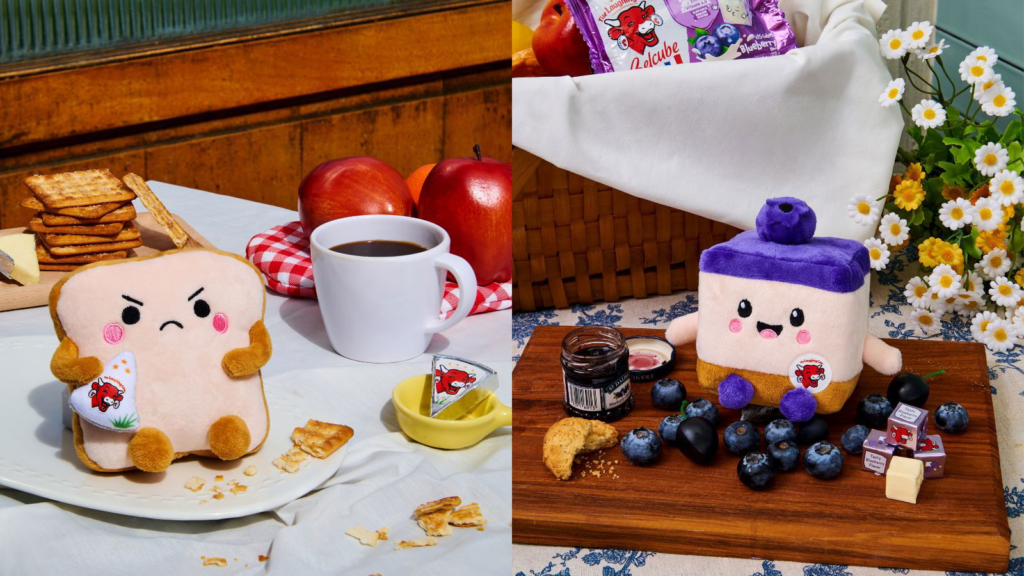
Bel Group’s Laughing Cow brand is bringing its playful personality to life in Southeast Asia with the return of its Cheesy Mood Café plushies, following a highly successful launch at the end of November. Fully redeemed within weeks, the limited-edition collectibles are making a comeback in Singapore and Malaysia, this time with a festive twist. Selected blind boxes will include a Golden Ticket, offering consumers the chance to win Chinese New Year angbao rewards—up to S$388 in CapitaLand vouchers in Singapore and RM888 in Touch ’n Go vouchers in Malaysia. “The blind box plushies were inspired by the idea of bringing The Laughing Cow’s joyful personality into everyday culture, beyond just the cheese aisle,” said a Bel Group spokesperson. “Collectible plushies and blind box formats resonate strongly with younger consumers and the Gen Z–millennial mindset, where discovery, surprise, and emotional connection matter. From a marketing perspective, this initiative is about building brand love and cultural relevance, not just awareness.” The campaign, which spans Malaysia, Singapore, Indonesia, Thailand, and Cambodia, reflects a broader effort to strengthen the brand’s presence in key SEA markets. According to the spokesperson, the rollout complements existing brand and product activations, with availability tailored to local retail partners and consumer touchpoints. The Laughing Cow’s social media presence in Indonesia stands out among the SEA markets it serves. Beyond a steady stream of content featuring KOLs and creators, the brand leverages its iconic red cow mascot in promotional posts and has even developed a playful comic strip showcasing the Cheesy Mood Café plushies. Don’t miss: Loyalty marketing gets cute with plushie strategy Key to the campaign’s success is its lifestyle-led approach. Beyond retail, the brand has leveraged on-ground experiences to engage consumers more deeply. Last month, a Laughing Cow pizza truck was deployed in Malaysia to support a new product launch. “The pizza truck reflects our belief in bringing the brand to life through experiences, especially when introducing new products,” the spokesperson explained. “While digital remains important, physical activations allow consumers to taste, interact, and emotionally connect with the brand in a way that’s very impactful. It’s a balanced approach—combining digital, retail, and experiential touchpoints depending on the market and objective,” they added.  Agency partnerships played a critical role in translating The Laughing Cow’s iconic character into collectible form. “We collaborated with selected creative and production partners across the region, supporting areas such as concept development, character translation into plush form, and executional design,” the spokesperson said. “This was a close, collaborative process to ensure the plushies stayed true to The Laughing Cow’s brand identity while appealing to local consumer tastes.” The return of the Cheesy Mood Café plushies also signals the brand’s long-term commitment to Southeast Asia, a region characterised by youthful demographics, dynamic food culture, and evolving consumer expectations. “Our focus is on strengthening relevance and penetration, while continuing to build emotional connection with consumers,” said the spokesperson. “This means investing not only in product innovation and packaging refreshes, but also in brand experiences and cultural touchpoints that resonate locally. Together, these efforts support sustainable growth by keeping The Laughing Cow contemporary, distinctive, and top-of-mind across Southeast Asia,” they added.  The Laughing Cow cheese brand traces its origins to 1921 in Lons, France, with production expanding to the US in Leitchfield, Kentucky, in the mid-1970s. Its iconic red laughing cow soon became globally recognised for individual, aluminium-wrapped cheese wedges. Celebrating its 100th anniversary in 2021, the heritage brand under Bel Group is now available in 120 countries, offering 110 recipes tailored to local tastes. The Laughing Cow isn’t alone in using playful collectibles and experiential marketing to engage younger audiences. Throughout 2025, numerous brands tapped into the global trend of plushies and collectibles. In Singapore, KitKat, Burger King, Milo, Pizza Hut, and Gardenia all released special-edition collectible soft toys. Meanwhile, in Malaysia, a wave of brand-launched plushies included offerings from ZUS Coffee, Gong Cha, Inside Scoop, and Starbucks. Notably, tea beverage chain CHAGEE stirred up joy across Southeast Asia with the launch of its limited-edition “Bes-tea” plushie collection, which were available in Singapore, Malaysia, Philippines, and Thailand. First introduced in China in late 2024, the plushies are now part of CHAGEE’s first-phase Southeast Asia launch, with each plushie modelled after one of its bestselling drinks such as its peach oolong milk tea and BO·YA jasmine green milk tea. As 2026 begins, the use of plushies to extend a brand beyond purchase shows no signs of slowing. McDonald’s Singapore is leveraging them not just to spark joy, but to shape behaviour, reward loyalty, and drive retention with its “Prosperity Pals.” Taking it further, the full plushie set is redeemable exclusively by MyM Members via the McDonald’s app, merging loyalty marketing with the collectible strategy. Related articles:Cute, cuddly, calculated: How plushies are helping brands stay relevantCHAGEE’s new Bes-tea plushies are here to spill the cute in MY, SG, TH ZUS Coffee’s plushies return with an emotional twist source

How The Laughing Cow is using plushies to connect, engage, and delight Read More »

MDDI seeks contractor to evaluate WOG media buying agency

Singapore’s Ministry of Digital Development and Information (MDDI) has called a tender to appoint an independent contractor to review the performance of its media buying agency under the Whole of Government (WOG) media buying framework, as seen on Gebiz by MARKETING-INTERACTIVE. The tender closes on 2 February 2026. Issued by the National Marketing Office (NMO), the tender seeks a comprehensive evaluation of the media buy agency’s compliance, financial accuracy and media delivery under the WOG Media Buying Services Period Contract and Framework Agreement. The review will cover government campaigns executed in Singapore over a period of up to two years, from 1 January 2023 to 31 December 2024. According to tender documents, the exercise aims to ensure transparency, accountability and value in the management of government paid media investments.  The tender document outlined that the contractor should have the relevant experience in media buy management review or similar project scope. The proposed project team of up to five key personnels should include a business lead and members with experience in marketing governance and media compliance services, and preferably with over fifteen years of experience in such projects.  The appointed contractor will be required to examine purchase orders raised under the framework and assess the media buying agency’s adherence to contractual obligations, financial controls and delivery commitments. Don’t miss: OPPO appoints PR and media agency partners in Singapore  NMO, which sits within MDDI’s public communications division, coordinates marketing and communications efforts across government agencies. Its role includes establishing governance mechanisms to improve campaign effectiveness and cost efficiencies, including aggregating demand for paid media buying across WOG through the media buying framework. While the review will be conducted primarily on-site at the media buy agency’s offices or where systems and documents are housed locally, remote reviews may be permitted provided data security, confidentiality and review integrity are maintained. Tenderers are also required to declare any potential conflicts of interest that could compromise their independence. The tender comes as numerous other government bodies and agencies have wrapped up pitches. Earlier this year, Singapore Tourism Board (STB) renewed its partnership with Maker Lab, appointing the in-housing agency as its outsourced creative team for social media for a further two years. At the same time, Singapore’s Ministry of National Development (MND) is seeking an agency to provide creative, marketing and social media management services for its Municipal Services Office (MSO). MARKETING-INTERACTIVE first reported the tender in August 2025. As of now, MND has not disclosed whether an agency has been appointed. Related articles:  MDDI uses real stories to show vaping’s horrific human cost  MDDI celebrates friendship with CNY rendition of 1998 song  MDDI highlights the resilience of everyday Singaporeans in four heartwarming films  source

MDDI seeks contractor to evaluate WOG media buying agency Read More »

Hospitality with heart: Hong Kong’s rise as a Muslim-friendly city

This post is sponsored by Hong Kong Tourism Board (HKTB). Muslim travel is one of the fastest-growing segments of Southeast Asia’s tourism landscape and destinations are rethinking how to create more inclusive and culturally aware experiences. The Hong Kong Tourism Board (HKTB) has taken a proactive approach, positioning the city as a destination that warmly welcomes Muslim travellers. Through recognised accreditation, focused outreach and strong partnerships across the region, its progress was highlighted at the Halal in Travel Awards 2025, where Hong Kong was awarded Most Promising Muslim-Friendly Destination of the Year. The award reflects its growing appeal among visitors from Indonesia, Malaysia, and neighbouring markets. Setting a new standard for inclusivity Building on its commitment to welcome Muslim travellers, HKTB introduced a Muslim-friendly accreditation programme in 2024 in collaboration with CrescentRating, a leading authority on halal travel. The initiative focuses on strengthening accessibility and trust while helping tourism partners adopt clear, consistent Muslim-friendly standards. Together with Hong Kong’s local certification body, the Incorporated Trustees of the Islamic Community Fund in Hong Kong, CrescentRating conducted a series of seminars for hotels, attractions, and F&B operators to deepen their understanding of Muslim guests’ needs and cultural practices. The impact has been tangible. To date, 62 hotels are accredited as being Muslim-friendly while halal-certified F&B outlets have nearly doubled, reaching 191 in total. Several major attractions and MICE venues now meet international benchmarks for Muslim-friendly hospitality. Hong Kong’s efforts are reflected in CrescentRating’s Global Muslim Travel Index (GMTI) 2025, where it ranks: 1st in Muslim-friendly accessible travel among non-OIC destinations 2nd in safety for Muslim women travellers among non-OIC destinations 3rd for Muslim-friendliness among non-OIC destinations Liew Chian Jia, regional director of Southeast Asia, HKTB, shared, “We are heartened to see our work being recognised. The past year has been about building trust through thoughtful experiences and strong partnerships, and this win motivates us to deepen our commitment to Muslim travellers across the region.” Marketing that builds connection Accreditation forms only part of HKTB’s wider strategy. To connect emotionally with Muslim travellers, HKTB launched Jelajah Hong Kong, a campaign celebrating culture, comfort, and discovery. The campaign featured Muslim talents exploring Hong Kong’s landmarks and neighbourhoods, from Victoria Harbour to Sheung Wan, offering fresh perspectives on the city. It resonated with family travellers seeking assurance that their needs would be respected and met, as well as with Gen Z audiences looking for authentic experiences. Complementing the campaign is a digital Muslim travel guide, the Jelajah Hong Kong Muslim guide, detailing popular districts, prayer facilities, and halal dining options, all accessible on a refreshed Muslim travel page on DiscoverHongKong.com. The revamped Muslim travel page includes complete listings of Halal dining spots and Crescent Rated Muslim-friendly hotels, making it easier than ever for travellers seeking Muslim-friendly travel information. Partnerships that strengthen regional ties HKTB continues to nurture regional engagement through community-driven initiatives across Southeast Asia. Annual Buka Puasa gatherings in Indonesia and Malaysia, familiarisation trips for Muslim trade and media representatives, and multi-market campaigns with partners such as Klook have all fostered closer regional ties and greater understanding of Hong Kong as a choice holiday destination. In Indonesia, HKTB collaborated with modest fashion label Nada Puspita on a Hong Kong-inspired collection and campaign. Led by designer and influencer Indah Nada Puspita, it showcased creativity and cultural understanding while reinforcing Hong Kong’s diverse appeal. In Malaysia, HKTB partnered with the producers of Projek Bapak Bapak, a popular travel reality series featuring Jalaluddin Hassan, Ramli MS, Roy Azman, and Mustapha Kamal. The show followed their experiences exploring Muslim-friendly Hong Kong, blending cultural exchange with humour and relatability. More industry recognition and city-wide collaboration These collaborations across Southeast Asia have been strengthened by support from partners within Hong Kong itself. Hotels, attractions, and event venues have played a key role in shaping experiences that feel welcoming and consistent for Muslim travellers, and many of them have now earned commendations. The Mira Hong Kong and Kowloon Shangri-La were named Muslim-Friendly Hotels of the Year. Both demonstrated strong service standards and thoughtful offerings tailored to Muslim guests. “Muslim travellers seek comfort and connection when they explore new places,” said a spokesperson from The Mira Hong Kong. “We’ve shaped our experience around that, from halal-certified dining and Arabic-speaking staff to a team trained to understand cultural nuances. Even our Michelin-recommended restaurant, Cuisine Cuisine, serves authentic halal Cantonese dishes so guests can savour Hong Kong’s flavours with peace of mind.” Beyond hotels, other sectors have also been recognised. Ngong Ping 360, one of the city’s most popular tourist experiences, received Muslim-Friendly Attraction of the Year. The Hong Kong Convention and Exhibition Centre was named Muslim-friendly Convention and Exhibition Centre of the Year, highlighting its appeal for business events and meetings. Momentum is also driven by coordinated efforts across multiple stakeholders. The 2025 Policy Address introduced the Halal Certification Funding Scheme for restaurants, the local Muslim community successfully launched Hong Kong’s first outdoor Halal Food Festival in April 2025, and the Hong Kong Trade Development Council’s Food Expo in August 2025 featured over 120 halal exhibitors. These government-backed, community-led, and trade-driven initiatives, combined with rapid growth in certified F&B outlets and accredited hotels, demonstrate that enhancing Muslim-friendliness has become a genuine city-wide priority. Looking ahead HKTB plans to expand partnerships, content collaborations, and marketing initiatives into 2026 to maintain momentum. Hong Kong’s evolution into a Muslim-friendly destination illustrates how inclusivity and cultural respect can redefine a city’s identity for modern travellers. source

Hospitality with heart: Hong Kong’s rise as a Muslim-friendly city Read More »

Confessions of a CMO: What I didn’t know about marketing effectiveness almost killed my budget

After 20 years in marketing, I thought I had seen it all but then… I’ve led big regional teams, juggled brand, performance, and customer experience across Asia Pacific. I’ve launched award-winning campaigns, rolled out million-dollar martech stacks and reported directly to global C-suites. I was fluent in the language of marketing ROI, but I had a secret. For most of that time, I didn’t actually know what was really driving business impact. I had an idea and assumptions, but I only knew what the numbers told me and – whisper it – the numbers lie. Not maliciously but because the entire system of measurement was, and continues to be, broken. The hidden truth about marketing leadership Let’s be honest. As CMOs, heads of marketing, VPs and directors, we’re mostly just trying to keep the lights on and every year, the job gets harder: New platforms, new formats, new tools. AI copy generators, AI media planners, AI attribution (whatever that ends up being). Tighter budgets, bigger expectations. More hats. Creative lead, content producer, tech stack architect, media negotiator, HR therapist. We know our teams are stretched. We know the strategy is running on assumptions, but we don’t have the bandwidth to fix it. That’s the part no one says out loud, most of us are just keeping our heads above water. We’re reacting, not rewiring. We’re optimising the wrong things. We’re presenting clean dashboards to the board while quietly praying no one asks the one question we can’t answer: What actually drove that result? The UPS chatbot and the business case that almost broke me Let me give you a real example. At UPS, I pushed through a transformation project to build a LINE chatbot for customer service across Japan, Thailand and Taiwan. I knew it would reduce call volumes, improve CX, and modernise the brand experience. But it took a full year to build the business case across multiple markets, languages, and stakeholder layers, and another year to implement. Two years for one project but it was worth it. It became a best-in-class case study. The APAC team is still expanding it today. However, while the business case was built on customer service, the quiet win was in brand. Across large parts of Asia, social platforms aren’t just entertainment – they’re service. Being present there forced us into relevance in a way paid media never could, which was great but here’s the truth: That was just one win. For every big bet I fought for, there were five others I quietly buried (sorry team). Not because they weren’t important. But because I didn’t have the energy, political capital, or clarity to take them on and, too often, I couldn’t prove they were worth the fight. The great paid search illusion (and why I clung to it) You want another confession? Back then, I used to walk into budget reviews with beautiful paid search numbers. The ROI looked clean. The graphs went up and to the right. Everyone nodded. But I knew, deep down, that paid search wasn’t doing it alone. Other channels were seeding demand; brand work, influencer engagement, offline touchpoints, all of it was lifting search. But the data I had couldn’t connect those dots or only some of them. So, I led with the metric that would keep my budget safe. Now, 12 months into my role at Analytic Partners, I’ve seen the truth with clarity I never had before. Those “clean” numbers were a false comfort. I was building strategies on sand. The 2026 measurement panic Fast-forward to today, and here’s the part that genuinely keeps me up at night – we’re running modern marketing on broken metrics and lots of leaders don’t even realise it yet. Let’s take attribution, which is still, somehow, being built on clicks. But in a world of AI-curated feeds, social discovery, and automated journeys with no click path, what happens when that last-click data disappears? Social search is climbing fast, especially across Asia. On platforms such as Xiaohongshu, TikTok, LINE, or Kakao, where content is social-first not web-based, visibility is rising. But those views? That “engagement”? It’s rarely tied to an outcome, and certainly not in a way your current reporting can trace. At the same time, brand contribution is finally getting the attention it deserves. But here’s the twist – we’re still trying to measure brand the way we did in 2012, with outdated reach curves, blunt awareness surveys, and black-box “brand uplift” reports. Let me summarise: Our attribution models are built on behaviours that no longer happen. Our paid channels are being propped up by organic influence we can’t see. Our social engagement has no line of sight to conversion. And our brand ROI is still based on recall, not revenue. Feeling confident? If you’re not urgently challenging your agency, your insights lead, or your in-house analyst right now, you might be building your marketing plan on a fantasy. The questions we should be asking, now If you’re a marketing leader, I urge you to ask your team these questions as soon as possible: What role did each channel actually play in this campaign? Did it drive awareness, action, preference, or conversion? Or did it just exist? Can you tell? Did we hit a budget ceiling or is our message decaying?Decaying creative often looks like declining performance, but so does market fatigue, poor sequencing, or misaligned targeting. If you don’t know which it is, how do you fix it? Are performance drops due to saturation or lack of signal? This is a common one. Saturation means you’ve maxed out your addressable audience. Signal decay means your media is no longer working the way it used to (think platform algorithm changes, format fatigue). Very different problems. Very different solutions. What could marketing have reasonably influenced, given the macro environment? This isn’t an excuse – it’s context. If interest rates spiked, prices surged, or competitor promos flooded the market and your only lever was to “optimise creative” or “tweak bids”

Confessions of a CMO: What I didn’t know about marketing effectiveness almost killed my budget Read More »

AFP and Getty Images renew multi-year global content partnership

Agence France-Presse (AFP) and Getty Images have renewed their longstanding content partnership, extending a collaboration that began in 2003. The multi-year agreement aims to continue providing newsrooms worldwide with premium coverage across global news, sports, and entertainment. AFP brings to the table a network of 450 photographers whose work has earned recognition at the world’s top photojournalism awards. Its International Photo Service is also strengthened by contributions from over 70 partner agencies, offering diverse perspectives and comprehensive reporting. Getty Images, meanwhile, serves more than 700,000 customers with coverage spanning red carpet events, football stadiums, and conflict zones. Each year, the company documents over 160,000 events and counts more than 1,600 major industry awards among its photographers. Don’t miss: Getty Images suffers partial defeat in UK copyright lawsuit against Stability AI Together, AFP and Getty Images say the partnership leverages their complementary strengths to deliver timely, high-quality visual content for global audiences. “AFP’s core mission of authentically documenting events as they break and unfold, from the ground where it all happens, is more important than ever in a world where pictures can be so easily manipulated. Our renewed partnership with Getty images ensures a wide distribution of an indispensable pictures offering for editorial clients” said Patrice Monti, commercial and marketing director at AFP.  In tandem, Ken Mainardis, global head of editorial at Getty Images said, “For almost 25 years, Getty Images and AFP have built a partnership for the benefit of editorial customers around the world rooted in journalistic excellence and an unrivalled depth and quality of coverage that is trusted. We are proud to continue our longstanding partnership at a time when the value it brings has never been more important.” The renewal comes as Getty Images moves towards a major industry milestone. In January last year, the company unveiled plans to merge with Shutterstock, creating a combined entity named Getty Images Holdings with an enterprise value of around US$3.7 billion. Until the deal closes, both companies continue to operate independently. In a customer note, Paul Hennessy, CEO of Shutterstock, said the merger is expected to expand access to diverse, high-quality visual content, enhance live coverage, and accelerate product innovation. Peters added that the combination would better meet growing demand for visual content across industries and unlock new opportunities for contributors, partners, and stockholders. Related articles: Berita Harian to go compact in 2026 as part of newsroom transformation     SPH Media merges Stomp and The New Paper under refreshed digital platform     CNA rolls out paid media release service source

AFP and Getty Images renew multi-year global content partnership Read More »

Can Brand Beckham survive its very public family feud?

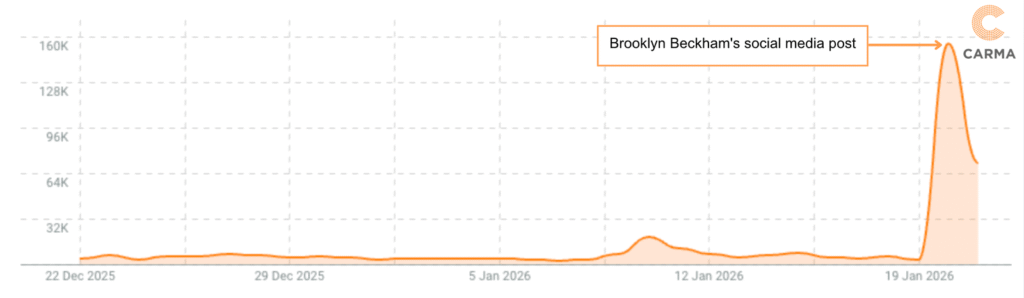
For decades, the Beckham family image has been one of the most carefully managed personal and family brands in the world – polished, photogenic and tightly controlled. This week, that control cracked. In a lengthy public statement, eldest son of the family, Brooklyn Beckham accused his parents, David and Victoria Beckham, of putting “Brand Beckham” ahead of the family, alleging years of media manipulation, narrative control and pressure to uphold a carefully curated public image. On his Instagram story, he shared that his wife, Nicola Peltz, had been repeatedly disrespected and excluded, citing incidents around their wedding. Attempts to set boundaries, he claimed, were met with retaliation both privately and through the press, prompting his decision to step away to protect his marriage, mental health and autonomy. Don’t miss: Outlasting the gossip: Why Astronomer doesn’t need to kiss its reputation goodbye A day later, in an interview with CNBC, David Beckham addressed the perils of social media. While he did not respond directly to the allegations made by his son, the older Beckham described social media as a powerful but potentially dangerous tool for young people. Instead, he framed the conversation around public missteps, describing it as part of how children learn. Did the family drama become another source of brand fuel? While Brooklyn’s statement might have fractured the family’s carefully maintained image, some players argue that it also revived “Brand Beckham” and put it back on top of global news sites. Data from media intelligence firm CARMA shows just how pronounced the impact was: globally, positive sentiment around the family had been 20.6% and negative sentiment 21.4% prior to Brooklyn’s post. After his statement, mentions surged and sentiment shifted sharply, with positive coverage dropping to 6.3% and negative coverage rising to 46.9%. Most of the online conversation centred on Brooklyn’s reported conflict with his parents and his public statements. Netizens circulated screenshots and news coverage of his social media post, quoting his words widely. Viral narratives focused on allegations of manipulation, attempts to interfere in his personal life, and efforts to control his relationships, particularly with his wife, Nicola Peltz. A CARMA word cloud of the coverage highlighted recurring terms such as “controlled,” “drama,” and “estrangement,” reflecting the key themes driving discussion. Discussion also touched on Brooklyn’s perceived “nepo-baby” status, highlighting the advantages and scrutiny that come with being part of such a high-profile family. Observers debated the pressures of celebrity life, the tension between public image and private relationships, and the costs of maintaining a brand built on perfection, underscoring how “Brand Beckham” continues to provoke fascination, even amid fracture. “The Beckham brand hit record news volumes,” said Charles Lankester, EVP of reputation and risk at Ruder Finn Asia. Describing the fallout as “frothy, spicy and gossipy” in the short term, Lankester added that the incident is unlikely to cause lasting brand damage. Family fallouts, he said, are hardly existential. For Lankester, the bigger risk is not being talked about at all. Quoting Oscar Wilde, he noted that attention, even uncomfortable attention, is often the price of cultural relevance.  What is undeniable, however, is the gravitational pull of the Beckham name. Lankester noted that amid coverage of geopolitical tensions and international diplomacy, the family drama still dominated headlines in the UK – and even here in Asia. “The power of ‘Brand Beckham’ on the global news agenda is extraordinary,” he said, adding that the attention itself reinforces the brand’s cultural weight, even in moments of turmoil. From fairy tale to fracture Where the impact may be more meaningful is not in scale, but in sentiment. For Meilin Wong, CEO and partner at Milk & Honey PR, Brooklyn’s statement stripped away the fantasy that has long underpinned the Beckham brand. “’Brand Beckham’ was created long before their children came into the picture,” she said. “It was always about a superstar footballer and a pop star–turned–fashion designer. A fairy tale they invited the media into.” Brooklyn, she added, grew up inside that machine without ever opting into it in the same way. His claim that the brand was prioritised over the relationship reframes the family image from aspirational to transactional. “You can’t un-hear a son saying he feels like collateral damage,” Wong said. While she does not believe the brand will be permanently impacted, she expects there to be a shift in the way the public views the family – from the idea of a perfect family towards one marked by success and visible fractures.  Manisha Seewal, group president at Redhill, echoed that view, arguing that public expectations have evolved. “People don’t expect perfection anymore,” she said. “In fact, many find it hard to relate to overly polished stories.” If handled with dignity and empathy, she believes the moment could add dimension rather than diminish the Beckham brand. The risk, she cautioned, lies in escalation. A prolonged public back-and-forth would turn a human conflict into a reputational liability. Hold your fire On whether the family should respond publicly, industry players called for restraint. Lankester was unequivocal, pointing to the Beckhams’ long-standing strategy of maximum visibility with minimal commentary. “The Beckhams have managed very well by being the most visible family on the planet whilst really saying nothing at all,” he said, urging them to stick with precision-led platforms rather than reactive statements. Wong agreed, arguing that not every crisis warrants content. “There comes a point where you have to find the balance between feeding the public persona and protecting the humans behind it,” she said, adding that turning a child’s pain into ongoing narrative fodder would be a mistake. Any real repair, if it happens, should take place off-camera. That restraint becomes especially relevant when considering whether the Beckhams can reclaim their long-held image of familial perfection. Wong questioned whether that should even be the goal. “If the price of a flawless family image is losing your child, is it worth it?” she asked. Seewal took a similar stance, noting that silence can communicate grace rather than avoidance. If a statement is issued, she said, it should be

Can Brand Beckham survive its very public family feud? Read More »

TBWAGroup Singapore elevates Mandy Wong to CEO

TBWAGroup Singapore has elevated Mandy Wong (pictured) to chief executive officer, after serving as president since 2022. In her new role, she will oversee the agency’s strategy and operations while continuing to champion TBWA’s “Disruption” philosophy across creativity, strategy, innovation, and client-business impact. In a statement to MARKETING-INTERACTIVE, the agency said the move recognises Wong’s leadership in driving sustained growth, creative excellence, and stability during a period of global transformation in the advertising industry. Wong has spent over 20 years at TBWAGroup Singapore, where her experience and expertise have shaped the agency’s business direction and strengthened client partnerships. Don’t miss: DDB SG CEO Jeff Cheong parts ways with Omnicom as merger retires legacy brands During her three-year tenure as president, she led new business wins including Mandai Wildlife Group and the Health Promotion Board, while nurturing long-standing relationships with clients such as Singapore Airlines and Spotify. Over the years, she has also managed complex regional and global accounts for brands including the Singapore Tourism Board, Standard Chartered Bank, Airbnb, and Carltex. “Wong has been instrumental in shaping TBWASingapore into the agency it is today. Her leadership, clarity of vision, and deep understanding of both our clients and our people make her the right person to lead the agency into its next chapter,” said Sean Donovan, president of Omnicom Advertising Asia.  Reflecting on her elevation, Wong said, “It’s a privilege to step into the role of CEO at a time when our industry is undergoing fundamental change. My focus is on leading with intention, strengthening collaboration across the group, supporting our people through transition, and ensuring we continue to deliver work that is both relevant and meaningful for our clients.” The appointment follows a post-merger restructure by Omnicom following its US$13.3 billion acquisition of Interpublic last year. Elsewhere in the region, TBWA’s leadership structure in Greater China and Malaysia remains unchanged. Joanne Lao continues as CEO of TBWAGreater China, while Yee Hui Tsin remains CEO of TBWAMalaysia. Most recently, TBWA Sydney named Darren Borrino as group creative lead, strengthening its creative bench as the agency sharpens its focus on craft and creative ambition across the group. He was previously group creative director at TBWAChiatDay New York, overseeing creative for Nissan North America and Hilton Hotels’ global business. Related articles:   TBWA’s leadership for Greater China, SG and MY unchanged amid Omnicom-IPG mergerOmnicom Media unveils new APAC leadership structureLeigh Terry exits IPG Mediabrands APAC amid Omnicom–IPG integration  source

TBWAGroup Singapore elevates Mandy Wong to CEO Read More »