marketing interactive

Starbucks SG saddles up for a pony-themed Lunar New Year

Starbucks Singapore has rolled out its Lunar New Year 2026 lineup, unveiling a festive range of limited-edition merchandise and member-exclusive rewards ahead of the Year of the Horse, as it looks to extend celebrations beyond the coffeehouse and into customers’ homes. In conversation with MARKETING-INTERACTIVE, Ruth Yam, head of commercial at Starbucks Singapore said this year’s Lunar New Year lineup is centred on creating warm and meaningful moments, whether customers are gathering with loved ones or picking up gifts for the season. She added that Lunar New Year remains a key occasion to introduce locally relevant offerings that spark shared experiences and joy among Singapore consumers. The 2026 Lunar New Year collection draws inspiration from a whimsical farmyard narrative, featuring vibrant red and gold tones alongside pony motifs symbolising prosperity, resilience and fresh beginnings. The collection includes mugs adorned with cheerful pony and auspicious tangerine designs, as well as a new stainless steel tumbler format fitted with a practical slider lid. Don’t miss: How Starbucks turned the Frappuccino into a global icon Completing the range is the Lunar New Year edition Bearista, dressed in festive pony attire, positioned as a collectible gifting option for the season. Shoppers can also pair the merchandise with a Starbucks Year of the Horse card with a minimum reload of SG$10. Yam said Starbucks’ approach to localisation during festive periods is shaped by how customers interact with the brand’s merchandise and experiences, both in-store and online. These shared moments, it added, inform how collectibles and collaborations are designed to connect different generations of Starbucks fans and strengthen a sense of community. That thinking also underpins the role of collectibles such as plush toys and red packets in the brand’s Lunar New Year strategy. Yam views merchandise as an extension of the Starbucks experience, designed to let customers take a piece of the festive atmosphere with them. She noted that it has seen customers return year after year to collect full sets, visit multiple stores to complete their collections, and share those moments with baristas or online. This year, Starbucks has also expanded its “Lion and dragon dance” collection this year, introducing sculpted mugs shaped after traditional lion and dragon dance figures. The Singapore-exclusive lion dance plush and plush keychain, previously available only at the Starbucks store at 37 Smith Street, have now been extended to selected stores. The Lunar New Year collections are available in-store, on the Starbucks Online Store, LazMall and ShopeeMall, while stocks last. Rounding out the festive offerings are Starbucks’ assorted egg rolls, a seasonal item the brand said has long been a fan favourite during Lunar New Year. Priced at SG$29.90 per box, each set includes two packs of original egg rolls, alongside new strawberry and chocolate flavours introduced this year to refresh the tradition. The egg rolls are available in-store and via the Starbucks app through mobile order and pay. Starbucks Gold Rewards members will also receive a complimentary Year of the Horse red packet set with a minimum spend of SG$28 nett in-store or on the Starbucks online store. Yam added that loyalty members play a key role in the success of festive campaigns, as they are often among the first to engage with new launches and help build momentum within the community. She said:  Ultimately, the best campaigns are the ones that create genuine connection, spark joy, and deepen that sense of belonging that sits at the heart of the Starbucks experience. The Lunar New Year push follows Starbucks Singapore’s broader strategy of anchoring seasonal campaigns in local culture and emotional resonance. Last year, the brand tapped into national pride and nostalgia with a multi-layered SG60 campaign celebrating Singapore’s 60th birthday. Titled “Shiok together,” the initiative brought together local flavours, childhood memories and creative partnerships with homegrown brands, reinforcing Starbucks’ positioning as a culturally attuned lifestyle brand. Central to the campaign was a limited-edition collaboration with local lifestyle label Inwarmregard, whose illustrations reimagined Starbucks as it might have appeared 60 years ago. The visuals depicted the brand housed in a traditional two-storey shophouse, complete with green metal grilles, vintage signboards and multigenerational “bearistas” going about their daily rituals. Related articles: Eu Yan Sang elevates Lunar New Year gifting with Jimmy Choo collaboration  Love, Bonito turns Lunar New Year into a stylish game of mahjong    Geneco marks CNY with playful music video and next-gen sustainability drive source

Starbucks SG saddles up for a pony-themed Lunar New Year Read More »

HSBC Singapore names new head of propositions and customer life cycle management

HSBC Singapore has appointed Mayank Dutt as head of propositions and customer life cycle management (CLCM) for international wealth and premier banking, the bank confirmed with MARKETING-INTERACTIVE. Reporting to Alice Fok, head of customer, international and marketing for international wealth and premier banking, Dutt will oversee customer engagement, proposition development, and portfolio management for the bank’s premier, international, and emerging affluent segments, the bank said. His remit includes delivering tailored solutions and proposition-led engagement across the customer lifecycle. Dutt brings over 20 years of leadership experience across financial services, payments, and tech. He first joined HSBC Singapore as head of marketing, retail bank in June 2025, leading marketing strategies and digital initiatives across international, wealth, and retail segments. Don’t miss: HSBC names global CMO HSBC did not clarify whether the new role is a promotion or if Dutt will retain his previous marketing responsibilities. Prior to joining HSBC, he was CMO and head of enterprise sales at ASEAN HR tech startup BetterPlace, where he scaled the company across ASEAN and UAE, building global branding strategies and partnerships with Microsoft and AWS. His earlier roles include head of marketing and communications for Southeast Asia at Mastercard, where he led strategic partnerships, ESG initiatives, and brand innovation, and multiple leadership positions at Citi across APAC and EMEA. At Citi, Dutt directed digital banking transformations, bancassurance operations, and customer-centric marketing strategies, achieving top net promoter scores in Vietnam and pioneering digital straight-through processing platforms for credit cards and insurance. Dutt’s appointment comes as HSBC continues to reinforce its brand presence in the region. In September 2025, the bank celebrated its 160th anniversary with the launch of the signature “HSBC Red” in partnership with Pantone, making it the first Hong Kong financial institution to have its own brand colour. The hue, reflecting elegance, passion, and Hong Kong’s prosperity, features across limited-edition gifts such as keychains, tote bags, and coffee cup sets. As part of the campaign, HSBC also debuted a hand-drawn commemorative edition of its iconic hexagon logo, reimagined by graphic designer Henry Steiner, who created the original design 40 years ago. Related articles: HSBC transforms tax season into wealth opportunities with cinematic flair   HSBC and The Monsters launch first collab to celebrate anniversary milestones  HSBC celebrates 160 years with an immersive dive into history source

HSBC Singapore names new head of propositions and customer life cycle management Read More »

Confessions of a telco head: Why 2026 must be the year we cut the cord

As we kick off 2026, my team and I are doing what every brand and communications team does in January: forecasting trends, setting targets, and analysing the “stickiness” of our digital ecosystem. My professional world is built on these metrics. I spend my weeks strategising how to deepen connection, celebrating when data consumption goes up and churn rates go down. But when I clock off and go home to my two boys, aged five and 11, I live a professional paradox. As we prepare for the new school year, I am looking at the shift towards phone-free zones in Singapore secondary schools, and I am not thinking about the lost engagement hours. I am breathing a massive, chest-loosening sigh of relief. It is a strange duality to live with. I help build the digital highway, but I am terrified of letting my own children drive on it. The peace of the pager era I grew up in the Singapore of the 90s. The “pager era”. Many of us remember the clunky Motorola strapped to our waistbands. If it beeped, I had to find a coin phone. It was inconvenient. It was slow. It was full of friction. But looking back, that friction was a blessing. As a teenage girl then, technology was utilitarian. It was for logistics (“Come home now” or “Meet at Dhoby Ghaut”), not for validation. My pager didn’t judge my appearance. It didn’t serve me a feed of parties I wasn’t invited to. It didn’t quantify my social worth with a ‘like’ count. When I put it away, the noise stopped. Today, the device in our pocket is not a tool; it is a portal. And for the “Anxious generation”, a term coined by social psychologist Jonathan Haidt, that portal never closes.  The “Great rewiring”: A mum’s nightmare Haidt argues that, in 2010, our world underwent a “Great rewiring” of childhood, moving from play-based to phone-based. As a mother of two young boys, I read the research with a specific kind of dread. Haidt notes that while girls tend to spiral inward (anxiety, depression), boys tend to withdraw outward. They retreat into the virtual world of gaming and forums, pulling away from the friction of the real world. I see the pull even now with my 11-year-old. The battle to get him to look up, to engage, to handle boredom without a screen is constant. If he carries a phone in school this year, recess won’t be a time for kicking a ball or navigating complex friendships; it will be just another session of head-down withdrawal. The “do more” pressure cooker However, whenever this topic arises, the pushback is predictable. I see it even in the comments on my own LinkedIn feed. The arguments are well-meaning but heavy with expectation: Parents just need to do more. You need to understand the parental control settings better. You should be ‘co-gaming’ with your children to guide their usage. To that, I have a simple confession: We are tired. Policing screen time in a hyper-connected world is a full-time job. It is an exhausting, daily battle of negotiation and conflict. Being told to “co-game” or master complex admin settings feels like just another KPI added to the endless list of modern parenting duties. When schools create phone-free zones, they aren’t “babysitting”; they are creating a sanctuary. It means that for 6 to 8 hours a day, I don’t have to be the “bad guy”. The environment does the heavy lifting. This doesn’t mean we ban tech entirely, my boys can still have their hour of gaming time at home. But because the school takes the “morning shift” of digital detox, the “evening shift” at home becomes manageable. We applaud the school for being the village that helps us raise them. Redefining brand purpose in 2026 This brings me back to my desk. In the admarcomms industry, we talk endlessly about brand purpose. For the last decade, the answer to “How do we delight the customer?” has been “give them more”. But looking at the landscape in 2026, I ask you: Is the definition of brand purpose is shifting? The next frontier isn’t performance; it’s trust. If we are honest, the “dark side” of the technology we sell is that it has monetised our children’s attention spans. If we optimise for engagement at the expense of mental health, we are not building a sustainable customer base; we are burning them out. Real brand purpose, from a leadership perspective, is recognising that technology is a given, but it shouldn’t be a tyrant. It is recognising that “delighting” a customer sometimes means protecting them from the product itself. The resolution Supporting phone-free schools isn’t anti-tech. It is pro-human. By removing the phone during school hours, we are forcing our kids to learn social dynamics the hard way – face to face, without a screen to hide behind. We are returning a little bit of the “pager era” peace we grew up with – where you could be connected, but you weren’t held hostage by the network. I want to sell the best connectivity in Singapore. But as a mother, my hope for 2026 is that the most valuable thing our schools give my sons is the permission to disconnect. This article was written by Lynette Poh, head of marketing communications at Singtel Singapore. The views expressed are her own. source

Confessions of a telco head: Why 2026 must be the year we cut the cord Read More »

Netflix partners Singapore’s Nativex to bring brands to streaming audiences

Netflix has appointed Singapore-based adtech Nativex to help brands access and activate on Netflix’s ad-supported streaming service. The partnership allows marketers to access Netflix’s premium inventory, advanced targeting solutions, and innovative ad formats, reaching highly engaged audiences across key markets. Under the collaboration, Nativex will support brands with planning and optimisation across Netflix ads. Brands can run campaigns using standard pre-roll and mid-roll video, Pause Ads, QR-enabled creative, and single-title sponsorships across popular series, films and live events. By combining Netflix’s content-rich environment with Nativex’s performance and creative expertise, marketers can run full-funnel campaigns that drive both brand impact and measurable business outcomes. The partnership also enables advertisers to reach audiences moving away from linear TV, leverage Netflix’s first party and content-based signals, including genre, Top 10 titles, device type and viewing context. Advertisers can also and experiment with interactive formats to create more engaging and shoppable brand experiences. Don’t miss: Netflix tarot lets viewers peek at their 2026 streaming fate  Nativex will roll out Netflix Ads solutions across APAC, Australia, North America, Europe and Brazil. Joint teams from Nativex and Netflix will work closely with brands and agencies on test-and-learn programmes, creative best practices, and scalable campaign models. “Streaming has become the new prime time for our clients, and Netflix sits right at the centre of that shift,” said Cheryl Huang, partner at Nativex “By partnering with Netflix, we can help brands tell richer stories in a premium environment, while using Nativex’s data, creative and optimisation capabilities to turn that attention into tangible business results. This is a major step forward in our mission to connect advertisers with audiences who are truly immersed in great content,” added Huang.  Netflix’s ad-supported plan currently reaches more than 190 million monthly active viewers globally. Its curated ad breaks, lighter ad load, and content-driven targeting are designed to minimise viewer fatigue while maximising attention. The number of Netflix subscribers on the streamer’s ad-supported tier has also grown 14% on a year, with nearly 40% of active Netflix accounts using ad tiers (up from 26%), reported Deadline. This marks the highest rate of growth for any global streamer including that of Disney+ (9% growth) and HBO Max (6%).  The partnership follows a similar deal in September 2025 where the streaming giant struck a partnership with Amazon Ads to give advertisers programmatic access to the streamer’s premium ad inventory through Amazon’s demand-side platform (DSP). The move allows advertisers using Amazon DSP to buy Netflix inventory directly across 12 markets including the United States, United Kingdom, France, Spain, Mexico, Canada, Japan, Brazil, Italy, Germany and Australia. The tie-up is aimed at making Netflix’s growing ad-supported tier more accessible to brands while giving marketers additional flexibility in how they reach streaming audiences. Related articles:   Netflix to buy Warner Bros. in US$82.7bn deal after Discovery split  Netflix Malaysia dishes out trishaw experience for Stranger Things Season 5  Netflix brings beers to screens in global AB InBev content partnership  source

Netflix partners Singapore’s Nativex to bring brands to streaming audiences Read More »

M&M’S suits up as heroes in global Marvel campaign

Mars and The Walt Disney Company are building on their longstanding relationship with the launch of a global campaign between M&M’S and Marvel, set to roll out throughout 2026. Driven by the belief that “It’s more fun together”, the collaboration merges Marvel’s iconic storytelling with the vibrant, playful world of M&M’S. The campaign spans generations and continents, targeting both Marvel and M&M’S fans with content, experiences and merchandise that highlight the shared love of characters and fandom culture. M&M’S and Disney have a long history of co-created experiences, from the colourful M&M’S Stores at Disney Springs in Florida to activations across Disney’s theme parks worldwide. The new campaign expands these efforts to even more markets globally, bringing both brands to life in digital and physical touchpoints. Don’t miss: Marvel’s Thunderbolts twist: Bold brand play or franchise lifeline?  As part of the campaign, fans can expect entertaining content featuring the M&M’S spokescandies — Red, Yellow, Green, Blue, Purple, Brown and Orange — dressed as Marvel characters. In playful videos, the spokescandies “audition” for their dream roles, blurring the line between snack and superhero. The collaboration will also hit the candy aisle with seven limited-edition M&M’S x Marvel packs, including Yellow as Wolverine, Red as Deadpool, Blue as Daredevil, Purple as Elektra, Green as She-Hulk, Brown as Yelena, and Orange as Red Guardian. Packs will debut in late January in select markets and gradually roll out worldwide across M&M’S stores and major retailers. Each pack features a QR code giving fans the chance to win exclusive prizes. Throughout 2026, the campaign will continue to unfold in more than 65 markets, with additional content, limited-edition products, in-store experiences and other fan-focused activations.  “We have a wonderful long-term relationship with Mars that enables us to come together in exciting ways. The Marvel Universe has built a rich legacy through iconic storytelling, resonating with generations of fans, and it was fun to imagine what could happen if M&M’S spokescandies were part of that fandom, too.” said Mindy Hamilton, senior vice president of alliances marketing and creative at The Walt Disney Company.  “At Mars, our global relationship with Disney has always been rooted in a shared belief in the power of fun and creating meaningful moments of connection,” added Rankin Carroll, chief brand officer, Mars Snacking. “M&M’S and Marvel fans share a passion for characters and storytelling. This phase of our collaboration combines the best of both brands to deliver immersive experiences, content and new ways for fans to engage. By leading with what our consumers love, we’re inspiring fun, fandom and connection in a way only our two brands can.” Closer to home, M&M’s in Singapore ran a sure-win campaign during the festive season to reinforce the brand’s core positioning of ‘Share the joy’ by creating fun, joy-filled interactions with consumers. The campaign featured a ‘Joy box’ featuring various Mars Snacking products where consumers can stand a chance to win prizes such as cruise holidays, pickleball sets, the latest gadgets and more. In conversation with MARKETING-INTERACTIVE at the time, Chaliya Suchato, strategic demand director, Mars Wrigley Asia, said it chose a sure-win mechanic rather than a traditional contest or lucky draw in hopes of tapping into the excitement of instant discovery and to deliver immediate delight, aligning with Singapore’s festive retail culture where convenience, engagement and memorable touchpoints come together to drive participation.  Related articles:  Mars overhauls global agency model as Publicis, IPG and Omnicom take charge   Marvel’s ‘Thunderbolts’ takes over KL skyline with Merdeka 118 projection Coca-Cola suits up in new collaboration with Marvel  source

M&M’S suits up as heroes in global Marvel campaign Read More »

Coach brings luxury into The Sims 4 for free in latest collab

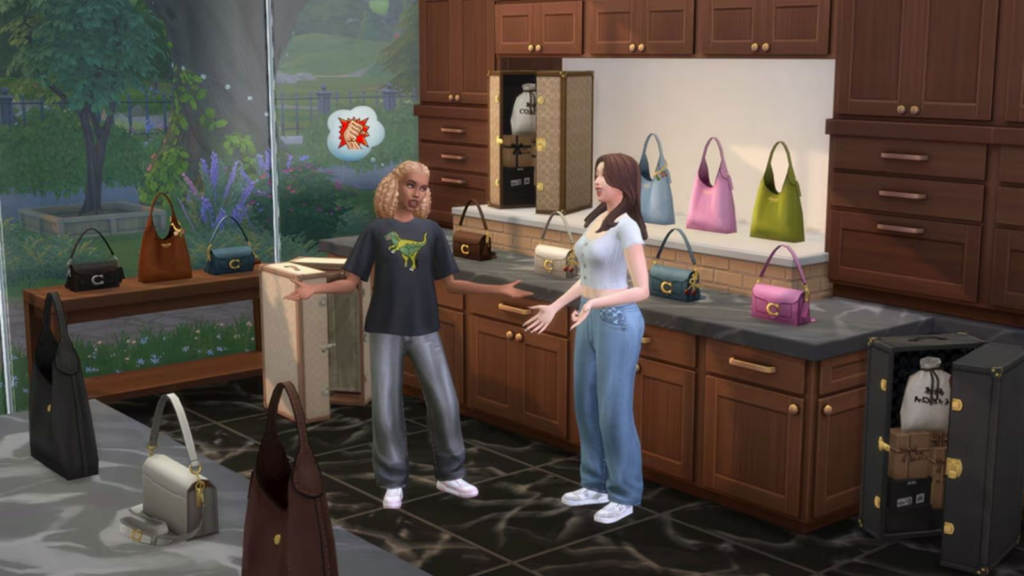
Luxury fashion brand Coach is stepping into the virtual world, partnering with The Sims 4 to launch “The Coach collection”. The in-game collection features nine new items spanning wearable staples, statement pieces, and décor, available for free from 13 January 2026. The partnership also brings the brand’s signature polish to both ‘Create a Sim’ and ‘Build Buy’ modes. Players can now outfit their Sims in Soho sneakers, varsity jackets, and sleek skirt sets, or decorate their homes with iconic Coach items such as the heritage trunk, and the Tabby and Brooklyn bags. A new gallery household, ‘The Carriage House’, also debuts alongside the collection. In a video seen by MARKETING-INTERACTIVE, three friends are seen navigating big dreams and fashion-forward chaos. Jonie Bag, a perfectionist musician; Brooke Lynne, a fast-food worker with a magnetic personality; and Selena Zhiwei, a freelance artist and hopeless romantic are seen trying on the new collection.  Don’t miss: How Coach is winning over Gen Z one experience at a time The collaboration highlights shared values between Coach and The Sims, including creativity, individuality, inclusivity, and a sense of play. Practical luxury meets the game’s unmistakable flair, whether Sims are lounging at home or attending virtual parties. For those who live for accessories, The Sims 4 gallery offers the ‘In The Bag’ room, a build designed to showcase Coach bags and trunks, giving players a space to dress up their Sims and explore interior styling. Fans can download ‘The Carriage House’ and the’ In The Bag’ build, and share their creations using ‘#CoachxTheSims’. MARKETING-INTERACTIVE has reached out for more information.  The collaboration builds on Coach’s ongoing experiments in immersive experiences for Gen Z. Over the past few years, the brand has been rethinking retail and hospitality, from “Coach Play Singapore Shophouse”, its largest concept store spanning 4,000 sq ft across three storeys, to “Coach Airways” in Malaysia, a retro-futuristic retail concept inside a repurposed Boeing 747. These interactive experiences and immersive moments reinforce the brand’s commitment to creativity, interactivity, and design, values now carried into its Sims collaboration. “These immersive partnerships complement each other by transporting customers into the world of Coach, where every detail is designed to engage the five senses,” said Zaccariello in a previous interview with MARKETING-INTERACTIVE. “Whether it’s a retail experience or a restaurant collaboration, each activation deepens connection with younger audiences by making the brand feel vibrant, unexpected and emotionally engaging – a world they want to explore and be part of.”  Related articles: AirAsia brings ASEAN to Roblox with the launch of AirAsia World   essence levels up its glam game with new Roblox experience   Gaming meets grub: McDonald’s makes foray into the Minecraft world source

Coach brings luxury into The Sims 4 for free in latest collab Read More »

Tommy Hilfiger scores first-ever global football partnership with Liverpool FC

American fashion brand Tommy Hilfiger has partnered Liverpool FC (LFC) in a landmark deal, marking the brand’s first collaboration with a football club. The partnership brings together two cultural icons to present a modern style vision for the game and aims to break conventions in sports partnerships. Spanning the men’s and women’s squads and key backroom staff, Hilfiger’s American classics will feature across campaigns and select matchdays. Fans can expect to see players including captain Virgil van Dijk, Dominik Szoboszlai, Florian Wirtz, Conor Bradley, Hugo Ekitike, Gemma Bonner and Leanne Kiernan bringing the brand’s signature pieces to life on and off the pitch. Seasonal campaigns, co-branded capsules and curated collections, ranging from denim and refined accessories to the “New York” dress casual line, will unfold across football’s biggest stages, offering fans closer access to the personalities that define Liverpool FC while expressing confidence, individuality and style. Don’t miss: Interview: Liverpool legend Robbie Fowler on brand loyalty in the world of football The partnership was launched with the largest Tommy Hilfiger flag ever produced, measuring 101 x 65.59 metres, unfurled across Anfield. The fabric has been donated to the Silly Goose Foundation, supporting Reagan, a lifelong Reds fan and LFC Foundation participant born with Down syndrome, who frequently creates LFC-themed pieces for charity auctions. The collaboration builds on decades of fashion-inspired storytelling, marking a defining moment for both the club and the brand. “Tommy Hilfiger is a truly iconic name in global fashion, and we’re absolutely delighted to partner with them as they venture into the world of club football for the first time,” said Ben Latty, chief commercial officer at LFC.  He added, “With a long-standing connection to innovative style and a deep-rooted sense of community, this partnership is a natural fit. This unique collaboration allows us to explore a different side of matchday and the moments around it, while giving supporters another connection point to the people who represent this great club.” In tandem, Tommy Hilfiger said, “For my entire career I’ve been inspired by sports icons, stories and uniforms. I am drawn to teams with deep fan heritage and value-driven storytelling, and Liverpool Football Club has an unmatched history shaped by its people – their belief, resilience and pride.” “I’m excited to work with the players and club staff who inspire a global fan base to dream through their uncompromising pursuit of greatness,” he added.  van Dijk said the players were excited to see the partnership come to life, highlighting how the collaboration brings together fashion, culture and heritage. The collaboration comes months after Liverpool FC and The Coca-Cola Company extended their multi-year partnership, which has supported fan engagement and LFC Women since 2020. The renewed deal expands Coca-Cola’s presence at Anfield and continues its pouring rights across the full beverage portfolio, while creating fan experiences and digital campaigns celebrating supporters worldwide. Past activations include the highly engaging “Christmas carpool” campaign, and the partnership builds on Coca-Cola’s wider football footprint, complementing its Premier League agreements and grassroots initiatives. Related articles: You’ll never scroll alone: How Liverpool’s social strategy is ruling the internet  Liverpool FC inks US$77m-a-season kit deal with adidas         Tommy Hilfiger picks Blackpink’s Jisoo as global brand ambassador source

Tommy Hilfiger scores first-ever global football partnership with Liverpool FC Read More »

Golden Globes 2026 sees dip in viewership, but surge in online fan engagement

The 2026 Golden Globes saw a dip in viewership, with only 8.66 million live and same-day viewers tuning in, according to Nielsen data, reported Deadline. This is equivalent to a 7% decrease from last year’s 9.27 million viewers.  Despite the decline, Paramount reportedly said that online chatter surrounding the awards show hit an all-time high, generating 43 million interactions online, up 5% from last year’s. Closer to home in Asia, the event generated 1.3 million online mentions, according to media intelligence firm CARMA.  The event, dominated by wins for shows such as The Pitt, The Studio, and Adolescence, and Timothée Chalamet cementing his status as an Oscars frontrunner, saw mostly positive conversations, with 36.9% positive sentiment versus 12.8% negative sentiments. The conversations focused on predictions, red carpet fashion, and reactions to winners. Fashion and celebrity style trends proved especially influential, with Jennifer Lawrence, Selena Gomez, and Miley Cyrus dominating social chatter, added CARMA.  Don’t miss: MARKETING-INTERACTIVE launches inaugural Content 360 Awards in SG  Interestingly, politics and social issues also played a role, with mentions of anti-ICE pins worn by Mark Ruffalo and Ariana Grande, alongside tributes to Renee Good, reflecting how current events intersect with entertainment and influence audience engagement. Real-time insights and co-creation in action For the first time, the Golden Globes incorporated a real-time prediction market through an exclusive partnership with Polymarket, allowing audiences to track probabilities of winners, trends, and outcomes as the show unfolded. “By pairing cultural debate with market-based probabilities, we’re giving fans a more interactive way to follow the show,” said Shayne Coplan, founder and CEO of Polymarket. Craig Perreault, president of Penske Media Corporation, added, “This partnership unlocks a new frontier, deepening connections between fans and the content they love, and opening new channels for engagement.” The integration of live insights demonstrates how interactivity, audience participation, and real-time engagement are reshaping the entertainment experience, creating opportunities for brands to be part of cultural conversations rather than just observers. The Golden Globes’ shift toward audience empowerment mirrors trends highlighted in Omnicom Media Asia Pacific’s 2026 report. According to OM APAC, one in four consumers is more likely to advocate for brands they feel engaged with, highlighting the growing importance of co-creation, interactive experiences, and two-way engagement. Social commerce, livestreaming, and AI-driven discovery are placing audiences firmly in the driver’s seat, with four in five livestream viewers engaging daily, often scanning QR codes or participating in polls via second screens. Moreover, the 2026 ceremony also marks the first Golden Globes under a for-profit ownership model, following decades of stewardship by the Hollywood Foreign Press Association (HFPA). The HFPA faced criticism over lack of diversity, transparency, and ethical concerns, leading to the sale of the awards’ assets and telecast rights, reported The Hollywood Reporter in 2024.  The 2026 Golden Globes underscored a clear shift: participation and collaboration are no longer optional. By integrating interactive, real-time insights and giving audiences a voice, the show drove engagement, cultural relevance, and even shaped how content and brands are perceived.  Related articles:  VIRTUE Asia makes entertainment play with launch of V47 studio Viral marketing done right: How a Hong Kong movie hijacked Threads (and hearts)   With influencer marketing taking over, what values do celebrities bring to marketers?  source

Golden Globes 2026 sees dip in viewership, but surge in online fan engagement Read More »

Tech leaders expect budget increases amid uncertainties for 2026

Over 80% of tech leaders across industries (86%) expect increased budgets this year, despite the uncertainties, report finds. Conducted by Forrester, the 2026 budget planning guides provide data-driven spending benchmarks and actionable recommendations for leaders in technology, security, business to business and business to consumer marketing, customer experience, digital strategy, and sales operations, enabling them to plan confidently for the year ahead. It is designed to empower business leaders to invest wisely, scale back where needed, and experiment continuously to succeed in times of change. The report indicates that volatility is dampening budget optimism for 2026. Factors such as tariffs, trade wars, cyber threats, and economic uncertainty are reshaping budget expectations, signaling a shift toward more cautious growth planning. Amid ongoing volatility, leaders should engage in scenario planning and prepare for both deeper budget cuts and unexpected investment opportunities. This involves protecting and prioritising investments that create customer value, halting spending on inefficiencies, and embracing constant, low-cost experimentation to stay ahead. While it’s no surprise that leaders are less bullish compared to last year, it’s not all doom and gloom. Despite the uncertainty, 86% of tech leaders across industries are expecting increased budgets from the year before. Additionally, tech leaders in the financial services and healthcare sectors expect double-digit budget increases, driven by investments in generative AI, analytics, and threat intelligence. In 2026, leaders can increase investments in two key areas: data literacy and employee AI readiness programmes, as well as customer insights and data management. Data and AI leaders should prioritise ongoing, persona-based training to educate employees on the responsible use of AI and how to interpret data-driven insights. Furthermore, leaders who develop a clearer understanding of customer insights during uncertain times will be better equipped to engage proactively. Implementing a robust data collection strategy is essential for achieving this goal. On the other hand, leaders should consider decreasing investments in a cloud-first strategy. New sovereignty and resilience regulations, rising geopolitical tensions, executive pressure to cut costs, and an increasing number of production-ready generative AI use cases have shifted the focus from a cloud-first approach to a cloud-as-necessary model. Additionally, leaders may want to reduce investments in legacy technology infrastructure. It’s time for a more radical approach to eliminate tech debt: declare tech debt bankruptcy and outsource the legacy tech stack to ensure operational reliability while freeing up funds to build a modern, adaptive, AI-powered ecosystem that drives innovation. Regarding areas for experimentation, the report suggests that leaders utilise agentic AI for task automation, beginning with a single application and expanding across business apps. Explore the disruptive potential of autonomous AI agents that can perform tasks and make decisions independently. Start by prioritising read-only or analytical apps to minimise the risk of compromising data entry or quality standards. Enterprises can also collect relevant inputs from mobile, internet-of-things, and other edge devices to provide customers with timely, use-case-driven insights. Wide deployment of edge intelligence solutions is expected over the next two to four years as developments occur in chipset functions, form factors, 5G networks, and powerful on-device and on-chip machine learning models. Sharyn Leaver, chief research officer, Forrester, said: “While conservative budget expectations are a fine starting point for 2026, now is not the time to get complacent. With no end in sight to today’s volatility, leaders should be prepared for both more aggressive cuts and unexpected investment opportunities. They can achieve this through constant, low-cost experimentation and gain the edge to outmaneuver competitors the moment the opportunity strikes.” Related articles: Marketers to slash display spend by 30% as AI and CTV redefine engagement: ForresterForrester: B2B marketers lead the AI revolutionHow HK brands are navigating the future of customer experience in 2026 source

Tech leaders expect budget increases amid uncertainties for 2026 Read More »

Citigroup to cut around 1,000 roles as restructuring continues

Citigroup is set to cut about 1,000 jobs this week as part of an ongoing effort to rein in costs and improve returns. The latest round of layoffs forms part of a restructuring plan unveiled two years ago, which aims to eliminate 20,000 roles by the end of 2026, reported Bloomberg. In a statement to MARKETING-INTERACTIVE, a Citi spokesperson said the bank will continue reducing headcount into 2026 as it adjusts staffing levels, locations and expertise to better align with current business needs. The reductions also reflect efficiency gains from technology and progress in its transformation programme, which the bank said is nearing its target state. The spokesperson added that Citi remains grateful for the contributions made by affected employees. As of end-September 2025, the bank had around 227,000 employees. Don’t miss: Cathay Pacific reportedly cuts marketing staff in latest AI push The job cuts come during a busy week for the bank, with its full-year results and 2025 bonus announcements reportedly scheduled for Wednesday.  Two years ago, chief financial officer Mark Mason said the bank’s global headcount would fall by about 60,000 roles by the end of 2026, bringing the workforce to roughly 180,000 employees. The move comes amid broader workforce recalibrations across the banking sector, as financial institutions increasingly turn to technology to drive efficiencies. In August last year, Australian bank ANZ cut approximately 3,500 employees as part of a restructuring plan. The reduction represents nearly 8% of its full-time workforce.  Similarly, in February last year, DBS Group Holdings said it plans to reduce around 4,000 contract and temporary roles over the next three years, as artificial intelligence takes on more tasks traditionally handled by humans. A DBS spokesperson told MARKETING-INTERACTIVE at the time that the reduction would occur through natural attrition as project-based roles conclude, adding that permanent staff across its markets would not be affected. The bank also said it would continue investing in upskilling and reskilling efforts, with about 13,000 employees identified for training. At the time of reporting, more than 10,000 staff have since begun learning programmes, including in areas such as AI and data. Related articles:   ANZ’s email blunder to fired employees: Can internal comms salvage the situation?Amazon reportedly plans to cut up to 30,000 corporate jobs   DFI Retail Group reportedly plans layoffs amid cost pressures source

Citigroup to cut around 1,000 roles as restructuring continues Read More »