marketing interactive

TikTok named FIFA’s 'preferred platform' for World Cup

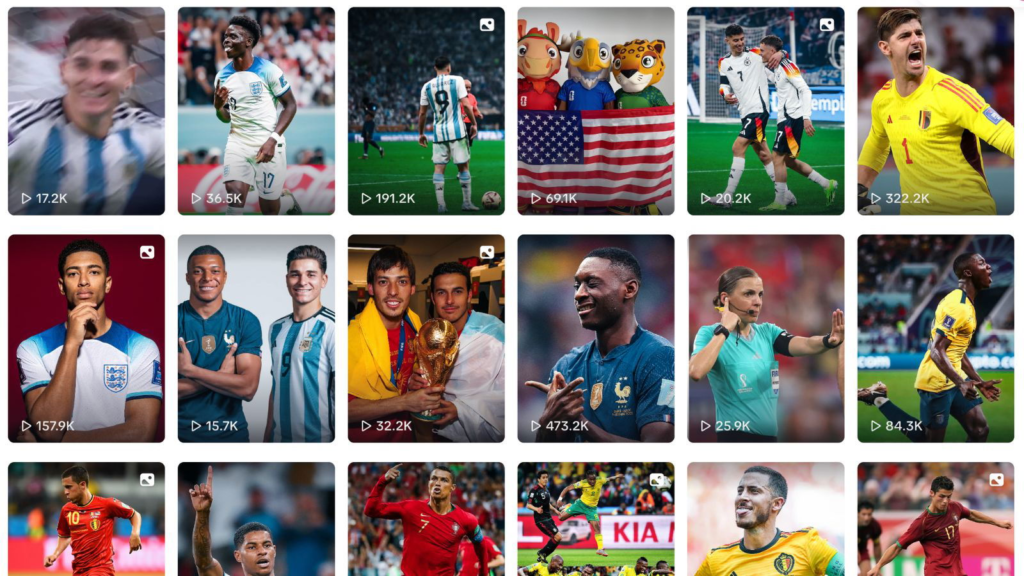
In a first-of-its-kind agreement, FIFA has named TikTok as its “Preferred Platform” for the FIFA World Cup 2026, a deal designed to turn viral fandom into measurable broadcast tune-in. The partnership, which builds on a 2023 Women’s World Cup tie-up that generated tens of billions of views, provides TikTok with unprecedented integration. For the first time, a select group of global creators will be granted “behind the curtain” access to training sessions and press conferences, while a broader pool of creators will be allowed to co-create using FIFA’s archival footage. Crucially, the deal unlocks new commercial avenues for official media partners. Global rights holders will be able to live-stream portions of matches directly on the platform and monetise their coverage through TikTok’s premium advertising solutions. FIFA secretary general Mattias Grafström said the collaboration is central to the tournament’s goal of being the most inclusive sports event in history. “This is an innovative and creative collaboration that will connect more fans across the globe to the FIFA World Cup in unprecedented ways,” Grafström said. “As football grows and evolves – uniting an increasing number of people – so should the way it is shared and promoted.” The partnership is anchored by TikTok GamePlan, a product suite designed to drive tangible business results for sports partners. According to TikTok’s global head of content James Stafford, fans are 42% more likely to tune in to live matches after watching sports content on the platform. “TikTok GamePlan turns fandom into measurable business results,” Stafford said. “We’re reaching the next generation of fans – particularly younger and female audiences – and converting that passion into real tune-in and engagement at unprecedented scale.” To protect the value of these rights, TikTok has committed to implementing strict anti-piracy policies to safeguard FIFA’s intellectual property throughout the 48-team tournament. source

TikTok named FIFA’s 'preferred platform' for World Cup Read More »

The future of AI-powered marketing measurement: Building a resilient data foundation for growth

This post is sponsored by Ayudante APAC.           Ayudante APAC was pleased to participate in Digital Marketing Asia 2025, one of Singapore’s largest gatherings for marketing and data professionals, organised by MARKETING-INTERACTIVE. The two-day event drew hundreds of marketers, data practitioners, and business leaders from across the region, all focused on exploring how emerging technologies and shifting regulations are reshaping the future of digital marketing. Ayudante APAC’s CEO, Naohiro Yamaura, delivered the session: “The future of AI-powered marketing measurement: Building a resilient data foundation for growth.” He shared practical perspectives on how organisations can adapt their measurement strategies in an increasingly fragmented, privacy-first world. For the first time, Ayudante APAC also showcased an exhibition booth featuring the in-house Google Analytics 4 Auditor, a tool designed to diagnose and evaluate the health of GA4 implementations. The booth attracted strong interest throughout the event, with attendees eager to learn more, highlighting the growing focus on robust and reliable GA4 measurement foundations. (For a report on our booth presence, and details on the GA4 auditor, please see this article.) While many sessions explored AI’s capabilities, Yamaura’s presentation reminded participants of a critical principle: without accurate and reliable measurement, AI-driven outcomes cannot be meaningfully evaluated. AI in marketing: Data is the key Yamaura began by highlighting a central insight: “AI is now integrated into every aspect of our lives – from recommendation engines to automated reporting and ad optimisation. But AI’s power lies not in its algorithms, but in the data it consumes.” He highlighted the increasing complexity of the digital ecosystem, where consumers interact with brands across websites, apps, social media, OTT platforms, and more, creating a mosaic of behaviours that traditional reporting cannot fully capture. Modern consumers present a unique challenge. Research shows that 97% of purchasing journeys are unique, often spanning 30 or more touchpoints. In such a fragmented environment, AI cannot rely on generic or low-value data. Successful organisations focus on data that matters – completed purchases, qualified leads or high-intent interactions – rather than tracking every click or page view, as meaningful signals better train AI and drive results. Using the marketing funnel (awareness → consideration → conversion), Yamaura illustrated how AI leverages data from the consideration stages and actual conversions to predict the next customer action. “No measurement, no prediction. AI is only as good as the quality of data you put into it.” Garbage in, garbage out: Why measurement matters The session emphasised that poor-quality data undermines AI’s performance. Misconfigured events, duplicate conversions or fragmented tracking can misguide optimisation, waste budgets, and erode trust in analytics. “AI does not fix poor measurement. It amplifies flaws in your data, leading to misallocated budgets, inaccurate predictions, and declining trust in results.” He stressed that accurate predictions depend on two factors: measuring user behaviour effectively and reliably capturing conversion data. Organisations should focus on high-value, outcome-driven signals, avoiding generic metrics that do not directly contribute to business outcomes. The measurement crisis: Technology and regulations Yamaura addressed the structural challenges affecting marketing measurement today. Technological disruptionThird-party cookies are increasingly ineffective due to browser restrictions, while Apple’s Intelligent Tracking Prevention has created so-called “data deserts”. Google’s evolving cookie strategy has produced a fragmented, consent-driven ecosystem, complicating measurement. In Japan, where Safari’s market share exceeds 50%, these changes have already had a significant impact, and with Safari usage rising in Southeast Asia, similar effects are expected across the region. Regulatory pressurePrivacy regulations worldwide, including GDPR, CPRA, and APAC laws such as Singapore’s and Thailand’s PDPA, carry enforceable penalties. As a result, signal loss reduces the data available for AI, lowering prediction accuracy and campaign effectiveness. Research shows the loss of third-party cookies alone could reduce conversions by more than 50%, highlighting the urgent need for resilient, privacy-compliant measurement frameworks. Turning a crisis into an opportunity: AI-enabled measurement Yamaura framed these challenges as opportunities to rebuild measurement infrastructure that is privacy-first and AI-ready, introducing three key Google-supported solutions: Google Analytics 4 (GA4) uses event-based tracking, predictive insights, and AI-driven modelling to help organisations forecast purchases and revenue, predict churn or high-value actions, leverage first-party data for AI optimisation, and model conversions even when consent is limited. By focusing on outcome-driven signals, GA4 ensures AI predictions are accurate and actionable. Google Consent Mode (V2) – uses AI to estimate outcomes from users who decline cookies, maintaining performance visibility while respecting consent. On average, it can recover up to 65% of lost conversions. Enhanced conversions – improves measurement by securely sending hashed first-party data for matching. Machine learning enhances attribution accuracy across platforms, enabling better-informed optimisation decisions. Together, these tools demonstrate that privacy and performance can work hand-in-hand, empowering marketers to leverage AI responsibly. Finally, Yamaura emphasised the session’s foundational insight: “Prediction or protection – it all begins with measurement. When done right, measurement enables AI to deliver meaningful results.” Q&A: Prediction and privacy can coexist Ayudante APAC’s GMP consultant Jasper Poon and CEO Naohiro Yamaura. The session concluded with a lively Q&A, with Ayudante APAC’s GMP consultant Jasper Poon joining. Attendees asked practical questions about AI, privacy, and industry-specific challenges. One striking question was: “How should AI and GA4 be utilised in industries with strict privacy regulations such as healthcare?” Ayudante APAC explained that AI’s essence is prediction, and its accuracy depends on sound data measurement combined with privacy-conscious practices. Implementing clear consent mechanisms isn’t just a legal requirement – it builds trust-based relationships with customers. Practical takeaways for marketing leaders Yamaura concluded with a clear message: “The future of AI-powered marketing measurement will reward organisations that prioritise high-quality, outcome-driven signals, build privacy-first frameworks, and treat analytics as a strategic capability. AI accelerates decision-making, but it cannot overcome weak measurement.” Key

The future of AI-powered marketing measurement: Building a resilient data foundation for growth Read More »

Mentoring SG unveils new series turning young dreams into reality

Mentoring SG has launched “One good shop”, a three-episode short-form reality series co-created by agencies ballsy and Friend, aimed at showing how mentorship can turn ideas into real businesses. The series follows three young people as they transform their concepts into actual shops, guided by experienced mentors at every step. The mentors featured in the series include Bjorn Shen, Masterchef Singapore alum, Rowena Bhagchandani, CEO and co-founder of BLKJ Havas, and fractional CMO Delbert Ty. The first episode follows 25-year-old Jaccine, founder of the home-based Bojio Bakery, who is passionate about building something of her own. She acknowledges the challenges of the F&B industry, citing high operational costs and the closure of many local outlets, but remains determined to chase her dream. Her mentor, Shen, offers guidance on navigating the food business. Don’t miss: ballsy appoints new SG-based MD, unveils Malaysian creative content studio  The episode then introduces the other mentees, who meet and share their perspectives on mentorship. They are presented with their first challenge: serving their baked goods to attendees at the National Mentoring Summit. The episode closes with a teaser of the next episode, showing the mentees interacting with the public at the summit. In conversation with MARKETING-INTERACTIVE, Remona Duquesne, marketing consultant, Mentoring SG said the series format reflects the journey of mentorship, from self-doubt and problem-solving to growth and tangible outcomes, making it relatable and practical for viewers.  “At its core, ‘One good shop’ shows how one good talk with the right mentor, can change a young person’s direction and make mentorship feel relatable, practical, and real,” said Duquesne.  The series was inspired by the simple insight that many youths don’t fully understand the value of mentorship until they experience it. Furthermore, youths today are experimenting with side hustles, creative ideas and alternative career paths, though often without guidance.  “‘One good shop’ was designed to bridge that gap by showing mentorship not as abstract advice, but as something that leads to real-world outcomes: products made, ideas tested, confidence built,” explained Duquesne, adding that the reality-show format helps make mentorship visible, human and culturally relevant for younger audiences.  The mentees were selected through an open call, with a focus on curiosity, commitment, and openness to learning rather than just “best ideas”. Meanwhile, each mentor was chosen intentionally, each representing different paths to success across food, lifestyle, entrepreneurship and business.  “One good shop” will be released on digital and social platforms, including Instagram, TikTok, and the Mentoring SG YouTube channel. It is supported by a broader digital-first campaign featuring social content, influencer storytelling, and mentor-led engagement, aimed at encouraging youths to sign up for Mentoring SG programs. “‘#OneGoodShop’ is an exciting first for Mentoring SG in partnership with our fractional marketing leads Remona Duquesne and Janice Chua. It is a bold campaign which activates our fundamental belief, that all it takes is #OneGoodTalk to turn doubt into direction for youth seeking clarity,” said Ian Tan, director of marketing and youth outreach, Mentoring SG.  In tandem, VJ Anand, founder and chief creative officer at ballsy, said, “This was a real team effort from the mentoring team to ballsy and Friend. We all cowrote the show together. Mentoring team wanted an idea to get in more mentees and the best way to recruit honestly is to show how mentoring can actually benefit a real-life challenge and business.”  “Way too many F&B businesses in Singapore are shutting down these days. So what happens when the younger generation dreams of entering the food industry? With real-life mentors and guidance, their dreams don’t have to take a backseat. Even in a challenging industry, the right guidance can help those dreams come true. That’s what the show is about,” he added. Building on their experience creating culturally relevant content for youths, ballsy previously made headlines last May with its global debut for Jetpac, a travel eSIM brand, through “The travel virgin show”. The social-first, unscripted series followed two first-time international travellers, guided by mentors including Love Is Blind UK star Benaiah. Bold OOH activations in Los Angeles and London teased the campaign with provocative phrases and directed audiences to a microsite, with the full rollout planned across Europe, APAC, Canada, and Australia. Related articles:   Ballsy and Vision Machina launch human-powered AI band Project Zilal   Former VaynerMedia creatives set up creative shop ‘Friend’    VJ Anand launches ‘ballsy’ in SG, aims to break traditional agency model source

Mentoring SG unveils new series turning young dreams into reality Read More »

Marriott Bonvoy makes loyalty as easy as checking in

Marriott International has teamed up with BBH Singapore to launch a new Asia Pacific campaign positioning its Marriott Bonvoy loyalty programme as simple and accessible, even for infrequent travellers. Titled “Loyalty’s just that easy”, the campaign challenges the perception that loyalty programmes are designed only for frequent flyers or business travellers. Instead, it frames Marriott Bonvoy as a programme that rewards everyday travel moments, from hotel stays to dining and spa experiences. At the centre of the campaign is a hero film created by BBH Singapore, which follows an everyday traveller discovering Marriott Bonvoy for the first time. The film captures his surprise as he realises that even small moments of relaxation, such as enjoying a meal or unwinding at a spa, can earn points. Don’t miss: Marriott Bonvoy hits the fast lane with F1’s Mercedes team in star-studded travel series The film was directed by Emmy Award-winning director Rhys Thomas and produced by Stink London. To reflect the programme’s broad appeal across the region, the campaign features three versions of the hero film, each led by a different protagonist from India, Japan and Korea. Shorter 30- and 15-second edits will also roll out, reinforcing the ease of earning and redeeming points across Marriott Bonvoy’s portfolio of more than 30 hotel brands at various price points. The films began airing on 5 January and will run across Asia Pacific markets including India, Japan, Korea and Indonesia. The campaign will be supported by an integrated media push spanning out-of-home, digital and social channels, with additional activations planned through the first half of 2026. Marriott Bonvoy allows members to earn and redeem points not only through hotel stays, but also through spending on food and beverage and wellness experiences, positioning loyalty as something that “comes naturally” rather than requiring deliberate effort. “We know loyalty programmes can feel complicated and real-world usage might seem like hard work. This campaign aims to correct these perceptions, showing how loyalty with Marriott Bonvoy is effortless. The variety of our hotel brand options means there’s something for everyone, and members can transform moments of relaxation, both big and small, into points,” said Xue Ying Mei, vice president Marketing, Marriott International Asia Pacific excluding China (APEC). In tandem, Khairul Mondzi, executive creative director, BBH Singapore, said, “Most hotel loyalty programmes make you feel like you need a spreadsheet just to know where you stand, not to mention the effort it takes just to earn the points. We started with a simple question. What if loyalty didn’t feel like effort at all? That idea became the foundation of this campaign, built around the moment you realise you don’t have to try. It just works.” The campaign also builds on BBH Singapore’s growing body of work with Marriott International in the region. In August last year, Fairfield by Marriott launched “Come back to calm”, a campaign created by BBH Singapore that positioned the brand as a serene counterbalance to the sensory overload of travel. The work, BBH Singapore’s first for Marriott International Asia Pacific excluding China since winning the business earlier that year, reinforced Fairfield by Marriott’s brand platform, “The beauty of simplicity”. Anchored by an online film, the campaign contrasted the colour, noise and spontaneity of travel with Fairfield by Marriott’s pared-back spaces designed for rest and recharge, closing with the tagline, “Come back to calm”. Don’t miss: From dosas to door greets: Marriott Hotels’ 24-hour welcome goes global    Marriott Bonvoy pours local pride into travelling coffee rave  Marriott Bonvoy honours HK’s culinary heritage with new campaign source

Marriott Bonvoy makes loyalty as easy as checking in Read More »

Tim Ho Wan refreshes brand identity with new leadership team

Hong Kong-based Tim Ho Wan has refreshed its brand identity to strengthen its appeal to a global audience and build stronger brand loyalty. As part of the rebrand, Tim Ho Wan has updated its visual identity, brand expressions, and manifesto to guide its owned markets and franchise partners on what the brand stands for, and how it should appear across all customer touchpoints. Driving the rebrand is its newly appointed vice president, global product and marketing, Lisa Leung. Reporting to the Tim Ho Wan global CEO Sheng Lee, Leung is tasked with overseeing the brand’s global product strategy, innovation, sales growth, and brand and marketing communications across customer touchpoints. Explaining the insights behind the rebrand, Leung told MARKETING-INTERACTIVE, “We aim to build lasting brand equity at every touchpoint and deepen global appreciation for the culture of ‘yumcha’ (飲茶). By delivering authentic, Michelin recognised dim sum that represents Hong Kong’s flavours consistently across all markets, we will ensure a cohesive, high-quality experience worldwide. We want to earn a place not just on dining tables, but in hearts and memories, and to offer a taste of Hong Kong to the world.” The rebrand targets all walks of life, cultures, and age groups across 11 markets including Hong Kong, Japan, Korea, Taiwan, the US and Singapore, she said. “We are the ‘champions of the people’; we believe extraordinary dim sum should be for everyone. We’re for those who believe a meal is reason enough to gather, and for those who like to gather around a table full of dim sum for connection, joy, and meaningful moments.” “We’re for those who seek what’s real – food made with care, authenticity, and heart. We welcome new faces, cultures, and communities to gather and connect over dim sum. Dim sum should be a language that everyone understands,” she added. Moving forward, Tim Ho Wan aims to strengthen brand awareness and affinity in Hong Kong, Asia, and the US, while tapping into new, younger customers. Marketing efforts will be focused on communicating yumcha culture, tastes of Hong Kong, and the role of Tim Ho Wan as a bridge that creates bonds and shared stories. “Great taste will always be the brand’s foundation, and it’s the joy, connection, and meaning alongside it that will take the brand further. Every bite at Tim Ho Wan should reflect that commitment—made with care and served with heart,” Leung added. Related articles: Tim Ho Wan partners local illustrator to bring dim sum culture to lifeInterview: Tim Ho Wan’s Daniel Lin on how to modernise marketing with AI-generated content source

Tim Ho Wan refreshes brand identity with new leadership team Read More »

Toyota Motor Asia spotlights reliability, service and innovation in regional push

Toyota Motor Asia has unveiled a new regional brand campaign centered on three pillars: diversification, service excellence, and quality, durability and reliability (QDR). The campaign aims to reinforce Toyota’s longstanding commitment to customers amid a rapidly evolving mobility landscape shaped by new technologies, powertrains and rising consumer expectations. It underscores the brand’s focus on trust, reassurance and long-term reliability while highlighting its deep roots in Asian communities.  The campaign was developed together with The Crisp Group, in collaboration with Benetone Films, Finally Studios, Black Cat White Cat Music and Assembly Global Australia. It will roll out across digital, social and premium video platforms in Thailand, Indonesia, Philippines, Vietnam, Singapore and Malaysia, presenting a unified expression of Toyota’s brand promise: supporting people to navigate a changing mobility world with confidence. Don’t miss: Toyota, dentsu Thailand turn Bangkok street into memorial for speeding victims   Central to the campaign are three distinct films, each reflecting one of the brand pillars. “Diversification” showcases Toyota’s wide range of mobility solutions and its commitment to inclusivity and choice. It features a farmer, a livestreamer and a chef, each embarking on their own separate paths only to come together and cook for the community they are a part of.  Meanwhile, “Service excellence” adopts a lighter, energetic tone, showcasing Toyota’s service network and the confidence it inspires. The film follows a girl named Maya, whose plans for an adventure with her friends hit an unexpected snag. Viewers are taken through the group’s experience at a Toyota service centre, where efficient support helps them get back on the road quickly. Finally, the QDR film demonstrates the brand’s promise of quality, durability and reliability through everyday experiences backed by rigorous engineering.  “As we continue to strive towards mobility for all, it is important for us to communicate Toyota’s strengths in a way that is authentic, human and relevant to people’s everyday lives,” said Jaja Ishibashi, general manager of Toyota Motor Asia. “This campaign reflects our long-standing commitment to quality, service and meeting the diverse needs of customers with confidence, reliability and trust.” “Toyota’s credibility is the result of decades of consistency along with continuous progress and innovation,” said Shantanu Dasgupta, co-founder and CEO of The Crisp Group. “Our role was to translate that trust into human stories, coded in contemporary culture while remaining unmistakably Toyota.” The campaign builds on Toyota Motor Asia’s broader regional initiatives, including last year’s evolution of its “Move your world” brand platform, launched alongside Toyota Motor Thailand. The initiative aims to inspire positive change, spark social impact, and foster connections that go beyond mobility, highlighting Toyota’s commitment to shaping a future where everyone can move forward together. Drawing inspiration from youth movements and grassroots collectives across Asia, the repositioning seeks to connect the region’s talent, creativity and innovation under a unified, purpose-driven narrative. Related articles:    Toyota maintains 23-year streak as BYD upends Australian auto marketToyota unveils next chapter of HiLux with loyalty-led summer campaign Toyota’s Project Bida reimagines the Tamaraw for a new generation  source

Toyota Motor Asia spotlights reliability, service and innovation in regional push Read More »

Reimagining beauty: How Shopee’s AI partnerships are redefining online shopping experiences

There was a time when buying beauty products meant standing at a crowded department store counter, swiping shade after shade on your arm until it disappeared under layers of rouge and glitter. Today, that same moment of discovery is happening on screens across Southeast Asia. On Shopee, shoppers are now trying, analysing and purchasing beauty products through AI-powered tools such as 3CE’s Personal Colour Analysis, SkinCam, HairScan and BeautyCam. From make-up to skincare to haircare, the experience is no longer guesswork. Rather, it is personalised, guided, and can be done entirely from home, giving shoppers more options to find the products they need. But this shift goes beyond ease and efficiency. It reflects a deeper change in what shoppers expect from online retail. According to DHL eCommerce’s “eCommerce trends report 2025”, which surveyed 24,000 online shoppers across 24 markets, 81% of shoppers in Asia Pacific now expect AI-powered features such as visual try-ons and smart shopping assistants, as part of the online shopping journey. Through a mix of technology and brand partnerships, Shopee is transforming online beauty retail from static product listings into immersive and personalised experiences. From Seoul to Southeast Asia in 30 seconds Shopee’s move into personalised beauty has been shaped by partnerships with some of the world’s biggest beauty players. Its most direct nod to professional beauty services comes through the 3CE Personal Colour Analysis tool. Powered by AI, the tool brings professional colour diagnostics to shoppers’ mobile devices, delivering results in just 30 seconds. It works by using a neural network to analyse specific parts of the face and read colour values from a photo of the user. These measurements are then mapped to a personal colour diagnosis using an expert framework co-developed by 3CE and a Korean personal colour specialist. Based on the results, users receive tailored product recommendations that match their personal colour profile, creating a seamless journey from discovery to purchase. For many consumers, a personal colour analysis was once a premium experience, one that might involve travelling to South Korea or spending hours in studio consultations. The trend has become so popular that some shoppers spend hundreds of dollars just to find their ideal colour type. With Shopee, what was once a time-consuming and costly process is now accessible to users across the region, empowering them to make confident and informed choices when shopping for beauty products with just a few taps on a phone. 3CE is the first Korean make-up brand to offer such a tool, exclusively on Shopee. The tool is available to users in Singapore, Malaysia, Indonesia, Thailand, and Vietnam. Early results show a strong impact: data from August 2025 indicated a 2.7 times uplift in buyer conversion rates and a 40% increase in items purchased per cart among shoppers who used the tool. When shoppers feel understood, and understand how different products can be applied together to achieve their desired look, confidence in a purchase follows. “Our partnership with Shopee to launch 3CE’s Personal Colour Analysis has been a great success, driving both an increase in conversion rates and the recruitment of new buyers,” said Karan Kansal, 3CE general manager for South Asia Pacific, Middle East and North Africa. “This strategic collaboration has truly helped us reinforce our position as the definitive Korean make-up brand recognised for colour expertise. We look forward to a continued and fruitful future with Shopee.” When AI gets personal In addition to the 3CE Personal Colour Analysis tool, Shopee has continued to bring personalised tools directly into the hands of shoppers with a suite of AI-powered tools, including SkinCam, HairScan and BeautyCam. SkinCam, launched in 2022 in partnership with ModiFace and L’Oréal, offers users a virtual skin diagnosis powered by AI and informed by dermatological research. At a moment when skincare choices can feel overwhelming, the tool helps shoppers identify products that address their individual skin concerns. By analysing specific skin concerns, SkinCam then recommends suitable products from brands, including L’Oréal Paris, Garnier, La Roche-Posay, Vichy, and CeraVe. SkinCam is exclusive to Shopee and is available in Singapore, Malaysia, Indonesia, Thailand, Vietnam, Taiwan, and the Philippines. According to Shopee, there was a four times uplift in buyer conversion rates among shop visitors who used SkinCam in November 2025. During the same period, La Roche-Posay saw a five times increase in buyer conversion rates among customers who used SkinCam. HairScan followed in 2025 through a partnership with Unilever. The tool gives users a personalised and science-backed hair AI analysis in just minutes. After uploading a hair selfie, users receive tailored insights into their hair condition, along with product recommendations that can be added straight to cart. Its reach has been amplified through Shopee Video and Shopee Live, which together contributed to 40% of total shop GMV as of October 2025. The tool is exclusive to Shopee and is available in Indonesia, Thailand, Vietnam, and the Philippines. Completing the experience is BeautyCam, an augmented reality (AR) make-up try-on tool that lets users visualise how make-up products such as lipstick shades appear on their own face before buying. The photo-realistic AR experience addresses a key challenge in online beauty retail: the uncertainty of buying before trying. Developed by ModiFace, and launched on Shopee, BeautyCam is used by brands such as L’Oréal Paris, Maybelline, Dazzle Me, Y.O.U Beauty, and Unilever. Available across Southeast Asia, Taiwan, and Brazil, BeautyCam has helped participating brands double their conversion rates. Together, these tools allow brands to bring personalisation to every stage of the shopping journey – from discovery and diagnosis to trial and purchase. As Chanelle Che, head of beauty and regional brand partnerships at Shopee, shared with MARKETING-INTERACTIVE, partnerships with such tools help brands deliver personalised recommendations that improve relevance and engagement across different markets. By doing so, customers across Southeast Asia enjoy individual analysis that makes shopping smoother, more convenient, and more enjoyable. “At Shopee, we are committed to supporting sellers and providing the best experience for customers. Our tech-enabled partnerships bring customers fresh and engaging ways of

Reimagining beauty: How Shopee’s AI partnerships are redefining online shopping experiences Read More »

Gen Z perspectives: Pizza Hut, Netflix tarot & surviving social media in 2026

Happy Friday, MARKETING-INTERACTIVE readers and welcome back to Gen Z Perspectives, your go-to feature where we unpack the week’s top stories and trending topics through the eyes of Gen Z. From the biggest industry moves to viral moments and marketing controversies worth dissecting, we’re bringing the heat with authenticity, awareness and probably a few unfiltered takes. Did you miss us? We’re back from the break and kicking it off with what Pizza Hut Malaysia has been up to, Netflix’s latest move into tarot and the key forces shaping social media this year. Dig in. Don’t miss: Gen Z perspectives: Your top stories of 2025 1. Pizza Hut MY rolls out global brand refresh locally through culture-led experiences Pizza Hut Malaysia is taking a softer, culture-first route in rolling out the brand’s global refresh locally, opting for everyday moments, playful social interactions and experiential touchpoints rather than a single headline-grabbing reveal. Anchored in the brand’s global mission of helping people “Feed good times”, the year-end push sees Pizza Hut Malaysia subtly repositioning itself as a connector of joyful social moments, particularly for younger audiences, while still staying accessible to families.  Read more here.  2. Netflix tarot lets viewers peek at their 2026 streaming fate Netflix is inviting viewers to see what 2026 has in store, and which shows might dominate their watch lists, through a playful new digital experience. The “Netflix tarot” forms part of the streaming giant’s “Discover your future” campaign where users are guided through a personalised tarot reading that pairs life fortunes with Netflix content. Participants begin by choosing one of three decks and answering three questions about where they want to invest their energy this year, from career and love to bold adventures or personal goals. To bring the experience to life, Netflix also released a four-minute short film. Read more here.  3. How brands can thrive, not just survive, on social media in 2026 2025 proved that the fight for attention online has never been fiercer. As feeds grew more crowded and audiences more scroll-happy, users began pushing back against endless content and fast-moving trends, seeking a slower, more enjoyable digital experience. Battenhall’s “Year ahead in social 2026” report highlights the forces shaping the platform economy this year, from Gen Alpha and AI influencers to backlash against trend-chasing and performative marketing. In 2026, brands no longer control the conversation; audiences do. Read more here.  Related articles: KFC Singapore picks new integrated creative and social agency    ballsy appoints new SG-based MD, unveils Malaysian creative content studio  Nike tech tracksuit sales soar following images of detained Maduro in outfit source

Gen Z perspectives: Pizza Hut, Netflix tarot & surviving social media in 2026 Read More »

Luckin Coffee refreshes menu, eliminates Nutri-Grade D items in Singapore

Luckin Coffee is putting wellness at the centre of its 2026 strategy, removing all Nutri-Grade D beverages from its Singapore menu from 5 January. In conversation with MARKETING-INTERACTIVE, the brand said, “As a leading retail coffee chain brand, Luckin Coffee aims to provide quality coffee without compromising on affordability and convenience to our customers.”  “For 2026, we will be placing greater emphasis on wellness during the product development process. Over the past few months, we have progressively upgraded ingredients and products in favour of healthier alternatives to ensure our menu no longer includes any Nutri-Grade D items,” it added. Don’t miss: Luckin Coffee and Duolingo serve up pandan power in SG collab The menu refresh is guided by the tagline “No more D, just delicious”. Luckin noted that the message reinforces the brand’s focus on wellness without compromising on taste, flavour or quality. In-store screens and the Luckin Coffee app now indicate the Nutri-Grade of each item, helping consumers make informed choices. To kickstart the year, the brand introduced the Blue-ming coconut latte and Blue-ming coconut frappe. Extracted from naturally blue spirulina and coconut juice, the plant-based drinks feature no artificial colouring. The latte combines espresso made from beans with a savoury whipped cheese cream, while the frappe offers an icy, lighter alternative. “These drinks were selected to be launched in January to align with our strategic focus on innovation and wellness in 2026,” Luckin said. “They are creamy, cooling and refreshingly sweet, the perfect icy escape from Singapore’s heat.” The refresh also targets health-conscious and trend-driven young professionals in Singapore who are seeking healthier options while maintaining the convenience and affordability Luckin is known for. Beyond January, the brand plans to launch additional wellness-focused products, including the Active Apple Kale Tea, developed in collaboration with the Australian Open and set to debut on 19 January. The drink blends apple, kale, grape and lemon with jasmine tea, contains no sugar substitutes, and is designed for everyday hydration or post-workout refreshment. The wellness-led refresh follows a series of brand-led campaigns in Singapore aimed at keeping Luckin Coffee culturally relevant. In November last year, the coffee chain partnered iconic cartoon duo Tom and Jerry for a nostalgia-driven collaboration tied to the year-end holidays. As part of the campaign, Luckin Coffee introduced the Mascarpone latte, described as blending Danish mascarpone with full-bodied espresso. The tie-up also featured festive-themed drinks and collectibles, with the brand positioning the collaboration around shared memories, playful rivalry and seasonal warmth. Prior to that, Luckin Coffee Singapore also leaned into purpose-led marketing with the launch of “UNSEEN // SEEN”, a social initiative and fundraising campaign developed in partnership with the Institute of Mental Health (IMH). Rolled out in support of World Mental Health Month, the campaign ran from 23 October 2025 across all Luckin Coffee outlets in Singapore. It sought to spotlight mental health through art, featuring works created by IMH patients during therapeutic art sessions guided by occupational and art therapists. Related articles: Luckin Coffee SG makes reality style horror film for Halloween   Luckin Coffee taps into Gen Z audience in HK with SpongeBob collab       Luckin Coffee set to open five new outlets in Malaysia by end of January     source

Luckin Coffee refreshes menu, eliminates Nutri-Grade D items in Singapore Read More »

GOODSTUPH Singapore strengthens creative bench with new appointment

GOODSTUPH Singapore has appointed Sofia Tawasil to its senior creative leadership team as associate creative director, strengthening the agency’s bench as it delivers work for global brands including Figma and Riot. Tawasil, hailing from Manila, is known for her clarity, cultural sensitivity, and restraint in creative execution. Her portfolio spans regional and global brands including McDonald’s, Jollibee, Nestlé Koko Krunch, and KitKat. Prior to joining GOODSTUPH Singapore, she was creative team head at Leo Burnett Manila and a copywriter at Dentsu Jayme Syfu. According to her LinkedIn, she started her career as a copywriter at McCann Worldgroup.  Don’t miss: KFC Singapore picks new integrated creative and social agency  “Tawasil brings a rare mix of intelligence, cultural sensitivity, and confidence in simplicity. As we continue building work across Asia, especially on brands such as Figma and Riot, Tawasil sharpens our ability to deliver thoughtful ideas at a regional scale. Plus, we really love her sense of humour,” said Pat Law, CCO of GOODSTUPH Singapore and Indonesia.  Tawasil’s hire reflects GOODSTUPH Singapore’s ongoing investment in senior creative talent across Southeast Asia, reinforcing the agency’s commitment to ideas that respect culture, audience, and intelligence.  The agency has also been adding clients to its roster, most recently winning the National Council of Social Service’s (NCSS) digital pitch in August 2025. As the appointed agency, GOODSTUPH Singapore has been tasked to spearhead NCSS’ comprehensive social media and digital engagement efforts. It will also collaborate closely with NCSS’ brand communications team to elevate the organisation’s digital presence, optimise audience engagement and deliver measurable outcomes aligned with NCSS’ strategic objectives.  Related articles:   GOODSTUPH, Free Fire turn Indonesia’s bullet train into record-breaking esports arena GOODSTUPH turns schoolyard slurs into pride keychains for Pink Dot 2025    LEGO Group nabs dentsu Creative SG MD as agency business partner director  source

GOODSTUPH Singapore strengthens creative bench with new appointment Read More »