The Next Web TNW

Startup contest seeks sustainable solutions to AI's energy demands

A new contest is searching for solutions to a defining problem of the AI era: soaring energy consumption. The Energy Innovation for AI Startup Challenge launches amid growing concern over the environmental cost of artificial intelligence. Just last month, the International Energy Agency (IEA) warned that global electricity demand from data centres is set to more than double by 2030 — with AI the main driver. Demand from dedicated AI data centres alone is forecast to more than quadruple. The surge threatens to deepen an already critical issue. Last year, Growth in global energy demand soared to almost twice its recent average, according to the IEA. As the increase accelerates, it’s set to intensify climate change, strain infrastructure, widen inequalities, and deplete vital resources. European tech superstars: Hear from Datasnipper, Hugging Face, Philips & many more Join 1000s of founders, investors and innovation champions at TNW Conference on June 19 & 20. It’s a problem partly caused by tech. It’s also a problem we need tech to solve. That’s the impetus behind the Energy Innovation for AI Startup Challenge. Powered by Extreme Tech Challenge (XTC) — the world’s largest startup competition for entrepreneurs addressing global challenges — and run in partnership with TNW, the contest is looking for startups tackling AI’s growing appetite for energy. The challenge welcomes a range of ideas, from advanced renewables and next-gen energy systems to smart grids and data centre optimisation. Young Sohn — the chairman and co-founder of XTC and the founding managing partner of VC fund Walden Catalyst Ventures — said the need for new approaches is essential.  “The next era of AI cannot be built on yesterday’s energy paradigms,” he told TNW. “We’re challenging innovators to deliver transformative energy solutions that will power the AI revolution sustainably.”  Applications for the challenge are open now — but startups need to act fast. The deadline for entries is May 7. Five finalists will pitch their ideas on stage at TNW Conference on June 19 in Amsterdam. As well as gaining global exposure, the startups will connect with top-tier investors, corporate leaders, and policymakers. Sohn — who will discuss the future of deep tech at TNW Conference with former ASML CEO Peter Wennink — urged startups to submit their energy ideas. “Show us your breakthroughs in advanced renewables, high-density energy storage, intelligent grid architectures, or novel harvesting technologies — the systems that will allow AI to scale responsibly,” he said. “The five selected startups invited to pitch on stage at TNW 2025 will define how the world balances technological progress with planetary boundaries.” Update (22:30 CEST, April 30, 2025): Updated to reflect the application deadline has been extended to May 7. If you want to watch the pitching contest, Young Sohn’s talk with Peter Wennink, or anything else on the packed agenda for TNW Conference, we have a special offer for you. Use the code TNWXMEDIA2025 at the checkout to get 30% off your ticket. source

Startup contest seeks sustainable solutions to AI's energy demands Read More »

Opinion: Scaling UK tech is a geopolitical imperative

Amid the economic malaise that followed the 2008 financial crisis in the UK – record unemployment, sluggish growth, tight fiscal consolidation – a game-changing policy drive was beginning to take shape.  This shift, driven by the Conservative-led coalition government at the time, was designed to transform the UK into “Incubator Britain” – attracting software and tech entrepreneurs with generous tax breaks, government-backed early-stage funding, and a thriving ecosystem, laying the foundations for the startup hub we recognise today. But while these initiatives succeeded in spurring startup growth, they did little to help those businesses scale. Despite having near-zero costs of distribution, British software firms today take nearly twice as long to scale from £10mn to £100mn in revenue as their US counterparts, held back by a set of persistent barriers that significantly stunt their growth potential. Against today’s backdrop of weak growth, isn’t it time we applied the same strategic focus to supporting scaleups as we did to startups in the 2010s? With geopolitical tensions rising, building up our homegrown technology sector represents good business sense and bolsters our future security. The 💜 of EU tech The latest rumblings from the EU tech scene, a story from our wise ol’ founder Boris, and some questionable AI art. It’s free, every week, in your inbox. Sign up now! The scaleup sector makes an outsized contribution to the economy, accounting for just 1% of UK SMEs, but generating 22% of SME turnover. Creating the right conditions for high-growth businesses to flourish is therefore crucial not only to the success of new businesses — it is also central to the government’s defining mission: reigniting economic growth. Recognising the barriers to scaleup growth Without meaningful action to address these barriers, the UK risks losing our most promising tech firms to foreign markets, taking high-value jobs, innovation, and intellectual property with them — a trend that has cost the UK billions already. The country has a golden opportunity to break this cycle, particularly in AI, where we have the potential to create globally significant companies rather than see these grow elsewhere or get snapped up by US giants. The AI sector alone has grown substantially, with its Gross Value Added increasing from £1bn in 2022 to £1.2bn in 2023, and estimates suggesting UK AI firms generated over £14bn in revenues. Keeping these companies local could be transformational. At a recent industry roundtable held by the think tank, The Future Governance Forum, the barriers facing scaleups took centre stage. Among the attendees were Labour MP Josh Simons, the BVCA — the trade body for the UK’s private equity and venture capital industry — and my company, Boardwave — a community of more than 2,000 European software leaders and CEOs. The discussion echoed the findings of the Future Governance Forum’s recent report, “A Mountain to Scale,” identifying three critical areas where policy must change to enable this essential growth. These were: finance, talent, and place. Finance: fixing the late-stage funding gap in UK tech While there is plenty of capital available for Series A investments, scaleups often struggle to secure the later-stage funding they need to continue growing. This “valley of death” in funding is a well-documented issue, with an estimated £15bn shortfall in domestic scaleup investment annually.  The government cannot close this gap alone; unlocking larger pools of private capital is essential. Sweden’s model of encouraging pension fund investment into growth-stage businesses offers one potential blueprint. The UK’s own pension reform agenda represents a similar opportunity to mobilise greater private sector investment. Talent: addressing hiring challenges and skills gaps Labour market dynamics are also making it harder for scaleups to thrive. The recent roundtable emphasised the challenges around hiring in the UK, given the impact that recent policy changes — such as the increase in employers’ National Insurance contributions — have had on business confidence. Alongside this is the availability of technology talent. The UK’s visa system needs to better support the development of skills in high demand, particularly in AI, if the country is to remain globally competitive. The government should look at targeted visa pathways such as Estonia’s e-Residency rules to attract the talent needed to drive the next generation of high-growth firms. Place: creating scaleup hubs across the UK There is a significant opportunity to position the UK as the best base for scaling businesses looking to enter the European market, particularly for investors and firms from high-growth economies like Brazil. Many foreign investors see the UK as attractive for reasons such as our strategic location, the English language, our openness to foreign direct investment (FDI), good infrastructure, and a stable government. However, the current feeling — particularly in the software and technology sector — is that the UK is often a less attractive place to scale a business than other markets. Despite this reputation, technology is playing an increasingly critical role in driving growth, fostering innovation in key sectors such as defence, energy, and security, and strengthening the UK’s geopolitical position.  The government’s recent announcement of increased defence spending underscores the need for sustained investment in cutting-edge technology to maintain strategic advantages. To fully harness the potential of tech scaleups — not just as economic drivers but as pillars of national resilience — policies like the Seed Enterprise Investment Scheme (SEIS) and the Enterprise Investment Scheme (EIS) should be expanded to support more mature, scaling companies in sectors aligned with these priorities. By doing so, the UK can solidify its leadership in the global tech landscape while reinforcing its economic and geopolitical standing. Regional growth is also key to tackling the broader trust problem in UK entrepreneurship. More people are employed by scaleups in the South East than in the rest of England combined. And with the majority of foreign funding for tech going to firms based in London and the South East, this reinforces the need to deploy more UK capital into tech, and take a place-based approach to scaleup policy.  Having stronger entrepreneurial communities is essential to propelling long-term

Opinion: Scaling UK tech is a geopolitical imperative Read More »

Tinder Swindler survivor launches identity verifier to fight scams

A Tinder Swindler survivor has launched a tool to fight the scams that upended her life.  Pernilla Sjöholm, who starred in Netflix’s hit documentary The Tinder Swindler, cofounded the platform — called IDfier — alongside computer scientist Suejb Memeti.  Released globally today, IDfier provides a human-to-human identity verification system. The platform promises a simple yet secure way to check who you’re interacting with. Users verify themselves by first scanning their passport, driver’s license, or ID card with their phone camera. If the document has an NFC (near-field communication), IDfier will also scan the chip for additional security. The user then completes a quick head movement to prove they’re a real person — rather than a photo, video, or deepfake. European tech superstars: Hear from Datasnipper, Hugging Face, Philips & many more Join 1000s of founders, investors and innovation champions at TNW Conference on June 19 & 20. Once verified, they can send other people a request to do the same. Both of them can then choose which information to share, from their name and age to their contact number. All their data is encrypted and stored across disparate servers. IDfier was built to blend this security with precision. According to the platform, the tech is 99.9% accurate in detecting real users and blocking impersonation attempts.  The team envisions the system securing endless online services, from e-commerce and email to social media and, of course, dating apps such as Tinder. Sjöholm (pronounced “Shuh-holm”) matched with conman Simon Leviev there in 2018. Posing as the jet-setting son of a wealthy diamond merchant, Leviev cultivated a close friendship with Sjöholm. They took lavish trips together across Europe, enjoying extravagant experiences. He claimed they were funded by his family’s fortune, but they were actually financed by other women scammed. Months after matching, Leviev said that “enemies” had placed life in danger — and he desperately needed cash. Sjöholm, a former sales worker from Sweden, was ultimately swindled out of tens of thousands of euros, leaving her bankrupt. TNW travelled to her hometown of Stockholm to hear her story — and her plans for IDfier. From the Tinder Swindler to IDfier On a sunny afternoon in a canal-side cafe, Sjöholm told TNW that she lost even more emotionally than she did financially. “In my eyes, it shouldn’t just be viewed as a fraud or a scam; it should be viewed as emotional abuse towards a victim,” she said. “When you experience fraud, you feel very embarrassed, you feel a lot of shame, and there’s so much hatred towards victims. I think people try to make themselves feel better by thinking that it doesn’t happen to smart people and wouldn’t happen to them. Actually, someone who says that is more likely to become a target.” The Tinder Swindler brought her experience of fraud to a global audience. Released in 2022, the show became Netflix’s most-watched documentary of all time. Sjöholm used her new-found fame to advocate for fraud awareness and financial security. She has since married and had twins, which led her to reflect on her line of work. Over time, she became frustrated by the limitations of solely supporting people after they had been scammed.  She also grew alarmed by the rapid advances in deepfakes. “We don’t even know if we’re interacting with a human today,” she said. “Before, it was more common to take someone else’s identity. Now, it’s more common to use synthetic identities. It’s so so easy today.” As Sjöholm explored new proactive directions, she was contacted by Memeti, a senior lecturer at Sweden’s Blekinge Institute of Technology. He asked if she would be interested in a solution that was preventative rather than reactive. Sjöholm believed the concept could have prevented her own entrapment. “What tool did I have to really check his identity? I didn’t have one,” she said. “I could have one now.” Sjöholm will discuss the future of fraud at TNW Conference in June. Credit: Kalle Sund Hellman The business case Sjöholm agreed to join the company as co-founder and COO, with Memeti taking the role of CEO. The duo has also received financial support from VC firms Visive Invest and Almi Invest. The latter is ultimately owned by the Swedish government, giving IDfier a powerful endorsement. To monetise the product, the platform has been made available as a subscription service on the App Store and Google Play. Prices start at $2 a month, with discounts for annual subscriptions and multi-user accounts, including a family plan starting at $7 a month for up to five people. The price point aims  to tap into a potentially enormous market. The Global Anti-Scam Alliance (GASA) estimates that scams cost consumers over $1 trillion each year — a figure that exceeds the GDP of most nations. Most of them involve fake identities or information, yet there’s currently no universally accepted form of consumer digital ID verification. “Fifty-to-sixty percent of scams involve fake identities,” Sjöholm said. “What if we could bring that down to 5%? We could have an enormous impact on the world economy.” Identity fraud also has deep social impacts. Suicidal ideation is alarmingly common — and the perpetrators can be victims as well. Law enforcement agencies have discovered a growing number of people being trafficked and forced to commit identity fraud. “If we could target the scammers in this way and not make it such a profitable industry, we would literally save lives,” Sjöholm said. Often, the targets of the scams are young people. In the long term, Sjöholm wants to give them IDfier for free.  The future of identity fraud prevention Sjöholm’s plan partly stems from her experience giving talks in schools. She recalls one in which she asked the students how many of them interacted with strangers online. “Ninety-five percent of these kids raised their hands,” she said. “And you could just see the teacher’s face drop. It’s a really scary situation.” Sjöholm is also campaigning for changes to EU laws. “I want it to be illegal to have a

Tinder Swindler survivor launches identity verifier to fight scams Read More »

Giant radar ‘umbrella’ launches into space on mission to transform climate science

The European Space Agency (ESA) has blasted its Biomass satellite into space aboard a Vega-C rocket. The launch took place at 11:15 (CEST) today from Europe’s spaceport in Kourou, French Guiana.  Now in orbit, the first-of-its-kind satellite will deploy a radar antenna that looks like a giant space umbrella. Developed by US defence contractor L3 Harris, the antenna is so intricate that it will take nine days to unfold in orbit. The umbrella’s job is to direct radar pulses from a P-band radar instrument mounted on the satellite’s body down to the forests below. This type of radar uses long wavelengths that can slice through thick canopies to reach the woody structures underneath, where most of a forest’s carbon is stored. Built by Airbus, it’s the first P-band radar ever launched into space. When the radar signals hit Earth’s surface, they bounce back. The umbrella-shaped antenna catches the returning signals and redirects them to the satellite. From there, the onboard systems process the data to create detailed 3D maps of global biomass. Think of it as an MRI scan — but for forests. By revealing the structure of the world’s biomass — comprising a complex mesh of leaves, stems, branches, and trunks — the probe aims to capture the most detailed measurements of forest carbon ever recorded from space. That could be a game-changer for climate science.  European tech superstars: Hear from Datasnipper, Hugging Face, Philips & many more Join 1000s of founders, investors and innovation champions at TNW Conference on June 19 & 20. Forests — often called the planet’s “green lungs” — pull around 8 billion tonnes of carbon dioxide out of the atmosphere every year. But when trees are cut down or damaged, they release that stored carbon back into the air, accelerating climate change. Tracking how carbon moves in and out of forests is critical to help scientists understand and predict the future of our climate.  The satellite is designed to estimate biomass, height, and carbon content with unmatched precision. That could help scientists better monitor deforestation and forest growth while revealing the role of biomass in the carbon cycle. Beyond forests, the probe can also map subsurface geology in deserts, ice sheet structures, and forest floor topography, offering a new perspective on Earth’s ecosystems.  source

Giant radar ‘umbrella’ launches into space on mission to transform climate science Read More »

This VC-backed network is on a mission to tackle the well-being crises with tech

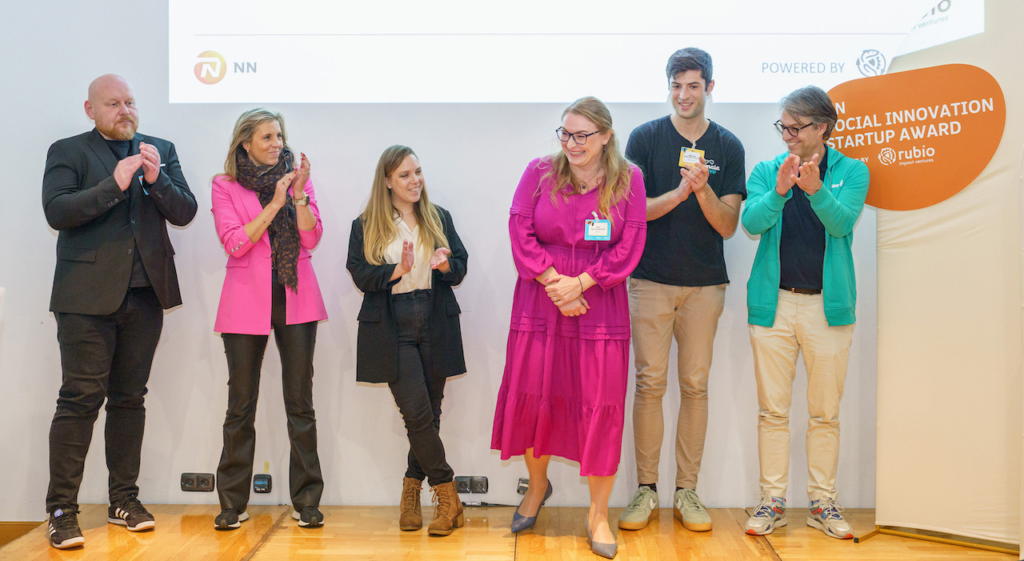
Last year, NN Group and Rubio Impact Ventures launched the NN Social Innovation Startup Award providing grants and mentoring to startups to tackle mental, physical, and financial well-being challenges with tech-backed solutions. Over 360 startups applied. Based on the success of the first edition, NN Group and Rubio Impact Ventures will be hosting a second edition of the NN Social Innovation Startup Award at TNW2025 on June 19, 2025 in Amsterdam. The winning startups will receive a grant and year-long coaching opportunities—with tailored resources, networking, and support (Psst the application deadline is April 30th, so apply now!). Bringing our world together with tech-driven social impact “I truly believe that social innovation could be our new strategic asset,” explains Tamara Obradov, partner at Rubio Impact Ventures and one of the program’s architects. “It’s a critical pillar alongside the green and digital transitions. We first had the digital transition, then the green transition and now, to bring this polarized-world together, we need the social innovators and system shapers.” Over the last decade, climate-tech solutions have received attention from VCs thanks to the Green Deal and national efforts to curb climate change by providing incentives and drivers for change. Alongside this, grew the realization that sustainability is not only good for the planet but also good for business, providing cost-saving alternatives. However, social impact solutions have not received the same level of attention from VCs. “People often associate impact with climate,” says Obradov. “But rarely do we talk about how we help people transition toward the future. That’s where social innovation comes in. We need to invest in climate and food systems—but we also need to help society adapt.” Today, it’s estimated that more than 84 million people in the EU are struggling with mental health problems. Many businesses received a wake-up call during the pandemic which fostered the rise in mental health-focused apps but, the number of people suffering from mental health issues is increasing and, not just amongst workers, but youth and the elderly as well. Lonneke Roza, Head of Community Investment at NN Group, believes: “If we were to focus on building a world where technology helps underserved communities gain access to technological solutions that can provide life-changing physical, mental, and financial support, we could not only unlock potential for individuals but society as a whole.” Ensuring everyone is heard Assistive technology company Whispp was one of the three grant winners from the first edition of the NN Social Innovation Startup Award. CEO Joris Casterman’s drive to found the company was rooted in the challenges he faced growing up with a severe stutter. With Whispp, he developed an assistive voice call app that uses AI to convert whispered speech and vocal cord impaired speech. Participating in the award was a game-changer helping Castermans meet more like-minded VCs and benefit from a year of coaching opportunities. “I met a lot of impact investors, in addition to Rubio, who I’m still in contact with. What you see is that, along with questions about your revenue and growth model, you also get questions about how you measure your impact.” This made it clear to Castermans that, for these VCs, impact was just as important as profit. In addition to more funding opportunities, the coaching his team received was invaluable. “We had great sparring sessions on our strategy and even worked with a coach to develop our management team’s collaboration and leadership goals,” Castermans says. “We couldn’t have done that on our own—it helped us professionalize and prepare for our next phase.” This year, Whispp is set to launch two powerful new features: A virtual microphone for video conferencing, enabling people with voice impairments to be heard clearly in online meetings; A live conversation mode designed to work in noisy or crowded environments—facilitating spontaneous, in-person communication. These tools will ensure everyone’s ideas are heard. Everyone can be part of special moments with their loved ones. And everyone’s voice is heard. It’s a powerful example of how technology can create life-changing impact. Inspired by the community he’s found through the NN Social Innovation Startup Award, Castermans sees even greater potential on the horizon. “There are several really interesting accessibility companies. We could build an accessibility subgroup or coalition. This could also become a source for the world to find cool and innovative solutions in the assistive technology domain. The risk of being a startup is that you often do your own thing. But there are so many instances in which you should collaborate and team up!” A chance for VCs and corporates to scale impact Last year, a fundraising wall and booklet were created exhibiting the top 100 impact startups that took part. It was made to be easily accessible allowing VCs to sort startups by theme, country, phase, etc. “Any investor that wants to participate is more than welcome to reach out to us,” Obradov says. And for corporates? While many have the vision and the resources to drive social innovation, what they often lack is access to startups. But together, corporates and VCs can build a powerful initiative. “NN Group’s partnership with Rubio is a great example. Each brings their strength—corporates with their themes and reach, VCs with their innovation pipeline. I would like to invite more corporates to join up with venture capital firms and see how they can support innovation at scale.” Putting the social back in social impact Our biggest social challenges won’t be solved by one startup, one investor, or one institution. It requires collective effort. “I absolutely believe this could be what brings this fractured world together. And these innovators could be these agents of unity for people and society to transition to a new future,” says Obradov. Ready to be part of the future of impact innovation? Startups: Apply to be part of the NN Social Impact Innovation Award by April 30, 2025! Investors & Corporates: Join the movement and connect with Europe’s leading social innovators source

This VC-backed network is on a mission to tackle the well-being crises with tech Read More »

Bulgaria’s bold leap: From outsourcing hub to emerging deeptech contender

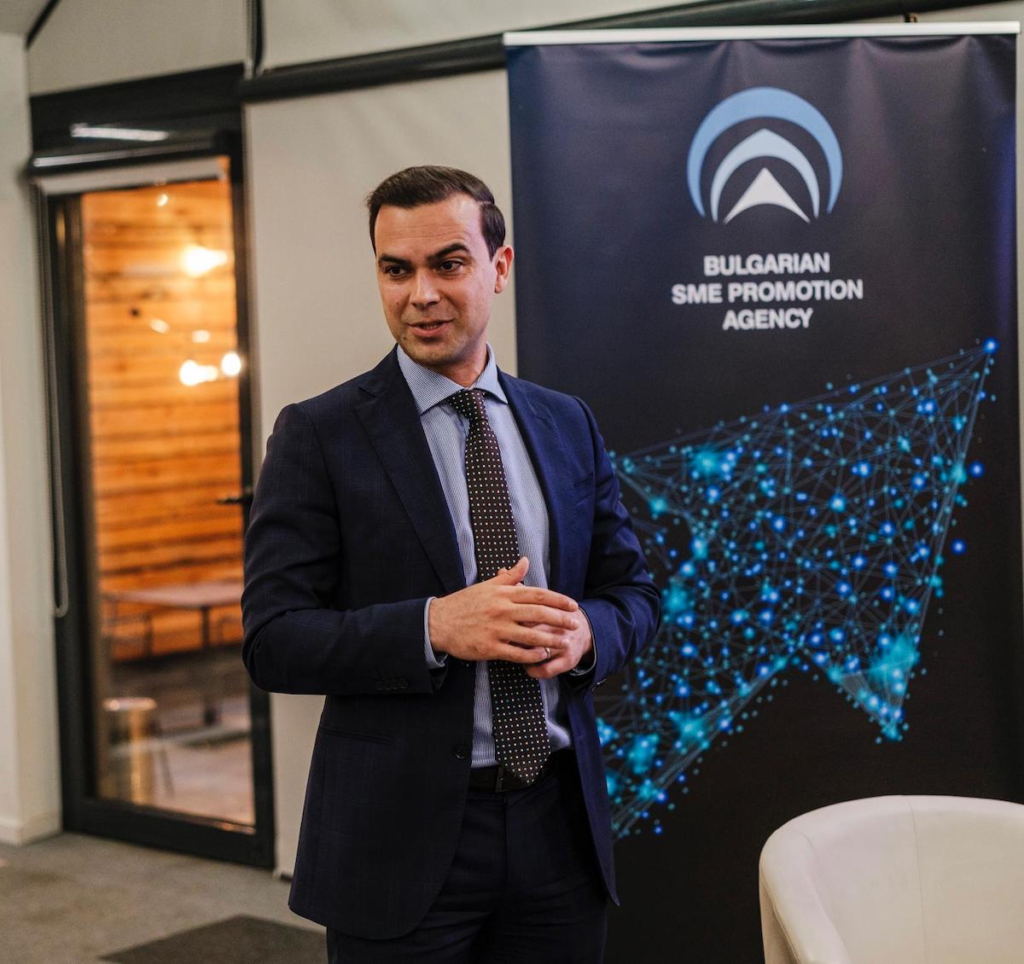
In the global race to become the next big tech hotspot, many countries pour billions into nurturing homegrown talent, courting VCs, and crafting startup-friendly policies. While some struggle to gain momentum, others seem to leap forward—fast. So, what sets apart these rapid risers? What’s the secret to ecosystem transformation? Look no further than Bulgaria—a country that’s quietly but confidently building one of Europe’s most exciting tech stories. The key ingredients For years, Bulgaria has been a magnet for global tech firms thanks to its flat 10% tax rate, highly skilled workforce, and cost efficiency. Industry giants like SAP, Microsoft, Oracle, and VMware have long operated sizable IT hubs in the country, capitalizing on Bulgaria’s deep technical talent pool. European tech superstars: Hear from Datasnipper, Hugging Face, Philips & many more Join 1000s of founders, investors and innovation champions at TNW Conference on June 19 & 20. It also leads Europe in one particularly important metric: women in tech. Nearly 29% of ICT roles in Bulgaria are held by women—almost double the EU average—broadening the country’s available talent base and setting a powerful example for inclusivity in the sector. In 2019/2020, fDi Intelligence ranked Sofia the world’s most cost-effective city for fintech—putting Bulgaria firmly on the radar of global investors. However, in the last few years, new initiatives have aimed at boosting the country’s homegrown tech companies. From Telerik to Bulgaria’s first homegrown unicorn One of Bulgaria’s first big successes was Telerik, a software company producing tools for developers. Although it was acquired by Progress for $262.5 million in 2014, before it could reach unicorn status, this success created a springboard for a slew of new companies. In 2022, the country welcomed its first homegrown unicorn Payhawk, a spend management platform. According to StartupBlink’s 2024 Global Startup Ecosystem Index, the country now ranks 37th worldwide for startup creation—a promising climb. Bulgarian startups attracted over €264 million in investments in 2023, marking a fourfold increase compared to five years prior—a clear signal that international and regional confidence in the ecosystem is rapidly rising. Investment into emerging technologies in particular has been significant. According to The Recursive’s State of AI Innovation in CEE report, over €1 billion was invested in Bulgarian and Bulgarian-founded deep tech and AI startups from 2018 – 2023. “Founders here are more mature now in how they think about business,” says Peter Tsatchev, Principal at VC firm LAUNCHub Ventures. “What we’re seeing is a generation of entrepreneurs building with a global mindset from day one. They’re creating products that can compete with startups out of London or New York. There is a trend that a lot of young folks from the region study abroad and then come back starting with the mindset of building a global company.” Tsatchev says access to capital is no longer the main challenge. Bulgaria has 15 VC firms managing around €500 million in assets, the next step is getting more people into the founder pipeline. “What we need are more success stories. When people see someone from their network build a global company, it becomes real. That ripple effect—along with education [in entrepreneurship] and awareness—is how we’ll see the next wave of startups emerge.” The secret sauce: The #BreakingGrounds initiative However, homegrown success stories alone weren’t enough to put Bulgaria on the global tech map. What the country truly needed was a bold rebrand—one that would reposition it not just as a hub for outsourcing, but as a serious contender for deep tech innovation. “The biggest challenge was lack of visibility a nd recognition,” explains Boyko Takov, Executive Director of the Bulgarian Small and Medium Enterprise Promotion Agency (BSMEPA). “Despite having strong tech talent and success stories, many still saw the country as outsourcing hub rather than as a place for high-growth startups.” Boyko Takov, Executive Director of the Bulgarian Small and Medium Enterprise Promotion Agency (BSMEPA) In his view, state involvement is an essential part of building a globally competitive tech ecosystem. “Without institutional backing, scaling an ecosystem internationally is nearly impossible. Public-private collaboration allows for consistent investment in visibility, structured support for startups, and positioning on the global stage. Governments must act as enablers, not just funders.” BSMEPA has been playing a strategic role in orchestrating ecosystem-wide efforts—coordinating stakeholders, securing international exposure, and aligning public and private forces behind a unified vision. In 2023, BSMEPA teamed up with regional tech PR agency, Storytelling Studio, powered by The Recursive to launch #BreakingGrounds—an ambitious initiative to reshape Bulgaria’s international reputation and establish it as a European deep tech leader by 2027. The mission? To elevate Bulgaria’s presence on the global stage by showcasing its top tech talent and startups on Europe’s top tech stages. “2024 was a pivotal year for #BreakingGrounds,” says Teodor Antonio Georgiev, Co-Founder & Head at Storytelling Studio. “Through our delegations at events like Web Summit, Slush, VivaTech, and Bits & Pretzels, we engaged over 350,000 global investors and innovators. More than 100 Bulgarian companies participated—and the initiative helped generate over €16 million in investments and deals.” Teodor Antonio Georgiev, Co-Founder & Head at Storytelling Studio Digital identity regtech startup Evrotrust, raised €3.3M in 2024. Konstantin Bezuhanov, CEO, said, “Being selected to pitch at the opening ceremony of Bits & Pretzels was an extraordinary opportunity for Evrotrust to showcase our innovation to a global audience of investors and industry leaders. This wouldn’t have been possible without the strategic guidance and support from the #BreakingGrounds team, who ensured we were positioned on the right platform at the right time. Their expertise in navigating top tech events and creating high-impact visibility has been instrumental in our strategy for international exposure.” Konstantin Bezuhanov, CEO Evrotrust What’s next for #BreakingGrounds? In 2025, #BreakingGrounds is yet again embarking on a whirlwind tour of tech conferences with the best of the best in Bulgarian tech with visits to ViennaUP, Reflect Festival, GITEX Europe, We Make Future, Bits & Pretzels, How to Web, Slush, Web Summit, and of course, TNW2025! And there’s more on the horizon: a

Bulgaria’s bold leap: From outsourcing hub to emerging deeptech contender Read More »

IQM to install Poland’s first superconducting quantum computer

Poland is set to power up its first full-stack quantum computer this year, following a deal with Helsinki-based startup IQM. IQM, Europe’s best-funded quantum hardware company, will install the machine at the Wrocław University of Science and Technology (WUST) in Poland.  Named “Spark,” the device is a superconducting quantum computer. This means that it uses superconducting circuits to create and manipulate quantum bits or “qubits” on quantum processors. Machines like Spark can only function at temperatures near absolute zero, making them some of the coldest places in the known universe.  “This is the first quantum computer in our country and Eastern Europe using low-temperature superconducting qubit technology,” said Professor Wojciech Bożejko, head of WUST’s faculty of ICT.  Researchers at WUST will use Spark for computer science research. “The system will offer students in Poland direct access to the actual quantum computer for practical programming in quantum computing,” said Bożejko. “Our goal is to conduct research and educate IT specialists.” The 💜 of EU tech The latest rumblings from the EU tech scene, a story from our wise ol’ founder Boris, and some questionable AI art. It’s free, every week, in your inbox. Sign up now! Getting scientists quantum-ready Spark only has 5-qubits — the lower end of the scale — and doesn’t have the computing power to outperform classical computers. However, it still provides an important testbed to familiarise researchers with quantum mechanics and prepare them for quantum utility. That’s the point at which quantum computers provide practical advantages over classical computers in solving specific real-world problems. IQM — whose CEO is speaking at TNW Conference on June 19 — is targeting quantum utility as early as next year, through some much larger machines with many more qubits than Spark. It’s also developed an entire business based around getting scientists and corporations ready for quantum utility right now. Founded in 2018, IQM has raised $210mn to date, making it Europe’s second best-funded quantum computing company after Quantinuum. According to Bloomberg, the startup is also in talks to raise over $200mn in fresh capital, which would bring its total funding to over $400mn. Located in Finland’s thriving quantum startup ecosystem, IQM has built over 30 full-stack quantum computers to date at its facility in Espoo, west of the capital, Helsinki. This site also houses Europe’s only private quantum chip factory.   If you want to catch the talk from IQM CEO and co-founder Jan Goetz at TNW Conference — or anything else on the packed agenda — we have a special offer for TNW readers. Use the code TNWXMEDIA2025 at the checkout to get 30% off your ticket. source

IQM to install Poland’s first superconducting quantum computer Read More »

ARX Robotics rides defence tech wave with €31M for battlefield robots

German defence tech startup ARX Robotics has secured €31mn to ramp up production of its autonomous battlefield robots, which look like mini tanks — minus the guns.  ARX — backed by NATO’s Innovation Fund — will also use the fresh capital to advance its operating system, Mithras OS. The software is designed to modernise existing military vehicles through AI, sensor systems, and autonomous driving capabilities. The company estimates it can retrofit 50,000 NATO vehicles with the tech. The co-founder and CEO of ARX, Marc Wietfeld — who will speak at TNW Conference and the Assembly in June — wants his company to become the European leader in the segment. “The demand for modular, software-driven defence systems is growing rapidly — and we’re building the company that will define this category in Europe”, said Wietfeld. The 💜 of EU tech The latest rumblings from the EU tech scene, a story from our wise ol’ founder Boris, and some questionable AI art. It’s free, every week, in your inbox. Sign up now! Earlier this month, ARX announced plans to invest £45mn into a new UK facility, where it will build its autonomous ground vehicles. The company expects the plant to produce 1,800 war robots each year once up and running. ARX’s machines drive around on treads and can be fitted with equipment such as radar, mine-sweeping devices, or medical stretchers. The largest carries military payloads weighing up to 500kg — including injured soldiers — across the battlefield.  The robots are modular, built using off-the-shelf components made in Europe. They’re designed so soldiers can fix them on the battlefield within minutes, without tools. The vehicles move around autonomously, but military personnel can also control them remotely from a tablet. Rise of defence tech The armed forces of Germany, Austria, Switzerland, Hungary, and the UK have already conducted field tests of ARX’s technology. In February, the company delivered 30 of its war bots to Ukrainian Armed Forces units engaged in active combat. The European Defence Agency (EDA) also recently contracted ARX to participate in the first EU-wide defence innovation initiative. “ARX Robotics has fielded the largest Western UGV fleet to Ukraine and we look forward to continuing to support the company as it expands its reach across NATO nations,” said Chris O’Connor, partner at NATO Innovation Fund. HV Capital was the leading investor in the company’s new Series A funding round. Omnes Capital and existing investors NATO Innovation Fund and Project A also chipped in. ARX’s raise comes amid substantial increases in European defence spending in recent months.  In March 2025, EU leaders endorsed the “ReArm Europe” plan, aiming to mobilise up to £683bn (€800bn) over the next four years to enhance military capabilities. The UK government, meanwhile, has committed to raising defence spending to 2.5% of GDP and wants to spend at least 10% of its defence budget on “innovative technologies.” If you want to watch Marc Wietfeld’s talk or anything else on the packed agenda for TNW Conference, we have a special offer for you. Use the code TNWXMEDIA2025 at the checkout to get 30% off your ticket. source

ARX Robotics rides defence tech wave with €31M for battlefield robots Read More »

‘Untappable’ encryption edges closer after quantum messaging breakthrough

Researchers at Toshiba Europe have used quantum key distribution (QKD) cryptography to send messages a record 254km using a traditional fibre optic cable network. It’s the first time scientists have achieved a coherent quantum communication using existing telecomms infrastructure. The breakthrough marks a step closer to ultra-secure quantum encryption, which could fend off hacks from even the most advanced classical and quantum computers of the future.   QKD is a form of communication that uses the principles of quantum mechanics to securely share encryption keys between two parties. It transmits information in the form of light. These photons carry qubits, the basic units of quantum information.  Crucially, it is impossible to “listen in” on a quantum message without disturbing the quantum states. It would instantly alert both parties to eavesdropping. This makes the technology “untappable.” The 💜 of EU tech The latest rumblings from the EU tech scene, a story from our wise ol’ founder Boris, and some questionable AI art. It’s free, every week, in your inbox. Sign up now! Quantum communication typically relies on expensive lasers and cryogenic cooling equipment. The researchers, however, were able to send quantum messages via fibre optic cable, potentially bringing the technology closer to practical applications in telecoms.    In the test, conducted last year, the team established a quantum communications network spanning 254km of existing commercial optical fibre in Germany. The network connected telecom data centres in Frankfurt and Kehl via a relay node in Kirchfeld.  The system managed to send quantum messages twice the distance of the record set in previous QKD research, without cryogenic cooling. While the data transmission was slow — 110 bits per second — it still represents an important stepping stone. The findings were published in Nature this week. “This work opens the door to practical quantum networks without needing exotic hardware,” Mirko Pittaluga, one of the paper’s lead authors, told IEEE Spectrum. “It lowers the entry barrier for industry adoption.”  Today, confidential information is transmitted online using encryption keys that would take classical computers an impractically long time to break. Quantum computers, however, are a different story.  By exploiting quantum phenomena like superposition and entanglement, quantum computers can process many more possibilities at once. As these machines get more powerful, they could potentially hack the most secure classical encryptions in a matter of minutes. They could also break all internet encryption on what is known as Q-Day. No wonder global governments are scrambling to develop their own quantum cryptography infrastructure.  The Next in Tech is one of three key themes at TNW Conference, which takes place on June 19-20 in Amsterdam. Tickets for the event are now on sale — use the code TNWXMEDIA2025 at the checkout to get 30% off. source

‘Untappable’ encryption edges closer after quantum messaging breakthrough Read More »

Trump tariffs reignite Europe’s push for cloud sovereignty

The Trump administration’s sweeping tariffs have ruffled feathers across the world — and reignited Europe’s push for digital sovereignty.  One of the key focus points has been Europe’s cloud infrastructure, which is currently dominated by US tech giants: Amazon Web Services (AWS), Microsoft Azure, and Google Cloud Platform (GCP). Together, the “big three” account for more than 50% of the continent’s cloud market. “Europe has been heavily reliant on US tech and cloud for decades,” said Mark Boost, CEO of UK-based web hosting company Civo. “But there are alternatives, where France, Germany, and the UK have full control of their data and cloud landscape.” Trump’s tariffs, Boost added, had “cemented the idea that Europe can no longer afford to rely on the US for its digital infrastructure.” Thankfully, Europe has loads of homegrown cloud providers. The largest is France’s OVHcloud, which runs the world’s largest data centre by surface area. Others include Finland’s UpCloud, Switzerland’s Exoscale, Germany’s IONOS, and France’s Scaleway (the cloud provider of choice for French AI unicorn Mistral). These alternative cloud providers may not match the scale and breadth of services offered by the US hyperscalers. They do, however, offer something very attractive in these uncertain geopolitical times: data sovereignty and privacy.    As Alexander Samsig, senior consultant and partner at Norwegian tech consultancy Funktive, put it in a recent blog post: “In 2025, the choice of a cloud provider isn’t just about technology or price.” Boost echoes that sentiment. “A sovereign European cloud could foster an ecosystem defined by fairness and transparency, in which domestic providers can compete, and customers have maximum freedom to choose the service that’s right for them,” he said.   It’s not a pipedream, either — Europe has cut its dependence on powerful American tech before and can do it again.  Europeans once relied entirely on the US for GPS access, but today, smartphone users on the continent can access navigation through the EU’s Galileo satellite system. Launched in 2016, Galileo is one of the world’s best satellite networks, and unlike others, it’s a civilian system designed with secure service provision at its core. It cost around €10bn to build and deploy. If Europe is truly committed to building sovereign cloud infrastructure, it will need to back up its ambitions with significant investment. “Allocating funding for domestic sovereign clouds would also go a long way to supporting domestic industries, and would send a clear signal that Europe can chart an independent path from the US and China,” said Boost.  Political momentum on this front looks to be building. In a speech yesterday, France’s AI minister, Clara Chappaz, called on the continent to “work as a pack” to take on US “predator” tech firms, particularly in the cloud services sector.  To shield Europe from US tech dominance, Chappaz urged the bloc to enforce its digital rulebook, stand up to Trump’s “idiotic” trade war, and hit back with digital taxes on Big Tech — if required. She also slammed “sovereignty washing” — when US cloud giants partner with EU firms to appear sovereign — and backed strict standards like France’s SecNumCloud certification, which disqualifies foreign-owned providers based on shareholding caps. Chappaz said Europe is finally “waking up” to the need for true cloud independence. The minister also claimed that both OVHcloud and Scaleway saw record client growth since Trump took office.  Europe’s digital sovereignty will be a hot topic at TNW Conference, which takes place on June 19-20 in Amsterdam. Tickets for the event are now on sale. Use the code TNWXMEDIA2025 at the check-out to get 30% off the price tag. source

Trump tariffs reignite Europe’s push for cloud sovereignty Read More »