The Next Web TNW

Fertility startup ‘rejuvenates’ human eggs to boost chances of conception

German biotech startup Ovo Labs has developed new technologies to “rejuvenate” human eggs, potentially boosting the chances of conception.  The therapeutics are designed to enhance in vitro fertilisation (IVF), one of the most transformative advances in reproductive medicine. The first baby was born via IVF more than 40 years ago. Since then, the technology has helped millions of women get pregnant. However, IVF can put significant emotional, psychological, and financial strain on patients. It is often unsuccessful on the first attempt. Some try multiple times without success. For many, IVF ultimately does not lead to parenthood. 40% off TNW Conference! For 1 week only… Register by 28 April & save up to €700 on General Admission, Corporate, VIP & Investor Passes, and Startup/Scaleup packages Ovo Labs wants to improve the odds. Based on 20 years of fertility research, the startup has developed three therapeutic treatments that reduce genetic errors in eggs. In doing so, the company aims to “dramatically” boost the number of women who can conceive in a single IVF attempt. A microscopic image of a human oocyte with the DNA visible in pink. Credit: Ovo Labs “By helping to increase the number of viable eggs, we aim to extend the reproductive window, empowering more couples to have children at a time that feels right to them,” said co-founder Professor Melina Schuh. Schuh is a world-leading fertility expert at the Max Planck Institute in Munich. She co-founded Ovo Labs in January alongside her former colleague Dr Agata Zielinska, a Polish-British fertility scientist, and German biotech expert Dr Oleksandr Yagensky. Ovo Labs has already proven that it can improve the quality of eggs in old mice. The company has also shown it can successfully treat isolated human eggs. However, its technology is not yet approved for human trials.    If the treatment gets the green light, Ovo Labs hopes it will become standard practice in IVF. To get there, though, the startup will need time, as the regulatory approval process for new medical treatments is notoriously slow. It will also need money. To that end, Ovo Labs today announced it has secured €4.6mn, its first batch of external funding. Creator Fund and Local Globe led the round, with participation from Blue Wire Capital, Ahren Innovation Capital, and angel investor Antonio Pellicer.   “It is inspiring to see European scientists of this calibre launch a company solving such a fundamental question facing humanity,” said Jamie Macfarlane, founder of UK-based Creator Fund.   Schuh and Zielinska spent years together researching eggs at Bourn Hall Clinic, the world’s first IVF centre (recently featured in the Netflix movie Joy). Their work shed light on why egg quality declines with age and the potential therapies. By the time a woman reaches 40, over 70% of her eggs carry genetic abnormalities, according to data from the London Egg Bank, making it much harder to conceive. By reducing genetic errors, Ovo Labs hopes to improve the chances of successful pregnancies. source

Fertility startup ‘rejuvenates’ human eggs to boost chances of conception Read More »

Lawtech startup upgrades 'sovereign legal AI' amid 'volatile' geopolitics

Berlin-based startup Xayn has rebranded itself after its flagship product, “Noxtua” — a “sovereign European legal AI” aimed at law professionals.  Alongside its new name, Noxtua has secured €80.7mn in funding to refine its AI models and expand to new markets.  The lead investor in the round was C.H.Beck, one of Germany’s oldest publishing houses. Noxtua will use the firm’s database of over 55 million law-related documents to train a new AI model called Beck-Noxtua.  Beck-Noxtua will join Noxtua’s suite of AI models, which work a bit like ChatGPT. However, unlike more general-purpose chatbots, all of the company’s models are trained on “exclusive high-quality legal data sets selected and meticulously labelled by legal experts,” its CEO and co-founder, Dr. Leif-Nissen Lundbæk, told TNW.   The 💜 of EU tech The latest rumblings from the EU tech scene, a story from our wise ol’ founder Boris, and some questionable AI art. It’s free, every week, in your inbox. Sign up now! “Noxtua has a deep understanding of the nuanced differences between various legal definitions,” Lundbæk said. Law professionals use the tool to conduct legal research as well as analyse, review, summarise, translate, and draft legal documents. It’s available in several languages, but focuses on German and English.  Noxtua is a AI copilot for lawyers. Credit: Noxtua European ‘sovereign AI’ Noxtua — then Xayn — first launched in 2017. Lundbæk and fellow co-founder Professor Michael Huth spun out the company from research on privacy-first AI solutions at Oxford University and Imperial College London.  Noxtua’s first product was a data privacy-focused mobile search engine. But it later pivoted to fully focus on legal AI, following the launch of its first model last year in collaboration with CMS, Germany’s largest business law firm. Noxtua bills itself as “Europe’s secure and sovereign legal AI.”  The startup said it hosts its models at data centres in Europe, owned by European cloud providers. It fully encrypts all user data and designs its AI models to be “fully compliant” with European data protection standards like GDPR from the outset. Europe’s reliance on American AI and cloud infrastructure has come under increasing scrutiny in recent months, fuelled by increasing transatlantic tensions under President Trump. The volatility is driving consumers to look for more secure alternatives.  “The geopolitical situation has become highly volatile, with historical certainties being questioned,” said Lundbæk. “During these times, independence, sovereignty, and autonomy become ever more important.” Europe’s digital sovereignty will be a hot topic at TNW Conference, which takes place on June 19-20 in Amsterdam. Tickets for the event are now on sale — use the code TNWXMEDIA2025 at the check-out to get 30% off. source

Lawtech startup upgrades 'sovereign legal AI' amid 'volatile' geopolitics Read More »

Meet the Dutch tech stars speaking at TNW Conference

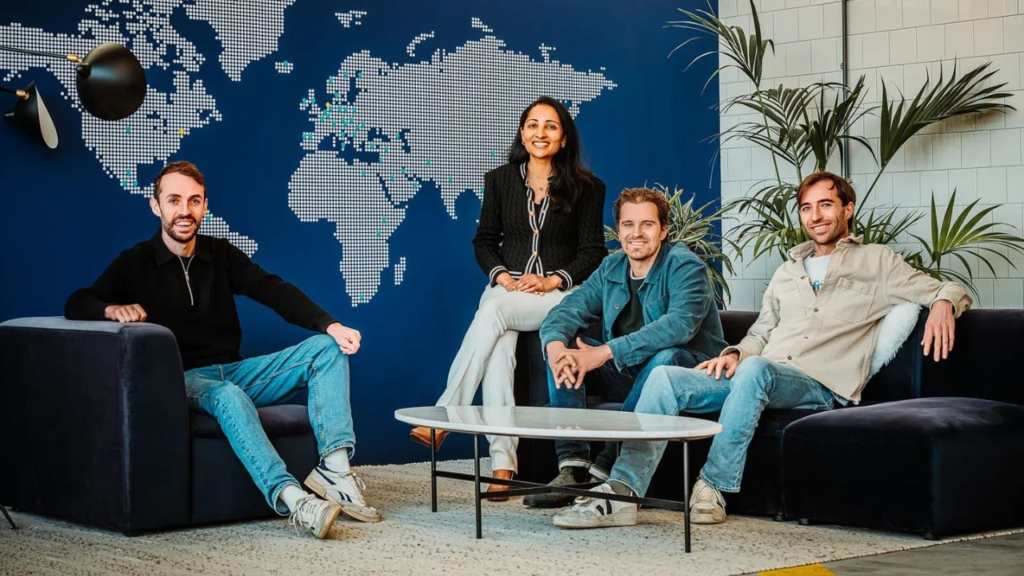
As our favourite Dutch holiday approaches, TNW is celebrating the tech titans shaping the future in the Netherlands. Our beloved home country is the proud parent of a prodigious brood of digital talent. It’s given birth to cultivated meat, raised Booking.com to become the world’s largest online travel agency, and watched with joy as ASML grew into Europe’s most valuable tech company. The family also includes a gifted group of startups and scaleups. In recent years, economic headwinds, geopolitical turbulence, and questionable government policies have blown some of their progress off course, but Dutch tech continues to punch well above its weight. Just last month, the Netherlands ranked 10th in a global index of tech competitiveness — ahead of every G7 country. The country also boasts an illustrious list of tech luminaries. Many of them will be at TNW Conference — and so could you. In our spirit of patriotism (and, perhaps, a bit of Dutch courage), we’re offering a ludicrously generous discount on tickets to mark Koningsdag — aka King’s Day, an orange-infused celebration of the monarch’s birthday. 40% off TNW Conference! For 1 week only… Register by 28 April & save up to €700 on General Admission, Corporate, VIP & Investor Passes, and Startup/Scaleup packages You can find all the details on the offer at the bottom of this article. But first, we want to introduce you to eight Dutch tech leaders who will grace the stages of TNW Conference on June 19 and 20. 1. Peter Wennink A legend of Dutch tech, Peter Wennink led chip giant ASML to become the most valuable tech firm in Europe. Over his 25-year career at the Veldhoven-based business — including over a decade as CEO — ASML earned acclaim as the world’s only supplier and producer of extreme ultraviolet (EUV) lithography machines. These systems are essential for manufacturing the world’s most advanced chips. They’ve become a crucial force behind countless innovations, from iPhones and MacBooks to autonomous vehicles and Nvidia GPUs. On the TNW stage, Wennink will speak in an exclusive session titled “Gods of Industry: The Battle for Deep Tech Dominance.” He’ll be joined by Young Sohn, the founding managing partner of Walden Catalyst Ventures, a VC fund dedicated to deep tech. The duo will give a glimpse into a future that is hard for most of us to even imagine. “It’s difficult for mankind to foresee the impact of exponentiality because it often yields something seemingly impossible,” Wennink told TNW. “But that’s exactly what science and deep tech will create, making the impossible possible.” 2. Vidya Peters As the CEO of Dutch unicorn DataSnipper, Vidya Peters has overseen the scaleup’s rise to become the fastest-growing tech company in the Netherlands for two years. Under her leadership, DataSnipper has become a global force in audit and finance automation. Over 500,000 professionals across more than 125 countries now use its software. After honing her expertise in Silicon Valley, Peters has also become a powerful advocate for European tech. Rather than merely mimicking US tech, she urges startups and scaleups to embrace the continent’s strengths. A key one is sustainable, long-term growth. “Five years ago, it wasn’t very fashionable to be profitable,” Peters told TNW. “But I think this is where the European sensibility is a strength, because European companies have always taken this approach, and now it’s hugely valued in the current economic climate.” Peters has also guided DataSnipper’s adoption of artificial intelligence. At TNW Conference, she’ll share her learnings in a session titled “AI’s Big Glow-Up: Generating Ideas, Innovation, and Impact.” Vidya Peters, the CEO of DataSnipper, flanked by the company’s three founders. Credit: DataSnipper 3. Daan Klein Douwel Joining Peters in her session will be Daan Klein Douwel, the head of data and AI at one of the biggest companies in the Netherlands: KLM Royal Dutch Airlines. Klein Douwel drives the company’s efforts to leverage the power of AI and data. KLM has applied these technologies to numerous applications, from automating responses to customer enquiries to predicting hand luggage amounts and cutting food waste. Klein Douwel will take the TNW stage to share practical insights on deploying AI. 4. Robert Doornbos In Max Verstappen, the Netherlands boasts the reigning four-time Formula 1 World Champion. In Robert Doornbos, TNW boasts one of the drivers who paved the path for Verstappen’s rise. A former F1 and Indycar driver, Doornbos was a driver for Jordan and Red Bull Racing — Max Verstappen’s team. He was also Minardi’s last-ever race driver. Today, he’s a renowned F1 analyst. His career in motorsports has given him unique insights into vehicle technology. He’ll join TNW Conference to explore the future of mobility in a talk titled “The Road Ahead: Driving Innovation and Sustainability.” 5. Jacqueline van den Ende Jacqueline van den Ende is playing a powerful role in fostering impactful companies. She’s the co-founder and CEO of Carbon Equity, an investment platform that unlocks private capital to solve one of the world’s greatest challenges: climate change. Earlier this month, the platform announced that it had raised €105mn for its Climate Tech Portfolio Fund III. “Despite the current geopolitical uncertainty, we have raised over €100mn within a year for innovative climate solutions. I’m proud of that,” van den Ende said.  “It also confirms that the momentum for investing in climate technology continues. The energy transition is already in full swing — not driven by idealism, but simply because sustainable solutions are economically smarter.” She’ll explore the challenges and opportunities for venture capital in a conference session titled “Off with Their Heads: Death to the VC & Building Smarter Investment Models.” 6. Marc Wesselink Joining van den Ende in her session will be Marc Wesselink, the co-founder of Venturerock, an all-in-one investment and venture-building platform. A serial entrepreneur, Wesselink has launched 12 companies. He’s also failed with four, gaining valuable insights about the startup world. In addition to his role at Venturerock, Wesselink is a founding partner at Startupbootcamp, responsible for its alumni portfolio. He’s now using those experiences to build a

Meet the Dutch tech stars speaking at TNW Conference Read More »

IBM and ESA launch AI model with ‘intuitive’ understanding of Earth

IBM and the European Space Agency (ESA) today launched TerraMind, a new open-source AI model with an “intuitive” understanding of Earth. According to the research team, the system is the best-performing AI model for Earth observation. In an ESA-led evaluation, TerraMind beat 12 leading AI models on the PANGAEA benchmark — a community standard for Earth observation. The model excelled at various real-world tasks, including land cover classification, change detection, and multi-sensor analysis. On average, it outperformed other models by 8% or more. “To me, what sets TerraMind apart is its ability to go beyond simply processing earth observations with computer vision algorithms,” said Juan Bernabé-Moreno, director of IBM Research UK and Ireland. “It instead has an intuitive understanding of geospatial data and our planet.” TerraMind is a generative AI model that can understand different types of data — such as images, text, and time-based sequences (like climate patterns) — and spot connections between these different kinds of information. That’s particularly useful when dealing with an immensely complex system like Earth.   40% off TNW Conference! For 1 week only… Register by 28 April & save up to €700 on General Admission, Corporate, VIP & Investor Passes, and Startup/Scaleup packages The model was trained on 9 million samples drawn from nine different data types, including satellite images, climate records, terrain features, and vegetation maps. The broad dataset covered every region and biome on Earth. It was designed to minimise bias and ensure the model can be used reliably across the globe, the researchers said.  ESA and IBM expand AI’s push into climate modelling TerraMind is built on Prithvi, an open-source family of foundational climate models launched by IBM and NASA in 2023. The Prithvi models require relatively less computational power than traditional climate modelling software, making them potentially more environmentally friendly. A standout feature of TerraMind is its “Thinking-in-Modalities” (TiM) tuning. Similar to chain-of-thought reasoning in language models, TiM lets TerraMind self-generate extra data to improve its performance.  “TiM tuning boosts data efficiency by self-generating the additional training data relevant to the problem being addressed — for example, by telling the model to ‘think’ about land cover when mapping water bodies,” said Johannes Jakubik, an IBM research scientist based in Zurich.  TerraMind was built in collaboration with Polish spacetech firm KP Labs, the Jülich Supercomputing Centre in Germany, and the German Space Agency (DLR). The model is now available open-source on Hugging Face. Fine-tuned versions will be released in the coming months.  ESA, NASA, and IBM are by no means the only organisations experimenting with AI models for climate forecasting. Another example emerged from Google DeepMind, which recently unveiled an AI weather forecaster that makes faster and more accurate predictions than the best system available today. The EU has also experimented with the tech. Last year, the union unveiled a comprehensive digital twin of the Earth that uses vast troves of data to improve climate predictions. source

IBM and ESA launch AI model with ‘intuitive’ understanding of Earth Read More »

Fusion energy could be ‘decisive’ for Europe's energy security

Highly dependent on imported fossil fuels and renewable energy technologies from foreign powers such as the US, China, and Russia, Europe’s energy security is in a precarious state. One potential fix? Harnessing nuclear fusion — the same atom-colliding reaction that powers the Sun and stars. While not yet proven commercially, fusion energy could provide Europe with a vital source of safe, locally produced, always-on clean power. Another plus is that future fusion power plants will likely run on abundant fuels like deuterium and tritium, which aren’t confined to specific geographies. Francesco Sciortino, co-founder and CEO of German startup Proxima Fusion, believes fusion energy can complement wind and solar power and become a “decisive building block” for Europe’s energy security. “Fusion holds the potential to fundamentally transform the way we think about energy, changing the world from a place that’s controlled by those with reserves of oil and gas, to one where technology lets countries control their own fate,” he told TNW.  The 💜 of EU tech The latest rumblings from the EU tech scene, a story from our wise ol’ founder Boris, and some questionable AI art. It’s free, every week, in your inbox. Sign up now! One of the most advanced kind of fusion energy globally approaches is magnetic confinement. These ring-shaped machines use powerful magnetic fields to contain super-hot plasma, creating the conditions for fusion reactions to occur. It’s a technology in which Europe already has a head start.  “Europe has an incredible strength in magnetic confinement fusion, with around twice the number of researchers and large-scale [fusion] devices than the US,” said Sciortino.  Proxima — the first company to spin out from the Max Planck Institute of Plasma Physics in Germany — is building a type of magnetic confinement device called a stellarator. This machine differs from the more common tokamak design at the heart of major international projects like ITER in France and STEP in the UK.   While more complex to build, ​​stellarators have several advantages over tokamaks. They need less power to operate and make the plasma easier to control. This stability is critical for a viable fusion energy plant.  Europe is a world leader in this kind of fusion technology. Germany hosts the most advanced stellarator, Wendelstein 7-X. That machine laid the foundation for Proxima’s Stellaris reactor design, revealed in February.  Proxima aims to complete its first demo device in just six years. The machine will lay the foundation for Stellaris, a 1GW fusion reactor which the company hopes will power up sometime in the 2030s.  Proxima is one of dozens of fusion energy startups racing to commercialise the technology, many of which are Europe-based. The best-funded include the UK’s Tokamak Energy and Germany’s Marvel Fusion.  The future of fusion energy There’s a cliche that fusion technology is always “30 years away,” but 70% of experts believe we’ll have a fusion device powering the grid by 2035, a Fusion Industry Association survey found last year.  If those predictions come to pass, fusion could become an important part of Europe’s renewable energy mix — and one with distinct advantages. Unlike wind or solar, fusion would provide continuous power. Unlike fossil fuels, much of which is imported from countries like Russia and the US, fusion is clean and could be homegrown, boosting energy security.    However, with the US leading in private investment in fusion energy, Sciortino warned that Europe may lose its advantage and urged governments to support emerging startups. “This is an important moment for Europe — a moment when we have the chance to make choices that will define the coming decades, and a chance to seize the lead in the global race to commercial fusion,” he said. “Europe cannot afford to squander the opportunity; it must invest in companies that are working towards our continent’s energy security and sovereignty.” European sovereignty will be a hot topic at TNW Conference, which takes place on June 19-20 in Amsterdam. Tickets for the event are now on sale — use the code TNWXMEDIA2025 at the check-out to get 30% off. source

Fusion energy could be ‘decisive’ for Europe's energy security Read More »

European climate tech funding sunk to five-year low in Q1

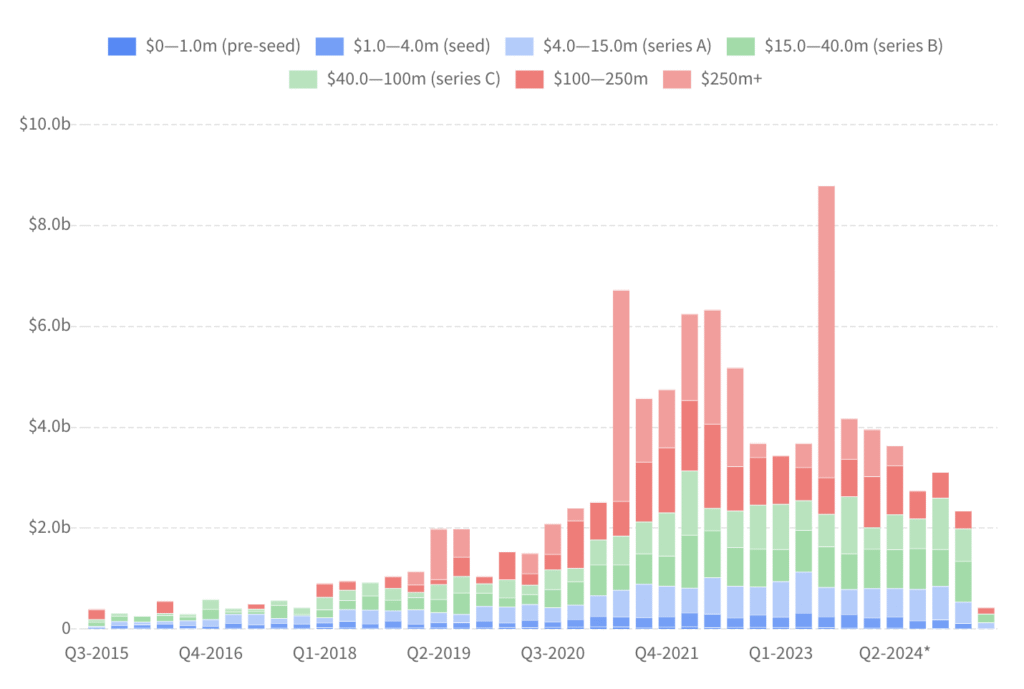
Europe’s climate tech startups raised $2.3bn (€2bn) in the first quarter of this year — the lowest total since Q3 2020, according to Dealroom data.  Behind the headline figure lies a complex mix of growing pains, shifting investor focuses, and broader VC market dynamics, experts told TNW. More specifically, they said the slowdown stems from a blend of market maturity, strategic repositioning, AI’s outsized pull on capital, and a tough exit environment.  “If we use the narrative of Dunning-Kruger Curve, we are at a slope of despair in climate now, at least for investors,” Rokas Peciulaitis, founder and managing partner at Lithuania-based Contrarian Ventures, told TNW.   40% off TNW Conference! For 1 week only… Register by 28 April & save up to €700 on General Admission, Corporate, VIP & Investor Passes, and Startup/Scaleup packages “No quick wins, no massive exits, mergers and acquisitions are limited,” he added. “Most companies required more capital than assumed, and did not show enough traction. Also, the regulatory tailwind completely failed in most cases.”   However, Peciulaitis believes there is light at the end of the tunnel. “I think those who are disciplined will prevail and win, both on the founder and VC side,” he said.     European climate tech startups raised $2.3bn in Q1 2025. This graph also includes the start of Q2. Credit: Dealrom The funding dip comes off the back of an exceptional run. European climate tech funding has soared over the past decade. The sector’s best year was in 2023, when climate tech startups raised $15bn in venture capital — more than their counterparts in the US. That’s despite an overall poor funding environment that year.  Orla Browne, head of insights at Dealroom, told TNW that there are several possible reasons why Europe’s climate tech funding has slowed down so far in 2025.  Firstly, the market is maturing. Some forms of cleantech that previously attracted heaps of VC cash — like electric mobility startups — have gone mainstream. As these markets become more established and growth stabilises, they tend to attract less early-stage venture funding, Browne said.   Investor hype around AI could also be fuelling the slowdown. “AI is taking the oxygen out of VC, at least for other sectors,” Browne said. “More than 25% of all VC now goes to AI startups, up from single-digit percentages just a few years ago.”  Another reason for the slump could be that climate tech startups are rebranding themselves as a “resilience” or “security” play to capitalise on skyrocketing defence tech spending and Europe’s current push for tech sovereignty.  The dip likely also signals a broader return to normal, following an unprecedented spike in VC investment in 2021. But Peciulaitis believes there could be a lot of “unannounced deals” in the pipeline this year.  Startup funding is one of the the key themes at TNW Conference, which takes place on June 19-20 in Amsterdam. Tickets for the event are now on sale — use the code TNWXMEDIA2025 at the checkout to get 30% off. source

European climate tech funding sunk to five-year low in Q1 Read More »

Can construction robots solve Europe’s housing crisis?

Europe’s housing crisis is deepening. High building costs, tight regulations, and labour shortages have choked the supply of affordable homes. As cities swell with new arrivals and construction workers retire en masse, the gap between supply and demand is only widening. Endless solutions have been proposed. Mass housing projects, revamping the planning system, modular buildings, pre-fabricated materials, rent controls, and restrictions on corporate acquisitions of homes have all been explored with mixed success. But the shortage of affordable housing has only grown. Dutch startup Monumental has pitched another fix: automation. The company is developing a suite of autonomous, electric robots that work on construction sites around the clock. Salar al Khafaji, the startup’s CEO and co-founder, believes the tech can overcome the labour, cost, and regulatory hurdles crippling the industry. The 💜 of EU tech The latest rumblings from the EU tech scene, a story from our wise ol’ founder Boris, and some questionable AI art. It’s free, every week, in your inbox. Sign up now! “It’s obvious that we need some forms of automation and robotics to solve these problems,” he tells TNW. “There’s almost no other way around it.” At TNW Conference on June 19-20 in Amsterdam, al Khafaji will share his tips on building a thriving robotics business. Ahead of his talk, he outlined his vision of the future of construction.  Why construction has stagnated Before launching Monumental in 2021, al Khafaji cofounded a visualisation startup called Silk. When Silk was acquired by US analytics giant Palantir in 2016, he began pondering his next venture. His plan was to focus on a major global challenge. “I wanted to solve a serious problem in society,” he says. “And I became obsessed with construction and infrastructure.”  Al Khafaji was stunned to see so little technological progress in the industry. The built world in which we live, work, and play had become severely restricted as a result. His focus turned to a central problem: a productivity collapse in construction. Labour shortages, strict regulations, and high costs, he feared, were worsening the housing crisis. New developments had become eye-wateringly expensive and painfully slow to construct. They also often result in unpopular buildings.  The past offers unflattering comparisons. The Empire State Building, for instance, was completed in 1931 after just 410 days. Eighty-four years later, 432 Park Avenue took 1,500 days — and became infamous for leaks, malfunctions, and a divisive design. The problem extends beyond landmark buildings. Construction of standard homes has also lost pace. The average time taken to build a single-family house went from 4.8 months in 1971 — the earliest year with data available — to seven months in 2019. Even after scaling this to account for the growth in average house size, the process is still slower today. Longer projects also bring higher costs, with labour often forming the bulk. “It’s very, very labour-intensive because we’ve barely automated anything there,” al Khafaji says. Monumental is his attempt to overhaul the status quo. Credit: MonumentalAl Khafaji (right) and Monumental co-founder and CTO Sebastiaan Visser. Credit: Monumental Tackling the housing crisis Al Khafaji founded Monumental in 2021 alongside his long-term business partner, Sebastiaan Visser, who serves as the company’s CTO. Their big idea was automating on-site construction with robotics and software. They began by building a prototype robotic crane, which evolved into autonomous ground vehicles that carry building materials around a construction site. The first finished system off the production line focused on one crucial construction craft: bricklaying. It was a logical starting point. Bricklaying is a skilled but physically demanding and sometimes dangerous job with a rapidly dwindling workforce. In 2022, researchers found that 19 European countries had a shortage of bricklayers, which made it the occupation with the biggest labour scarcity. As a result, construction projects suffer from delays and increased costs. With the profession struggling to attract young talent, the shortage of workers is only set to grow. In the UK, the number of bricklayers recently hit a 25-year low, and a third of them are forecast to retire within the next decade. Monumental’s systems aim to fill the gap — and, ultimately, strengthen the supply of affordable housing. The startup’s electric bricklayer robots work autonomously alongside humans. Using sensors, computer vision, and small cranes, the machines precisely lay bricks and mortar in walls. The system also integrates with existing construction processes — a crucial requirement in an industry that isn’t always open to new technologies. The robot builders Al Khafaji compares the robots to distributed computers. Composed of multiple, interconnected modular components, they function like network devices. To prepare the machines for construction jobs, the startup’s software models both the site and the robots themselves. A machine vision stack then allows them to localise in the building zone. While they work, AI coordinates their tasks. “We really think of it as an operating system for construction sites,” al Khafaji says. “We’re trying to make construction more software-defined.” In 2023, the robots completed their first large-scale, 15-metre wall. Since then, the machines have built facades for houses, canal retaining walls, and other structures that stand across the Netherlands today. Investors have been impressed by the progress. Last year, Monumental raised $25mn in seed funding to bring the concept closer to reality. But the company still has to win over the construction industry. Labour’s role in the housing crisis Across construction sites, many labourers’ tasks have changed relatively little over recent decades. Bricklayers, for example, continue working in much the same way. Shipyard workers, by contrast, have had their jobs transformed — if not replaced — by containerisation and automated pickers.  Al Khafaji was shocked by construction’s lack of innovation. “It doesn’t feel like enough time, money, or talent is flowing there… It’s the industry with the most stagnation,” he says. “Construction basically works the same way as a century ago.” It’s a curious inertia given the size of the industry. Construction employs over 100 million people and accounts for about 13% of global GDP. Yet the

Can construction robots solve Europe’s housing crisis? Read More »

Boaty McBoatface submarine takes NATO-backed quantum tech underwater

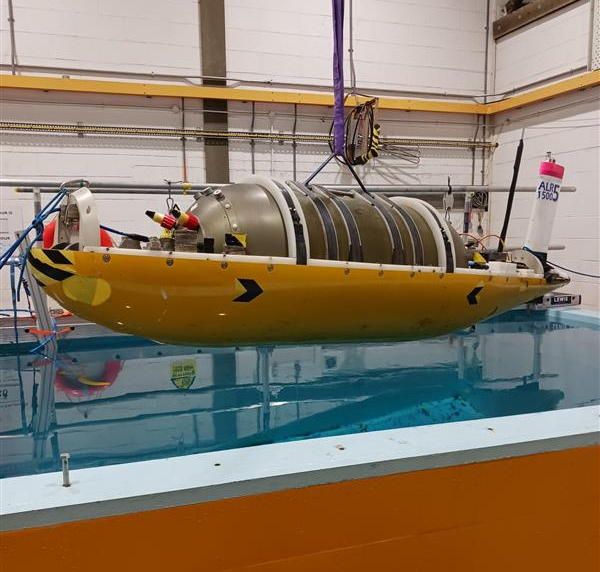
UK startup Aquark Technologies has used Boaty McBoatface — the internet’s best-loved submarine — to test its quantum sensing technology underwater for the first time. The NATO-backed company put its so-called “cold atom” system inside the autonomous submarine. Boaty McBoatface then descended to the bottom of a giant indoor tank at the National Oceanography Centre (NOC) in Southampton. The idea was to test how Aquark’s quantum tech — which must be completely isolated from external disturbances to function — would fare in the temperatures and pressures of an underwater environment.  Boaty Mcboatface with its quantum payload being lowered into the test tank. Credit Aquark/NOC Andrei Dragomir, the startup’s co-founder and CEO, called the trial a “resounding success” as the device performed just as it would on dry land. Dragomir said he expects practical applications of the technology to follow shortly. Aquark’s patented cold atom technology can be used as an alternative position, navigation, and timing (PNT) device, independent from satellites and thus immune to external tampering such as GPS interference.  The 💜 of EU tech The latest rumblings from the EU tech scene, a story from our wise ol’ founder Boris, and some questionable AI art. It’s free, every week, in your inbox. Sign up now! That’s especially useful for vehicles like planes, drones, and submarines — hence NATO’s interest. The tech can also be used to measure minute variations in gravity caused by different densities in the seabed.  Dr Alex Phillips, head of marine autonomous and robotics systems at NOC, believes the technology has the potential to make a “substantial contribution to underwater navigation and seabed imaging.”    How does Aquark’s “cold atom” quantum sensing work? Aquark cools atoms — typically from rubidium, a soft, silvery-white metal — to near absolute zero using lasers to create what’s known as a cold atom “trap”. At these ultra-low temperatures, the atoms slow down and take on quantum properties.  These quantum atoms are extremely sensitive to external forces such as gravity, acceleration, or rotation. By analysing those forces, scientists can measure acceleration, magnetic fields, rotation, gravity, and time with far greater precision than classical devices such as accelerometers, atomic clocks, or gravimeters. Cold atom traps form the foundation of quantum sensors — a bit like how a chip forms the basis of a quantum computer. These sensors could transform everything from air traffic control to underground exploration.  Scientists have been trapping atoms for decades, using magnetic fields. But during his PhD, Dragomir found a way to trap atoms without magnetic fields at all.   This translates to systems that are smaller, lighter, cheaper, and more energy-efficient than existing ones, the company previously told TNW. They are also more robust and can be used in difficult terrain. Aquark has developed a cold atom trap that can operate virtually anywhere — including underwater. Credit: Aquark/NOC Aquark has previously tested its tech onboard a Royal Navy vessel and inside a small drone. It’s now been further validated on the NOC’s Autosub Long Range, affectionately known as Boaty McBoatface after the moniker won a public poll to name the vessel.  Dragomir has high hopes for Aquark’s next adventures. “In the future, we may be able to measure the density of minerals under the sea floor using gravity measurements or perform high-sensitivity magnetic field measurements, giving scientists new ways of seeing things that were previously hidden,” he said. “We may even uncover some hidden treasures!” source

Boaty McBoatface submarine takes NATO-backed quantum tech underwater Read More »

‘Electrotech’ can sever Europe’s reliance on fossil fuel imports

Europe can dramatically cut its dependence on imported fossil fuels by adopting electricity-based technologies, according to a new report. Electric vehicles, heat pumps, and renewables could cut global reliance on imported fossil fuels by 70% when used to replaced them in transport, heating, and power, according to energy think tank Ember. They would also save importers an estimated $1.3 trillion (€1.14 trillion) globally each year, Ember found. The think tank refers to this trio of technologies as “electrotech.” Cutting reliance on US, Russian fossil fuels Russia’s full-scale invasion of Ukraine in 2022 exposed one of Europe’s greatest vulnerabilities — its reliance on imported fossil fuels to power its vehicles, heat its buildings, and drive its industries forward. Three years on, Europe is still hooked on foreign supplies of oil and gas. Many European states cater to the majority of their primary energy needs from these fossil fuel imports. The countries include Italy (77%), Spain (74%), Germany (67%), and France (51%), Ember found. “Fossil-importing nations are like frogs in boiling water, failing to detect the gradually increasing danger,” said Kingsmill Bond, energy strategist at Ember. “Import dependency has been rising for decades, and now Donald Trump has turned up the heat to a boil.” 40% off TNW Conference! For 1 week only… Register by 28 April & save up to €700 on General Admission, Corporate, VIP & Investor Passes, and Startup/Scaleup packages Europe has more than halved its imports of Russian fossil fuels since Moscow invaded Ukraine. But in the process, it has shifted its dependencies across the Atlantic. The EU imported more oil and gas from the US than any other country in 2024.  Concerns over this dependence have grown since Donald Trump’s reelection. Trump’s tariff wars and rising regional conflicts have placed global trade under greater threat than at any time since the Second World War. Faced with increasingly volatile global markets, “electrotech offers the fastest escape route,” said Bond. Looking east Rapid adoption of electric vehicles would make the largest single contribution to Europe’s energy independence, the report found. By cutting oil use in road transport, EVs could slash imports by a third. Scaling up solar and wind adds another 23%. Replacing imported fossil fuels in buildings with heat pumps contributes a further 14%.  In 2024, China was by far the largest exporter of solar panels, batteries, and electric vehicles to the EU. However, even though boosting Europe’s share of electrotech might deepen the region’s reliance on China, this poses a less significant threat to energy security than depending on fossil fuel imports, the report found. Fossil fuels must be imported and burned without pause. Electric technologies, however, need just one import — of a solar panel or battery, for instance — to secure energy for years, if not decades. Rapid adoption of electric technologies will also be crucial to meeting the EU’s target of carbon neutrality by 2050. source

‘Electrotech’ can sever Europe’s reliance on fossil fuel imports Read More »

The 5 hottest scaleups in France enter TECH5’s ‘Champions League of Tech'

Five flourishing French scaleups have made it into TECH5 — the “Champions League of Technology.” The quintet will now compete for the title of top scaleup in Europe. The contest concludes on June 19-20, when the TECH5 champion will be announced on the main stage of TNW Conference. But first, the contenders have to win a regional crown. For the French challengers, that’s no easy task.  The country’s tech sector has been going through a historic boom. Over the past decade, the startup scene has seen the most dramatic growth of any European country, with investments surging nearly 1000% to €53bn, according to VC firm Atomico. 40% off TNW Conference! For 1 week only… Register by 28 April & save up to €700 on General Admission, Corporate, VIP & Investor Passes, and Startup/Scaleup packages One of the largest recent funding rounds went to French AI darling Mistral. In June 2024, the Paris-based company raised €468mn and became Europe’s most valuable AI startup. France’s blend of highly skilled talent, increased government support, and expanded investment streams has created fertile ground for tech firms to grow. This has laid the foundation for an impressive flock of scaleups. Yet only five of them could enter the TECH5 finals. Our judges selected them based on an analysis of their growth, impact, and future potential. Their evaluation led us to the following high-flying scaleups, listed in random order: 1. Kinetix A frontrunner in the thriving AI scene of Paris, Kinetix specialises in 3D character animation for games. Using GenAI tools, the company transforms camera footage and text prompts into precise animations. AI filters can then add extensive customisations to the visuals. The platform makes 3D content creation accessible to anyone. “At Kinetix, we believe character motion is at the heart of storytelling,” the scaleup told TNW. “Whether in games, entertainment, or branded content, movement brings digital characters to life and creates meaningful, engaging narratives.” Kinetix is best known for its embeddable AI emote feature, which lets players create and use custom emotes in-game. It’s a concept that has attracted booming demand. Fortnite alone has over 1,000 emotes. By 2030, the digital human avatar market is forecast to reach over €450bn. 2. Kovalee Kovalee has developed a powerful publishing platform for non-gaming apps. The scaleup wants to give every promising content creator a chance to build the best app in their field — regardless of their resources. Through product enhancement, monetisation boost, user acquisition, and app store optimisation services, Kovalee has fostered numerous success stories. Several have become category leaders in the App Store, from stretching platform Bend to motivational companion PetTalk. The model has fostered a rapid rise for Kovalee, which was founded in 2020. Last year, the company topped Sifted’s list of France’s fastest-growing startups after an eye-catching 626% two-year revenue growth. VC firm Iris, which led an €8mn Series A investment in the company in 2023, said Kovalee has “the potential to become the leading non-gaming publishing platform.” 3. Swan One of Europe’s premier fintechs, Swan provides a straightforward route to embedding banking features. Via simple APIs, companies can quickly integrate services including accounts, cards, and payments into their own products. Swan was founded in 2019 by three fintech veterans and seasoned entrepreneurs. The trio had first-hand experience with the frustrations of embedded finance, from the interminable meetings and piles of paperwork to the clunky APIs. They launched Swan to offer an alternative.  Nicolas Benady, the company’s CEO and co-founder, has an ambitious goal for the business: “Swan is on a mission to build the leading tech-driven bank in Europe.” Investors have been impressed by the plans. In January, Swan announced it had raised €42mn, bringing the scaleup’s total funding to an estimated €100mn.  4. Qovoltis Qovoltis has created an innovative all-in-one EV charging solution. It comprises a smart charging station that adjusts power in real time, a mobile app for remote management, and a novel energy optimisation system. Last year, Qovoltis expanded its product line with the launch of the Qobox mini, an ultra-compact smart charger. The model is the first charging station to earn an “Origine France Garantie” certificate — a guarantee of French production and quality. It also won the Made in France Innovation Grand Prix 2024. The milestone year culminated in a €45mn Series A funding round. Qovoltis president Ehsan Emani — who founded the company in 2019 — described the cash injection as a “decisive step” for the business. “It will enable us to expand our commercial offerings and solidify our role in the transition to sustainable electric mobility,” he said. 5. Dalma Dalma has pioneered a new approach to pet insurance. The company’s insurance reimburses all veterinary expenses within 48 hours — with no excess or hidden fees. Founded in 2021, Dalma has rapidly expanded — and still has enormous growth potential. Nearly half of European households have a pet, on which they collectively spend an estimated €24.6bn annually, opening up a lucrative market for insurers.  Investors have identified Dalma as one of the industry’s front runners. Last month, the company raised €20mn, taking its total funding to over €50mn, according to Bounce Watch data. “Our ambition for Dalma is to build the pet insurance leader in Europe — one that not only provides financial protection but also fundamentally improves pet healthcare,” Dalma told TNW. What’s next for the French scaleups? The fabulous French five will compete for the TECH5 title with contenders from six other regions. At TNW Conference in June, the grand champion will be crowned Europe’s hottest scaleup.  The challengers from France, Benelux, the Nordics, and DACH have now all been chosen. Next week, we reveal the finalists from another region in the tournament: Southern Europe. TECH5 is part of a packed programme for TNW Conference, which takes place on June 19-20 in Amsterdam. Tickets for the event are now on sale. Use the code TNWXMEDIA2025 at the check-out to get 30% off the price tag. source

The 5 hottest scaleups in France enter TECH5’s ‘Champions League of Tech' Read More »