The Next Web TNW

Can dumbphones revive Europe’s mobile industry?

Do you remember your first phone? The thought of mine brings a tear to my eye. It was a beautiful blue Nokia 3310 — and it was borderline indestructible. Best of all, the handset had the greatest mobile feature of all time: Snake. It also offered calls and SMS, but I had little use for those extravagances. I had a pay-as-you-go contract, and money was tight back then. I also had a home phone — and Mum footed the bills. As for SMS, what was the point of that when you had the joys of MSN Messenger available for free? Mobile calls and texts were strictly reserved for emergencies — like getting attacked in the street. Unfortunately, when that moment came, the assailants also stole my beloved Nokia 3310. Those were the days. They were also the days when Europe led the world in mobile telecoms. Finland’s Nokia was the world’s largest handset manufacturer, with Sweden’s Ericsson holding down third place. US rival Motorola sandwiched the two Scandinavian competitors. The 💜 of EU tech The latest rumblings from the EU tech scene, a story from our wise ol’ founder Boris, and some questionable AI art. It’s free, every week, in your inbox. Sign up now! Yet none of them could maintain those positions for long. Europe lost its lead due to slow adoption of smartphones, weak software ecosystems, and fierce competition. American and Asian manufacturers now dominate the industry. But Europe’s old mobile guard isn’t finished yet. The continent’s phone makers are still finding new routes into the market. One of them stems from the resurgence of dumbphones. A reminder of simpler times, the basic bricks offer a digital detox and an escape from relentless data harvesting. A range of new versions have recently been launched. Older ones are also enjoying comebacks — including the legendary 3310. Hackaday recently spotlighted a technique that revitalises the classic handset: installing a USB-C socket. The mod is the brainchild of Andrea Salvadori, a developer based in Italy. Salvadori adds the USB-C port by integrating a small adapter into the phone. He’s selling the parts online for €25. My beloved 3310 would have cherished the upgrade, but the old device is sadly no longer with me. Thankfully, a host of modern dumbphones are now available. Europe’s dumbphone rally Many of the new dumbphones are made in Europe. One that’s caught our eye is the plastic-and-fantastic Barbie Phone. Built by Finland’s HMD Global in partnership with Mattel, the handset launched last year. HMD bills the handset as a tool to “take a vacation from your smartphone.” It features a few basic apps and one extremely intriguing game: Malibu Snake. Digital wellbeing tips and “Barbie Meditation” are also available on the flip phone. TNW contributor Siôn Geschwindt was dazzled by the device. Well, his four-year-old daughter was. “I love that pink one,” she said. “Wow stickers. I want it!”  Adults have also been impressed, but the lurid pink and Barbie branding aren’t for everyone. Fortunately, there are numerous other dumbphones on the market. An impressive number of them are built by European companies. Among them are the Nokia 2660 Flip, the Swiss-made Punkt MP02, and the 6820 from Swedish firm Doro. Europe may have lagged behind in the smartphone era, but the continent is now leading the dumbphone revival. source

Can dumbphones revive Europe’s mobile industry? Read More »

Glaciers in the Alps have shrunk 39% in two decades, data shows

British startup Earthwave and a group of European scientists have used satellite data to map out glacial melt across the globe — and the results are alarming. The team discovered that the European Alps’ glaciers have shrunk the most of all — 39% in just over two decades, compared to a global average of 5%. Earthwave co-founder Livia Jakob said the project was invaluable to our understanding of glacier ice loss.  “We developed an algorithm to combine all the different datasets into one common estimate of glacier mass balance, giving us a new and improved picture of glacier behaviour in the past two decades,” Jakob told TNW via email. Across the world, glaciers have lost an average of 273 billion tonnes of ice per year since 2000, according to the research, which was published in Nature today. That’s equivalent to the entire global population’s drinking water consumption for 30 years. TNW Conference FLASH SALE is LIVE Meet investors from Sequoia, Walden Catalyst Ventures, and more. Take advantage of our 50% our Startup, Scaleup and Investor Programs. Ends 21 February. And the situation is snowballing. The rate of ice loss increased from 231 billion tonnes per year (2000–2011) to 314 billion tonnes per year (2012–2023) and doesn’t show any signs of slowing down.  The Alps worst hit Temperatures in Europe’s highest mountain range are rising twice as fast as the global average. Swiss glaciers lost 6% of their total volume in 2022 alone, following intense summer heatwaves.  Dust from the Sahara could also be to blame for the rapid decline of central Europe’s glaciers. Particles in the air come from the Sahara desert and settle on glacier surfaces, darkening the ice. This causes them to absorb more solar radiation and melt faster. But ultimately, human-induced climate change is the greatest culprit. If greenhouse gas emissions keep increasing, scientists predict the Alps could lose over 90% of their glacier mass by 2100. Glacial retreat spells trouble for millions who rely on glacial melt for drinking water, agriculture, and hydropower — while coastal communities brace for the rising tides. Over the study period, glaciers contributed 18mm to global sea-level rise. The research was conducted as part of the Glacier Mass Balance Intercomparison Exercise, or Glambie for short. The project is a major research initiative coordinated by the World Glacier Monitoring Service (WGMS) hosted at the University of Zurich, in collaboration with the University of Edinburgh and Earthwave.  Jakob co-founded Earthwave in 2018. The startup uses satellite remote sensing to monitor the effects of climate change or help other scientists unlock valuable insights from satellite data.  Eyes over glaciers While many have experienced glacial decline first-hand, tracking it planet-wide is a bit more challenging. That’s where satellites can help.   Numerous satellites monitor Earth’s ice thickness from orbit. They use optical, radar, laser, and gravimetry instruments to provide data on glacier loss, sea ice changes, and rising sea levels.   The Glambie study used this information to compile one of the most comprehensive overviews of glacier retreat ever conducted.   The study included data from satellites including the USA’s Terra/ASTER and ICESat-2, the US–German GRACE, the German TanDEM-X, and the European Space Agency’s CryoSat.   As global temperatures continue to rise, studies like these deepen our understanding of how glacial melt impacts freshwater supplies, ecosystems, and sea-level rise — and what must be done to mitigate the worst effects of climate change. source

Glaciers in the Alps have shrunk 39% in two decades, data shows Read More »

Europe has twice as many climate tech startups as the US

Europe is home to twice as many climate tech startups as the US (30,000 vs. 14,300). However, limited access to VC funding is forcing these early-stage companies to seek capital from outside the continent, according to a new report released at the Munich Security Conference today. Venture financing in Europe averaged just 0.2% of GDP between 2013 and 2023, a fraction of the US average of 0.7%. While the continent is great at creating clean tech companies, it’s not so good at funding them.  The authors of The Importance of Climate Tech for European Resilience report — the World Fund, Kaya Partners, and Worthwhile Capital Partners — fear this trend isn’t just bad for business, but also leaves Europe exposed to geopolitical and economic shocks. Dependency on foreign powers for everything from solar panels to EVs is eroding Europe’s resilience, they said.  They warn that Europe has lost the early advantage in climate tech R&D that it established during the 2010s. Germany provides a good example. Despite being a frontrunner in solar and wind capacity in the early 2000s, the country saw its progress stall after 2012 due to tariff and subsidy policies. As a result, annual installed renewable capacity peaked at 9.7GW in 2012 and remained below that level until 2022. “Thanks to its leadership in climate tech innovation, Europe has a second chance to build leading industries and strengthen its resilience,” said Danijel Višević, World Fund general partner and co-author of the white paper. “We shouldn’t repeat the mistakes made in 2012, but capitalise on our opportunities.” The 💜 of EU tech The latest rumblings from the EU tech scene, a story from our wise ol’ founder Boris, and some questionable AI art. It’s free, every week, in your inbox. Sign up now! The authors call for bold, long-term policy and investment shifts across four key areas: energy, food security, frontier technologies, and raw materials. They view defence as a unifying thread across these sectors.  The paper’s key recommendations include upgrading the energy grid, boosting long-term energy storage, and backing frontier tech like AI, fusion, and quantum computing. It also calls for an increase in EU defence spending to at least 3% of GDP.   Additionally, the report reiterates Mario Draghi’s call for €800bn in annual spending via public-private partnerships, regulatory streamlining, and expanded roles for institutions like the European Investment Bank.   Combined, these actions could provide a clear and solid basis for policies that actively strengthen resilience by 2029, the report argues.  The paper comes as world leaders gather at tense times in global politics, which are strengthening the case for European independence in venture financing.    “Disruption is upon us,” said Bo Lidegaard, a partner at Kaya Partners and co-author of the white paper. “Europe must embrace it and reignite the creativity, innovation, and entrepreneurship so deeply rooted with us.” source

Europe has twice as many climate tech startups as the US Read More »

Europe boosts military AI with alliance between Helsing and Mistral

European tech leaders Helsing and Mistral have formed a pact to build new military AI systems. The partnership brings together two of Europe’s top startups. Helsing, a defence tech firm based in Germany, was valued at €5bn last year. Founded in 2021, the company develops software for weapons, vehicles, and military strategy. Its systems have been deployed in battlefield simulations, fighter jets, and drones in Ukraine. Mistral, meanwhile, is widely considered Europe’s closest competitor to OpenAI. The French startup has also become a favourite of investors, raising at €600mn at a valuation of €5.8bn last year. The partners announced their alliance today at a landmark AI summit in Paris. In a statement, they pledged to develop systems “for the defence of Europe.” TNW Conference FLASH SALE is LIVE Meet investors from Sequoia, Walden Catalyst Ventures, and more. Take advantage of our 50% our Startup, Scaleup and Investor Programs. Ends 21 February. Their collaboration will focus on vision-language-action (VLA) models. An emerging field of AI, VLA blends visual perception, language understanding, and outputs for robotics.  Helsing and Mistral will bring the models into defence platforms. The startups said the integration will boost decision-making, understanding of environments, and communication with operators. Military AI on the rise in Europe Helsing and was signed amid a boom for European defence tech. Anxieties around Russia’s imperial ambitions and Donald Trump’s threats to NATO have led military budgets to soar across the continent. Last month, the European Commission allocated over €1bn to defence R&D projects. VC spending on military tech is also surging in Europe. A big chunk of these funds is flowing towards AI systems. Helsing, for instance, raised a whopping €450mn last June. By combining forces with Mistral, the startup plans to shape the future of defence tech. “Europe needs to assert its strength as a geopolitical actor, and AI leadership is the key to that strength and Europe’s future security and prosperity,” said Gundbert Scherf, co-founder of Helsing. “As Europe’s fastest and most ambitious companies in the space, we will advance this leadership for the next generation of defence systems. “ Defence tech is a key theme of this year’s Assembly, the invite-only policy track of TNW Conference. The event takes place on June 19 and 20 — a week before the NATO Summit arrives in Amsterdam. Tickets for TNW Conference are now on sale. Use the code TNWXMEDIA2025 for an exclusive subscriber discount. source

Europe boosts military AI with alliance between Helsing and Mistral Read More »

Netherlands a rare bright spot as EU struggles to breed unicorns

The US continues to hog the global herd of unicorns, dwarfing the EU in both the number and total valuation of billion-dollar startups. However, the Netherlands provides a minor bright spot, according to a new report by PwC.    More than 3,000 companies worldwide have reached unicorn status since 2013, collectively reaching a staggering valuation of $27 trillion, according to the study. The US accounts for 55% of these and a whopping 75% of their total valuation.   In stark contrast, the EU has contributed just 9% of billion-dollar startups and generated 4% of global unicorn value in that timeframe.  Despite the bloc’s poor performance, the Netherlands punches above its weight, ranking as the fourth-largest unicorn hub in the EU.    The country has produced 32 unicorns, with 72% still active. Most emerged between 2018 and 2022, mirroring global trends.  The 💜 of EU tech The latest rumblings from the EU tech scene, a story from our wise ol’ founder Boris, and some questionable AI art. It’s free, every week, in your inbox. Sign up now! The majority of the active flock have engaged with TNW’s services. Among them are Ayden, Bird, Bunq, Booking.com, and Picnic.   Overall, Dutch unicorns account for 11% of the EU total, ranking behind Germany, France, and Sweden. Amsterdam alone hosts 7% of all unicorns in the bloc. The Netherlands has also done better than most at attracting unicorns to relocate. Five billion-dollar startups have migrated to the country. Only one unicorn has left for the US.   In contrast, 64 unicorns have left the EU (excluding the Netherlands) while only 10 startups have entered from outside its borders.  The data was released just days after a worrying report on the Dutch tech ecosystem. The new findings provides a glimmer of hope for the Netherlands, but also raises concerns. Like the rest of the EU, the country lags far behind the US in fostering high-growth companies, even after adjusting for economic size, population, and venture capital availability.  New tips on breeding unicorns There are four primary reasons why the US remains the preferred playground for billion-dollar startups, according to PwC. First, venture capital intensity (as a share of GDP) is significantly higher in the US than in Europe — 0.7% compared to just 0.2%.  Second, regulatory fragmentation is causing disruption. Differences in language, local business conditions, and the lack of an integrated capital or banking union can impede growth.  Third, the sheer size and uniformity of the US domestic market provide a competitive edge. Finally, companies often move stateside to access a deeper talent pool. If the EU wants to close the unicorn gap, PwC advises the bloc to act decisively. Increasing venture capital investment, streamlining regulations, and fostering a more integrated single market could help startups scale faster. The EU’s tech ecosystem will be a hot topic at TNW Conference, which takes place on June 19-20 in Amsterdam. Tickets for the event are now on sale. Use the code TNWXMEDIA2025 at the check-out to get 30% off the price tag. source

Netherlands a rare bright spot as EU struggles to breed unicorns Read More »

Exclusive: Tech mogul launches AI research engine Corpora.ai

British tech mogul Mel Morris has announced the general release of AI research engine Corpora.ai. The system provides a new approach to research. Built to generate comprehensive reports from single prompts, Corpora promises in-depth analysis and accurate outputs. Speed is another big selling point. According to Corpora, the engine can process 2 million documents per second. After receiving a prompt, the AI model scans through academic papers, news articles, legal documents, and other data on the web. The content is then compiled into summaries or reports. TNW Conference FLASH SALE is LIVE Meet investors from Sequoia, Walden Catalyst Ventures, and more. Take advantage of our 50% our Startup, Scaleup and Investor Programs. Ends 21 February. Corpora has shared an array of the results. They range from analyses of autism and AI investments to reports on documentaries about the Roswell incident. Links to sources are provided throughout every text. “We’re a research engine — we’re not a search engine,” Morris said. “The breadth and depth of what we produce and look at is really important.” Morris shared news of Corpora’s public release exclusively with TNW. The announcement marks another milestone in his colourful career. Behind the AI research engine A self-made tycoon who left school at 16, Morris is the former chairman of Candy Crush creator King. When the company went public in 2014, Morris became one of Britain’s richest men. A further windfall flowed from his dating website uDate, which he sold for around $150mn. An ill-fated spell running Derby County Football Club bit a painful chunk out of his fortunes, but Morris remains a wealthy man. Last August, he placed in the top 10 of the first-ever Sunday Times Gaming Rich List. A substantial slice of his funds is now going into Corpora.ai. Corpora.ai vs OpenAI Alongside the launch announcement, Morris revealed that he’s invested $15mn of his own money into Corpora. His funding aims to create a new business model for LLMs. Rather than challenge the leading GenAI firms, Corpora plans to bring a new service to the sector. The research engine can also integrate existing models on the market. “We don’t compete with OpenAI, Google, or DeepSeek,” Morris said. “The nice thing is, we can play with all of these AI vendors quite nicely. As they improve their models, our output gets better. It’s a really great symbiotic relationship.” Those outputs are where Corpora plans to make its mark. According to the company’s tests, the engine produces superior research at faster speeds and lower costs than the latest reasoning models on the market. The service is now available via a subscription-based model. Users are offered monthly plans tailored to their needs. To tempt them in, Corpora is also introducing an array of new features: Instant running of new queries on highlighted text Hashtags to categorise reports easy searching Support across more than 20 languages Access to lesser-known studies, alternative viewpoints, and hidden connections Prioritisation of original sources to eliminate repetitive or derivative content Morris envisions Corpora.ai digger further into research than the likes of OpenAI and DeepSeek. “These technologies skim the tip of the iceberg,” he said. “We’re letting you see beneath the surface.” source

Exclusive: Tech mogul launches AI research engine Corpora.ai Read More »

Ukrainian drones to dodge Russian jamming with GPS alternative

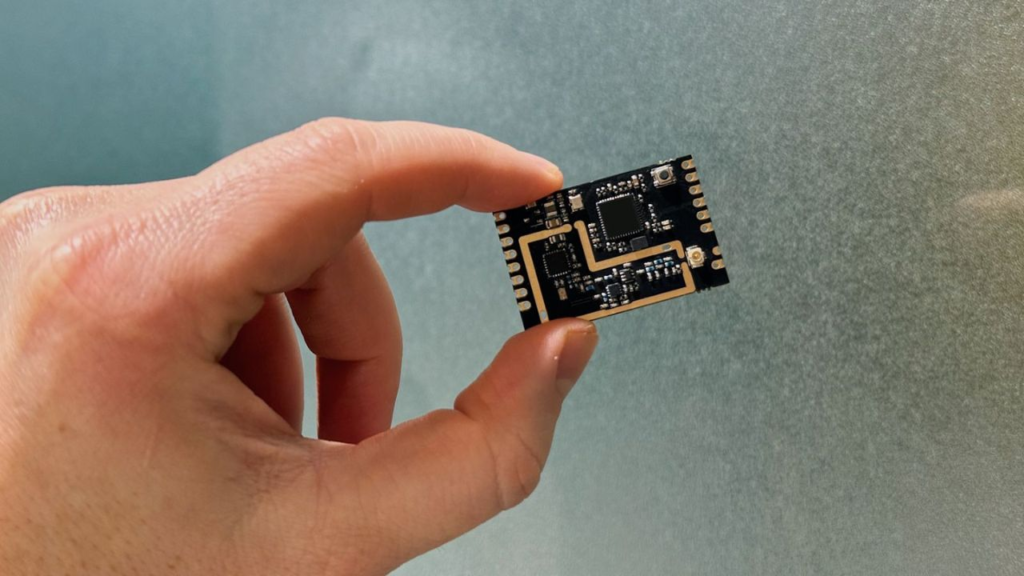
A Ukrainian drone tech firm has unveiled an alternative to GPS navigation. Sine.Engineering built the system to counter Russia’s electronic warfare, which has wreaked havoc on GPS signals.  To dodge the interference, Sine invented a satellite-free replacement. The approach is inspired by time-of-flight (ToF) methods, which began tracking aircraft long before the advent of GPS.   TNW Conference FLASH SALE is LIVE Meet investors from Sequoia, Walden Catalyst Ventures, and more. Take advantage of our 50% our Startup, Scaleup and Investor Programs. Ends 21 February. Unlike GPS, ToF systems don’t rely on satellites. Instead, they measure the time it takes a signal to travel between a transmitter and a target. In Sine’s framework, the calculations come from a communication module for drones.  Smaller than a playing card, the module shares signals with a ground station and two beacons. It then measures how long the signals take to travel. As the beacons and ground station have known, static coordinates, the software can precisely determine a drone’s coordinates. And because the module runs on multiple bandwidths, the aircraft can elude jamming that targets specific frequencies. Crucially, the system is also relatively cheap. By providing affordable accuracy, Sine plans to accelerate Ukraine’s transition to autonomous drones. The country’s armed forces have backed the plans. Already, they have deployed Sine’s module in military operations. New route for drones According to Sine, the system is already active in intelligence, surveillance, and reconnaissance.  The next target is first-person view (FPV) drones — cheap but effective aircraft equipped with cameras that send footage to remote pilots. Testing on the FPVs began last month.  “We expect battlefield deployment in the near future,” Andriy Chulyk, Sine’s CEO and co-founder, told TNW via email. Alongside autonomous FPVs, Chulyk plans to support swarm operations. “Our technology enables coordinated flights of multiple drones, allowing them to operate as cohesive units,” he said. Yet autonomy is not the sole objective. Sine’s module also aims to lower entry barriers for human pilots of unmanned aircraft. “It significantly simplifies drone operation through automation and intuitive control interfaces similar to consumer drones like Mavic,” Chulyk said. This positioning capability is built into the core communication module. Credit: Sine.Engineering Going to market Sine was founded in 2022 to counter Russian drone operations. As the aerial combat evolved, the startup began exploring new navigation systems. Due to widespread jamming and spoofing, GPS had become a critical vulnerability. At the same time, cheap FPV drones were transforming the battlefields. Yet their positioning systems lacked sophistication. Sine’s founders decided to build an affordable upgrade. Their invention promises to improve navigation, expand autonomy, and evade electronic warfare. In Chulyk’s view, such enhancements are becoming essential. “Without reliable navigation capabilities, the transition to autonomous operations — necessary for true scalability — remains out of reach,” he said. “This creates a critical capability gap in modern warfare, where the ability to deploy large numbers of autonomous platforms could provide decisive advantages.” source

Ukrainian drones to dodge Russian jamming with GPS alternative Read More »

AI that isolates instruments in any song is bringing my musical dreams to life

“For the third time, stop tapping!” my primary school teacher screams at me from across the room. I must not have heard her the first two times. I’d been drumming on the desk again, using my fingers for sticks and the floor beneath for a kick drum. While my body was in maths class, my mind was elsewhere.   It was 1970. I was John Bonham, drummer of legendary rock band Led Zeppelin, on stage at the Royal Albert Hall, performing “Moby Dick” — one of the most iconic drum solos of all time. The lights are low, the atmosphere electric, and I’m thundering along, each beat pulling the crowd deeper into my rhythmic spell. These kinds of daydreams happened a lot. More than my teacher, and my parents, would have liked. But that didn’t stop me. Drumming was my creative outlet, an escape from the whirlwind of adolescence — and maths, of course.   Back then, the ultimate form of musical immersion was playing drums to my favourite tunes. For that, you had to get your hands on drumless tracks. This way you wouldn’t just play with your favourite drummer — you could become your favourite drummer.   TNW Conference FLASH SALE is LIVE Meet investors from Sequoia, Walden Catalyst Ventures, and more. Take advantage of our 50% our Startup, Scaleup and Investor Programs. Ends 21 February. But in the early 2000s, removing drums from a song was almost impossible. The only option was to get your hands on an original recording of the band playing the song without drums. There were a few of these tracks scattered across the web or recorded on CDs, but only for the most popular songs. This technological impasse forced me, and millions of others, into the role of backup drummer. If only there were a simple way to remove the drums from any song, I mused… Fast forward to the present day and my musical dreams have become reality. There are now several apps that use AI to separate and remove “stems” — like bass, drums or vocals — from any song. One of them is Moises, founded by Brazilian web developer Geraldo Ramos.  Like me, Ramos is a drummer. Unlike me, he’s also a tech whizz.  “I’ve been involved with computers since very young, but I also play the drums,” Ramos tells TNW. “I always had these two tracks in my life: music as a hobby, and then tech as a career. With Moises, I bought the two together.” Ramos first launched Moises using Spleeter, an open-source AI model created by the research team at French music streaming company Deezer. Spleeter was revolutionary for the time, but it was built for researchers, not musicians. Ramos took the model and used it to create an alpha version of the Moises app. Over 50,000 people signed up within the first week.  “I realised that this was just the tip of the iceberg — this new generation of tools will be able to change everything, how people create, consume, produce music,” says Ramos. Geraldo Ramos, the founder and CEO at Moises Moises says it now has 50 million registered users on its platform. The app is used by amateurs looking to practise their craft. It’s also endorsed by an ensemble of rising stars.   YouTube drummer Jorge Garrido, aka “El Estepario Siberiano”, says the tool is “a total game changer.” “Now not only can I play any drum part over the songs that I cover but also I can learn any song by extracting the drums out of the original mix,” he tells TNW. El Estepario, from Valencia, Spain, rose to fame through viral Instagram videos. The drummer, who has over 4.5 million subscribers on YouTube, is one of a cohort of young musicians using technology to perfect their art and reach wider audiences. Increasingly, that includes using artificial intelligence. “Tools like AI are just making things easier,” he says. “You no longer require a PhD in mastering to be able to master nor do you need a PhD in audio engineering to separate the instruments on a song. Technology is the new democracy for artists.”  You judge the results in this clip of El Estepario in action: How does AI separate drums from a song? Moises’ developers train their machine learning algorithms on thousands of stems so that the AI can learn to recognise the unique frequencies and rhythms of each instrument. Over time, it gets better at identifying and separating these sounds from mixed audio, even when they overlap.  Once the AI isolates and removes an instrument, it fills in the space by reconstructing the remaining audio, smoothing over any gaps to make it sound seamless. While Moises got its break with song separation, it has since developed a whole suite of AI tools aimed at helping musicians practise. One of these tools picks up the beat of any song and then adds a metronome to it. Another for guitarists can automatically detect the chords of any track.  Moises is also working on a generative AI toolset to launch later this year that can create an entirely original stem for you.  While Moises designed the first version of its app using Deezer’s Spleeter, it now has a team of data scientists building AI models in-house. According to the company, all the algorithms are trained on licensed music from studio houses and compositions created by producers in Moises’ studios. Ramos says the company is committed to “ethical AI.”  “Ninety percent of our team are musicians,” he says. “We’re not trying to replace real music but enhance it.”  The good and bad of AI for music In recent years, AI has faced significant scrutiny in creative industries over concerns ranging from copyright infringement to job losses.  Last year, a band of US record labels sued Suno and Udio, two of the most prominent AI music generators, alleging copyright infringement on a “massive scale.”  Udio’s and Suno’s tools allow users to produce entire songs by typing in written

AI that isolates instruments in any song is bringing my musical dreams to life Read More »

Can you spot these deepfakes? 99.9% can’t, claims biometrics firm

Deepfakes have become alarmingly difficult to detect. So difficult, that only 0.1% of people today can identify them. That’s according to iProov, a British biometric authentication firm. The company tested the public’s AI detective skills by showing 2,000 UK and US consumers a collection of both genuine and synthetic content. Sadly, the budding sleuths overwhelmingly failed in their investigations. A woeful 99.9% of them couldn’t distinguish between the real and the deepfake. Think you can do better, Sherlock? You’re not the only one. TNW Conference FLASH SALE is LIVE Meet investors from Sequoia, Walden Catalyst Ventures, and more. Take advantage of our 50% our Startup, Scaleup and Investor Programs. Ends 21 February. In iProov’s study, over 60% of the participants were confident in their AI detection skills — regardless of the accuracy of their guesses. Still trust your nose for digital clues? Well, you can test it for yourself in a deepfake quiz released alongside the study results. The quiz arrives amid a surge in headline-grabbing deepfake attacks. In January, for instance, the tabloids were enraptured by one that targeted a French woman called Anne. Scammers swindled her out of €830,000 after using deepfakes to pose as Brad Pitt with deepfakes of the actor. The fraudsters also sent her footage of an AI-generated TV anchor revealing the Hollywood star’s “exclusive relationship with one special individual… who goes by the name of Anne.” Poor Anne was roundly mocked for her naivety, but she’s far from alone in falling for a deepfake. Deepfakes on the rise Last year, a deepfake attack happened every five minutes, according to ID verification firm Onfido. The content is frequently weaponised for fraud. A recent study estimated that AI drives almost half (43%) of all fraud attempts. Andrew Bud, the founder and CEO of iProov, attributes the escalation to three converging trends: The rapid evolution of  AI and its ability to produce realistic deepfakes The growth of Crime-as-a-Service (CaaS) networks that offer cheaper access to sophisticated, purpose-built, attack technologies The vulnerability of  traditional ID verification practices Bud also pointed to the lower barriers of entry to deepfakes. Attackers have progressed from simple “cheapfakes” to powerful tools that create convincing synthetic media within minutes. “Deepfaking has become commoditised,” Bud told TNW via email. “The tools to create deepfake content are widely accessible, very affordable, and produce results undetectable to the human eye. It’s creating a perfect storm of cybercrime, as most organisations lack adequate defences to counter these attacks. “Traditional solutions and manual processes like video identification simply can’t keep up. Organisations must adopt science-based biometric systems combined with AI-powered defences that can detect, evolve with, and prevent these attacks.” AI will take centre stage at TNW Conference, which takes place on June 19-20 in Amsterdam. Tickets for the event are now on sale. Use the code TNWXMEDIA2025 at the check-out to get 30% off the price tag. source

Can you spot these deepfakes? 99.9% can’t, claims biometrics firm Read More »

Watch: Meet the stylish new robot that threatens to out-dress you

UK-based startup Humanoid has just shared a first look at its prototype humanoid robot — the HMND 01. It’s not here to overthrow humanity (yet), but it may walk, work, and possibly even out-dress you. At 5’9” and 154lbs, the “labour automation unit” is the coworker who never calls in sick, never complains about overtime, and somehow always looks sharp. Yes, HMND 01 comes with a range of interchangeable outfits.  The humanoid is no slouch, either. It can walk at a brisk 5.4km/h, carry up to 15kgs, and work for four hours straight before it needs a coffee break. Or should I say, electricity recharge.  Check it out for yourself in the video below: TNW Conference FLASH SALE is LIVE This week only, take advantage of our 2 for 1 offer on General Attendee and Corporate Passes. Ends 21 February. Humanoid claims its bot has human-level (or better) dexterity for complex tasks and can navigate tight spaces like a pro. Whether it’s lifting, packing, or navigating tight spaces in a warehouse, this robot is ready to take on the world. And by “the world,” we mean retail, manufacturing, logistics, and pretty much any industry that involves repetitive tasks humans would rather avoid.   Rather than plotting world domination, Humanoid’s founder Artem Sokolov envisions a future “where humans and machines work side by side, not in competition, but in harmony.” “This societal shift will address social issues such as workforce shortages and ageing population while giving people more freedom to focus on more creative and meaningful work,” says Sokolov, a serial entrepreneur and investor who founded Humanoid last year.  “The strongest argument in favour of humanoids is that the world is already designed for humans.” This means humanoids – unlike robot dogs or wheeled robots — could move about our world with ease.  Humanoid is still in the early stages of developing its robot, and it better hurry up. The space is getting increasingly crowded.   Tesla’s Optimus is set to go on sale as early as this year, while Boston Dynamics’ Atlas continues to backflip its way into our dreams (or nightmares?), and China’s Unitree bots are perfecting their dance routines. These robots are poised to take over the jobs we don’t want to do — and maybe a few we do. So whether you’re excited or nervously side-eyeing your toaster, one thing’s certain: the future is looking decidedly humanoid. Now, if you’ll excuse me, I’m off to buy a new outfit. If the robots are going to out-dress me, I might as well go down in style. source

Watch: Meet the stylish new robot that threatens to out-dress you Read More »