VentureBeat

Tech trends at CES 2025 favor growth, so long as trade war doesn’t start

Join our daily and weekly newsletters for the latest updates and exclusive content on industry-leading AI coverage. Learn More The tech market in the U.S. is expected to grow a few percent in 2025 to $537 billion, so long as there isn’t a trade war triggered by promised tariffs from president elect Donald Trump, according to the Consumer Technology Association, the group that puts on CES. That’s one of the predictions made today about tech trends at the opening session of CES 2025, the big tech trade show in Las Vegas this week. AI could drive that growth, as 93% of U.S. adults are familiar with generative AI. And 61% of U.S. adults have used an AI tool that worked. Brian Comiskey, senior director of innovation and trends at the CTA, talked about the predictions for tech trends in front of a room full of international tech press. He noted Gen Z is about 32% of the global population now, and it is 27% of the OECD economic workforce. He said Gen Z grew up with smartphones and is the first truly digital native generation. Comiskey said 60% of Gen Z are early adopters of tech in the U.S., based on their purchasing habits. Comiskey got on stage with Melissa Harrison, head of marketing and communications at the CTA, the trade association that puts on CES. The CTA expects the U.S. tech market will grow 3.2% to $537 billion in 2025, up from $520 billion in 2024. But the warning is that tariffs promised by Trump could take those numbers down dramatically if the tariffs trigger a trade war. Things like laptop sales could go down as much as two-thirds if that happens, he said. Game consoles would also be dramatically affected in a negative way. Human security is a big trend that will affect tech. That includes energy transition, including grid resilience and infrastructure. Companies are investing in nuclear power just to power the infrastructure needed to meet AI demand, Comiskey said. He also said we’re advancing toward autonomy, for everything from aircraft to Waymo self-driving ridesharing vehicles to Mobileye sensors. The AI retail market is expected to hit $7 billion while virtual try-on is going to be a $2 billion market. Consumers are taking to AI purchasing. about 64% have used AI tools for shopping online. The modern enterprise is benefiting from advances in computing and AI tech. Semiconductors can only perform their best if software enables modern data infrastructure. Smart home will take advantage of the next generation of AI for products like smarter TVs. AI will help out robotic vacuums from Narwal, and improve pet care products like Pawport. Harrison said she toured the show floor and noted that Oshkosh, which is more than 100 years old, is showing up to CES for the first time and it is “bringing it,” she said. And the future looks promising. “If the 2020s are the intelligence decade, the 2030s will be the quantum decade,” said Comiskey. source

Tech trends at CES 2025 favor growth, so long as trade war doesn’t start Read More »

Oshkosh launches EV and other tech for specialty vehicles with safety, quiet and cleanliness in mind

Join our daily and weekly newsletters for the latest updates and exclusive content on industry-leading AI coverage. Learn More At CES 2025 for the first time ever, Oshkosh launched a number of specialty vehicles with electric power, safety, quiet and cleanliness in mind. It’s an example of the trend of non-tech companies showing up with technology that makes products better but doesn’t take center stage. In this case, the 107-year-old company is bringing us EV postal service trucks, collision avoidance for first responders, and garbage pickup robots. Oshkosh announced its Collison Avoidance Mitigation System designed specifically to keep first responders and service workers safe while operating in high-risk roadside environments. The Oshkosh, Wisconsin-based company also launched AI and electrified solutions that improve refuse and recycling collection in communities and an innovative, autonomous robot designed for on-demand refuse collection that reduces weekly chores. “Technology is only as valuable as the positive impacts it has on our lives and our communities,” said John Pfeifer, Oshkosh CEO, in a statement. “Oshkosh has been working closely with our customers to find solutions to the toughest challenges for some of the hardest jobs in the world – from protecting firefighters to reducing pollution to tackling weekly chores. Our latest solutions use AI, autonomous, connected, and electrification technology to transform our neighborhoods and put technology to work for all of us to make our world safer, cleaner, quieter, and more sustainable.” Pfeifer said in a press briefing that the company leverages tech born on race tracks with its PrattMiller division, and then it takes them into areas like reducing risks for those working on the road with fire trucks or two trucks. Pfeifer said the company is working on tech for the airport of the future, the job site of the future and the neighborhood of the future. Smarter airports, postal trucks and garbage trucks An Oshkosh smart jet bridge. In airports, anyone can see inefficiencies in airports like sitting around airports because of long lines or delays. AI-driven docks, cargo handling and airplane parking tools can minimize human error or delays in getting planes and luggage to where they need to be. iOPS tech can digitally connect the entire gate operation for an aircraft and can synchronize everything, reducing aircraft turnaround time by two minutes for each flight, based on a test with one airline with 200 planes. The cumulative savings in time, efficiency and cost becomes significant, Pfeifer said. To make job sites safer, Oshkosh is making autonomous vehicles and similar hubs that can manage vehicles so they’re ready when needed. Oshkosh makes purpose-built, route-based vehicles like postal service trucks. Electric cars have problems with unpredictable driving distances and scarce EV chargers. But the fleets that the postal service uses have predictable routes and can be tailored to maximize the use of the EV infrastructure. Oshkosh is delivering 165,000 vehicles to the USPS, and 70% of them are zero-emission EV trucks, Pfeifer said. Reducing roadside risks for first responders The CAMS system can protect first responders. Oshkosh noted that first responders and service workers, such as tow truck drivers, take incredible risks every time they respond to a call that involves an active roadway. More than 250 first responders have died from being struck by a vehicle (mostly driven by distracted drivers) on the job in the last four years. To improve the safety of first responders and service workers, Oshkosh developed the Collison Avoidance Mitigation System (CAMS) – the first system designed specifically for roadside emergency scenarios. CAMS accurately detects the trajectory, speed, and proximity of oncoming vehicles relative to a parked response vehicle by using advanced camera technology with AI, advanced autonomous driving sensors, and radar, Iyenger said. This tech came from the PrattMiller car racing business. CAMS provides two to three seconds of advance notice of an impending collision, significantly improving the safety of everyday heroes during roadside operations, Iyenger said. The camera system also records a continuous video feed that supports accident reconstruction and insurance documentation, adding another layer of operational safety. Whether responding to accidents, performing roadside assistance, or managing snow removal, CAMS is an essential tool that enhances situational awareness. Improving neighborhoods with better refuse and recycling collection This Volterra electric garbage truck is quieter and it uses AI to pick up bins. Oshkosh also introduced three market-leading technologies that complement its McNeilus Volterra ZSL – a first-of-its-kind integrated, electric garbage truck for refuse and recycling collection in North America. Most refuse trucks are outdated in terms of modern safety, comfort and noise pollution principles, said Jay Iyenger, CTO of Oshkosh, said in a briefing. But the new truck can do things like detect a bin and reach out accurately with a robotic arm to pick it up on the first try. Normally, a driver has to stop and use a joystick to pick up a bin through trial and error. Iyenger said Oshkosh is working on ways to make electrificiation, autonomy, and AI technologies to make gargage collection and recyling more efficient. There are problems like cross-contamination of recyclables and refuse. It is also designed for operator comfort and safety. It also has a new McNeilus Volterra ZFL front-loading truck to complement its side-loading truck. The new technologies include: AI-enabled bin detection: This will allow for safer and smarter refuse pickup. Using AI and machine learning to enable semi-autonomous bin handling, collection vehicles will detect refuse bins autonomously. With the push of a button, the electric arm will deploy to collect the bin with high precision. The streamlined process reduces human error, accelerates cycle times, and is expected to decrease training time, Iyenger said. It also enhances safety since the arm will not deploy if anything other than a bin is detected. Electrified arm: Oshkosh is replacing the traditional hydraulic arm on refuse and recycling collection vehicles with a new electric version. The electrified arm operates faster than hydraulic arms, saving up to 50 minutes to 60 minutes per day and enabling collection companies to service

Oshkosh launches EV and other tech for specialty vehicles with safety, quiet and cleanliness in mind Read More »

L’Oreal Cell BioPrint analyzes your skin in five minutes

Join our daily and weekly newsletters for the latest updates and exclusive content on industry-leading AI coverage. Learn More L’Oréal Groupe announced at CES 2025 the L’Oréal Cell BioPrint, a hardware device that provides customized skin analysis in just five minutes at the beauty counter. This isn’t surface-level: this device will utilize cutting-edge proteomics science to understand your skin’s unique biology. L’Oréal calls it a revolution in consumer skin intelligence rooted in the field of longevity science. The company made the announcement at CES 2025, the big tech trade show in Las Vegas this week. L’Oréal has been a regular at the event in recent years as the worlds of beauty and tech collide. Proteomics, the study of how protein composition varies in our bodies and affects biological processes, is now being applied to skin intelligence, with a lab experience that has been miniaturized to the size of a credit card, the 115-year-old beauty company said. Through L’Oréal Groupe’s exclusive partnership with Korean startup NanoEnTek, this groundbreaking technology makes it possible to measure L’Oréal Groupe-patented biomarkers within the skin – invisible clues that reveal the skin’s past, present, and future. L’Oréal’s Advanced Research, for the first time, identified biomarkers in the skin that can indicate key components of skin health and longevity. The L’Oréal Cell BioPrint is a tabletop hardware device that provides personalized skin analysis in just fiveminutes, using advanced proteomics – the study of how protein composition in the human body affects skin aging. L’Oréal Cell BioPrint is made possible by L’Oréal’s Longevity Integrative Scienceä, a groundbreaking approach that reveals how mechanisms in the human body can affect skin’s appearance, and through an exclusive partnership with Korean startup NanoEnTek. L’Oréal Cell BioPrint produces a personalized skin assessment in minutes including: Skin’s Biological Age: How fast is skin aging? L’Oréal Cell BioPrint can calculateskin’s age and provide personalized advice on how to slow down the appearance ofaging. Ingredient Responsiveness: Will certain active ingredients work on one’s skin?L’Oréal Cell BioPrint minimizes guesswork by helping to predict responsiveness tocertain key ingredients such as retinol. Shifting from Reactive to Proactive Skincare: Is one’s skin prone to dark spots orenlarged pores? L’Oréal Cell BioPrint can help predict potential cosmetic issuesbefore they become visible, enabling users to take proactive steps to help protectthe beauty of their skin. “At L’Oréal, we’re always looking toward the future of beauty, blending cutting-edge discoveries with our long-standing beauty expertise,” said said Barbara Lavernos, deputy CEO in charge of research, innovation and technology at L’Oréal Groupe, in a statement. “With skin being the largest organ, and a key part of people’s wellbeing, we are thrilled to unveil Cell BioPrint, an exclusive microfluidic lab-on-a-chip technology coupled with our century-long skin science leadership. With the Cell BioPrint device, we offer people the ability to discover deeper insights about their skin through specific biomarkers and to proactively address the beauty and longevity of their skin.” In Pursuit of Increased Personalization in Skincare L’Oreal Cell Bioprint can analyze your skin in five minutes. The growth of the global skincare market, which is projected to reach $125 billion in 2024, is driven by consumers who are continuously seeking more information about, and more efficacious products for, their unique skin. According to a recent U.S. survey of 2,000 skincare users, nearly 80% reported relying on trial and error to determine what worked for them, with the average person reporting trying seven different cleansers before finding one they love. The advanced science in L’Oréal CellBioPrint is now being applied to skin intelligence thanks to decades of knowledge-building and innovation by L’Oréal’s Advanced Research team, which identified for the first time, unique biomarkers in the skin that can indicate key components of healthy-looking skin and longevity. The L’Oréal Cell BioPrint device also features NanoEntek’s exclusive microfluidic lab-on-a chip technology, which leverages some of NanoEnTek’s 100+ patents to measure the presence of L’Oréal‘s groundbreaking protein biomarkers in five minutes. It works through a simple, non-invasive process comprised of the following steps: Put a facial tape strip on one’s cheek, then place into buffer solution. Load the solution into the L’Oréal Cell BioPrint cartridge and insert it into the machine for analysis. While L’Oréal Cell BioPrint processes the sample, the Skin Connect device takes several images of one’s face and a short questionnaire about skin concerns and aging is completed. L’Oréal Cell BioPrint is scheduled to pilot with a L’Oréal brand in Asia later in 2025. L’Oréal has more than 90,000 employees, including 20 research centers with more than 4,000 scientists and 6,400 workers. L’Oréal is focused on inventing the future of beauty and becoming a beauty tech powerhouse. source

L’Oreal Cell BioPrint analyzes your skin in five minutes Read More »

Qualcomm unveils AI chips for PCs, cars, smart homes and enterprises

Join our daily and weekly newsletters for the latest updates and exclusive content on industry-leading AI coverage. Learn More Qualcomm Technologies unveiled AI technologies and collaborations for PCs, cars, smart homes and enterprises at CES 2025. At the big tech trade show in Las Vegas, Qualcomm showed how it’s using AI capabilities in its chips to drive the transformation of user experiences across diverse device categories, including PCs, automobiles, smart homes and into enterprises. The company unveiled the Snapdragon X platform, the fourth in its high-performance PC portfolio the Snapdragon X Series. It brings industry-leading performance, multi-day battery life and AI to more of the Windows ecosystem. Qualcomm has talked about how its processors are making headway grabbing share from the x86-based AMD and Intel rivals through better efficiency. Qualcomm’s neural processing unit gets about 45 TOPS, a key benchmark for AI PCs. The Snapdragon X family of AI PC processors. Additionally, Qualcomm showed that it is gaining continued traction of the Snapdragon X Series, with more than 60 designs in production or development and another 100-plus expected by 2026. Qualcomm Snapdragon for vehicles Qualcomm demoed chips that are expanding its automotive collaborations. It is working with Alpine, Amazon, Leapmotor, Mobis, Royal Enfield and Sony Honda Mobility, which use Snapdragon Digital Chassis solutions to drive AI-powered in-cabin and advanced driver assistance systems (ADAS). The company also announced its continued traction for its Snapdragon Elite-tier platforms for automotive, highlighting its work with Desay, Garmin and Panasonic for Snapdragon Cockpit Elite. Throughout the show, Qualcomm will highlight its holistic approach to improving comfort and focusing on safety, with demonstrations on the potential of the convergence of AI, multimodal contextual awareness and cloud-based services. Attendees will also get a first glimpse of the new Snapdragon Ride Platform with integrated automated driving software stack and system definition jointly developed with BMW. Smart home 2.0 The La Jolla, California-based Qualcomm further showcased new AI chatbots integrated into appliances, advanced smart TVs, humanoid robots and more. The company envisions 2025 as the start of “Smart Home 2.0,” with significant advancements coming from the integration of generative AI into products at the edge. The company featured devices with high-powered processors capable of handling complex AI tasks independently, enhancing user interaction and device functionality. And, the company announced the next evolution of the Qualcomm Aware Platform, a cloud-based service that empowers enterprises to equip their devices with location, visibility and monitoring capabilities to enable the development of internet of things (IoT) solutions that meet specific needs and challenges of consumers and businesses across a wide range of industries, including logistics, retail, energy, smart home robotics and more. Qualcomm AI On-Prem Appliance Solution Qualcomm also highlighted the Qualcomm AI On-Prem Appliance Solution, an on-premise desktop or wall mounted hardware solution, as well as the Qualcomm Cloud AI Inference Suite, a set of software and services for AI inferencing spanning from near-edge to cloud. The combination of these new offerings allows for small and medium businesses, enterprises and industrial organizations to run custom and off-the-shelf AI applications on their premises, including generative workloads. Running AI inference on premises can deliver significant savings in operational costs and overall total cost of ownership, compared to the cost of renting third-party AI infrastructure. The Qualcomm Booth will be at #5000 in West Hall of LVCC with demos. source

Qualcomm unveils AI chips for PCs, cars, smart homes and enterprises Read More »

Vay expands its teledriving car service in Las Vegas

Join our daily and weekly newsletters for the latest updates and exclusive content on industry-leading AI coverage. Learn More Vay is launching is expanding its teledriving car service, an Uber-like service where your car is driven by someone in a remote location. The company is expanding its fleet of cars and building an 8,500-square-feet production facility in Las Vegas. You may not have heard about teledriving before, but I was able to try it out at CES 2024 last year. With Vay, you can order a car to come pick you up. A Vay driver sitting in a building with a bunch of screens in front of them will remotely drive the car to you. To spectators, this will look like a self-driving car coming to pick you up. But a human is fully in control of the car — from a distance. Then you can get in the car and drive it around to where you want to go. When you are done, you hand it back over to the remote driver, who can drive the car to its next destination. If you’re good at racing video games, remote driving might be a good job for you. It’s a very interesting concept for a new kind of service — one that gives drivers more privacy than a taxi or an Uber. It can be more cost-effective as a per-minute rental service than other ridesharing solutions. And it could be safer than a self-driving car because a human is always in control of the car. Vay is using Kia Niro EVs. The company started its pilot service last year and now it is expanding its door-to-door remote driving service in 2025 to 100 vehicles in Las Vegas. Vay has secured a state-of-the-art production facility in Las Vegas to build out its fleet of electric vehicles, which have cameras and sensors attached.  This facility, designed to process up to 16 vehicles per week, will serve as Vay’s primary production and hardware deployment hub for the United States. Vay also has a downtown hub dedicated to fleet readiness and maintenance. The facility will optimize the build-out of Vay’s Kia e-Niro fleet, which will serve as the primary hub for hardware deployment.  Vay is actively hiring remote drivers to support both car and truck operations, as remote truck driving services will begin soon. Vay provides services throughout central Las Vegas, including the Strip, the busiest hotels, and nearby attractions. It has gained popularity because it offers a seamless way to travel in and around the city. Since its launch a year ago, users have taken more than 6,000 trips. “This new facility and our fleet expansion highlight Vay’s commitment to serving our growing customer base in Las Vegas, ensuring a seamless experience for everyone requesting our vehicles,” said Thomas Von der Ohe, CEO of Vay, in a statement. “This investment represents a significant milestone for Vay’s growth and will play a crucial role in scaling our offerings.” Vay’s remote driving services Caleb Varner and Anja Rechtsteiner of Vay. Through the Vay app, users can request that an electric vehicle be remotely delivered to their location. After the car arrives, the user takes over and drives it like a regular car. At the end of the trip, the user ends the rental in the app, exits the car, and a remote driver takes over, eliminating the time-consuming search for parking. Vay’s per-minute rental service costs half as much as current ride-sharing options, is a more economical alternative to autonomous driving, and requires no costly membership fees. Vay aims to make remote driving services universally accessible through its commercial solutions, which provide affordable and sustainable door-to-door mobility. With a seamless experience from vehicle delivery to return, users enjoy full control and privacy, traveling at their own pace in a safe, personal environment. Moreover, Vay’s remote driving technology maximizes the efficiency of its all-electric fleet, reducing the number of cars needed in urban areas and contributing to greener, less congested cities. Vay has also recently expanded its offerings to include B2B services, which enable remote driving for private cars, trucks, vans, and autonomous vehicles, among others. The future of mobility jobs: remote drivers Someone is driving this car but they are not behind the steering wheel. That’s Vay. Remote driving introduces an entirely new and unique profession that combines safety and flexibility. Remote drivers operate from an office environment alongside colleagues, enjoy regular breaks, and avoid spending extended periods away from home. Unlike traditional driving roles, they are compensated hourly rather than per ride, providing greater stability. This setup also creates a safer and more appealing work environment.  The Vay Remote Driving Academy offers a comprehensive training program that prepares remote drivers for professional driving on public streets. Through rigorous training and advanced technology, remote drivers are provided with skills to operate confidently while consistently maintaining a safe and defensive driving style. One of the things that was useful while I was riding: the remote driver said things like “I see the stop sign ahead” to reassure the passenger that they were paying attention. Vay’s remote driving technology Professionally trained remote drivers sit at a remote driving station with a steering wheel, pedals, and other vehicle controls developed in accordance with automotive industry standards. The service operates night and day, with Vay operating in Las Vegas from 6:30 a.m. to 10 p.m.. Camera sensors reproduce the car’s surroundings and transmit them to the screens of the remote driving station. Road traffic sounds, such as emergency vehicles and other augmented warning signals, are transmitted to the remote driver’s headphones via microphones. Vay develops and operates remote driving technology with a strong emphasis on safety. This includes focusing on Functional Safety (ISO 26262) and Cybersecurity (ISO 21434). To validate Vay’s high safety standards, TÜV Süd, an internationally recognized independent third-party organization specializing in testing, certification, auditing, and advisory services, has thoroughly tested and positively endorsed Vay’s technology. source

Vay expands its teledriving car service in Las Vegas Read More »

Lymow unveils smart robotic mower with mulching blades and tracked threads

Join our daily and weekly newsletters for the latest updates and exclusive content on industry-leading AI coverage. Learn More Everything is getting smart. A case in point is the Lymow One, which the company Lymow says is the world’s first smart robotic mower with mulching blades and tracked threads. Remember that movie The Lawnmower Man? Well, the AI smarts in your lawnmower might remind you of it, if you can remember that far back. Sure, it’s not the only smart lawnmower. But it’s pretty cool to see it with tracked threads, as if it were a tank. Lymow said the Lymow One features an upgraded front mulching deck, advanced LySee navigation, and unparalleled terrain adaptability. The company is showing the mower off at CES 2025. The Lymow One delivers five times more daily coverage than other competitors, setting a new benchmark in robotic mowers, the company claimed. With advanced RTK-VSLAM combined navigation and smart object detection, it ensures precise and effortless mowing. “Most robotic mowers today are built for small yards, but many U.S. homes have large, complex lawns. As a result, these mowers often serve as a supplement rather than a true replacement for traditional mowers,” said Wangshu Gao, CEO of Lymow, who spent eight years at the helm of the R&D department at SharkNinja, in a statement. “With Lymow One, we’re taking a different approach. Our product is designed to fully replace traditional mowers, delivering superior automated lawn care—better results, less time, lower costs, and minimal effort.” The Slick LyCut Mowing Deck: Revolutionizing Grass Cutting with Power and Efficiency Lymow touts the mowing efficiency with its LyCut Dual Blade Mowing Deck, designed to handle all types of grass with ease. At its core is a shift from the previous lateral scissor blades to two high-speed spinning mulching blades, paired with a powerful centrifugal fan integrated into the deck for optimal clipping discharge. This advanced system finely chops clippings without clumping, nourishing the lawn while keeping it impeccably clean. Its cutting-edge design effortlessly tackles tough grass, dense patches, wet or dry conditions, and debris like fruit, pinecones, and small branches. It features: ● Powerful Blades: Unlike other robotic mowers that use metal sheet swing blades attached to a revolving plate, the Lymow One features professional-grade mulching blades typically found on ride-on and traditional lawnmowers. Powered by an intelligent brushless motor with a peak output of 1200 watts, it drives the mulching blades to spin at 6000 RPM, effortlessly cutting through all types of grass. The Lymow One’s dual-blade front deck offers an effective cutting width of 16 inches, ensuring exceptional mowing efficiency.● High-Speed Fan Discharge: Ensures clippings are finely chopped and evenly distributed, nourishing the lawn without clogging. Seen in action here, users can choose from a side or rear discharge with a ClipFlex accessory.● Versatile, Terrain-Adaptive Floating Deck: The front deck of the Lymow One offers an adjustable cutting height from 1.2 to 4 inches, providing users with mowing flexibility. The mowing deck follows the ground with its omniwheels, guaranteeing even cuts on uneven terrain. Smart LySee Navigation: No More Lost Mowers on the Lawn Lymow One’s LySee Multi-Fusion Navigation System combines Real-Time Kinematic (RTK) satellite positioning and Visual Simultaneous Localization and Mapping (VSLAM) technologies for autonomous lawn care. The advanced navigation technology eliminates the need for boundary wires, allowing for map editing of multiple zones and no-go areas. Its stereo camera also enables the Lymow One to perceive its surroundings and avoid obstacles for uninterrupted mowing. By replacing traditional perimeter wires with RTK-VSLAM navigation, which provides centimeter-level accuracy, the Lymow One offers the convenience of easy setup and map management through the app. However, as a satellite-based system, RTK signals can be affected by trees, roofs, walls, or even bad weather. To address this, the Lymow One combines RTK with VSLAM technology, ensuring seamless navigation even during temporary RTK signal loss. Lymow One’s stereo camera combines image-based semantic recognition with depth-sensing for a comprehensive understanding of its surroundings. Advanced algorithms allow it to identify and react to objects like hedgehogs, sprinklers, and pet waste, avoiding them with ease. Users can customize its response to items such as fruits or pinecones through the Lymow app—either bypassing them or cutting them using the LyCut Mowing Deck. The tech is highly adaptable. Safety is built into every aspect of Lymow One. Its advanced sensor array includes five ultrasonic sensors, a pair of front bumpers, and off-ground sensors in the blade deck, creating multiple layers of protection. The blades can stop in under a second from full speed, offering reliable, responsive safety in any mowing scenario. And Lymow One’s smart path planning feature ensures perfectly aligned stripes, not random paths. Users can adjust the overlap between parallel stripes to their preference and even set the stripe angle to create checkerboard or diamond grid patterns. Savage Traverse System for Sturdy, Speedy, Superior Mowing Lymow One’s tracked tread propulsion delivers unrivaled speed, stability, and agility. Covering up to five times more area than other mowers, it covers 0.23 acres/hour, 0.57 acres/charge, and 1.73 acres/day.Seen in action here, its superior traction allows it to glide through rough, uneven terrain, clear obstacles up to 2 inches in height, and tackle slopes with a 45° (100%) gradient with ease—even climbing stairs and performing reliably in wet weather and slippery conditions. This rugged performance ensures consistent operation in any environment. The Lymow One is built for performance and to last. Featuring FEM analysis for collision testing, it boasts a one-piece die-cast aluminum alloy frame, similar to those found in sports cars. The LiFePO4 battery delivers over double the charge cycles of standard lithium-ion batteries. With an upgraded IPX6 waterproof rating, the Lymow One is designed to withstand all weather conditions, ensuring lasting reliability for years to come. Availability and pricing After a highly successful Kickstarter campaign that raised over $3.5 million, the newly enhanced Lymow One is now in production and slated for delivery in April 2025, priced at $3,000. For further information or to place

Lymow unveils smart robotic mower with mulching blades and tracked threads Read More »

Acer unveils Acer Swift Go and Aspire Vero 16 laptops with latest chips and up to 99 TOPS AI

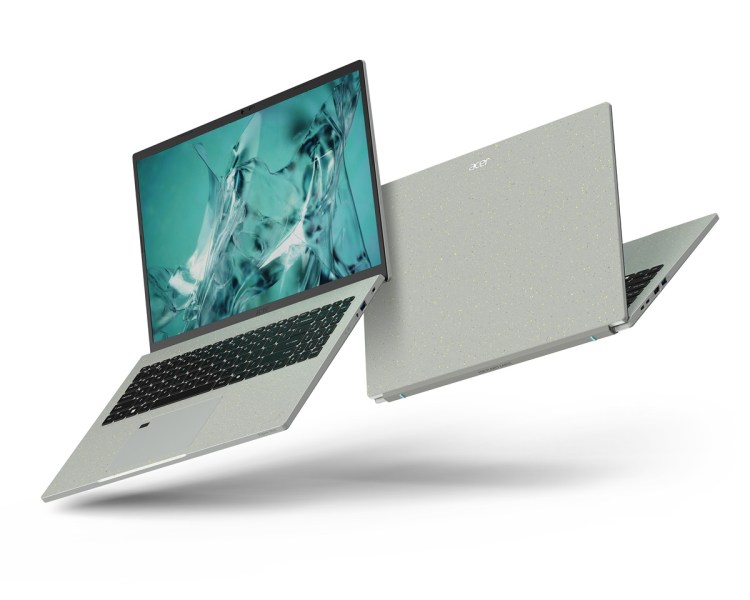
Join our daily and weekly newsletters for the latest updates and exclusive content on industry-leading AI coverage. Learn More Acer unveiled new models in its Acer Swift Go and Acer Aspire Vero laptop families with the latest components from Intel and AMD. The Acer Swift Go 16 and Swift Go 14  laptops deliver the latest performance with up to Intel Core Ultra 9 processor 285H (Series 2), featuring Intel Arc graphics and onboard AI tools to deliver up to 99 total on-device AI TOPS. Both laptops come with the option of a 3K OLED or 2K IPS touch display (16-inch and 14-inch, respectively) and they both have long battery life. They also include WiFi 7, a 1440p QHD webcam with three mics, a wide range of ports (including two USB Type-A ports), all wrapped up in a thin/light chassis. The Swift Go 14 has up to 1TB of storage. The Swift Go 16 provides up to 22.3 hours of video playback, while the Swift Go 14 provides up to 27.5 hours of video playback. The Acer Swift Go 16 (SFG16-73/T) will be available in North America in April, starting at $950. And the Acer Swift Go 14 (SFG14-74/T) will be available in North America in May, starting at $900.  Acer Vero 16 laptop. The Aspire Vero 16 (AV16-71P) laptop is committed to carbon neutrality throughout its lifecycle, based on its calculated carbon footprint offset. It features a chassis of which more than 70% is made from a blend of post-consumer recycled plastic and bio-based oyster shell material, and is made with an easy-to-repair design. A CES Innovation Award 2025 Honoree, the carbon-neutral Aspire Vero 16 is the world’s first laptop made with bio-based oyster shell material. I never thought I would see that. The Vero 16 is powered by up to Intel Core Ultra 7 255H processors and provides up to 10.5 hours battery life. The 16-inch display brings clear, sharp images with 100% sRGB color gamut support and a wide aspect ratio thanks to slim bezels. Collaboration and security are enhanced with a high-resolution 1440P QHD webcam, privacy features, vital connectivity options in Wi-Fi 7, HDMI 2.1, DTS Audio and two Thunderbolt 4 ports. The laptop weighs 3.97 pounds and it has a 65-watt lithium ion battery. The Acer Aspire Vero 16 (AV16-71P) will be available in North America in April, starting at $800. The Acer Connect M6E 5G mobile Wi-Fi device, with sim card, virtual sim, and SignalScan technology support, provides high-speed 5G network access in over 135 countries, eliminating the hassle of weak signals and dropped connections. The 8,000 mAh high-capacity battery supports fast-charging through a USB Type-C port, while users can enjoy up to 28 hours of uninterrupted high-speed internet connectivity.  The Acer Connect M6E 5G Mobile Wi-Fi device will be available in North America in Q1, starting at $250.  The Acer Wave D7 Wi-Fi Dongle delivers congestion-free Wi-Fi 7 speeds of up to 2,880 Mbps (6 GHz) with tri-band technology. With USB Type-A and a base with USB Type-C connector, flexible installation plus faster transfer speeds are possible through direct plug-and-play. The powerful dongle can support Wi-Fi 7 BE6500 combined throughput across all bands (2.4, 5, and 6 GHz). MLO+ multi-link switching minimizes network fluctuations and supports load balancing by connecting to two wireless access points simultaneously.  The Acer Wave D7 Wi-Fi Dongle will be available in North America in Q1, starting at $80.  AI models The Acer Swift Go 14 AI model. In addition to the Swift Go models listed above, Acer has also launched the Swift Go 16 AI (SFG16-61/T) and Swift Go 14 AI (SFG14-64/T).  These new Copilot+ PCs deliver the latest AI capabilities powered by new AMD Ryzen AI 300 Series (Ryzen 7 350 or Ryzen 7 340) processors that deliver up to 50 NPU TOPS and the latest AMD Radeon 800M graphics for improved streaming, editing and more while providing long battery life. The 16-inch or 14-inch displays (respectively) come in three display options: 3K OLED, 2K OLED or 2K IPS touch. They  feature an all-new anodized aluminum chassis design with a dual arrow pattern that highlights the laptops’ svelte form factors. They also come with the latest features, ports and more.  The Swift Go 16 AI (SFG16-61/T) provides up to 18 hours of video playback and the Swift Go 14 AI (SFG14-64/T) provides up to 24.9 hours of video playback. The Acer Swift Go 16 AI (SFG16-61/T) will be available in North America in April 2025, starting at $950. And the Acer Swift Go 14 AI (SFG14-64/T) will be available in North America in May 2025, starting at $900. Another new Copilot+ PC is the Acer Aspire 14 AI laptop (A14-52M/A14-52MT). It combines all the essentials and up to 22 hours of video playback on a battery charge. It’s powered by Intel Core Ultra processors (Series 2) and an integrated neural processing unit (NPU) to accelerate AI workloads. The 180-degree hinge lets the display lay flat for collaboration, while its 3.09-pound lightweight design means it’s easy to transport. It comes with either a 14-inch 16:10 OLED option or WUXGA touch-enabled panel. It also features up to 32 GB LPDDR5X memory, two powerful Thunderbolt 4 Type-C ports and HDMI 2.1, which can support up to an 8K monitor. And it has two USB 3.2 Gen 1 Type-A ports. It weighs 3.09 pounds. The Acer Aspire 14 AI (A14-52M/A14-52MT) will be available in North America in February, starting at $800. Featuring a minimalist white profile, the Acer Aspire S AI AIOs elevate home computing with a sleek style. The series includes the Aspire S24 AI (S24A-GLNL/S24A-TLNL) with a 23.8-inch Full HD 120 Hz display and the Aspire S27 AI (S27A-ELNL/S27A-TLNL/S27A-ULNL) with a 27-inch display available in both Full HD and QHD (2560×1440). They come with an Intel Core Ultra 7 processor (Series 2) (Intel AI Boost Capable) Both models offer touch panel options. The flexible design allows for optimal viewing angles with a tilt range of -3 to 25 degrees. It’s powered by up to Intel Core Ultra processors (Series 2) with up to 48 NPU TOPS and integrated Intel Arc graphics.  A variety of ports include HDMI 2.0, two USB 3.2, two USB 2.0, and USB 3.2 Gen 2 Type-C. They come with LPDDR5X memory. The Acer Aspire S24 AI ($1,300) and the Acer Aspire

Acer unveils Acer Swift Go and Aspire Vero 16 laptops with latest chips and up to 99 TOPS AI Read More »

AMD’s Ryzen 9 9950X3D — best processor for gamers and creators — is among many new chips coming

Join our daily and weekly newsletters for the latest updates and exclusive content on industry-leading AI coverage. Learn More Advanced Micro Devices unveiled a new set of processors and graphics processing units (GPUs) at its CES 2025 press event. The big chip design company showed off processors for desktops, laptops and gaming handhelds, as well as new graphics chips. Jack Huynh, SVP of AMD’s computing and graphics group, said that the company’s technology is revolutionizing industries from fish farming to nuclear power, with AI processing massive amounts of data. “Whether you know it or not, you probably interact with AMD technology every day,” said Huynh. And he added that the company is “just getting started” across gaming, AI PCs and enterprise. At a press event at the big tech trade show in Las Vegas, Huynh said that the company is launching its AMD Ryzen 9000 Series, including the “world’s best processor for gamers and creators,” the AMD Ryzen 9 9950X3D. AMD said it “touches the lives of billions” every day thanks to its AI and gaming chips. The chip has 16 Zen 5 CPU cores, the fifth generation of the cores that helped AMD leapfrog Intel in x86 chip performance. It has a max boost frequency of 5.7 GHz, and 144 MB total cache with second-generation AMD V-Cache technology. Microsoft Xbox executive Matt Booty said in a guest message at the event that AMD has been driving innovation across every level of gaming, from the latest PC hardware to Xbox game consoles. The chip can run games 8% faster on average across 40 games tested, including Cyberpunk 2077 and Black Myth Wukong compared to the predecessor AMD Ryzen 9 7950X3D. And the company said it is 20% faster based on 40 games tested compared to the Intel Core i9 285K processor. The chip is also 13% faster on average at content creation on 20 apps test versus the AMD Ryzen 9 790X3D. And, it’s 10% faster than the Intel chip. AMD said it has two versions available, one with 16 cores and 32 threads and another with 12 cores and 24 threads. They will be available in the first quarter of 2025. AMD mobile processor AMD Ryzen 9000HX delidded chip. AMD also introduced the Fire Range HX3D, which the company called the best gaming and content creation mobile processor. That chip is coming in the first half of 2025. The HXD family ranges from 12 cores and 24 threads to 16 cores and 32 threads, with max boost frequency ranging from 5.2 GHz to 5.4 GHz. The cache memory ranges from 76MB to 144MB, and the TDP (a power measurement) is 54 watts. AMD graphics with RDNA 4 Meanwhile, AMD showed off its RDNA 4 architecture for graphics and AI chips. It is based on optimized compute units, supercharged AI compute, improve raytracing per CU and better media encoding quality. AMD said the RDNA 4 architecture will be used in second-generation AI accelerators and will be built with a 4nm process. It will also be used in third generation raytracing accelerators and the second-generation AMD Radiance Display Engine. AMD also said its AMD FidelityFX Super Resolution 4 tech with machine learning (ML)-powered upscaling will enable high-quality 4K upscaling, high performance with FSR + FG and low latency with AMD Anti-Lag 2. For gaming graphics, AMD is introducing the AMD Radeon RX 9070 XT and the AMD Radeon RX 9070. The chips will be available in Q1 2025 from Acer, Asus, Sapphire, XFX, ASRock, Gigabyte, PowerColor and Yeston. Gaming handheld processor AMD Ryzen Z2 Series is aimed at portable gaming machines. AMD also announced its AMD Ryzen Z2 Series processors targeted at handheld PC gaming devices. It will feature “console-class” gaming in a handheld and allow users to stay unplugged for hours to game wherever they roam. These Z2 processors will be part of the Lenovo Legion Go, Asus ROG Ally and the Valve Steam Deck. The SKUs include the AMD Ryzen Z2 extreme with eight cores and 16 threads, the AMD Ryzen Z2 with eight cores and 16 threads, and the AMD Ryzen Z2 Go with four cores and eight threads. They will be available in the first quarter of 2024. AI processors AMD Ryzen AI PRO 300 Series AMD also introduced the AMD Ryzen AI Pro 300 Series processors. It has a premium series AMD Ryzen 9 processor, with other processors including the AMD Ryzen AI 7 and the AMD Ryzen AI 5. AMD said the AMD Ryzen AI 7 350 it has the fastest multitasking performance in its class ahead of the Qualcomm X Plus X1P-42-100 and the Intel Core Ultra 7 285V. It said the AMD Ryzen AI 7 has the world’s best performance in next-gen AI PCs in running Windows NPU in Procyon AI. AMD Ryzen AI Max Pro chip. AMD Ryzen also has multi-day battery life for mobile applications. The family will be available in the first half of 2025. Further, AMD unveiled the Halo series, with the AMD Ryzen AI Max+ and the AMD Ryzen AI Max processors. These have up to 16 Zen 5 performance cores, 40 RDNA 3.5 compute units, 50 TOPs with XDNA 2 NPU, and 256GB/s bandwidth in a new memory interface. The company said the Ryzen AI Max Series performance will be up to 402% faster than the Intel Core Ultra 9 288V. And, the graphics performance will be as much as 251% better. It also said its 3D rendering performance will be better than the Apple Mac M4 Pro. It will be the world’s first Copilot+ PC processor to run 70B LLM with 2.2 times better performance than the Nvidia GeForce RTX 4090 24GB and 87% lower TDP. The AI Max+ and the AI Max Pro will be available in the first half of 2025. Among the machines to use it will be the HP ZBook Ultra G1a, the HP Z2 Mini G1a and the Asus ROG Flow Z13. AMD CEO Lisa Su said that there will

AMD’s Ryzen 9 9950X3D — best processor for gamers and creators — is among many new chips coming Read More »

Xthings unveils Ulticam home security cameras powered by edge AI

Join our daily and weekly newsletters for the latest updates and exclusive content on industry-leading AI coverage. Learn More Xthings announced that its Ulticam security camera brand has a new model out today: the Ulticam IQ Floodlight, an edge AI-powered home security camera. The company also plans to showcase two additional cameras, Ulticam IQ, an outdoor spotlight camera, and Ulticam Dot, a portable, wireless security camera. All three cameras offer free cloud storage (seven days rolling) and subscription-free edge AI-powered person detection and alerts. The AI at the edge means that it doesn’t have to go out to an internet-connected data center to tap AI computing to figure out what is in front of the camera. Rather, the processing for the AI is built into the camera itself, and that sets a new standard for value and performance in home security cameras. It can identify people, faces and vehicles. CES 2025 attendees can experience Ulticam’s entire lineup at Pepcom’s Digital Experience event on January 6, 2025, and at the Venetian Expo, Halls A-D, booth #51732, from January 7 to January 10, 2025. These new security cameras will be available for purchase online in the U.S. in Q1 and Q2 2025 at U-tec.com, Amazon, and Best Buy. The Ulticam IQ Series: smart edge AI-powered home security cameras Ulticam IQ home security camera. The Ulticam IQ Series, which includes IQ and IQ Floodlight, takes home security to the next level with the most advanced AI-powered recognition. Among the very first consumer cameras to use edge AI, the IQ Series can quickly and accurately identify people, faces and vehicles, without uploading video for server-side processing, which improves speed, accuracy, security and privacy. Additionally, the Ulticam IQ Series is designed to improve over time with over-the-air updates that enable new AI features. Both cameras offer free cloud storage (7 days rolling) and 8GB of built-in storage, expandable up to 128 GB with SD cards for additional recording capacity and dual-layer recording. Ulticam IQ Series security cameras are weatherproof and designed for reliable outdoor performance in any environment, day or night, with exceptional 2K Quad HD image quality (4K Ultra HD versions coming in Q2 2025). IQ features an integrated spotlight, while IQ Floodlight features two powerful floodlights and color night vision. Both activate upon detecting motion, deterring intruders, and enhancing visibility with more light. With the U home app, users get real-time alerts, live camera viewing, two-way audio, and searchable footage. The cameras also offer four customizable detection zones to help minimize false motion detections. Users also can choose from multiple connectivity options, including Wi-Fi, LAN, 4G LTE, or Power over Ethernet (IQ only). IQ offers a plug-in power option and IQ Floodlight is a wired camera. The IQ series will support integration with Amazon Alexa and Google Home at launch. The price Ulticam IQ 2K is $169 or $199 with optional 4G LTE connectivity. IQ Floodlight 2K is $199 or $239 with optional 4G LTE connectivity. IQ will be available in Q1 2025, and IQ Floodlight in Q2 2025. Ulticam Dot: The anywhere security camera You can take the Ulticam Dot security camera on the go. Ulticam Dot, available for $69, is a portable, wireless security camera that delivers peace of mind at home or on the go. Its compact, battery-powered, and weather-resistant design makes it easy to use anywhere indoors or covered outdoors—whether at home, in a hotel room, or anywhere in between—making it a dependable and versatile security solution. Like all Ulticam cameras, it offers free cloud storage (7 days rolling) and subscription-free person and motion detection. With 2K Quad HD video, night vision, and an ultra-wide field of view, Ulticam Dot ensures clear and comprehensive coverage, day or night. When connected to Wi-Fi, it provides real-time alerts, two-way audio, and automatic dual-layer recording. Dot also offers four customizable detection zones to deliver real-time alerts while minimizing false motion detections. Ulticam Dot is designed for personal security wherever you need it and comes with four replaceable AA alkaline batteries, 8GB built-in storage, alarm siren, a magnetic base for mounting on metal surfaces, and peel-and-stick adhesive and screws for easy installation on any surface. Dot can stay in standby mode for up to nine months on lithium batteries. In use battery life will depend on camera activity and environment. Built-in Wi-Fi enables direct connection to your home network without additional hubs, and the U home app allows seamless control. Dot will support integration with Amazon Alexa and Google Home at launch. It will be available starting in Q1 2025. “Consumers are tired of being locked into costly monthly subscriptions, which is why Ulticam offers free cloud storage and advanced AI features without requiring any fees,” said Matthew Brown, Ulticam’s head of marketing, in a statement. “Ulticam is setting a new standard for value and performance in the home security market and we’re putting consumers first.” Ultraloq smart locks Ultilog Bolt Xthings also showed off its smart lock brand, Ultraloq, with two new smart locks at CES. The locks include the Ultraloq Bolt Mission UWB + NFC Smart Deadbolt, the world’s first lock with ultra-wideband (UWB) technology, and Ultraloq Bolt Fingerprint Matter, one of the first Matter-compatible locks to support several smart home platforms. Bolt Mission UWB + NFC ($399) updates the smart door lock with a precise, hands-free auto-unlocking experience. Using ultra-wideband (UWB) technology, the same technology commonly used in digital car keys, Bolt Mission senses the keyholder’s phone location with centimeter-level accuracy, determining both distance and direction of approach. This spatial awareness enables automatic unlocking as users approach from the outside and also prevents unintended unlocking when users are inside their homes. For added convenience, Bolt Mission also features NFC for quick tap-to-unlock functionality and automatic locking. It supports Matter for easy integration, voice commands with Siri, Amazon Alexa, Google Assistant, and Samsung SmartThings, and connects directly to your home Wi-Fi via the U home App, eliminating the need for additional hubs. Bolt Mission offers lightning-fast unlocking in under half

Xthings unveils Ulticam home security cameras powered by edge AI Read More »

Sony is making a location-based experience based on The Last of Us

Join our daily and weekly newsletters for the latest updates and exclusive content on industry-leading AI coverage. Learn More Neil Druckmann, studio head of Naughty Dog and co-creator of The Last of Us, announced that Sony is working on a location-based physical entertainment experience based on The Last of Us. It will depict the experience in the infected undergrounds of Seattle, which was prominently featured in The Last of Us Part II video game. This is still in the proof of concept phase and it will invoke all of your senses, Druckmann said. He made the announcement at the Sony event at CES 2025. Neil Druckmann touts more media on The Last of Us at CES 2025. He also said that season 2 of the television show will debut in April on HBO and will be available to stream on Max. Druckmann showed a trailer full of violence and emotion from the second season of the show, which has been a major hit as a streaming series. He said the company continues to strive to be an IP powerhouse with original content. “We’ve been floored at how beloved The Last of Us has become,” he said. source

Sony is making a location-based experience based on The Last of Us Read More »