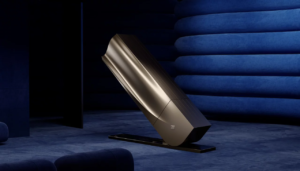
When my neighbor wanted a vision of what his fence could look like, I didn’t hesitate to ask ChatGPT to create a mock-up. I took a photo of the fence and asked it to overlay a potted Jasmin espaliered to it, after a couple of tweaks, and all of about one minute later, it gave me this:

Howard Armitage
During a recent conversation with a diving buddy, he pulled out his phone mid conversation and said “Hey Grok, show me that dive computer we were talking about this morning.” And yes, it’s $580 worth of gorgeous.
Its translation abilities are spectacular, and occasionally hilarious. It really is the Babel fish. Not that long ago I moved to a bank simply because it supported Apple Pay years before the big players. At that time, paying with just the tap of a wrist always garnered astonishment and commentary. Around the same time, voice assistants started crossing the line from novelty to genuinely useful. Set a timer, make an appointment, play some music. Super !
“Alexa, turn the kitchen light on.” Light comes on. “No, turn it off.” “There is no device called ‘it’ to turn off.” Oof !
No memory, no context.
Enter Nabu (yes I know, I haven’t got round to changing the wakeword name yet). Naby knows it turned the kitchen light on, and knows I was referring to the kitchen light when I said “turn it off.” It remembers, it has context, because it’s not just a dumb voice assistant anymore, it is plumbed into my local AI.
The big commercial AI platforms can be connected to these systems, but running it locally means the data stays within the boundaries of my house. It won’t process that mountain of documents or win that tricky legal case yet, but it can keep track of the state of my home and understand what I mean when I speak naturally.
That’s a big deal – because now I don’t have to write and memorize tiresome automations for rigid pre-programmed commands, I can converse with Nabu in human and it understands “all the lights” or “just the downstairs aircons.”
Only five years ago, running an AI model at home was a ridiculous proposition – you’d need datacenter hardware and a tech-bro budget. Now, it’s dramatically cheaper and easier – with consumer GPUs, mini PCs, Ollama and Hugging Face, technically curious people are quietly building surprisingly capable AI systems at home. The GPU that I can hold in my hands doesn’t compete with a datacenter the size of several football fields – but for my homelab tinkerings, it’s surprisingly capable, and is only becoming more so.
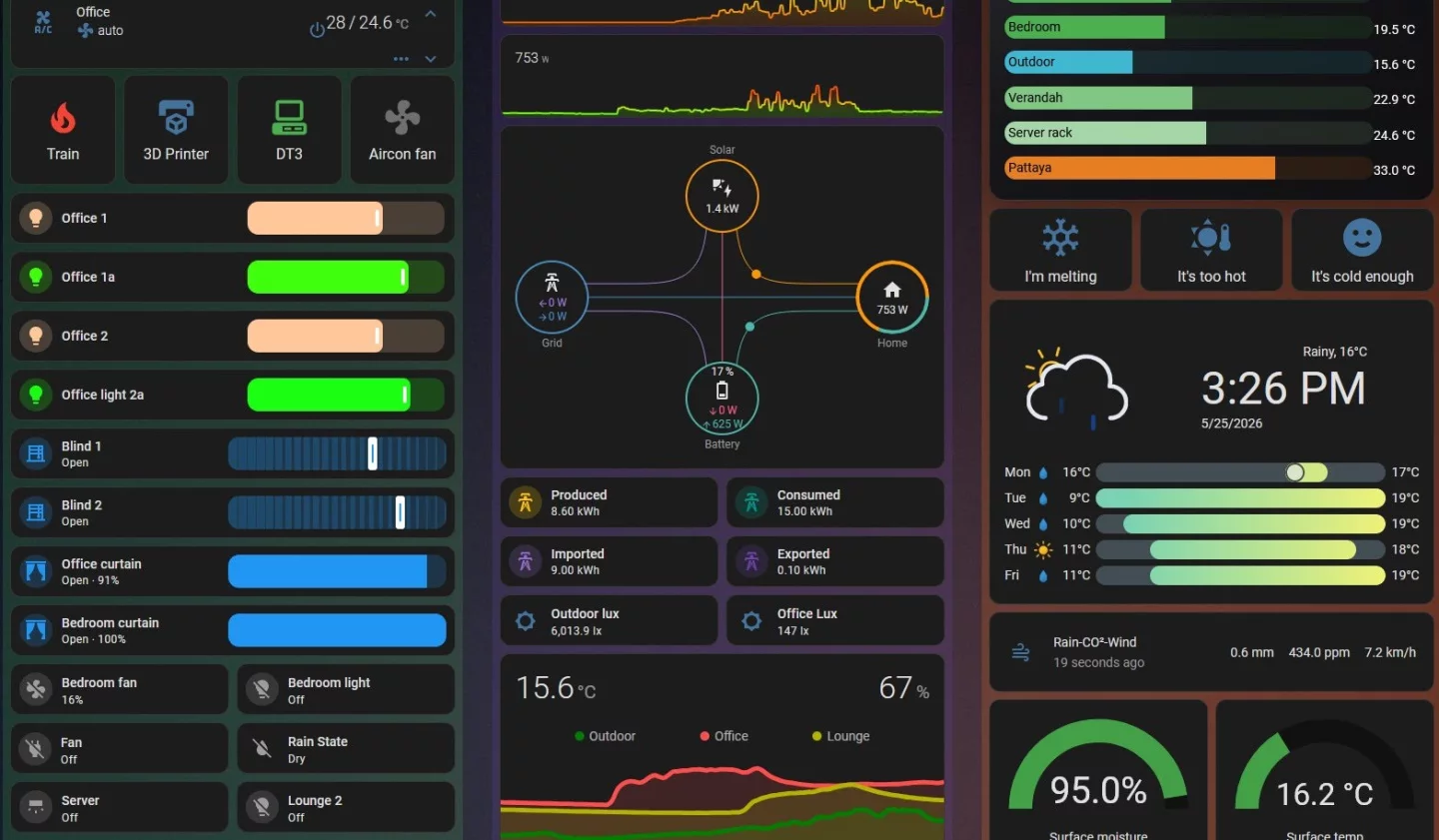
I should probably backtrack a little here – I’m enthusing about Home Assistant, which I’ve been running for about 12 years – originally on a Raspberry Pi, now in a VM on ProxmoxVE. Sensors and controllers are scattered all over the house, with a dashboard in a browser acting as mission control. Lights automated with timers and presence detectors. Sun elevation adjusts blinds, curtains react to sunrise and sunset, and moisture sensors trigger irrigation on demand. Solar and battery systems respond to dynamic electricity pricing, buying and selling power depending on what the grid is doing.
Howard Armitage
Home Assistant proclaimed 2023 to be the Year of the Voice and duly launched a prototype Voice Assistant. At launch, its capabilities were limited. Today, it is genuinely good at a variety of tasks, and it’s all open source so you can build your own device from very inexpensive hardware, and the software is on GitHub.
Local models – Llama, Gemma, Mistral, Qwen – very much lag behind the giant commercial systems, but for experimentation, home automation, and general day-to-day interaction, they’re becoming more and more usable. I personally care about data sovereignty (a huge topic in its own right), so running a local AI grants me a more privacy-conscious workflow, and it still works when the internet doesn’t.
Quite how many months of commercial AI subscriptions I could have got for the price of my GPU is a question I’m deliberately avoiding, predominantly for marital reasons. I rather think of myself as a data nerd. All those sensors collecting all that data in a “If this, then that” environment makes for endless tinkering possibilities. And with an AI-powered Nabu gradually replacing Alexa, my office edges ever closer to Tony Stark’s lair. We’re no longer at “deploying Kubernetes clusters” level of difficulty, but it’s still very much a tinkerer’s space rather than a mainstream consumer appliance. Even so, it feels like a taste of where we’re heading.
The strange thing is how quickly this all stops feeling strange. Talking naturally to an AI that understands context, remembers previous conversations and controls my house may have garnered astonishment and commentary. Now, it’s just another thing sitting quietly in my server rack.
I’m going to call it “Yaffle.”