Traveling with music was always a cumbersome affair. Cassettes fluttered, CDs skipped, and choosing a dozen albums for a trip meant leaving dozens more behind. Then there’s the one you have to exclude because Peter Gabriel signed it.
As soon as Fraunhofer’s MP3 codec hit me like a brick in the mid-1990s, I knew that one day I’d carry my entire music collection around in my pocket. That prediction turned out to be correct, although not quite in the way I imagined. What I hadn’t seen coming was the way ownership, control and dependence would quietly shift beneath my feet.
The iPod was the first glimpse of that future. A Walkman with instant track access and no moving parts to skip or flutter. We weren’t quite there yet – my music collection was several times larger than the storage available on most portable players – but for the first time the destination was in sight. Then came smartphones and streaming.
Carrying my CD collection everywhere was what I’d envisaged. What I got was access to almost every album ever recorded, instantly available wherever I wanted it. The dream had come true, and then some.
Somewhere along the way, though, something changed. Music stopped being something I owned and became something I accessed. Not overnight, and not necessarily for the worse. The convenience was undeniable. Most of us barely noticed the trade. We’d gone from box storage to cloud storage. Not only was my CD collection in boxes, but the weeks I’d spent ripping it to MP3s back in the 90s had effectively been wasted as those files were neglected in preference to a cloud subscription. I was renting access to something I not only owned, but had already done the hard yards ripping.
Today, the amount of music I can carry around with me is staggering. How much ? All of it. Probably. Or close enough to all of it that the distinction hardly matters. Mankind’s millennia of music-making endeavors, in my pocket. Storage is no longer the issue. The issue is how to access my music freely.
Howard Armitage
Nobody wants 200 GB of music on their phone, but that always-on, always-connected device in my pocket could easily access my 200 GB of music (or movies or photos or books or …) parked at home on my NAS box. Software such as Plex made that experience almost seamless. I could cancel my music subscription, blow the pixel dust off my MP3 collection and listen to my music from my hardware without sacrificing convenience.
Without really meaning to, I’d started self-hosting my own music collection. I was taking control of my own data before I’d even heard the term “digital sovereignty.” The same transition from physical to virtual happened to video, books and audiobooks. So now I wanted access to all my media. We’re gonna need a bigger NAS.
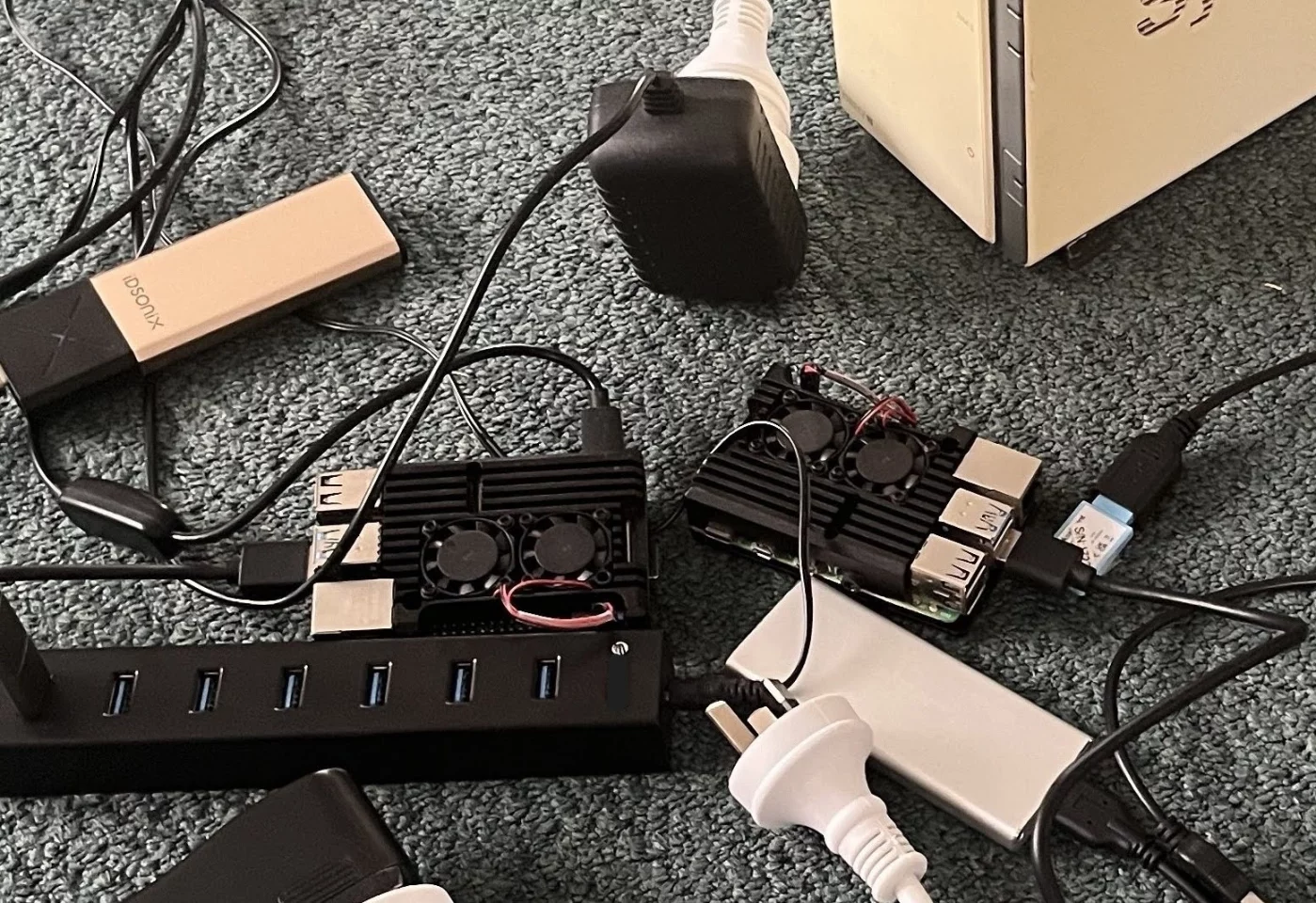
Once the NAS existed, it became the obvious place for photos. Then backups. Then audiobooks. Then movies. A Raspberry Pi became two Raspberry Pis, then became a mini pc. It’s a slippery slope. Eventually I discovered virtualisation and Proxmox’d everything onto a single server. Somewhere along the way I found myself running local AI models and a selection of self-hosted services. At no point did I decide to build a homelab. The infrastructure simply grew around the problems I was trying to solve. I did not set out to accommodate all this. I just sort of drifted here.
The recent Plex price increase has renewed interest in more sovereign alternatives such as Jellyfin. Not because everyone suddenly hates Plex, but because it serves as a reminder that:
- Platforms change.
- Prices change.
- Terms change.
- Ownership doesn’t.
As one Linux podcaster recently observed, the idea of having to log in to access your own media library sits uncomfortably with some people. That’s not directly a criticism of Plex so much as a reminder of the question that led me to self-host my music collection in the first place:
How much of our digital lives are we comfortable placing on someone else’s platform?
This is not an argument that everyone should buy servers. I’ve admittedly gone extras ‘cos I’m a nerd and a techie. Many people are perfectly served by streaming services, but there is now a growing middle ground – a NAS, a mini PC, a few self-hosted services and a tiny power footprint. You don’t need a PhD, a datacenter, or $5,000 worth of gear. You just need to decide where convenience stops and ownership starts. Recent events suggest more people are starting to think about where they draw that line.
Looking back, I was right about carrying my music collection around in my pocket. What I failed to predict was that 30 years later I’d be running a small datacenter in my office to keep it under my own control.
I didn’t mean to build a homelab. I just wanted my music back.