Yakult Singapore is retiring its orange-flavoured Yakult and replacing it with a new peach flavour, marking the brand’s first flavour change since it hit Singapore’s shores in 1979. The orange-flavoured Yakult will be phased out locally from July 2026.
The original lineup of flavours at launch included orange, grape, green apple and the original classic version.
The change is due to production capacity constraints at its Singapore factory, with production of the orange-flavoured Yakult set to cease at the end of June.
Don’t miss: How Yakult Malaysia is evolving with its iconic Yakult ladies for 90th anniversary
In an interview with The Straits Times, Masaaki Sunami, Yakult Singapore’s managing director, said the company had received requests from customers to bring the peach-flavoured Yakult to Singapore, a flavour that has performed “very well” in other markets and is popular among international consumers.
He added that the peach-flavoured Yakult offers a strong alternative to the orange flavour and that the company is encouraged by its success in other countries.
The move has divided fans on the internet. Checks by MARKETING-INTERACTIVE on Yakult Singapore’s social media pages found several users urging the brand to keep the orange flavour. On its latest post, one user commented that orange was “the reason why consumers choose Yakult over Vitagen”, positioning the flavour as a point of differentiation from its competitor. Another appealed to the brand to “please listen to your consumers” and reconsider the move.
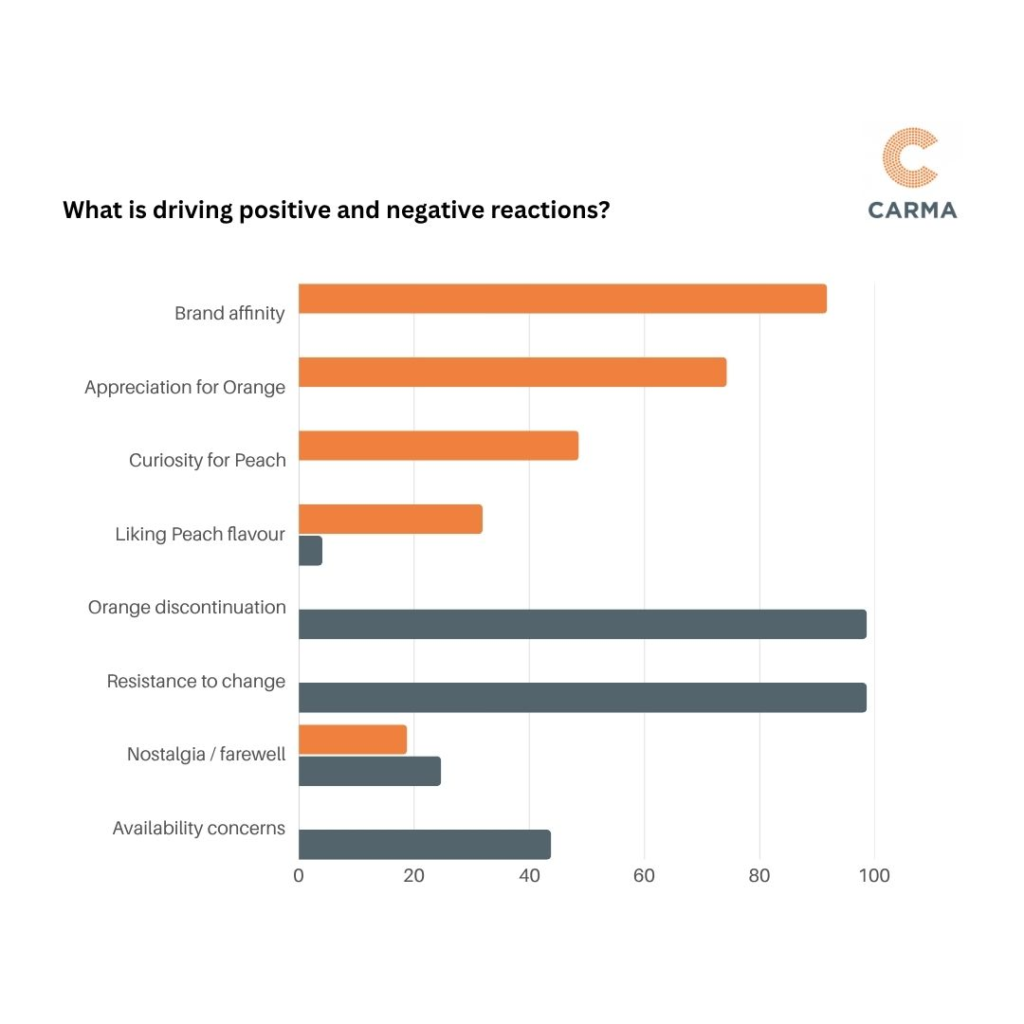
Meanwhile, media intelligence firm CARMA found that the online conversation is driven more by nostalgia rather than rejection of the new flavour, with the strongest theme being product discontinuation (44%), followed by flavour preference (36%), suggesting that consumers are primarily reacting to the loss of orange Yakult, rather than expressing direct dislike toward peach Yakult.
Positive discussions were driven by Yakult’s strong brand affinity (91.7%) and curiosity toward the new peach flavour (48.6%).

“Orange Yakult’s discontinuation highlights how legacy products can hold emotional value far beyond their commercial performance. While Yakult says orange was its least popular flavour, online discussions suggest it may have been one of the brand’s most emotionally significant products,” said CARMA.
The conversation had also moved beyond nostalgia into action, with consumers sharing plans to stock up on orange Yakult before its discontinuation. This suggests the announcement created a scarcity effect, transforming a routine flavour change into a consumer-led farewell moment.
This was broadly echoed by Truescope Singapore, which found that the announcement triggered a sharp spike in attention, with coverage rising from three items before the announcement to 257 after it. This marked a near 8,500% increase, reaching close to 49.4 million in potential audience within 36 hours.
However, Truescope’s analysis suggests that sentiment varied depending on where the conversation was taking place. While social posts leaned slightly negative due to nostalgic and farewell-style reactions around the retirement of orange Yakult, audience comments were more positive. According to Truescope, the dominant sentiment at the comment level was “positive-to-relieved”, with many users saying orange was their least preferred flavour and welcoming the switch to peach.
Rather than rejecting the new peach flavour, much of the conversation centred on consumers defending their preferred Yakult flavours. Truescope noted that users were more concerned about Yakult potentially discontinuing favourites such as original, grape and green apple, with comments such as “just don’t touch my original and green apple” and “just don’t touch the purple one please” drawing high engagement.
“Majority of commenters across TikTok, Instagram, and Facebook expressed that orange was their least preferred flavour and welcomed the change. The key themes audiences are raising centre not on grief for orange, but on protective anxiety about grape and green apple,” explained Truescope.

Yakult Singapore has yet to publicly respond to the reaction.
The brand’s recent marketing efforts have largely centred on Yakult Gold, which it positions as a healthier version of its probiotic drink without “compromising the taste”. Other initiatives include an ongoing recipe-led campaign showcasing different ways consumers can enjoy Yakult, from matcha and strawberry shakes to ice cream.
Meanwhile in Malaysia last year, Yakult celebrated its 90th anniversary with a series of consumer engagement efforts, including grocery and hypermarket roadshows, bottle-shaped mascots and a “Spin to win” campaign offering customers the chance to win flights to Japan amongst other prizes.
The brand also evolved its door-to-door service led by the iconic “Yakult ladies” with a phygital layer, where receipts include QR codes directing customers to a mobile site for registration, gamified experiences and reward redemption.
Photo courtesy of Yakult Singapore, Facebook.
Related articles:
‘Unlike other nutri-grade D cultured milk’, says Vitagen in latest competitor jab
Yakult SG takes consumers on a gut health adventure with 3-part mini game
Yakult plastic straws marketed on Carousell as ‘vintage’, reselling at SG$1,000