What Rodney Hood's OCC Stint Could Mean For Banking

By James Morrissey and Nicholas Zlevor ( March 21, 2025, 5:08 PM EDT) — On Feb. 10, Rodney Hood, the former chairman of the National Credit Union Administration assumed the role of first deputy comptroller at the Office of the Comptroller of the Currency…. Law360 is on it, so you are, too. A Law360 subscription puts you at the center of fast-moving legal issues, trends and developments so you can act with speed and confidence. Over 200 articles are published daily across more than 60 topics, industries, practice areas and jurisdictions. A Law360 subscription includes features such as Daily newsletters Expert analysis Mobile app Advanced search Judge information Real-time alerts 450K+ searchable archived articles And more! Experience Law360 today with a free 7-day trial. source

What Rodney Hood's OCC Stint Could Mean For Banking Read More »

How to Start A Successful e-commerce Business​ in 2025

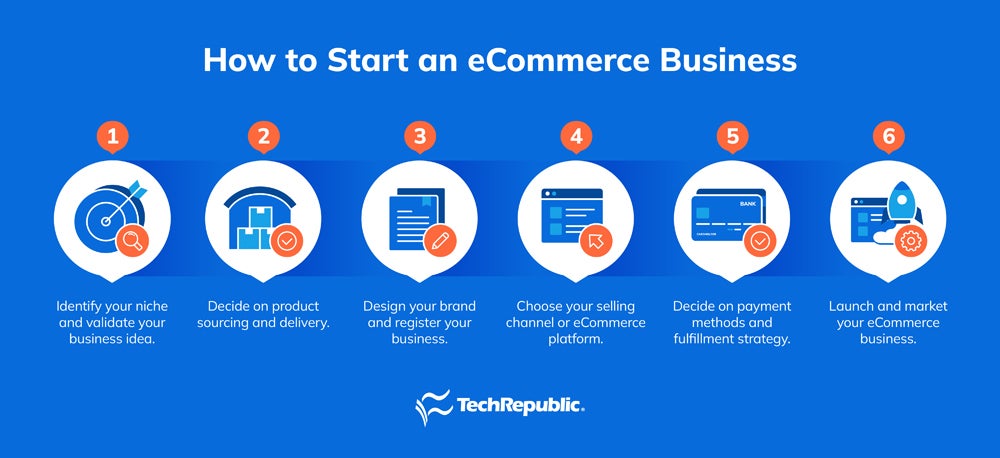
Starting an e-commerce business is easy, but creating a highly profitable and lasting e-commerce business is another. Learn how to start an e-commerce business in this guide. 1 Pipedrive CRM Employees per Company Size Micro (0-49), Small (50-249), Medium (250-999), Large (1,000-4,999), Enterprise (5,000+) Any Company Size Any Company Size Features 24/7 Customer Support, Analytics / Reports, API, and more 2 CrankWheel Employees per Company Size Micro (0-49), Small (50-249), Medium (250-999), Large (1,000-4,999), Enterprise (5,000+) Any Company Size Any Company Size Features Analytics / Reports, API, Dashboard, and more Key takeaways: Choose a scalable e-commerce business model, one that aligns with your growth goals. Invest in a secure and flexible payment system, focusing on support for multiple payment methods, fraud protection, and seamless transactions for both domestic and international customers. Optimize fulfillment for efficiency and cost savings. Leverage multiple marketing channels for growth. Use automation to streamline operations. Implement AI-powered tools, chatbots, and automated workflows for different aspects of your e-commerce business. E-commerce is the driving force of global retail. By 2027, online shopping is expected to account for nearly a quarter of all global retail sales, up from 19% in 20231, and global e-commerce sales are forecast to surpass $8 trillion2, a testament to its explosive growth. With 2.77 billion online shoppers worldwide in 20253 — a whopping third of the global population — digital commerce has become the preferred way to shop. In the US alone, online shoppers have increased by 8.1% year-over-year to 270.11 million4 and are projected to keep rising. As inflation, supply chain shifts, and evolving consumer expectations reshape the market, businesses of all sizes — SMBs, direct-to-consumer brands, digital-first startups, and B2B businesses — should be wise to seize these new opportunities. Success in this rapidly expanding space demands strategic business models, efficient fulfillment, and optimized digital marketing. In this guide, I provide expert insights into launching and scaling an e-commerce business in 2025. Step 1: Identify your niche and validate your business idea. A successful e-commerce business starts with a great product idea, and the foundation of this is zeroing in on a target audience and selecting a niche. While it might seem counterintuitive to niche down, a well-defined niche actually helps refine your product selection and brand positioning. In the same way, narrowing down your audience makes it easier to offer products that resonate, rather than selling a broad range of generic goods. A clear understanding of your ideal customer ensures effective marketing and higher sales. To identify your niche product and validate its sellability: Find product opportunities: Start by researching trending products using tools like Google Trends, Amazon Best Sellers, and social media platforms like Instagram and TikTok. Look for gaps in the market where demand is high but supply is limited. Browse niche forums and online communities to identify common pain points that potential products can address. Additionally, considering personal interests and expertise can provide a unique advantage when selecting a product category. Evaluate your idea: Once you have a product idea, validate its potential by conducting thorough market research. Create surveys and polls to gather feedback from potential customers. Use tools like Google Keyword Planner to analyze search volume and demand. Calculate the cost of production, marketing, and shipping to determine profit margins. Testing the idea with a small batch or pre-order campaign is also helpful before committing to large-scale production. Understand and study competition: Assess the competitive landscape by analyzing existing businesses offering similar products. Identify their strengths, weaknesses, pricing strategies, and customer reviews. Use competitive analysis tools such as SEMrush, Ahrefs, and SimilarWeb to gain insights into their online performance and marketing strategies. Differentiate your brand by offering unique value propositions such as superior customer service, eco-friendly packaging, or exclusive product bundles. Decide on an e-commerce business model. Along with a product idea, choosing the right e-commerce business model is also crucial as it defines how you manufacture, deliver, and sell your products or services. Whether you have a business idea first or prefer to choose a model and then find a business idea that fits, the key is defining a structure that supports long-term growth. There are several popular models to consider: E-commerce business model Revenue streams Operational dynamics Business-to-Customer (B2C)The most common model, where businesses sell products directly to consumers (e.g., Amazon, Walmart) Product sales, upselling, cross-selling, membership subscriptions Requires effective marketing, customer acquisition strategies, and optimized logistics for fast delivery Business-to-Business (B2B)Companies sell goods or services to other businesses, often in bulk or recurring transactions (e.g., Alibaba, wholesale suppliers) Bulk orders, long-term contracts, wholesale pricing structures Focuses on repeat orders, customer relationship management, and account-based sales approaches Customer-to-Customer (C2C)Online marketplaces where consumers sell to other consumers (e.g., eBay, Etsy) Transaction fees, listing fees, premium memberships Marketplace moderation, user verification, and dispute resolution systems are key Customer-to-Business (C2B)Individuals provide goods or services to businesses (e.g., freelancers on Upwork, influencers working with brands) Service commissions, freelance project fees, influencer marketing collaborations Requires a platform that connects individuals with businesses and ensures smooth transactions To choose the right business model, analyze how similar businesses operate and identify opportunities for improvement. Understand customer needs — whether they prioritize affordability, fast shipping, or personalized products. And experiment with business models, marketing tactics, and fulfillment methods to optimize profitability and efficiency over time. Write a business plan. Writing a business plan helps clarify how your business will generate revenue and scale. Many business plans are available for startups, B2Bs, and technology-based or industry-disrupting businesses. Overall, regardless of the type of business plan you create, it needs to have the following sections specific to e-commerce businesses: Problem statement: Identify one to three major problems your business aims to solve. Highlight existing businesses that currently address these issues. Solution: Describe the key features of your product or service and explain how they directly solve the problems outlined in the previous section. Key metrics: List the performance indicators measuring business growth and success. Common KPIs include customer acquisition cost, lifetime value,


How to Start A Successful e-commerce Business​ in 2025 Read More »

Why CDOs should prioritize ESG in data strategy

By embedding sustainability into enterprise data strategies, CDOs can play a pivotal role in driving long-term environmental and social impact while ensuring their organizations remain competitive and compliant in a rapidly evolving regulatory landscape.  💡Building strong partnerships  For CDOs to successfully integrate sustainability into their data agenda, they must collaborate beyond their immediate teams. Strong partnerships across departments and external organizations are key to ensuring a holistic approach to ESG initiatives.  Internally, CDOs should work closely with sustainability, operations and marketing teams to align data-driven sustainability goals with overall corporate objectives. For example, marketing teams can leverage sustainability data to communicate responsible business practices to consumers, while operations teams can use insights to optimize resource efficiency.  Externally, partnerships with NGOs, academic institutions and regulatory bodies can help CDOs stay ahead of evolving ESG expectations. Collaborating with research institutions can improve ESG data methodologies while engaging with regulators ensures compliance with changing disclosure requirements. Additionally, participating in industry consortiums or sustainability alliances can create opportunities for shared best practices and innovation in sustainable data governance.  💡Advocating for change  To elevate the role of sustainability in data leadership, CDOs must actively advocate for its inclusion in enterprise-wide decision-making. This requires influencing stakeholders, both internally and externally, by demonstrating the strategic value of ESG initiatives.  Internally, CDOs should educate and inspire other business leaders by presenting data-driven insights that illustrate the long-term benefits of sustainability investments. Hosting internal workshops and knowledge-sharing sessions can help integrate sustainability into corporate culture.  Externally, CDOs should participate in industry discussions and conferences, leveraging their expertise to shape the broader ESG discourse. Contributing to panels, publishing thought leadership content and engaging in policy discussions can help drive the agenda forward. Additionally, collaborating with peers from other organizations can lead to industry-wide improvements in sustainability data management.  source

Why CDOs should prioritize ESG in data strategy Read More »

Meta Defends Need For Current Data In FTC Case

By Matthew Perlman ( March 21, 2025, 8:02 PM EDT) — Meta Platforms Inc. told a D.C. federal court the company should be able to use the most recent data it has during next month’s trial in the Federal Trade Commission’s case accusing the Facebook parent company of monopolizing personal social networking…. Law360 is on it, so you are, too. A Law360 subscription puts you at the center of fast-moving legal issues, trends and developments so you can act with speed and confidence. Over 200 articles are published daily across more than 60 topics, industries, practice areas and jurisdictions. A Law360 subscription includes features such as Daily newsletters Expert analysis Mobile app Advanced search Judge information Real-time alerts 450K+ searchable archived articles And more! Experience Law360 today with a free 7-day trial. source

Meta Defends Need For Current Data In FTC Case Read More »

Dutch startup Skylark takes off to give non-technical founders wings

A new startup called Skylark has taken flight today — with TNW lending an extra set of wings. The company launches with a central mission: empowering non-technical founders to quickly create high-quality Minimum Viable Products (MVPs). To bring their plans to life, Skylark has created an AI-enhanced framework that promises rapid, efficient iteration cycles. Freelance developers apply the framework to build the MVP. While they code, Skylark’s internal team handles the client acquisition. Every solution is customised for the founder’s objectives. By drawing from a pool of freelancers, Skylark can then find developers that fit each project’s specific needs.  The MVPs are designed to scale in the real world. Throughout the build, Skylark provides founders with strategic insights and expert support. The 💜 of EU tech The latest rumblings from the EU tech scene, a story from our wise ol’ founder Boris, and some questionable AI art. It’s free, every week, in your inbox. Sign up now! “We help them launch faster, cheaper, and better than traditional agencies,” Steven Kleinveld, the startup’s CEO and co-founder, told TNW. “And we do that mainly due to our framework.” Kleinveld has strong links to TNW. He recently completed an internship as a startup scout at TNW Programs, which he credits with kickstarting his plans for Skylark. He has also chosen TNW City for Skylark’s headquarters.  From the Amsterdam office, he’s developed a roadmap to quickly deliver MVPs. The process begins with an assessment of the client’s needs and goals. After setting out the deliverables and timelines, Skylark analyses the market and competition to refine the project plan. Developers then build a flexible, code-based prototype.  Finally, the prototype is refined into a polished MVP. Clients also receive the full codebase — and advice on how to use it. Additionally, Skylark offers further guidance on features, design, SEO, and strategy. The plans aim to solve common problems for non-technical founders. Kleinveld (right) and Skylark co-founder Arshad Khan at TNW City. Credit: Skylark Technical issues for founders Many of the world’s most successful startups had non-technical founders, from Pinterest’s Ben Silbermann and Airbnb’s Brian Chesky to Tinder’s Whitney Wolfe Herd and Snap’s Evan Spiegel. But there could have been many more. Countless big ideas never become big businesses, because the minds behind them are short on coding skills. Kleinveld has first-hand experience of the issues. While studying business at the University of Amsterdam, he attempted to code his own projects. “I’m not overly technical, and it took me months to build not even MVPs, but just apps. And it frustrated me, because I had so many ideas,” he said. He discovered that many other entrepreneurs experienced similar problems. One common issue was that lengthy development cycles led them to miss the ideal time for market entry. Another was lacking the technical expertise to evaluate and collaborate with developers. Skylark aims to resolve these problems.  Key to the plans is an array of AI enhancements to the development process. Among them are the app builder Lovable — one of Europe’s fastest-growing startups — the code builder Cursor, and the versatile ChatGPT Pro. By blending AI with a product delivery framework and a pool of developers, Skylark hopes to give flight to a new flock of founders. As Kleinveld puts it: “If the idea is stuck on the ground, we launch it into the sky.” Whether you’re a non-technical founder or a coding genius, this summer’s TNW Conference will offer numerous insights on building successful startups. The event takes place on June 19-20 in Amsterdam. To get 30% off your ticket, use the code TNWXMEDIA2025 at the check-out. source

Dutch startup Skylark takes off to give non-technical founders wings Read More »

With Google’s Gemini, Create Podcast-Style Discussions From Your Docs

Sundar Pichai at the Google I/O 2017 Keynote. Image: Steven Zimmerman/Creative Commons Google has expanded the capabilities of its Gemini platform, promising to transform the way users collaborate on projects. With a focus on real-time editing, intuitive coding support, and audio content creation, the new features aim to redefine creative workflows for professionals and students. Audio overview: Bringing documents to life Adding another dimension to its suite of features, Gemini now includes Audio Overview. This new tool transforms documents, slides, and research reports into engaging, podcast-style audio discussions. With a single click, users can upload their files and listen as two AI hosts debate, summarize, and provide insights on the material. This innovation is particularly useful for those on the go, turning dense research or lengthy emails into accessible audio content. Currently available in English for Gemini and Gemini Advanced subscribers, Audio Overview is expected to roll out in additional languages soon. Users can access these discussions on both the web and the Gemini mobile app. More Google news & tips Canvas: A dynamic collaboration hub Gemini’s Canvas emerges as an interactive workspace where users can write, edit, and share content seamlessly. Whether crafting a speech, revising an essay, or generating blog posts, Canvas offers high-quality first drafts along with quick editing tools. Users can adjust tone, length, and formatting, highlighting a section and requesting a more concise, professional, or informal rewrite with just a few clicks. The interface isn’t limited to text alone; it also caters to coding tasks. For those brainstorming ideas or prototyping designs, Canvas enables the generation of HTML, React code, and other programming languages. There’s more — seamless integration with Google Docs, which means collaboration with teammates is just one click away. Coding made simple and interactive The Canvas environment offers live previews, allowing users to instantly see how their code translates into visual designs. For instance, a user might ask Gemini to generate an email subscription form, preview its appearance, and then tweak input fields or buttons as needed. This interactive feedback loop empowers users to iterate on their designs quickly and confidently, all without leaving the Gemini ecosystem. By combining code generation with real-time preview capabilities, Google is demystifying programming for novices and streamlining prototyping for professionals. source

With Google’s Gemini, Create Podcast-Style Discussions From Your Docs Read More »

Exclusive: AI that accelerates 3D architectural renders by 90% bags funding

Oslo-based startup Visoid has raised €700,000 in seed funding for its AI software, which helps architects turn their 3D models into striking renders within seconds.  For architects and designers, a good render can mean the difference between winning or losing a client. However, rendering typically requires a lot of time, effort, expertise — and money. Tools like Visoid look to disrupt the status quo. “What started as a simple tool for architects to generate beautiful visualisations has led us on a journey to simplify and democratise the visualisation process itself,” said co-founder Joachim Holwech. Here’s how the software works:  The 💜 of EU tech The latest rumblings from the EU tech scene, a story from our wise ol’ founder Boris, and some questionable AI art. It’s free, every week, in your inbox. Sign up now! You take a screenshot of your 3D design and import it into Visoid’s web-based app. Then write out a general overview of your creative vision using a text prompt — “Scandinavian house in the woods with big windows,” for example. You can also set more detailed requirements like the desired lighting or background elements. Once you’re ready, click “Render.” Then the AI, trained on images of real buildings and homes, will generate your visualisation. If you’re happy with the result, you then download it in up to 4K resolution.  All of this speeds up the 3D rendering time by up to 90%, Visoid claims. The startup also promises to slash costs. A typical architectural 3D render costs anywhere from €90 to €9,000 — per image. In contrast, Visoid’s Premium software package is available for just €55 a month.  The founders of US-based construction outfit PANL, one of Visoid’s clients, described the impact as “game-changing.” “It allows us to create lots of beautiful content for a fraction of the price,” they said. AI accelerates into architecture PANL is far from alone in applying artificial intelligence to architecture. Over 40% of architects are now using AI tools, according to a report last month by the Royal Institute of British Architects (RIBA).  Some of these AI tools include OpenAI’s ChatGPT for writing briefs, and text-to-image generators like Stable Diffusion, Midjourney, or Dall-E for creating early concept designs. However, Visoid is confident that its tool offers something unique.  “Unlike other AI tools that generate images from prompts and light references, Visoid uses architects’ actual 3D models to create precise, true-to-design renderings,” CEO and co-founder Mark Szoke told TNW.  “While other AI tools operate with more freedom based on less information and are more relevant in generating concept ideas and variations, Visoid ensures precise control and photo-realistic visualisation — key reasons behind our rapid usage growth in just a year.” Since launching in 2023, Visoid has attracted customers in over 80 countries and generated more than 2.7 million images, with over 500,000 uploaded to its platform, the company said.  The startup’s progress caught the attention of VC firm Antler, which participated in the new seed funding round.  “The fact that they have reached a high ARR [annual recurring revenue] and attracted users from around the world while having spent very little money on marketing shows they have built something that creates real value for their customers,” said Anna Munthe-Kaas, associate partner at Antler. Antler contributed to Visoid’s new funding alongside lead investor StartupLab, a Norwegian startup incubator and investor and construction giant OBOS.  Visoid will use the fresh capital to expand its team and reach new clients. Among the recent additions to the customer base is the Nordic Office of Architecture. One of Scandinavia’s leading architecture practices, the company has led mega projects including the new Oslo Airport and Norway’s Government Quarter.  source

Exclusive: AI that accelerates 3D architectural renders by 90% bags funding Read More »

Top AI Use Cases For Accounts Receivable Automation In 2025

The AI Transformation In Accounts Receivable In the dynamic world of finance, AI is transforming accounts receivable (AR) processes, driving efficiency and accuracy like never before. Our latest report, Top AI Use Cases For Accounts Receivable Automation In 2025, explores the groundbreaking ways AI is reshaping AR, from collection management to electronic invoice presentment. The report highlights five key use cases where AI is making a significant impact: Collection management. AI technologies such as ML and predictive analytics are enhancing collection management by assessing at-risk payments and forecasting overdue account recovery. Companies like Serrala and BlackLine are leveraging AI to tailor collection strategies and forecast invoice payments, improving collection prioritization and efficiency. Cash application. AI is streamlining cash application processes by analyzing historical invoice and payment patterns to automatically apply new incoming payments to open invoices. Solutions from Quadient and HighRadius are automating payment allocation and providing personalized insights on payments and invoices. Payment notice management. AI-driven text analytics, ML, and generative AI (genAI) are optimizing payment notice management. Quadient uses ML to categorize inbound AR emails, while genAI generates email replies and templates to save employees’ time. Deduction management. AI is significantly automating deduction management, particularly in the consumer packaged goods and retail industries. HighRadius uses prescriptive analytics to prioritize deductions based on their likelihood of being invalid, while Serrala’s predictive AI analyzes past behavior to predict unauthorized deductions. Electronic invoice delivery and presentment. AI is enhancing e-invoice delivery and presentment by automating the generation of invoices in compliant formats. Serrala uses genAI to convert complex e-invoices to PDFs for quick review by auditors and approvers. Choose The Right AR Use Case Our report also features two insightful heatmaps that illustrate AI’s impact on AR automation. These heatmaps provide a clear visual representation of AI adoption among enterprises (see below graphic) and future investment priorities across various AR use cases, helping finance and technology leaders make informed decisions about their AI strategies.   The future of finance is bright with AI at the forefront. By adopting the right AI technologies, companies can achieve significant improvements in efficiency, accuracy, and cost savings in their AR processes. Dive into our full report, Top AI Use Cases For Accounts Receivable Automation In 2025, to explore these insights in detail and prepare your organization for the AI-driven future of finance. Forrester clients can schedule a guidance session or inquiry with me to discuss this topic more. source

Top AI Use Cases For Accounts Receivable Automation In 2025 Read More »

MITRE CIO Deborah Youmans on the surprising benefits of openly sharing cyber incident details

00:00 Maryfran Johnson 0:08Hi, good afternoon and welcome to CIO Leadership Live. I’m your host, Maryfran Johnson, CEO of Maryfran Johnson Media and the former editor in chief of CIO magazine and events. Since November of 2017 this video and audio podcast has been produced by the editors of cio.com and the digital media division of foundry, which is an IDG company. Our growing online library of past interviews, which are all openly available on cio.com and on our YouTube channel, includes more than 150 chief information technology and digital officers from mid sized to large companies across every industry joining us. That esteemed lineup of CIOs today is Deborah Youmans, who is the CIO of MITRE Corporation. Founded in 1958 MITRE is an independent, not for profit organization that provides technology research and development. It’s based in Bedford, Mass., and McLean, Virginia, and has over 10,000 employees operating at six different federally funded R&D centers, and those centers are sponsored by a long list of government agencies responsible for everything from national defense and aviation safety to financial systems, healthcare and cyber security. Deb joined MITRE in August of 2023 to lead more than 400 IT professionals in the enterprise technology division. The tech organization is responsible for a broad range of miters work in innovation and experimentation, information security, enterprise, it business and knowledge services. Before her current role, she was the Vice President and deputy CIO at Booz Allen Hamilton, where she led enterprise solutions across the firm’s 30,000 users. Before that, Deb directed Booz Allen information systems for more than a decade earlier in her 25 year it career, Deb held software project manager and implementation manager roles at ca CI international and American Management Systems. Welcome. Deb, that’s quite a resume. We’re glad to have you here.Deborah Youmans 2:26Thank you so much for having me. Maryfran, I’m very excited to be here.Maryfran Johnson 2:30All right, now, in the year and a half that you’ve been the CIO miter has had a lot going on. You have changed the CEO. You have dealt very openly with a major cyber security attack. And I’d like to start with just some of your perspective on all that, what it’s been like, and what sort of activities you are most engaged with around that.Deborah Youmans 2:52Absolutely. Yeah, I was thrilled to join miter a year and a half ago, and it was an amazing experience coming in. I kind of thought I knew what I was going to be getting myself into accepting the job, and it has been that, and so much more. The the change within miter has been amazing to watch and be part of. As you mentioned, we have a new CEO that started last fall, and then prior to that, we had this, this very large cyber incident, and watching how miter responded to this, and helping lead through the response was really different than what I had seen in other companies. Often, you know, it can be very similar in in companies, and there are many things that are extremely similar, the difference of miter and what has been, you know, the learning process for me is that, as an independent research and development company, our goal is to operate in the public interest. And so, you know, in the scenario of our cyber, cyber incident, we very quickly went public because we thought it was in the public interest to know and to learn. And so that was a real turning point for me to understand how miter works and where our mission and focus is,Maryfran Johnson 4:08yes, well, and it’s that openly discussing, and there were several blog posts, because this was actually a Chinese nation state adversary that attacked, and just kind of displaying the openness around all that was something, not only that, I’m sure a lot of fellow IT and business professionals have read about, but it’s something that you would hope would inspire other companies to deal with their cyber security incidents in this way, so that everybody can keep learning.Deborah Youmans 4:37Absolutely, the CIO community is one that is extremely welcoming. And also, you know, at most companies, there’s one CIO, there’s not many CIOs. And so to learn and to share knowledge, it often happens outside your own company. And so when we, when we released the fact that we had had a cyber breach, which is a hard thing for a company to announce. Else, right? Almost every company has a a stellar cyber program, and they pride themselves in that. And so to say we too had had an attack was really humbling, extremely humbling. And the support that I got from the CIO community was amazing. Not only like, how can we help you, but tell us what you’ve learned so that we can prevent this at our own company. And so it was a combination of an offer for help and, you know, an offer back on my side, to help and share the knowledge that we had so that we could all improve together as an industry, you know, from a CIO perspective. And for your listeners, you know, they the cyber attacks are what keep us up at night and so. So when it happens, making sure that we can share our knowledge is really critical.Maryfran Johnson 5:49Well, it’s always hard to find any kind of significant upside from a cyber attack like this, but when you then go take the risk of being able to publicly talk about it. The upside, one of the upsides you discovered, was how quickly it brought you deeply into that, that network of CIOs, not just in the research and development centers working with the feds, but probably all over McLean, all over the Boston area.Deborah Youmans 6:17Yes, yes. And it was a combination, too. I learned a lot about our own company, right? And the cyber experts we had working within

MITRE CIO Deborah Youmans on the surprising benefits of openly sharing cyber incident details Read More »

Ex-Kubient CEO Gets 1 Year For Lying About AI Fraud Tool

By Rae Ann Varona ( March 20, 2025, 8:24 PM EDT) — A New York federal judge on Thursday sentenced software company Kubient Inc.’s former CEO to a year and a day in prison for putting $1.3 million in phony revenue on the digital advertising technology company’s books and lying about an artificial intelligence-powered tool meant to spot digital ad fraud…. Law360 is on it, so you are, too. A Law360 subscription puts you at the center of fast-moving legal issues, trends and developments so you can act with speed and confidence. Over 200 articles are published daily across more than 60 topics, industries, practice areas and jurisdictions. A Law360 subscription includes features such as Daily newsletters Expert analysis Mobile app Advanced search Judge information Real-time alerts 450K+ searchable archived articles And more! Experience Law360 today with a free 7-day trial. source

Ex-Kubient CEO Gets 1 Year For Lying About AI Fraud Tool Read More »