How AI is empowering tech leaders

When it comes to IT procurement, “time is money” is an understatement. For many organizations, the procurement process eats up six to nine months — an expensive exercise in a time of digital transformation, when both tech agility and organizational leadership define business success. That’s why the CIO of today is no longer solely a manager of technology — they’re also strategic business leaders balancing the fine line between long-term strategy and immediate implementation. The ever-increasing demands of their role are complicated by procurement inefficiencies that can stretch timelines, strain resources, and stall progress. But here’s the good news. AI is helping CIOs reimagine the entire procurement life cycle, enabling organizations to streamline complexity, harness data-driven insights, and speed up the decision-making process. The AI-powered procurement solution: Speed meets strategy AI is revolutionizing procurement by automating routine tasks, improving decision-making, and enhancing efficiency. It’s not just another tool — it’s a game-changer. It addresses procurement’s most pressing pain points while powering a more strategic and visionary approach to organizational transformation.At its heart, this transformation is about people. Why? AI-powered procurement platforms directly support tech leaders in navigating their dual responsibility: dealing with the here and now, while leading their teams into an innovative future. (See also: Under increasing pressure, how can CIOs convince CFOs to invest in AI?) Procurement’s pain points: Roadblocks to progress Traditional procurement processes are notorious for inefficiencies and delays. Here are some of the challenges AI can address:• Lengthy timelines: Procurement delays can triple project timelines, putting organizations at a disadvantage. With AI-driven platforms, procurement cycles are significantly shortened, enabling organizations to launch new projects faster. • Legal bottlenecks: Contract negotiations and compliance reviews often add months to the process. Legal processes, from analyzing commercial contracts to standardizing legal data, billing, and more, are optimized by AI, removing bottlenecks. • Data deficiencies: Seventy-five percent of organizations struggle with poor data analytics, leading to uninformed decisions. AI improves data accuracy. • Collaboration challenges: Traditional procurement hinders collaboration, making it difficult to build trust and achieve alignment with suppliers and internal stakeholders. AI-driven platforms make it simpler for suppliers and procurement teams to collaborate. • Resource strains: Misjudged workloads and overestimated process maturity create undue pressure on teams. AI automates routine tasks, freeing procurement professionals for strategic work. • Legacy system integration: Incorporating new solutions into outdated systems remains a logistical nightmare. AI can take on repetitive tasks — such as data entry or basic queries — while legacy systems handle more complex processes that require human oversight.  • Supplier risks: Evaluating supplier performance and mitigating risks consume substantial resources. AI simplifies this process, identifying risks and ensuring compliance. Strategic procurement: The bigger picture What if we could think of procurement as a strategic catalyst of innovation and growth? Unlike traditional methods that prioritize short-term cost savings, strategic procurement — amplified by AI — focuses on long-term value. By aligning procurement decisions with business goals, AI supports sustainability, enhances supplier relationships, and prioritizes total cost of ownership over upfront price tags. It transforms procurement into a forward-thinking function that supports the broader mission of the business. (See also: How to prioritize AI initiatives: A strategic framework for maximizing ROI.) The CIO as visionary: Enabling leadership with AI As they balance the demands of procurement with the strategic imperative to innovate, AI becomes tech leaders’ most valuable ally. It’s not only about faster processes; it’s about smarter ones that align with the mission and goals of the organization. In this light, the CIO’s hybrid role as both manager and leader comes into sharper focus. AI can eliminate the operational pain points of procurement, granting CIOs the bandwidth to steer their organizations toward innovation while overseeing daily operations. The implications extend beyond individual organizations. AI-powered procurement accelerates access to new technologies, enabling businesses to adapt to market shifts in real time. It fosters agility, empowers teams to focus on meaningful work, and ensures that organizations remain competitive over time. AI everywhere: Transforming procurement We’ve entered the era of “AI everywhere,” where generative AI (GenAI) technologies are transforming the way businesses operate. From streamlining workflows to uncovering actionable insights, these advancements are reshaping software sourcing and vendor management. This means faster, more confident, data-driven decisions — and smarter, simpler procurement. (See also: Where CIOs should place their 2025 AI bets.) How to get started Start with familiar toolsAdopt GenAI tools already integrated into your workflows, like Microsoft 365 Copilot or Google’s Gemini. Freemium options like Otter.ai offer an easy way to explore AI’s capabilities without big commitments. Refine your workflowExamine your procurement processes to identify inefficiencies. AI can automate repetitive tasks and uncover insights to optimize workflows and vendor analysis. Focus on strategic partnershipsLeverage AI insights to prioritize long-term vendor relationships over transactional wins. Collaboration across IT, procurement, and legal teams ensures strategic value aligns with company goals.By addressing inefficiencies, reducing timelines, and providing actionable insights, AI bridges the gap between execution and vision, empowering technology leaders to drive meaningful change. Learn more about IDC’s research for technology leaders OR subscribe today to receive industry-leading research directly to your inbox. International Data Corporation (IDC) is the premier global provider of market intelligence, advisory services, and events for the technology markets. IDC is a wholly owned subsidiary of International Data Group (IDG Inc.), the world’s leading tech media, data, and marketing services company. Recently voted Analyst Firm of the Year for the third consecutive time, IDC’s Technology Leader Solutions provide you with expert guidance backed by our industry-leading research and advisory services, robust leadership and development programs, and best-in-class benchmarking and sourcing intelligence data from the industry’s most experienced advisors. Contact us today to learn more. source

How AI is empowering tech leaders Read More »

耀才料恒指將挑戰23,200點 看好AI板塊

圖: (從左至右)耀才證券行政總裁及執行董事許繹彬、主席及執行董事葉茂林、高級顧問黃健財及研究部總監植耀輝。 耀才證券金融集團(01428)每年舉辦的「耀才新春包場請睇戲」已成為一年一度的傳統盛事。今年,耀才一連兩日於銅鑼灣的戲院豪氣包場,邀請超過 4,000 人一齊觀賞今年香港新春票房冠軍的賀歲猛片《臨時決鬥》,希望能藉此盛會與一眾客戶及合作伙伴歡聚一堂,更可以答謝客戶長期支持和信任。 葉茂林倡議政府落實減稅措施吸引海外人才回流 席間葉茂林主席與各位傳媒好友暢談近期全球財經及時事熱話。提到 2024-25 年度財政預算案 將於 2 月26 日公布,一向敢於發聲的葉主席表示,香港持續出現赤字,建議政府應引入更多擅長財經的賢才加入政府,才有望扭轉香港經濟的弱勢;希望政府盡快落實減稅措施,相信實施低稅率後,可吸引外資流入,以及海外人才回流就業或創業,藉此可提振香港疲弱的經濟,更可令香港國際金融中心地位更穩固。如減稅方案落實,將能進一步激活資本市場,稅收亦自然會做到「因減得加」。他認為減股票印花稅,當然可降低交易成本,吸引更多投資者參與股市,但大前提是政府亦應關注如何激活本港資本市埸,再配合減印花稅的措施才能更有效。在相得益彰的情況下,成交自然增加,進而帶動稅收上升。另外,講到中美關係發展,葉主席表示,特朗普上場後動作多多,擔心其政策朝令夕改的行為,令原本美國持續減息的措施,反而變為「加息」,令原本有望復甦的本港住宅市場,反而再度呈現「停滯不前」或「不升反跌」 的局面;而對商廈及商舖的看法,葉主席則表示仍要觀望。 許繹彬:港股突現「小陽春」 行政總裁及執行董事許繹彬表示,踏入蛇年,股市在狂人特朗普上場後,不跌反升,更持續暢 旺,在DeepSeek 及 AI 熱潮帶動下,恒指連日來成交出現 3,000 億元以上,更在上周五(2 月 14 日)突破22,500 點水平,氣勢可以媲美去年 10 月國內使出「連環拳」挽救國內資本市場的光景。港股再現「小陽春」,投資者入市意欲大增。 植耀輝: 標普500指數挑戰6,500點 耀才證券研究部總監植耀輝表示,港股近日受惠 DeepSeek 概念加上北水大量流入而有可觀升幅。後市續關注北水動態,以及會否有更多內地人工智能 (AI )行業發展之利好消息。此外能否企穩 250 月線(現於 21,750 點)亦屬關鍵,若能企穩始意味大市有望真正轉勢,有機會挑戰去年高位 23,200 點水平;至於美股雖然年初至今表現不及港股,但在企業盈利支持以及持續受惠 AI 發展下,預期年內繼續會有理想回報,標普 500 指數有望挑戰 6,500 點水平,板塊方面則繼續看好AI相關股份。 LinkedIn Email Facebook Twitter WhatsApp The post 耀才料恒指將挑戰23,200點 看好AI板塊 appeared first on VeriMedia. source

耀才料恒指將挑戰23,200點 看好AI板塊 Read More »

A look under the hood of transfomers, the engine driving AI model evolution

Join our daily and weekly newsletters for the latest updates and exclusive content on industry-leading AI coverage. Learn More Today, virtually every cutting-edge AI product and model uses a transformer architecture. Large language models (LLMs) such as GPT-4o, LLaMA, Gemini and Claude are all transformer-based, and other AI applications such as text-to-speech, automatic speech recognition, image generation and text-to-video models have transformers as their underlying technology.   With the hype around AI not likely to slow down anytime soon, it’s time to give transformers their due, which is why I’d like to explain a little about how they work, why they are so important for the growth of scalable solutions and why they are the backbone of LLMs.   Transformers are more than meets the eye  In brief, a transformer is a neural network architecture designed to model sequences of data, making them ideal for tasks such as language translation, sentence completion, automatic speech recognition and more. Transformers have really become the dominant architecture for many of these sequence modeling tasks because the underlying attention-mechanism can be easily parallelized, allowing for massive scale when training and performing inference.   Originally introduced in a 2017 paper, “Attention Is All You Need” from researchers at Google, the transformer was introduced as an encoder-decoder architecture specifically designed for language translation. The following year, Google released bidirectional encoder representations from transformers (BERT), which could be considered one of the first LLMs — although it’s now considered small by today’s standards.  Since then — and especially accelerated with the advent of GPT models from OpenAI — the trend has been to train bigger and bigger models with more data, more parameters and longer context windows.    To facilitate this evolution, there have been many innovations such as: more advanced GPU hardware and better software for multi-GPU training; techniques like quantization and mixture of experts (MoE) for reducing memory consumption; new optimizers for training, like Shampoo and AdamW; techniques for efficiently computing attention, like FlashAttention and KV Caching. The trend will likely continue for the foreseeable future.  The importance of self-attention in transformers Depending on the application, a transformer model follows an encoder-decoder architecture. The encoder component learns a vector representation of data that can then be used for downstream tasks like classification and sentiment analysis. The decoder component takes a vector or latent representation of the text or image and uses it to generate new text, making it useful for tasks like sentence completion and summarization. For this reason, many familiar state-of-the-art models, such the GPT family, are decoder only.    Encoder-decoder models combine both components, making them useful for translation and other sequence-to-sequence tasks. For both encoder and decoder architectures, the core component is the attention layer, as this is what allows a model to retain context from words that appear much earlier in the text.   Attention comes in two flavors: self-attention and cross-attention. Self-attention is used for capturing relationships between words within the same sequence, whereas cross-attention is used for capturing relationships between words across two different sequences. Cross-attention connects encoder and decoder components in a model and during translation. For example, it allows the English word “strawberry” to relate to the French word “fraise.”  Mathematically, both self-attention and cross-attention are different forms of matrix multiplication, which can be done extremely efficiently using a GPU.  Because of the attention layer, transformers can better capture relationships between words separated by long amounts of text, whereas previous models such as recurrent neural networks (RNN) and long short-term memory (LSTM) models lose track of the context of words from earlier in the text.  The future of models  Currently, transformers are the dominant architecture for many use cases that require LLMs and benefit from the most research and development. Although this does not seem likely to change anytime soon, one different class of model that has gained interest recently is state-space models (SSMs) such as Mamba. This highly efficient algorithm can handle very long sequences of data, whereas transformers are limited by a context window.   For me, the most exciting applications of transformer models are multimodal models. OpenAI’s GPT-4o, for instance, is capable of handling text, audio and images — and other providers are starting to follow. Multimodal applications are very diverse, ranging from video captioning to voice cloning to image segmentation (and more). They also present an opportunity to make AI more accessible to those with disabilities. For example, a blind person could be greatly served by the ability to interact through voice and audio components of a multimodal application.   It’s an exciting space with plenty of potential to uncover new use cases. But do remember that, at least for the foreseeable future, are largely underpinned by transformer architecture.  Terrence Alsup is a senior data scientist at Finastra. DataDecisionMakers Welcome to the VentureBeat community! DataDecisionMakers is where experts, including the technical people doing data work, can share data-related insights and innovation. If you want to read about cutting-edge ideas and up-to-date information, best practices, and the future of data and data tech, join us at DataDecisionMakers. You might even consider contributing an article of your own! Read More From DataDecisionMakers source

A look under the hood of transfomers, the engine driving AI model evolution Read More »

Arm Shocks the Semiconductor Industry by Announcing It May Sell Its Own Chips

Semiconductor design firm Arm surprised the hardware industry on Feb. 13 with the announcement that it will make a server CPU as well as license its semiconductor designs to other organizations; Meta locked in as the first partner. The move turns Arm from a resource for companies like Qualcomm and NVIDIA into a potential competitor. According to the Financial Times, Arm Chief Executive Rene Haas could show the new chip by the summer. More about Innovation Arm plans to make a chip for servers in large data centers Specifically, Arm will develop and sell its own CPU intended to reside in servers for large data centers. The processor will have a base architecture customizable to different customers. More details about the chip’s capabilities were not available at the time of writing. Arm won’t do the manufacturing; like many major semiconductor producers, the chip will be manufactured by Taiwan Semiconductor Manufacturing Co. (TSMC). Also, Arm has recruited personnel from its customers, according to Reuters. SEE: Data centers can reduce energy usage by changing just 30 lines of code in the Linux kernel network stack, a team from the University of Waterloo found. Arm makes most chips in leading smartphones, seeks to expand AI production Arm, which SoftBank owns, holds a critical space in the semiconductor industry as a design company that licenses its blueprints out to the tech giants that handle the implementation and manufacturing. Most of the world’s smartphones include chips designed inside Arm. For example, the Samsung Galaxy S24 and Google Pixel 8 both use AI-capable CPUs based on Arm designs. Apple’s M-series chips found in iPhones are based on Arm designs. SoftBank founder Masayoshi Son plans to leverage Arm to build an AI production pipeline, the Financial Times said. SoftBank is also financing the Stargate project, a U.S.-based initiative to build out AI infrastructure along OpenAI, Microsoft, and NVIDIA. Arm is based in Cambridge, England. Arm’s chip competes with hardware powerhouses Arm’s partnership with Meta could disrupt some business for other major companies in server chips, such as Intel and AMD. Arm has already pulled ahead of Intel in the AI age because its CPUs are relatively energy efficient. Energy efficiency can make or break data center plans in the days of resource-guzzling AI workloads. Selling its own chip puts Arm in direct competition with one of its customers: Qualcomm. Arm and Qualcomm have been embroiled in a legal battle, resulting in a win for Qualcomm in December 2024. Arm alleged Qualcomm’s use of Nuvia processors, which Qualcomm began to use after acquiring Nuvia, violated the terms of Nuvia’s licenses regarding Arm chips. However, jurors were undecided on whether Nuvia actually broke its licensing contract with Arm; therefore, the case might go to another trial. Arm’s step into making a CPU product overlaps with NVIDIA’s customer base, although NVIDIA is known best for GPUs. NVIDIA attempted to buy Arm in 2020 but was thwarted by antitrust regulators. NVIDIA still has a financial stake in Arm and uses Arm for some of its designs. source

Arm Shocks the Semiconductor Industry by Announcing It May Sell Its Own Chips Read More »

Ukrainian drones to dodge Russian jamming with GPS alternative

A Ukrainian drone tech firm has unveiled an alternative to GPS navigation. Sine.Engineering built the system to counter Russia’s electronic warfare, which has wreaked havoc on GPS signals.  To dodge the interference, Sine invented a satellite-free replacement. The approach is inspired by time-of-flight (ToF) methods, which began tracking aircraft long before the advent of GPS.   TNW Conference FLASH SALE is LIVE Meet investors from Sequoia, Walden Catalyst Ventures, and more. Take advantage of our 50% our Startup, Scaleup and Investor Programs. Ends 21 February. Unlike GPS, ToF systems don’t rely on satellites. Instead, they measure the time it takes a signal to travel between a transmitter and a target. In Sine’s framework, the calculations come from a communication module for drones.  Smaller than a playing card, the module shares signals with a ground station and two beacons. It then measures how long the signals take to travel. As the beacons and ground station have known, static coordinates, the software can precisely determine a drone’s coordinates. And because the module runs on multiple bandwidths, the aircraft can elude jamming that targets specific frequencies. Crucially, the system is also relatively cheap. By providing affordable accuracy, Sine plans to accelerate Ukraine’s transition to autonomous drones. The country’s armed forces have backed the plans. Already, they have deployed Sine’s module in military operations. New route for drones According to Sine, the system is already active in intelligence, surveillance, and reconnaissance.  The next target is first-person view (FPV) drones — cheap but effective aircraft equipped with cameras that send footage to remote pilots. Testing on the FPVs began last month.  “We expect battlefield deployment in the near future,” Andriy Chulyk, Sine’s CEO and co-founder, told TNW via email. Alongside autonomous FPVs, Chulyk plans to support swarm operations. “Our technology enables coordinated flights of multiple drones, allowing them to operate as cohesive units,” he said. Yet autonomy is not the sole objective. Sine’s module also aims to lower entry barriers for human pilots of unmanned aircraft. “It significantly simplifies drone operation through automation and intuitive control interfaces similar to consumer drones like Mavic,” Chulyk said. This positioning capability is built into the core communication module. Credit: Sine.Engineering Going to market Sine was founded in 2022 to counter Russian drone operations. As the aerial combat evolved, the startup began exploring new navigation systems. Due to widespread jamming and spoofing, GPS had become a critical vulnerability. At the same time, cheap FPV drones were transforming the battlefields. Yet their positioning systems lacked sophistication. Sine’s founders decided to build an affordable upgrade. Their invention promises to improve navigation, expand autonomy, and evade electronic warfare. In Chulyk’s view, such enhancements are becoming essential. “Without reliable navigation capabilities, the transition to autonomous operations — necessary for true scalability — remains out of reach,” he said. “This creates a critical capability gap in modern warfare, where the ability to deploy large numbers of autonomous platforms could provide decisive advantages.” source

Ukrainian drones to dodge Russian jamming with GPS alternative Read More »

How to strengthen the security of Oracle applications without relying on OAU

Vendor support agreements have long been a sticking point for customers, and the Oracle Applications Unlimited (OAU) program is no different. The high costs and lack of flexibility associated with OAU puts its value into question and affects enterprises running on Oracle E-Business Suite, JD Edwards Enterprise One, PeopleSoft, Siebel CRM, Hyperion, and more. As security remains high on the priority list for companies and IT leaders,1 and increasingly so with the rise of cyber-attacks, IT executives are put into a tough position – trying to find the funds to keep their systems secure while having enough left to invest in innovation and growth. While the OAU program gives customers access to security patches and application updates which may be delivered through periodic upgrades at a cost of typically 22% of the annual license fees, applying changes to software introduces risk of compatibility issues with existing applications and customized software. That, in turn, can lead to system crashes, application errors, degraded performance, and downtime.2 These challenges and contradictions are prompting OAU customers to seek alternatives – including third-party support – to reduce cost, skip unneeded upgrades and consider strengthening their security posture without a dependency on vendor patches.    Increasing security risk and business impact The security aspect can’t be overstated, with security risks increasing daily as cyber threats evolve and IT environments expand. Over 40,000 vulnerabilities were reported to NIST in 2024, an increase of over 10,000 vulnerabilities YoY.3 Breaches are also expensive. IBM put the latest global average cost of a data breach at $4.88 million, a 10% increase over 2023 and the highest total ever. Much of that cost is reputational in nature, as IBM reports “lost business” accounts for 30% ($1.47M) of the costs of a data breach on average. 4 Security strategies and proactive vulnerability management Most companies implement multiple levels of protection using specific solutions to protect against specific risks. While patching individual vulnerabilities may be one part of that strategy, an alternative (or complementary) approach is to proactively remedy whole categories of weaknesses that lead to vulnerabilities. Rimini Street, the global leader of third-party support for Oracle, forms a partnership with its clients and helps them identify such weaknesses. The team offers ongoing guidance and detailed, regular reviews of clients’ security posture, as well as proprietary information on how to stay protected.   With a long history dating back to 2005, securing thousands of clients in tightly regulated industries to address both their business and technical needs, Rimini Street’s security offering, Rimini Protect™, provides guidance and support in 3 primary ways: Establishing an advisory relationship. Staying on top of active threats and vulnerabilities demands resources and expertise that organizations generally don’t have. The Rimini Protect team continually tracks cyber threats on a global basis, providing threat intelligence research that gives users options for addressing the vulnerabilities they face that go well beyond industry best practices. Understanding your current security posture. The Rimini Protect team conducts a security assessment to evaluate the risk posture of a client’s enterprise software as well existing security controls, network configurations, deployed applications, and policies. It follows and expands upon security guidance including the Open-Source Intelligence framework (OSINT), the Center for Internet Security (CIS) Benchmarks, and the Defense Information Systems Agency Security Technical Implementation Guides (STIGs). Addressing the remaining risk. Some risks cannot be mitigated through hardening guidance or security patches (if available). The Rimini Protect portfolio addresses security vulnerabilities as well as the underlying weaknesses that lead to those vulnerabilities, offering protection even against vulnerabilities that have yet to be discovered – and without requiring changes to the software being protected. “A proactive defense strategy helps to protect against unknown or yet-to-be-discovered vulnerabilities that can be exploited at some point in time,” said Gabe Dimeglio, SVP & GM of Rimini Protect and Watch Solutions. “By getting ahead of bad actors and having a robust, proven method to immediately combat security breaches, organizations can help prevent the devastating impacts of cybersecurity breaches and the threats that lie-in-waiting for the perfect moment to attack.” Breaking free from vendor support Many companies that have elected to switch to third-party support and services typically no longer receive new patches – and they have not looked back.  For Ricoh, the Japan-based provider of integrated digital services, selecting Rimini Support™ and Rimini Protect™ for its Oracle EBS applications proved to be a powerful combination that helped keep systems secure while freeing up critical resources for other strategic projects. “Rimini Street offers an attractive service that has saved us hundreds of millions of yen in upgrade costs. They provide highly skilled support engineers who can cover major ERP and database systems and protect them too,” said Keisuki Hamanaka, Deputy General Manager, Process, IT and Data Management at Ricoh. “Rimini Street is the only partner that can support the Japanese market with the high-quality support and protection we need, at a price that aligns with our financial goals.”5 The dilemma of what to do about risk mitigation shouldn’t be a barrier to any organization’s growth. Rimini Street gives organizations a robust third-party support option for turning application support into a competitive advantage. “Our proactive approach reduces support costs, provides critical security support, and allows our customers to make the most out of their significant application investments,” Dimeglio says. “It’s a sound alternative when new enterprise software features lack any business imperative, and more priority projects can be delivered leveraging those unlocked funds and resources by choosing Rimini Street.”   No need to sacrifice innovation for security As cyber-crime continues to rise, IT leaders must evolve their security strategy. Embracing a proactive, multi-layered approach to protecting enterprise software investments, including Oracle applications, can provide organizations with peace of mind. At the same time, the approach frees up resources needed to invest in the strategic IT initiatives that matter most to the business. With the right third-party support, no longer do IT leaders need to choose between protection and innovation. Follow the path of hundreds of Oracle

How to strengthen the security of Oracle applications without relying on OAU Read More »

The Cost of AI: Navigating Demand vs Supply for AI Strategy

In the midst of the second week of InformationWeek’s series on the Cost of AI, attention turns to better understanding some of the current limits on AI resources and how that can affect enterprises’ plans for the technology. So far the series has covered many facets of needs associated with delivering AI, and the following video features interviews on issues of supply and demand when it comes to the technology, the people needed to drive it, and other resources required to support it. Many organizations want to explore ways they can use AI, incredible ideas they believe could elevate their operations. The problem is — they might not be able to because the resources they need are not always available. That can mean not having access to the most popular tech, a shortage of AI gurus, or there is just not enough energy to support their ambitions. This does not necessarily mean they must give up on AI. Liz Fong-Jones, field CTO for Honeycomb; Brandon Lucia, CEO and co-founder of Efficient Computer; Simeon Bochev, CEO and co-founder of Compute Exchange; and Chaitanya Upadhyay, chief product officer for Aarki, discuss ways companies can adopt grounded strategies to navigate supply and demand for AI. source

The Cost of AI: Navigating Demand vs Supply for AI Strategy Read More »

Taking AI to the playground: LinkedIn combines LLMs, LangChain and Jupyter Notebooks to improve prompt engineering

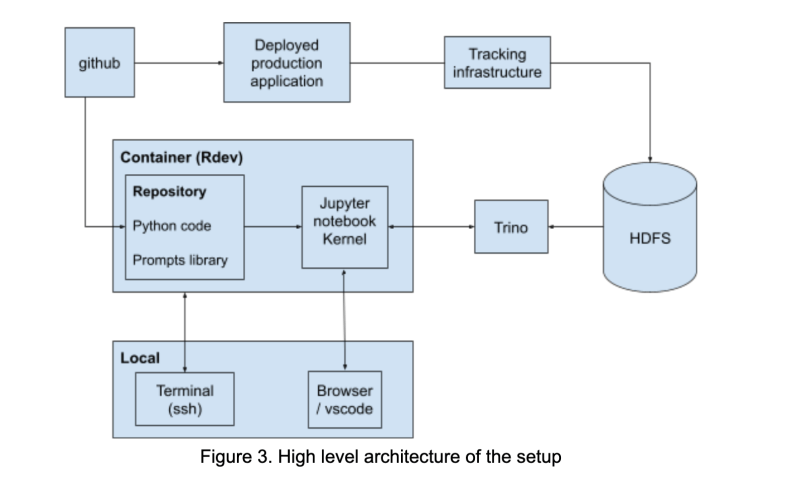
Join our daily and weekly newsletters for the latest updates and exclusive content on industry-leading AI coverage. Learn More For enterprises, figuring out the right prompt to get the best result from a generative AI model is not always an easy task. In some organizations, that has fallen to the newfound position of prompt engineer, but that’s not quite what has happened at LinkedIn. The professional networking platform is owned by Microsoft and currently has more than 1 billion user accounts. Although LinkedIn is a large organization, it faced the same basic challenge that organizations of nearly any size faces with gen AI —  bridging the gap between technical and non-technical business users. For LinkedIn, the gen AI use case is both end-user and internal user facing.  While some organizations might choose to just share prompts with spreadsheets or even just in Slack and messaging channels, LinkedIn took a somewhat novel approach. The company built what it calls a “collaborative prompt engineering playground” that enables technical and non-technical users to work together. The system uses a really interesting combination of technologies including large language models (LLMs), LangChain and Jupyter Notebooks. LinkedIn has already used the approach to help improve its sales navigator product with AI features, specifically focusing on AccountIQ — a tool that reduces company research time from 2 hours to 5 minutes. Much like every other organization on the planet, LinkedIn’s initial gen AI journey started out by just trying to figure out what works. “When we started working on projects using gen AI, product managers always had too many ideas, like ‘Hey, why can’t we try this? Why can’t we try that,’” Ajay Prakash, LinkedIn staff software engineer, told VentureBeat. “The whole idea was to make it possible for them to do the prompt engineering and try out different things, and not have the engineers be the bottleneck for everything.” The organizational challenge of deploying gen AI in a technical enterprise To be sure, LinkedIn is no stranger to the world of machine learning (ML) and AI. Before ChatGPT ever came onto the scene, LinkedIn had already built a toolkit to measure AI model fairness. At VB Transform in 2022, the company outlined its AI strategy (at that time). Gen AI, however is a bit different. It doesn’t specifically require engineers to use and is more broadly accessible. That’s the revolution that ChatGPT sparked. Building gen AI-powered applications is not entirely the same as building a traditional application. Prakash explained that before gen AI, engineers would typically get a set of product requirements from product management staff. They would then go out and build the product.  With gen AI, by contrast, product managers are trying out different things to see what’s possible and what works. As opposed to traditional ML that wasn’t accessible to non-technical staff, gen AI is easier for all types of users. Traditional prompt engineering often creates bottlenecks, with engineers serving as gatekeepers for any changes or experiments. LinkedIn’s approach transforms this dynamic by providing a user-friendly interface through customized Jupyter Notebooks, which have traditionally been used for data science and ML tasks. What’s inside the LinkedIn prompt engineering playground It should come as no surprise that the default LLM vendor used by LinkedIn is OpenAI. After all, LinkedIn is part of Microsoft, which hosts the Azure OpenAI platform. Lukasz Karolewski, LinkedIn’s senior engineering manager, explained that it was just more convenient to use OpenAI, as his team had easier access within the LinkedIn/Microsoft environment. He noted that using other models would require additional security and legal review processes, which would take longer to make them available. The team initially prioritized getting the product and idea validated rather than optimizing for the best model.   The LLM is only one part of the system, which also includes: Jupyter Notebooks for the interface layer; LangChain for prompt orchestration; Trino for data lake queries during testing; Container-based deployment for easy access; Custom UI elements for non-technical users. How LinkedIn’s collaborative prompt engineering playground works Jupyter Notebooks have been widely-used in the ML community for nearly a decade as a way to help define models and data using an interactive Python language interface. Karolewski explained that LinkedIn pre-programmed Jupyter Notebooks to make them more accessible for non-technical users. The notebooks include UI elements like text boxes and buttons that make it easier for any type of user to get started. The notebooks are packaged in a way that allows users to easily launch the environment with minimal instructions, and without having to set up a complex development environment. The main purpose is to let both technical and non-technical users experiment with different prompts and ideas for using gen AI. To make this work, the team also integrated access to data from LinkedIn’s internal data lake. This allows users to pull in  data in a secure way to use in prompts and experiments. LangChain serves as the library for orchestrating gen AI applications. The framework helps the team to easily chain together different prompts and steps, such as fetching data from external sources, filtering and synthesizing the final output.  While LinkedIn is not currently focused on building fully autonomous, agent-based applications, Karolewski said he sees LangChain as a foundation for potentially moving in that direction in the future. LinkedIn’s approach also includes multi-layered evaluation mechanisms: Embedding-based relevance-checking for output validation; Automated harm detection through pre-built evaluators; LLM-based evaluation using larger models to assess smaller ones; Integrated human expert review processes. From hours to minutes: Real-world impact for the prompt engineering playground The effectiveness of this approach is demonstrated through LinkedIn’s AccountIQ feature, which reduced company research time from two hours to five minutes. This improvement wasn’t just about faster processing — it represented a fundamental shift in how AI features could be developed and refined with direct input from domain experts. “We’re not domain experts in sales,” said Karolewski. “This platform allows sales experts to directly validate and refine AI features, creating a tight feedback loop that wasn’t possible before.”

Taking AI to the playground: LinkedIn combines LLMs, LangChain and Jupyter Notebooks to improve prompt engineering Read More »

PIN AI launches mobile app letting you make your own personalized, private DeepSeek or Llama-powered AI model on your phone

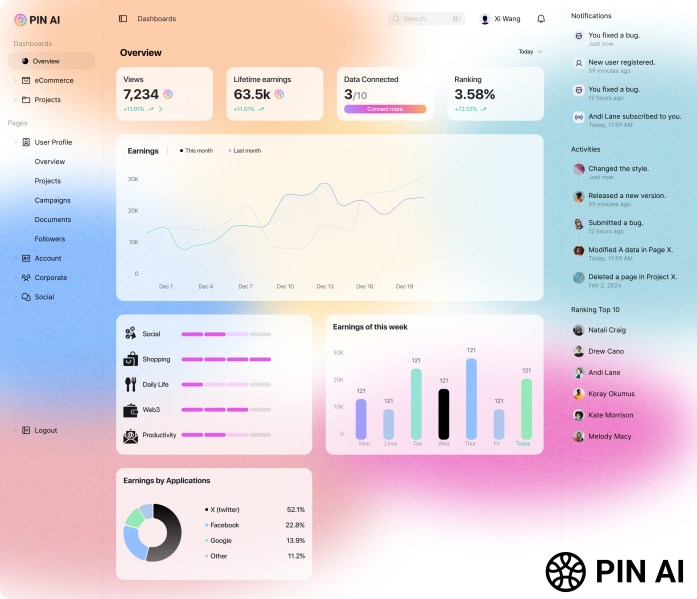
Join our daily and weekly newsletters for the latest updates and exclusive content on industry-leading AI coverage. Learn More Thanks to Her and numerous other works of science fiction, it’s pretty easy to imagine a world in which everyone has their own personalized AI assistant — a helper who knows who we are, our occupations, our hobbies, our goals and passions, our likes and dislikes…what makes us “tick,” essentially. Some AI tools today offer a fairly bare bones, limited version of this functionality, such as CharacterAI and ChatGPT’s memory feature. But these still rely on your information flowing up to corporate servers outside of your control for analysis and processing. They also don’t allow for many third-party transactions, meaning your AI assistant can’t make purchases on your behalf. For those especially concerned about privacy, or who want an AI model that actually retrains itself to adapt to individual preferences — making a unique AI assistant unlike any in the entire world — you’re basically on your own. Until now: A new startup PIN AI (not to be confused with the poorly reviewed hardware device the AI Pin by Humane) has emerged from stealth to launch its first mobile app, which lets a user select an underlying open-source AI model that runs directly on their smartphone (iOS/Apple iPhone and Google Android supported) and remains private and totally customized to their preferences. Video of PIN AI mobile app in action. Credit: PIN AI Built with a decentralized infrastructure that prioritizes privacy, PIN AI aims to challenge big tech’s dominance over user data by ensuring that personal AI serves individuals — not corporate interests. Founded by AI and blockchain experts from Columbia, MIT and Stanford, PIN AI is led by Davide Crapis, Ben Wu and Bill Sun, who bring deep experience in AI research, large-scale data infrastructure and blockchain security. The company is backed by major investors, including a16z Crypto (CSX), Hack VC, Sequoia Capital U.S. Scout and prominent blockchain pioneers like Near founder Illia Polosukhin, SOL Foundation president Lily Liu, SUI founder Evan Cheng and Polygon co-founder Sandeep Nailwal. Personal AI realized PIN AI introduces an alternative to centralized AI models that collect and monetize user data. Unlike cloud-based AI controlled by large tech firms, PIN AI’s personal AI runs locally on user devices, allowing for secure, customized AI experiences without third-party surveillance. At the heart of PIN AI is a user-controlled data bank, which enables individuals to store and manage their personal information while allowing developers access to anonymized, multi-category insights — ranging from shopping habits to investment strategies. This approach ensures that AI-powered services can benefit from high-quality contextual data without compromising user privacy. “The problem today is that all the big players claim they do personal AI — Apple, Google, Meta — but what are they really doing?” Davide Crapis, co-founder of PIN AI, said in an in-person interview with VentureBeat earlier this month. “They’re taking the gold mine in your phone and exploiting all that information to figure out what to push to you.” Desktop view of PIN AI user dashboard. PIN AI launched a web-only version late last year that has already gained tremendous traction, with more than 2 million alpha users via Telegram and a Discord community of 220,000 members. The new mobile app launched in the U.S. and multiple regions also includes key features such as: The “God model” (guardian of data): Helps users track how well their AI understands them, ensuring it aligns with their preferences. Ask PIN AI: A personalized AI assistant capable of handling tasks like financial planning, travel coordination and product recommendations. Open-source integrations: Users can connect apps like Gmail, social media platforms and financial services to their personal AI, training it to better serve them without exposing data to third parties. “With our app, you have a personal AI that is your model,” Crapis added. “You own the weights, and it’s completely private, with privacy-preserving fine-tuning.” He told VentureBeat that the app currently supports several open-source AI models as the base model from which users can begin personalizing their assistant, including small versions of DeepSeek and Meta’s Llama. Promotional screenshot of PIN AI mobile app. Credit: PIN AI Blockchain-based ledger for credentials and data access PIN AI’s infrastructure is built on blockchain protocols, ensuring security, transparency and user control. Data is stored locally: Unlike cloud-based AI systems, PIN AI keeps all user data on personal devices rather than centralized servers. Trusted execution environment (TEE) for authentication: Credentials and sensitive computations occur within a secure enclave, preventing external access — even from PIN AI itself. Blockchain registry for financial transparency: Key actions are authenticated on-chain while user data remains private and locally stored. Interoperability with emerging AI protocols: PIN AI is designed to integrate with future decentralized AI and blockchain projects, ensuring long-term adaptability. By decentralizing AI infrastructure, PIN AI aims to balance privacy, security and efficiency, allowing users to retain ownership of their digital footprint while still benefiting from AI-driven insights and automation. “We designed our protocol around privacy using modern cryptographic methods like TTE,” said Crapis. No one — not even us — can see your authentication keys,” User-based AI focus The launch of PIN AI comes at a time when concerns over data privacy and AI monopolization are at an all-time high. Co-founder Wu emphasized the importance of data sovereignty, stating, “We’re uniting open-source AI builders and developers to build a foundation for open personal AI, where the user owns the AI 100%.” Sun explained the broader vision: “Think of it like J.A.R.V.I.S. from Iron Man — the most loyal executive system that evolves into your personal AI assistant.” Crapis further elaborated on PIN AI’s approach, stating, “We’re creating a data bank that lets you reclaim your personal data from big tech — your Google data, Facebook data, even Robinhood and financial data — so your personal AI can run on it.” Beyond personal use, PIN AI envisions a network of personal AI agents that can interact

PIN AI launches mobile app letting you make your own personalized, private DeepSeek or Llama-powered AI model on your phone Read More »

Participate In Forrester’s 2025 State Of B2B Events Survey And Unlock Valuable Insights For Your Organization

Forrester’s annual State Of B2B Events Survey is back! We invite all B2B event leaders and practitioners to participate and gain access to the latest B2B event market trends to help shape their event strategy over the next 12 months. Last Year’s Survey The 2024 iteration of the survey delivered a number of insights into the evolving event mix, priority focus areas, and approaches to event technology: Two-thirds of marketers faced flat or declining event budgets. While the event mix is now multiformat, small and hosted events were by far the fastest-growing event format type in 2024, followed by webinars. Better event measurement, maximizing the value of event data, and improving post-event attendee follow-up were the top three priorities. There were stark regional differences when it came to sustainability, with 79% of EMEA teams saying that this was a priority compared to just a third of North American teams. Only one in five organizations had integrated their primary event technology platform with their wider infrastructure, leading to data silos. 2025 Survey Overview While events continue to dominate marketing program spend in 2025, teams face an uncertain and challenging environment. Budgets remain under pressure, younger attendees want different experiences, and technology remains siloed. To thrive, teams must align event plans to business objectives and attendee needs and do a better job measuring event impact. The 2025 State Of B2B Events Survey will delve into key topics to help leaders understand the environment, including budgets, event mix planning, priority focus areas, and attitudes about AI. Confidentiality And Benefits Rest assured that all survey responses will be kept strictly confidential. The survey itself will take less than 15 minutes to complete, and all respondents will receive a complimentary copy of the Forrester reports, The Global State Of B2B Events, 2024: Marketers Continue To Ride A Wave Of Transformation and Reimagine B2B Events With AI. We will also share a summary of the findings when available in Q2. Join The Survey Your input is invaluable to us! If you’re involved in running B2B events, take the 2025 State Of B2B Events Survey before February 21. For any questions, please don’t hesitate to reach out to Conrad Mills ([email protected]) or Hannah Jachim ([email protected]). source

Participate In Forrester’s 2025 State Of B2B Events Survey And Unlock Valuable Insights For Your Organization Read More »