Empowering Women in AI: Leading innovation in the UAE

One of the key driving forces behind the increasing participation of women in AI in the UAE is the country’s robust initiatives in education, partnerships, and research. The UAE is home to numerous programs that nurture young women’s talent in STEM fields, ensuring that they have the resources and support to pursue careers in technology and AI. For instance, the UAE’s National AI Strategy 2031 includes a strong focus on diversity and inclusion, emphasizing the need for women to take an active role in shaping the future of AI. Women across the nation are being given access to world-class educational resources, AI labs, and tech-based initiatives aimed at empowering the next generation of innovators. This investment in women’s education is enabling many to break barriers and step into previously male-dominated fields like AI research and development. As Eng. Yasmin Al Enazi, Ambassador of Women in AI, UAE, aptly states: “Last year, the United Nations Development Program (UNDP) empowered more women with initiatives of education and partnerships in the UAE and beyond. With these initiatives, we are seeing more and more female AI engineers and AI researchers returning to the lab. Women are truly redefining what AI can do and how it can have an impact.” source

Empowering Women in AI: Leading innovation in the UAE Read More »

Why GreenOps will succeed where FinOps is failing

The next frontier in cloud operations  Combining GreenOps, sustainable architectures and technology transformational leadership represents the next frontier in cloud operations, addressing FinOps’ limitations by integrating sustainability into the equation. Organizations should begin by aligning their operational and sustainability goals, investing in training to build expertise in sustainable design and fostering collaboration across all departments. This proactive approach not only ensures a more efficient and eco-friendly cloud ecosystem but also positions businesses as leaders in the pursuit of technological and environmental excellence.  By combining a culture of collaboration, transparency and long-term value creation with the principles of transformational leadership, GreenOps offers a pathway to more sustainable and efficient cloud practices. As businesses prioritize environmental responsibility, GreenOps is poised to become a critical framework, shaping the future of cloud computing and ensuring a harmonious balance between technological innovation and ecological stewardship.   Kacy Clarke has held executive roles at Microsoft, Deloitte, Cloud Technology Partners/HPE, DTCC and Wellington Management where she has driven technology innovation and transformation initiatives guiding organizations through complex IT and business challenges. Kacy is currently the Chief Technology Officer for Chiefly & Co, a management consulting firm helping clients achieve both sustainability and profitability. She is an IASA Global Chief Architect, and is the co-founder of the SustainableArchitectures.org community, which is bringing together IT architects to establish principles, patterns, frameworks and guidelines for technology leaders responsible for ensuring organizational ESG and Sustainability business goals are met. She is also a sustainability advisor in the Responsible AI initiative at SustainableIT.org.   source

Why GreenOps will succeed where FinOps is failing Read More »

Dems Seek Further Review Of Treasury And DOGE

By Courtney Bublé ( February 5, 2025, 4:29 PM EST) — Democrats are not satisfied with the answers they’ve received from the U.S. Department of Treasury on access granted to Elon Musk’s Department of Government Efficiency to the federal payment system and are looking at other avenues to scrutinize his activity…. Law360 is on it, so you are, too. A Law360 subscription puts you at the center of fast-moving legal issues, trends and developments so you can act with speed and confidence. Over 200 articles are published daily across more than 60 topics, industries, practice areas and jurisdictions. A Law360 subscription includes features such as Daily newsletters Expert analysis Mobile app Advanced search Judge information Real-time alerts 450K+ searchable archived articles And more! Experience Law360 today with a free 7-day trial. source

Dems Seek Further Review Of Treasury And DOGE Read More »

Microsoft Will Remove the Free VPN That Comes With Windows Defender

As of Feb. 28, Microsoft Defender customers will lose access to the VPN that came with the subscription. Billed as “the privacy protection feature,” the VPN included in the subscription isolated Microsoft 365 applications for additional security. It was released in 2023. Why did Microsoft remove the VPN feature? “Our goal is to ensure you, and your family remain safer online,” an anonymous Microsoft employee wrote in the end-of-support notification. “We routinely evaluate the usage and effectiveness of our features. As such, we are removing the privacy protection feature and will invest in new areas that will better align to customer needs.” Reading between the lines, the statement may mean the VPN did not see wide customer adoption. Microsoft’s VPN did not let customers choose a location for their internet connection, meaning it could not be used for one of the most common consumer use cases: streaming country-gated media. No other features of Microsoft Defender will change. SEE: How can you tell if your VPN is working properly?  Do Microsoft 356 users need to take any action? Microsoft 365 users do not have to take any action, although Android users might want to. Microsoft will remove the VPN feature from Windows, iOS, and macOS users automatically. Android users can remove the VPN profile from their device if they prefer. Keeping the VPN profile will neither negatively impact the device nor keep the VPN active. To remove the VPN profile, go to Settings > VPN > Microsoft Defender and tap the name to remove it. The new price includes Copilot in Microsoft 365 Windows Central, which spotted the end-of-support notification for the VPN, pointed out Microsoft increased prices for Microsoft 365 Personal and Family subscriptions just a few days ago. The increased price comes with the addition of the generative AI assistant, Copilot. The $1.99 monthly Basic plan, which does not come with Copilot, was not affected by the price hike. Microsoft Defender requires a Microsoft Personal or Family subscription. It provides: Data and device protection. Credit monitoring in the U.S. only. Identity theft monitoring in the U.S. only. Threat alerts. Similarly to Microsoft’s price increase, Google increased the cost of Workspace by a few dollars to make the Gemini chatbot available by default. source

Microsoft Will Remove the Free VPN That Comes With Windows Defender Read More »

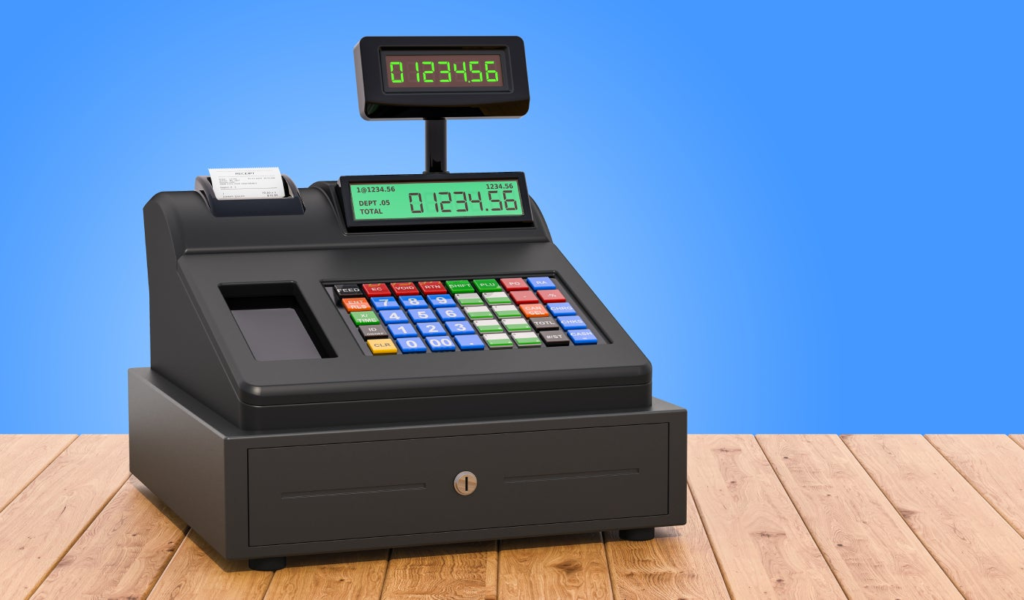
POS System vs Cash Register: Key Differences Explained

Choosing between a POS system and a cash register is a big decision for business owners. While both help you process sales, they cater to very different needs. A cash register may work well for a small shop with simple operations but a POS system offers tools to help you grow, streamline processes, and meet modern customer expectations. In this article, I’ll explain the key differences between a POS system and a cash register, explore their benefits and drawbacks, and help you decide which one best suits your business. POS System Cash Register Best for Businesses needing advanced features like inventory tracking, analytics, and scalability. Small businesses or startups with minimal transaction needs. Benefits Seamless inventory and sales management. Accepts multiple payment methods, including digital wallets. Integrates with ecommerce platforms and other tools. Provides detailed reporting and customer insights. Simple to set up and use. Low upfront cost. Minimum maintenance and no software subscriptions. Drawbacks Higher recurring costs. Requires setup and possible training. Limited features. Cannot support online sales or modern payment methods. What is a cash register? A cash register is a basic device or equipment designed to record sales transactions and securely store cash. It has been a staple for small businesses for decades, offering simplicity and reliability for processing cash payments. Most cash registers include a cash drawer, a receipt printer, and a basic keypad for entering transaction amounts. What is a POS system? A POS (point of sale) system is more than a cash register–it’s a versatile tool for managing and growing your business. While its primary function is to handle transactions, a modern POS system combines hardware and software to do so much more. It integrates features such as inventory management, sales reporting, customer relationship management (CRM), and even employee management. POS systems are designed to streamline operations and provide insights that help businesses make data-driven decisions. They often support multiple payment methods, including credit cards, digital wallets, and contactless payments, making them ideal for businesses wanting to cater to modern customer preferences. Some POS systems are compatible with traditional cash registers and businesses can use both tools together. In this setup, the POS system handles advanced functions like payment processing, inventory tracking, and reporting, while the cash register manages cash transactions and acts as a secure cash drawer. This integration is especially useful for businesses transitioning from a cash register to a more modern solution. SEE: What is a POS system? POS system vs cash register detailed comparison POS System Cash Register Initial costs Basic setups start at $59 Basic models start at $200+ Recurring costs Monthly software subscription fees ranging from $20–$300+, depending on features. Minimal or none (except for receipt paper and occasional maintenance). Payment types accepted Supports multiple payment methods: cash, credit cards, digital wallets, contactless payments, etc. Primarily cash, with some modern models supporting credit card processing. Ease of use User-friendly but may require training for advanced features. Simple and straightforward; minimal training required. Functionality Inventory management, sales reports, CRM, and employee management, etc. Limited to basic sales recording and cash storage. Integration options Accounting software, ecommerce platforms, and other business tools. Typically no integrations with other tools. Hardware requirements Touchscreen terminals, card readers, barcode scanners, printers, cash drawers, scales and more. Includes a keypad, receipt printer, and cash drawer. Scalability Highly scalable; can expand with additional users, locations, and advanced features. Limited scalability; not suitable for growing businesses with complex needs. Security features Includes advanced security, such as encrypted payment processing and fraud prevention tools. Basic cash security such as a lockable drawer. Transaction speed Faster transactions with automated processes and quick card payments. Manual entry can slow down checkout, especially during busy hours. Customization Customizable workflows, features, and reports to suit business needs. Programmable buttons for modern cash registers. Customer support 24/7 support may be available via phone, chat, or email. Limited to warranty services. Real-life scenarios Every business has unique needs, and the choice between a cash register and a POS system depends on your specific operations and goals. If cash is the primary or only payment method, a cash register might suffice, but a POS system or a mobile POS system offers greater flexibility and efficiency for businesses with varied payment options. Scenario 1: You have a small online business and you occasionally have pop-up shops Best fit: An omnichannel POS system allows you to manage both online and in-person sales effortlessly, ensuring sales and inventory syncs automatically and providing a consistent experience across both channels. Scenario 2: You run a small neighborhood convenience store where most customers pay in cash. Best fit: A cash register is a cost-effective option for handling straightforward cash transactions, providing a reliable way to manage sales without unnecessary features or higher costs associated with modern systems. Scenario 3: Your mobile food truck serves customers on the go, requiring fast transactions for cash, cards, and digital wallets. Best fit: A mobile POS system ensures quick, secure transactions and allows you to operate flexibly from any location. Scenario 4: You manage a boutique with an expanding inventory, run seasonal promotions, and accept multiple payment types, including credit cards and digital wallets. Best fit: A POS system supports inventory tracking, reporting, and seamless integration with modern payment methods. Scenario 5: You operate a restaurant chain that accepts diverse payment types and needs tools for menu updates, sales tracking, and staff management. Best fit: A POS system with multi-location management features ensures consistency and efficiency across all locations. Scenario 6: Your seasonal holiday shop serves customers who prefer using cards and digital wallets, alongside cash. Best fit: A mobile POS system provides flexibility to process multiple payment types efficiently during peak periods. Whether your business requires a cash register or a POS system, I recommend looking through our list of the best POS systems for small businesses and the best cash registers for small businesses. How to decide between a POS system and a cash register When choosing between a cash register and


POS System vs Cash Register: Key Differences Explained Read More »

How global retailers like Orlebar Brown navigate local challenges to expand internationally

For some Australian retailers, their next frontier of business is global expansion. Recent data highlights this ambition: two in three conversations with Australian brands are about breaking into the US market, according to Guillaume Deront, ShipBob’s General Manager for ANZ. Furthermore, a separate study revealed that the majority of Australian SMBs plan to operate internationally within the next five years. As these businesses prepare to take their operations offshore, they must tackle challenges unique to global expansion, including cross-border logistics, navigating diverse markets, and delivering exceptional customer experiences that resonate locally and globally. The key to success lies in adopting a ‘glocal’ strategy, one that balances global ambitions with local relevance. Orlebar Brown, the iconic luxury holiday wear brand, offers a compelling example of how brands can strike this balance. Through a transformative partnership with Tryzens and Shopify, Orlebar Brown has optimised its international operations while maintaining a consistent, connected customer experience globally. This journey provides critical insights for CIOs and CTOs seeking to align their technology investments with business goals to drive growth and meet local market needs. Technology that powers glocal strategies For retailers embracing a glocal strategy, technology plays a pivotal role in overcoming operational and customer experience challenges. From inventory management to personalised interactions, the solutions offered by Tryzens and Shopify address critical needs for expansion. The first is simplifying cross-border operations. Shopify Markets is a unified home for global business expansion where brands can create customised online shopping experiences for different customer segments, manage compliance obligations, and sell in multiple currencies around the world. Retailers in ANZ can improve operational efficiencies and customer checkout experience by offering localised payment options while maintaining centralised control. Solutions are also designed to break down data silos. Unified systems consolidate data from online and offline channels, empowering businesses to make informed, data-driven decisions. Insights from Shopify’s ecosystem allow retailers to tailor their strategies to specific regions, ensuring alignment with local trends and customer needs. Lastly, Tryzens and Shopify are committed to delivering consistent customer experiences. Disjointed customer journeys are a common pitfall for global businesses. By leveraging connected platforms, retailers can create consistent, frictionless experiences that build trust and drive loyalty. Features like endless aisle, buy online/pick up in-store (BOPIS), and integrated gift cards provide customers with seamless interactions across every touchpoint. Getting started with global ecommerce Expanding internationally is a significant step for ANZ brands, but thoughtful planning is essential for success. Here’s how to get started: Understand your target markets:Research local preferences, cultural nuances, and regulatory requirements. Use data to identify demand for your products and tailor offerings accordingly. Optimise your operations for scalability:Adopt scalable systems like Shopify Markets to handle diverse currencies, payment preferences, and inventory management across regions. Break down data silos:Implement unified platforms to gain real-time insights into customer behaviour, inventory, and sales, helping you optimise strategies. Create connected customer experiences:Deliver consistent and personalised interactions across all touchpoints to foster loyalty and build trust. Partner with experts:Work with partners like Tryzens and Shopify who have a proven track record in global ecommerce strategy and implementation. A success story: Orlebar Brown One brand that exemplifies the power of a connected customer experience is Orlebar Brown, a luxury holidaywear retailer with operations spanning ANZ, Europe, the UK, and the US. For Orlebar Brown, balancing global expansion with local relevance was critical to their growth strategy. By partnering with Tryzens and Shopify, Orlebar Brown implemented a sophisticated commerce ecosystem that addressed key challenges: Managing inventory across borders: Real-time visibility into global inventory allowed Orlebar Brown to optimise stock availability across regions. Providing a personalised journey: A unified view of customer data enabled tailored interactions, both online and in-store. Simplifying transactions: Shopify Markets’ multi-entity functionality streamlined currency handling and checkout processes, reducing costs and enhancing the customer experience. “The transformation was about removing friction for our customers,” said Jamie De Cesare, Chief Technology Officer at Orlebar Brown. “With Tryzens’ guidance and Shopify’s technology, we’ve created a seamless omnichannel experience that puts the customer at the heart of every interaction.” The success of Orlebar Brown’s transformation underscores the value of strategic partnerships in navigating the complexities of international expansion. Shopify’s technology and Tryzens’ expertise in digital commerce created a solution that was both scalable and tailored to Orlebar Brown’s unique needs. Shaun Broughton, APAC Managing Director at Shopify, notes that Shopify’s unified technology empowers businesses to streamline operations and deliver seamless, personalised shopping experiences across all channels. “Together with Tryzens, we’re enabling retailers to focus on what matters most: building meaningful relationships with their customers.” Watch the full interview with Jamie De Ceasare, Chief Technology Officer at Orlebar Brown here. Looking Ahead Global expansion is an exciting opportunity for ANZ brands but requires careful planning and execution. By understanding markets, optimising operations, leveraging data, and delivering connected customer experiences, businesses can confidently take their local operations to the global stage. “For Australian brands, global expansion isn’t just about scaling operations, it’s about evolving strategically. Success lies in combining scalable technology with deep local customer informed insights to deliver seamless, personalised experiences that resonate with a brands customer base across diverse regions. At Tryzens, we empower businesses to navigate these complexities, helping them achieve sustainable growth while enhancing operational efficiency,” concludes James Lutchmaya, ANZ Managing Director at Tryzens. With the right strategy, tools, and partnerships, ANZ brands can unlock new growth opportunities and establish themselves as global leaders in e-commerce. source

How global retailers like Orlebar Brown navigate local challenges to expand internationally Read More »

Key IRS Workers Can't Do 'Resign' Deal Until After Tax Season

By Anna Scott Farrell ( February 5, 2025, 7:54 PM EST) — Internal Revenue Service workers were notified Wednesday that employees working in positions considered necessary to the tax filing season can’t accept President Donald Trump’s resignation offer until mid-May…. Law360 is on it, so you are, too. A Law360 subscription puts you at the center of fast-moving legal issues, trends and developments so you can act with speed and confidence. Over 200 articles are published daily across more than 60 topics, industries, practice areas and jurisdictions. A Law360 subscription includes features such as Daily newsletters Expert analysis Mobile app Advanced search Judge information Real-time alerts 450K+ searchable archived articles And more! Experience Law360 today with a free 7-day trial. source

Key IRS Workers Can't Do 'Resign' Deal Until After Tax Season Read More »

Technology And Security Predictions: Your Questions Answered

Last week, Forrester hosted our Predictions 2025 Webinar: Technology & Security. We had a great time bantering about some of the most impactful security and technology predictions that our analyst teams called out, including around the ROI for AI initiatives, private cloud and VMware, plans for agentic AI, and enforcing the EU AI Act in 2025. Thanks to the webinar attendees who asked some insightful questions throughout the session! Unfortunately, we ran out of time and couldn’t answer all of your questions, but here are responses to some of the questions we couldn’t get to (questions have been edited for clarity): Which application types will be best suited for on-prem clouds? Private cloud can’t remotely match the firepower, scale, and pace of innovation of the hyperscale public cloud platforms, but this doesn’t mean that private cloud is irrelevant. In fact, private cloud may be the most cost-effective choice for much of enterprise IT, particularly in shops that embrace the enabling style of high-performance IT that focuses on stabilizing and protecting operations that are cost-effective and don’t require vast cloud resources. Then there are workloads where security and sovereignty are paramount and where the autonomy of enterprise IT is critical. Even IT organizations embracing the transforming style of high-performance IT may find that private-cloud-based AI meets their needs, especially if DeepSeek’s claims of AI innovation on garden-variety GPUs become generalized. Do you suggest a formula or criteria to help stakeholders select high-value business use cases for AI? There is no formula, per se. A good way of thinking about it is in the form of a portfolio of use cases and capabilities that are road-mapped with interconnected milestones — some of which deliver quick value and others more so over the longer term (because for some use cases, even high-value ones, it may be better to wait or go slow). Use case selection is complicated for AI and not just driven by monetary value but involves readiness based on four teams: business, data, technology, and governance. Have you observed any recurrent behavior in how and who is writing the AI agenda? Any emerging pattern (e.g., centralization, federation) as the practice evolves in each organization? In Forrester’s State Of Data, Analytics, Measurement, And Insights Survey, 2024, we asked data and analytics decision-makers, “Where does the most senior data and analytics leader report to in your organization?” Thirty-nine percent of respondents say IT and 37% say to the CEO — so the agenda is set by IT leaders or the CEO, as discussed in the webinar. We are seeing a lot of partnership between business and IT and federation. Thinking more about security than AI, I see AI as creating an even higher priority to cover the basics to reduce exposure and risk. Do you agree? We covered this briefly at the end of the webinar, but it deserves a longer response. As we build AI into our systems and applications, a lot of the risks and challenges should look familiar: unprotected API calls into third-party models, unvetted models, and shadow AI. Over the years, we’ve learned lessons about third-party risk management, using open-source and third-party software components safely, and managing and protecting APIs — we need to apply those lessons to AI so that history doesn’t repeat itself yet again. How well are third-party risk management systems factoring risks around AI governance? Many of the platforms that support third-party risk management (TPRM) also enable governance, risk, and compliance (GRC) use cases. These platforms support AI governance by helping organizations get a handle on the range of AI use cases that their companies deploy and the variety of models that support them — inventory assets, systems, and third-party entities, as well as support AI policy creation, distribution, and tracking. Generative AI features of GRC and TPRM platforms have quickly become standard to how risk pros manage the risks of AI in their organizations. Additionally, AI governance platforms are emerging as a new market forecasted to grow at a 30% compound annual growth rate to the end of this decade. There’s more to come on this, with Forrester planning new, groundbreaking evaluative research on AI governance platforms in 2025. Thanks again to all the attendees who asked such insightful questions! If you missed the webinar, you can still check out the replay here. Forrester clients, be sure to check out all of our 2025 Predictions reports and set up an inquiry or guidance session if you want to dive in further. source

Technology And Security Predictions: Your Questions Answered Read More »

Del. Judge Tells Fuel Cell Co. Investors To Filter Imprecise Suit

By Sydney Price ( February 4, 2025, 10:52 PM EST) — A Delaware federal judge on Tuesday ruled that investors of hydrogen fuel cell company Plug Power Inc. must submit more particular details to support their allegation that shareholders were damaged by the company’s failure to disclose production challenges, saying it is not the court’s responsibility to filter out evidence…. Law360 is on it, so you are, too. A Law360 subscription puts you at the center of fast-moving legal issues, trends and developments so you can act with speed and confidence. Over 200 articles are published daily across more than 60 topics, industries, practice areas and jurisdictions. A Law360 subscription includes features such as Daily newsletters Expert analysis Mobile app Advanced search Judge information Real-time alerts 450K+ searchable archived articles And more! Experience Law360 today with a free 7-day trial. source

Del. Judge Tells Fuel Cell Co. Investors To Filter Imprecise Suit Read More »

Supercharge The IT Circular Economy With The CARFAX Approach

The Challenge With The Circular Economy In 2025, Forrester predicted that more than a third of Global Fortune 100 firms will commit to circular economy goals. We recommended that, this year, enterprise leaders perform infrastructure lifecycle assessments to understand the environmental impact of their choices. Further for manufacturing, Forrester’s report, Embrace The Circular Economy To Make Manufacturing More Sustainable, describes five Rs that matter for manufacturers: reduce, reuse, repair, refurbish, and recycle. For IT, however, circular economy practices face challenges. Some of these key obstacles include: Enterprise. Shifting habits toward more sustainable practices can be difficult. IP and proprietary ecosystems. Existing regulations around IP may not always support circular practices and can sometimes incentivize waste. Economic incentives. The initial investment for transitioning to circular models can be high, and the economic benefits may take time to materialize. Infrastructure availability gaps. Adequate technology infrastructure for recycling and reusing materials isn’t always available. The challenges are magnified by rapid technological shifts, power demands, limited resources, and the increasing importance to nations, their businesses, and their citizens globally. Firms need to identify whether they need to dispose (as with the linear economy) or recycle the asset and its components. Tech leaders must know the asset value within and outside the organization. This data is the key to making an informed decision and whether keeping or recycling an IT asset (and its components) is more valuable or sensible. But this critical information is currently lacking and can drastically change the decisions made today. The CARFAX Approach At Forrester, we propose gathering information about IT assets and their service records, much like CARFAX does for used vehicles. This doesn’t address all the challenges of circular economy, but we believe that it’ll assist in mitigating the impact of many of them. One of the recent developments in this area has been the French repairability index. The CARFAX approach will address some of the challenges so far debated in this approach, such as: Not relying on manufacturer self-assessments. Wider scope — IT in the data center as well as IT in the workplace (end user devices). Focus on both availability and affordability. How To Get This Information The information needed to enable this approach is already available for many IT organizations, via a configuration management database or bill of materials that contains the information of IT assets and service tickets for those IT assets. Understanding whether an IT asset is up to date with the latest firmware and patches, has had parts replaced, has had issues, or has been kept in an environment that’s out of specification helps an organization understand the value of what they have: Is the IT asset worth keeping? Is it better to recycle or dispose of it? Can you sell/auction it to recoup some capital? Who Can Build This Dataset? An independent third party can help your organization by letting you know the market demand for those IT assets, the available supply, and its value. This information enables tech leaders to make the right decisions with their IT assets. Without the critical context of this data, organizations may not make optimal decisions on whether to retain, reuse, or dispose of IT assets. After all, these decisions cost money, time, effort, and may face risks by using failure-prone IT infrastructure. This Is Just The Start Parts of this approach involve having an independent entity on board. What that entity would look like — wholly private, nonprofit, or a public entity — is open to debate. There are parts of the CARFAX approach that still need to be addressed: The need to handle sanctions and export controls between countries Transparency and trust with the entity Requiring the entire ecosystem (organizations, server vendors, support providers, etc.) to be involved in data sharing to enable this approach Dependence on the reported data (must be accurate, comprehensive, and up to date) source

Supercharge The IT Circular Economy With The CARFAX Approach Read More »