For years, marketers have been told to “tap into culture”, to show up where communities gather and to create experiences instead of advertisements. The result? Music festivals become branded playgrounds, clubs double as activation spaces and every cultural moment risks becoming another marketing opportunity.
However, for Singapore nightlife institution Zouk, there’s a line between participating in culture and commercialising it. That distinction comes into sharper focus as the 35-year-old brand enters one of the biggest transformations in its history.
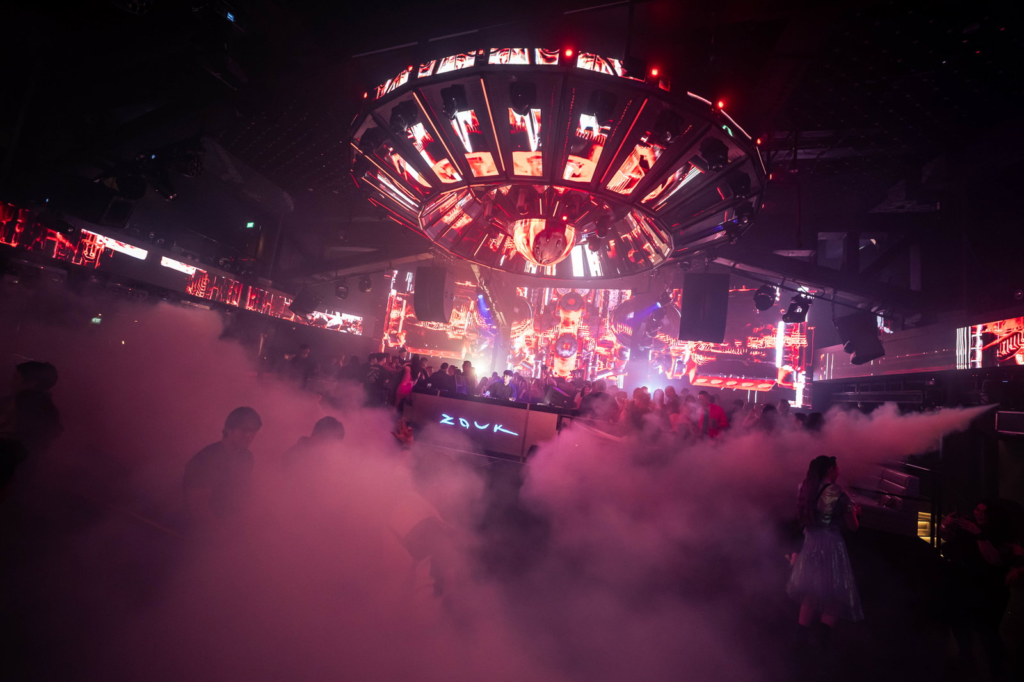
Fresh off a multi-million-dollar renovation, Zouk has reopened its flagship Clarke Quay venue with reimagined Mainroom and Phuture spaces, next-generation production capabilities and a modular layout that can accommodate up to 3,500 guests across concerts, conferences, product launches and immersive brand activations.
Alongside the reopening, the group has also launched Rally Clubhouse, a new day-to-night social concept built around food, music, creativity and community.
Don’t miss: ‘Human beings first’: Why Pink Dot 18 is evolving its approach to activism
Together, the developments signal more than a physical refresh. They mark Zouk’s evolution from a nightlife institution into a broader cultural and lifestyle platform, designed to meet audiences wherever they choose to gather, whether that’s over coffee, at a creative workshop, during a live performance or on the dancefloor.
Yet according to Christine Tan, head of brand marketing at Zouk Group, becoming more versatile doesn’t mean becoming more commercial. “We don’t see culture as inventory. We see it as something that needs to be continuously earned and nurtured,” she said.
In an interview with MARKETING-INTERACTIVE, Tan said that philosophy underpins every decision Zouk makes, from the partnerships it pursues to the way it has reimagined its spaces.
While the upgraded venue dramatically expands what Zouk can host, commercial potential alone isn’t enough. Every partnership is ultimately judged on one question: does it add to the experience people came for?
Access doesn’t equal relevance

As brands continue shifting media budgets towards experiences, Tan believes many still mistake access for authenticity. Simply showing up in a cultural space, she argues, doesn’t automatically make a brand part of the culture that exists within it.
Brands shouldn’t assume that access automatically creates relevance. People don’t come to Zouk to see advertising. They come for music, connection and experiences.
Rather than viewing audiences as a captive crowd, Zouk encourages brands to think about how they can contribute to the night itself. For Tan, the strongest partnerships aren’t necessarily the most visible. They’re the ones guests barely perceive as marketing at all because they naturally complement the experience.
Whether through music, hospitality, entertainment or thoughtfully designed guest moments, the objective isn’t brand recall. It’s emotional recall.
That philosophy has become even more important as Zouk expands beyond traditional nightlife. Its revamped venue now accommodates everything from concerts and conferences to MICE events and immersive brand activations. But for Tan, more opportunities should never come at the expense of the guest experience.
“The guest experience will always come first. Every partnership, activation or event needs to contribute positively to the overall experience. If something feels disruptive, forced or disconnected from why people are there in the first place, it doesn’t matter how commercially attractive it may be — it probably isn’t right for us,” she explained.
That balancing act extends beyond individual partnerships. As Zouk grows into a broader lifestyle and entertainment brand, it must constantly navigate competing priorities: corporate and community, relevance and aspiration, heritage and innovation.
Those tensions are also why she rejects the idea that cultural credibility can be commercialised.
“I’ve never viewed credibility as something that can be commercialised. Credibility comes from trust. It’s built over years through consistency, programming, experiences and the communities that choose to spend time with you,” she said.
Instead, every new partnership is measured against a simple question: would audiences recognise it as part of the Zouk experience? If the answer is no, it’s usually a sign to rethink the collaboration.
Responding to a new generation of gathering

While the reopening introduces larger spaces, upgraded technology and greater flexibility, Tan is quick to point out that none of those changes were the starting point. Instead, the renovation began with a much broader observation: people simply gather differently today.
Consumers no longer separate work, dining, entertainment and socialising into neat categories. They move between coffee meetings, creative workshops, networking sessions, live performances, dinners and late-night drinks, often within the same day. Rather than asking audiences to adapt to a traditional nightclub model, Zouk decided it needed to adapt to them.
That thinking underpins not only the redesign of the flagship venue, but also the launch of Rally Clubhouse.

Positioned as a modern clubhouse rather than a conventional F&B concept, Rally combines café culture, music, community programming and creative events under one roof. From open decks and listening parties to workshops, networking sessions and panel discussions, it gives audiences reasons to engage with Zouk beyond traditional club nights.
Together, Rally Clubhouse and the modular redesign of Mainroom, Phuture and Capital reflect a broader repositioning of Zouk from nightlife operator to experience platform.
As Tan puts it:
You don’t stay relevant for 35 years by standing still. The challenge is knowing what to preserve, what to evolve, and what to introduce next.
Credibility has to be earned
Zouk’s expansion inevitably raises another question: can a cultural brand grow commercially without losing the community that made it culturally significant in the first place?
For Tan, however, growth isn’t the destination. Maintaining the trust that has defined Zouk for the past 35 years is.
“The larger you become, the easier it is to lose touch with the communities and audiences that helped build the brand in the first place. That’s why growth alone isn’t the goal,” she explained.
“The challenge is continuing to evolve while remaining relevant, trusted and meaningful to the people who support you. If you can do that, credibility doesn’t disappear — it grows alongside the brand.”
It’s a philosophy reflected throughout Zouk’s transformation. The renovation, Rally Clubhouse and expanded programming aren’t simply about creating more commercial opportunities. They’re about creating more ways for people to engage with the brand without losing sight of the experience that made it meaningful in the first place.
For marketers, the takeaway is simple. Cultural relevance doesn’t come from sponsorships, venue bookings or bigger activations.
Like credibility, it has to be earned.
Related articles:
How Coach is winning over Gen Z one experience at a time
Tea raves and new rules: How Fuze Tea is reaching Gen Z
How Durex is making premium intimacy more relatable