CFA Institute

Do-It-Yourself High-Dividend Strategies

Introduction What do business development companies (BDCs) and covered call and preferred income strategies have in common? Most obviously, they all offer dividend yields well above those of the S&P 500 and are especially popular among yield-hungry retail investors. Less obviously, all these strategies have underperformed the S&P 500 on a total return basis over the long term. Put another way, dividend investors are trading capital for income. Do investors need to accept lower returns in exchange for high dividend yields? No, they do not. In fact, do-it-yourself (DIY) high-dividend strategies can generate enviable income without sacrificing capital. High-Dividend Stock Performance The Global X SuperDividend US exchange-traded fund (ETF, DIV) is our proxy for a high-dividend US stock portfolio. The ETF has a 10-year track record, manages more than $600 million in assets, and charges 0.45% in fees per year. It is composed of 50 equal-weighted high-dividend-yielding US stocks that paid dividends consistently over the last two years and are less volatile than the US stock market. Given its portfolio composition and positive exposure to the value, low volatility, and size factors as well as negative exposure to quality, the Russell 1000 Value Index serves as the benchmark. The dividend yield of DIV is 6.3% compared with 2.0% for our Russell 1000 Value Index proxy, the iShares Russell 1000 Value ETF (IWD). Dividend Yields: US High-Dividend ETF vs. Russell 1000 Value Source: Finominal But this comparison reveals a 2.5% CAGR for DIV versus 9.0% for the Russell 1000 Value Index between 2013 and 2023. While not an appropriate benchmark, the US stock market as represented by the S&P 500 has done even better with 12.4%. That DIV basically achieved zero performance over 10 years even as its benchmark doubled and the S&P 500 nearly tripled in value is quite an accomplishment. US High-Dividend Stock Performance Source: Finominal Return on Dividend vs. Return on Capital When we break DIV’s performance into price and dividend returns, we see that capital investment depreciated from $1,000 in 2013 to $660 in 2023. While DIV did yield positive total returns over the last decade, these all came from dividends. This demonstrates a poor stock-selection process that allocated capital to troubled companies that nevertheless paid high dividends. Such firms might be overleveraged, have lackluster products, or belong to declining industries. In value-investing lingo, they are value traps — cheap for good reason. Price vs. Dividend Return: Global X SuperDividend U.S. ETF (DIV) Source: Finominal Synthetic Dividends via Capital Returns What is a dividend? It is simply a capital distribution from a company to its shareholders. Nothing more, nothing less. Theoretically, all listed companies could distribute any excess cash not needed for operations or investments back to their shareholders. But many firms — Amazon among them — choose not to. Other companies have negative operating cash flows but pay dividends anyway because shareholders expect them. Rather than pay dividends directly, many US companies have started buying back their shares. As a rule, investors should purchase companies with growing cash flows instead of focusing on dividends. After all, the dividends a company pays indicate little about the underlying health of the business. But if we hold a stock, mutual fund, or ETF, we can create our own synthetic dividends by selling part of our investment. Amazon may not pay dividends, but as investors, we can set a desired dividend yield, say 4% per year, and sell the requisite percentage of our Amazon investment on a quarterly basis to realize that 4%. We can increase the dividend yield of the Russell 1000 Value or any index to our desired level through such synthetic dividends. Increasing Dividend Yields via Capital Returns Source: Finominal Tax Considerations Of course, the switch from ordinary to synthetic dividends does require some adjustments, mental and otherwise. Since synthetic dividends represent return of rather than return on capital, they are taxed as capital gains instead of dividends and only if the investment was profitable. While some investors can minimize taxes, through Roth IRAs, for example, for many others taxes can still significantly reduce the underlying value of the investment. DIV’s total post-tax return is 13.3% from 2013 to 2023 assuming a 20% dividend tax rate. That compares with a 29.7% pre-tax return. Investors could have synthetically generated a similarly high dividend yield for the IWD. The pre-tax return would have only declined from 146.0% to 132.9% if we had factored in a 15% capital gains tax. This is a much higher return than DIV’s. So, what explains the difference? Most of it is due to the health of the companies in the IWD. High Dividend Strategies: Post-Tax Returns Source: Finominal Further Thoughts Proponents of traditional dividends might contend that DIV’s lackluster performance was the result of a poor stock selection process. Other products that prioritized dividend growth over yield might have done better. While such an approach might reduce underperformance, it would also lower the dividend yield. For example, the T. Rowe Price Dividend Growth ETF (TDVG) features more than 100 dividend-growing stocks but only offers a dividend yield of 1.3%, less than the IWD’s 2%. The takeaway is clear. Instead of trying to find companies that pay dividends without destroying investment capital, we may be better off taking the S&P 500 or some other benchmark and creating synthetic dividends at our desired yield. In other words, not all financial engineering is bad. For more insights from Nicolas Rabener and the Finominal team, sign up for their research reports. If you liked this post, don’t forget to subscribe to Enterprising Investor. All posts are the opinion of the author. As such, they should not be construed as investment advice, nor do the opinions expressed necessarily reflect the views of CFA Institute or the author’s employer. Image credit: ©Getty Images / stevecoleimages Professional Learning for CFA Institute Members CFA Institute members are empowered to self-determine and self-report professional learning (PL) credits earned, including content on Enterprising Investor. Members can record credits easily using their online PL tracker. source

Do-It-Yourself High-Dividend Strategies Read More »

Climate Change Calculus: HNWIs and Sustainable Impact Investing

Climate change is inescapable even for high-net-worth individuals (HNWIs). Its effects are forcing both short- and long-term decisions on HNWIs and their family offices. In the short term, the phenomenon is changing the calculus of where HNWIs choose to live, travel, and do business. In the long term, it is making them question what the world will look like for their children, grandchildren, and society as a whole.  Socially responsible and sustainable impact investing give HNWIs tools to protect their short- and long-term interests — and to potentially reap financial rewards along the way. How Climate Change Is Impacting HNWIs  Florida and California are two states long favored by HNWIs. But climate change may be changing that. Under perennial storm and hurricane threat, Florida is facing an exodus of insurance companies. Farmers Insurance, Bankers Insurance, and AIG subsidiary Lexington Insurance, among others, no longer offer home insurance in the state.  California suffers from a similar dilemma. After devastating wildfire seasons in the late 2010s and early 2020s, the state has recently endured atmospheric rivers and megastorms. Hurricane Hilary brought a year’s worth of rain in a single day to some parts of the state and led to damages in the $7-billion to $9-billion range. Stung by repeated losses, insurers are pushing premiums ever higher or exiting the state altogether. HNWIs may be able to take higher premiums in stride, but wholesale loss of coverage is another issue entirely. Will they stay in these states and risk substantial financial losses or relocate altogether? Leaving may solve the immediate problem, but the same existential question remains: What kind of world are they leaving for their heirs?  This is where socially responsible investing can help bridge the gap between doing well and doing good. Sustainable Impact Investing: More Than Do-Gooderism Socially responsible and sustainable impact investing are not just forms of money-losing altruism. HNWIs and family offices — like all investors — expect to earn financial returns on their investments. Sustainable companies may have motivations beyond the bottom line, but they have to have a business model with a sustainable bottom line if they are to appeal to investors over the long term. The growing influence of such investment strategies demonstrates their viability. They have achieved some important milestones, including: 1. Buy-In from Global Actors Worldwide, socially responsible investing is accelerating. Saudi Arabia’s sovereign wealth fund, the Public Investing Fund (PIF), has announced its goal of achieving net zero emissions by 2050. Governments are getting behind impact investing. 2. More Capital and Customers Environmental, social, and governance (ESG) reporting is growing ever more important to investors’ buy-and sell decisions. Nearly half (48%) have expressed an interest in sustainable investing, and 68% say they would be willing to pay more for sustainable products. From a personal perspective, investing in companies that mitigate climate change can not only safeguard the tangible assets that HNWIs enjoy but also help preserve those assets for their heirs. Climate change might not be solved in their lifetime — or in the next several generations’ — but more and more consumers, investors, lenders, and governments believe that concentrating their resources to counteract climate change can yield both financial and practical benefits. There is no backup planet to build on or invest in, and HNWIs are beginning to align their capital allocations with that sentiment.  If you liked this post, don’t forget to subscribe to Enterprising Investor and the CFA Institute Research and Policy Center. All posts are the opinion of the author. As such, they should not be construed as investment advice, nor do the opinions expressed necessarily reflect the views of CFA Institute or the author’s employer. Image credit: ©Getty Images / Kofi Oliver Professional Learning for CFA Institute Members CFA Institute members are empowered to self-determine and self-report professional learning (PL) credits earned, including content on Enterprising Investor. Members can record credits easily using their online PL tracker. source

Climate Change Calculus: HNWIs and Sustainable Impact Investing Read More »

The Augmented LP: 6 Ways AI Can Enhance the Allocator’s Workflow

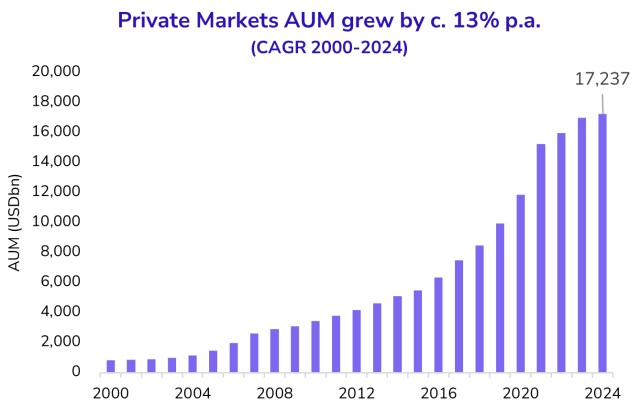
Private markets, once outlier investments with a manageable set of underlying financial instruments, are growing more complex with each passing quarter. These markets now sit at the center of institutional portfolios and have evolved into a sprawling ecosystem of private credit, continuation funds, royalties, and infrastructure with assets exceeding $17 trillion. The breakneck pace of new strategies and new structures has created a deluge of information and data even the best-resourced limited partner (LP) teams struggle to process. Amid this scale and complexity, most LP teams still rely on fragmented workflows: spreadsheets, PDFs, scattered notes, and disjointed data platforms. Decisions often depend as much on memory and intuition as on measurable insight. Artificial intelligence (AI) can markedly improve investment decision outcomes. Sources: Private Markets AUM in USDbn (PE, PD, Infra), 2000-2024, Preqin As the market has grown so has the dispersion between top—and bottom—quartile managers, underscoring the gravity of allocator discipline and process quality. The next evolution in investment analysis isn’t about outsourcing decisions to algorithms but about using AI tools to sharpen human judgment. The AI-Augmented LP uses machines to structure chaos, extract insight, and maintain discipline from allocation to oversight, without giving up control across the investment process to the final investment decision. Sources: Dispersion (Q4 2014 Q4 2024), J.P. Morgan, Deutsche Bank AG. Data as of Feb. 2025 What AI Can and Cannot Do for LPs—and Why It Matters Now Used properly, AI technologies can enhance every stage of the allocator’s process, automating routine work, detecting inconsistencies, classifying strategies, and tracking changes across vintages and managers. Tools such as natural language processing (NLP), machine learning (ML), large language models (LLMs), and autonomous agents can now extract, structure, and compare information from the mountains of documents and data that surround private-market investing. Scalability is where AI adds the most value. With clear prompting and oversight, AI can save hours of work and free up human teams to focus on insight, context, and conviction. The lesson for investment managers is not to reject AI tools but to govern them with allocators as the final interpreters and decision makers. The models do not profoundly think about or understand institutional investing; they predict the probability of a particular outcome which is predicated on data availability and quality. To wit, they can fall short, misread nuances, fabricate information, or overlook subtleties that experienced professionals instinctively catch. AI tools should enhance and support decision-making, not replace it. 6 Ways AI Can Enhance the Allocator’s Workflow Across the investment process, AI is shifting the allocator’s role from data wrangling to decision-shaping. These six areas highlight how LPs can use intelligent tools to cut friction, uncover insight, and apply human judgment with greater precision. 1. Strategic and Tactical Asset Allocation AI can streamline the asset allocation process, making it a continuous and data driven exercise, rather than a once-a-year check-in necessitating multiple spreadsheets. Constraint Extraction and Structuring: Natural language tools can read policy statements, asset and liability models, and regulatory texts, extracting liquidity limits, solvency rules, and capital budgets. These can become structured inputs that dynamically inform portfolio models. Dynamic Calibration: AI agents can track how internal and external factors evolve including mandate changes, market dislocations, or new strategies and then update allocation assumptions in near real time. Scenario and Sensitivity Testing: Machine learning systems can simulate multiple portfolio outcomes, measuring how rate changes, pacing shifts, or rebalancing moves affect capital efficiency and liquidity. Human Oversight: AI should make strategy discussions sharper, not set strategy. Allocators still determine risk appetite and weighting decisions. Principle: AI structures constraints and surfaces trade-offs; allocators set direction. 2. Sourcing and Screening Sourcing in private markets remains fragmented and biased toward well-known managers. AI gives LPs the reach and structure to uncover what traditional funnels miss. Thematic Discovery: Clustering algorithms can identify relationships among managers, strategies, and regions, revealing niche opportunities and spinouts that manual screening may overlook. Continuous Monitoring: AI agents can scan filings, databases, and public disclosures to alert analysts to new launches or team changes that fit institutional mandates. Automated Data Extraction: AI models can parse pitch decks, due diligence questionnaires (DDQs), and fund updates, tagging details like strategy, AUM, and team composition for searchable analysis. Prioritization and Scoring: By comparing extracted data across funds, AI can score opportunities on strategy fit, performance dispersion, and risk factors, ensuring analyst focus where potential impact is highest. Principle: AI filters the noise; allocators find the signal. 3. Due Diligence Due diligence produces the insights that drive investment decisions, yet much of that intelligence is locked in unstructured documents and personal notes. AI makes it usable and comparable. Information Extraction: Natural language models can read private placement memorandums (PPMs), limited partnership agreements (LPAs), DDQs, and financial statements, organizing key terms, performance metrics, and qualitative information into structured form. Verification and Comparison: AI can detect inconsistencies across vintages, highlight changes in fund terms, or identify dispersion anomalies in reported returns. Knowledge Capture: Transcribed meetings and call notes can be tagged and stored, building an institutional memory that preserves insight even as teams change. Human Validation: Analysts review, interpret, and challenge AI outputs, testing assumptions, confirming accuracy, and adding qualitative context that models cannot infer. Principle: AI organizes diligence; humans judge merit. 4. Investment Decision The investment committee (IC) translates analysis into action, but time constraints and uneven data can weaken its decisions. AI strengthens preparation, consistency, and challenge. Structured IC Materials: AI tools can generate clear summaries of due diligence findings, emphasizing anomalies, peer benchmarks, and alignment with mandates. Scenario Simulation: Automated models can test downside cases and concentration exposures, helping the IC visualize portfolio implications quickly. Counterpoint and FAQ Agents: AI can play the role of structured challenger, flagging weak assumptions, surfacing overlooked risks, and compiling recurring questions for efficient discussion. Decision Discipline: By grounding debate in structured data, AI helps committees spend time evaluating judgment rather than locating information. Principle: AI sharpens the question; the IC provides the answer. 5. Monitoring and Portfolio Management Monitoring is too often

The Augmented LP: 6 Ways AI Can Enhance the Allocator’s Workflow Read More »

ChatGPT and Large Language Models: Six Evolutionary Steps

The evolution of language models is nothing less than a super-charged industrial revolution. Google lit the spark in 2017 with the development of transformer models, which enable language models to focus on, or attend to, key elements in a passage of text. The next breakthrough — language model pre-training, or self-supervised learning — came in 2020 after which LLMs could be significantly scaled up to drive Generative Pretrained Transformer 3 (GPT-3). While large language models (LLMs) like ChatGPT are far from perfect, their development will only accelerate in the months and years ahead. The rapid expansion of the ChatGPT plugin store hints at the rate of acceleration. To anticipate how they will shape the investment industry, we need to understand their origins and their path thus far. So what were the six critical stages of LLMs’ early evolution? The Business of GPT-4: How We Got Here ChatGPT and GPT-4 are just two of the many LLMs that OpenAI, Google, Meta, and other organizations have developed. They are neither the largest nor the best. For instance, we prefer LaMDA for LLM dialogue, Google’s Pathways Language Model 2 (PaLM 2) for reasoning, and Bloom as an open-source, multilingual LLM. (The LLM leaderboard is fluid, but this site on GitHub maintains a helpful overview of model, papers, and rankings.) So, why has ChatGPT become the face of LLMs? In part, because it launched with greater fanfare first. Google and Meta each hesitated to launch their LLMs, concerned about potential reputational damage if they produced offensive or dangerous content. Google also feared its LLM might cannibalize its search business. But once ChatGPT launched, Google’s CEO Sundar Pichai, reportedly declared a “code red,” and Google soon unveiled its own LLM. GPT: The Big Guy or the Smart Guy? The ChatGPT and ChatGPT Plus chatbots sit on top of GPT-3 and GPT-4 neural networks, respectively. In terms of model size, Google’s PaLM 2, NVIDIA’s Megatron-Turing Natural Language Generation (MT-NLG), and now GPT-4 have eclipsed GPT-3 and its variant GPT-3.5, which is the basis of ChatGPT. Compared to its predecessors, GPT-4 produces smoother text of better linguistic quality, interprets more accurately, and, in a subtle but significant advance over GPT-3.5, can handle much larger input prompts. These improvements are the result of training and optimization advances — additional “smarts” — and probably the pure brute force of more parameters, but OpenAI does not share technical details about GPT-4. ChatGPT Training: Half Machine, Half Human ChatGPT is an LLM that is fine-tuned through reinforcement learning, specifically reinforcement learning from human feedback (RLHF). The process is simple in principle: First humans refine the LLM on which the chatbot is based by categorizing, on a massive scale, the accuracy of the text the LLM produces. These human ratings then train a reward model that automatically ranks answer quality. As the chatbot is fed the same questions, the reward model scores the chatbot’s answers. These scores go back into fine-tuning the chatbot to produce better and better answers through the Proximal Policy Optimization (PPO) algorithm. ChatGPT Training Process Source: Rothko Investment Strategies The Machine Learning behind ChatGPT and LLMs LLMs are the latest innovation in natural language processing (NLP). A core concept of NLP are language models that assign probabilities to sequences of words or text — S = (w1,w2, … ,wm) — in the same way that our mobile phones “guess” our next word when we are typing text messages based on the model’s highest probability. Steps in LLM Evolution The six evolutionary steps in LLM development, visualized in the chart below, demonstrate how LLMs fit into NLP research. The LLM Tech (R)Evolution 1. Unigram Models The unigram assigns each word in the given text a probability. To identify news articles that describe fraud in relation to a company of interest, we might search for “fraud,” “scam,” “fake,” and “deception.” If these words appear in an article more than in regular language, the article is likely discussing fraud. More specifically, we can assign a probability that a piece of text is about. More specifically, we can assign a probability that a piece of text is about fraud by multiplying the probabilities of individual words: In this equation, P(S) denotes the probability of a sentence S, P(wi) reflects the probability of a word wi appearing in a text about fraud, and the product taken over all m words in the sequence, determines the probability that these sentences are associated with fraud. These word probabilities are based on the relative frequency at which the words occur in our corpus of fraud-related documents, denoted as D, in the text under examination. We express this as P(w) = count(w) / count(D), where count(w) is the frequency that word w appears in D and count(D) is D’s total word count. A text with more frequent words is more probable, or more typical. While this may work well in a search for phrases like “identify theft,” it would not be as effective for “theft identify” despite both having the same probability. The unigram model thus has a key limitation: It disregards word order. 2. N-Gram Models “You shall know a word by the company it keeps!” — John Rupert Firth The n-gram model goes further than the unigram by examining subsequences of several words. So, to identify articles relevant to fraud, we would deploy such bigrams as “financial fraud,” “money laundering,” and “illegal transaction.” For trigrams, we might include “fraudulent investment scheme” and “insurance claim fraud.” Our fourgram might read “allegations of financial misconduct.” This way we condition the probability of a word on its preceding context, which the n-gram estimates by counting the word sequences in the corpus on which the model was trained. The formula for this would be: This model is more realistic, giving a higher probability to “identify theft” rather than “theft identify,” for example. However, the counting method has some pitfalls. If a word sequence does not occur in the corpus, its probability will be zero, rendering the entire product as zero. As the value of the

ChatGPT and Large Language Models: Six Evolutionary Steps Read More »

Book Review: The Enduring Value of Roger Murray

The Enduring Value of Roger Murray. 2022. Paul Johnson and Paul D. Sonkin. Columbia Business School Publishing. Who among us does not know the contributions of Benjamin Graham and David Dodd to security analysis, as well as their disciplined approach to long-term investing? After reading and thoroughly enjoying The Enduring Value of Roger Murray, I now understand that Roger Murray represents a dynamic successor to them in practicing fundamental analysis with an emphasis on uncovering the intrinsic value of the stock at hand. This fresh look at a great investment personality of the last millennium restores one’s confidence in fundamental analysis — and especially value investing. It also underscores how sticking with one’s convictions in all aspects of work and life can leave a lasting impact beyond one’s own lifetime. The authors present this book in a congenial way, acquainting the reader with Roger Murray’s professional and personal life and then introducing him in his own voice in four lectures, as well as a 1996 interview by Peter Tanous that took place the year before he died at the age of 86. Both authors have backgrounds that enhance their work on this investment master. Paul Johnson has taught security analysis and value investing at Columbia Business School for more than 30 years, and Paul D. Sonkin was a portfolio manager at Mario Gabelli’s GAMCO Investors, Inc., also serving as an adjunct professor at Columbia Business School. Murray strikes me as a rational thinker who could approach any problem with an open mind. The biographical section of the book highlights this strength during his undergraduate years at Yale, where he achieved awards at a young age in literary research and analysis. What drew Murray to business and economics during the Great Depression was marriage. Although he wanted to become a teacher, he realized he would need a better income to support his family. Early in his career at Bankers Trust, Murray discovered his passion for investing and his call to work in investment management. By the age of 39, he was named head of the economic and business research department and simultaneously given the responsibility to manage institutional portfolios. Murray’s primary concern in investing post–World War II was that the returns for fixed income would fall behind the returns he anticipated for equities. At this time, fixed income provided the main source of investment return for both individual and institutional investors. Murray took a retirement of sorts when he left Bankers Trust for Columbia Business School in 1954. His dream of becoming a teacher was about to come true, even though his work at Columbia was initially administrative. As an adjunct professor, he was able to teach only a single class — which happened to be Advanced Security Analysis, initially taught by Ben Graham who planned to retire in 1956. With Murray’s extensive experience in investment management, he brought a sense of excitement and purpose to all the classes he taught over two decades at Columbia. After his departure, the school’s excellent program in value investing was not actively nurtured until it was recultivated in the 1990s with the founding of The Heilbrunn Center for Graham & Dodd Investing. After 10 years at Columbia Business School, Murray took a sabbatical and began working at TIAA (later along with CREF) as vice president and economist, leading its investment operation. At that time, he noted that the returns from college endowments lagged the growth rate in operating budgets. As a remedy, Murray invested conservatively in equities with a multi-decade timeframe based on his bullish outlook for the US economy. Overarching his 30 years in investing and teaching, Murray stimulated widespread interest in investing for retirement, not only in pension plans but also in Keogh and IRA plans. He assisted US Representative Eugene Keogh in his efforts to pass a retirement plan for self-employed workers, and he worked to get the IRA into the 1974 ERISA. His 1968 comprehensive study of the effects of pension plans on savings and investment for the National Bureau of Economic Research (NBER) was a major part of the IRA effort. Murray’s thoughts are summarized impeccably in the four lectures he presented at the Museum of Television and Radio in New York City in early 1993, sponsored by Gabelli Asset Management Company. In these lectures, the reader “hears” his voice, understands his reasoning, and gets a few hearty laughs. Murray addresses numerous topics that emphasize critical issues investors face, including earning power and its sources, intrinsic value, cash flow versus reported earnings, and inflation in valuation. Readers will also enjoy the Authors’ Notes throughout the lectures; their analysis makes the lectures seem as if they were given recently, not 30 years ago. In addition to keen insights on fundamental investing, readers receive a special treat as the book begins when they are introduced to Murray’s family. The Murrays were a hard-working, close-knit family that valued education and strong commitment to productive work. The big surprise to me was learning about his older sister, Grace Hopper, fondly known as Grandma COBOL. She wrote the industry’s first software compiler in 1952. My only critique of this excellent book is that it lacks an index. I was put on the spot when a colleague asked me a specific question about Bruce Greenwald. I also unsuccessfully sought a quick look-up on Murray’s quote: “I’ve got a deal you can’t refuse!” This excellent tribute to Roger Murray and his enduring value will delight seasoned investment professionals and those who are just beginning their careers in investment research and management. For the more mature practitioner, it highlights the importance of thoughtfully considering the pricing versus the intrinsic value of securities in managing assets. For the student or younger practitioner, it extols the joy and satisfaction of loving one’s work and profession over a long and rich career. For all, it sheds great light on the investment management industry’s evolution over the past 90 years — and how one luminous individual contributed so much to

Book Review: The Enduring Value of Roger Murray Read More »

AI Can Pass the CFA® Exam, But It Cannot Replace Analysts

Recent headlines have highlighted how large language models (LLMs) perform well and quickly on the CFA® exam. These attention-grabbing headlines should not be viewed as a “death sentence” for a certification renowned for its rigorous curriculum and challenging pass rates. Rather, they serve as another illustration of artificial intelligence’s (AI’s) expanding capabilities and offer an opportunity to reflect on competency standards within the financial industry. When AI Passes the CFA Exam First, AI proponents should breathe a sigh of relief. This scenario is precisely where AI is expected to excel: a well-defined body of knowledge, abundant homogeneous training data, and a test format standardized across participants globally and through time. This outcome should not be surprising given how LLMs have demonstrated impressive capabilities in other standardized examinations beyond finance. These tests are designed to assess baseline competencies, and AI’s success in these areas underscores its ability to process and synthesize vast amounts of information efficiently, especially where passing thresholds do not demand perfect accuracy. If AI didn’t perform well in this scenario, it would certainly contribute to the ongoing debate about the outsized investments in its advancement. Technology Has Always Raised the Bar Second, as Mark Twain reportedly said, “History doesn’t repeat itself, but it often rhymes.” The progress of AI echoes broader trends in the financial industry and underscores that this progress isn’t necessarily linear, but can occur in leaps and bounds. The financial sector has embraced many technological advancements, moving from pen and paper to calculators, then to computers, Excel spreadsheets, Python programming, and more. None of these transitions turned out to be an existential threat to the profession; rather, they enhanced efficiency and analytical capabilities, freeing up professionals from routine tasks and allowing them to focus on higher-value activities. This historical perspective is exemplified by Benjamin Graham, father of value investing and driving force behind the CFA designation. Graham wrote optimistically about “The Future of Financial Analysis” in the Financial Analysts Journal in 1963, when the computer made its entry in the investing world. Competence Keeps Evolving Third, AI serves as a reminder that the bar for what constitutes basic competency is a continuously evolving standard, and that success in this industry, as in many others, requires an ongoing commitment to upskilling. CFA Institute has long promoted this approach, adapting its curriculum to integrate topics such as AI and big data. The breed of financial analyst still exclusively using pen and paper, not having basic computing skills, being apprehensive of Excel spreadsheets, or having no appreciation for the potential of programming has largely become obsolete. Not using AI is no longer an option and leveraging it where it’s value-adding, and with the appropriate guardrails, can become a significant advantage. The time saved through AI-driven analysis can be redirected toward more strategic thinking, complex problem-solving, and client engagement. Why Human Judgment Still Matters Finally, AI will not be a replacement for distinguishing yourself as an investment professional anytime soon. Success in the field demands more than rehashing common and easily accessible knowledge. Landing that first job requires more than tapping into a broad corpus of knowledge; it demands demonstrating the ability to apply knowledge in ever-changing market circumstances, critically analyze information, and innovate — a challenge that goes well beyond merely passing Levels I, II, and III. In that vein, hiring managers will more likely ask, “What aspects of the CFA curriculum will you leverage to assess how uncertainty around tariffs may impact the supply chain in your industry?” They will less likely ask, “Do these investments look suitable given this hypothetical client’s investment profile?” Similarly, investment performance is driven by finding outliers and identifying information that the market may be missing. This requires not only a deep understanding of foundational knowledge, but also the ability to contextualize it and express nuanced judgment grounded in subject matter expertise. While AI tools can serve as powerful assistants in this endeavor, the ability to uncover differentiated insights in a timely manner necessitates skills that extend far beyond surfacing consensus views that pass an exam threshold. As CFA Institute has been emphasizing for years, the future belongs to those who master the AI + HI (human intelligence) model, where investment professionals achieve superior outcomes through the synergy of machines and humans. The parting words of Graham’s 1963 FAJ article still ring true: “Be all as it may, of one thing I am certain. Financial analysis in the future, as in the past, offers numerous different roads to success.” I acknowledge the contributions of LLMs in reviewing and refining my outline and draft. source

AI Can Pass the CFA® Exam, But It Cannot Replace Analysts Read More »

ChatGPT and Large Language Models: Syntax and Semantics

For more on artificial intelligence (AI) in investment management, check out The Handbook of Artificial Intelligence and Big Data Applications in Investments, by Larry Cao, CFA, from the CFA Institute Research Foundation. A New Frontier for Finance? The banking and finance sectors have been among the early adopters of artificial intelligence (AI) and machine learning (ML) technology. These innovations have given us the ability to develop alternative, challenger models and improve existing models and analytics quickly and efficiently across a diverse range of functional areas, from credit and market risk management, know your customer (KYC), anti-money laundering (AML), and fraud detection to portfolio management, portfolio construction, and beyond. ML has automated much of the model-development process while compressing and streamlining the model development cycle. Moreover, ML-driven models have performed as well as, if not better than, their traditional counterparts. Today, ChatGPT and large language models (LLMs) more generally represent the next evolution in AI/ML technology. And that comes with a number of implications. The finance sector’s interest in LLMs is no surprise given their vast power and broad applicability. ChatGPT can seemingly “comprehend” human language and provide coherent responses to queries on just about any topic.  Its use cases are practically limitless. A risk analyst or bank loan officer can have it assess a borrower’s risk score and make a recommendation on a loan application. A senior risk manager or executive can use it to summarize a bank’s current capital and liquidity positions to address investor or regulatory concerns. A research and quant developer can direct it to develop a Python code that estimates the parameters of a model using a certain optimization function. A compliance or legal officer may have it review a law, regulation, or contract to determine whether it is applicable.  But there are real limitations and hazards associated with LLMs. Early enthusiasm and rapid adoption notwithstanding, experts have sounded various alarms. Apple, Amazon, Accenture, JPMorgan Chase, and Deutsche Bank, among other companies, have banned ChatGPT in the workplace, and some local school districts have forbidden its use in the classroom, citing the attendant risks and potential for abuse. But before we can figure out how to address such concerns, we first need to understand how these technologies work in the first place. ChatGPT and LLMs: How Do They Work? To be sure, the precise technical details of the ChatGPT neural network and training thereof are beyond the scope of this article and, indeed, my own comprehension. Nevertheless, certain things are clear: LLMs do not understand words or sentences in the way that we humans do. For us humans, words fit together in two distinct ways. Syntax On one level, we examine a series of words for its syntax, attempting to understand it based on the rules of construction applicable to a particular language. After all, language is more than jumbles of words. There are definite, unambiguous grammatical rules about how words fit together to convey their meaning. LLMs can guess the syntactic structure of a language by the regularities and patterns they recognize from all the text in their training data. It is akin to a native English speaker who may never have studied formal English in school but who knows what kinds of words are likely to follow in a series given the context and their own past experiences, even if their grasp of grammar may be far from perfect. LLMs are similar. Since they lack an algorithmic understanding of the syntactic rules, they may miss some formally correct grammatical cases, but they will have no problems communicating. Semantics “An evil fish orbits electronic games joyfully.” Syntax provides one layer of constraint on language, but semantics provides an even more complex, deeper constraint. Not only do words have to fit together according to the rules of syntax, but they also have to make sense. And to make sense, they must communicate meaning. The sentence above is grammatically and syntactically sound, but if we process the words as they are defined, it is gibberish. Semantics assumes a model of the world where logic, natural laws, and human perceptions and empirical observations play a significant role. Humans have an almost innate knowledge of this model — so innate that we just call it “common sense” — and apply it unconsciously in our everyday speech. Could ChatGPT-3, with its 175 billion parameters and 60 billion to 80 billion neurons, as compared with the human brain’s roughly 100 billion neurons and 100 trillion synaptic connections, have implicitly discovered the “Model of Language” or somehow deciphered the law of semantics by which humans create meaningful sentences? Not quite. ChatGPT is a giant statistical engine trained on human text. There is no formal generalized semantic logic or computational framework driving it. Therefore, ChatGPT cannot always make sense. It is simply producing what “sounds right” based on what it “sounds like” according to its training data. It is pulling out coherent threads of texts from the statistical conventional wisdom accumulated in its neural net. Key to ChatGPT: Embedding and Attention ChatGPT is a neural network; it processes numbers not words. It transforms words or fragments of words, about 50,000 in total, into numerical values called “tokens” and embeds them into their meaning space, essentially clusters of words, to show relationships among the words. What follows is a simple visualization of embedding in three dimensions. Three-Dimensional ChatGPT Meaning Space Of course, words have many different contextual meanings and associations. In ChatGPT-3, what we see in the three dimensions above is a vector in the 12,228 dimensions required to capture all the complex nuances of words and their relationships with one another. Besides the embedded vectors, the attention heads are also critical features in ChatGPT. If the embedding vector gives meaning to the word, the attention heads allow ChatGPT to string together words and continue the text in a reasonable way. The attention heads each examine the blocks of sequences of embedded vectors written so far. For each block of the embedded vectors, it reweighs or “transforms” them into a new vector that is then passed through the

ChatGPT and Large Language Models: Syntax and Semantics Read More »

How Tariffs Could Accelerate America’s AI Revolution: Implications for Investors

The 2024 US presidential election has ushered in major policy shifts, with sweeping tariffs and new trade strategies signaling the end of decades of open-market globalization. While these changes introduce short-term uncertainty for businesses and investors, they may also set the stage for a strategic overhaul: accelerated investment in US manufacturing and a surge in AI-driven productivity. If managed well, this shift could spark a new era of American economic growth. Understanding how tariffs could reshape investment trends and accelerate AI adoption is critical for anticipating the next phase of US economic growth. History shows that major disruptions, when paired with transformative technologies, often precede new periods of economic growth. Policy Shifts and Economic Risks: Tariffs Reshape the Landscape The federal government is expected to undergo major organizational reforms to improve its finances. The current economic disruption from tariffs could yield considerable long-term gains by downsizing departments and reducing headcount. This initiative may result in reductions in federal employment and the implementation of expanded tariffs, introducing risks of a mild recession. A reduction of federal employment could dampen household incomes and consumer spending, with potential knock-on effects for regional economies[i]. This downturn could impact commercial spaces, local bonds, and regional banks. Plans also call for replacing portions of federal tax revenue with tariffs, the assumption being that with these measures will decrease the federal deficit and help balance the budget. Under the best-case scenario, these tariffs could raise the average import duty to approximately 22%, thereby increasing prices by a few percentage points and slowing 2025 economic growth[ii].  Easing the Labor Transition: Reskilling and Reinvestment Opportunities The key question is how the economy will adapt to the influx of former federal employees seeking private and state sector jobs that match their qualifications. The US economy could mitigate the impact of losing 15% of federal jobs by allocating about 10% of tariff revenues into a “Re-Employ America” fund. This fund could provide reskilling vouchers, wage subsidies for new hires, and temporary unemployment benefits to rapidly integrate displaced workers into private or state sectors[iii]. Simultaneously, expanding CHIPS-style manufacturing grants, expediting infrastructure projects approved under the IIJA Infrastructure Investment and Jobs Act, and advancing defense procurement spending could create hundreds of thousands of new jobs[iv]. Nevertheless, even with superb execution, tangible outcomes would take years to materialize as a compensatory offset. A Fragile Recovery: Rising Defaults and “Stagflation Lite” Weakened consumer sentiment poses significant hurdles for companies. They are contending with dwindling sales and facing the task of refinancing about $1.8 trillion in corporate debt[v] and $1.98 trillion in commercial real estate this year and next[vi] at higher interest rates. This scenario risks increasing defaults and widening credit spreads. Already, we are witnessing a rise in subprime auto and credit card delinquencies, with small business loans next to the list[vii]. This picture of slowing growth, combined with inflation and stricter credit conditions, sometimes dubbed “stagflation lite,” represents a moderate downturn paired with stubborn inflationary pressures.  AI: A Beacon of Hope on the Horizon Amidst all this domestic and global economic ambiguity, there is a beacon of hope on the horizon. A more robust economy might just be in the cards over the coming years, stronger than what we have seen since the post-COVID period. What fuels this hope? The burgeoning wave of artificial intelligence (AI) is unfolding across numerous commercial applications. Investment cash is ready, and the demand is set to soar. The existing level of investment in this strategic area is quite impressive. Leading tech firms have committed more than $1 trillion to develop GPU production facilities, secure energy for extensive data centers, and propel innovative model research in 2026[viii]. Federal initiatives like the CHIPS and Science Act and a 25% investment tax credit are expected to maintain construction momentum, even if companies hold off on their IT spending for a bit[ix]. We are likely to see an influx of new computing power. Just as the PC market saw a revival following the disinflation of 1982, and cloud services boomed after the 2009 economic recovery, we may see a similar revitalization of capital expenditure initiatives by chief financial officers. Investor Sentiment: AI’s Growing Role in Earnings and Equity Markets Tariffs could reduce GDP by around 1%, which is already reflected in many cyclical stocks. Investors now demand a compelling growth narrative to reignite interest in equities. AI is emerging as a strong contender, particularly if tariff pressures prompt the Federal Reserve to ease monetary policy. Embracing Next Gen AI for more consumer-centric commerce could trigger a nationwide productivity surge that compensates for tariff-driven margin contractions. Investors are optimistic, as demonstrated by the staggering $57 billion poured into AI data centers and model training throughout late 2024. That investment fostered a robust network of equipment suppliers, electrical contractors, and software integrators[x]. A notable increase in AI mentions during earnings calls from sectors like finance, media, and manufacturing has prompted analysts to suggest we could see widespread margin enhancements. Nvidia’s 60% revenue forecast underscores the unceasing silicon demand[xi].  The Intersection of Protectionism and AI At the intersection of protectionism and AI lies a pivotal challenge: the erosion of white-collar career paths due to decades of offshoring. While outsourcing to cheaper regions reduced costs, it also slashed skilled jobs and pressured local wages. Gen AI might redefine this landscape. Today, AI chatbots manage about 60% of customer queries, and developer “copilots” empower a single US programmer to compete with multiple overseas counterparts[xii]. When you factor in stricter visa regulations and domestic sourcing policies, the drive to export routine tasks lessens. Although global expertise will be tapped for specific projects, AI-enhanced domestic teams are likely to revive key support roles.  Instead of cutting jobs, advanced AI amplifies American potential, freeing up workers for high-level tasks that require human ingenuity. Generative models efficiently draft code, reconcile accounts, or summarize legal texts, allowing auditors, engineers, and paralegals to focus on strategy, creativity, and complex analyses — tasks that rely on human insight. With the United States at

How Tariffs Could Accelerate America’s AI Revolution: Implications for Investors Read More »

The Little-Known Credit Holding Up the Clean Fuel Market

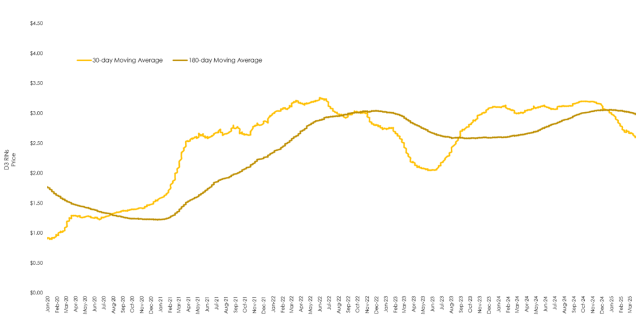
For investors watching the energy transition unfold, the surge in prices of compliance credits known as D3 renewable identification numbers (RINs) tells an important story. Refiners and importers of gasoline or diesel are obligated to purchase these biofuel compliance credits. D3 RINs have quietly become a barometer for the challenges facing renewable fuel policy — where government mandates, limited supply, and lagging innovation collide. Understanding the dynamics of this green currency can help investors spot both bottlenecks and breakthroughs in the low-carbon economy. Source: EPA and Author Analysis What’s Driving the Spike in D3 RIN Prices These compliance credits are the “currency” of the US Renewable Fuel Standard (RFS) Program. D3 RINs are linked to cellulosic biofuels,  which come from non-food plant material. Three forces are contributing to the rising prices of D3 RINs: Supply Constraints: Cellulosic biofuel production is challenging and costly and continues to lag far behind mandated levels. The limited number of D3 RINs has made compliance more difficult, forcing obligated refiners and importers to compete for a small pool of credits. Regulatory Pressure: Government policies have increased the required volumes of advanced biofuels, including cellulosic fuels, even as production struggles to keep pace. The growth rate of D3 RIN target volumes averaged 8.4% between 2021 and 2022. The projected growth rate from 2023 to 2025 is expected to average just over 30%. At the same time, regulators have removed key flexibilities. The Set Rule for 2023, 2024, and 2025 eliminated Cellulosic Waiver Credits as a compliance option, which effectively removed the price ceiling for D3 RINs. And since 2018, no exemptions have been granted for renewable volume obligations, resulting in increased demand for RINs. Trend Analysis: D3 RIN Volume Targets (billion RINs) Source: EPA Innovation and Investment: Ongoing investment and technological advancements in cellulosic biofuel production can also impact prices. If considerable progress is made, it may initially drive up prices as demand for new, more efficient technologies grows. Price Relief Is Possible—but Structural Constraints Make It Unlikely Strong demand, tight regulation, and limited supply have been keeping D3 RIN prices high. Several developments could ease pressure on D3 RIN prices, but so far, few show signs of materializing. Here’s what might push prices lower: Regulatory Relief: If the government reduces renewable fuel volume targets or allows RINs to carry over from previous years, demand could ease. Waivers and Exemptions: Small refinery exemptions (SREs) could reduce the number of obligated parties required to purchase RINs. More waivers could lower demand, but none have been granted since 2018. Summary of Small Refinery Exemption Decisions Each Compliance Year Source: EPA and Author Analysis Improved Market Liquidity: More active trading in the RIN market could increase efficiency and lead to more competitive pricing. Technological Breakthroughs: Advances that make cellulosic biofuel production cheaper or more scalable would help increase supply. Lower Compliance Costs: If obligated parties find cheaper ways to meet their RFS obligations, demand for RINs may decrease. Economic Factors: Broader economic conditions, such as falling crude oil prices can influence the competitiveness of renewable fuels. Currently, there are no clear indications that D3 RIN prices will decrease. Market factors, such as increasing demand for renewable fuels, regulatory requirements, and the limited supply of qualifying biofuels, are keeping prices elevated. Additionally, ongoing policy support and production constraints contribute to sustained price pressure. As a result, it is unlikely that we will see a significant drop in D3 RIN prices soon. Impact For Investors Over the past decade, D3 RIN credits have proven to be among the most significant factors affecting the financial viability of biogas projects across the United States. While project costs and operational complexities vary by region, infrastructure, and feedstock, the economics of most projects are fundamentally tied to D3 RIN prices remaining above a critical level. Since 2015, the price of D3 RIN credits has fluctuated within a broad range, reflecting changes in market dynamics and regulatory factors. Based on historical data, D3 RIN prices have varied from a low of $0.46 to a high of $3.50 per credit. Although prices are currently elevated, the economics of these projects remain sensitive to downward price movements. On average, trends observed across diverse projects nationwide indicate that if D3 RIN credits ever fall below $1.15, many ventures become financially unfeasible. This price threshold serves as a rough break-even point for many developers and is a key metric for assessing project risk. This underscores the broader investment implications tied to regulatory risk, energy transition volatility, and market inefficiencies. The elimination of price ceilings and waivers has intensified market dynamics, further amplifying demand. For investors, this creates both risk and opportunity — emphasizing the need for active monitoring and strategic positioning. Projects that incorporate risk mitigation tools, such as long-term credit hedging or structured offtake agreements, are better equipped to navigate volatility and deliver resilient returns in the maturing low-carbon fuel sector. source

The Little-Known Credit Holding Up the Clean Fuel Market Read More »

Hiding in Plain Sight: Accounting for Capex

In both public and private markets, investors often rely on EBITDA and cash flow metrics to assess profitability and value companies. Yet these measures can mask a wide gap between accounting earnings and free cash flow. That gap typically stems from two sources: shifts in working capital and investment cash flows, with CAPEX often the largest driver in capital-intensive industries. Poorly performing projects may even make profits look stronger while cash is being drained. This blog highlights why ex-post monitoring of capital allocation matters and how investors can detect whether CAPEX is creating or destroying value across different industries. It is important to note that CAPEX needs vary significantly by sector. Capital-intensive industries such as telecommunications and energy require large recurring investments. Others like software or education are far less dependent on fixed-asset spending. While working capital management is typically monitored closely, far less attention is given to the cash flow conversion of growth CAPEX. This oversight has become especially relevant in recent years as higher interest rates increase the cost of financing large investment programs. Why CAPEX Monitoring Matters Growth CAPEX is a long-term capital allocation decision. The challenge for investors is that, once approved and executed, companies rarely disclose whether projects actually deliver the promised returns. The risk is clear: reported earnings may not fully reflect the cash flow implications of expansion programs. Underperforming investments can make profitability look stronger than it is, while simultaneously reducing the cash available for dividends, buybacks, or debt service. The earnings–cash flow gap is especially pronounced in capital-intensive sectors like telecom and energy, where large recurring investments are the norm. With higher interest rates raising financing costs, careful monitoring of CAPEX cash conversion has become even more critical. Disclosure Approaches Here are a couple of examples of companies that break out CAPEX from total earnings: Telecommunications: Spanish telecom giant Telefónica reports earnings before interest, taxes, depreciation, amortization, and special losses (EBITDAaL). This metric incorporates accrued capital expenditures. Management noted in Q2 2025 results, “It is important to consider capital expenditures excluding spectrum acquisitions with EBITDAaL, in order to have a more complete measure of the performance of our telecommunication businesses.” Because Telefónica integrates all CAPEX into this key performance indicator (KPI), even by geography, management and investors can more easily identify when rollouts fail to generate expected cash flows. Industrial manufacturing: French transport system manufacturer Alstom disclosed an adjusted net profit to free cash flow conversion ratio but did not report return on capital employed (ROCE) or return on capital invested (ROCI) in its March 2025 annual report. On the other hand, it does track working capital needs on a project-by-project basis, indicating that management monitors cash flow implications at the operating level even if broader capital return metrics are absent. These examples show how disclosure practices differ across industries, and why investors must adapt their approach depending on the sector and reporting culture. Investor Red Flags Investors rarely see management’s internal capital budgeting models, but public disclosures often contain signals worth monitoring: Rising leverage at higher cost of capital, particularly when companies rely on private debt funds with variable rates. Declining profitability of comparable operations. For example, lower EBITDA per store, business unit, or product category after the ramp-up period may suggest new investments are diluting overall profitability. CAPEX growth without sustained improvement in return on invested capital (ROIC). These signals should always be assessed in conjunction with the Management Discussion & Analysis (MD&A) to separate structural problems from temporary pressures. What Good Disclosure Looks Like Strong disclosure practices help investors evaluate capital allocation discipline. Examples include: Reporting ROIC or EBITDA checkpoints after the ramp-up period, distinguishing between comparable units and those tied to new CAPEX. Providing segment-level CAPEX disclosure linked directly to cash flow outcomes. Communicating payback periods for strategic projects. Demonstrating improved profitability in the business units where CAPEX has been deployed, ideally with a breakdown of fixed assets by new versus comparable operations. Conclusion Shareholder value is not created by the volume of capital deployed, but by a company’s ability to transform those investments into sustainable cash flows. This principle applies across industries, whether in telecom, energy, industrials, or asset-light sectors where CAPEX plays a smaller but still strategic role. For investors, the key is to look beyond earnings and monitor whether CAPEX is being translated into real cash generation. Undisciplined CAPEX inflates balance sheets, but disciplined growth builds resilience and long-term economic return. If you liked this post, don’t forget to subscribe to the Enterprising Investor. All posts are the opinion of the author. As such, they should not be construed as investment advice, nor do the opinions expressed necessarily reflect the views of CFA Institute or the author’s employer. Image credit: ©Getty Images / Ascent / PKS Media Inc. Professional Learning for CFA Institute Members CFA Institute members are empowered to self-determine and self-report professional learning (PL) credits earned, including content on Enterprising Investor. Members can record credits easily using their online PL tracker. source

Hiding in Plain Sight: Accounting for Capex Read More »