CFA Institute

FX Bubbles: Through the Lens of Shiller and Sornette

It is widely understood that psychological factors such as perceptions and herd mentality can significantly influence stock market dynamics and precipitate speculative bubbles and abrupt market corrections. Less appreciated is the fact that the foreign exchange (FX) market is equally susceptible to such risks and perhaps more so in the context of geopolitical events. The FX market — an over-the-counter marketplace that sets exchange rates for currencies worldwide — is the largest market globally in terms of trading volume. We’re going to look at bubbles in the FX market through the lens of Robert Shiller and Didier Sornette. A notable example of an FX market bubble and crash is the case of the Icelandic króna during the early 2000s. The króna appreciated significantly following the deregulation of Iceland’s financial sector in 2001, which allowed financial institutions to expand and facilitated greater foreign investment. This financial-sector expansion, combined with Iceland’s high interest rates, attracted considearble speculative investment as herd mentality settled in. In early 2007, The Economist ranked the Icelandic króna as the most overvalued currency based on its Big Mac Index. The bubble burst during the global financial crisis of 2008, resulting in a severe depreciation of the króna and a dramatic economic collapse for Iceland. Shiller Challenges Neoclassical Models When speaking about price bubbles in any asset class, it is essential to start with Shiller’s theories and then move onto Sornette’s models. Shiller’s insights into financial market dynamics challenge traditional neoclassical models and offer a deeper understanding of purely speculative price runups that can be applied to FX markets. His theories, particularly the Excess Volatility Hypothesis, suggest that just like stock markets, the FX market might experience volatility that exceeds what could be justified by economic fundamentals such as interest rates, inflation rates, or balance of payments. Shiller’s integration of behavioural finance into the analysis of financial markets underscores the significant role of psychological factors in trading and investment decisions. In the FX market, this could manifest as currency values being influenced by perceptions, herd behaviour, and overreactions to news — factors that can drive the market away from fundamental values and potentially lead to speculative bubbles and abrupt corrections. Questioning the efficient market hypothesis, Shiller proposes that markets may not always efficiently incorporate new information, a theory applicable to FX markets. Anomalies such as predictable patterns from carry trade opportunities suggest that FX markets, similar to stock markets, exhibit moments where past pricing data could help predict future movements. Shiller advocates for a broader approach to understanding financial markets, one that includes non-economic factors such as geopolitics, market sentiment, and economic events. These factors can influence currency prices and induce large-scale speculative movements, akin to bubbles seen in other financial markets. Shiller’s theories provide a framework for understanding the FX market that goes beyond classical economic analysis, incorporating the interplay of economic, psychological, and sociological factors. This comprehensive approach challenges the purely rational and efficient market paradigm and highlights the need for a nuanced view of FX dynamics. This broader perspective is crucial for predicting and understanding the subtleties of currency fluctuations and the often-irrational behaviour of market participants. Enter Sornette: A Model to Predict Bubbles When measuring bubbles, Sornette inevitably comes to mind. The researcher explores the phenomena of financial crashes and the dynamics of capital markets. He delves into the patterns and behaviours that lead to market failures, focusing on the critical concept of bubbles. Unlike traditional definitions, which rely on comparing an asset’s price with its often difficult-to-measure fundamental value, a financial bubble in this context is characterized by the detection of unsustainable movement in the asset’s price. A key theme of Sornette’s research is the predictability of financial crashes. He argues that while markets often appear random and driven by myriad factors, they can sometimes exhibit patterns that signal an impending crash. One of the primary methods Sornette developed for identifying such patterns is the Log-Periodic Power Law Singularity (LPPLS) model. The LPPLS model posits that financial bubbles can be detected through the identification of two important components: 1) faster-than-exponential growth of the asset price during the formation of the bubble, and 2) accelerating oscillations in prices as they approach a critical point, essentially capturing how market sentiment escalates before a crash. In applying this model to the FX market, Sornette suggests that similar patterns may be observable in currencies. FX markets, like stock markets, are influenced by a combination of macroeconomic variables, geopolitical events, and trader psychology. The LPPLS model can potentially help in identifying bubbles in FX markets by analysing the super-exponential growth and log-periodic oscillations in exchange rates. If such patterns are found, they can serve as early warning signs of an impending significant adjustment or crash in the currency values. For instance, before a currency crashes, it might experience an increasingly rapid appreciation against other currencies, accompanied by a rise in speculative trading and investment in that currency market. This could create an unsustainable bubble that eventually bursts, leading to a sharp adjustment in the price. By monitoring such rapid growth and price oscillations and using statistical tools to analyse their frequency and magnitude, investors and economists can potentially predict and mitigate the adverse effects of such crashes. Sornette’s insights provide a theoretical foundation for considering how the complex dynamics of market behaviours and psychological factors can be modelled and understood, offering a unique lens through which to view the prediction and management of risks in the realm of FX investing. source

FX Bubbles: Through the Lens of Shiller and Sornette Read More »

ChatGPT: Copilot Today, Autopilot Tomorrow?

For more on artificial intelligence (AI) applications in investment management, read The Handbook of Artificial Intelligence and Big Data Applications in Investments, by Larry Cao, CFA, from CFA Institute Research Foundation. ChatGPT and other large language models (LLMs) may someday automate many investment management and finance industry tasks. While that day is not here yet, LLMs are still useful additions to the analyst’s toolkit. So, based on what we have learned about the new, dark art of prompt engineering, how can quant and fundamental analysts apply LLMs like ChatGPT? How effective a copilot can these technologies be? Fundamental Analyst Copilot Stock analysts generally know their companies from top to bottom, so ChatGPT may not reveal anything altogether new about their primary names. But LLMs can generate overviews of less well-known firms quickly and at scale. Here are the ChatGPT prompts we’d deploy to analyze a hypothetical CompanyX. Company Overview “explain the business model of CompanyX” “conduct SWOT analysis of CompanyX” (strengths, weaknesses, opportunities, threats) “list 10 competitors of CompanyX” “list the 10 main risks to an investment in CompanyX” Environmental, Social, and Governance (ESG) Overview “list and describe 10 key Environmental scandals of CompanyX” “list and describe 10 key Governance scandals of CompanyX” “list and describe 10 key Social scandals of CompanyX” Drill down as appropriate We’d also add a standard ending to each prompt to increase the chances of an accurate response: “list your sources; if you do not know an answer, write ‘Do not know.’” Case Studies Now we can test some of these prompts in two simple case studies: “summarize: [web address of text document, or paste in the text]” “list 10 key negatives” (risky unless we provide source text) Drill down as appropriate We ran the above ChatGPT analysis on two real-life companies — Mphasis, a lightly covered Indian mid-cap, and Vale, a very well-covered Brazilian mining company — and scored the results of each task on a one-to-five scale, with five being the highest. The answers were generated simply by prompting ChatGPT-4, but in actual practice, the highest-tech managers would automate much of this process. We would use multiple LLMs, which give us more control over the responses, greater validation and cross-checking, and much greater scale. Of course, like all ChatGPT-produced results, those below need to be treated with care and not taken at face value, especially if we are relying on the model’s training data alone. 1. Mphasis Company Overview While the results are hardly revelatory, ChatGPT does provide an informative, high-level summary of Mphasis. We also prompt it for sources and explicitly instruct it not to make things up. Such measures improve accuracy but are not foolproof. As we proceed, the LLM offers up more interesting insights. We can now drill down with a little SWOT analysis. Our SWOT analysis identifies “Dependencies on Certain Industries” as a potential weakness for the company. So, we pose additional questions to help understand the underlying context. Mphasis Company Overview Score: 4 2. Vale ESG Overview Vale’s record on ESG issues has generated headlines, and ChatGPT picks up on the major themes. A simple prompt for a specific aspect — “Social” — yields accurate results, even though the system cautions that it cannot attribute sources and recommends we cross-reference the response. To get into more detail, we need to delve deeper than ChatGPT allows. Vale ESG Overview Score: 3 Ground Truthing: ChatGPT Interrogates and Summarizes Latest Mphasis Data Summary ChatGPT can summarize and interrogate a company’s latest earnings call, news flow, third-party analysis, or whatever data we provide — this information is called the “ground truth,” which is a different use of the expression than in supervised machine learning. But if we don’t specify and deliver the text for ChatGPT to analyze, as we saw above, it will rely only on its training data, which increases the risk of misleading “hallucinations.” Moreover, the end-date of the LLM’s training data will limit the possible insights. Another point to keep in mind: Official company communications tend to be upbeat and positive. So rather than ask ChatGPT to “summarize” an earnings call, we might request that it “list 10 negatives,” which should yield more revealing answers. ChatGPT delivers fast and effective results. Though they are often obvious, they may reveal important weaknesses that we can probe further. Latest Mphasis Data Summary Score: 5 Quant Analyst Copilot ChatGPT can write simple functions and describe how to produce particular types of code. In fact, “GPT codex,” a GPT-3 component trained on computer programming code, is already a helpful auto-complete coding tool in GitHub Copilot, and GPT-4 will be the basis of the forthcoming and more comprehensive GitHub Copilot X. Nevertheless, unless the function is fairly standard, ChatGPT-generated code nearly always requires tweaks and changes for correct and optimized results and thus serves best as a template. So at the moment, LLM autopilots appear unlikely to replace quant coders anytime soon. A quant might use ChatGPT for the three tasks described below. Here we are simply prompting ChatGPT. In practice, we would access specific codex LLMs and integrate other tools to create far more reliable code automatically. 1. Develop an Entire Investment Pipeline ChatGPT can partly execute complex instructions, such as “write python functions to drive quant equity investment strategy.” But again, the resulting code may need considerable editing and finessing. The challenge is getting ChatGPT to deliver code that is as close as possible to the finished article. To do that, it helps to deploy a numbered list of instructions with each list item containing important details. In the example below, we prompt ChatGPT to create five functions as part of a factor-based equities investment strategy and score each function on our five-point scale. For slightly higher accuracy, we would also construct a prompt for the system to “ensure packages exist, ensure all code parses.” 1. Download Factor Time-Series Data ChatGPT generates a decent function that downloads a zip file of factor data from the Kenneth R. French Data Library and extracts

ChatGPT: Copilot Today, Autopilot Tomorrow? Read More »

The Enterprise Approach for Institutional Investors

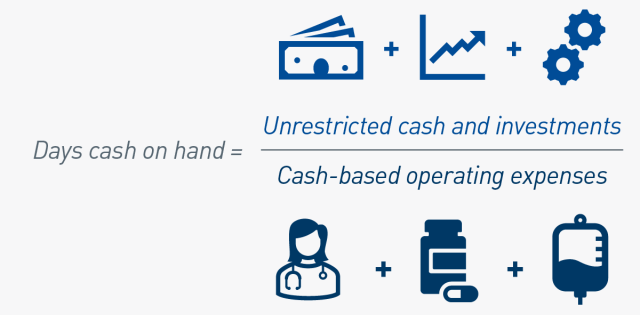
Given the ever-changing crosscurrents of market and economic forces, institutional investors of all types would be wise to consider an enterprise approach to managing their investment assets. From liquidity-driven and income-focused portfolios to liability-centric insurance pools, a holistic investment management framework has the potential to benefit any institutional investor. Enterprise Approach vs. Return-Only Strategy Simply put, an enterprise approach to investment management considers the impact of investment risk within an organization’s broader financial health, versus an approach that addresses the expected return of a portfolio in isolation. To illustrate this concept, consider a healthcare provider that monitors days cash on hand (Figure 1) to inform its investment strategy. In a return-driven approach, the provider might only consider the numerator (unrestricted cash and investments) where investment market returns have a clear effect. In contrast, astute stewards of capital typically find it advantageous to consider the interplay between the numerator and denominator (cash-based operating expenses) as many providers’ days cash on hand have come under considerable stress in recent years given financial market volatility and rising supply and labor costs. Figure 1. In this example, operating expenses are influenced by many factors, such as the cost of drugs and other supplies and, of course, labor markets. Days cash on hand can fall due to a decline in liquidity (the ability to convert resources to cash, the numerator), a rise in costs (the denominator), or both. A hospital system solely focused on investment return might be tempted to make material allocations to illiquid alternative investment strategies — an asset class known to offer high return potential in exchange for lower liquidity. But what happens if investment markets pull back amid a challenging operating environment? A possible outcome is days cash on hand shrinks on both sides of the fraction — the numerator falls on negative returns and the denominator rises due to increasing costs (Figure 2). This “double whammy” scenario could prove especially challenging for a provider that has invested too heavily in illiquid alternatives, as these strategies often come with higher volatility. A potential negative outcome is greater investment losses pairing with rising operating costs resulting in a liquidity debt covenant violation, as seen by the “With Illiquids — Negative Returns and Increasing Costs” line in Figure 2. However, a provider subscribing to an enterprise approach might make a more measured allocation to illiquid alternatives, keeping in mind the need to maintain liquidity in a challenging operating environment. This provider may still see its days cash on hand decline, but not so sharply as to lead to a covenant violation, as represented by the “Liquids Only – Negative Returns and Increasing Costs” line. Investment strategies with illiquid alternatives might offer greater return potential, but also pose more downside risk — a key consideration to shoring up liquidity when operating costs rise. Figure 2. The Hallmarks of a Successful Enterprise Approach Several documents are necessary to analyze an organization’s current investment strategy, including the investment policy statement, spending policy, and current investment statements. These documents provide detail about how the current asset allocation may differ from investment policy targets and the opportunities that may arise from integrating financial statements with investment goals. Core financial statements — the balance sheet, income statement, and cash flow statement — can tell the story of how investment risk has influenced an institution’s overall financial health historically. On the other hand, a budget, multi-year projections, and other operating assumptions can help develop and implement a longer-term strategic vision. Consider a university that forecasts gifts or other contributions into its endowment and assumes a portion of its endowment spend will go to the maintenance and construction of campus facilities. A holistic approach can help inform how investment performance can aid or hinder projects that influence other important revenue streams, such as tuition and fees. For example, what if the draw from the endowment was insufficient to support the completion of a critical capital project on a timely basis? Would the university be able to achieve its enrollment goals, and what would be the ensuing impact on tuition revenue? Or, if borrowing from the endowment is possible, what are the longer-term costs from a strategic, maintenance and engagement perspective of lower endowment net assets in the near term? A return-only approach might advise on how to maximize net assets, while an enterprise approach has the potential to make goal attainment the focus by examining how each factor influences a range of potential outcomes. For an organization to measure its investment success, a customized benchmark that reflects long-term asset allocation targets is valuable in just about any investment policy statement. However, I would caution against tying the definition of success entirely to performance relative to a benchmark, as it does not always capture the full picture. Consider a property and casualty insurer that increased the duration — a measure of interest rate sensitivity — of its fixed income portfolio during the low-rate environment following the 2008 financial crisis to improve returns. While many insurers may have felt compelled to extend duration to boost investment yield and keep pace with a benchmark, the market value of this fixed income portfolio would have fallen precipitously as the Federal Reserve began aggressively raising interest rates in the spring of 2022, as illustrated in Figure 3. Longer-duration bond portfolios would have lost more value relative to shorter-duration ones during the Fed’s 2022 to 2023 rate hiking cycle, all else being equal. Figure 3. Market Yield on US Treasury Securities at 10-Year Constant Maturity, Quoted on an Investment Basis A “fire sale” type scenario became a reality for many that year as inflation and catastrophe-driven losses wreaked havoc on industry financials, creating a downward spiral. A holistic approach to investment management could consider these elements in an integrated model: the value of investment income, the possibility of elevated losses, the benefit of matching asset duration to that of liabilities, and — perhaps most importantly — how investment performance and operating activity influence policyholder surplus in

The Enterprise Approach for Institutional Investors Read More »

Stablecoins and Treasuries: A Fragile Funding Link Investors Can’t Ignore

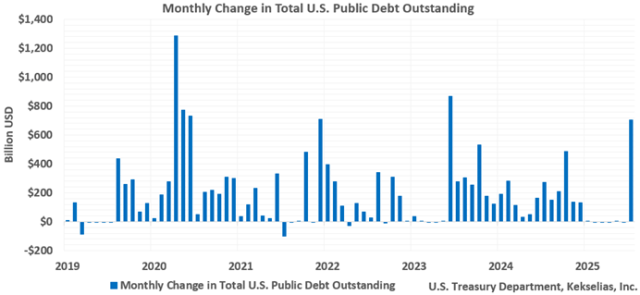
An underappreciated corner of crypto is shaping US government debt markets. Stablecoins, a type of cryptocurrency designed to retain a stable value, was once seen mainly as digital cash for trading. But stablecoins now hold hundreds of billions of dollars in Treasury bills. And flows into or out of stablecoins can move short-term yields, shift liquidity conditions, and alter Treasuries’ safe-haven role. For investors, that means a new source of volatility in the world’s most important safe asset, one that links portfolio resilience to crypto-market sentiment. The Bank for International Settlements (BIS) estimates that inflows into stablecoins reduce 3-month T-bill yields by 2 to 2.5 basis points within 10 days, while outflows lift yields by 6 to 8 basis points in the same time period. In its report, “Stablecoins and safe asset prices,” BIS notes that stablecoins pegged to the US dollar and backed by T-bills increasingly resemble money market funds. After the $5 trillion debt ceiling hike increased T-bill issuance, stablecoins’ contribution toward absorbing upsized ($100 billion) weekly 4-week T-bill issuance has underscored cryptocurrencies’ role as funding provider for US federal expenditure, especially when total US public debt outstanding surged $700 billion in the month of July 2025 (Figure 1). Figure 1. Source: Treasury Department’s “Debt to the Penny” portal. When Crypto Sentiment Drives Treasury Liquidity A paradox emerged as a major fiat haven asset (and funding channel for the US federal government) became closely coupled with instruments active in decentralized finance (DeFi). In “Stablecoins and Crypto Shocks: An Update,” New York Federal Reserve researchers concluded “demand for stablecoins grows along with demand for non-stablecoin crypto assets (as proxied by Bitcoins)” and “the demand for stablecoins appears to be tied to activity levels in the broader crypto ecosystem.” This suggests that a decline in broader crypto sentiment (e.g. Bitcoin downturn) could correspond to less demand for stablecoins, and outflows from stablecoins to cash could result in collateral shedding. This risk-off to T-bill liquidation feedback loop risks eroding the latter’s haven characteristics. Furthermore, as of June 30, the largest stablecoin, Tether (USDT), held 20% of its reserves in corporate bonds, precious metals, Bitcoins, other investments, and secured loans. These less-liquid assets would be less capable of meeting cash demands during a funding crunch, and this hints at “dash for cash” via T-bill sales during adverse market shocks. A Brookings analysis highlighted this dynamic during the March 2020 volatility event as institutions sold Treasuries, the most liquid assets available on institutional balance sheets, to meet funding needs at the height of the equity rout. Th New York Fed highlighted the dominance of Tether and USDC in the stablecoin market, and both are large T-bill holders (Figure 2). Figure 2. A Fair-Weather Funding Channel with Investor Risks The amplification of T-bill flows by stablecoins could act as a double-edged sword in shaping US market conditions. During “fair-weather” periods, healthy inflows into the crypto markets (and growth in stablecoins) would boost demands for T-bills to help offset the trend rise in US short-term debt sales. Conversely, market instability and broader liquidity drought (that reduce risk appetite in cryptocurrency markets) could reduce stablecoins’ footprint in the Treasury market, thus leaving a greater portion of issuance to be absorbed by fixed income investors. This would likely come at a time of rising government benefits disbursement and lower tax receipt. Finally, CME analysis noted growing institutional acceptance of cryptocurrencies and their integration alongside traditional investments, which would likely contribute to higher equity and Bitcoin correlation. Combined, higher correlation between traditional risk assets and crypto markets, co-movements between digital asset sentiment and stablecoin market cap, and the casual relationship between stablecoin market cap and demand for T-bills suggest higher US fiscal and sovereign bond market sensitivity to cryptocurrency volatility. Conclusion: Fragility Behind the Stablecoin–Treasury Link In conclusion, higher T-bill demand induced by broader allocations into cryptocurrencies represents greater fragility in the short-term dollar funding market. Stablecoins’ “fair-weather” debt purchases offer only a temporary reprieve for fiscal authorities, offsetting issuance pressures but not permanently absorbing them. For portfolios, the risk is hidden but real: a virtuous cycle in calm markets can turn vicious in stressed conditions. As volatility rises, stablecoin outflows and collateral sales could erode Treasuries’ safe-haven role, leaving investors more exposed just when protection is needed most. Investors may need to stress-test their reliance on Treasuries as a safe-haven, and prepare for funding dynamics increasingly shaped by crypto-market sentiment. source

Stablecoins and Treasuries: A Fragile Funding Link Investors Can’t Ignore Read More »

Nuclear Conflict: Why We Must Consider the Risks

In the wake of Russia’s attack on Ukraine, the risks of nuclear conflict have become clearer both inside and outside the world of finance. Yet many market watchers have simply thrown up their hands under the mistaken assumption that when it comes to nuclear weapons, nothing they do will matter. Such a philosophy is inadequate on multiple fronts. First, while a “limited” nuclear exchange or even a single detonation would be catastrophic and almost certainly deadly for thousands if not millions, it would not end life on earth. People will still very much care about their jobs, their savings, and their investment portfolios. When the pandemic struck, our financial concerns didn’t disappear despite COVID-19’s horrific human toll. Our financial stability still mattered then, just as it would after a nuclear conflict. While investing based on nuclear risk in the short term might be a fool’s errand, implementing the necessary risk controls across various market environments assuredly is not. Proper diversification, monitoring the financial resilience of counterparties, limiting leverage, and keeping the duration of liabilities fairly long and matched to assets are all important and logical steps in any risk-mitigation strategy. But there is a much more pressing rationale for increasing our focus specifically on nuclear risk: Whether it is a regional or global nuclear exchange among current or future nuclear states or non-state actors, we need to reduce the likelihood of such an event in the first place. Sustainability considerations come into play as well. After all, the UN Sustainable Development Goals (SDGs) are sustainable investing’s North Star. Nuclear risk reduction is implicit in Goal 16, “Peace, Justice and Strong Institutions.” Indeed, nuclear war, like climate change, constitutes an existential threat that could prevent us from ever realizing any SDG goal. Even investors who aren’t focused on sustainability understand why avoiding nuclear conflict is in their long-term self-interest. Of course, international relations are the government’s responsibility, aren’t they? That may be true, but just as governments lacked the foresight to prevent the COVID-19 pandemic and were often flatfooted in their response, they alone cannot be counted on to forestall a nuclear conflict or deal with its aftermath. So, what should investors do? In light of the war in Ukraine, many financial institutions, particularly in Europe, are reconsidering negative screens around defense companies. This evolution is a good thing: Blanket exclusions and divestment are overly blunt instruments in any sector, and defense is no exception. The world will always have its share of bad actors, and an effective defense industry can help provide both protection and deterrence. Moreover, when it comes to effecting change, engagement is preferable to divestment. That holds true for defense firms or any company involved in the manufacture of nuclear weapons or their related delivery systems, or otherwise contributes to the risk of nuclear conflict. What might engagement look like? It could, for instance, mean increased oversight of a defense firm’s lobbying efforts or any potential conflicts of interest among board members. Since the defense sector isn’t the only source of nuclear risk, we should also screen firms in other industries on a range of issues and engage with them on any shortfalls. Among the potential considerations: Industrial and Manufacturing Companies: How do they ensure compliance with sanctions regimes and limit the potential for the export or diversion of dual-use technologies that could be part of a nuclear supply chain? Shipping Firms and Port Operators: Are they enforcing sanctions and adhering to export controls? Do they deploy nuclear detection technology? Utility Companies: With respect to nuclear energy and terrorism threats, are they complying with cybersecurity regulations and best practices? Are their systems air-gapped? Banks: What sort of anti-proliferation financing measures do they have in place? Do they understand which of their customers’ technologies or products might have a dual-use component? Big Tech: How are they limiting the export of certain 3D printing technologies and other products that could contribute to nuclear risk? What are they doing to detect and expose deepfakes and other divisive material that could ignite geopolitical conflict? Social Media: What are their security protocols for protecting the personal accounts of government officials and other influential figures? How are they mitigating the spread of inflammatory propaganda? The degree to which a firm’s business contributes to potential nuclear conflict shouldn’t be the only consideration. We need to look at what companies are doing to proactively reduce the risks of nuclear conflict. Which media firms are producing content highlighting nuclear risks? How are companies working to bridge the gap between adversarial nations and populations? Such factors should be included in our calculations. The exact risks and sectors we should screen for may be open to debate. But we need to have that debate today. It is time for investors, businesses, accounting standards boards, environmental, social, and governance (ESG) raters, NGOs, and governments, among others, to start that discussion. If not now, when? If you liked this post, don’t forget to subscribe to the Enterprising Investor. All posts are the opinion of the author. As such, they should not be construed as investment advice, nor do the opinions expressed necessarily reflect the views of CFA Institute or the author’s employer. Image credit: ©Getty Images/diegograndi Professional Learning for CFA Institute Members CFA Institute members are empowered to self-determine and self-report professional learning (PL) credits earned, including content on Enterprising Investor. Members can record credits easily using their online PL tracker. source

Nuclear Conflict: Why We Must Consider the Risks Read More »

Decoding PE Buyouts: The Full Financial Picture is in the Consolidated Accounts

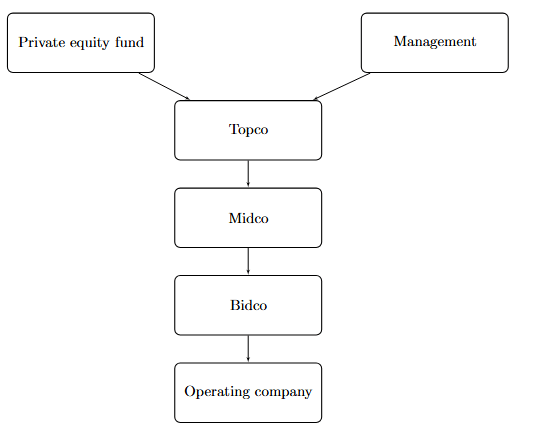
Private equity (PE) buyouts introduce complex financial structures that can make it challenging to track portfolio company performance. The use of acquisition vehicles can obscure financial reporting, meaning investors and analysts can have a difficult time trying to  understand a company’s true debt levels, profitability, and overall financial health. This post is the second in my three-part series. It explores the differences between operating entity accounts and consolidated group accounts, highlighting key financial discrepancies and what they mean for investment analysis. In my first post, I demonstrated how the creation of acquisition vehicles to facilitate PE buyouts creates challenges for analyzing performance with the examples Topco, Midco, and Bidco. Understanding these vehicles (illustrated in Exhibit 1) is important to gain a clear understanding of the target group’s financials during the PE ownership period. Figure 1. Topco, Midco, Bidco. After a company is acquired in a PE buyout through such a structure, the consolidated accounts of the target group will typically be recorded at the newly created Topco level, while the operating entity will often file unconsolidated accounts. Other acquisition vehicles like Midco and Bidco will also often file unconsolidated accounts. These accounts, however, may lack complete financial information. In some cases, more than one company in the group structure will file consolidated accounts. The key to recognizing which set of accounts is the most relevant to fully understanding the group finances is to capture the complete group ownership structure and identify which entity sits at the top of the corporate tree. To further complicate the process, the post-buyout consolidated reporting entity may change during the PE holding period. This often happens, for example, when other investors acquire a stake in the target group or when the target acquires or merges with other firms. All of this can make accurately studying portfolio company performance from pre- to post-buyout a difficult exercise. Operating entity accounts often do not capture the full group capital structure, and in some cases, may lack financial information altogether. Moreover, they may not reflect the group cost structure, as some costs may be charged further up in the chain – like at Topco level — so profitability may be stronger at the operating entity level compared to at the consolidated group. What is more, the debt used to finance the acquisition is often only captured on the accounts of one or more of the newly created acquisition vehicles, meaning that the total debt figure on the balance sheet of the target operating firm may be considerably lower than the consolidated group figure. For buyouts which use a considerable amount of leverage to finance the deal, this will naturally be of even greater importance. Consolidated Group Accounts vs. Operating Firm Accounts Table 1 shows a buyout transaction and reports the main financials for both the consolidated group entity, created for the purpose of the acquisition, with the unconsolidated operating entity accounts. The transaction is the acquisition of Xtrac Limited, a UK-based firm, by Inflexion Private Equity Partners LLP, a UK-based PE investor. Three vehicles were created for the purpose of the buyout: Viola Bidco Limited, Viola Midco Limited, and Viola Holdco Limited. The latter vehicle consolidated the group accounts during the PE ownership tenure. Panel A shows the financials of the operating entity, while panel B shows the financials of the consolidated group entity. There are differences across reported sales, assets, and headcount, all of which are which are lower at the operating entity level. On the other hand, EBITDA (earnings before interest, taxation, depreciation, and amortization) is higher at the operating entity level. Short- and long-term company debt is considerably lower at the operating entity level. These differences will naturally have implications for any financial ratios which are calculated, such as profitability and leverage. Table 1 illustrates Inflexion Private Equity Partners’ acquisition of Xtrac Limited in 2017 and its exit in 2023. Panels A and B compare financial accounts of both the operating entity (Panel A) and the consolidated group entity (Panel B), which was created for the purpose of the buyout in 2017. Table 1. Consolidated and Operating Firm Accounts. I studied a sample of almost 3,000 PE buyouts in the United Kingdom over the past two decades and summarized my findings in a recent research article. In it, I document the difference in PE target group financials between the operating firms and the consolidated group entities. There are marked differences in sales, assets, earnings, debt, and cash holdings. For example, the median difference in total assets in the first full year after the buyout between the consolidated group accounts and the operating firm accounts is 77%. The median difference in total debt is 244%, underlining that operating entity accounts do not fully reflect the size of the portfolio company’s consolidated group balance sheet. These differences are even greater in buy-and-build deals, where the target company acquires other firms during the PE holding period. Key Takeaways Understanding the differences between operating entity accounts and consolidated group accounts is essential for accurate financial analysis of PE-owned firms. The evidence shows major discrepancies in reported assets, debt, earnings, and profitability. Yet, these metrics can significantly impact valuation, risk assessment, and investment decisions. As the PE landscape evolves, investment professionals must understand how to correctly capture the full picture of a portfolio company’s performance — especially in leveraged buyouts and buy-and-build strategies, where these differences are most pronounced. In my final post in this series, I will examine the implications these differences have when studying the capital structure and performance of PE-owned companies, and I will shed light on important accounting elements of buyout targets’ balance sheets. source

Decoding PE Buyouts: The Full Financial Picture is in the Consolidated Accounts Read More »

Supercharge Your Network: 5 Tips to Jumpstart Old Connections

Establishing and nurturing lifelong relationships with friends, family, colleagues, and clients is one of the most rewarding parts of life. We all know that relationships are important — to our health and happiness, to the progression of our careers, and to getting the most out of what life has to offer. Yet, we’ve all been guilty of letting a relationship go cold, only to regret it later. The leading excuse for losing touch? Time — not having enough of it. As a result, the relationship weakens. As interactions become less frequent, relationships become more difficult to pick back up. There comes a time when we can’t recall the last time we connected, which makes us too embarrassed to reach out. We’re worried the conversation will be seen as transactional: “They must want something.” Think of relationships like a classic car. Left neglected and undriven, the car won’t run and might even begin to rust. The maintenance needed will continue to pile up. However, with a little time, attention, and even a bit of elbow grease, it can be restored to its former glory. Here are a few tips for bringing those “rusty relationships” back to life: Great relationship builders invest in relationships when they do not need anything in return. This approach shows real authenticity and a true desire to invest in and connect with others, rather than giving the impression that you are just looking for a favor. Some of these old relationships may need a jolt of energy as if you’re recharging a car’s battery. You can inject new enthusiasm into a relationship easily by sending a quick “just checking in” text or sharing a memory that pops up to reinvigorate the connection. Use bridge connections to find common ground. A great tool to bring new life to a relationship is to engage your bridge connections — common people or interests that connect you. When considering dormant relationships to revisit, those with the closest bridge ties to the person you want to reconnect with should be the easiest and most advantageous to revitalize. Perhaps you heard through a bridge that the person you’d like to rekindle a relationship with took on a new role, had a baby, or experienced another big change. Asking about these updates or congratulating them on the success can help bring the relationship back to the forefront. Consider saying things like, “Nancy seems to be getting traction in the London market. Did you see that she was honored at the event last week?” Or “It’s been ages since I’ve seen Jose. Are you still in that leadership forum with him and the others from the summit?” Address past issues and commit to a new path moving forward to restart conversations. Carefully consider what went wrong previously in the relationship and be open and honest about what’s different this time around. For example, “We used to do a great job updating each other on industry news. I’m sorry I dropped the ball. I saw your CEO on Bloomberg yesterday and realized how much I valued our exchanges. I’m attaching some recent statistics from our research team that you might find interesting. Let’s catch up soon.” Proactively reach out to stay connected. Whether you need support, advice, an introduction, or a job, it doesn’t look great if you wait to reach out to someone only when you need their help. You should have been in contact all along. It’s acceptable to ask your network for favors if the relationship is real. However, only reaching out when you need something sends a clear message that the connection you have is one-sided — that it’s about you, and not the relationship. Reach out quickly and with intention. Keep in mind that the research suggests relationships run cold after three weeks of no attention. Next time you meet someone at a conference or event, don’t wait a month or two before saying hello. Reach out quickly and with something intentionally relevant. Speed and relevancy are essential to success. Reaching out two days after meeting to say something generic like, “It was nice to meet you” is low value and may not bear fruit. Similarly, reaching out five weeks later to follow up on something relevant runs the risk of the person not remembering you. All relationships benefit from a revisit and it’s important not to let the daunting task of relationship maintenance overwhelm the value of two strong, committed partners. Just as a classic car can be brought back from rusty neglect to clock many more miles on the open road, so too can those cherished relationships that have lost their shine. You May Also Like: “Your Network is Your Net Worth.” If you liked this post, don’t forget to subscribe to the Enterprising Investor. All posts are the opinion of the author. As such, they should not be construed as investment advice, nor do the opinions expressed necessarily reflect the views of CFA Institute or the author’s employer. Image credit: ©Getty Images / Ascent / PKS Media Inc. Professional Learning for CFA Institute Members CFA Institute members are empowered to self-determine and self-report professional learning (PL) credits earned, including content on Enterprising Investor. Members can record credits easily using their online PL tracker. source

Supercharge Your Network: 5 Tips to Jumpstart Old Connections Read More »

Commodities for the Long Run?

If you focus only on returns and covariances over a one-year investment horizon, you may conclude that commodities have no place in an investment portfolio. The efficiency of commodities improves dramatically over longer investment horizons, however, especially when using expected returns and maintaining historical serial dependencies. We’ll demonstrate how allocations to commodities can change across investment horizon, especially when considering inflation. Our analysis suggests that investment professionals may need to take a more nuanced view of certain investments, especially real assets like commodities, when building portfolios. This is the third in a series of posts about our CFA Institute Research Foundation paper. First, we demonstrated that serial correlation is present in various asset classes historically. Second, we discussed how the risk of equities can change according to investment horizon. Historical Inefficiency of Commodities Real assets such as commodities are often viewed as being inefficient within a larger opportunity set of choices and therefore commonly receive little (or no) allocation in common portfolio optimization routines like mean variance optimization (MVO). The historical inefficiency of commodities is documented in Exhibit 1, which includes the historical annualized returns for US cash, US bonds, US equities, and commodities from 1870 to 2023. The primary returns for US cash, US bonds, and US equities were obtained from the Jordà-Schularick-Taylor (JST) Macrohistory Database from 1872 (the earliest year the complete dataset is available) to 2020 (the last year available). We used the Ibbotson SBBI series for returns thereafter. The commodity return series uses returns from Bank of Canada Commodity Price Index (BCPI) from 1872 to 1969 and the S&P GSCI Index from 1970 to 2023. The BCPI is a chain Fisher price index of the spot or transaction prices in US dollars of 26 commodities produced in Canada and sold in world markets. The GSCI — the first major investable commodity index — is broad-based and production weighted to represent the global commodity market beta. We selected the GSCI due to its long history, similar component weights to the BCPI, and the fact that there are several publicly available investment products that can be used to roughly track its performance. These include the iShares exchange traded fund (ETF) GSG, which has an inception date of July 10, 2006. We used the two commodity index proxies primarily because of data availability (e.g., returns going back to 1872) and familiarity. The results from the analysis should be viewed with these limitations in mind. Exhibit 1. Historical Standard Deviation and Geometric Returns for Asset Classes: 1872-2023. Source: Jordà-Schularick-Taylor (JST) Macrohistory Database. Bank of Canada. Morningstar Direct. Authors’ calculations. Commodities appear to be incredibly inefficient when compared to bills, bonds, and equities. For example, commodities have a lower return than bills or bonds, but significantly more risk. Alternatively, commodities have the same approximate annual standard deviation as equities, but the return is approximately 600 basis points (bps) lower. Based entirely on these values, allocations to commodities would be low in most optimization frameworks. What this perspective ignores, though, is the potential long-term benefits of owning commodities, especially during periods of higher inflation. Exhibit 2 includes information about the average returns for bills, bonds, equities, and commodities, during different inflationary environments. Exhibit 2. Average Return for Asset Classes in Different Inflationary Environments: 1872-2023. Source: Jordà-Schularick-Taylor (JST) Macrohistory Database. Bank of Canada. Morningstar Direct. Authors’ calculations. Data as of December 31, 2023. We can see that while commodities have had low returns when inflation is low, they have outperformed dramatically when inflation is high. The correlation of commodities to inflation increases notably over longer investment horizons, increasing from approximately 0.2 for one-year periods to 0.6 for 10-year periods. In contrast, the correlation of equities to inflation is only approximately -0.1 for one-year periods and approximately 0.2 for 10-year periods. In other words, focusing on the longer-term benefits of owning commodities and explicitly considering inflation could dramatically change the perceived efficiency in a portfolio optimization routine. Listen to my conversation with Mike Wallberg, CFA: Allocating to Commodities While inflation can be explicitly considered in certain types of optimizations, such as “surplus” or liability-relative optimizations, one potential issue with these models is that changes in the prices of goods or services do not necessarily move in sync with the changes in financial markets. There could be lagged effects. For example, while financial markets can experience sudden changes in value, inflation tends to take on more of a latent effect: changes can be delayed and take years to manifest. Focusing on the correlation (or covariance) of inflation with a given asset class like equities over one-year periods (e.g., calendar years) may hide potential longer-term benefits. To determine how optimal allocations to commodities would have varied by investment horizon, we performed a series of portfolio optimizations for one- to 10-year investment horizons, in one-year increments. Optimal allocations were determined using a Constant Relative Risk Aversion (CRRA), which adjusts for risk the cumulative growth in wealth over a given investment horizon. Optimal allocations corresponding to equity allocations from 5% to 100%, in 5% increments, were determined based on target risk aversion levels. We included four asset classes in the portfolio optimizations: bills, bonds, equities, and commodities. Exhibit 3 includes the optimal allocations to commodities for each of the scenarios considered. Exhibit 3. Optimal Allocation to Commodities by Wealth Definition, Equity Risk Target, and Investment Period: 1872-2023. The allocation to commodities remained at approximately zero for virtually all equity allocation targets when wealth was defined in nominal returns (Panel A). On the other hand, when wealth was defined in real terms (i.e., including inflation), the allocations proved to be relatively significant over longer investment periods (Panel B). That was especially true for investors targeting moderately conservative portfolios (e.g., ~40% equity allocations), where optimal allocations to commodities would be roughly 20%. In other words, the perceived historical benefits of allocating to commodities have varied significantly depending on the definition of wealth (nominal versus real) and the assumed investment period (e.g., moving from one year to 10 years).  Forward-looking expectations for

Commodities for the Long Run? Read More »

Book Review: Poor Charlie’s Almanack

Poor Charlie’s Almanack: The Essential Wit and Wisdom of Charles T. Munger. 2023. Edited by Peter D. Kaufman. Stripe Press. There is no shortage of advice to improve our diets. There is an “expert” for every taste: from doctors and dieticians to members of Congress (who in 2011 defined pizza as a vegetable) and social media influencers. Food companies add their own voices. The cornucopia of competing guidance overwhelms, but common sense and wisdom from our elders can guide us to the best choices. There is no shortage of guidance to improve our investment returns, either. The late Charlie Munger —longtime vice chair of Berkshire Hathaway — offers his own recipe for investment success, and it is very much like the dietary common sense that informed mealtimes a few decades ago. In Poor Charlie’s Almanack: The Essential Wit and Wisdom of Charles T. Munger, Munger dishes out folksy wisdom about values and valuation accumulated over almost a century. His examples are punctuated with memorable phrases, such as the utility of “a one-legged man in an a**-kicking contest” and a man who owns only a hammer and to whom every problem looks like a nail. While Munger, who died 28 November 2023, knew the ingredients for success, he was quick to dismiss the physics envy and false precision of financial experts, as well as the efficient market hypothesis, which supposes the immediate incorporation of new information into the market prices of securities. How, after all, can we explain his and Berkshire partner Warren Buffett’s incredible and enduring investment success if the market is perfectly efficient or if success requires ever-increasing computing power? (Astute readers will recognize, however, that Berkshire uses leverage and has investment tools unavailable to most investors; it can purchase companies outright, and its fortress balance sheet allows bespoke and profitable transactions with companies in difficulty — for example, Salomon Brothers and Goldman Sachs). Poor Charlie’s Almanack, first published in 2005, is a reissue with a new foreword by Stripe, Inc., (and Stripe Press) founder John Collison. Following the original three forewords by Buffett, Munger, and almanac compiler Peter D. Kaufman, the book features three introductory chapters — a “portrait” of Munger’s life, recollections and anecdotes from his children, and a summary of his “approach to life, learning, and decision-making” — followed by 11 talks given between 1986 and 2005. Munger’s final talk is substantially revised and expanded from three speeches given between 1992 and 1995 and serves as a bookend to the third introductory chapter. Either of the bookend chapters could serve on its own as a comprehensive exposition, but the book is strengthened through repetition of Munger’s lessons and wit. The chronological arrangement of the talks also gives readers insight into the evolution of his wisdom (the wit is there from the start). The almanac is less textbook and more a series of warm fireside chats, and as with the yarns of our elders, the repetition can draw a groan but also ensures that the lessons endure. Most talks are followed by a short reflection by Munger and some featured highlights from audience question-and-answer (Q&A) sessions. For example, an attendee asks how to copy the Berkshire model of success. Munger’s response underscores the value of wisdom rather than formulas or shortcuts. First, Munger and Buffett’s system is not a secret formula but, rather, a latticework of mental models that challenges assumptions and assesses downside risks from a variety of perspectives. Second, they focus on areas where they have a competitive advantage or at least areas where they are not at a disadvantage (hence Berkshire’s traditional reluctance to invest in technology stocks — businesses they claim not to understand well). In one of many analogies from his wide range of interests, Munger draws on the card game bridge to demonstrate the importance of using all available models and the importance of model interaction. Successful players communicate the strengths and weaknesses of their hands through strategic bidding and then leverage that information through finesse and skillful card play. Investors who have attended one of Berkshire Hathaway’s convention and annual meeting weekends may know already of the link between Munger’s passion for bridge and the breadth of Berkshire’s investment holdings. Convention floor attendees may have kicked (while wearing Justin Brands boots) the tires of a Dairy Queen ice cream cart or a NetJets plane or a Burlington Northern and Santa Fe Railway car and then witnessed Munger and Buffett drop in for a hand at a side-area duplicate bridge match. At the arena next door, Munger’s and Buffett’s market insight would have been on lively display at the annual meeting’s Q&A session. Poor Charlie’s Almanack weaves the temporal wisdom of successive annual meetings — at which, questions often focus on current market events — into a comprehensive and equally lively set of life lessons and investment guidance, producing a philosophical companion to the live experience of a Berkshire annual meeting. The multiple models approach includes management of downside risks, for which Munger quotes the algebraist Carl Jacobi (“invert, always invert”) and provides practical examples in the methodology used by Charles Darwin as he developed On the Origin of Species. Additional lessons are drawn from an eclectic list of tutors: Demosthenes, Jack Welch, George Bernard Shaw, B. F. Skinner, and, of course, Ben Franklin. Munger was also fond of the term “lollapalooza,” by which he meant the synergistic interaction of multiple biases or effects or models. It is unclear whether he knew the musician Perry Farrell, who more recently popularized the term. Criticisms of the book are few. Munger’s style can seem outdated; he draws mostly on male examples and uses such phrases as “the manly art of wagering.” But given that he lived to the age of 99, readers may overlook this drawback to focus on his wisdom. Still, some of Munger’s examples age better than others. As expected, Demosthenes and Franklin age well. (It is unclear whether Munger knew either of them.) Jack Welch, the former CEO of

Book Review: Poor Charlie’s Almanack Read More »

From Darwin to Wall Street: A Rebuttal

This article is a rebuttal to Drew Estes’s “From Darwin to Wall Street: Harnessing Evolutionary Theory for Smarter Investments.” In his post, Estes argues that economics should borrow ideas from evolutionary biology rather than physics. Like Estes, I challenge the philosophical core upon which finance is based. But I make an argument for building investment processes on a theistic worldview. Estes asserts: “A product, whether a good or a service, is a firm’s DNA, and products comprise many sub-units, or “premes.” The preme is the gene of commerce. They are the “units of heredity” differentiating product-lines. Accordingly, premes are the primary “replicators” of commerce, and firms, like organisms, are merely their “survival machines.” [1] Conclusions drawn from Estes’s article are eminently reasonable within the naturalist worldview. If existence led to essence, then insights from evolutionary theory within investments may prove useful. But what if essence led to existence?[2] The problem within finance is its philosophical core; that is, the worldview upon which our analytical frameworks are based. Naturalism, the philosophical foundation of evolutionary theory, is in direct conflict with theist-based worldviews. If you start from a different philosophical foundation you will end with a substantially different investment process. For more details, see Financial Fruit Based on Philosophical Roots: A Christian Perspective. [3] Here, a brief sketch is made between the investment implications of two different philosophical foundations — naturalism and theism. Estes laments, “No other science is so thoroughly ignored by its practitioners. … Economics should instead borrow ideas from evolutionary biology.” This departure from science may more reasonably be the result of wholesale adoption of evolutionary theory. Alvin Plantinga notes, “Scholarship and science are not neutral, but are deeply involved in the struggle between Christian theism, perennial naturalism, and creative anti-realism.”[4] C. S. Lewis notes, “Men became scientific because they expected law in nature, and they expected law in nature because they believed in a lawgiver.”[5] There are rational justifications for building investment processes on a theistic worldview. The emergence of numerous funds focused on biblically responsible investing (BRI) would be unwarranted within naturalism. If Christian theism is true, then BRI-based funds are not only warranted but are likely to be beneficial. Naturalism, Theism, and Finance Plantinga argues, “there is superficial conflict but deep concord between science and theistic religion, but concord and deep conflict between science and naturalism.”[6] Thus, there are reasons that investment processes built on components of naturalism, such as evolutionary biology, will not perform well. For example, naturalism denies the concept of biblical sin, a key aspect of Christian theism. Naturalism is defined as “the philosophical belief that everything arises from natural properties and causes, and supernatural or spiritual explanations are excluded or discounted.”[7] From a naturalist worldview, some form of evolutionary theory is logical. Theistic-based worldviews depict humans as more than simply sensate animals.[8] Financial decisions are not reduced to simply advancing my own narcissistic goals regardless of who may be hurt. Ideals exist that are foundational to investment-related decisions. Scientific activities usually focus on that which is repeatable but is not applicable in finance. According to Michael Ruse, science “deals only with the natural, the repeatable, that which is governed by law.”[9] This definition is too limiting as it rules out finance. According to John C. Lennox, science is a “method of inference to the best explanation.”[10] Investment management is a challenging field of study as it suffers from performativity among other things. Performativity implies beliefs about financial prices that change financial prices. Further, understanding what it means to be human is critical. The reality of human depravity, including our own, aids in developing appropriate financial guardrails. Two Economic Frameworks Theistic worldviews have essence preceding existence: “In the beginning, God created the heavens and the earth.”[11] Naturalist worldviews have existence preceding essence. “I am an infinitesimal speck of carbon-based dust born in a time and place not of my choosing here for an incredible brief amount of time before my atoms are scattered back into the cosmos.”[12] Modern economic analysis has moved away from a normative approach (what ought to be) to a positive approach (what is).[13] Modern economic analysis is positivist in flavor and fits well within naturalism. Theism-based economic analysis is normative in flavor and in direct contradiction to naturalism. Since economic thought first became formalized over two centuries ago, there have been essentially two different views about wealth. One view, first defined by Adam Smith and Jean-Baptiste Say, is that wealth is primarily metaphysical — the result of ideas, imagination, innovation, and individual creativity — and is therefore, relatively speaking, unlimited, susceptible to great growth and development. The other view about wealth, espoused by Thomas Malthus and Karl Marx, contends that wealth is essentially and primarily physical, and therefore ultimately finite. The modern presentation of this view argues that since usable energy is steadily diminishing into entropy, all wealth is really cost to be shared more equitably.”[14] Note modern economic theory is founded upon the doctrine of scarcity. The biblically-based approach is founded upon the doctrine of abundance coupled with a stewardship mandate. Products or People When applying evolutionary theory to commerce, it is understandable that the center of analysis rests on physical items. Estes asserts, “Products, in other words, are like DNA. They are complex structures of subunits called premes, and premes, like genes within DNA, battle for inclusion in products. A preme is any attribute impacting a product’s value proposition. It can be as minor as employees saying, ‘My pleasure,’ at Chick-fil-A or as major as iOS for Apple products.”[15] When applying a theistic worldview to commerce, it is expected that the center of analysis rests on the metaphysical, primarily people. For example, Chick-fil-A’s corporate purpose is as follows: “To glorify God by being a faithful steward of all that is entrusted to us. To have a positive influence on all who come in contact with Chick-fil-A.”[16] Similarly, from Apple’s website: “Apple conducts business ethically, honestly, and in full compliance with the law. We believe that how

From Darwin to Wall Street: A Rebuttal Read More »