CFA Institute

Top 10 Posts from 2024: Private Markets, Stocks for the Long Run, Cap Rates, and Howard Marks

Asset owners have dramatically increased their allocations to private markets over the past two decades, driven largely by a mistaken belief that private debt and equity deliver returns that are orders of magnitude above those of public markets. What makes most investors believe that private capital funds are such clear outperformers? In the first of his three-part series, Ludovic Phalippou, PhD, says the use of since-inception internal rate of return (IRR) and the media’s coverage are to blame. This is the third in a three-part series from Edward McQuarrie that challenges the conventional wisdom that stocks always outperform bonds over the long term and that a negative correlation between bonds and stocks leads to effective diversification. In it, McQuarrie draws from his Financial Analysts Journal paper analyzing US stock and bond records dating back to 1792. The relationship between capitalization rates (cap rates) and interest rates is more nuanced than first meets the eye. Understanding their interplay is a cornerstone of real estate investment analysis. In this blog post, Charles De Andrade, CAIA, and Soren Godbersen dissect historical data and discuss current and future opportunities. Risk is not simply a matter of volatility. In his new video series, How to Think About Risk, Howard Marks delves into the intricacies of risk management and how investors should approach thinking about risk. He emphasizes the importance of understanding risk as the probability of loss and mastering the art of asymmetric risk-taking, where the potential upside outweighs the downside. With the help of our Artificial Intelligence (AI) tools, we summarized key lessons from Marks’s series to help investors sharpen their approach to risk. Private equity portfolio companies are about 10 times as likely to go bankrupt as non-PE-owned companies. Granted, one out of five companies going bankrupt doesn’t portend certain failure, but it is a startling statistic. To understand what private equity is at its worst is a call to action, personally and professionally. We need to monitor the specific and repetitive activities that benefit the operators and no one else. Alvin Ho, PhD, CFA, and Janet Wong, CFA, share strategies gleaned from their fireside chat with Brendan Ballou and hosted by CFA Society Hong Kong. Will the son of a billionaire perpetuate his inherited wealth? Apparently not, if history is any guide. In fact, there is strong evidence that most “rich families” will be poorer after several generations. Some of the reasons for this are systemic, but most factors that diminish a family’s wealth over generations are the choices that heirs make, writes Raphael Palone, CFA, CAIA, CFP. Traditional investment approaches assume investors have equal access to market information and make rational, emotionless decisions. Behavioral finance challenges this by recognizing the role emotions play. But the ability to quantify and manage these emotions eludes many investors. They struggle to maintain their investment exposures through the ups and downs of market cycles. In this post, Stephen Campisi, CFA, introduces a holistic asset allocation process to manage the phenomenon of regret risk by considering each client’s willingness to maintain an investment strategy through market cycles. Hedge funds have become an integral part of institutional portfolio management. They constitute some 7% of public pension assets and 18% of large endowment assets. But are hedge funds beneficial for most institutional investors? Richard M. Ennis, CFA, found that hedge funds have been alpha-negative and beta-light since the global financial crisis (GFC). Moreover, by allocating to a diversified pool of hedge funds, many institutions have been unwittingly reducing their equity holdings. He proposes a targeted approach that may justify a small allocation to hedge funds and cites new research that leaves the merit of hedge fund investing open to debate among scholars. Robert Shiller’s cyclically adjusted price-to-earnings ratio (CAPE) is approaching historically high levels. In fact, CAPE’s current value has been exceeded only twice since 1900. But should you care? Investment professionals know that despite CAPE’s historical tendency to anticipate equity market returns, it isn’t a reliable market-timing tool. Marc Fandetti, CFA, shares evidence that CAPE changed in the 1990s and that mean-reversion concerns may be misplaced. After World War II, the portfolios of US institutional investment plans began growing rapidly. As of 2021, the total assets held by US public and private pensions alone exceeded $30 trillion. Much like their predecessors in the mid-1900s, the trustees that oversee these assets have limited time and variable levels of expertise. This forces them to rely on the advice of staff and non-discretionary investment consultants. Mark J. Higgins, CFA, CFP, reveals an especially pernicious bias of investment consultants that is often masked by the inaccurate claim that their advice is conflict-free.  source

Top 10 Posts from 2024: Private Markets, Stocks for the Long Run, Cap Rates, and Howard Marks Read More »

Project Finance: Beware Interest Rate Miscalculations

Interest rates are like the weather. We can prepare for typical fluctuations, but sudden changes can still catch us by surprise. After the global financial crisis (GFC), for example, we enjoyed a decade of clear skies and low rates. Even as the winds rose in 2019 and the economy struggled with a higher federal funds rate, the gusts soon dissipated and zero interest rates returned. But in the last two years, the interest rate equivalent of a violent storm has descended. Desperate to battle inflation, the US Federal Reserve has hiked at an unprecedented pace as the federal funds rate hit its highest point in more than 22 years, with a target range of 5.25% to 5.50%. The Fed’s moves have caught many unprepared. Consider Saudi Arabia. Its private sector has experienced remarkable credit expansion in the last few years. The July 2023 Monthly Statistical Bulletin from the Saudi Central Bank (SAMA) indicates that banks’ credit exposure to the private sector grew at a compounded annual rate of 10% from 2018 to 2022. This growth culminated in a record outstanding credit of SAR 2.4 trillion, or the equivalent to US$0.64 trillion. Notably, almost half of this exposure has a maturity period exceeding three years. Meanwhile, since the launch of the 2030 Vision, Saudi Arabia has announced around US$1 trillion in real estate and infrastructure projects. Last June, the National Privatization Center & PPP (NPC) declared a pipeline of 200 projects across 17 sectors, reinforcing the commitment to public-private partnership initiatives. These initiatives, combined with the massive credit expansion in the private sector, mean that many projects have long-dated floating borrowing exposure. And interest rate volatility has put them under more pressure than ever before. The risk? Failing to accurately plan for rate changes. The consequences? Spiraling costs, blown budgets, and an uncertain future. The question is, How do we navigate this storm? The Financial Model and Interest Rate Assumptions Interest rate assumptions are central to leveraged transactions with extended exposure. For long-term projects under SAR borrowing, liquidity typically permits hedging for five to seven years. Consequently, lender covenants require many projects to hedge a substantial portion of this borrowing. But how do we address the exposure’s remaining lifespan? Many projects apply static, unsubstantiated interest rate assumptions, particularly for periods beyond 7 to 10 years. These are clearly unsuitable for today’s climate of evolving rates. Therefore, the models have to be recalibrated to reflect elevated rates and a reasonable interest rate curve extrapolated. Addressing the Present Dilemma Adjusting models to the current interest rate environment after the fact will undoubtedly affect core profitability metrics and may even compromise a project’s financial viability. The ramifications grow more severe with increased leverage. Yet failing to address the problem will only compound the negative consequences. Projects facing higher interest rates need to update the models to assume a painful current environment if the floating debt portion is material. This challenge remains even when the debt is partially hedged. Therefore, the project company has to examine long-term borrowing implications as well as the immediate exposures. So, how should companies navigate this environment? And is derivative hedging the only answer? The On-Balance-Sheet Approach A primary approach should be looking at the balance sheet. The financial evaluation of a project must consider the prevailing interest rate conditions. If it shows enhanced performance in its current phase — whether construction or operation — then debt refinancing for more favorable terms may be an option. Alongside this review, the project’s covenants need to be monitored in line with both commercial and accounting objectives. Any refinance proposition, however, must correspond to the agreed terms and conditions governing the underlying financing documents. Project finance lenders usually agree to a soft mini perm financing structure. What is a mini perm? It is a type of loan that has a short- to medium-term initial period during which the borrower pays only interest or a combination of interest and a small amount of principal. This incentivizes projects to refinance at initial maturity (medium term; five to seven years post drawdown). For new projects, the cash sweep, pricing mechanism, and other key terms need to be carefully recalibrated to best influence the underlying project economics for the sponsors. Increased financial performance and creditworthiness could lower the credit spread upon refinancing. This can reduce interest expenses, bolster the cash flow, and otherwise cushion the impact of a higher rate environment. Improved project outcomes also afford companies increased leverage in negotiations, potentially securing advantageous debt terms and less stringent covenants. This facilitates greater financial and operational latitude. A vital component of this on-balance-sheet strategy is the potential to release equity value by refinancing on more flexible terms. Replacing a segment of debt with equity financing can sustain the project company’s balance sheet and amplify its financial resiliency. Proper refinancing can recalibrate the capital structure, ensuring that debt maturity and costs correspond with the project’s cash flow capabilities — and strengthen its financial standing. Ultimately, these benefits can bolster investor trust, particularly for publicly traded entities. Enhanced confidence can widen the investor pool and augment the liquidity of debt securities in secondary markets, especially in instances of public Bond/Sukuk issuance. The Off-Balance-Sheet Approach The “Blend and Extend Strategy” enjoyed its time in the sun during the pandemic. Interest rates presented an opportunity, and many sought to prolong their higher fixed interest rate swaps (IRS) hedging. This extended high-rate hedges beyond their maturity to capitalize on reduced swap rates, thereby achieving a blended, diminished rate. By merging an existing swap and a new one into an extended term swap, entities could immediately ease cash flow burdens and spread the swap’s adverse liability over a prolonged period. The current scenario presents the reverse opportunity. A project company with an extended IRS but only partial hedging against debt exposure can alleviate liquidity risk and looming covenant breaches. The project company might reduce the duration, channeling the favorable mark to market (MTM) to broaden short-term hedge coverage. But what about the

Project Finance: Beware Interest Rate Miscalculations Read More »

Distressed Debt: Which Sectors Offer Value?

Each cycle in distressed debt investing is different. During the global financial crisis (GFC), many otherwise viable companies faced a liquidity crisis. Prior to that, as the tech bubble burst in the early aughts, Global Crossing, Nortel, and Lucent, among other firms, applied too much leverage and, in the face of insufficient demand, had to restructure or in some cases go into liquidation. In the 14 years of the post-GFC cycle, the US federal funds rate and the Government of Canada rate stayed exceptionally low, hovering around 1%, plus or minus. During this era, every financial transaction, whether a business acquisition or refinancing, created paper at historically low rates. Now, in a higher rate regime, many of these layers of corporate debt cannot be easily refinanced. Clearly, this is bad news for the original owners of that paper. But it could be very good news for investors seeking attractive, non-correlated returns in publicly traded stressed and distressed credit. Indeed, amid speculation about what central banks will do next, investors cannot ignore how far bond prices have dropped. For stressed companies, the price dislocation has increased, and that creates a growing opportunity set for credit market investors. Since 2008, central banks have been quick to buy bonds and other securities to shore up the markets during periods of high volatility. One outcome of this quantitative easing (QE) regime is that distressed debt investors must be poised and ready to seize opportunities in whatever sector they arise. Right now may be an ideal time to lean into a stressed and distressed debt mandate. The quality of companies experiencing credit stress has never been higher, and in some sectors the margins of safety have not been this favorable in decades. According to Howard Marks, CFA, co-founder of Oaktree Capital, we are in a “sea change” environment of nominally higher rates where “buyers are not so eager, and holders are not so complacent.” Companies experience credit stress for a variety of reasons. It could be the classic case of taking on too much debt. It could be the result of a poor acquisition or ill-advised debt-funded share repurchases. Maybe the managers’ forecasts were overly optimistic and earnings and cash flow disappointed. In such moments, rolling over the debt may no longer be an option, and in a rising rate environment, the debt becomes harder to service. Investors begin calculating the probability of a default or sale, and the price of the bonds goes down. Utilities and REITs are among the sectors that are often funded by debt issuance. Nevertheless, sector agnosticism is advisable when it comes to stressed and distressed credit. After all, such investments are idiosyncratic by nature, and whatever the industry, buying a good-quality bond for 50 cents on the dollar is always a good idea. Not so long ago, in 2015 and 2016, the energy sector experienced a drought, and in 2018, it was the homebuilding industry’s turn. There will always be pockets of stress in different sectors at different times. Today, traditionally defensive sectors may offer a rich vein of value. Health care and telecommunications, for example, have tended to be resilient in this regard. Why? Because people are much more likely to cancel their Maui vacation than their iPhone, and given the choice between a hip replacement and a Winnebago, they will opt for the former. Hence, the top lines in these sectors tend to remain quite strong. Nevertheless, we are in a recessionary period, and rising labor costs are pinching margins. The small and middle ends of the issue market are also worth exploring. These may offer a better risk/reward scenario with less competition since the larger distressed credit funds cannot invest in companies of this size. After all, size is the enemy of returns: At some point, the largest funds become the market and can no longer generate alpha. Smaller, more nimble investors are thus better positioned to jump in and capitalize on the opportunities. All in all, the current environment may be the best that credit investors have seen in at least a generation. Unlike equity investors, they have capital priority, and even in a worst-case-scenario, those holding the higher tiers in the capital structure will realize value — sometimes abundant value. Nevertheless, credit investors should stay more risk-focused than return-focused and work to identify those investments with the most appealing risk/reward ratios. If you liked this post, don’t forget to subscribe to the Enterprising Investor. All posts are the opinion of the author(s). As such, they should not be construed as investment advice, nor do the opinions expressed necessarily reflect the views of CFA Institute or the author’s employer. Image credit: ©Getty Images / Ivan-balvan Professional Learning for CFA Institute Members CFA Institute members are empowered to self-determine and self-report professional learning (PL) credits earned, including content on Enterprising Investor. Members can record credits easily using their online PL tracker. source

Distressed Debt: Which Sectors Offer Value? Read More »

Escaping the Benchmark Trap: A Guide for Smarter Investing

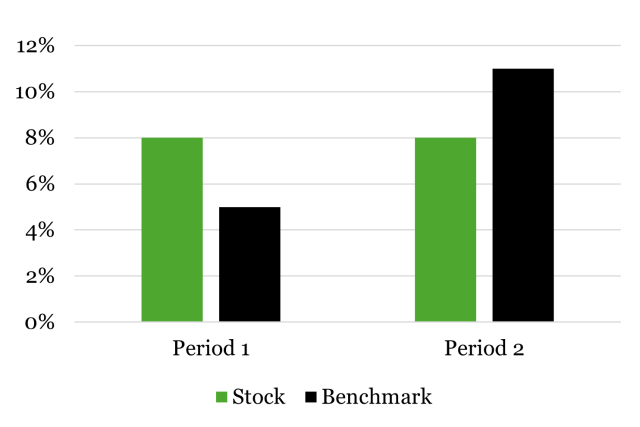
Pim van Vliet, PhD, is the author of High Returns from Low Risk: A Remarkable Stock Market Paradox with Jan de Koning. In the world of professional investing, a scary obsession has taken hold: the fixation on benchmarks and relative performance. This phenomenon, which I’m coining “benchmarkism,” is distorting incentives and pulling many institutional investors in the wrong direction. It’s time to explore how we can escape this benchmark trap for smarter investing where the focus is on  stable long-term wealth growth. The Rise of the Benchmark The rise of investment benchmarks started in the late 19th century when Charles Dow introduced the Dow Jones Industrial Average in 1896. At that time, the role of benchmarks was minimal. Investors were primarily focused on dividends, as demonstrated by funds like those offered by Robeco. Benchmarks played no role in Robeco’s funds until decades after the firm was founded in 1929. It wasn’t until the efficient market hypothesis gained prominence in the 1960s that benchmarks started becoming the investment industry’s central performance yardstick. Today, beating benchmarks is often seen as the definitive measure of success, overshadowing the most fundamental rules of investing — don’t lose capital and achieve an adequate return. Investors are increasingly fixated on relative short-term performance. John Maynard Keynes once quipped, “It is better to fail conventionally than to succeed unconventionally.” Nowhere is this statement embraced with as much approbation as in today’s benchmark-driven world. The Core Problem of Benchmarkism The crux of the problem with benchmarkism is that it shifts the investor’s focus away from absolute returns and capital preservation. Benchmarkism shifts the focus to outperforming the benchmark. But this can result in irrational decision-making. Imagine a portfolio manager choosing between a stable stock offering an 8% return and an index fund that averages 8% but fluctuates wildly. Logically, most investors would pick the stable stock for its lower absolute risk. Yet, a manager aiming to beat the benchmark might avoid the stable stock because it offers periods of no outperformance, which is a substantial risk in the realm of benchmarkism. This dilemma is illustrated in Figure 1. Exhibit 1. Stable stock versus volatile benchmark. A hypothetical example of returns of a stock and the benchmark in two periods. This behavior reflects how the drive to beat benchmarks can push investors to take on additional risks, diverting attention away from the two fundamental investment principles: capital preservation and long-term wealth growth. In bond markets, for example, debt-laden countries or corporations often get larger weights in bond indices. As a result, portfolios are often tilted toward the riskiest issuers, simply because they carry more debt. That’s the paradox of benchmark investing: it encourages risk-taking in pursuit of relative gains, sometimes at the expense of common sense. Historical Lesson of Fisher Black The focus on relative return over risk management isn’t new. Fisher Black — one of the architects of the now 60-year-old capital asset pricing model (CAPM) — tried to launch a low-risk equity fund at Wells Fargo in the early 1970s. His research demonstrated that low-beta stocks could achieve market-like returns with reduced capital risk. The fund aimed to profit from this principle of “winning by losing less.” Yet, it didn’t take off. The problem? Black’s innovative strategy faced leverage constraints, and investors were more focused on beating the market than reducing risk.[i] Ironically, it wasn’t until the dot-com bubble burst in 2000 and the financial crisis of 2008 that defensive, low-volatility strategies gained real traction. Several low-volatility ETFs became very popular, attracting large inflows in the early 2010s.[1] Today, Black’s idea is more relevant than ever. Defensive strategies have demonstrated their resilience by outperforming during downturns such as in 2022. However, the emphasis on relative performance often makes these strategies appear less appealing against an increasingly concentrated benchmark in bullish markets, as seen in the ongoing US tech rally of 2024. The Broader Risks of Benchmarkism The unintended consequences of benchmarkism extend beyond individual portfolios. By focusing solely on beating the benchmark, many institutional investors have become hostages to indices. This focus can lead to misallocation of capital, where risky investments become overvalued and safer ones remain underappreciated. A clear example of this was during the late 1990s tech bubble, when technology stocks became grossly overvalued as they gained larger and larger weights in the indices. Worse still, regulatory frameworks can reinforce this behavior. In countries like the Netherlands, corporate pension funds are required to explain why their performance deviates from the benchmark, often penalizing funds that pursue more defensive strategies. In Australia, the “Your Future, Your Super” law pressures investors to stick to benchmark-like returns, even when it might not be in the best long-term interest of their beneficiaries. The result? Professional investors, bound by fiduciary duties and regulatory oversight, cannot reduce the absolute risk in their equity portfolio to avoid falling behind their increasingly concentrated benchmark, even in markets that exhibit speculative bubbles or systemic instability. The Role of Index Committees The influence of benchmark providers, such as MSCI, is another critical factor to consider. These committees wield immense power in deciding which stocks or countries are included in an index. Their decisions, often shaped by lobbying efforts, have profound implications for global investment flows. A notable example is the inclusion of local Chinese stocks in global indices since 2018, which prompted investors worldwide to allocate capital to China, regardless of specific governance issues or geopolitical risk involved. Index providers are also lobbying to embed their benchmarks into regulatory frameworks. Recent moves in Brussels to incorporate Paris-Aligned benchmarks into the Sustainable Finance Disclosure Regulation (SFDR) illustrate how the subjective choices of index providers can steer large-scale investment flows. Yet these indices are not always consistent. For example, Nexans, a company central to the energy transition, was excluded from the Paris-Aligned High Yield Index due to its carbon emissions, while Ford Motor — a largely carbon-fuel-based automaker — was included. Such inconsistencies reveal the risks of relying too heavily on benchmarks. Benchmarks Unchained: Is There an

Escaping the Benchmark Trap: A Guide for Smarter Investing Read More »

The Witch of October Is Here: Remember Short-Term Pain = Long-Term Progress

The month of October strikes fear in the hearts of many Wall Street veterans — and for good reason. Over the last 123 years, 7 of the 10 worst days in US stock market history occurred during this seemingly haunted 31-day stretch. But there’s nothing supernatural about these October scares: They are the remnants of the 19th century agricultural financing cycle. During the 1800s, farmers harvested and shipped their crops to market in the fall, paying for the operation with large withdrawals from their local banks. These banks, in turn, withdrew funds from larger New York City banks and trusts to replenish their reserves, which made Wall Street financial markets especially vulnerable to panics. Even after the United States transitioned to an industrial economy and re-established a central banking system in the early 1900s, the memories of past Octobers seem to have conditioned investors to erupt in panic out of habit. October 2022 may be just the latest manifestation. Costs of Closet Tactical Asset Allocation Panic is the mortal enemy of long-term investors, especially in volatile markets, but that does not mean that we should sit idly by in the face of another October scare. At times like these, the late David Swensen‘s observation in his classic Unconventional Success is worth remembering: “Perhaps the most frequent variant of market timing comes not in the form of explicit bets for and against asset classes, but in the form of passive drift away from target allocations.” Many investors fail to heed this advice at the very moments when it is most valuable. Instead, they let their gains ride in bull markets and then freeze up when markets descend into bear territory. This is precisely the insidious form of tactical asset allocation referenced by Swensen. But history shows this is never wise. For every savant who successfully traverses the treacherous macroeconomic currents, many more suffer financial ruin while making the attempt. Failure to rebalance may not be ruinous, but it will almost certainly drag down long-term returns. Dow Jones Industrial Average: 10 Worst Trading Days: Date One-Day Decline 19 October 1987 -22.6% 28 October 1929 -12.8% 29 October 1929 -11.7% 18 December 1899 -8.7% 14 March 1907 -8.2% 26 October 1987 -8% 15 October 2008 -7.9% 18 October 1937 -7.8% 1 December 2008 -7.7% 8 October 2008 -7.3% Source: Dividend.com So, why is such tactical asset allocation so common among pension funds, foundations, endowments, and other institutional investors? Since many are advised by non-discretionary investment consultants who lack the authority to rebalance portfolios, they simply neglect to advise their clients to do so. But trustees need to take the initiative and ensure that they follow through on rebalancing during times like these. Short-Term Pain and Long-Term Gain In Principles, Ray Dalio advises readers to seek painful feedback so that they can confront their deficits and attain the insight necessary to eliminate them. He often repeats the mantra: Pain + Reflection = Progress. Economic events follow a similar principle. Today’s economic pain will likely intensify in the coming months, but that doesn’t mean that we suffer needlessly. The mistakes of the past must be corrected. Elevated inflation has persisted for too long, and re-establishing price stability is absolutely essential to ensure future economic prosperity. We learned this in the 1980s. There is no need to learn it again in the 2020s. We have to break the back of inflation, and while that will be painful, it will be worth it. Today’s hardships will not be for naught. After the recession of 1981 and 1982 subsided, the US economy came back stronger. Fueled by extraordinary technological innovation, the country went on to enjoy two decades of economic prosperity. The past two and a half years have had plenty of financial scares. We may see more this October and in the months ahead. But when it passes, we will breathe freely again. In the meantime, we need to steel our nerves, rebalance our portfolios, and trust that the pain we suffer now will be rewarded in the future. If you liked this post, don’t forget to subscribe to the Enterprising Investor All posts are the opinion of the author. As such, they should not be construed as investment advice, nor do the opinions expressed necessarily reflect the views of CFA Institute or the author’s employer. Image credit: ©Getty Images/Đorđe Milutinović Professional Learning for CFA Institute Members CFA Institute members are empowered to self-determine and self-report professional learning (PL) credits earned, including content on Enterprising Investor. Members can record credits easily using their online PL tracker. source

The Witch of October Is Here: Remember Short-Term Pain = Long-Term Progress Read More »

Global Fungible Money Flows Heighten Volatility Risks

Rapid yen appreciation in this year’s third quarter attracted policy attention when it triggered a brief-but-disruptive volatility surge across major asset markets. The precise contagion emerged quickly. The unwinding of yen carry-trades estimated in the order of several hundred billion dollars ignited a vicious cycle of forced liquidations. As currency gains lifted the repayment costs of yen loans funding non-yen investments, attempts to sell non-yen assets in haste to repay yen debt exacerbated both the yen rally and the local currency assets rout. Even though market sentiment eventually rebounded and volatility fell, the existence of substantial fair-weather carry-trades — made possible by institutional foreign currency borrowing — attracted policy attention. A mirage of “plentiful liquidity” that comingles “sticky” money supply with “transitory” flows likely overstated the financial system’s resiliency and market depth. In the context of Warren Buffett’s remark that “You don’t find out who’s been swimming naked until the tide goes out,” transitory liquidity from carry-trades were part of a recent phenomenon that kept markets’ “water level” artificially high and swimmers content, at least until 3Q 2024 demonstrated the fleeting nature of “liquidity-on-loan.” Fungible Money Sustained Buoyant Asset Prices Despite Rate Hikes In a subsequent interview, BIS Economic Adviser and Head of Research Hyun Song Shin reflected on the implications of the yen carry-trade unwind. Prior to the volatility episode, asset markets were recipients of inflows from institutional currency borrowing, commonly known as FX swaps. Such swaps bridges sources of cheap liquidity — like Japan — with markets of higher-yielding assets — like the United States. Amid rising FX swap flows, the yen carry-trades gradually evolved from retail investors in Japan putting yen savings into higher-yielding foreign currencies to market-moving institutional “yield-seeking” flows.   Figure 1. While FX swaps originally served the goal of currency hedging, Shin noted that financial uses of the FX swaps to convert borrowed cash into foreign currencies now represent the lion’s share of this market. Thus, institutions “not constrained by the funding currency” can source liquidity anywhere that is economic to do so, and FX swaps “project” these funds from one market to another, potentially drowning out local monetary measures and market signals. Shin proposed that if money is already “fungible across currencies” in the current system, then such borderless money erodes the importance of local money supply managed by national central banks. This also rationalizes the puzzling coexistence of high interest rates and buoyant asset valuations. If money supply is tight in the United States but loose in Japan, FX swaps can turn cheap liquidity under BOJ’s easing regime into “fungible dollars” to buy US assets and erode the effect of Fed tightening. This also explains the 3Q 2024 volatility spike and subsequent risk sentiment rebound seen in Figure 2. Both did not coincide with material changes in U.S. domestic liquidity conditions. For carry-trades inject or drain “transitory” liquidity unrelated to domestic liquidity conditions under the Fed’s purview. Figure 2. Borderless, Flighty Liquidity Complicates Policy Transmission and Heightens Market Volatility Under contemporary central bank frameworks, asset prices are key to monetary policy transmission. The state of risk appetite in equity and corporate debt markets, short-term and long-term interest rates, and currency valuations act as central banks’ conduit to influence activities in the real economy. Numerous financial conditions indices (FCIs) would measure the effective policy stance transmitted to the economy: Easier FCI: Markets relay looser policy to the economy via higher equity prices, lower yields, cheaper currency. Tighter FCI: Markets transmit restrictive policy via lower stock prices, higher yields, and stronger currency.  The existence of substantial carry-trade flows therefore adds “noise” to policy transmission by easing or tightening FCI on its own. If a national central bank intends to tighten policy, large carry-trade inflows enabled by cheap liquidity abroad and FX swaps erode such policy stances. Conversely, a carry-trade unwind reduces the easing effect of rate cuts. To asset markets, weaker policy influence on financial conditions implies greater hurdles to assess liquidity risk premium. Money supply suggests one liquidity condition, while “transitory” institutional carry-trades further modifies that calculus. The policy and market challenges together suggest higher symmetrical market volatility. In other words, euphoric rallies from inflows that eclipse policy tightening vs. asset routs from panic-induced unwinds that fuel calls for policy easing. If you liked this post, don’t forget to subscribe to the Enterprising Investor. All posts are the opinion of the author. As such, they should not be construed as investment advice, nor do the opinions expressed necessarily reflect the views of CFA Institute or the author’s employer. Image credit: ©Getty Images / Ascent / PKS Media Inc. Professional Learning for CFA Institute Members CFA Institute members are empowered to self-determine and self-report professional learning (PL) credits earned, including content on Enterprising Investor. Members can record credits easily using their online PL tracker. source

Global Fungible Money Flows Heighten Volatility Risks Read More »

The Downgrade Is Done. The Investor Response Is Just Beginning

For global investors and institutional asset managers, Moody’s downgrade of US sovereign debt is more than a symbolic signal — it’s a market event with portfolio-level consequences. The move by Moody’s to cut the US rating to Aa1 reflects growing concern about long-term fiscal stability, and it forces investment professionals to reassess Treasury exposure, sovereign risk modeling, and forward-looking allocation strategies. Downgrade with Real Implications When Moody’s stripped the United States of its triple-A rating after markets closed last Friday (May 16), it cited a “rising tide of debt” and prolonged fiscal inaction. While the downgrade does not change the fundamentals of the US economy, it marks a moment of strategic reflection for global investors. Rising Debt and Political Gridlock Moody’s decision did not occur in a vacuum. It followed years of fiscal strain amid gridlock in Washington. Federal debt has surged relative to GDP, and Moody’s projects deficits reaching nearly 9% of GDP by 2035, up from 6.4% in 2024. The political context was pivotal. The downgrade came amid contentious showdowns over the debt ceiling and federal budget. As this blog went to press, the US House narrowly passed a sweeping tax and spending bill. The statutory debt limit, reinstated in January 2025 at $36.1 trillion, was fast approaching. Analysts warned that the United States could default by mid-July if Congress failed to act. The Trump Administration and Congress had prioritized tax relief and strategic investments to support economic growth, while maintaining a commitment to fiscal responsibility over the long term. Moody’s warned that extending the 2017 tax cuts would significantly worsen the outlook, adding roughly $4 trillion to deficits over the next decade. Just hours before the downgrade, budget negotiations faced renewed challenges in Congress, underscoring the complexities of achieving bipartisan consensus on long-term fiscal solutions. Investor Response and Repricing Risk The downgrade jolted investors but did not trigger panic. Treasury yields jumped in early trading on Monday (May 19) and stocks dipped initially, reflecting routine market adjustments in response to updated credit assessments. “Very surprising…markets were not expecting this at all,” admitted one Wall Street trading head who was caught off guard by the downgrade. However, there was no mass exodus from US assets. Global investors continued to view Treasuries as a safe haven even with a lower rating. For institutional investors, the downgrade serves as a reminder to revisit sovereign risk frameworks. Portfolio managers may need to adjust asset allocations, hedge exposure to US Treasuries, or recalibrate models that rely on triple-A-rated government debt as a benchmark. While the market response was muted, the rating shift could subtly influence capital weightings and collateral requirements. Any rise in US borrowing costs was modest. Credit spreads on highly rated corporate and municipal bonds widened only slightly, signaling a minor repricing of risk rather than a loss of confidence. One notable move was gold’s surge above $3,200 per ounce — a flight-to-safety response. Meanwhile, the US dollar held firm, its reserve-currency status unshaken by a one-notch rating change. Global Spillovers and EM Vulnerabilities Moody’s downgrade of US sovereign debt carried symbolic weight far beyond American shores. Financial leaders from Frankfurt to Beijing watched closely, mindful that any shift in US credit conditions can send ripples through global markets. In this case, the ripples were subtle but significant. Global investors reassessed their portfolios over the weekend, balancing the slight uptick in US risk with conditions elsewhere. Emerging markets felt a chill. Some emerging economy bonds and currencies came under pressure as the news sparked a modest “risk-off” mood. When the world’s benchmark risk-free asset is perceived as marginally riskier, investors often become more cautious toward riskier sovereigns. Indeed, analysts noted a small widening of emerging market sovereign bond spreads on Monday, and a few developing-nation currencies slipped as money moved toward dollar assets. At the same time, higher US yields — even marginally higher — can attract capital flows out of emerging markets, raising their borrowing costs. For some emerging economies already navigating global financial tightening, the downgrade added a layer of complexity to their outlook. Some finance ministers from Asia and Africa voiced concern that their countries could face capital outflows or higher interest on new debt issuance if global investors demand a higher premium. The consensus among many economists, however, is that the overall impact on emerging markets likely will be contained. Liability-driven investors, insurance companies, and global fixed income managers may face ripple effects if credit rating changes affect capital reserve calculations or yield expectations. Even minor shifts in perceptions of US credit quality can cascade through models that prioritize safety and duration matching. Fiscal Credibility and the Investor Outlook Despite the political drama and Wall Street jitters, the prevailing view in policy circles is that the United States retains extraordinary financial resilience. Moody’s itself acknowledged that US creditworthiness rests on “exceptional credit strengths” — a diverse and productive economy, unrivaled monetary flexibility, and the government’s unblemished record of honoring debt through every crisis. The downgrade has not changed the fact that US Treasury bonds remain the world’s safe asset of choice, underpinning the dollar-based international financial system. No other nation can yet match the United States’ capacity to issue debt at such scale, in its own currency, at relatively low cost. The real question now is how US policymakers respond. The Moody’s downgrade is more than symbolic; it’s a warning to restore fiscal credibility. That means a medium-term plan to reduce deficits, stabilize debt-to-GDP, and improve policy predictability. As the IMF and others have noted, governance matters: recurring brinkmanship risks eroding investor confidence in Treasuries as the global benchmark. For long-term investors, a credible bipartisan approach — focused on spending discipline, targeted revenue, and durable policy frameworks — could reinforce the US Treasury market’s central role in global finance. In contrast, ongoing gridlock may lead to higher risk premiums or a shift toward sovereign diversification. Early signals are modest but encouraging. Lawmakers have revived talks on a fiscal commission, and the White House has shown openness to reform. For markets, what matters isn’t the downgrade — it’s the path forward. The world still depends on a financially sound America. Investors

The Downgrade Is Done. The Investor Response Is Just Beginning Read More »

What Lies Beneath a Buyout: The Complex Mechanics of Private Equity Deals

Private equity (PE) buyouts are intricate financial maneuvers, often shrouded in complexity. By utilizing tiered acquisition structures and strategic vehicles, PE investors can unlock value while safeguarding investments. This article explores the nuances of these frameworks, from the role of acquisition vehicles to jurisdictional intricacies and the rise of offshore registrations. It is the first in a three-part series. When PE investors acquire companies in a buyout, they typically use newly formed acquisition vehicles to do so, rather than directly acquiring the operating companies. These vehicles –- also referred to as holding companies, or special purpose vehicles (SPVs) — are created for the purpose of the buyout and have not traded prior to the transaction closing. The number of acquisition vehicles which are created can vary and will depend on the complexity of the structure of the buyout and the jurisdictions involved. Figure 1 shows what a typical three-tiered acquisition structure may look like. Figure 1: Tiered acquisition structure In this example, Topco, Midco, and Bidco are vehicles which are created to facilitate the buyout of the operating company. A PE fund, very often alongside the target firm’s management team, invest into the newly created Topco acquisition vehicle. This vehicle lends the money into the Midco vehicle, which borrows some amount of debt — typically shareholder debt from the PE fund or junior debt from an external provider — and lends this, plus the money from the Topco vehicle, into the Bidco vehicle. Finally, the Bidco vehicle borrows some amount of external senior debt and uses its total amount of money to buy out all debtholders and shareholders of the operating company.[1] Through this tiered structure, because the senior lender lends to the Bidco vehicle and not to the Topco vehicle, the senior lender has direct rights against the entity which owns the operating company, and therefore the assets of the target group. This structure ensures that the senior lender’s debt is not structurally subordinated to junior debtholders and equity holders. It gives the senior lender prior claim to the underlying assets of the target company. External senior debt providers in buyouts, such as banks, will often favor this structural subordination. The number of different securities which are issued to finance the transaction and the complexity of the buyout are both important factors when forming a buyout structure. For example, in buy-and-build deals, where PE investors acquire one platform company and then bolt-on other targets to the platform, these acquisition structures can become more complex. Differences in jurisdictions also play an important role in determining the transaction structure. For example, in the US Chapter 11 bankruptcy laws offer strong protection for junior lenders, so inter-creditor agreements and contractual provisions may suffice. The strong protections also mean there is less need for the creation of tiered acquisition vehicles as there may be in the United Kingdom or European jurisdictions. Indeed, there may only be two vehicles in a US buyout structure: one for equity holders and another for all debtholders. All debt instruments used to finance the transaction may be loaned into a single entity, where there are contractual provisions and inter-creditor arrangements that achieve the required structural subordination, in the same way that UK and European buyouts do through the layering of different acquisition vehicles. Nevertheless, more complex US buyouts and multi-jurisdictional transactions may involve more elaborate structures. It is also worth understanding the registration of acquisition vehicles in offshore jurisdictions – a popular practice in the United Kingdom in recent years, driven in large part to avoid withholding tax.[2] Many PE investors acquiring UK companies – whether they are based in the United Kingdom, the United States, or elsewhere — have created acquisition vehicles registered in offshore jurisdictions. Popular offshore jurisdictions include the Channel Islands, Luxembourg, and the Cayman Islands. Aside from tax-related reasons, registering these entities offshore may also provide PE acquirers with greater flexibility in receiving dividends from their portfolio companies. For example, distributions under Jersey or Guernsey law (in the Channel Islands) can be made without requiring distributable profits to be available. In a recent research paper, I document a considerable rise in the use of offshore vehicles in buyout transactions in the United Kingdom. In 2000, only 5% of buyouts involved an offshore ultimate holding entity, compared to more than 25% of deals in 2022 (see Figure 2). It appears to be particularly common in larger buyout transactions and in buyouts involving PE firms who are headquartered overseas. Given that when the ultimate holding entity is registered offshore its financial accounts are not publicly accessible (unlike when the entity is registered in the United Kingdom), this highlights an important decline in the transparency of PE buyouts in the United Kingdom over the last two decades. Figure 2. Key Takeaways: Acquisition Vehicles as Essential Tools: Private equity buyouts commonly rely on tiered acquisition structures, with vehicles like Topco, Midco, and Bidco playing critical roles in managing investments and debts. Structural Subordination Benefits: The layered structure ensures that senior debt providers retain priority over junior lenders and equity holders, safeguarding their claims against the operating company’s assets. Jurisdictional Differences Matter: Variations in laws, such as Chapter 11 bankruptcy protections in the United States, influence the complexity of acquisition structures. Stronger bankruptcy laws may reduce the need for multiple vehicles. Offshore Flexibility: Registering acquisition vehicles in offshore jurisdictions like the Channel Islands or Luxembourg offers tax advantages and operational flexibility, particularly for dividend distributions. This has become an increasingly popular practice in the United Kingdom in recent years. Complexity Grows with Strategy: Buy-and-build deals and multi-jurisdictional transactions add layers of complexity, making structuring crucial for effective management and risk mitigation. By understanding these elements, stakeholders can navigate the intricate world of private equity buyouts with confidence and precision. In my next post, I will cover the consolidation of PE company portfolio accounts. [1] These acquisition vehicles can be called anything. Topco, Midco, and Bidco have traditionally been common in the United Kingdom and are used here for illustrative

What Lies Beneath a Buyout: The Complex Mechanics of Private Equity Deals Read More »

Will They, or Won’t They? The Risk of Betting on the Fed

The world economy stared into the abyss on 16 March 2020. COVID-19 had sent country after country into lockdown, disrupting manufacturing supply chains and service sectors. Global US dollar liquidity had dried up, and recession risks were soaring. In Europe, credit default swaps on corporates traded with a default probability of around 38%. As confirmed COVID-19 cases soared from fewer than 10 in January to nearly 165,000, scientists speculated desperately on fatality and transmission rates. Market participants, meanwhile, were on tenterhooks. As sentiment morphed from concern to panic, the crash began. The Dow Jones ended the day down nearly 3,000 points. The S&P 500 dropped 12%, and the NASDAQ fell 12.3%. It was the worst day for US equity markets since Black Monday in 1987. Reprising its global financial crisis (GFC) playbook, the US Federal Reserve sought to calm the markets and extended immediate liquidity to prevent a pandemic-induced cross-market domino effect. Before the market opened on 16 March 2020, the Fed agreed to swap-line arrangements with five other central banks in an effort to ease the strain on the global credit supply. A few days later, the Fed entered similar agreements with nine other central banks. But it wasn’t enough. Before the end of March, the Fed extended its provisions to even more central banks holding US Treasury securities, Saudi Arabia’s among them. These central banks could temporarily swap their securities held with the Fed to access immediate US dollar funding so they wouldn’t need to liquidate their Treasuries. Liquidity support for US dollar borrowers will always be an option for the Fed. Such interventions show the central bank is committed to alleviating economic instability concerns and protect the economy from financial wreckage. In the short term. But what about the long term? Does such swift — and often predictable — action heighten the vulnerability of the financial system? Does it create moral hazard for central banks and market participants? The state an economy is in when crisis strikes is important. Thanks to stricter regulation and the evolving Basel Accords, banks today are more resilient and better capitalized than they were in the lead-up to the GFC. They are not the main concern. But the economy is holding more debt and is even more vulnerable to shocks. In 2020, total global debt soared at a pace not seen since World War II amid massive monetary stimulus. By the end of 2021, global debt had reached a record US $303 trillion. This excess debt has created greater systemic risk, especially amid the recent surge in interest rates. Companies gorged on credit during the easy money era. Safe in the knowledge that policymakers would intervene during turbulent times, they failed to build a margin of safety. Recent market volatility — the brutal faceoffs between bulls and bears — has been driven by speculation about what the Fed will do next. The back and forth has repeated itself often this year: Bad economic news sets the bulls running in anticipation of a potential Fed pivot to smaller hikes, while strong GDP growth or employment numbers feed the bears, raising the odds that the Fed will sticks to its guns. Now, as the December Federal Open Market Committee (FOMC) meeting approaches, the equity markets have caught a bid again on high hopes of a pivot. The Fed first hiked rates this past March, so the current hiking cycle isn’t even a year old. Yet indebted firms are already showing strain. How many more hikes can they stomach, and for how long? Preventing runaway inflation is critical, but so is addressing the inevitable consequences through carefully crafted fiscal policies that take the whole economy into account. As investment professionals, we have to anticipate the long-term challenge. Today, the threat is clear: The higher interest rate environment will expose financially leveraged corporations. That means that risk management has to be among our top priorities and we have to hedge the interest rate hiking cycle. Active asset and liability management require we look beyond the accounting impact and focus on the economic value of equity, among other metrics. The bottom line is that amid economic turmoil, the solution to the imminent threat often creates more significant long-term dangers. We should avoid speculating as to when or whether central banks or regulators will intervene. We also need to remember that just as every economic downturn has unique causes, they also have unique cures. If you liked this post, don’t forget to subscribe to the Enterprising Investor All posts are the opinion of the author. As such, they should not be construed as investment advice, nor do the opinions expressed necessarily reflect the views of CFA Institute or the author’s employer. Image courtesy of the US Federal Reserve Professional Learning for CFA Institute Members CFA Institute members are empowered to self-determine and self-report professional learning (PL) credits earned, including content on Enterprising Investor. Members can record credits easily using their online PL tracker. source

Will They, or Won’t They? The Risk of Betting on the Fed Read More »

Distress Investing: A Tale of Two Case Studies

With recession forecasted in many economies this year or next, distressed situations will be an important source of deals for prospective investors. But what will matter is whether the targets are permanently impaired or can be turned around. Two real-life scenarios from the debt bubble of the early aughts and the ensuing credit crunch provide helpful guidance. Cyclical Volatility, or Dislocation The UK investment firm Candover bought the hygienic products producer Ontex for €1 billion, or 8.1 times EBITDA, in 2002. The debt package, composed of bog-standard senior and mezzanine loans, totaled 6 times earnings. Despite strong economic growth, Ontex’s EBITDA margin dropped from 17% to 12% within three years due largely to rising oil prices. Oil is a key ingredient of the absorbent powder in Ontex’s diapers, and the company could not pass the costs onto customers because their products are distributed by Walmart, Tesco, and other price setters with oligopolistic positions. Unable to ship directly to consumers, and as a private-label manufacturer without a dominant brand, Ontex is a price-taker. But this wasn’t a new development. In the past, Ontex’s profitability had slumped whenever oil prices spiked. Still, excessive leverage didn’t make Ontex a bad investment. Rather, its debt package had a rigid structure with a set repayment schedule and strict interest margins when market cyclicality demanded more agile lending terms. When TPG and Goldman Sachs purchased Ontex from Candover in 2010, covenant-light — cov-lite — loans had become plain-vanilla instruments that gave borrowers the flexibility to adapt to such economic dislocation. That was what Ontex needed. As crude oil prices rose more than 160% between early 2016 and late 2018, its EBITDA margins slipped from 12.5% to 10.2%. Structural Change, or Disruption But there’s another kind of distress scenario where market shifts are more extensive. The private equity (PE) firm Terra Firma executed a leveraged buyout (LBO) of the storied record label EMI Music, valued at £4.2 billion, in 2007. Unlike Ontex’s debt structure, EMI’s featured all the tricks in the PE toolkit, including a gracious cov-lite package with unlimited rights to equity cures and abundant EBITDA adjustments. Yet the deal proved disastrous. The internet revolution had shaken up the recording industry, and for years EMI had struggled to adapt. To turn EMI’s fortunes around, Terra Firma planned to raise capital in the bond markets and secure it against the recurring cash flows of EMI’s music catalogs. It also hoped to restore margins by cutting the workforce, outsourcing some activities, renegotiating artist contracts, rationalizing the property portfolio, and shrinking expense accounts. Terra Firma likewise had its eye on new revenue streams — concerts, online services, merchandising, and artist management — and sought to onboard new tech talent to implement the digital transition. Yet despite multiple equity cures, EMI’s sole lender, Citi, took it over in 2011 and hastily sold it off piecemeal. EMI, it turned out, was not experiencing a brief dislocation but a permanent disruption. Due to online piracy, US compact disc (CD) shipments had collapsed by two-fifths between 1999 and 2007. In the fiscal quarter preceding the buyout, EMI CD sales had fallen by 20%. Paying over 18 times trailing EBITDA for such a business proved unwise. Adding leverage to a business facing such severe challenges wasn’t advisable. EMI’s net debt-to-EBITDA ratio remained above 8 throughout the LBO period. The turnaround strategy never improved profitability enough to keep up with the steepening debt commitments. The Risks Pyramid EMI’s experience shows how significant execution risk does not mix well with leverage amid a major restructuring. Cost cuts, asset disposals, contract renegotiations, refinancing, securitizations, and other conventional strategic and operating tools are no match for disruptive innovation. That’s why dislocation cannot be confused with disruption. The former is temporary and cyclical — it is manageable, even when it is recurrent by nature. Disruption, by contrast, is permanent and structural; for many businesses, it is a terminal threat. Whereas dislocation requires adaptation and can be tackled by progressively altering a firm’s strategy, disruption calls for reinvention, in which case a firm must reengineer its operations. In such a fundamental scenario, the extensive use of debt is a very bad idea. The Risks Pyramid below visualizes this dilemma: Leverage sits atop many other risk categories. Companies have little room for financial risk — i.e., debt — when facing market, operational, and strategic headwinds. Under the weight of so much uncertainty, additional leverage can crush any corporate borrower. Risks Pyramid Structure The Great Glut The unprecedented monetary stimulus in the aftermath of the global financial crisis (GFC) and during the pandemic ought to provide fertile ground for distress investing in the years ahead. Excess capital is frequently misallocated and leads to wasteful and ill-advised investments. It can kill returns. Debt-bloated buyouts and overcapitalized start-ups are plentiful, but thanks to capital accumulation — $12 trillion of assets, including $3 trillion in dry powder — private markets may take a long time to adjust. Following its March 2000 peak, the NASDAQ did not hit bottom until October 2002, and many dot-coms were still reeling when the GFC broke out. Today’s private market shakeout may entail a similarly extended wait. PE and venture capital (VC) firms would prefer to hold onto impaired assets and keep earning fees rather than acknowledge the true state of their portfolios. Yet with recent bank collapses, the bridge financing that start-ups need to postpone any down round may dry up. With their avid use of leverage, financial sponsors can still manage downside risks by negotiating looser loan agreements and massaging numbers. Too much debt, however, can leave borrowers in a zombie state and make it harder for distress investors to step in. They might have to wait it out like Citi did amid EMI’s inescapable disintegration in the wake of the GFC. Dealing with Market Fracture The financialization of the markets raises a broader question: Does the growing debt overhang represent temporary turbulence or a more radical discontinuity of modern economies? The cost of a stretched balance

Distress Investing: A Tale of Two Case Studies Read More »