CIO CIO

The low-code lessons CIOs can apply to agentic AI

Managing agents the low code way Agentic AI ranges from simple automations for daily tasks based on ‘fill in the blank’ prompts, to more autonomous workflows that detect inputs like incoming emails that trigger business processes to look up information and send responses, or even place an order or book a meeting. Gen AI makes those automations both less fragile and easier to create. In many ways it’s a natural progression, and low code platforms like Microsoft’s Power Platform, Mendix, Salesforce, and Zoho, which have offered AI features to simplify development for several years, are now adding gen AI tools to assist users to build apps and workflows. In Forrester’s research, Bratincevic says the number-one use case for low code platforms is AI-infused applications. Just as importantly, they apply the same compliance, governance, information security, and auditing tools to agentic AI. Like low code, gen AI agents need access to data sources and connections to line of business applications, and organizations will also want policies that control access and what actions can be taken, as well as how widely users can share apps and workflows. As with any other tools with consumption-based pricing, IT teams will also want to know about usage and adoption, and managers will want to look at what that delivers for the business to understand ROI. source

The low-code lessons CIOs can apply to agentic AI Read More »

EXL Code Harbor speeds legacy code migration through genAI

Overview Companies that have legacy codebases and are looking to speed up their digital transformation or code migration are often faced with a lengthy, cumbersome project. Code Harbor from EXL aims to accelerate this migration through the use of a generative AI-enabled tool. In addition to enhancing data and optimizing for code governance, the tool addresses the manual effort of writing and optimizing code. Swati Malhotra, senior engagement leader at EXL, demonstrates key features of the Code Harbor offering. This episode is sponsored by EXL, which drives business forward with data and AI. Learn more at exlservice.com. Website: https://www.exlservice.com/insights/solution-sheet/exl-code-harbor Register Now source

EXL Code Harbor speeds legacy code migration through genAI Read More »

The biggest enterprise technology M&A deals of the year (so far)

Perforce absorbs data virtualization and testing firm Delphix  Perforce, a provider of enterprise developer software, has acquired data virtualization and masking technology provider Delphix for an undisclosed sum. Analysts said that the move is part of Perforce’s attempts to create a more integrated, end-to-end developer platform for DevOps teams, thanks to Delphix’s ability to make testing easier through virtualization and masking out personally identifiable information used by applications.  February 2024  KKR nabs ex-VMware divisions from Broadcom in $4 billion deal Private equity firm KKR acquired Broadcom’s End-User Computing Division (which is made up of former VMware business units) for $4 billion in a deal announced at the end of the month. Flagship products that have been acquired by KKR include desktop and application virtualization solution Horizon, as well as unified endpoint management platform Workspace ONE. FTC continues rearguard action against Microsoft’s $68.7 billion bid for Activision Blizzard  The US Federal Trade Commission is still trying to reverse Microsoft’s acquisition of games developer Activision Blizzard, which Microsoft announced it had closed in October. On Dec. 6, the FTC asked an appeals court in California to overturn a lower court decision allowing the deal to go ahead, and on Feb. 7 wrote to the court protesting that Microsoft had started laying off staff at the newly acquired division on Jan. 25, contradicting statements the company had made to the court.   Activision Blizzard’s apps are not typically authorized on enterprise networks, but when the deal was first announced, it seemed there was a chance its technology for creating and animating virtual worlds could make it into the workplace. Back then, Microsoft said the acquisition would give it the building blocks for the metaverse. However, since then Microsoft has laid off 100 staff in its industrial metaverse unit, essentially closing it down.  January 2024  Accenture nabs Navisite in latest 2024 acquisition  Navisite, the Massachusetts-based digital transformation services provider, was snapped up for an undisclosed price by Accenture as part of the professional services company’s move to help its clients get ready to adopt generative AI. A total of 1,500 workers from Navisite will join Accenture’s infrastructure engineering practice, among them 400 cloud engineers with deep experience across cloud providers and enterprise technologies.  InSemi to become part of Infosys in semiconductor deal  IT services consulting firm Infosys announced plans in early January to buy InSemi, a semiconductor and embedded services design company, for an undisclosed amount. Infosys expects InSemi’s expertise will enable it to provide stronger AI and engineering R&D offerings to its customers, given the centrality of silicon to new technologies including AI, 5G, and quantum computing.  IBM to buy more mainframe expertise from Advanced  IBM is buying mainframe application and data modernization assets from Advanced, a UK company that boasts extensive experience in mainframe strategy. IBM will fold the team into its consulting business. Mainframes are still surprisingly widespread, and many companies — including some of the largest banks in the world — are dependent on them for core transaction processing functions. Terms of the deal were not disclosed.   December 2023  Alteryx agrees to be bought by two investment funds  Analytics cloud platform Alteryx is going private. It has agreed to be acquired by Clearlake Capital and Insight Partners in a deal valued at $4.4 billion. Alteryx CEO Mark Anderson said the deal will provide the company with increased working capital and access to industry expertise to grow. Clearlake already owns stakes in a number of enterprise technology firms, including Kofax, Metricstream, Perforce, and Precisely. Insight’s portfolio includes Augury, Camunda, Docker, and Veeam.  Silver Lake sells parts of Software AG to IBM  IBM has agreed to buy the StreamSets and webMethods integration-platform-as-a-service enterprise technology platforms from Software AG for $2.13 billion. It’s an odd move for Software AG — its CEO recently put the “super iPaaS” at the very heart of his strategy — but great news for shareholder Silver Lake, which bought a majority stake in July in a deal valuing the whole company at $2.4 billion. The sale will leave Software AG with four main product lines: Aris for business process mining; Alfabet for managing IT transformation; Cumulocity for IoT, and Adabas & Natural, its legacy mainframe modernization programming languages. For IBM, the idea appears to be to bolster its value proposition for WatsonX AI, enabling the company to deploy it faster in industries dependent on large-scale multi-cloud and hybrid-cloud environments.  Salesforce buys Spiff to spiff up compensation tracking capabilities  Salesforce has agreed to buy Spiff, a developer of software for tracking sales commissions. It plans to integrate it into its Sales cloud platform to enhance its performance management functionality. The majority of Spiff’s customers use Salesforce as their CRM, and its software is sold through Salesforce’s AppExchange.   ServiceNow expands process mining with Ultimate acquisition  ServiceNow has bought another company — and despite its name, it surely won’t be the last — to expand the process mining capabilities of its Now Platform. UltimateSuite’s task mining software analyses keystrokes and mouse clicks to identify automation opportunities and streamline repetitive work.  Adobe abandons Figma deal after running into regulatory trouble  Adobe has given up on its plan to buy Figma, one of the largest rivals to its online design tool Creative Cloud, after running into resistance from competition regulators. On Aug. 7 the European Commission called in Adobe’s September 2022 agreement to buy Figma for $20 billion for a full investigation, but it was Adobe’s refusal to comply with remedies required by the UK Competition and Markets Authority that finally killed the deal. Figma is more often seen in the art department than the IT department, but with Adobe also a big player in customer data platforms, CIOs will be relieved the company won’t be getting an even bigger hold on their cloud software spend.  Cognizant buys Thirdera to boost its ServiceNow capabilities  IT outsourcer Cognizant has snapped up Thirdera, a ServiceNow partner based in Colorado, and added almost 1,000 employees to its workforce of almost 350,000. Of particular interest was Thirdera’s in-house online training platform, Thirdera University, which Cognizant plans to use to

The biggest enterprise technology M&A deals of the year (so far) Read More »

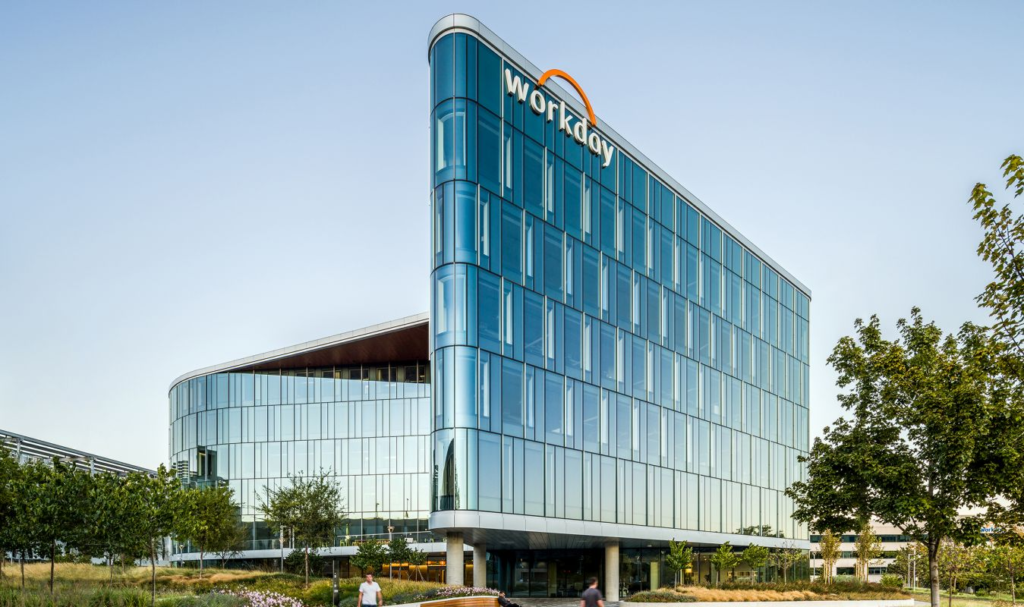
Workday aims to manage AI agents like employees

At its Workday Rising event in September, the company rolled out Illuminate, its next-gen agentic AI platform, along with four AI agents: Recruiter, Expenses, Succession, and Optimize. Recruiter is for sourcing candidates, recommending talent, and automating outreach and interview scheduling. Expenses creates, submits, and approves expense reports. Succession automates the succession planning process, prompting managers to create succession plans. It also recommends successors, and generates personalized development plans. Optimize identifies bottlenecks, inefficiencies and deviations from the company’s best practices. Role with it Workday has adopted an agentic AI strategy around what it dubs role-based AI agents. Most AI agents in the market today are task-based and follow specific step-by-step instructions. Workday CEO Carl Eschenbach believes task-based agents must evolve into role-based agents, which contain a configurable set of skills that give them more autonomy and the ability to better support humans in particular roles. “The future of agents is when they become role-based,” he said in the same press conference. “These role-based agents will maybe start out with a skill, but over time they will have many skills. This is how we will truly unlock the power of AI.” source

Workday aims to manage AI agents like employees Read More »

BPTN’s Obsidi connects recruiters with Black IT talent

That’s why it’s so important to be intentional with your hiring practices. Otherwise, when it comes to hiring, mentorship, promotions, and succession planning, people are more likely to “bet on potential” if it’s someone they “have something in common with,” Douglas says.  “Unless you’re going to make a conscious effort to — what I like to say — ‘vibe outside your tribe,’ and go and connect with people that you typically wouldn’t necessarily be associated with, you’re going to keep [hiring and promoting] more and more of the same,” he says. Douglas gives the example of a hiring manager who works down the hall from someone more junior, but their sons play on the same hockey team. In this instance, the two colleagues have something in common, and that hiring manager is going to see themselves in that employee. However, if it was an employee who had a child playing another sport, something from another culture or part of the world, it’s not as effortless to “assimilate and have a conversation outside of work.” source

BPTN’s Obsidi connects recruiters with Black IT talent Read More »

IDC and e& enterprise to lead AI Innovation at 18th annual Middle East CIO Summit

The 18th Annual IDC Middle East CIO Summit is set to explore the dynamic world of artificial intelligence and its potential to drive business success. In partnership with e& enterprise, the region’s leading provider of secure, scalable digital solutions, the summit will serve as a critical platform for shaping the future of AI adoption in the Middle East. Taking place on February 19–20, 2025, at the Grand Hyatt Dubai, this year’s summit, themed Architecting an AI-Fueled Business, promises to explore how AI is revolutionizing business operations, from improving productivity to boosting profitability. As AI adoption accelerates across the META region, IDC’s latest research shows that 72% of organizations in the area are either already using AI or planning to adopt it within the next two years. This highlights the growing importance of AI as a key driver of future business strategies. With e& enterprise as the official Host Partner, the summit is set to be an important event in this transformation journey, enabling companies to leverage cutting-edge technologies for their digital futures. “We are thrilled to welcome e& enterprise as Host Partner for this landmark edition of the IDC Middle East CIO Summit,” says Jyoti Lalchandani, IDC’s regional managing director for META, Central Asia, and India. “e& enterprise’s leadership in driving digital transformation in the region is unmatched, and together we aim to empower the ICT ecosystem to thrive in an AI-dominated era.” source

IDC and e& enterprise to lead AI Innovation at 18th annual Middle East CIO Summit Read More »

CIO Leadership Live Middle East with Tanveer Group Chief Information Officer, BGC HOLDING LTD

Welcome to a new episode of CIO Leadership Live Middle East! In this episode, we’re joined by a true visionary in the world of technology and leadership—Tanveer, the Group Chief Information Officer at BGC Holding Ltd. With years of experience steering the digital transformation and IT strategies at one of the region’s leading conglomerates, Tanveer will share insights into the evolving role of a CIO, key challenges in today’s fast-paced tech landscape, and the innovative approaches he’s spearheading to drive business growth and efficiency. Register Now source

CIO Leadership Live Middle East with Tanveer Group Chief Information Officer, BGC HOLDING LTD Read More »

Why firewalls and VPNs give you a false sense of security

In the ever-changing landscape of cybersecurity threats, traditional pillars like firewalls and VPNs are struggling to keep pace with the evolving challenges. Organizations are facing an upsurge in security breaches and vulnerabilities that surpass the capabilities of these longstanding security measures. The shift from on-premises work environments to more remote and digital setups has forced industries to rethink their security strategies. Once hailed as the foundation of security, firewalls and VPNs now find themselves outdated and inadequate. While they once provided a level of security, these tools now reveal vulnerabilities that can leave companies exposed to risks, particularly as they embrace digital transformations. In 2025, innovation in generative AI, automation, and IoT/OT technologies is poised to push boundaries across various industries. This progress, while groundbreaking, also presents new challenges. It enables attackers to automate phishing campaigns, create evasive malware, expedite threat development through AI, and offer Ransomware-as-a-Service (RaaS). With the increasing concerns surrounding cybersecurity breaches, the focus has shifted towards the potential vulnerabilities in VPNs that could grant attackers unauthorized access. A recent Cybersecurity Insider survey uncovered that 56% of organizations have been targets of cyberattacks exploiting VPN security vulnerabilities in the last year. Moreover, a staggering 91% of respondents express concerns about VPNs leading to a compromising breach. Even with strong firewalls in place, major organizations remain vulnerable to breaches. Delve deeper into the reasons why firewalls and VPNs might not be providing sufficient protection. A thinner sheet of protection across a larger attack surface VPNs and firewalls play a crucial role in extending networks, but they also come with risks. By connecting more users, devices, locations, and clouds, they inadvertently expand the attack surface with public IP addresses. This expansion allows users to work remotely from anywhere with an internet connection, further stretching the network’s reach. Moreover, the rise of IoT devices has led to a surge in Wi-Fi access points within this extended network. Even seemingly innocuous devices like Wi-Fi-connected espresso machines, meant for a quick post-lunch pick-me-up, contribute to the proliferation of new attack vectors that cybercriminals can exploit. Perimeter-based architecture means more work for IT teams More doesn’t mean better when it comes to firewalls and VPNs. Expanding a perimeter-based security architecture rooted in firewalls and VPNs means more deployments, more overhead costs, and more time wasted for IT teams – but less security and less peace of mind. Pain also comes in the form of degraded user experience and satisfaction with VPN technology for the entire organization due to backhauling traffic. Other challenges like the cost and complexity of patch management, security updates, software upgrades, and constantly refreshing aging equipment as an organization grows are enough to exhaust even the largest and most efficient IT teams. The bigger the network, the more operational complexity and time required. VPNs and firewalls can’t effectively guard against today’s threat landscape VPNs and firewalls deployed to protect and defend network access behave a lot like a security guard who sits at the front of a store in order to stop theft. Security Guards Firewalls and VPNs Stationed at the front door of a valuable store – tasked with identifying and stopping attacks. Can’t monitor all entrances at the same time. Deployed at key access points to an organization’s network. Can’t stop all the threats across every access point. Once an attacker gets in, they get access to the entire store. Permit lateral threat movement by placing users and entities onto the network. 1:few threat detection can’t scale unless you hire a lot of security guards to monitor all entrances. Can’t inspect encrypted traffic and enforce real-time security policies at scale. Can be slow, tired, expensive to hire, late for their shift and present a number of other issues that allow threats to go undetected and unanswered. Suffer from a variety of other challenges related to cost, complexity, operational inefficiency, poor user experiences, organizational rigidity, and more. Much like a lone security guard, VPNs and firewalls can help mitigate some risks, but they can’t keep up with the scale and complexity of the cybercrime of today. Your network is extending exponentially as you digitally transform your organization. With constant attacks on the horizon and a thinner cover of protection, how many million security guards can you hire? The Zero Trust Exchange delivers on the promise of security Unlike network-centric technologies like VPNs – zero trust architecture minimizes your attack surface and connects users to the apps they need directly—without putting anyone or anything on the network as a whole. Zscaler delivers zero trust with its cloud native platform: the Zscaler Zero Trust Exchange. The Zero Trust Exchange starts with the premise that no user, workload, or device is inherently trusted. The platform brokers a secure connection between a user, workload, or device and an application—over any network, from anywhere by looking at identity, app policies, and risk. As threats grow more dangerous, we can’t rely on a single security guard to keep everybody out anymore. VPNs and firewalls were designed to make organizations feel secure, but with all the evolving threats of today highlighting the cracks in these technologies, IT and security teams are left with a false sense of security. Truly secure digital transformation can only be delivered by implementing a zero trust architecture. The Zscaler Zero Trust Exchange is the comprehensive cloud platform designed to keep your users, workloads, IoT/OT, and B2B traffic safe in an environment where VPNs and firewalls can’t. If you’d like to learn more, this webinar serves as an introduction to zero trust and provides entry-level information about the topic. Or, if you’d like to go a level deeper, consider registering for an interactive whiteboard workshop for free. source

Why firewalls and VPNs give you a false sense of security Read More »