CIO CIO

Dealing with prima donna IT superstars

Most CIOs will tell you there are three or four people in their organizations who deliver enormous value to IT and are worth every dollar they get. They’re the superstars of databases, data management, security, applications, infrastructure, and systems. They can troubleshoot and resolve any issue, come up with any new module you might need for integrating software, organize and manage data, and perform delicate background systems functions and tunings that produce enormous impact for IT projects. But there is often a flip side to managing these elite IT pros. These individuals know their value and take pride in their expertise, which can result in king-size egos. It’s little wonder then that some CIOs refer to these tech giants both as “gems” and “prima donnas” — sometimes in the same sentence. In IT, prima donnas — an Italian term for those who find it difficult to work under direction or as part of a team — can often be those very same tech gurus CIOs need most to do the heavy tech lifting for major projects. Other staff members are also attuned to the guru–prima donna syndrome, and they look to their CIOs and project managers to solve the personal issues that can arise when a personality of this type is part of the team. But this isn’t always easy. source

Dealing with prima donna IT superstars Read More »

10 most used gen AI tools in the enterprise

Dall-E 3 Gen AI isn’t just about chatbots and virtual assistants. DALL-E 3, also from OpenAI, focuses on generating visuals from text descriptions, and 30% of respondents in the Wharton survey said they currently use DALL-E 3, and 35% said they’re evaluating or testing it. OpenAI launched the original DALL-E model in 2021, and the DALL-E 3 deep learning model leverages computer vision and natural language processing to create visuals. Potential business uses include product ideation, app mockups, logo design, creating images and videos for social media posts, and educational materials. Among AI image generators, DALL-E 3’s strength lies in its integration with ChatGPT, yet many users say it struggles with photorealism, with a distinctive style that makes it easy to spot the model generated an image. RunwayML Gen-1 and Gen-2 Runway uses text, images, and video inputs (including content generated by other gen AI tools) to generate video, and 25% of respondents to Wharton’s survey said they currently use Gen-1 and Gen-2, while 31% said they were evaluating or testing the models. source

10 most used gen AI tools in the enterprise Read More »

8 ways diversity and inclusion help teams perform better

“The key outcome all employees are driving for is respect,” says Cox. “I encourage leaders to focus on this. You can define what respect looks like and what the lack of it — disrespect — looks like. If you look at Pew Research data, disrespect is one of the top three reasons why people voluntarily leave.” More relevant products “If the people building your technology don’t have an appreciation and understanding for the culture of your buyers, you’re not going to optimize your investment,” says Palomarez. This can cover everything from the spoken and written language to the actual product ideas. If your team doesn’t have lived experience of the people in the markets you serve, you will miss something. You might miss many things. There are so many examples of this in AI development that it is affecting the development and application of the technology. If, for example, no one on your team has any lived experience around disability, you will probably miss a larger market than you think. “A lot of the work we do is around accessibility and digital inclusion,” says Hilary Stephenson, managing director at nexer digital. “People typically look at technology as designed for the majority and then look at edge cases. We flip that model. We design for the needs of disabled people, people who aren’t as confident, can’t afford Wi-Fi, or don’t trust digital services. If we design for them, we have a better chance of meeting the needs of everybody because everyone is aging or might break an arm or leg. We often think of accessibility as a niche thing for disabled people, but we all have access needs.” Improved engagement If you build a team that is inclusive, that welcomes a diverse group of people and works to make sure that the women, people of color, LGBTQ people, and those with disabilities are comfortable and able to bring their authentic selves to the workplace, those people will not be wasting mental energy protecting themselves, hiding, or navigating toxicity. And neither will anyone else. “When you build your team to cater to the people who have the most needs, you inadvertently make your team that much stronger for everybody else that might be experiencing something momentarily,” says Allen. “You have a framework that’s been built to foster a positive work environment for anybody who might be struggling.” The systems you have built to create a welcoming culture for everyone, serves everyone on the team, often in ways you can’t see until everyone is free to be who they are. “If you’re distracted about not being able to be authentic,” says Allen, “you’re taking up bandwidth and energy that otherwise could be going to doing your job extremely well.” source

8 ways diversity and inclusion help teams perform better Read More »

CIOs must mind their own data confidence gap

“The teams may get pushed on to build the next set of things that they may not be ready to build,” he says. “This can result in failed initiatives, significantly delayed delivery, or burned-out teams.” To fix this data quality confidence gap, companies should focus on being more transparent across their org charts, Palaniappan advises. Lower-level IT leaders can help CIOs and the C-suite understand their organization’s data readiness needs by creating detailed roadmaps for IT initiatives, including a timeline to fix data problems, he says. “Take a ‘crawl, walk, run’ approach to drive this in the right direction, and put out a roadmap,” he says. “Look at your data maturity in order to execute your roadmap, and then slowly improve upon it.” source

CIOs must mind their own data confidence gap Read More »

Why 81% of organizations plan to adopt zero trust by 2026

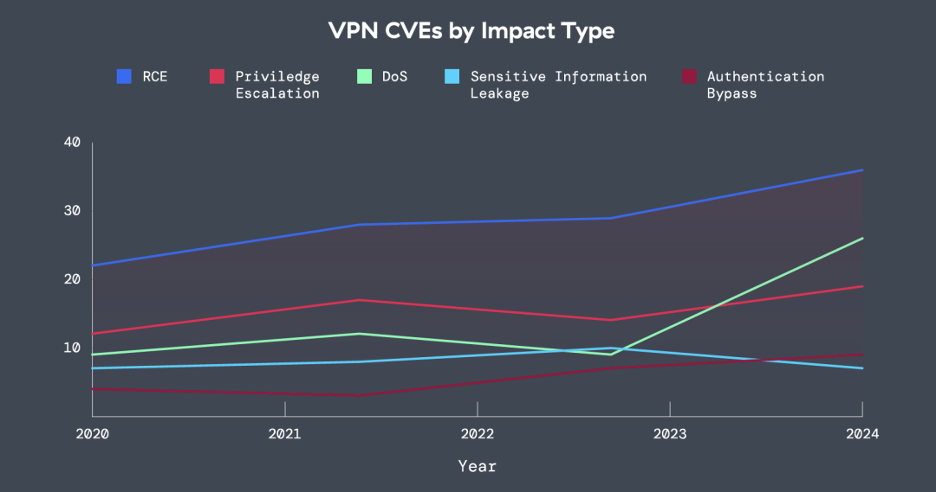
VPN technologies have long been the backbone of remote access, but according to new ThreatLabz research, the security risks and performance challenges of VPNs may be rapidly changing the status quo for enterprises. The Zscaler ThreatLabz 2025 VPN Risk Report with Cybersecurity Insiders draws on the insights of more than 600 IT and security professionals on the growing risks and operational challenges posed by VPNs. It reveals that enterprises are actively grappling with the security risks, performance challenges, and operational complexity of VPNs. One key striking trend: enterprises are beginning to transition en masse to adopt zero trust solutions. Overall, 65% of organizations plan to replace VPN services within the year, a 23% jump from last year’s findings. Meanwhile, 96% of organizations favor a zero trust approach, and 81% plan to implement zero trust strategies within the next 12 months. All of these shifts, meanwhile, happen within the context of an AI-enabled threat landscape. Because VPNs are internet-connected, it has become relatively straightforward for attackers to use AI for automated recon targeting VPN vulnerabilities. This can take the form of simply asking your favorite AI chatbot to return all current CVEs for VPN products in use by an enterprise, which are then easily scanned over the public internet. When you consider that researchers have recently discovered that tens of thousands of public IP addresses hosted by at least one of the largest security providers are being actively scanned, likely by attackers, the crux of the problem for VPNs becomes clear: if you’re reachable, you’re reachable. The report analyzes these risks in the context of enterprise concerns, plans, and their adoption of zero trust strategies to secure the hybrid workforce and enable secure connectivity to private applications.  Below, this blog post discusses three key findings from the report underlying these critical shifts. For full insights, analysis, and best practices, download the Zscaler ThreatLabz 2025 VPN Risk Report today. 1. The widespread security challenges of VPNs Virtual Private Networks (VPNs) were once the gold standard for enabling secure remote access. But as cyber threats evolve, VPNs have shifted from trusted tools to major liabilities. Indeed, VPN vulnerabilities are proving irresistible for attackers; 56% of organizations reported VPN-exploited breaches reported last year, a notable rise from the year prior. Such vulnerabilities pose a central challenge. Because VPNs are internet-connected devices, threat actors can easily probe for impacted VPN infrastructure and exploit it before any patch is released or has been applied. Recently, CISA issued an advisory for impacted organizations to apply security updates for CVE-2025-22457, now a known-exploited critical vulnerability that may allow unauthenticated attackers to achieve remote code execution (RCE). These gaps have become prime entry points for ransomware campaigns, credential theft, and cyber espionage campaigns that can cause widespread damage across networks. Indeed, a staggering 92% of respondents share concerns that unpatched VPN flaws directly lead to ransomware incidents—highlighting how difficult it is to continuously patch VPNs in time. Meanwhile, 93% of respondents express concerns over backdoor vulnerabilities introduced by third-party VPN connections, as attackers increasingly exploit third-party credentials to breach networks undetected. Mapping the rise of VPN CVEs from 2020-2025 In an effort to understand the rise of VPN vulnerabilities, ThreatLabz also analyzed VPN Common Vulnerabilities and Exposures (CVEs) from 2020 to 2025 based on data from the MITRE CVE Program. In general, vulnerability reporting is a good thing, as rapid vulnerability disclosure and patching helps the entire ecosystem improve cyber hygiene, improve community collaboration, and quickly respond to new vectors of attack. No type of software is immune from vulnerabilities, nor should it be expected to be. Zscaler Figure 1: The impact type of VPN CVEs from 2020-2024, covering remote code execution (RCE), privilege escalation, DoS, sensitive information leakage, and authentication bypass. How these CVEs are discovered and the information they contain reflect changes in the evolving threat landscape. In the case of VPNs, ThreatLabz found that not only have VPN vulnerabilities increased over time — in part reflecting their popularity during the post-COVID transition to hybrid work — but they are often severe. Over the sample period, VPN CVEs grew by 82.5% (note that early 2025 data has been removed for this portion of the analysis). In the past year, roughly 60% of the vulnerabilities indicated a high or critical CVSS score — indicating a potentially serious risk to impacted organizations. Moreover, ThreatLabz found that vulnerabilities enabling remote code execution (RCE) were the most prevalent kind in terms of the impact or capabilities they can grant to attackers. These types of vulnerabilities are typically serious, as they can grant attackers the ability to execute arbitrary code on the system. Put another way, far from being innocuous, the bulk of VPN CVEs are leaving their customers vulnerable to exploits that attackers can, and often do, exploit. As enterprises race to keep pace with advancing attacker sophistication, organizations are turning to other options. Zero trust architectures are emerging as the solution for filling these security gaps. Unlike VPNs, which rely on implicit trust and broad network access, zero trust frameworks enforce granular, identity-driven access policies that directly mitigate attacker movement within networks — and remove the risk of internet- and network-connected assets that can be easily scanned for and exploited by attackers. 2. End-user frustration driving enterprise decision-making VPN inefficiencies aren’t just a problem for security—they’re frustrating users. Slow connectivity, frequent disconnections, and complex authentication processes have plagued VPN users for years — and these challenges top the list of end-user frustrations in our findings. According to the report, these user experience frustrations are increasingly influencing IT strategies, with enterprises looking to zero trust to deliver secure access without performance challenges or compromises. Zero trust models achieve this by bypassing centralized network dependencies in favor of direct, application-specific connections. The result? Employees gain swift and seamless access to the tools they need, while IT teams can ensure security posture checks and policy enforcement in real-time. Unsurprisingly, satisfaction with zero trust solutions spans both end users and IT teams, solidifying

Why 81% of organizations plan to adopt zero trust by 2026 Read More »

Best practices for migrating between public clouds

Historically, cloud migration usually meant moving on-premises workloads to a public cloud, like Amazon Web Services (AWS) or Microsoft Azure. And because so many businesses were keen to get out of the on-prem infrastructure management business by moving to public cloud, there were plenty of guides and tools to help with an on-prem to public cloud migration. But now that about half of enterprises have workloads in the public cloud, moving applications and data from on-prem server rooms or private data centers into a public cloud environment is no longer the crux of many cloud migration strategies. Instead, businesses are facing a new challenge: How to move workloads from one public cloud to another. Unfortunately, because cloud-to-cloud migration is a more novel type of use case for many companies, fewer resources are available to help guide the process. While cloud providers offer some tools (like Azure Migrate, which can move AWS-based server instances into Azure, and AWS Server Migration Service, which can move them in the opposite direction) that can migrate certain types of objects between clouds, they often don’t address issues like reconfiguring complex networking setups or the need to move hundreds of terabytes’ worth of data over network connections that offer limited bandwidth. And few guides to cloud migration offer best practices on how to perform a cloud-to-cloud migration. source

Best practices for migrating between public clouds Read More »

The project of reform and revival that saved JAL

Tomohiro then succeeded Ueki as head of the Sakura Project and transferred up to 50 project members from IT planning to the PSPD. The team then consisted of around 100 people, but expanded to over 300 at its peak, with around 200 from JAL Infotec, the IT planning department, airport subsidiary JAL Sky, and call center subsidiary JAL Navia. And another 150 from partner companies like Nomura Research Institute (NRI), later taken over by IBM Japan, and Sigmaxyz. “Initially, the company’s reorganization plan identified outdated IT in several areas, so the IT planning department requested NRI’s assistance in reviewing the entire system,” adds Sugihara. “One aspect of the plan was updating the PSS, so NRI came in at the initial stage, but when it came time to put the plan into action, IBM Japan, who had worked on the POS system in the past, began to get more involved.” IBM took charge of upgrading JALCOM’s peripheral systems and managing the project, and Sigmaxyz was in charge of project management to customize Altea. But as the introduction of PSS progressed, a problem emerged regarding the complicated fare system for domestic flights, which is divided into discounts and reservation protocol not in sync with the global standard. source

The project of reform and revival that saved JAL Read More »