Forrester

If Process Is So Important, Why Isn’t Process Prioritized?

In today’s unstable market driven by shifting buyer expectations and AI disruption, strong processes are an organization’s lifeline, ensuring predictability, consistency, and scalability, yet many organizations overlook their importance. Investing in process improvement isn’t a nice-to-have — it’s essential. It boosts innovation, creates competitive differentiation, improves efficiency, cuts waste, and makes an organization agile. B2B leaders and operations teams must embrace process improvement as a strategic lever that drives predictable and sustainable growth, builds operational resilience, and delivers exceptional customer experiences. Though many organizations experience growth and profitability without process rigor, weak processes create chaos, which isn’t scalable. In Forrester’s Revenue Operations Survey, 2024, 88% of B2B operations professionals agree that their executives value and invest in process optimization — but only 38% think that their processes are flexible enough for fast response when conditions change. Process is how organizations institutionalize consistent behaviors to make sure the company does what it intends. Absence of process undermines the experience of customers and employees by treating each situation as a one-off, producing an uncontrolled variety of outcomes and opening the door for finger-pointing. Good process creates predictability and consistency, allowing for scale. Despite being fundamental to B2B success, process is often overlooked because: It’s not considered a strategic investment. Organizations optimize for efficiency, not outcomes. Internal culture and perception affect process adoption. In addition, the way that most organizations measure process improvement inhibits future investment in process initiatives. Traditional process metrics focus on efficiency and cost reduction rather than strategic outcomes, leading to a narrow view of process value. This measurement approach shifts focus away from process initiatives, often pushing them aside for quicker revenue-generating tasks. Process improvements have an indirect impact on revenue, so the immediate financial benefits may not be evident. This oversight can result in missed opportunities for long-term growth, innovation, and competitive advantage. So what can B2B organizations do about it? Leverage the Forrester B2B Process Value Architecture, a multidimensional approach to defining process value. By using this approach to reevaluate how they define process value, organizations will better appreciate the critical role of process in: Boosting efficiency with greater capacity and velocity. Strengthening stakeholder value by driving collaboration, alignment, and satisfaction. Enhancing effectiveness to achieve consistency, business outcomes, and reduced waste. Achieving sufficiency by balancing resources for optimal outcomes. Mitigating risk by ensuring compliance and standards. Building operational resilience by enhancing transparency, adaptability, and scalability.   Find answers on how to unlock the full potential of process across your B2B functions in the full report, which dives deeper into each process value category. To learn even more, join us at Forrester’s B2B Summit North America from March 31 to April 3, 2025, in Phoenix. We have keynote, breakout, workshop, and roundtable sessions focused on process optimization and how to act, ensuring that all go-to-market efforts are being executed as efficiently and effectively as possible. source

If Process Is So Important, Why Isn’t Process Prioritized? Read More »

DeepSeek Is Resetting The Bar For AI Infrastructure

DeepSeek: A New Model And New Hopes When DeepSeek released the open-source AI model, DeepSeek R1, with impressive performance and significantly lower training costs, it garnered immediate attention and rapid adoption. It has outperformed many, if not all, of its competitors’ latest models across many commonly used AI tests. Its model efficiency comes from several architectural choices such as the mixture-of-experts system, multi-head latent attention, memory compression, a mixed precision framework, and other optimization techniques. The infrastructure needed for inferencing with DeepSeek is far less than what its competitors use — useful deployments of DeepSeek can be done on consumer desktops and laptops. Microsoft announced DeepSeek R1 models for its Windows 11 Copilot+ PCs, and NVIDIA announced that its GeForce RTX 50 Series GPUs can run the DeepSeek family of models, as well. Key Takeaways: DeepSeek’s Promise Raises AI Aspirations This level of efficiency opens generative AI to a much broader audience. Organizations now have a choice to size up AI infrastructure that they can both acquire and afford for at least one generative AI model family. Tech executives: The bar to participating with generative AI has been set to a new low, and you no longer need to wait or spend enormous sums of money to begin. You no longer need bleeding-edge AI infrastructure (data center GPUs, AI servers, high-speed networks) to participate. Commonly available commodity IT infrastructure can suffice. This is not to say that having the latest GPU or 800-GbE network won’t provide benefits — they definitely will! source

DeepSeek Is Resetting The Bar For AI Infrastructure Read More »

Deepfakes Are Here: Here’s What To Do

In the last two years, growing concerns around the proliferation of and advances in deepfakes has raised concerns around their potential to impede adoption of facial and voice biometrics. Deepfakes are increasing because many organizations are migrating identity verification, authentication, and high-value, high-risk transactions (e.g., payments, taking out an insurance policy) to remote digital interactions, rendering traditional in-person vetting procedures obsolete. Meanwhile, there have been significant advances in computing power and deepfake generator algorithms. Deepfakes can cause fraud losses, data breaches, compliance issues, and reputational damage. Deepfakes are easier to generate than ever, more convincing than ever, and permeate across all channels (including call center, mobile app, and online web). Orgs need a strategy for defending against deepfakes because: People are highly susceptible to falling for deepfakes. A study sponsored by the UK’s Royal Society reports that “when individuals are given a warning that at least one video in a set of five is a deepfake, only 21.6% of respondents correctly identify the deepfake as the only inauthentic video, while the remainder erroneously select at least one genuine video as a deepfake.” Forrester expects that without warnings, the detection rates are even lower. Deepfakes affect not just authentication but authorization, too. Deepfakes permeate not just authentication but also onboarding and authorization of high-risk, high-value transactions. In 2024, an employee in an organization’s finance department mistakenly paid out $25 million to fraudsters after the fraudsters, who created a deepfake video of the chief financial officer, instructed him to do so. Deepfake creation has never been easier. It takes about 10 minutes to register for or optionally pay $10 to $20 (and decreasing over time) for GPU power, upload the victim/target’s video/audio, and upload the message (source) video/audio/text to Gooey.AI, Deepfakesweb.com, Deepgram.com, Wavel AI, and other online deepfake generation services. Mobile apps such as DeepFaceLab, Reface, and ZAO require no coding. All deepfakes are not malicious. Government agencies, airport authorities, and chatbot vendors have been creating deepfakes for legitimate purposes, often to create human-looking and -sounding bots with which customers can have natural, convenient, and familiar conversations. Protection against deepfakes takes many forms, from protecting the channel to understanding user behavior to looking at data artifacts in the deepfakes. Our just-published report, Detecting And Defending Against Deepfakes, discusses the most relevant methods that, when used in combination, help strengthen defenses against deepfakes, including spectral artifact analysis, liveness detection, behavioral analysis, and generative adversarial networks, as well as human training and processes that can assist in deepfake detection. If you are looking to better protect your organization from deepfakes, please read our report and schedule an inquiry or guidance session with us. source

Deepfakes Are Here: Here’s What To Do Read More »

AI Product Managers: The Role Of The Future Or Another Tool In Your toolkit?

In the early days of the internet, job opportunities for “internet product managers” began to appear as companies recognized their need for this new technology. As the internet evolved, other roles such as “web product manager” or “digital product manager” became common. While these roles to some extent still exist, having internet experience is now an expected prerequisite for most product management roles. Today, you are probably seeing more “AI product manager” or “AI product owner” job titles. A Google search on “AI product managers” today reveals anywhere from a thousand of these roles to over twenty thousand jobs with these title or skills requirements. While “AI PMs” might go the way of internet product manager in the future, today it is clear that there is a demand for individuals with traditional product management skills and AI-specific expertise. Key Areas Of Proficiency Are Required For The AI Product Manager AI-specific technical competence: AI product managers will need to demonstrate an understanding of AI and machine learning technologies and how AI models are trained, tested, and implemented. Data science skills: As AI models are dependent on their underlying data, AI product managers will need to deeply understand data requirements, quality, and potential biases that will impact a model’s performance. AI model performance: An AI product manager will need to understand how AI models are developed and iterated with the goal of improving usability, accuracy, reliability, and scalability along with the time and costs involved in that process. Regulatory, ethics, and bias understanding: AI models sometimes replicate biases in the source data for the models. An AI product manager will need to understand the sources and effects of these biases and how to test for them, as well as an understanding of how privacy, regulatory, and ethical issues should be managed. Education, evangelization, and influence management: Given that generative AI is a quickly evolving technology, AI product managers will be called on to evangelize the business benefits and bring stakeholders up to speed. Many of the challenges today for the AI product manager will differ slightly from those of their traditional colleagues. More than working on product features, AI product managers are focused on model performance, acceptable error rates, understanding new types of user interaction, and management of risk and cost trade-offs. Of course, core similarities remain: the focus on solving real customer problems, setting vision and strategy, roadmap prioritization and trade-offs, stakeholder management, and working with marketing, sales, and customer success. Every Product Manager Will Be An AI Product Manager, So Start Learning Today Just as the “internet product manager” evolved to become a component of today’s standard product management practice, Forrester predicts that AI will also become part of the standard product manager’s role in the future. Generalist PMs will need a baseline understanding of AI so they can thoughtfully integrate AI capabilities into existing products and continually improve those capabilities based on technology changes and customer feedback. They will also need to understand the basics of model behavior, data privacy, and ethical considerations. Product Leaders Must Support Their Teams’ AI/ML Learning Product management leaders must take a strategic approach to upskilling their teams about AI and ML by fostering a culture of learning and providing hands-on experiences. A good start is providing AI literacy courses (such as those from Coursera or LinkedIn Learning), hands-on learning opportunities like AI hackathons or instructor-led AI bootcamps, and online interactive options such as Google’s ML crash course. Finally, product leaders must encourage team members to experiment with today’s popular tools in their everyday lives. A suggestion: Make one day a week a “no search engine” day, encouraging use of AI tools instead. Please join Forrester Vice President and Principal Analyst Lisa Singer and her panel of experts to discuss AI product strategy in a fast-changing world at Forrester’s B2B Summit North America 2025. source

AI Product Managers: The Role Of The Future Or Another Tool In Your toolkit? Read More »

Global Technology Spending In 2025 Will Reach $4.9 Trillion With Robust 5.6% Growth

The growing digital economy will capture 17% of global GDP by 2028 and see a 7% compound annual growth rate (CAGR) through 2028, which will in turn drive robust technology spending growth across the globe. In 2025, two-thirds of global tech spending will come from software and IT services, and in Europe and North America, this share of tech spending will be even higher. While the finance and insurance, government, and media and information sectors combined currently account for 46% of global tech spend, other factors driving global tech spending include: Software. Fueled by cybersecurity, cloud computing, generative AI (genAI), and the modernization of legacy systems, software will capture nearly 60% of global tech spend growth through 2029. The forecast shows that software spending by enterprises and governments will reach 1.7% of global GDP by 2029, nearly doubling its worth since 2016. GenAI will revolutionize sectors such as financial services, media, and retail, enhancing customer experiences with more personalized and humanlike virtual assistants and customer service solutions. IT services. Nineteen percent of global tech spend comes from tech consulting and system integration services, and 15% comes from tech outsourcing and hardware maintenance. Driven by infrastructure as a service, outsourcing services growth outpaces that of consulting services. The United States. With the advantages of lower inflation, reduced interest rates, and a dynamic technology sector, the US will see a 6% increase in technology spending (excluding staff costs) in 2025. Remarkably, the US accounted for 41% of global tech spend and 46% of AI software spend in 2024. Almost 70% of the top 24 companies by market cap that saw the fastest growth from 2015 to 2023 come from the US, and more than half of these are media and information companies. The Asia Pacific region. This region is witnessing a surge in real GDP growth that far exceeds the global average, led by countries such as India, the Philippines, Vietnam, and Indonesia. This rapid economic expansion drives tech spending growth, with emerging countries known for innovation like China, India, Japan, and Malaysia showcasing the region’s potent tech investment potential. Managing tech inhibitors. Enterprises need to balance tech talent availability (including AI capabilities acquired through partnerships and acquisitions) with the minimization of technical debt, as well as tangible tech investment returns. Legacy systems still capture two-thirds of global tech spending. With the half-life of tech skills at less than five years, skills renewal of the tech workforce is vital. To accelerate technology spending growth in 2025, enterprises will grow their AI infrastructure capacity (with strong growth expected for data centers) as well as find growth through partnerships and acquisitions. The Forrester report, Global Tech Market Forecast, 2024 To 2029, shows robust 5.6% growth in 2025 to reach $4.9 trillion that is then set to surpass $5 trillion by 2026 and soar beyond $6 trillion by 2029. For more in-depth analysis by region or country, also keep an eye out for Forrester’s European and US tech market forecasts from 2024 to 2029. source

Global Technology Spending In 2025 Will Reach $4.9 Trillion With Robust 5.6% Growth Read More »

Should Your Organization Adopt An Internal Product Team Approach?

Pet adoption is often a high point for many people when creating memories. Do you remember the excitement of bringing home your first pet? The joy of a new furry family member, however, comes with responsibility and preparation. You likely spent hours researching breeds, finding veterinarians, debating names, and preparing your home. Well, adopting an internal product management approach also requires careful planning, commitment, and a readiness to embrace change. Just as you’d prepare your home for a new pet, it’s time to prep your business for a strategy that nurtures growth and innovation. But what exactly is internal product management, and how can you determine if it’s suitable for your organization? What Is Internal Product Management, And Why Might You Need It? Internal product management is a forward-thinking strategy to move away from traditional tactical project execution toward a more flexible, value-aligned, and customer-centric methodology. It focuses on treating internal stakeholders and teams as customers, and it requires a unique set of skills and a customer value-based approach, distinguishing it from traditional IT roles. Signs That Your Organization Is Ready To Adopt An Internal Product Team Approach Adopting an internal product team approach can come with advantages, including more flexible planning, greater business alignment, and more flexibility and adaptability. While the approach can benefit most organizations, several factors will impact its effectiveness: Rapid industry changes. This model thrives on adaptability and is well suited to environments where staying ahead of the curve is crucial. If innovation is a key determinant of success in your industry, it’s time to consider an internal product team approach. Current IT approaches are lagging. If existing IT organization methodologies can’t keep up with the demands of your customers and internal teams, internal product management gives a more agile and flexible development approach. The product model fits your needs. If you’ve seen benefits from treating internal teams as customers, the internal product team approach could be a game-changer. Defending the value of internal products/platforms. It’s crucial for team members to understand the value of the internal platform and that they are able to defend its worth to executive leadership. If your team is ready to showcase the business value of the internal product, this approach could flourish in your organization. If any of these factors look familiar, it might be time to investigate the role of the internal product manager and how it is helping Forrester clients transform their operating models. By doing so, you could be positioning your team to drive greater value for your team and the business. Forrester clients can read the full report, The Rise Of Internal Product Management, to learn more details of these dimensions. Forrester clients can also schedule a guidance session or inquiry to discuss this in the context of your product organization. source

Should Your Organization Adopt An Internal Product Team Approach? Read More »

Why The DOJ Is Worried About Networking Innovation And What Paths Lie Ahead For HPE And Juniper

On January 30, 2025, the US Department of Justice (DOJ) moved to block the acquisition of Juniper by HPE. The DOJ is concerned about 60% of the wireless LAN (WLAN) market being occupied by two vendors (HPE and Cisco) and that it would stifle any innovation from other vendors that have single-digit market share. HPE and Juniper have started to contest this ruling with various counterpoints regarding WLAN competition, a classic “better together to fuel innovation” story, and a cautionary tale regarding network security, especially for the next generation of emerging technology. The DOJ is not wrong that sleepy, mature markets like IT networking struggle with innovation without the push from startups. Today, innovation in networking is hard to come by. It’s been a while (early 2000s) since the major networking players drove innovation in the market, such as the creation of new protocols and architectures to help networking organizations overcome technology challenges. Since the 2010s, there has been a chasm. Any innovation in this space has mainly come from two areas: 1) startups like Meraki, Mist, Nicira, and Viptela; and 2) large customers like Facebook and Google. The large cloud providers have been lighthouses for networking professionals in need of guidance on data center best practices, how to automate networks, and alternative network architectures. The enterprise Wi-Fi market hasn’t moved the needle much, either. Despite being around for 25 years, Wi-Fi solutions hardly do more than connect laptops and mobile phones in office settings and have real difficulty adapting to the new ways that users want to leverage other wireless protocols. Few attempts have been made to improve the management experience of supporting the various device types, including IoT devices. Few solutions support basic connections into Bluetooth, EnOcean, NearLink, Thread, and Zigbee technologies. To HPE Aruba’s credit, it has one of the strongest IoT-ready wireless solutions available, offering a strong smart office and retail portfolio featuring AI security insights, edge computing solutions, and IoT data processing capabilities. However, much of this capability came from the innovation under past Aruba leadership/visionaries, Dominic Orr and Keerti Melkote. And that’s just WLAN. This lack of innovation is systemic across the entire IT networking world. The biggest gap is at the edge (manufacturing plants, stadiums, stores, aircrafts, etc.), where nontraditional devices need connectivity. With over 100 billion IoT devices, the market is vast, driven by new applications, devices, security needs, and hardware requirements. Networking at the edge faces significant challenges, such as wireless interference and troubleshooting in distribution centers. The industry needs business-optimized networks (BON) with verticalized solutions. Where does that leave us? The IT networking world needs a hero: someone with the resources and the will to revolutionize the industry. Realistically, that isn’t going to come from a tiny startup. But the big players have been focused on market share, marketing, and margins. Change will require true leadership. Will the DOJ’s action to block the Juniper acquisition save innovation in networking? No. Would the acquisition unlock new innovation? Unlikely. But we’d love to be wrong (see below). Why is it hard to imagine this rosy future? Every major public technology company struggles to fund revolutionary innovation when there are shareholders to satisfy. Realistically, efficiencies gained from a combined portfolio/organization largely go to shareholders, not to fund new organic innovation. And it’s far easier to justify innovation via one-time acquisition costs rather than an ongoing stream of unrealized innovation. Ultimately, either future could hold good news for customers if they are put front and center. Let’s look ahead at the possible outcomes and what each path could entail: Scenario 1: HPE and Juniper remain separate HPE’s broader portfolio paired with its Aruba footprint has a real opportunity to be an edge networking innovator that creates verticalized easy-to-use solutions. In a time when almost every vendor is claiming to have cloud-native, AI-driven platform solutions, HPE is the only networking vendor that has the resources and portfolio today — such as compute, multilayer stack, storage, and software — to put together an edge, IoT, and networking solution to deliver a BON solution for retail and other adjacent verticals, such as hospitality. No one else is making big bets, turning their backs on generic technology providers, and choosing a few verticals to go after. This could be HPE’s moment to reclaim its innovator culture of yesteryear to truly own edge and network verticalization. Juniper’s technology and executive team are ahead of the game with its an AI-driven networking platform, Mist, that unifies the management and monitoring across various networking and security components. Mist innovation is how Juniper grew its WLAN market share so quickly over a short period of time and posed an issue for the competition, including HPE. With more investments, Juniper can continue to disrupt the management of data center and campus networking market with its Mist leadership — under Bob Friday and Sujai Hajela — and Marvis AI solution. As such, Juniper would create a businesswide networking fabric solution, which is essential for the future of networking. Looking forward, the company can expand on its networking platform by seamlessly integrating security services, with Marvis as its foundation to automate the secure networking platform. At this stage, Juniper would just be running up against Extreme’s networking platform, its version of a secure businesswide networking fabric. Cisco, Huawei, and others would be hard-pressed to match Extreme’s and Juniper’s platforms. Scenario 2: HPE acquires Juniper A combined organization can take the superpowers from both groups to create a dominant force in IT networking; but in practice, it’s too tempting to focus on fast cash for shareholders with the greater leadership from the acquired party choosing to quickly move on as soon as their contract terms allow. To position a combined HPE/Juniper for success, Juniper leadership should take the helm of innovative progress across its portfolio to ensure products like Mist don’t get stifled as the engineers integrate into the Aruba portfolio (Axis, ClearPass, Cape Networks, Silver Peak, etc.). There will likely be some portfolio rationalization.

Why The DOJ Is Worried About Networking Innovation And What Paths Lie Ahead For HPE And Juniper Read More »

The Essential Role Of Process In Executing Your B2B Strategy

B2B organizations often find themselves at a crossroads between strategy formulation and strategy execution. The harsh reality is that many fail to transform their well-crafted strategies into tangible results, a disconnect stemming from a fundamental oversight: the underestimation of process as a critical lever for execution. Process is not merely a conduit for efficiency; it’s the backbone of converting strategy into results. Without a robust process in place to develop and execute strategy, reaching your goals becomes a herculean task. This necessity becomes even more pronounced when executing a customer-obsessed growth strategy in which the focus intensifies on delivering value at every customer touchpoint. Why do so many organizations falter in executing their strategies? The answer often lies in the gap between those who devise strategies and those tasked with implementing them. Many B2B companies possess a growth strategy, or at the very least, target revenue goals. Yet instead of focusing on aligning their strategy with how they operate, they quickly turn to buying new technology or reorganizing resources, thinking that it will solve their problems. Process matters immensely. It has a direct impact on the customers’ experiences, whether the process is internally focused or is a customer-facing activity. Processes accelerate an organization’s time to market, allow organizations to adapt to market changes, lead to predictable outcomes, enhance efficiency, reduce costs, and increase profitability. In essence, process is the engine that drives growth, not just by optimizing performance but by enabling companies to be agile and responsive in a dynamic market environment. Follow these steps to adopt process optimization as the required tool used to execute your strategy: Articulate the business challenge. Clearly define what you are trying to solve for; assess the impact, importance, and urgency of the challenge; and sell the business case that justifies the resources necessary to deliver the value. Connect root causes to potential solutions. Understand why the challenge exists and how it can be addressed. This often involves linking multiple processes — planning, preparation, and production — to craft a comprehensive solution. Take action. Move beyond planning and preparation to actual execution. Ensure that you have the processes sequenced to minimize rework and costs, allocate resources effectively, and measure baseline performance to gauge the impact of your efforts. Allow the change to be progressive. Processes are critical to driving a culture of alignment and collaboration. Conducting periodic retrospectives, creating an iterative feedback loop with stakeholders, and breaking down your strategy into manageable, agile pieces all helps to maintain alignment and enable progression toward business-objective achievement. Understand, however, that perfection is often the enemy of progress. Finally, don’t forget to celebrate wins, both big and small, along the way! Providing an avenue for team members to acknowledge their successes fosters a culture of recognition and motivates teams to strive for continuous improvement. It’s a vital component of maintaining momentum and reinforcing the value of the processes that have been put in place. The significance of process in strategy execution cannot be overstated. It’s the linchpin that connects strategic planning with tangible outcomes. By investing in and meticulously designing interconnected processes, organizations can not only anticipate but also adapt to market changes, ultimately driving sustainable growth. The journey from strategy to execution may be complex, but with a robust process as your guide, achieving your B2B goals is not just possible — it’s probable. Join me at the upcoming B2B Summit North America event happening March 31–April 3 in Phoenix, Arizona, and digitally. B2B Summit is an exceptional opportunity to delve deeper into how process turns ambiguity into action. It’s a platform to learn how to build a customer-obsessed growth strategy, execute that strategy effectively, and manage the change that accompanies its execution. B2B Summit will also showcase real B2B success stories, providing invaluable insights into how companies have navigated their own growth journeys. I hope to see you there! source

The Essential Role Of Process In Executing Your B2B Strategy Read More »

Why The “AI Agent As Coworker” Narrative Is The Future

In this two-part blog series, Principal Analysts Anthony McPartlin and Seth Marrs debate the idea of AI agents as coworkers. In this blog, Seth takes the perspective of the believer, while in the second blog, Anthony (ever the pragmatist) explains why this is overblown. There’s no debate that the talk track that some vendors are using around AI agents is hyperbolic. Vendors large and small are making claims that just don’t hold up in the real world. This is especially true for enterprise organizations, where business complexity and compliance create an environment that many AI agents are not built to support … yet. The gap between an amazing demo and the ability to translate those features into your business has never been greater, but that doesn’t mean that this technology doesn’t have value today that will evolve into the way organizations work in the future. AI Agents Are Following A Well-Trodden Path To Success AI agents are gaining the most traction with small- and medium-sized businesses and the middle market. The barriers to adoption, risks, and business complexity are all lower, making this the perfect place for innovative technology companies to start. Over the years, most new sales tech started by delivering value for this customer base. Sales engagement, conversation intelligence, revenue operations and intelligence, and even new entrants to established categories such as sales planning management started here and expanded. AI agents are following the same path as the sales tech vendors before it. Agent Coworkers: Reality Or Fiction? Every year at Dreamforce, Salesforce touts a new technology as the “greatest new technology” with a significant amount of hype that typically fades and generates a limited market response. Last year, the stock price dropped 3% after Dreamforce. But this year, it jumped 4% after the event. The stock price is increasing based on Agentforce and shows that the company is meeting the moment. The bigger challenge for Salesforce is to deliver an innovative, cutting-edge product. The verdict is still out on that, but investment feeds innovation, so AI agents will become a reality, whether it’s Salesforce or someone else leading the way. Why Start Working With AI Coworkers Now? There is an opportunity for short- and long-term value for those who take the right steps. Taking the perspective of a believer, here are three ways to use AI agents to make a difference for your company right now: Build and grow your AI agent capabilities with non-customer-facing use cases. AI agents are doing amazing things, but they are far from perfect. For this reason, going all in on them with customer-facing use cases is risky. Instead, focus on areas where they can add value without being perfect. A great use case is seller roleplay. Right now, AI agents are good enough to help the seller get better but still make errors or say the wrong thing. Even with these issues, it’s still useful to the seller, so they will tolerate a goofy out-of-context response now and then. Use AI agents for challenging customer-facing use cases. Hearing sales tech vendors trying to convince companies to use an AI agent with customers that companies have spent a lot of money trying to acquire is nuts. That is one place where it’s worth investing in a human to engage. Instead, use AI agents in areas, such as non-work-hour responses, where your customers are getting a less-than-ideal experience. Also, this technology has extensive language capabilities, so it can help a company go to market in countries where language barriers prevented it in the past. Be realistic about what you want to accomplish. I like the term coworker because this technology needs to be trained in a way that is a lot closer to a human than to software and will learn and grow as it works with us. That being said, the technology as it is today cannot function like a human, even if the training of it makes you feel like it can. But it can do things like understand your ideal customer profile, help you identify prospects quicker, and make it easier to generate content to engage those prospects. Every coworker has unique skills, and AI agents are no exception. Use them in areas where they are useful enough to add value. source

Why The “AI Agent As Coworker” Narrative Is The Future Read More »

Assessment Is Anyone’s Guess: Proving GOAT Status Requires Validation

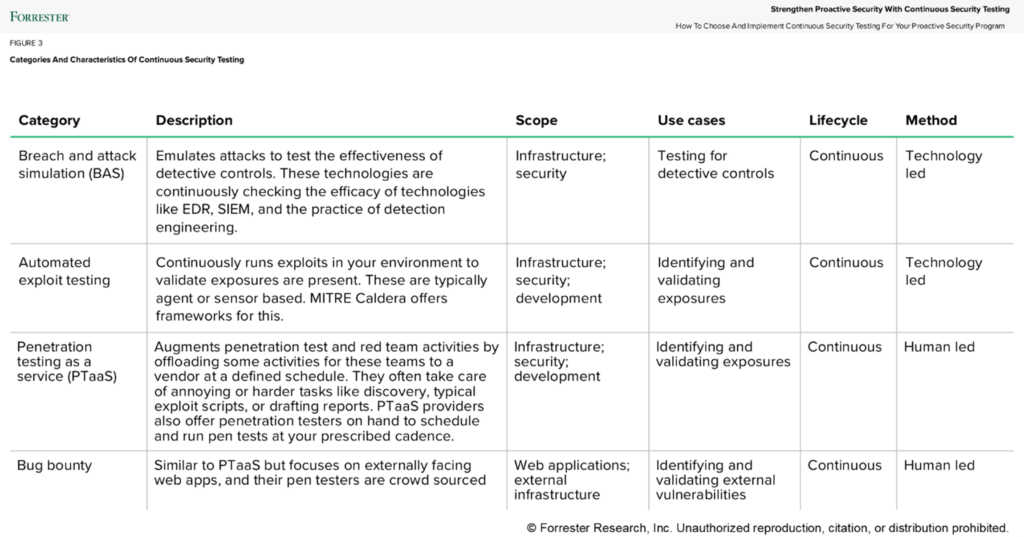
As spectators tuned in to Super Bowl LIX to indulge in American culture rife with consumerism, T. Swift, and rap feuds, the buzz was less around the game and more on determining who is pro football’s GOAT (greatest of all time). Kansas City Chiefs quarterback Patrick Mahomes had an unprecedented opportunity to win a third consecutive Super Bowl, the fourth in his young career, which raised questions from sports analysts of whether Mahomes was surpassing the legacy of another NFL GOAT, New England Patriots QB Tom Brady. It seemed like sports media had already declared Mahomes as the new GOAT, but first, Mahomes would have to win this year’s Super Bowl versus the Philadelphia Eagles to cement this status. That didn’t happen. Instead, a tough Eagles defensive front brought constant pressure that disrupted Mahomes, leading to several costly turnovers. The Chiefs could not overcome the Eagles’ preparation and the effectiveness of their defensive schemes, which validated Philadelphia’s defensive preparations. Validation showed its GOAT-head during the Super Bowl’s commercial breaks, with cybersecurity vendor Pentera’s ad about a half-goat/half-CISO that transformed from being his organization’s scapegoat to the cyber-greatest of all time. Becoming the cyber-GOAT, they say, requires continuous and proactive testing for vulnerabilities. Forrester’s proactive security research outlines visibility, prioritization, and remediation as the core principles of proactive security, with validation being a means to enhance accuracy and focus in prioritization. Vendors such as Pentera, XM Cyber, and Horizon3.ai provide validation that vulnerabilities are exploitable as a means to drive prioritization. Cyber threat exposure management is used by some vendors to describe this prioritization strategy. This is an unnecessary term in an already crowded world of cyber acronyms. Instead, organizations should focus on how to build proactive security programs with prescriptive, use-case centricity — using the three proactive principles to understand how organizations are gaining visibility, prioritizing exposures, and ultimately remediating them. Exposure management is a prioritization strategy and can be one of many prioritization strategies that organizations use. It maps exposures on an attack path and assesses the potential that an opponent could breach them — much like how Chiefs and Eagles head coaches Andy Reid and Nick Sirianni built out their Super Bowl game-day plans and playbooks. But you can only validate the effectiveness of offensive and defensive schemes in the game itself. In cybersecurity, this is how penetration testing and red teams provide singular, point-in-time validations. But now organizations are looking to do these continuously. This is where continuous security testing comes in, which we outlined in our recent report, Strengthen Proactive Security With Continuous Security Testing. Continuous security testing validates and proves that vulnerabilities are exploitable. There are many ways that continuous security testing can factor into remediation prioritization strategies today. Other options include breach and attack simulation, bug bounties, and penetration testing as a service, which all have different use cases and scopes (see image below). And while these are different options that factor into remediation prioritization, it’s likely that your organization will still utilize other prioritization methods such as CISA KEV, CVSS, and EPSS, depending on asset types and circumstances.   Should you do continuous security testing? Before jumping right in, we recommend that security and risk pros first assess how they are gaining visibility into assets and vulnerabilities — our first principle of proactive security. Next, teams should perform assessments of vulnerabilities with vulnerability scanning and combining their increasingly omnipresent sources of vulnerabilities. From there, teams can form their prioritization strategies. Consider exposure management as one of these and improve it with continuous security testing that validates that exposures are exploitable. But don’t forget remediation plans — this use case is often neglected in proactive platform companies (and why we expect to continue to see consolidation in the proactive security market, as companies such as Tenable acquire Vulcan Cyber to enhance remediation processes). Let’s talk! If you want to talk more about proactive security or continuous security, book time with me. source

Assessment Is Anyone’s Guess: Proving GOAT Status Requires Validation Read More »