Forrester

The “AI Agent As Coworker” Narrative Is Nonsense

In this two-part blog series, Principal Analysts Anthony McPartlin and Seth Marrs debate the idea of AI agents as coworkers. Here, Anthony takes a skeptical perspective, while in his blog, Seth (ever the optimist) makes his case for a more positive view of AI agents. An ad campaign has been running on bus shelters across San Francisco encouraging employers to “Stop Hiring Humans” and that “The Era of AI Employees Is Here.” The ad is part of a broader campaign by sales AI startup Artisan and aims to highlight the advantages that AI employees have over humans. “Artisans won’t complain about work-life balance” and “Artisan’s Zoom cameras will never ‘not be working’ today,” claims some of the other ads in the campaign. AI Agents Are “Manna From Heaven” For Sales Tech Providers Artisan’s approach is certainly attention-grabbing. But many sales tech providers are pushing a similar narrative to excite the market and reignite funding and growth. Early-stage investors such as Y Combinator are pouring money into similar sales startups, while even the mighty Salesforce is placing its hopes on its new Agentforce platform. Since its release at Dreamforce, Salesforce CEO Marc Benioff has been touting such “digital labor platforms” as a trillion-dollar market opportunity. Benioff seems to have convinced the financial markets in the process, with Salesforce’s market cap rising by $50 billion as a result. Agent Coworkers: Reality Or Fiction? Amid the current hype blizzard around agentic AI, it is vital that sales leadership and those with ownership of sales technology can separate reality from fiction. They must understand the real near-term potential and priorities while preparing their organizations for longer-term change being driven by these innovations. Having spent some time speaking to this cohort in recent months, I think this is a challenge for many in B2B. It’s Time To Take A Hard Look At The AI Coworker Narrative Taking a more cynical perspective, here are five reasons why the “AI agent as coworker” narrative is nonsense: It’s transparently self-serving. As mentioned above, agentic AI is a gift for the sales tech industry. When a company the size of Salesforce is using agents to significantly reframe the perceived long–term value of the company with very limited evidence, buyers should rightly be wary of the claims being made. It’s just automation. You have to admire Benioff’s chutzpah in defining digital labor as some brand-new massive market opportunity. But to many, it just sounds like automation. Like every other phase of automation since the beginning of the industrial age, this phase is also about doing more with fewer human resources. The market is blurring agentic differentiation. Forrester defines agentic AI as general AI systems, trained to act invisibly on behalf of an enterprise or individual, performing tasks, making decisions, and interacting with data or other systems autonomously. But with agents the flavor of the month in B2B tech, providers have been adjusting their go-to-market efforts for existing approaches to bask in the agent glow. Copilots, intelligent assistants, and single and multiple agents all now occupy a spectrum of what is claimed to be agentic, creating confusion and increasing skepticism for buyers. There’s a false equivalency of agents as virtual employees. Attempts to establish some sort of equivalency between agents and actual employees is not only misleading but demeaning to B2B professions. It misrepresents the agentic role in B2B processes, which will increasingly be invisible to both employees and customers. “Coworker” suggests relationships or partnerships to complete tasks or processes. Human employees surrounded by AI robots at Amazon warehouses or Tesla factories do not see these robots as “coworkers,” so why should sellers? The ROI potential is exaggerated. In the world of software, providers talking big on ROI and productivity is nothing new. The hype around agents often presents a form of sales leadership “fever dream” of 24-hour selling uninterrupted by sickness or PTO. But the limited, task-level scope of many proclaimed “agent” solutions should rightly make buyers wary. Forrester’s ongoing studies of sales productivity over the past 10 years or more have shown that the explosion in sales technology during this period has only had limited impact on seller productivity. Sales productivity has a tendency to soak up the productivity enhancements provided by evolutionary waves of sales technology, finding new efficiency barriers and roadblocks along the way. Potential AI impacts on productivity should be viewed in this context. Healthy AI Skepticism Is Good Holding such views does not automatically imply that you may be an AI troglodyte. Being skeptical of the coworker narrative is not at odds necessarily with believing in the long-term value or impact of AI in sales. Having a balanced view will actually help inform a better AI strategy and priortitize more impactful use cases. It should also inform stronger change management approaches that combine adoption, employee satisfaction, and, ultimately, more significant company impact. source

The “AI Agent As Coworker” Narrative Is Nonsense Read More »

Voices From The Field: Best Practices In Filtering Sales Communications

This week, Forrester published Introducing The B2B Sales Communications Rules Engine. This new model is designed to help revenue enablement teams better filter all the incoming requests, demands, and downright “noise” that well-meaning colleagues aim at sales and other customer-facing personas. Most sales-adjacent functions such as portfolio marketing and revenue operations, as well as supporting departments such as HR or finance, earnestly seek to enable the revenue team for their own, (usually) legitimate reasons. But without coordination, context, or calendar control, their aggregated efforts often result in turmoil and end up ignored by sellers who are appropriately more focused on the only thing that matters to them: their current deals, opportunities, renewals, and accounts. This is where the best enablement teams add value to sales communications and rep advocacy: providing a circuit breaker to better feed the revenue team members only what helps them, with timing and delivery mechanisms geared toward the audience, not the originators of the messaging. The B2B Sales Communications Rules Engine focuses on the who, what, why, when, and how for every sales communication request through a seller’s “What’s in it for me?” lens. It optimizes incoming content for the field and teaches requesters how to better frame and rethink their own needs. In researching and producing this report, we connected with a wide variety of practitioners to understand what works (and doesn’t) in streamlining communications to sales and revenue teams. While the B2B Sales Communications Rules Engine concentrates on how revenue enablement can effectively filter incoming requests, a number of best practices for downstream activity — how to best implement effectively managed communications requests — arose from our interviews. Here are some of the best pieces of advice, including from two of my valued Forrester colleagues: Cameron Tanner, Cisco: Mimic best practices in customer communications. Think about the ideal time of day, relentlessly review content clarity and simplicity before launching, and make your sales messaging as predictable as “I know my newspaper arrives daily at 6 a.m. to my tablet over Wi-Fi. I want to knowt hat it takes 3 minutes to read, the articles have been peer-reviewed, and it has clear recommendations for me.” Mike Kunkle, SPARKiQ: Select a single, primary channel for regular and important updates, from the same acknowledged source of truth, and use other channels and sources only as reinforcement. Store updates in a searchable location so that they can be found and referenced as needed. Kathleen Pierce, Forrester: People need a clear mental map of what goes where and when. We all know where to go for HR policies, but sales information runs through all sorts of channels from all sorts of people. End the chaos by concentrating on the user experience. Jackie Menzel, EliteGTM: Time is revenue for your audience, so use live meetings sparingly when introducing core communications. Trim down your high-level summary or announcement to 1 minute, then hand things over to the enforcing “partner in crime” for the remaining 4 minutes. Practice your presentation, keep it brutally short, and provide entertainment when appropriate. Suzanne White, Smartsheet: Communications is incredibly personal, and choice of venue matters to your audience. You’ll never nail down one channel to rule them all, so be sure to balance corporate channel mandates with meeting your sellers where they prefer to get information. Zachary Lukasiewicz, analytics consultant: If you are trying to communicate critical information, you’d better not have links, banners, or graphics. Luke Martin, ZoomInfo: Leverage your digital adoption platform to deliver situationally relevant roll-over and pop-up content — which can be text but also animation and video — to the right people at the right time. That almost always means within the context of their current deals, opportunities, and projects. Jon Symons, Forrester: Use TLDR creatively to both grab attention but also to give folks a legitimate opportunity to opt out. Even The New York Times leads with short-form content, with a roll-over if you want to see the details. source

Voices From The Field: Best Practices In Filtering Sales Communications Read More »

The Total Experience Awaits At Forrester’s CX Summit 2025

Welcome to 2025, where the boundaries of customer relationships are being redefined. Imagine a world where visionary brand strategies seamlessly blend with real-world journeys, and every interaction is meticulously crafted to captivate and delight. This is the future we’ll explore at CX Summit North America 2025, the ultimate gathering of customer experience (CX), digital, and marketing leaders — and we want you to be a part of it! This year, we’re unveiling our groundbreaking new Brand Experience Index and updated Customer Experience Index (CX Index™) which together form a powerful new way to measure a brand’s ability to drive loyalty. We’ll also reveal fresh insights into the future of — and best practices for — CX, digital business, and marketing. It’s such an important time to start building the future together. In 2024, CX performance was the weakest it’s been in a decade. But we have the know-how and the technology to create total experiences that consumers crave. At this year’s CX Summit, we’ll dig into that through: Unparalleled Keynote Presentations Get ready to be inspired by six dynamic Forrester keynote sessions that will immerse you in forward-thinking insights and cutting-edge research. Celebrate innovation with our 2025 Customer Obsession Award winners and leave equipped with the knowledge and drive to spark meaningful change in your organization. (Learn more about our awards and nomination process here.) Actionable Insights And Hands-On Learning With 42 targeted breakout sessions, 40 real-world case studies, nine workshops, and a special CX Summit Certification program, you’ll gain the knowledge you need to tackle today’s biggest challenges. We’ve more than doubled the number of hands-on sessions we’re offering this year so that you and your team can begin applying what you learn right away — before you return home. Whether it’s aligning teams, integrating emerging technologies, or developing robust measurement strategies, we’ve got you covered. Meaningful Connections Forge meaningful connections with top professionals in customer experience, digital, and marketing at 14 interactive sessions, industry-focused meetups, analyst-led roundtables, and social engagements. We’ll also feature our very popular annual Forrester Women’s Leadership Program and invitation-only Executive Leadership Exchange. And of course, dozens of Forrester experts will be available for one-on-one sessions so you can get direct answers to your most pressing questions. Don’t Miss Out!  Since we’re in Nashville, we’ll have great musical guests and other activities to make this an event to remember.  Join us at CX Summit 2025 and be part of a community that’s shaping the future of the total experience. This is more than just an event — it’s an opportunity to transform your brand and create unforgettable journeys for your customers. Register now and take the first step toward mastering the total experience! Don’t forget to take advantage of our early and team registration discounts. We can’t wait to see you there! 🎉 source

The Total Experience Awaits At Forrester’s CX Summit 2025 Read More »

How Generative AI Is Changing The Game In Commerce Search

Generative AI (genAI) continues to reshape how organizations use technology — including in digital commerce. For organizations selling online, this means reimagining internal operations and innovation as well as customer-facing initiatives. Forrester predicts that in 2025, one in five US and EMEA retailers will launch customer-facing genAI applications. GenAI also ranked in the top 10 investments for retailers and brands in 2024. To help our clients better understand genAI’s impact on commerce-related solutions, we launched a research series in which we ask vendors to outline how they’re currently bringing genAI applications into their live product. Following our initial analysis around B2C commerce and point of service, our third report focuses on the impact of genAI on commerce search, which includes feedback from 21 commerce/site search providers. Here’s a peek at what our research uncovered: Shopping assistants are the most common application for genAI in commerce search. Thirteen of the 21 vendors included a shopping assistant use case in their current solution offering or roadmap. These customer-facing assistants feel like a chat agent used for customer service. The shopping assistants respond to shopper questions with tailored recommendations, gift ideas, or product details. They refine their responses based on inputs from the shopper. Product data enrichment is a window of opportunity for genAI enhancements. GenAI is taking on the tediousness of generating comprehensive product descriptions that align with branding, language/locale, and data requirements, as well as optimizing product content for different audiences. Some solutions also leverage genAI to interpret product photos, generate attributes based on the images, and use the attributes to enrich the product data. There’s potential for a more sophisticated search experience. Some genAI use cases that are still in development include ways to further enhance the search experience for shoppers. GenAI will bring more relevant product and content recommendations as it learns to better perceive the intent of the shopper. It will also boost product data with more sophisticated tools that will interpret content from more sources. Check out the full report for all of our findings, plus insights about how to approach this cutting-edge tech. Curious to learn more? Let’s connect — schedule an inquiry or guidance session with us! source

How Generative AI Is Changing The Game In Commerce Search Read More »

DeepSeek Resetting The Bar For AI Infrastructure

DeepSeek: A New Model And New Hopes When DeepSeek released the open-source AI model, DeepSeek R1, with impressive performance and significantly lower training costs, it garnered immediate attention and rapid adoption. It has outperformed many, if not all, of its competitors’ latest models across many commonly used AI tests. Its model efficiency comes from several architectural choices such as the mixture-of-experts system, multi-head latent attention, memory compression, a mixed precision framework, and other optimization techniques. The infrastructure needed for inferencing with DeepSeek is far less than what its competitors use — useful deployments of DeepSeek can be done on consumer desktops and laptops. Microsoft announced DeepSeek R1 models for its Windows 11 Copilot+ PCs, and NVIDIA announced that its GeForce RTX 50 Series GPUs can run the DeepSeek family of models, as well. Key Takeaways: DeepSeek’s Promise Raises AI Aspirations This level of efficiency opens generative AI to a much broader audience. Organizations now have a choice to size up AI infrastructure that they can both acquire and afford for at least one generative AI model family. Tech executives: The bar to participating with generative AI has been set to a new low, and you no longer need to wait or spend enormous sums of money to begin. You no longer need bleeding-edge AI infrastructure (data center GPUs, AI servers, high-speed networks) to participate. Commonly available commodity IT infrastructure can suffice. This is not to say that having the latest GPU or 800-GbE network won’t provide benefits — they definitely will! source

DeepSeek Resetting The Bar For AI Infrastructure Read More »

Go Beyond The MITRE ATT&CK Evaluation To The True Cost Of Alert Volumes

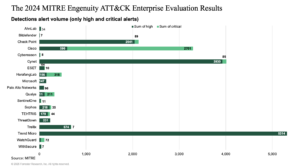
MITRE released its latest Enterprise MITRE ATT&CK Evaluations in December of 2024. At that time, we published a blog with a quick overview of the results. Today, we’re excited to announce that we have released three new pieces of research about this round of evaluations: Analysis Of The 2024 MITRE Engenuity ATT&CK Evaluation — an overview of this round’s evaluations with an explanation of the changes in methodology and an interpretation of the results. 2024 MITRE Engenuity ATT&CK Enterprise Evaluation Results — a report that visualizes some key data from the evaluation. The 2024 MITRE Engenuity ATT&CK Enterprise Evaluation Cost Calculation Tool — a tool to help calculate the costs of using each of the vendor technologies in the evaluation to detect the attacks included in the evaluation. These reports break down the results, give insights into how to interpret them, and provide ways to quantify the impact of using these tools. If you want a tl;dr version, this blog covers a few things we learned from this evaluation data. True correlation remains elusive, if not nonexistent. The alert volume generated by some of the participating vendors is ridiculous. A few of the vendors were able to reduce the number of alerts per attack to single digits while still providing full visibility into the attack. This is ideal but was extremely rare in this evaluation. Most vendors surfaced a detection every single time they identified a step as potentially malicious, including those that were not correlated into an incident. This inflated their alert volume numbers significantly, requiring a lot of manual effort to correlate. High alert volumes will create misery for incident responders. While MITRE is not evaluating user experience — and, to be quite honest, cannot be expected to — we at Forrester do evaluate vendors on their user experience, among other features. Some vendors triggered thousands of alerts during this evaluation, with one vendor triggering over a million alerts. Surfacing so many alerts for just three scenarios is ridiculous. Even if you only consider the high- and critical-severity alerts, the numbers still don’t add up. Individual vendor results vary from one vendor with over 5,000 high- and critical-severity alerts to other vendors that had under 10. The true cost of excess alerting comes down to dollars and cents. Let’s assume that your team is bringing relevant alerts into the security information and event management (SIEM) platform for additional correlation. Every alert generated by these tools is an added cost (as if the user experience costs were not enough). For example, say that the cost to ingest and store in the SIEM per GB is $0.30 and that the average endpoint alert is 1 KB. If 10,000 endpoints are hit with LockBit, the cost to bring those alerts into the SIEM ranges from $0.006 with some vendors to $471.192 with others. That’s the cost for just one attack. Consider this cost when you’re evaluating tools or trying to reduce your SIEM budget. Our research includes a tool for calculating this cost. Dive deeper. Forrester clients who want deeper guidance about the evaluation and the vendors included can book an inquiry or guidance session with me. source

Go Beyond The MITRE ATT&CK Evaluation To The True Cost Of Alert Volumes Read More »

Tariffs, Your Customer, and Your Brand: A Common-Sense Guide

What’s a tariff? A tariff is simply a tax — when one country imposes a tariff on another (as the US has done with China and is threatening to do with Canada and Mexico), then products imported from those countries are subject to a tax. Like most trade policies, this can get pretty complex, so it’s not a flat tax for everything imported from that country but can vary by category. Tariffs can be imposed for various reasons — to generate revenue for the exchequer, protect domestic production, and politically wrangle with other nations. Among the most famous tariffs were the Corn Laws in England enacted in 1815 to keep out cheaper food grain to benefit the wealthy landowners, most of whom dominated the Parliament (surprise, surprise!). This didn’t work out too well for the regular folks, especially the urban poor in the throes of the Industrial Revolution, who had to deal with astronomical food prices. The Corn Laws were repealed, and it was a watershed moment for the free trade movement. What’s up with tariffs in the United States? The US administration has imposed an additional 10% tariff on all imports from China, effective February 4, 2025. Canada and Mexico are threatened with 25% tariffs on most imports — these tariffs have been temporarily suspended following negotiations. There’s likely more coming. As expected, China has retaliated in this tit-for-tat trade game, and there may be further escalations in the trade war. There has also been talk of tariffs targeting the European Union. How’s this going to work out for your customers? Not too well, I’m afraid. Getting a room full of economists to agree on anything is rare, but we may have found that one common ground. GDP will shrink, jobs will be lost, and prices will increase. Just about everything — from food to smartphones to housing – will cost consumers more, and the annual estimates range from $800 to north of $3,000 more in household spending. To put it more simply, a $20 Barbie will now cost more than $30, and you may have to skip the guacamole at next year’s Super Bowl bash as avocado prices from Mexico take a hit. How’s this going to work out for brands? If a company’s supply chain involves importing from a country with a tariff imposed on it, it will see an increase in costs. The most obvious strategy to avoid this tax is to buy from somewhere else. For example, Apple has been moving production from China to India for some time as part of its de-risking China strategy, and the company can continue to minimize the cost impact by shifting sourcing away from China. But it’s not always easy. Consider alcoholic beverage company Diageo, for whom the United States is a huge market, with its tequila brands a source of strong growth — tequila must originate in Jalisco or one of a few other regions in Mexico, so the company is out of luck in being able to diversify its supply source. What’s a marketer to do? A tariff-driven cost increase is no different from how any cost increase plays out in marketing strategy. The company can absorb some of the cost if the margin allows it and the economics make sense — if consumers have other options and will substitute away from these goods at higher prices. Otherwise, some or all of the cost increases will be passed on (as the economists predict will happen). Here are some ways to work through a tariff-driven price increase: Get smarter about pricing and price up to segments generally more insensitive to increases. But be careful, as tinkering with prices can have the unintended consequence of lousy PR: We’ve seen it with surge pricing, shrinkflation, and, now, “surveillance pricing.” Be transparent about why you need to take a price increase, mainly because there will likely be a parallel narrative about corporate price gouging, especially if popular discontent with increased prices casts a shadow on the current administration. Be creative about alternatives such as bundling up for value or trading down to minimize sticker shock. Big-ticket item manufacturers and retailers can get creative with financing schemes that ease the burden for prospects. Build a better moat because it will insulate against price-switching behavior. In the short term, this could beef up loyalty programs that induce customers to stick around. In the long term, this is yet another clarion call for building brand equity that creates greater stickiness and dampens competitive switching. ————————————————————————————————————— Learn more: Forrester clients can read my research on how brands grow. Follow my work: Go to my Forrester bio and click “Follow.” Chat with me: If you are a Forrester client interested in discussing these topics, please schedule time with me for an inquiry or a guidance session. Plan a session: If you are a Forrester client looking to host a strategy session on a related topic (for example, “the future of digital consumer experience related to AI”), please contact your account team or email me at [email protected]. To learn more about the new administration’s new policies and their global macroeconomic effects, read my colleague Michael O’Grady’s blog post and report, The Potential Impact Of A New US Administration And Policy On Tech Spend. source

Tariffs, Your Customer, and Your Brand: A Common-Sense Guide Read More »

SEO Must Solve Its Marketing Problem

Marketers spend hundreds of millions of dollars a year on paid search but only hundreds of thousands on SEO. Marketers know SEO isn’t thousands of times less valuable, but it can feel thousands of times harder to realize its value. In the words of one Redditor: “SEO is incredibly time consuming, often involves multiple people, involves difficult and in-depth technical skills, and even when done perfectly, you may not see tangible results for three to six months … Meanwhile you can do [paid search] and wham bam thank you ma’am, you can get many results in a short timeframe, [and it] only needs one person to get up and running. And you can prove 100% attribution to the marketing team.” This sentiment is shared by countless marketers. It reflects SEO’s marketing problem. SEO’s greatest challenges (and opportunities) come from: Necessary cross-functional collaboration. The SEO process depends on in-house and/or agency content marketers, web developers, UX pros, performance marketers, and more working in sync to implement content and technical fixes that lack immediately apparent ROI. Many SEO tasks, including enhancing site speed, implementing data markup, analyzing log files, removing duplicate content, and regularly updating content, are tedious and don’t pay off right away. Therefore, they’re deprioritized. In the process, SEO reveals cultural disconnects between siloes. Search engines’ evolution. Search engines ranging from Google to Bing, Perplexity, and ChatGPT are increasingly conversational, assistive, and agentic. Instead of keywords and ranked links judged by users, search engines exercise agency and infer unasked questions. They anticipate intent, interpret natural language, and guide users on complex, click-free journeys. As a result, metrics like organic traffic, click-through rate, average position, and ranking, on which SEO practitioners are typically goaled, become obsolete. SEO Remains An Influential And Cost-Effective Channel Despite its challenges, SEO is critically important. Practically every buyer’s journey is influenced, blatantly or subtly, by organic search. Making a brand increasingly visible across ChatGPT and Perplexity is still SEO, but it demands new skills and tools. The market for SEO solutions is growing to meet marketers’ evolving needs. SEO solutions resolve marketers’ problems with the channel by reducing SEO’s effort. They accelerate and simplify the SEO process and derisk cross-functional collaboration. They also help practitioners adapt to the rise of generative AI (genAI) and diversification of search beyond Google. Our new Landscape report on SEO solutions clarifies the SEO market’s maturity, dynamics, notable vendors, top use cases, functionalities, and future. It features end-to-end platforms, point solutions, and agency tools. Some specialize in creating and auditing brands’ content while others focus on making brands’ sites increasingly intelligible to search engines. All try to keep pace with genAI and prove SEO’s value. Stay tuned for our Forrester Wave™ on SEO solutions, which will publish in Q3 2025. As always, contact us to learn more. source

SEO Must Solve Its Marketing Problem Read More »

A Developer At An I&O Vendor Conference

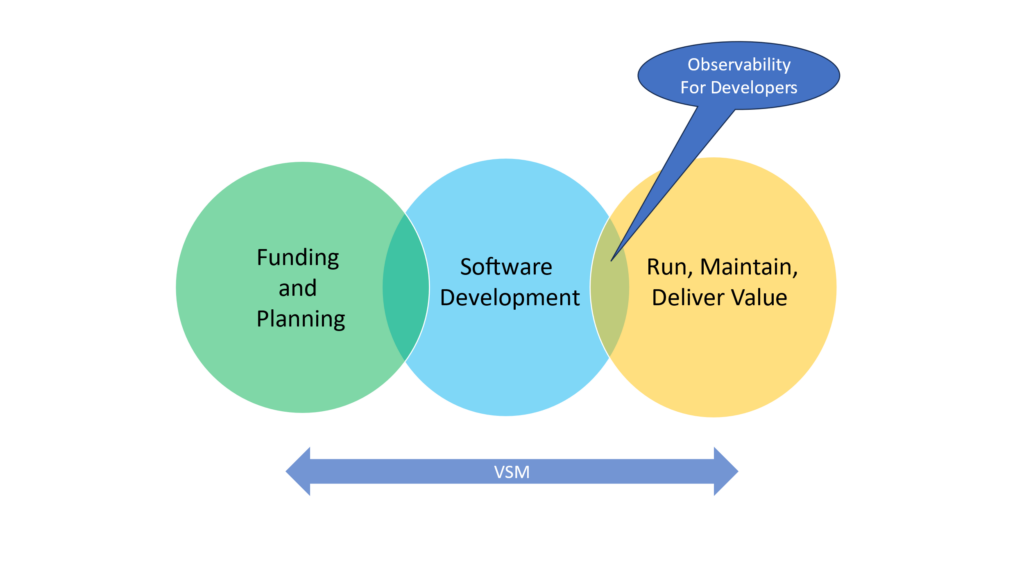
Dynatrace Perform, the annual event to highlight all things Dynatrace, was held at the ARIA in Las Vegas from February 3–5. I was there to get a look at the company’s new offering directed at developers: Observability for Developers. Dynatrace is well known for its artificial intelligence for IT operations (AIOps) products that help infrastructure and operations (I&O) engineers spot, diagnose, and mitigate issues before they turn into outages. Observability for Developers is analogous to this but directed at software engineers. Here’s a few of the interesting capabilities: Davis AI. Davis AI is a generative AI interface to help developers analyze logs, traces, events, and metrics using a conversational interface. It makes it a lot easier for developers to monitor health and analyze end user interactions. Live debugging. Live debugging of cloud-native apps and AI-powered troubleshooting enables developers to get access to runtime data in any environment, including production. Data can be masked and access-managed within Dynatrace to prevent sensitive data from being improperly accessed. Using “snapshots” lets developers see how data is flowing through the code paths to help them debug the “only happens in production” issues. Self-service capabilities. Dynatrace offers a capability to enable a self-service portal to developers for accessing data from production such as log traces, performance benchmarks, access to live debugging, and so forth. This enables the ops side of DevOps to level up their practices and serve developers at scale. What I’d Like To See Dynatrace has a set of capabilities, such as dashboards and customer impact metrics, that are meant for high-level leadership — e.g., CTOs and CIOs. This allows them to monitor progress toward high-level business goals. I’d like to see a version of this scaled to each level of the organization, all the way down to the individual product team members — product managers, dev leads, developers, designers, testers, security champs, etc. — to allow them to monitor their own business performance metrics. If you know my coverage of value stream management, you might have a sense of where this is going: Observability for Developers has the power to not only help developers diagnose apps, but it can help monitor and communicate the unique value that they are creating with their efforts, such as reducing cloud spend by optimizing an algorithm, speeding up transactions with less latency, and reducing the number of random errors in production — in other words, going beyond DORA and talking about the metrics that really matter. Here’s how I see Observability for Developers fitting into the world of value stream management:   What It Means Powerful application runtime diagnostic tools such as distributed tracing, performance analytics, metrics dashboards, data masking, and more have existed for some time, but they were primarily meant for high-end, “born in the cloud” organizations that had the talent, resources, and drive to create those capabilities for themselves. Observability for Developers democratizes access to these powerful capabilities and lets every organization gain access to top-tiered diagnostic features. But it can be more: It can also be a powerful tool to help everyone in the organization see how they fit into the overall value delivery chain, prioritize work that matters, and ultimately be happier knowing how much they contribute to the bottom line. source

A Developer At An I&O Vendor Conference Read More »