marketing interactive

Gen Z perspectives: lululemon strikes back, Microsoft's nostalgic Croc & MEA ID

Happy Friday, MARKETING-INTERACTIVE readers and welcome back to Gen Z Perspectives, your go-to feature where we unpack the week’s top stories and trending topics through the eyes of Gen Z. From the biggest industry moves to viral moments and marketing controversies worth dissecting, we’re bringing the heat with authenticity, awareness and probably a few unfiltered takes. This week, lululemon clapped back at its founder Chip Wilson, STB kicked off a creative pitch, and Microsoft x Crocs served nostalgia with a side of comfort. Plus, a sneak peek at what went down at Marketing Excellence Awards Indonesia. Engage sport mode, we’ve got stories worth running for. Don’t miss: Gen Z perspectives: Duolingo’s ad platform and Gong Cha’s 2026 reboot 1. lululemon strikes back at founder Chip Wilson over scorned ad Lululemon has responded to founder Chip Wilson’s recent criticism of the brand which was made public through a paid ad placement in the Wall Street Journal. The brand has come out to state that the founder made “misleading statements” about the company. In a statement to the media, the yogawear giant said that Wilson has not been involved with the company for a decade, and continues to make “inaccurate and misleading statements about lululemon”, its history, board and leadership. Read more here.  2. Singapore Tourism Board hunts for creative agency, Ebiquity to handle pitch The Singapore Tourism Board (STB) has called a pitch for a new creative agency partner to drive its global marketing and communications strategy from 2026 onwards. Independent consultancy Ebiquity has been appointed to assist STB in managing the pitch and evaluating proposals. The new appointment will take effect from February 2026 for an initial period of two years and two months, with the option to renew for another two years, and subsequently for one additional year. According to tender documents seen on GeBIZ, the appointed agency will work closely with STB’s marketing group in Singapore to deliver destination marketing for both leisure and business tourism, while also supporting its strategic communications.  Read more here.  3. Microsoft brings its iconic wallpaper, Clippy and 2000s nostalgia to Crocs Microsoft is leaning into nostalgia with a playful new release. The tech giant has unveiled a Microsoft limited edition Crocs bundle, featuring design elements inspired by some of its most iconic moments, including the cultural phenomenon that was Windows XP. The ‘Bliss’ backdrop – a photograph of a green hill under a blue sky dotted with white clouds, taken in Sonoma County, California – became an enduring symbol for millions of Windows XP users in the early 2000s. For this limited-edition release, the image has been reimagined and incorporated into the bundle’s accessories and design, giving fans a tangible connection to the brand’s past. Read more here.  Related articles: In conversation: Reinventing influence in the age of content   How Raffles Hotel is banking on the butler to modernise luxury  By 2026, can agencies rewrite the playbook fast enough to survive? source

Gen Z perspectives: lululemon strikes back, Microsoft's nostalgic Croc & MEA ID Read More »

How brands can stay relevant as ChatGPT Atlas redefines discovery

Search is ever evolving and OpenAI’s new web browser, ChatGPT Atlas, has arrived to change how audiences may discover and interact with content as we know it. Built around ChatGPT, Atlas integrates AI directly into the user’s workflow, letting it suggest next steps, summarise research, automate tasks, or even act on behalf of the user — all while keeping privacy and data under control. The launch comes amid a shift in how younger audiences find information. Gen Z and Gen Alpha are increasingly skipping traditional search, turning instead to social feeds, eCommerce platforms, and generative AI tools. Google remains dominant, but its cultural monopoly is quietly eroding. For brands, Atlas highlights a new challenge: with AI curating what audiences see, marketers must rethink visibility, content strategy, and how to maintain emotional connections when an AI sits between them and their customers. For starters, Nathan Petralia, country head of Hong Kong, Ogilvy One and Verticurl, would frame Atlas as more than a browser. “It transforms traditional browsers from navigation tools into execution platforms,” he said. “Discovery becomes assistant-mediated within the exact window users are viewing, eliminating the need for tab-hopping and creating seamless, contextual experiences,” he added. Don’t miss: OpenAI’s APAC comms head on leveraging ChatGPT as a strategic partner This, in turn, leads to brand competing to be recommended by an assistant instead of ranking on a page. “As AI platforms such as Atlas integrate browsing, memory, and agent features, discovery becomes deeply personal. The assistant knows what users like, buy, and trust. For brands, that means traditional SEO can’t just chase keywords – it must build authority, clarity, and context,” said Shane Liuw, CEO of First Page Digital. Paid search will evolve too, as fewer user clicks mean tighter competition for visibility, explained Liuw, adding that:  The ‘new front page’ won’t be Google’s top result; it’ll be the AI’s top recommendation. Brands need to prepare for that reality now. To land top recommendation, Petralia suggests transforming content creation and optimation, highlighting three interconnected disciplines brands must master: Answer engine optimisation (AEO), Generative engine optimisation (GEO) and Callable APIs.  According to Petralia, AEO ensures canonical facts, product specs, policis and sustainability claims that are structured, verifiable and backed by source-of-truths IDs. GEO, on the other hand, involves producing fact-dense, rights-cleared assets that AI models can verify and quote while Callable APIs allow assistants to check availability, configure products, deliver estimates, or provide support, while maintaining attribution. This comes amid a competitive landscape that is intensifying rapidly. “Chrome is embedding Gemini, Edge is embedding Copilot, Perplexity is pushing for browser integration, and Atlas represents OpenAI’s bid to own the in-page assistant layer. This multi-assistant reality demands optimisation by design: portable schemas, callable APIs, and measurement parity across all major AI platforms,” he explained. “Success in this new landscape requires measuring what truly matters: share-of-recommendation, answer coverage, action success rates, and data freshness and latency,” he added.  Kuhan Kumar, CEO of Digital Symphony noted that content today is first interpreted by machines, not just consumed by humans. He stated that modern SEO now revolves around semantics, schema, and narrative clarity, posing the critical question of whether an AI can understand a brand as accurately as a human would. He added:  Stop creating for feeds — start creating for frameworks. Structure and meaning are the new creative currency. Meeting the next gen If AI is the new shelf, brands need to do more than sit pretty, they have to resonate with the next generation in ways assistants can’t ignore. As Gen Z and Gen Alpha increasingly turn to AI assistants and social feeds to discover brands, brands can no longer rely solely on ads or search rankings, they need to speak the language of these digitally native audiences, embed themselves into the platforms they trust, and create experiences that AI can recognise, amplify, and act on.  With ChatGPT Atlas’ agentic capabilities, brand may face profound implications. “Brands must pivot towards anticipating AI prompts and creating content that answers these questions before they’ve been asked, embedding their brands across all platforms for Atlas to trawl through, and ensuring cultural nuances aren’t lost in the mix,” Dan Kalinski, managing director, APAC at NP Digital, said.  Liuw said reaching Gen Z and Alpha requires blending cultural relevance with conversational discoverability. Brands must be present in the spaces they live, short-form video, AI chats, and social micro-trends, with a voice that feels authentic, not automated.  “You can’t just be optimised; you have to be in the culture. If your brand isn’t being talked about organically, it won’t be surfaced algorithmically. The key is turning awareness into advocacy,” he said.  For Kumar, brands need to feed the algorithms with genuine cultural signals such as collaboration, participation and purpose, in order to stay relevant. “These generations can spot manipulation instantly. Authenticity isn’t a tone anymore – it’s a data layer.”  Beyond the algorithm As AI increasingly mediates the customer journey, the risk is that interactions become transactional and impersonal. Brands now face the challenge of fostering genuine emotional connections while AI handles discovery, recommendations and even transactions. Petralia stressed that maintaining a consistent brand voice while enabling human handoff is critical. This involves training brand voice layers and defining clear escalation paths to preserve service rituals and moments that create lasting memories for customers. Echoing this, Kalinski noted that AI-driven interactions still begin with human emotion or intent. Whether it’s curiosity, aspiration, or a desire to belong, brands must anchor their messaging to these triggers, even AI-delivered answers should feel personal and relevant. Data, he added, can inform this.  “The consumer journey does not end with discovery. As platforms such as Atlas minimise clicks and compress the funnel, brands must ensure that the end-to-end experience carries emotional consistency. By gaining knowledge of behaviours across platforms, brands can translate these insights into the emotional triggers to pick up and act on – thereby personalising experiences in line with who the consumer is and what they’re looking for,” explained Kalinski. He added:  In an age

How brands can stay relevant as ChatGPT Atlas redefines discovery Read More »

Mediacorp lodges police report after CNA Facebook comment sparks controversy

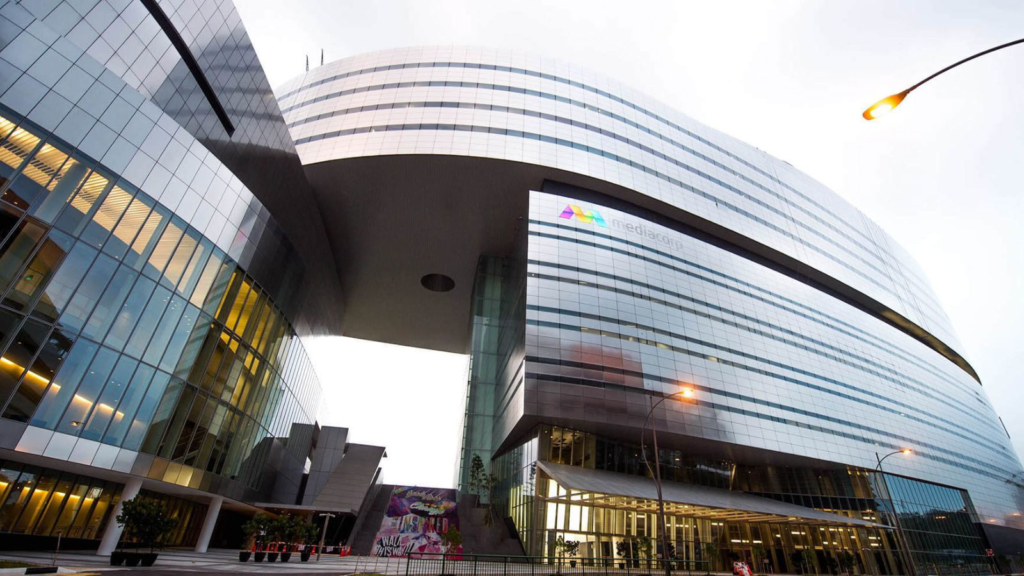
Mediacorp has filed a police report following a controversial Facebook comment posted from CNA’s official account. In conversation with MARKETING-INTERACTIVE, Mediacorp said it “made a police report to help verify the screenshot’s authenticity and origin.” The comment was made in response to a November 2015 post by home affairs minister K. Shanmugam discussing the late Lee Kuan Yew’s legacy and Singapore’s future. Local documentary filmmaker Yusri Shaggi Sapari reignited attention to the incident on 16 October when he uploaded a screenshot of the comment, captioning it, “CNA admin got caught.” Don’t miss: Singapore backs Mediacorp with SG$380m amid shifting media habits The comment, posted under CNA’s verified account, read: “Typical playbook – talking to their base, rally their troops and generals but their real target is actually to corner and neutralise the WP.” “WP” refers to the Workers’ Party, Singapore’s main opposition party. The screenshot quickly gained traction on social media, appearing on the Singapore Reddit thread where it drew over 2.7k upvotes. Checks by MARKETING-INTERACTIVE confirmed that the comment has since been removed from Shanmugam’s original post. In Singapore, laws such as the Protection from Online Falsehoods and Manipulation Act (POFMA) regulate the spread of online content deemed false or misleading, particularly when it involves public interest or government matters. Posts or comments perceived as politically biased or anti-government in nature can attract scrutiny under these laws, as authorities maintain strict guidelines to ensure online discourse remains factual and responsible. The incident come as Mediacorp receives about SG$380 million in annual funding, which helps it reach over 90% of the population across TV and digital platforms while maintaining high viewer satisfaction, minister Josephine Teo said in parliament. The funding aims to “inform, educate, and connect Singaporeans” through trusted, culturally representative programming. Teo added that metrics now include digital reach, with meWATCH viewers rising 80% over the past decade despite a dip in TV ratings. Funding is directed at overall operations rather than individual programmes, giving Mediacorp flexibility to adapt and innovate, as seen in successful productions such as Emerald Hill – The Little Nyonya Story, which is also set to debut on Tencent.  Related articles:  Mediacorp slashes 93 jobs amid shifting media landscape and economic pressures CNA rolls out paid media release service  TODAY to merge with CNA to become digital long-form weekend magazine  source

Mediacorp lodges police report after CNA Facebook comment sparks controversy Read More »

America the Beautiful: Brand USA aims to rekindle global affection

With America’s global image arguably more complicated than ever, Brand USA is hoping to reframe the conversation with its biggest global tourism push to date. Brand USA, the destination marketing group for the United States, has launched America the Beautiful, a global tourism marketing campaign that marks a new chapter in Brand USA’s approach. The organisation-wide platform brings every facet of the brand under a single strategic vision designed to cut through what it described as “noise” and remind travellers what they truly love about the USA. The initiative takes a distinct shift from product to people and reminds the world that it is the people, the stories, culture and shared experiences that sets the US apart as a destination. Timed ahead of a milestone year marked by the FIFA World Cup, America’s 250th anniversary and the Route 66 centennial, the campaign aims to accelerate growth and reignite international affection for the brand. A new AI-powered planning hub, AmericaTheBeautiful.com, underpins the effort. Built with Mindtrip technology, it offers personalised recommendations, interactive maps and itinerary tools across eight languages, helping travellers connect iconic gateways with lesser-known regional destinations – a move Brand USA said will make trip planning more intuitive and engaging. The campaign rolls out across connected TV, streaming, out-of-home, digital and social media in nine priority markets including Australia, South Korea, India, Japan and the United Kingdom, with targeted messaging designed to reach globally curious travellers seeking outdoor, cultural and luxury travel experiences. Tourism remains a big driver of the US economy, contributing US$147 billion in the year to July 2025, but visitation from key markets – particularly Canada – has been in decline. Brand USA data shows international visitors to the United States sit at 32.5 million, down 3% from last year. While Canada recorded a steep 17.7% decline, Mexico surged 12.5%, partially offsetting the overall dip. Across the broader regions, arrivals from Asia fell 2.2% and Oceania slipped 2%, underscoring why Brand USA is intensifying efforts in these long-haul, high-value markets. As Brand USA president and CEO Fred Dixon put it, the campaign’s goal is to invite the world to rediscover America and “see it, feel it and carry home experiences that become core memories.” “With America the Beautiful, we’re delivering a fresh invitation to explore the USA in new and exciting ways. As we look ahead to 2026 and the decade of mega events on the horizon, we remain laser-focused on maximizing international tourism opportunities to drive economic impact and job growth while inviting the world to celebrate 250 years of America the Beautiful.” source

America the Beautiful: Brand USA aims to rekindle global affection Read More »

Grab brings travel, rides and entertainment to fingertips with Partner Apps

Singapore and Malaysia users can now book rides, travel, entertainment, and more directly within the Grab app, without creating new accounts or downloading separate apps. The move expands Grab’s ecosystem beyond its core deliveries, mobility, and digital financial services, while offering brands access to its 46 million monthly transacting users across Southeast Asia. Partner Apps launch with five services: Firsty, a global eSIM provider allowing travelers to stay connected in over 180 countries; HelloRide, an on-demand bicycle-sharing service; Jolibox, an entertainment platform offering games and short dramas; redBus, a bus and ferry booking platform covering Singapore and Malaysia; and Drive lah, a peer-to-peer car-sharing service. Users can book, transact, and pay securely via GrabPay, and earn GrabRewards Points — rebranded as GrabCoins from November 2025. Don’t miss: Punggol goes driverless as Grab rolls out self-driving shuttles The integration also enables contextual advertising based on user activity. Riders en route in a Grab car may see promotions for HelloRide bikes nearby, or notifications to purchase a Firsty eSIM before traveling. According to Grab, Partner Apps will expand to more local and international brands across its markets in the coming months, giving users more everyday choices—from booking travel tickets and rides to accessing entertainment—directly within the Grab app. “Partner App services complement our users’ lifestyles beyond Grab’s on-demand offerings. Users can enjoy a seamless all-in-one experience through their existing accounts and payment preferences, while Partner brands can leverage Grab’s platform to reach a wider audience across Southeast Asia,” said Philipp Kandal, Grab’s chief product officer.  Brand partners welcomed the collaboration. Jiayuan Mao, director of global partnerships at Jolibox, said: “This partnership connects us with a wider audience and creates new engagement opportunities.” Vince Vissers, founder of Firsty, added: “Grab users can now stay online anywhere, without roaming surprises or local SIM swaps.” Hayden Choo, managing director of overseas markets at HelloRide, said the integration promotes greener and smarter urban mobility. The expansion of Grab’s platform isn’t limited to digital services. The company is also testing autonomous mobility in Singapore with Ai.R, its first autonomous vehicle service in the heartlands. Operated in partnership with AV technology firm WeRide, Ai.R will run two fixed routes in Punggol with 11 vehicles cleared under Singapore’s Milestone 1 safety assessment. A trained safety operator will be onboard during the rollout. The move reflects Grab’s broader strategy to combine technology, convenience, and lifestyle services, reinforcing its superapp ecosystem for both digital and physical mobility solutions. Related articles:  Grab takes Singapore’s ‘chope’ culture to the next level with restaurant stunt  Grab and Gojek orders become symbols of cross-border solidarity amid Indonesian protests  STB partners Grab to elevate visitor experience and support local businesses  source

Grab brings travel, rides and entertainment to fingertips with Partner Apps Read More »

Spotify joins forces with major labels to develop ‘artist-first’ AI music tools

Spotify is joining hands with the world’s largest music companies — Sony Music Group, Universal Music Group, Warner Music Group, Merlin, and Believe — to develop AI-powered products designed to empower artists rather than compete with them. The move comes as generative AI continues to reshape how music is created, distributed, and experienced. Spotify said the collaboration aims to ensure “responsible innovation” that protects artists’ rights, creative choices, and compensation in an increasingly AI-driven ecosystem. According to the streaming giant, the partnership will focus on four key principles: upfront agreements with rights holders, artist choice in participation, fair compensation, and strengthening artist-fan connections. Don’t miss: Spotify’s latest campaign plays to Gen Z’s soundtrack-obsessed culture in PH Spotify is building a dedicated generative AI research lab and product team to develop tools aligned with these principles. The company said it will work closely with artists, songwriters, and producers to shape future AI-powered music experiences. “Technology should always serve artists, not the other way around,” said Alex Norström, co-president and chief business officer at Spotify. “Our focus is making sure innovation supports artists by protecting their rights, respecting their creative choices, and creating new ways for fans to discover and enjoy the music they love.” Leaders across the music industry have voiced support for the initiative. Rob Stringer, chairman of Sony Music Group, said the partnership “acknowledges that direct licensing in advance of launching new products is the only appropriate way to build them”. Lucian Grainge, Universal Music Group chairman and CEO, added that the move represents “critical steps forward” in creating a commercial landscape where artists, fans, and technology companies can all thrive. In tandem, Robert Kyncl, CEO of Warner Music Group, also highlighted the importance of ensuring AI “works for artists and songwriters, not against them,” while Merlin COO Charlie Lexton praised Spotify’s commitment to “respecting and valuing copyright and creativity.” Denis Ladegaillerie, founder and CEO of Believe, said the collaboration aligns with its vision of “value-creative AI”, tools that put artists and their careers at the centre, deepening fan engagement and creating new commercial opportunities. Spotify said more rightsholders and distributors will be invited to join the collaboration over time. The partnership also reflects Spotify’s broader push to blend creativity and technology across its ecosystem. Most recently, Spotify Advertising launched “Tunetorials”, a playful campaign that turns marketing education into music through ad strategy–inspired tracks. Designed to help marketers understand how to reach the right audience with the right message, the series blends entertainment and insight in true Spotify fashion, with each original song and video spotlighting different aspects of its advertising ecosystem, from multi-format campaigns to ROI tracking. Related articles: Spotify celebrates heart and soul of music fandoms through film Nike and Spotify turn music into motivation for girls worldwide    7UP and Spotify merge science with sound with new Spiceit playlist source

Spotify joins forces with major labels to develop ‘artist-first’ AI music tools Read More »

Salesforce deepens ties with OpenAI, brings enterprise data to ChatGPT

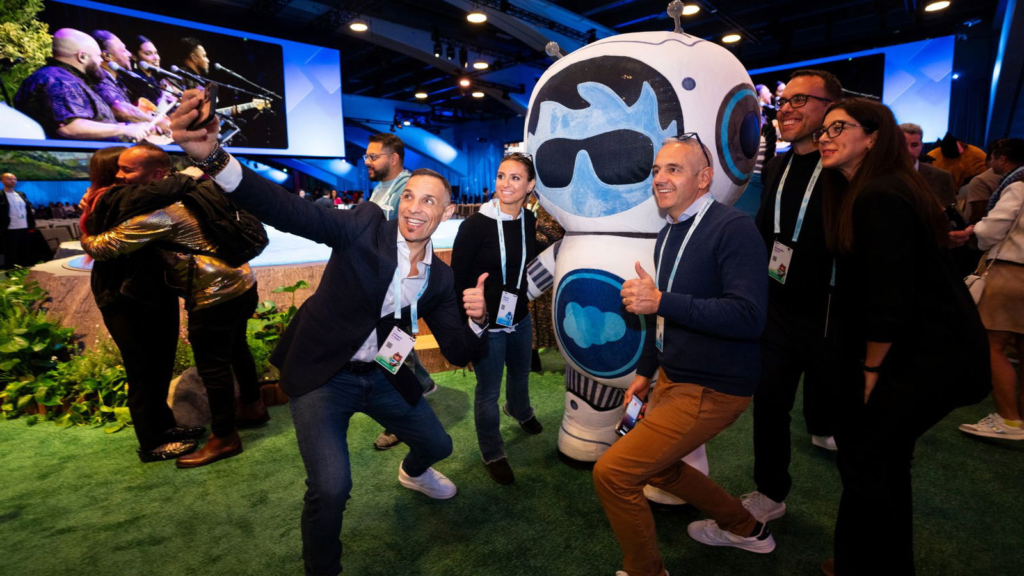
Salesforce and OpenAI have announced a wide-ranging partnership that will bring Salesforce’s Agentforce 360 platform directly into ChatGPT, allowing businesses to access CRM data, customer conversations and Tableau visualisations inside the conversational interface for the first time. Unveiled during the opening session of Dreamforce 2025 in San Francisco, the integration marks a major convergence between enterprise systems and generative AI. It also gives OpenAI’s frontier models, including GPT-5, a deeper foothold in business workflows by embedding them within Salesforce’s customer and commerce applications. SEE MORE: Salesforce opens the age of ‘Agentic Enterprise’ The partnership lets companies query sales records, analyse customer sentiment and generate data-driven insights simply by typing into ChatGPT. Salesforce’s enterprise logic and governance layer remains intact, with all activity governed through its Atlas Reasoning Engine. Businesses can also use OpenAI models inside Salesforce to build intelligent agents and prompts within the Agentforce 360 Platform. Marc Benioff, chair and CEO of Salesforce, described the move as a “natural step” in the company’s push toward what he calls the “age of the Agentic Enterprise.” “As consumers, we already get instant recommendations or insights from ChatGPT,” Benioff said. “Now enterprises can deliver that same intelligence and immediacy. By uniting the world’s leading frontier AI with the world’s #1 AI CRM, we’re creating the trusted foundation for companies to become Agentic Enterprises.” For employees, the partnership means Salesforce tools will soon surface in ChatGPT’s app ecosystem, giving authorised users access to customer data and Tableau dashboards within a secure conversational environment. ChatGPT’s capabilities are being woven into Salesforce-owned Slack, allowing teams to summarise conversations, generate content and surface insights in the flow of work. Developers will also be able to tag OpenAI’s Codex agent inside Slack channels to write or edit code based on natural-language instructions. “We believe that AI systems are going to unlock potential for humanity levels that we today can’t even comprehend,” Brad Lightcap COO OpenAI, told delegates during on the opening day of Dreamforce.  OpenAI CEO Sam Altman said the goal was to make AI feel more embedded in everyday workflows. “Our partnership with Salesforce is about making the tools people use every day work better together, so work feels more natural and connected,” he said. “It’s an important step in how AI can improve daily workflows under our efforts together.” The collaboration also extends into commerce. A new experience will allow merchants using Agentforce Commerce to surface product listings directly inside ChatGPT, with purchases handled through Instant Checkout. The system uses Salesforce’s Agentic Commerce Protocol and Stripe infrastructure to enable privacy-compliant, tokenised transactions without losing control of customer data. Benioff positioned the integration as the next phase of enterprise AI – one that moves beyond siloed apps toward multi-surface, conversational experiences. “The tools we use to work and shop are blending,” he said. “AI isn’t just in the background anymore – it’s the interface.” source

Salesforce deepens ties with OpenAI, brings enterprise data to ChatGPT Read More »

Singapore backs Mediacorp with SG$380m amid shifting media habits

Singapore’s public service broadcaster Mediacorp continues to receive about SG$380 million in annual funding, as the government shifts towards measuring its reach across digital and social platforms, said minister for digital development and information Josephine Teo in parliament on Wednesday (15 October). Over the past five financial years, the funds have helped Mediacorp engage audiences in all four national languages. Teo noted that the broadcaster now reaches more than 90% of Singapore’s population through its channels and social media platforms, with over three-quarters of viewers satisfied with its content. While the amount is roughly half of what Finland and Denmark each spend on their national broadcasters, Teo said Singapore’s investment continues to serve an important purpose — to “inform, educate, and connect Singaporeans” through trusted and culturally representative programming. Don’t miss: Raj Parekh leads Mediacorp’s new Growth & Partnership unit, Ivan Wong departs  The minister also said that the ministry of digital development and information (MDDI) has broadened its performance metrics beyond television viewership to account for changing consumption habits. “For example, Mediacorp’s TV reach dropped by about 10% over the last decade, but unique video viewers on meWATCH have risen by about 80%,” she said, adding that overall satisfaction levels have remained steady. MP Foo Cexiang pointed to the success of Mediacorp productions such as Emerald Hill – The Little Nyonya Story, which recently topped local ratings ahead of popular Korean dramas and will debut on Chinese streaming platform Tencent later this year. He asked if the government would consider further support to help Mediacorp expand collaborations with international platforms such as Netflix. Teo replied that funding is directed at overall operations rather than individual programmes to give public service media flexibility to “adapt and innovate in the fast-changing media landscape.” Teo’s comments come as Mediacorp undergoes internal restructuring to stay competitive in a shifting media landscape. The broadcaster recently announced a reduction of 93 roles, representing just over 3% of its workforce, as part of its efforts to adapt to changing audience behaviour and economic pressures. In a company statement, Mediacorp said the move reflects the growing dominance of short-form, mobile-first, and social-led formats, while traditional long-form content and legacy platforms face mounting competition for both audience attention and advertising dollars. At the same time, clients are seeking more agile, platform-native campaigns with measurable performance outcomes — a shift that mirrors broader industry trends driving the evolution of public service media funding and measurement. Related articles:  Mediacorp slashes 93 jobs amid shifting media landscape and economic pressures  Mediacorp drops multilingual musical tribute celebrating everyday Singaporeans  RHB Singapore banks new television partnership with Mediacorp  source

Singapore backs Mediacorp with SG$380m amid shifting media habits Read More »

Apple’s final collab with Jane Goodall celebrates creativity’s first spark

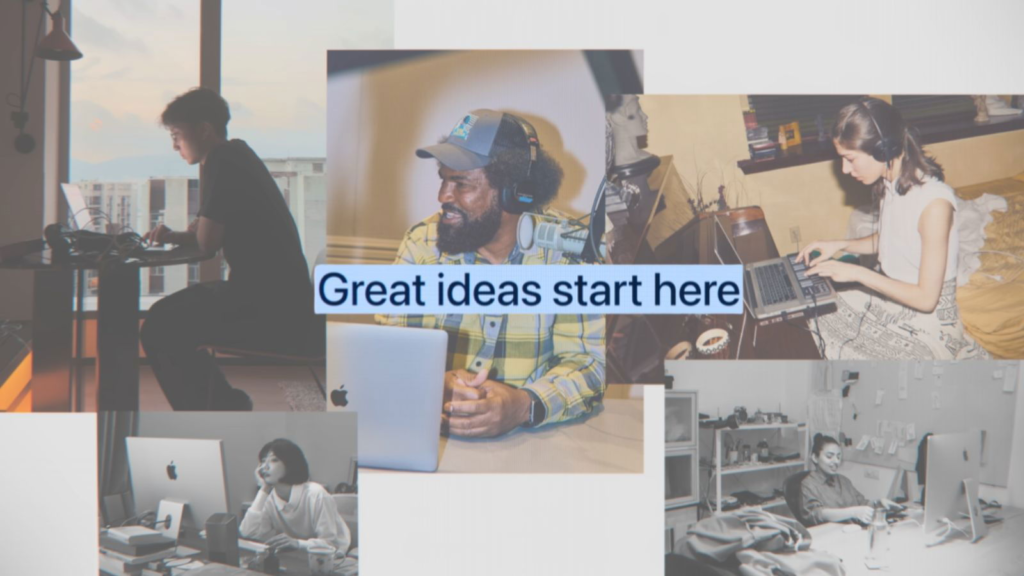
Apple has unveiled its new global brand platform for Mac, “Great ideas start on Mac”, a tribute to creativity, possibility, and the first spark of inspiration. The campaign was developed by TBWAMedia Arts Lab and directed by Academy Award–nominee Mike Mills. It marks the late Jane Goodall’s final collaboration with the brand, with the conservationist and author lending her voice to the film’s narration. Opening with the blink of a cursor against a white screen, the film captures how the Mac has become the starting point for countless world-changing ideas. Don’t miss: Apple’s cinematic stunt proves the iPhone 17 Pro can take a beating It spotlights real creators across diverse disciplines, from Bruce Strickrott, chief pilot of the Alvin submersible, who has documented deep-sea discoveries on Mac since 1996; to Ruchika Sachdeva, founder of Indian fashion label Bodice; to disability rights activist Alice Wong, who uses Mac’s accessibility features daily as a nonspeaking person. Also featured is 1X Technologies, the team behind humanoid robot NEO, designed to give people more time for what they love. “Every story you love, every invention that moves you, every idea you wished was yours, all began as nothing. Just a flicker on a screen, asking a simple question, what do you see,” Goodall said. The clip ends with the caption “great ideas start here”.  Through these stories, Apple aims to celebrate the Mac as a tool that not only powers creativity but also amplifies human potential, beginning, as always, from a single blank screen.  Goodall, the famed ethologist and pioneer of the global conservation movement, recorded her narration before her passing earlier this month at the age of 91. She had previously featured in Apple’s iconic 1998 “Think different” campaign. MARKETING-INTERACTIVE has reached out for more information.  Apple is no stranger to emotive storytelling. Earlier this year, the brand released a Chinese New Year campaign titled “I made a mixtape for you”, shot entirely on the iPhone 16 Pro. The film, directed by The Greatest Showman’s Michael Gracey with TBWAMedia Arts Lab Shanghai, follows a young man transported to the 1990s through a mixtape, a nostalgic journey that highlights the phone’s advanced camera and sound capabilities. Related articles: Apple spotlights Aceh’s Ratoh Jaroe dance in latest #ShotoniPhone feature   A hit on beloved Apple as ‘eavesdropping’ and ‘spying’ get associated with US$95m Siri settlement?   Instagram brings AI age-detection to Australia, says Apple and Google must do more   source

Apple’s final collab with Jane Goodall celebrates creativity’s first spark Read More »

monday.com puts AI to work in Singapore with new 360° campaign

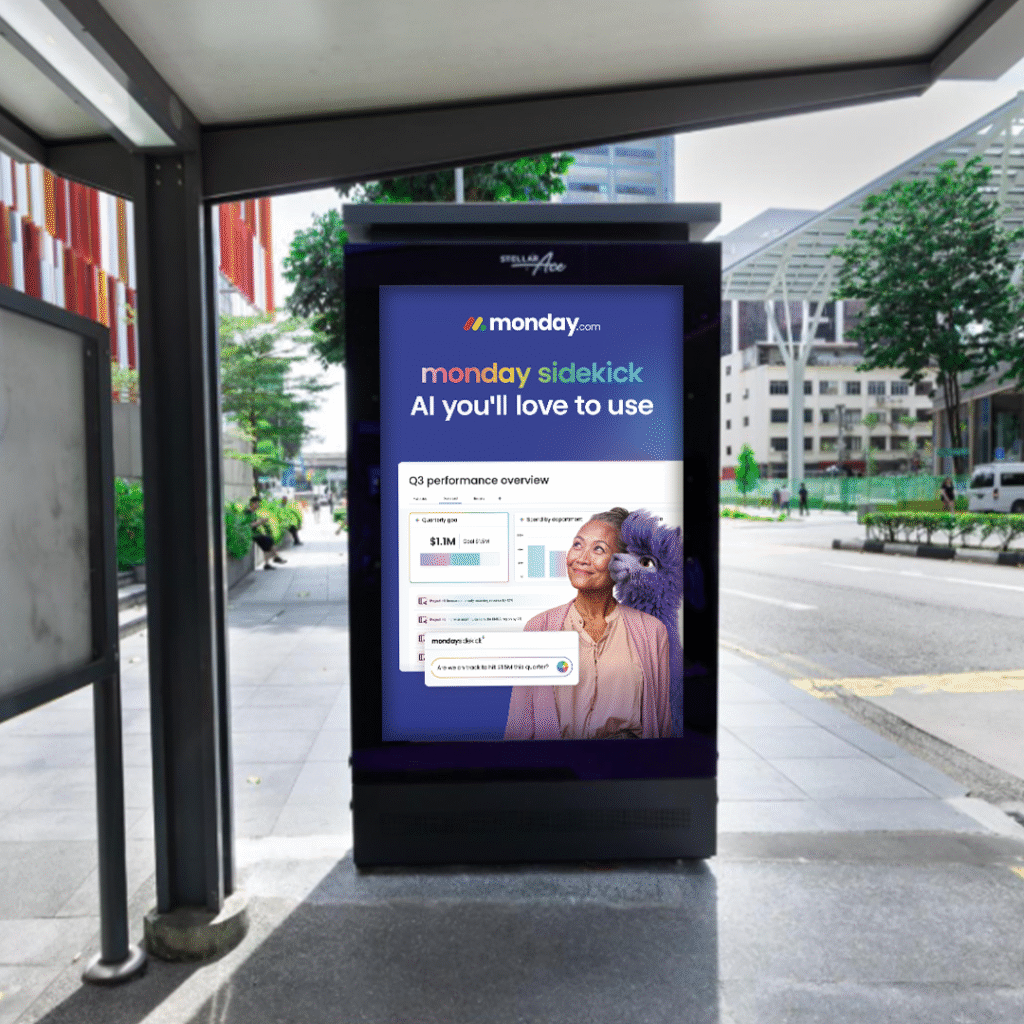
monday.com, the global software company behind work management solutions, has launched a 360-degree brand campaign in Singapore. The campaign puts the spotlight on ‘monday sidekick’, the company’s AI-powered digital worker, highlighting how the platform integrates seamlessly into daily workflows and delivers immediate impact. Targeting local teams grappling with AI adoption, the campaign shows how monday sidekick automates mundane tasks, freeing employees to focus on creative problem-solving and strategic work. Don’t miss: Singapore leads in AI adoption, but customer service still falls short  In addition, the campaign revives monday.com’s mascot, the llama, to show that B2B marketing can be both creative and relatable. Built in-house by monday.com’s global creative team, the campaign was directed by Doug Karr, produced by Jiminy Production, post-produced by Wizard, with VFX by Juice. The OOH activation spans high-dwell locations across Singapore, including MRT lines, major malls, bus stations linking residential areas to the CBD, and Changi Airport. “As AI adoption picks up pace in Singapore, the campaign amplifies our latest AI innovations, including monday sidekick, which helps teams move beyond managing their work to getting their work done for them,” said Stephanie Perez-Israel, regional marketing lead APJ at monday.com. Robbie Ferrara, global creative director, added that the campaign addresses common anxieties around AI, from leadership pressure to unclear ROI, while keeping the messaging human-centred and engaging. The campaign coincides with the opening of its new SEA regional hub in Singapore earlier this month. The Singapore office comes as the region’s digital economy is projected to reach US$300 billion by the end of 2025. In addition, Singapore is monday.com’s second-largest market in APAC, with over 1,000 customers. Singapore is also investing heavily in AI to strengthen its economy, with up to US$198.3 billion in projected impact and plans to train 15,000 AI professionals by 2029. Currently, the new chapter is powered by talent relocating from its ANZ team. It is also seeking local hires.  Related articles:   Temasek bets on human-AI collaboration to transform investment decisions  Meta to use AI chats to personalise ads and content across platforms   ‘No longer a choice’: Neil Patel makes the case for AI personalisation at scale  source

monday.com puts AI to work in Singapore with new 360° campaign Read More »